Tag Archives: rhyme

Melissa Balmain: ‘A Super-Subtle Metaphor’

(For my son)

Dear Unruly Backyard Maple:
I’ve been clipping you for years,
convinced that efforts to reshape’ll
pay for one who perseveres.

But now I get it, stubborn maple –
though I’ve trained your docile peers,
my double-bladed snip and scrape’ll
never give you classic tiers.

And I am seeing, steadfast maple,
how your tousled crown endears:
you shelter birds; come spring, your drape’ll
glow just like a chandelier’s.

So please forgive me, patient maple,
if it’s not too late, for here’s
my blessing, solemn as the papal.
Grow your way.
                        Love, Pruning Shears

*****

Melissa Balmain writes: “Looking back at poems I’ve written for and about my family, I realize many are metaphorical. I suspect that metaphor–like rhyme and meter–helps steer me toward interesting thoughts and away from over-sentimentality. (Whether my son agrees has yet to be seen!)”

‘A Super-Subtle Metaphor’ is the lead poem in the current issue of Lighten Up Online.

Melissa Balmain’s third poetry collection, Satan Talks to His Therapist, is available from Paul Dry Books (and from all the usual retail empires). Balmain is the editor-in-chief of Light, America’s longest-running journal of light verse, and has been a member of the University of Rochester’s English Department since 2010. She is a recovering mime.  

Photo: “Red Maple Tree” by Stanley Zimny (Thank You for 52 Million views) is licensed under CC BY-NC 2.0.

Weekend read: Odd poem: French President Emmanuel Macron, ‘Pour Sophie’

On a trip to Paris one day, little Sophie
Met a giant lady lighting up the night sky.
“What’s your name, you magical monster?”
“My many visitors call me the Eiffel Tower.”
“In all your attire, don’t you sometimes tire
Of being seen only as a humdrum tower?
You, a dragon, a fairy watching over Paris,
An Olympic torch held aloft in grey skies?”
“How you flatter me! So few poets these days
Ever sing the praises of my Parisian soul,
As did Cocteau, Aragon, Cendrars,
Trénet and Apollinaire… Since you’re so good
At seeing beneath the surface, you could
– If you like, when you’re back from France –
Take up your pen and write down
Why you like me – it would be nice and fun!”
“You can count on me! There’s so much to say!
I’ll write twenty lines… but who will read them?”
“Well, I know a man who’ll read your verse.”
“Really? Who?”
“The President of France.”

En voyage à Paris, la petite Sophie
Croisa une géante illuminant la nuit.
“Comment t’appelles-tu, monstre surnaturel?”
“Mes nombreux visiteurs m’appellent Tour Eiffel.”
“N’es-tu pas parfois lasse, avec tes mille atours
Que l’on ne voie en toi qu’une banale tour?
Toi le dragon, la fée, qui veille sur Paris,
Toi, immense flambeau planté dans le ciel gris!”
“Quel plaisir tu me fais! Ils sont devenus rares
Ceux qui comme Cocteau, Aragon ou Cendrars,
Trenet, Apollinaire, avaient su célébrer
Mon âme parisienne aux charmes singuliers.
Puisque tu sais si bien percer les apparences,
Tu pourrais, si tu veux, à ton retour de France,
Prendre à ton tour la plume et conter en anglais
(It would be nice and fun) ce qui chez moi te plaît!”
“Tu peux compter sur moi! Il y a tant à dire!
Je t’écrirai vingt vers… Mais qui voudra les lire?”
“Oh, moi j’en connais un qui lira ton cantique.”
“C’est?”
“Monsieur le président de la République.”

*****

This poem by French President Emmanuel Macron is in French alexandrine: 12 syllable lines, rhyming couplets. The translation is either by him (he is fluent in English) or by the French Embassy in London, as the poem was written for the English girl Sophie’s 13th birthday. She herself had initiated everything with the poem below, which she had sent in April 2017 to the French President… at that time the President was François Hollande, but Macron won the presidency later that year, and responded for Sophie’s birthday on November 1st. Her poem was 20 lines long, written out on her drawing of the Eiffel Tower; his response is also 20 lines long (counting the final question and answer as a single line, which it clearly is by metre and rhyme).

Here is 12-year-old Sophie’s ‘Centre of Attention’:

She has four beautiful legs,
Which help her stand proud,
She looks over everyone,
With her head in the clouds,
She is elegant and tall,
Wears a pretty, lacy skirt,
Whilst staring at her in awe,
Your eyes will not avert,
Her spine is amazingly straight,
Whilst her head touches the sky,
People look up and take pictures of her,
As they are passing on by,
You need to tilt your head up,
To be able to see all of her,
But when you do,
She is as pretty as a picture,
She is the centre of attention,
Noticed by everyone.
She is the Eiffel Tower,
She is second to none.

Macron created a nice circularity with his response to Sophie’s poem, by pretending it was written first and caused Sophie’s poem, rather than the other way round. All very playful.

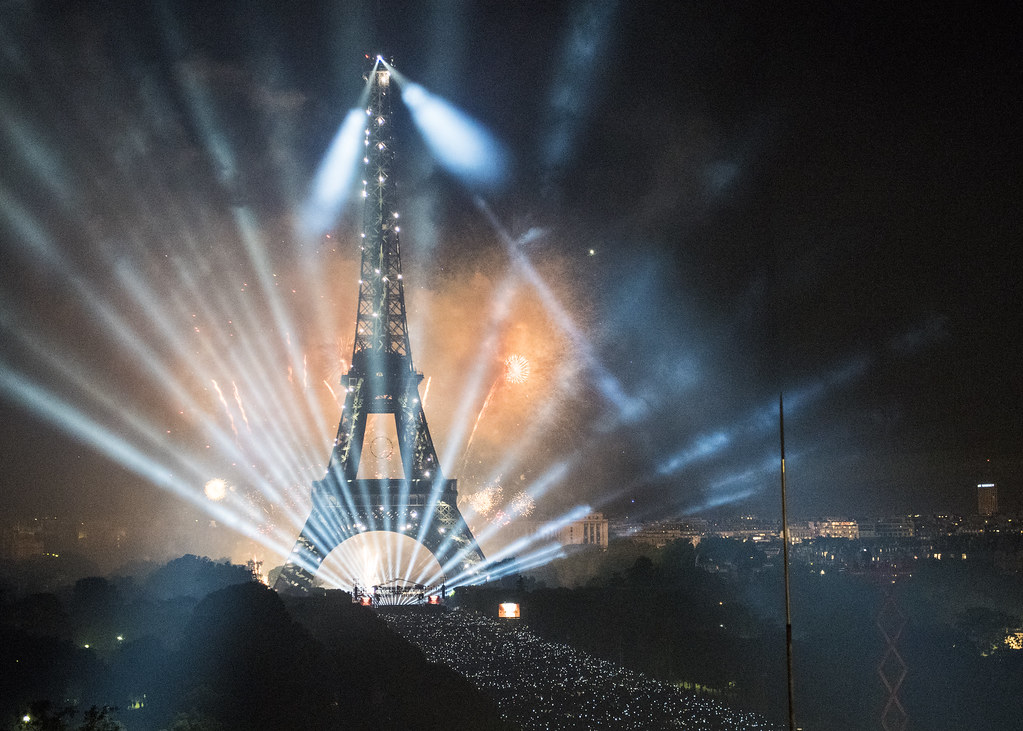
Photo: “170714-D-PB383-151” by Chairman of the Joint Chiefs of Staff is licensed under CC BY 2.0.

Weekend read and listen: RHL, 3 audio + text poems

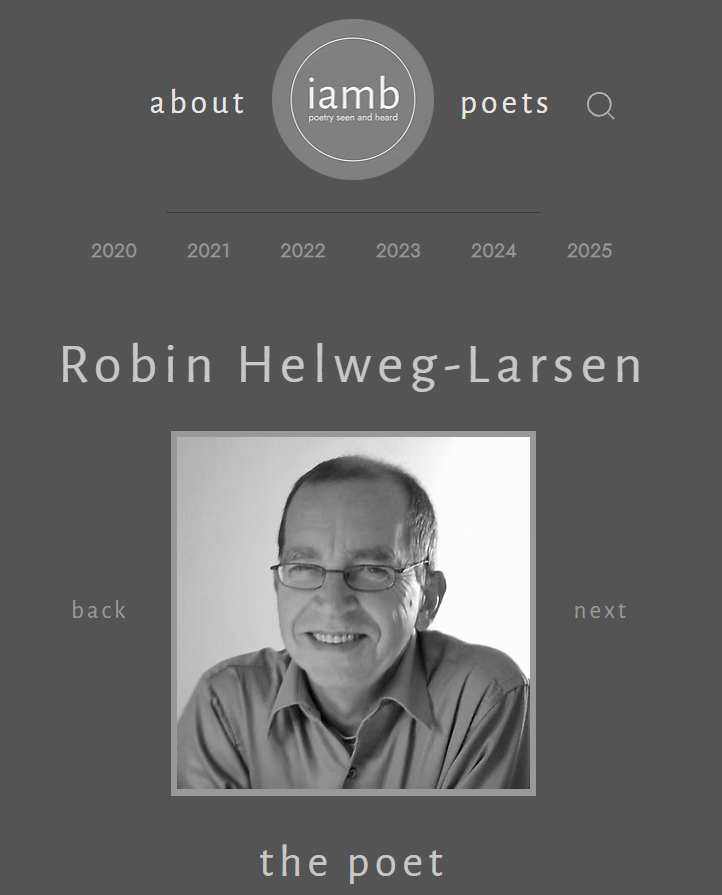
iamb – poetry seen and heard” is the creation of Mark Antony Owen, showcasing poets with their readings of three of their poems. Begun in 2021, Mark describes his project as “part library of poets, part quarterly journal, iamb is where established and emerging talents are showcased side by side. Not just their words, but their readings of them. Expect new poems, every three months, free to your device of choice.”

Accompanied by an out-of-date photograph, three of my poems are available here. They are not among my most recent work, but they are favourites and I chose them for their very different moods, themes, and forms: ‘Camelot at Dusk’, ‘Old Sailors’, and ‘This Ape I Am’. And their use of form sets them apart from all the other poems in this 21st ‘wave’ of iamb. I can’t decide if I am stuck in the past, or write in the style of the only verse that has a chance of being remembered in 100 years. But maybe that’s not an either/or – maybe only verse that is rooted in the historical rhythms of the language will last. So I suspect.

Auditions will reopen in September for next year’s waves.

Short poem: RHL, ‘Flamingo’

As annuals at their lives’ ends flower in beds,
blossom and ripen into yellows and reds
as Earth throws scarlet to the day’s end skies –
so the flamingo trying to fly, pounding along
the surface of the water, pink wings flapping, pink feet slapping,
ungainly straining desperate, then sudden rise,
its work rewarded: scarlet, pink, black, strong,
suddenly graceful, airborne . . . and then gone.

*****

This short poem was recently published in Lighten Up Online after the editor’s careful query “Could I just check that Ls 5 and 6, which seem to have six beats unlike the others, are intentionally reflecting the awkwardness of the flamingo’s take-off?” Indeed, and I’m glad that it came across that way – thanks, Jerome Betts!

The current Lighten Up Online is a particularly good issue, with many poems far superior to my poor struggling flamingo.

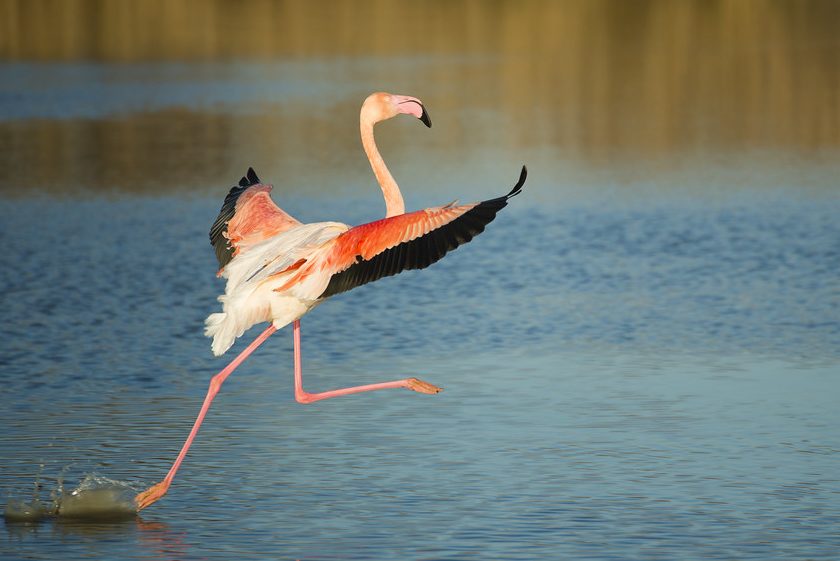
France – Flamingo Landing 04/25/16 Explored” by Benjamin PREYRE Photography is licensed under CC BY-NC-ND 2.0.

RHL, ‘The Queen’

In March the Queen came, flirting on her throne;
April, I loved her gladly,
And in May I’ll love her madly,
And in June I may act badly
For July I’ll love her sadly,
Cause when August comes, I know that she’ll be gone.

*****

This poem was just published in Rat’s Ass Review – thanks, Roderick Bates… who, in accepting it, wrote “By the way, I assume the queen is Cassiopeia, who is always visible at my latitude.” I’m happy with that interpretation; but it’s actually about the lighthearted springtime attractions that, sensibly, go nowhere.

Photo: “flirt” by cloud.shepherd is licensed under CC BY 2.0.

RHL, ‘If Astrology Were Real’

If astrology were real, you’d expect
it would be an unremarkable aspect
of daily life for someone to select–
to fall in love, fully connect–
with two people with the same birthday;
for victims of mass events (tornados, cities wrecked)
to share a sun-sign or unlucky day;
for astrology to be so useful that respect
for horoscopes would drive a business power play,
and with no reason to suspect
insider information when bets proved correct;
and that some other nonsense disarray
would have to be invented to display
for children, lovers, dreamers, to collect–
for old folks suffering neglect–
for young ones on the make, unchecked–
for trash TV and media to infect–
and for the rest of us to naturally reject.

*****

My English mother was a great practitioner of astrology; my Danish father was a thorough sceptic. In the 1950s he was going to take a trip across the Atlantic by sea, and asked her to do a forecast of the voyage. She went off and studied the stars, and came back and said that everything looked fine. (What else could she say?) Unfortunately the ship went on the rocks at Bermuda and everyone was taken off in lifeboats. When my father later questioned her forecast, her explanation (as he reported it) was that “Venus was in the Dragon’s Tail and kiss my arse.”

I studied astrology (along with lots of other religious and spiritual systems) in my 20s, but ended up agreeing with my father; hatha yoga is the only practice I’ve retained from those days.

This poem has just been published in Rat’s Ass Review – a good place for snarky poetry. Thanks, Roderick Bates!

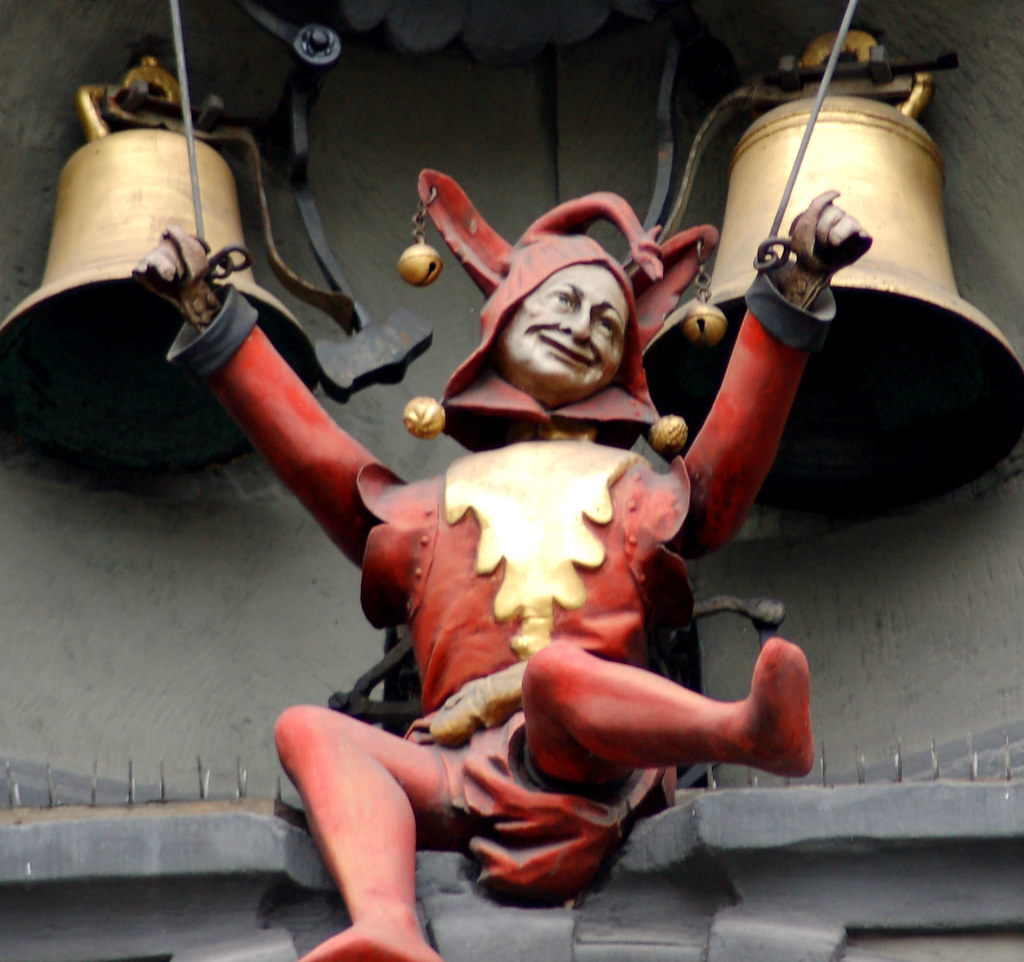
Photo: “Automata on the famous astrological clock” by Curious Expeditions is licensed under CC BY-NC-SA 2.0.

Using form: Susan Jarvis Bryant, ‘Sorceress’

She is polished and pernicious 
Her demeanor is delicious 
She will soften the suspicious 
     With her smile 
 
She’ll abash you then disarm you 
She’ll harass and she’ll alarm you 
Then she’ll nonchalantly charm you  
     That’s her style 
 
She’ll reject and then she’ll choose you 
She’ll respect and then she’ll use you 
She’ll protect and then she’ll bruise you 
     In a flash 
 
She’ll dismiss you then possess you  
She will curse you then she’ll bless you 
She’ll distress and then impress you 
     With panache 
 
She’ll accuse and then assuage you 
She’ll abuse and she’ll upstage you 
She’ll amuse and she’ll enrage you 
      Every day   
 
She’ll assist you then she’ll spurn you 
She’ll enlist you then she’ll burn you  
She will twist and she will turn you 
     Every way 
 
She will praise and then berate you 
She will raise and then deflate you 
She’ll amaze and still frustrate you 
     You can’t win 
 
She’s capricious and malicious 
She is smoothly surreptitious 
She conceals a core that’s vicious  
     With a grin

*****

Susan Jarvis Bryant writes: “This is one of those poems that simply wrote itself. It’s a nonce form that appeared in my head as a song without lyrics.  The lyrics came easily. I love the way words fit together to create music – a melodious flow that lifts images to a greater height. Passion always assists me in the creative process, and this poem is written about someone in particular… someone that irked me greatly… someone I will never mention. I’ll just nod and smile a satisfied smile when reading the poem. Poetry composition can be immensely cathartic.”

‘Sorceress’ was originally published in Snakeskin.

Susan Jarvis Bryant is originally from the U.K. and now lives on the coastal plains of Texas. Susan has poetry published on The Society of Classical Poets, Lighten Up Online, Snakeskin, Light, Sparks of Calliope, and Expansive Poetry Online, The Road Not Taken, and New English Review. She also has poetry published in The Lyric, Trinacria, and Beth Houston’s Extreme Formal Poems and Extreme Sonnets II anthologies. Susan is the winner of the 2020 International SCP Poetry Competition and was nominated for the 2022 and 2024 Pushcart Prize. She has published two books – Elephants Unleashed and Fern Feathered Edges.

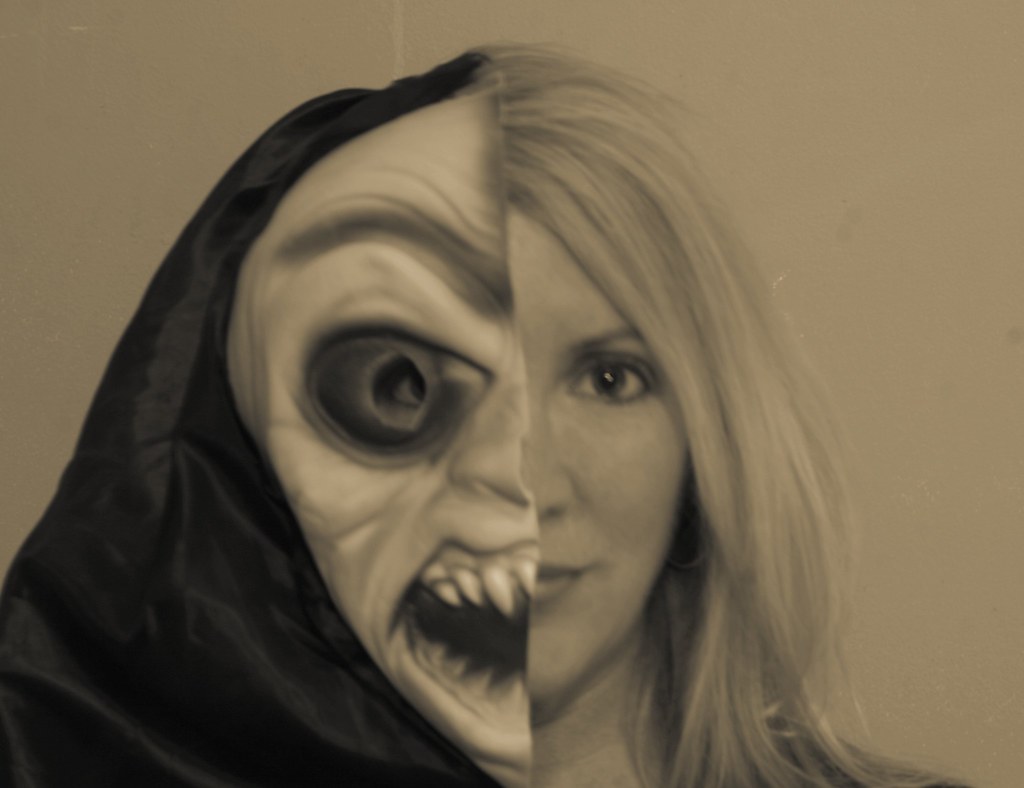
Photo: “Day 47-Split Personality” by Bazule is licensed under CC BY-ND 2.0.

Short verse: RHL, ‘The Romance of the Challenge’

Suggesting,
questing,
testing;
contesting,
besting,
resting.

*****

Humans, in any culture, seem naturally attracted to quests; often to more than one at a time, and contradictory. Maybe the universe is just a playground for questing…

Published this week in The Asses of Parnassus. Thanks, Brooke Clark!

Photo: “”The victorious knight” Berry Brothers hard oil finish vanquishes the field and receives the guerdon of merit. (front)” by Boston Public Library is licensed under CC BY 2.0.

Cowboy poetry: Using form: Doc Mehl, ‘Poems Used To Rhyme’

Poems used to rhyme.
In time, the couplets were dispensed.
Incensed, today’s poet rebels from rhyming schemes,
It seems. The writer, newly shedding the shackles of quatrains,
Refrains from even a modicum of lilt.

And built now from unpaired diphthongs,
His songs have lost a measure of glue.
It’s true. No longer does the ear delight
In flight of fancy, in teeter-totter,
Like water on the endless sand, the to-and-fro,
And no, this tide will not abate.

Of late, I find that poems no longer draw me in.
They’re thin.

*****

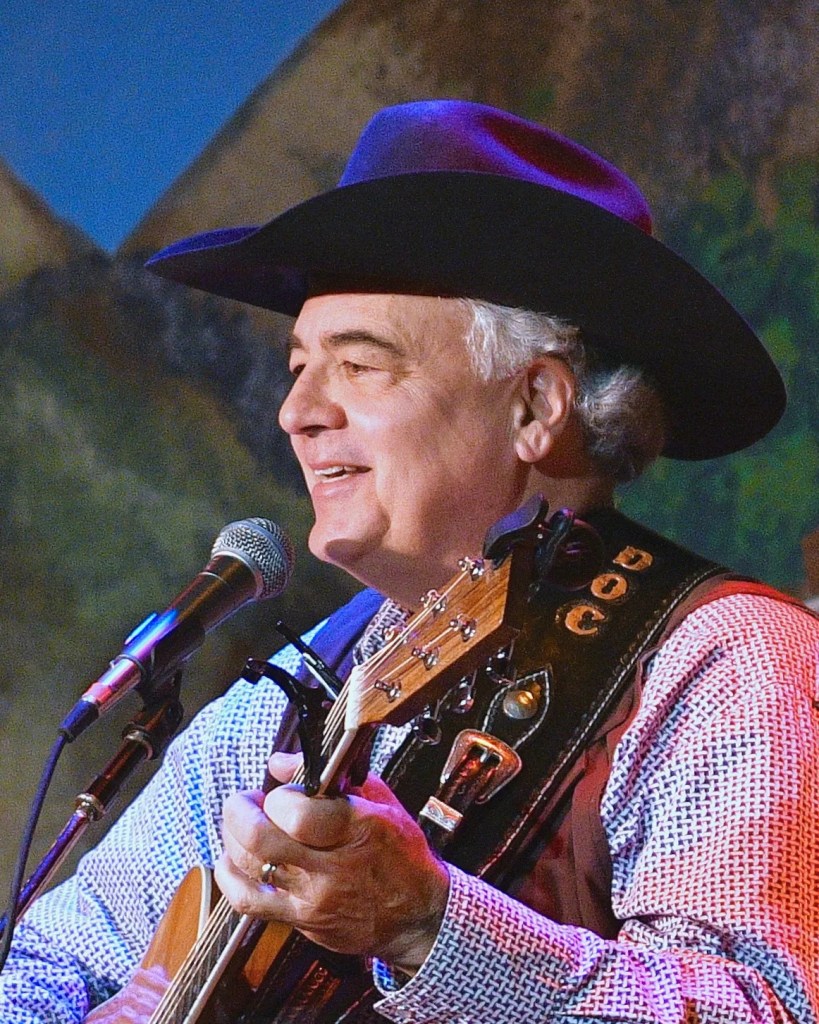
Doc Mehl writes: “For the last two decades I’ve written rhyming western poetry, and I’ve performed both the poetry and my original western-themed music at cowboy poetry events in the western U.S. and Canada. I’ve recorded two spoken-word CDs of my rhyming poetry, and several CDs of my original music.
I’m not averse to free verse. (OK, I must pause momentarily to savor the rhyme in that sentence.) Still, the author of a free verse poem ought to be able to convincingly answer this question: “Why do you maintain that this work should be categorized as poetry rather than prose?”
In this poem (“Poems Used To Rhyme”), I liked the gamesmanship of sneaking the rhyming word of each “couplet” into the beginning of the second line rather than at the end of the second line. The resulting poem might first appear to be a tongue-in-cheek free verse poem about why rhyme is important. Still, the magic of the closely juxtaposed rhyming words can’t help but rise from the ether.”

‘Poems Used To Rhyme’ was first published in Rattle #85 with a link to audio.

Newly transplanted from Colorado to Black Diamond, Alberta, Al “Doc” Mehl traces his family roots to central Kansas, where his grandfather raised six children on the family homestead. His debut music CD is titled “Asphalt Cowboy,” and his second music CD titled “I’d Rather Be…” was released in 2008. Doc Mehl has also published a CD of original poetry titled “Cowboy Pottery,” and a second spoken-word poetry CD titled “The Great Divide,’ named 2013 “Cowboy Poetry CD of the Year” by both the Western Music Association and the Academy of Western Artists. In 2020, Doc published his first collection of poetry, “Good Medicine: Read Two Poems and Call Me in the Morning.” And in 2022, Doc released two new CDs of music, “West of the 22” and “Tried and True. Doc’s poems and musical lyrics have been featured on the website http://www.CowboyPoetry.com, he has been published in the poetry journal “Rattle,” and he was a first-place silver buckle winner at the National Cowboy Poetry Rodeo in Montrose, Colorado in 2009.

Photo: https://docmehl.com/photo-gallery

Using form: Nonce form, riddles: Aaron Poochigian, ‘The New New Amsterdam’

I am the scam
you go in for, the diamonds in the pavement,
ecstatic evenings caught on traffic cam,
rare toilets and consensual enslavement.

Scholars and brawlers are inside of me.
What could I be?

I am
the new New Amsterdam.

I am those glam
high-rises and the derelicts’ despair,
graffiti worthy of the Met, and sham
Versace hawked to chumps in Union Square.

Purists and tourists are inside of me.
What could I be?

I am
the new New Amsterdam.

I am the ham
ironist, the perverse poobah of shock,
the firetruck stranded in a rush-hour jam
while conflagration rages round the block.

Birders and murders are inside of me.
What could I be?

I am
the new New Amsterdam.

I am the slam
Where Subway Ends, a scrum of mad musicians,
Sunday phone calls with a far-off fam,
Halal street food, and infinite ambitions.

Shoo-ins and ruins are inside of me.
What could I be?

I am
the new New Amsterdam.

*****

Aaron Poochigian writes: “Riddles go back to a time before ‘English’ was our English, before Shakespeare and Chaucer, the time of bards and Beowulf. The Anglo-Saxon riddles have the rhythms of poetry. They tell it slant like poetry does sometimes. The tantalizing, first-person self-description that defines the genre gave me a ‘way in’ to talk about a subject that would have been too vast otherwise—New York City.”

‘The New New Amsterdam’ was first published in The Rising Phoenix Review.

Aaron Poochigian earned a PhD in Classics from the University of Minnesota and an MFA in Poetry from Columbia University. His latest poetry collection, American Divine, the winner of the Richard Wilbur Award, came out in 2021. He has published numerous translations with Penguin Classics and W.W. Norton. His work has appeared in such publications as Best American Poetry, The Paris Review and Poetry.
aaronpoochigian.com
americandivine.net

Twitter: @Poochigian
Facebook: Aaron Poochigian
Instagram: aaronpoochigian

Photo: “NYC Night Life” by Tom Roeleveld is licensed under CC BY-NC-ND 2.0.