Tag Archives: Shelley

Poems on poems: Ogden Nash, ‘The Collector’

I met a traveler from an antique show,
His pockets empty, but his eyes aglow.
Upon his back, and now his very own,
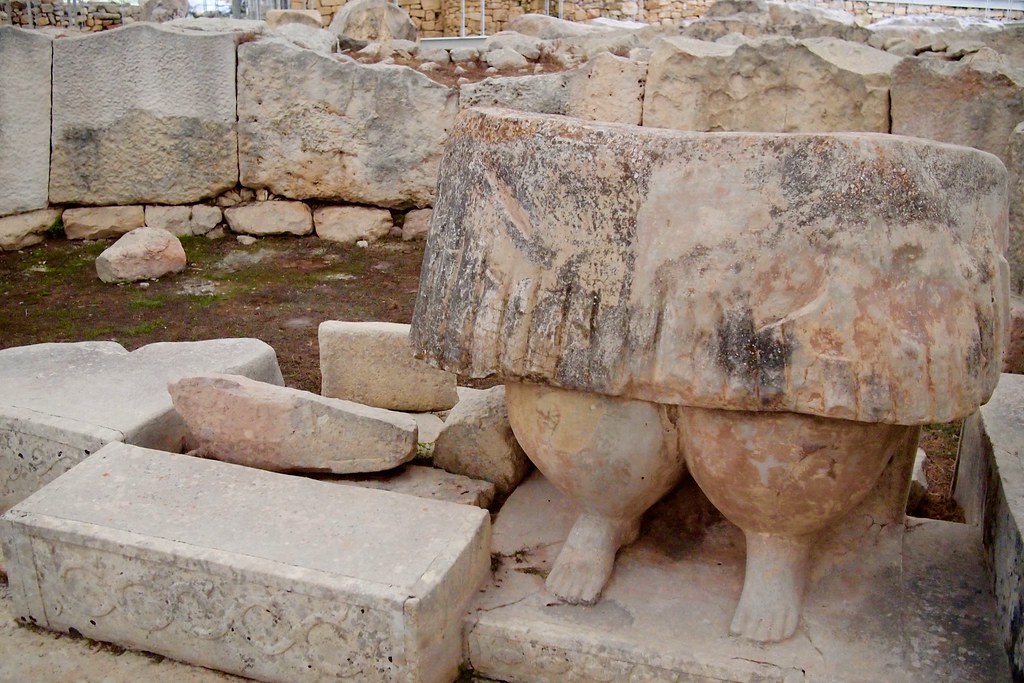
He bore two vast and trunkless legs of stone.
Amid the torrent of collector’s jargon
I gathered he had found himself a bargain,
A permanent conversation piece post-prandial,
Certified genuine early Ozymandial
And when I asked him how he could be sure,
He showed me P. B. Shelley’s signature.

*****

Ogden Nash‘s teasing take on Shelley’s Ozymandias is collected in ‘The Old Dog Barks Backwards’.

Photo: “Two vast and trunkless legs of stone” by skittledog is licensed under CC BY-NC-SA 2.0.

Max Gutmann, “Ozymandias” Meets “Casey at the Bat”

The outlook wasn’t brilliant for the Sandville One that day.
The boundless, barren, lone, and level sands stretched far away.
The traveler who’d tell the tale now gazed on it alone.
A king’s cracked visage lay beside vast, trunkless legs of stone.

His name was Ozymandias, a name of great renown;
Upon his monumental visage glared a potent frown;
A wrinkle curled his lip; he wore a sneer of cold command,
Asserting the calm certainty that he would always stand.

Oh, somewhere in this antique land the sun is shining fair;
Great Works that tower somewhere cause the Mighty to despair;
And somewhere there is more than pedestals and sand about;
But the King of Kings is joyless—mighty Ozy has struck out.

*****

Max Gutmann writes: “This was part of a series of comic pieces crossing famous poems with each other, not a particularly unique idea, as proven by The Spectator, which ran a contest on a similar premise a few months after I wrote the first of the batch. One of the early ones appeared in that Spectator issue. This one appeared in Light.”

Max Gutmann has worked as, among other things, a stage manager, a journalist, a teacher, an editor, a clerk, a factory worker, a community service officer, the business manager of an improv troupe, and a performer in a Daffy Duck costume. Occasionally, he has even earned money writing plays and poems.

Graphic: “The Pharaoh Ozymandias at bat”, Robin Helweg-Larsen and DALL-E.

Poems on Poets: George Simmers, ‘Poets in Residence’

The Head was ambitious and nobody’s fool,
A big man, efficient, and proud of his school.

At the start of the term, as he sorted his post,
The item of mail that intrigued him the most

Was a piece puffing National Poetry Day,
Including a list of the poets who’d stay

And workshop and somehow persuade the whole school
That poets were ‘groovy’ and poems were ‘cool’.

‘Here’s status,’ the Head thought. ‘It’s not to be missed.’
The one problem, though, was the names on the list;

Though doubtless they wrote quite respectable stuff,
Not one of them, frankly, was famous enough.

His school deserved more; his ambition took wing,
And so he decided to do his own thing.

With his usual flair, and with chutzpah exquisite,
He invited the whole English canon to visit.

Geoffrey Chaucer came first, on an equable horse,
And Spenser, and Marlowe, and Shakespeare, of course

(Who was grabbed by the teachers of English, imploring
‘Do come and persuade the Year Nines you’re not boring.’)

Keats arrived coughing, Kipling marched vigorously;
Matthew Arnold began to inspect the school rigorously –

Which delighted the Head, who with pride and elation
Showed the bards of the ages today’s education.

Vaughan was ecstatic, though Clough was more sceptical.
Ernest Dowson puked up in a litter receptacle.

Coleridge sneaked off to discover the rates
Of an unshaven person outside the school gates;

Soon he’d sunk in a private and picturesque dream,
While Auden was ogling the basketball team.

Plath lectured the girls: ‘Get ahead! Go insane!’
Algernon Swinburne cried: ‘Bring back the cane!’

Dylan Thomas soon found the head’s cupboard of booze,
And Swift was disdainfully sniffing the loos.

And then the Head twigged, with a horrified jolt,
That something had sparked a Romantic revolt.

Shelley’d gathered the students out in the main quad,
And roused them to rise against school, Head, and God.

Byron soon joined him, and started to speak.
(He showed his best profile, and spouted in Greek.)

The bards of the thirties were equally Red,
And Milton explained how to chop off a head.

Decadents undermined all the foundations.
Surrealists threw lobsters and rancid carnations.

Pre-Raphaelites trashed the technology room
And the First World War poets trudged off to their doom.

Sidney with gallantry led a great charge in
(Tennyson cheering them on from the margin).

The Deputy Head, who was rather a dope,
Got precisely impaled on a couplet by Pope

(Who, while not so Romantic, was never the chap
To run from a fight or keep out of a scrap).

Then the whole solid edifice started to shake
As it was prophetically blasted by Blake. 

Soon the School was destroyed. Eliot paced through the waste,
And reflected with sorrow and learning and taste,

Which he fused in a poem, an excellent thing,
Though rather obscure and a little right-wing.

He gave this to the Head, who just threw it aside
As he knelt by the wreck of his school, and he cried

Salty tears that went fizz as they hit the school’s ashes.
He said words that I’d better imply by mere dashes:

‘——– Poets! ——– Poetry – rhyme and free verse!
Let them wilt in the face of a Headmaster’s curse!

‘Let poetry wither! How sweet it would be
If all of the world were prosaic as me!’

*****

George Simmers writes: “Poets in Residence was written as a celebration of National Poetry Day many years ago. Several people had been mouthing blandly off about how lovely poetry was in contrast to that horrible pop music young people listen to. Schools were being encouraged to give children a lot of poetry because it was nice and beautiful, and would make them nice. ‘Do these people have no idea of how incendiary the English canon is?’ I wondered. I really enjoyed demolishing the school around the ears of the pompous and pretentious head. I was a teacher at the time.”

George Simmers used to be a teacher; now he spends much of his time researching literature written during and after the First World War. He has edited Snakeskin since 1995. It is probably the oldest-established poetry zine on the Internet. His work appears in several Potcake Chapbooks, and his recent diverse collection is ‘Old and Bookish’.

Photo: “Ndélé highschool student in front of destroyed school” by hdptcar is licensed under CC BY 2.0.

Political poem: appallingly bad verse apparently in favour of Liz Truss

Bizzy lizzy will win by a.mile
She has got a lovely smile
Brians to match her lovely face.
She will win this pm race
Sunaks a snake
A back stabbee he is
He turned on boris
And will turn on liz
She will be a great pm
Not as good.as maggie but no one could be
Mrs thartcher mach 3
Liz will stand proud over our lands
Holdinh out her hand
If we wotk to gether we can
Get rid of the woke
And watch them. Cry into there cornflakes
As liz makes our country great.
In liz we trust god speed to our new pm

*****

In honour of Liz Truss’s trip to Balmoral Castle to be named Queen Elizabeth’s Prime Minister, I looked for poems by or about the new PM. The above is the best I could find, reposted in the Yorkshire Bylines by Jimmy Andrex under the heading Has the emergence of Liz Truss stimulated a new type of poetry?

Jimmy does a good serious job of discussing modern political poetry… sort of. But he fails to note that the quoted “poem” by “Bill Sutton” originated as a post to the Facebook group ‘Liz Truss Supporters (no trolls)‘ which is loaded with sarcastic commentary on the British Conservative Party in general and Liz Truss in particular.

So the answer to Jimmy’s question is No, of course. Scathing poetry, good or deliberately bad, has long been used as a political weapon. Bill Sutton’s post may be amusing, but is unlikely to resonate for as long as, say, Shelley’s rant the year before George III died: “An old, mad, blind, despised, and dying king, –

Good luck, Liz; hope you’ve got a thick skin.

Political poem: Shelley’s ‘England in 1819’

An old, mad, blind, despised, and dying king,–
Princes, the dregs of their dull race, who flow
Through public scorn, mud from a muddy spring,–
Rulers who neither see, nor feel, nor know,
But leech-like to their fainting country cling,
Till they drop, blind in blood, without a blow,–
A people starved and stabbed in the untilled field,–
An army which liberticide and prey
Makes as a two-edged sword to all who wield,–
Golden and sanguine laws which tempt and slay;
Religion Christless, Godless, a book sealed,–
A Senate—Time’s worst statute unrepealed,–
Are graves from which a glorious Phantom may
Burst to illumine our tempestuous day.

Shelley wrote this sonnet in 1819 in response to the Peterloo Massacre: a peaceful crowd of 60,000 had gathered in Manchester to call electoral reform, but were charged into by a local Yeomanry regiment, and then by a cavalry regiment of the King’s Hussars with sabres drawn. Official numbers show 18 people killed, including several women, and 400 to 700 injured: bayoneted, sabred, knocked down, trampled.

Shelley blames the mad King George III and his sons (including of course the Regent, the future George IV), and the ruling class in a time of unemployment and economic recession, and further blames the illiberal army, and harsh laws, and morality-free religion, and a Parliament that was refusing all civil rights to Catholics. They might all be graves of corruption, but Shelley hopes that from their decay will come a glorious new spirit to brighten the world.

Not all of the poem resonates with any particular political situation in the world today; but “an old, mad, blind, despised and dying king”… well, that’s certainly the impression given by the White House in early 2021.

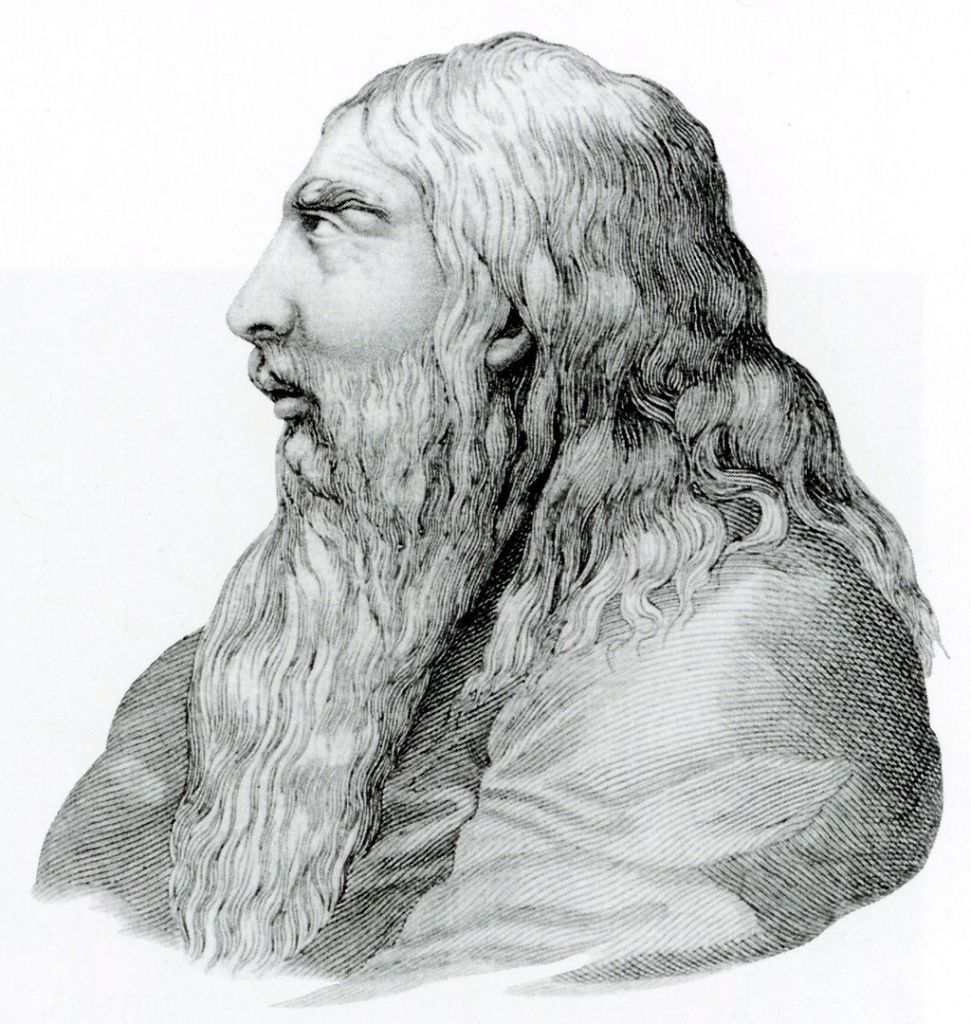
Technically: the sonnet is in iambic pentameter as you would expect, but the rhyme scheme is unconventional: ababab cdcdccdd. The illustration is an engraving of George III in later life, by Henry Meyer.

Using form to convince: Poem: “Conviction”

Verse has magical powers to engage the minds of its audience and, through that engagement, sway opinions and change attitudes. This is more than the tricks that make it easy to learn verse. It is more than Coleridge’s “Prose: words in their best order; poetry: the best words in the best order.” It is that poets and singers chant, and enchant. The musician chants, the magician chants, if it is well done it creates enchantment. It changes moods, it changes minds. It is used by all religions, all football teams, all angry mobs, and all gentle singers of lullabyes. The fact of the idea being expressed in verse is used as unspoken proof of the idea’s appropriateness.

Chanting

Poetry in motion

In my last post I said that “rhyme can be used to create a sense of inevitability”. Let me explain:

CONVICTION

True verse has a rhythmic twitch
that needs ongoing action.
Rhyme’s an open pattern which
asks for satisfaction.
Give the right words, strong and bright,
and the listener knows “That’s right!”

Conviction carries over, bought
with the words expressed.
The listener believes the thought
because it came well dressed.
Give the right words, strong and bright,
and the listener knows “That’s right!”

In other words, because the words sound right (in meter and in rhyme), our minds are prepared to accept that their meaning is right, their argument is valid. As O’Shaughnessy wrote,

“With wonderful deathless ditties
We build up the world’s great cities
(…)
And three with a new song’s measure
Can trample a kingdom down.”

And that is why Shelley was able to claim that “poets are the unacknowledged legislators of the world”. Poets everywhere agree!