Tag Archives: short poems

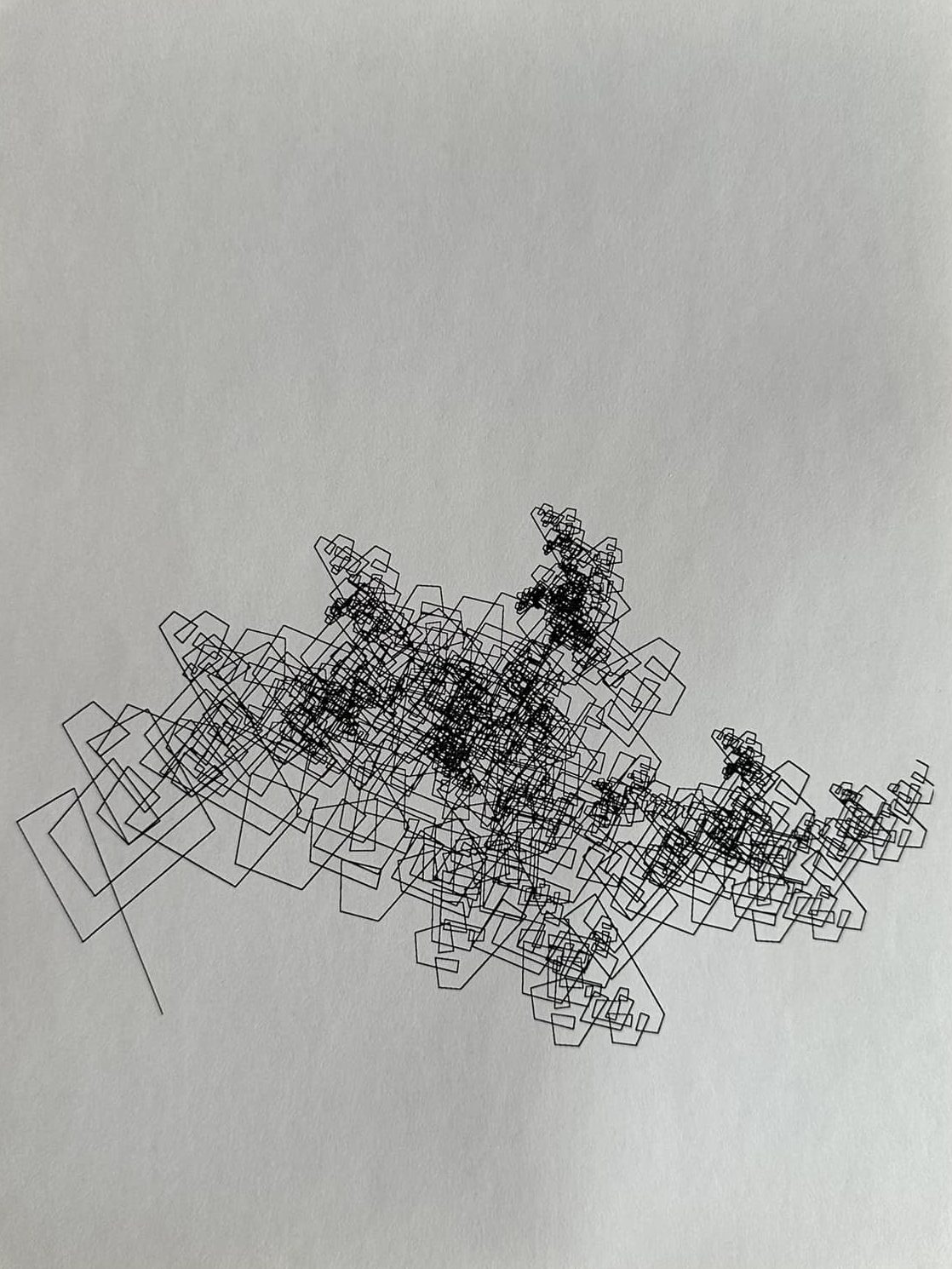
Using form: Experimental: Edmund Conti, ‘Solace’

I know, I know it’s tough.
I know. It’s tough. I know.
It’s tough. I know it’s tough.
I know. I know. It’s tough.
I know it’s tough. I know.

It’s tough.

I know.

*****

Edmund Conti writes: “I guess I like because it uses just four words to say a lot.”

Edmund Conti has recent poems published in Light, Lighten-Up Online, The Lyric, The Asses of Parnassus, newversenews, Verse-Virtual and Open Arts Forum. His book of poems, Just So You Know, is published by Kelsay Books,
https://www.amazon.com/Just-You-Know-Edmund-Conti/dp/1947465899/
and was followed by That Shakespeherian Rag, also from Kelsay
https://kelsaybooks.com/products/that-shakespeherian-rag

Photo: ‘Solace’ by Edmund Conti

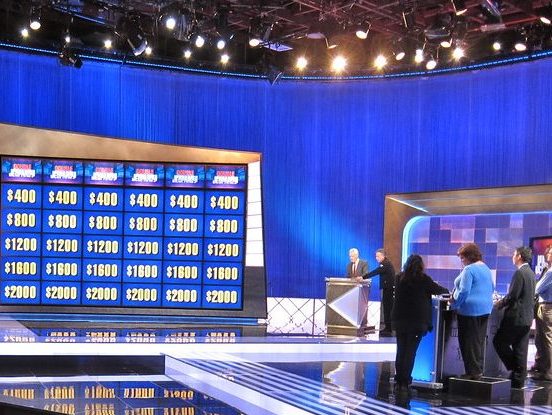
Short verse: Susan McLean, ‘Jeopardy’

The first thing she requests post-surgery,
awake but drifting in the morphine glow,
is that my sister turn on the TV
so that the two can watch her favorite show.
Weak but alive, unsure if she has cancer,
my mother turns to questions she can answer.

*****

Susan McLean writes: “I wrote this poem while I was over a thousand miles away from the scene it describes, based on my sister’s phone account of what happened. The irony of the show’s title under the circumstances was the first stimulus for the poem, but also I almost laughed when I thought of how characteristic my mother’s action was. Given that she was in her eighties when she had major surgery, my mother’s jeopardy was very real, and I wrote the poem while we still didn’t know whether she had cancer. She did not. There is another irony, in that the game show Jeopardy! provides answers for which the contestants have to supply the appropriate questions. Yet, in context, those questions are answers.
The hardest challenge when writing about an emotional situation is to focus on the facts and let the emotions emerge by suggestion. A hint of humor acts as a counterweight to unspoken anxieties. The poem was first published in Measure and later appeared in my second poetry book, The Whetstone Misses the Knife.”

Susan McLean has two books of poetry, The Best Disguise and The Whetstone Misses the Knife, and one book of translations of Martial, Selected Epigrams. Her poems have appeared in Light, Lighten Up Online, Measure, Able Muse, and elsewhere. She lives in Iowa City, Iowa.

Susan McLean has two books of poetry, The Best Disguise and The Whetstone Misses the Knife, and one book of translations of Martial, Selected Epigrams. Her poems have appeared in Light, Lighten Up Online, Measure, Able Muse, and elsewhere. She lives in Iowa City, Iowa.
https://www.pw.org/content/susan_mclean

Photo: “Filming Jeopardy!” by jurvetson is licensed under CC BY 2.0.

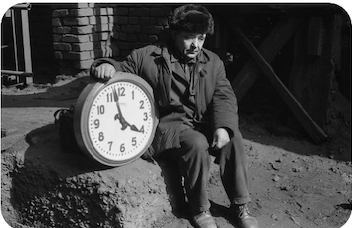
Richard Fleming, ‘Time 2’

A hamster racing on a wheel,
a movie spinning on a reel,
the clock-hands march inexorably.
What they record, we cannot see
or touch, or hear, or smell, or taste,
yet it diminishes. Make haste.

*****

Richard Fleming writes: “When young, I thought about time in terms of how quickly I could run 200 metres and, later, whether I could dip under 35 minutes in a 10k road race. Yes, I was shallow then but youth and shallowness often go hand in hand: they did in my case. Grown older (let’s be honest, old) , Time has acquired a capital T and seems to have morphed into a rather unnerving companion who demands more and more of my attention every day.”

Richard Fleming is an Irish-born poet (and humorist) currently living in Guernsey, a small island midway between Britain and France. His work has appeared in various magazines, most recently Snakeskin, Bewildering Stories, Lighten Up Online, the Taj Mahal Review and the Potcake Chapbook ‘Lost Love’, and has been broadcast on BBC radio. He has performed at several literary festivals and his latest collection of verse, Stone Witness, features the titular poem commissioned by the BBC for National Poetry Day. He writes in various genres and can be found at www.redhandwriter.blogspot.com or Facebook https://www.facebook.com/richard.fleming.92102564/
Odd poem: Muhammad Ali, ‘Me, We’

Me?
We.

*****

Muhammad Ali was invited to talk to a group of Harvard students on June 4, 1975. Someone shouted, ‘Give us a poem, Muhammad’ and he paused, looked up and said: ‘Me? We’. But as it was spontaneous and spoken, the punctuation is what you will, and evokes a variety of ideas and responses. Questions of identity… of Ali himself being part of the roomful of attendees… of the needs of the group outweighing the needs of the individual… the human journey from selfishness to altruism… Certainly all that is in keeping with the speech he gave that night, excerpted here.

It claims title to the World Championship for the shortest poem, at least in the English language.

Short poem: ‘On a Magazine Editor’

He puts on his apron every day
and dusts, arranges, bests;
but the more finicky his entryway,
the fewer, it seems, the guests.

*****

This little poem was sparked by the difficulties I have in trying to submit to some magazines and in trying to contribute to some discussions. Eventually I give up. And then make snarky comments.

It was recently published in The Asses of Parnassus – thanks, Brooke Clark (who makes the contribution process very simple!)

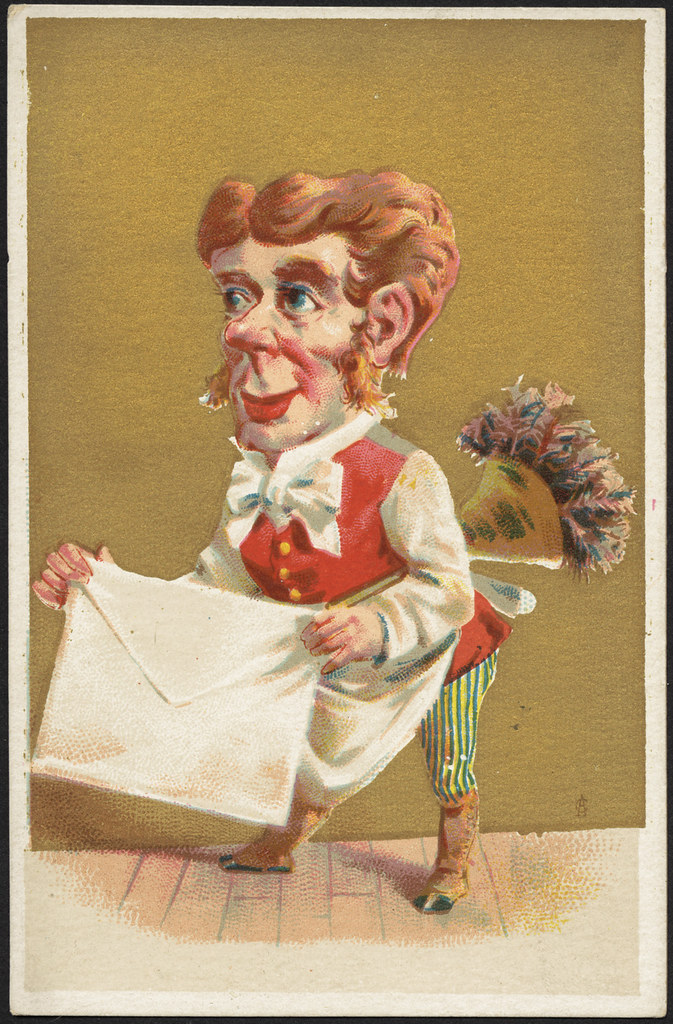
Illustration: “Man holding an envelope with a feather duster. [front]” by Boston Public Library is licensed under CC BY 2.0.

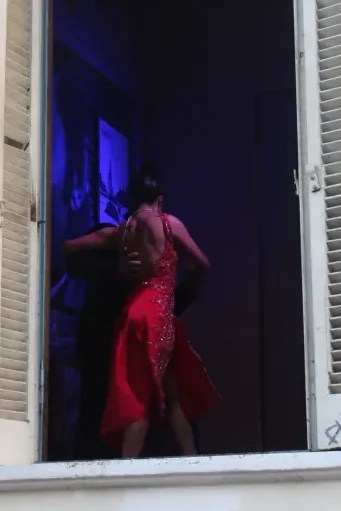
Lisa Marshall, ‘Tango’

The night was cloaked
In disarray
My heart was soaked
In chardonnay
The joint I smoked
In shades of grey
The music broke
A new song played
And then you spoke
Looking my way
A need awoke
Swept me away
Feelings evoked
I dare not say

*****

Lisa Marshall writes: “The poem is one long stanza with alternating lines rhyming.  It is about a woman who is feeling forlorn on a night that isn’t going her way.  She uses substances like cannabis and alcohol to forget her feelings and herself.  But suddenly the music changes and she is asked to dance (tango) by a love interest. Suddenly her mood changes and she starts to feel something which she expresses through dance instead of words.”

Lisa Marshall is a poet and author who resides in beautiful Dartmouth, Nova Scotia – also known as the City of Lakes.  She is the author of Black Olive: A Novel and Poetry for the Feminist’s Soul, both of which are available on Amazon Kindle. 
Read more at Not Another Nice Girl Blog.

Short poem: ‘Punster’

The artist said the wit
was “full of it”,
disparaged him.
The punster tore the painter limn from limn.

*****

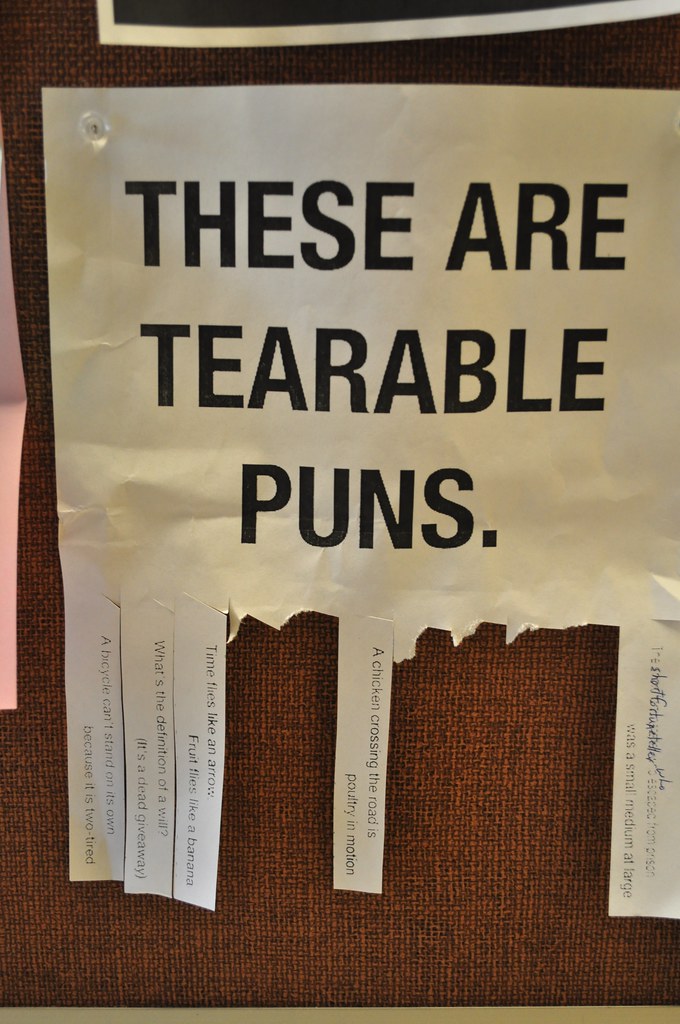
Apparently some people believe that puns are “the lowest form of humour”, but I would suggest that those people are not good at wordplay, and therefore have no poetic sensibility. Look to Homer, Shakespeare and Samuel Johnson for puns; enjoy more discussion and examples here.

This short poem was published in The Asses of Parnassus, home of “short, witty, formal poems”. Thanks, Brooke Clark!

Photo: “punster” by danbruell is licensed under CC BY-NC-SA 2.0.

Short poem: ‘Poetic Tours de Force’

We aim to sing
Boldly as the brave acrobat on his thin string
Across the air.
But yet, no matter how we juggle words and dare,
And think ourselves stupendous,
We’re risking nothing… we’re no Flying Wallendas.

*****

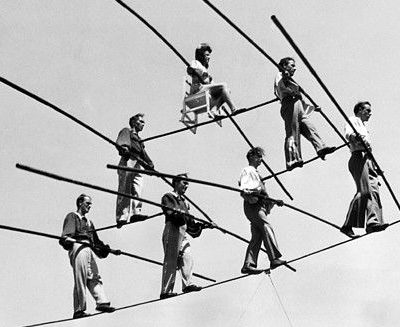
The Seven-Person Pyramid, the creation of Karl Wallenda, cost a couple of the acrobats their lives in 1962. https://www.heraldtribune.com/story/news/2012/06/10/wallendas-history-one-of-greatness-and-tragedy/29102856007/ Poetry may also try for spectacular effects, but without the inherent dangers of the highwire. Poets are more likely to risk their lives through their livers than anything else.

This short poem was just published in Lighten Up Online (thanks, Jerome Betts!)

Short poem: ‘Bantering’

Bantering needs many, not one voice:
you need ‘response’ as well as ‘call’.
Or else it’s only masturbantering –
with no real intercourse at all.

*****

You make up a word, and then you have to use it… a short poem is one way to do it. This poem was first published in Rat’s Ass Review (as you might have guessed, if you know that no-holds-barred magazine). Thanks, Rick Bates!

Photo: “banter” by Andrew G Thomas is licensed under CC BY 2.0.

Short poem: ‘Ghost Tales’

Discounting tales of ghosts kids say appeared,
We teach them to be rational instead.

Jesus was scourged, then crucified, then speared…
You really think he came back from the dead?

*****

This poem was originally accepted for November 2016 publication in Quarterday, a Scottish quarterly that appeared in print and online for a few issues. There were some discrepancies with publication, and I never determined whether this poem made it into either format. The ambiguity is quite in keeping with all reports of ghosts, so I’m not complaining.

(But perhaps I should have blogged this at Easter.)

Photo: Ghosts by goldberg from Openverse