Tag Archives: sonnet

Sonnet: George Witte, ‘Progress’


From sidewalk and cracked windowpane,
demolished wall, foundation, beam,
cement, charred rebar, median,
bare highway undercut by stream,

through paver, panel, gutter, tile,
amenities exposed to snow
corroding granite, marble, steel,
oak porch and bluestone patio,

begot by fecund apertures
into an unrecorded day
green filaments emerge, gold furze,
no tool or fingertip or spray

deployed for terminal reverse—
dominion, put another way.

*****

George Witte writes: “Progress was inspired by Samuel Miller McDonald’s book of the same name, which is a history of “progress” as defined by humanity, where extraction and exploitation of resources has brought the planet to a precipice. I confess to a perhaps morbid attraction to brief poems about end times, with Frost’s Fire and Ice being the exemplar, and Byron’s Darkness being a vision.”

‘Progress’ was first published in The Sonneteer.

George Witte’s four books of poems are An Abundance of Caution (Unbound Edition Press, 2023), Does She Have a Name?, Deniability, and The Apparitioners. New poems are published or forthcoming in Dappled Things, Nimrod, Poems for Persons of Interest, and Revel.
Links: unboundedition.com/authors/george-witte
georgewittepoet.com/poems-online-george-witte

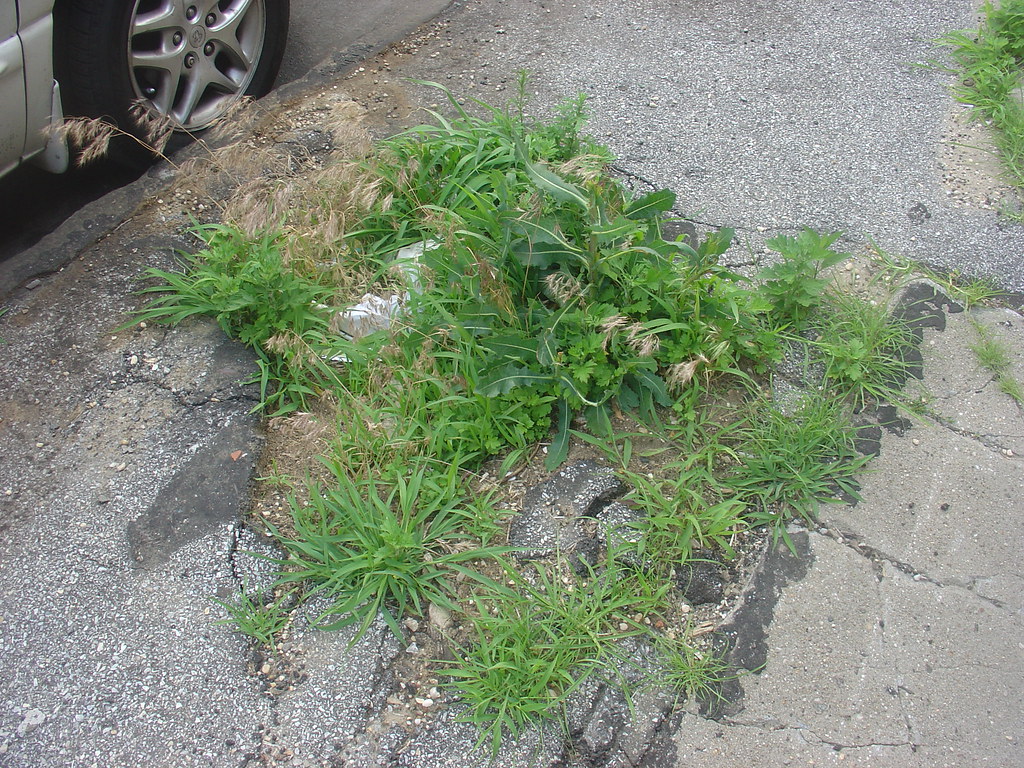
“weeds in sidewalk cracks” by nicknormal is licensed under CC BY-NC-ND 2.0.

Sonnet: Paul Burgess, ‘Sea Turtles’

The cruelest welcome party greets their birth.
Instead of feeding at a mother’s teat,
they’re stretched upon a table for the mirth
of birds and crabs that hunger for their meat.
No time for toddling, sprinting from the first,
the lucky reach a second party where
their thinning band of comrades is immersed
in pools of creatures glad to eat them rare.

The world’s so honest with them from the start —
no lullabies, no fairy tales believed,
no revelation of the brutal part,
no sudden grief at having been deceived.
They learn so young of running for one’s life
to earn the chance to swim in seas of strife.

*****

Paul Burgess writes: “Even though I’ve spent much of my adult life far from the ocean, my hometown is Hilton Head Island, which is a barrier island off the southern part of the U.S.’s East Coast. There are many provisions there to protect the loggerhead sea turtle nesting sites and to avoid disturbing the hatchlings scrambling to get to the ocean. However, even when humans refrain from making things worse, the reality of what the turtles face from the second they hatch is one of the bleakest existential scenes nature has ever produced. The image and its symbolic potential suddenly hit me one day out of the blue, and I had to write this poem.”

‘Sea Turtles’ was originally published in Pulsebeat Poetry Journal.

Paul Burgess is the sole proprietor of a business in Lexington, Kentucky that offers ESL classes in addition to English, Japanese, and Spanish-language translation and interpretation services. He has recently contributed work to The Road Not Taken, Blue Unicorn, Light, The Orchards, Pulsebeat, Snakeskin, Lighten Up Online, and several other publications. https://paulburgesswritingandlanguage.blog/

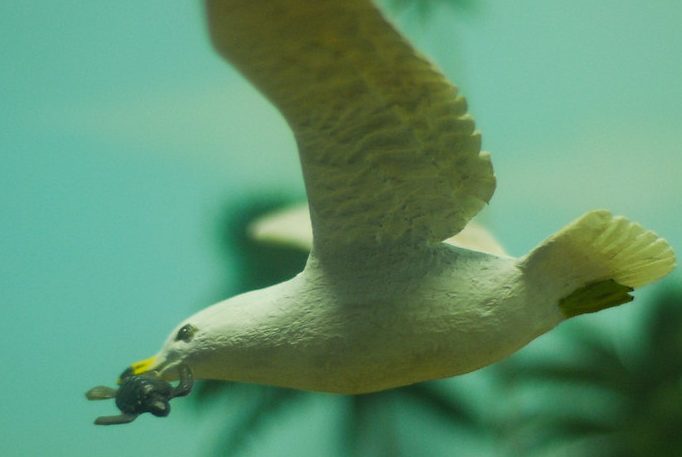
“seagull eating baby turtle” by maveric2003 is licensed under CC BY 2.0.

Sonnet: Richard Fleming, ‘The Attic’

The attic, once unreachable, taboo
in childhood, is a temple laid to waste.
I climb the ladder, face the overdue
clear-out of debris with a mild distaste.
A View-Master, kaleidoscope, a kite,
a rocking-horse in much need of repair,
a reel-to-reel recorder I’d recite
poems into as though speaking them ‘on air’.
I dust them off, then pack them in a case
and glimpse in a chipped mirror on a shelf,
the look of an intruder on his face,
a fellow who can only be myself,
the last one left, unsportingly miscast
as tomb-raider, despoiler of the past.

*****

‘The Attic’ was first published in a set of ten semi-autobiographical poems in The High Window, where Richard Fleming was the Featured Poet.

Richard Fleming is an Irish-born poet and humorist based in Guernsey, a Channel Island between Britain and France. Widely regarded as one of the island’s foremost literary voices, his versatile work blends lyricism, sharp wit, emotional depth, and a strong sense of place. Drawing from his Northern Irish roots and adopted home, his poetry and prose explore love, loss, nostalgia, identity, and modern life. Collections include Strange Journey (2012), held in the National Poetry Library, and Stone Witness (Blue Ormer) featuring the BBC-commissioned title poem. His work can be found on
Facebook https://www.facebook.com richard.fleming.92102564/
or Bard at Bay www.redhandwriter.blogspot.com

“VIEW-MASTER” by Kim Hanwool is licensed under CC BY-NC-SA 2.0.

Sonnet: Melissa Balmain, ‘Solidarity. On a recent explosion of fireflies across the US’

Even my ordinarily blank lawn
is flashing this July—no bottle rocket
or Catherine wheel could match the pleasant shock it
gives me each time a tiny lamp turns on
to help a bachelor find a blinding date.
The bugs can’t read, of course, about pollution
and other woes that might spell dissolution
for all their kind, but as they mate and mate
I like to think they somehow know what’s looming,
deep in their chitin—that their sudden blooming
is nature’s way of putting up a fight,
and that these living fireworks before us
can make us hear, and heed, a timely chorus:
When darkness threatens you, crank up your light.

*****

Melissa Balmain writes: “For some reason, I’ve written a lot of bug poems lately. And I’m starting to suspect this has given insects the wrong idea about me. Memo to the ants infesting my kitchen: if you think my plans for you involve writing an ode, think again.”

First published in The New Verse News

Melissa Balmain edits Light, North America’s longest-running journal of comic verse, and teaches writing at the University of Rochester.  Her poems and/or prose have appeared in Crab Orchard Review, Ecotone, The Hopkins Review, Literary Matters, McSweeney’s, The New Yorker, The New York Times, Nimrod, Poetry Daily, and Rattle. Her latest book of poetry is Satan Talks to His Therapist (Paul Dry Books). 

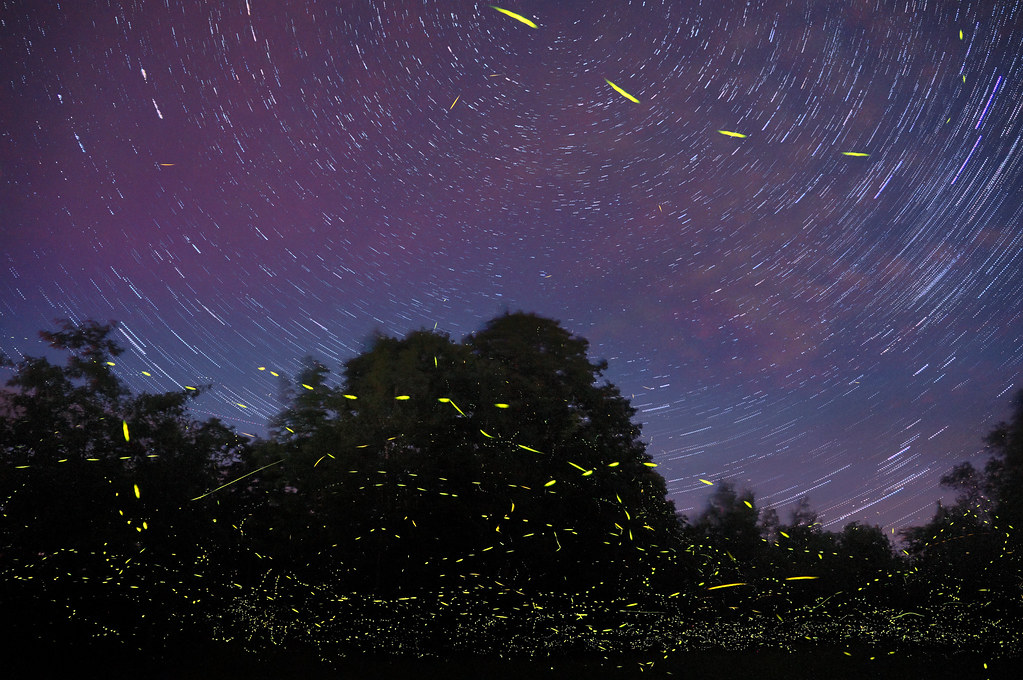
Photo: “Fireflies and Star Trails No. 3” by ikewinski is licensed under CC BY 2.0.

Sonnet: John Gallas, ‘Ascension Sonnet’

you can’t unload the caravan for one lame donkey

It’s six a.m. We’re swarming up a drain.
Someone up the front knows what we’re doing.
Me and Tich are flying up the flueing.
Snap! My leg falls off. You can’t complain:
you can’t expect an army on the trail
of half a dog and sugar-sick to stop
and say Oh dear, Goodbye. I squirm and flop
along the gutter’s edge. A wizened snail
laced up in cobwebs grins across the slime.
I hear a million footsteps fading. Tich!
The sun smacks like a snare-drum. Life’s a bitch.
My head goes dry. I’m running out of Time.
I climb a twig to face the Ant Unknown.
We have to face our last few pricks alone.

*****

John Gallas writes: “Ascension: a slightly cruel Proverb to modern ears, but of course often the case as we all bustle forwards in life. The sad demise of this Ant is done in a cod-Existential drama, and tries to mix some black humour with the Final Stand (even with a leg missing). The also-once-left-behind snail a warning to us all. Who knows how Ants talk, but they are sociable, so …”

Ascension Sonnet is one of the 100 sonnets collected in The Coalville Divan (part of John Gallas’ ‘Star City’ from Carcanet), which use as their beginnings Persian Proverbs from the Wisdom of the East series by L.P. Elwell-Sutton.

John Gallas, Aotearoa/NZ poet, published mostly by Carcanet. Saxonship Poet (see www.saxonship.org), Fellow of the English Association, St Magnus Festival Orkney Poet, librettist, translator and biker. 2025 Midlands Writing Prize winner. Presently living in Markfield, Leicestershire. Website is www.johngallaspoetry.co.uk which has a featured Poem of the Month, complete book list, links and news.  

“Trail of Ants” by McLevn is licensed under CC BY-SA 2.0.

R.I.P. Chris O’Carroll, ‘Ballynagaul, County Waterford’

A graybeard and a girl walk on this beach.
She’s his grandmother; she’s not really here.
He stoops for shells and pebbles. His hands reach
Across a family’s distances and years.
Of her eleven children, three are left —
His father and two aunts back in the States.
He pockets bits of Ireland, reverent theft
Of relics for her blood to venerate.
She lost two brothers here, both fishermen
Who labored daily on this chill, gray sea
That one day failed to bring them home again.
That’s when her childhood ended. That’s when she
Booked passage for her children’s native land.
She’s not here; she can’t hold her grandson’s hand.

*****

Chris O’Carroll was largely known as a poet for his light verse, but even a volume with the title ‘The Joke’s On Me‘ would contain more reflective work such as this sonnet. As an expatriate child of expats, I enjoy his appreciation of the back and forth across the seas, a family aware of its roots and far away. I included this poem in the Potcake Chapbook ‘Families and Other Fiascoes‘.

Chris passed away earlier this month. Christopher O’Carroll Obituary (1951 – 2026) – Pelham, MA – Daily Hampshire Gazette. The world of light poetry will retain his glow.

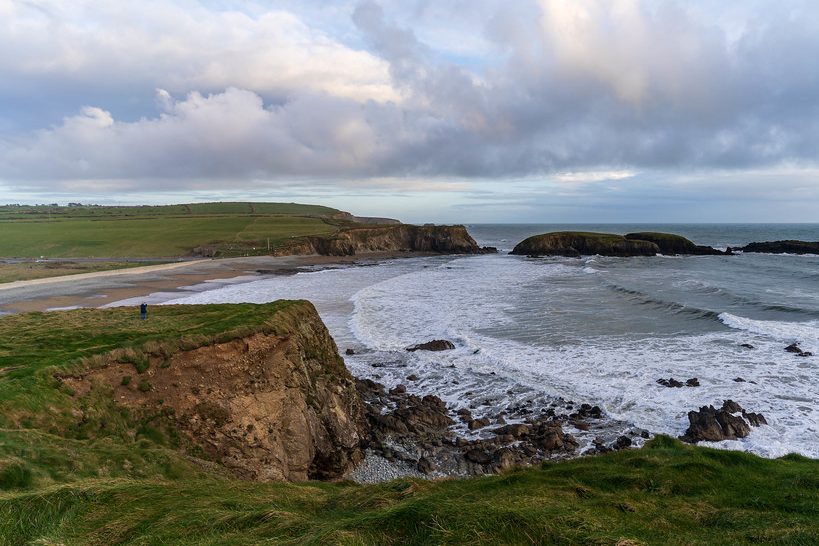
“Annestown Beach, County Waterford” by mwmosser is licensed under CC BY-NC-SA 2.0.

Sonnet: RHL, ‘Bubbles’

The Earth’s a pot of water on the range,
and nothing happens for a billion years;
then as the water heats, things start to change
and movement – formless, unaware – appears.
Next the first tiny bubbles start to form,
brains self-assembling, they form, collapse,
form and collapse in water barely warm,
minds that start yearning for some Great Perhaps.
They grow, they start to rise, still fade away
while dreaming of a life that will not fail;
and this is humans as we are today,
starting to boil up from this mortal jail
to break into the vastly bigger air…
unknowing where steam goes, what happens there.

*****

This is as close to religious belief as I can get. Somewhere at the intersection of Nietzsche and Vonnegut, of reincarnation and “It’s all a simulation”, with Musk aiming for Mars and wondering aloud if he’s an NPC, is a place of absolute and unknowable change. And that’s where we are.

‘Bubbles’ was first published in Pulsebeat Poetry Journal.

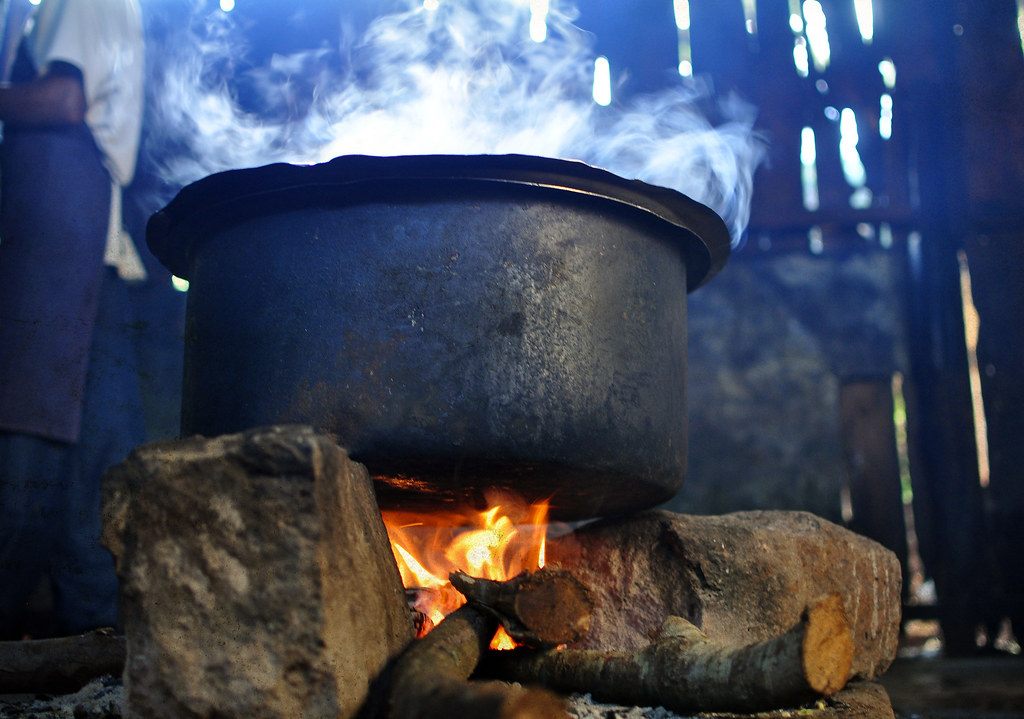
“Boiling Pot” by Brad Ruggles is licensed under CC BY-NC-SA 2.0.

John Gallas, ‘Amman Sonnet’

‘Musk is known by its smell, not the shopkeeper’s words’

‘As smooth as a sheet and as sweet as a sweet; nutritious,
delicious, delightful and sprightful and dreamy as silk;
as fat as a sausage in sassafras, creamy as milk;
a Quazi of Fishes, a Mogul of Dishes; capricious,
lubricious, the Sultan of Mambo, the Queen of the Deep;
scrumptious with camel’s milk, aubergines, pickles and beans;
with anchovies, lovage-leaves, lentils and lashings of greens;
as cool as a cucumber, fragrant and filling and cheap;
unequalled, unsequelled, the Whacker, the Whopper, the Winner,
the One; stuff it or steak it or bake it or boil it
or roast it or toast it or roux it or stew it or broil it
or fry it but BUY IT! I give you THE NUMBER ONE DINNER!‘
‘That one, please.’ He winked: ‘You like my spiel?’
‘I would have bought it anyway.’ An eel.

*****

John Gallas writes: “a little meditation on selling techniques vs the buyer who knows what s/he wants anyway. I once heard a fruit-seller in Amman singing for half an hour about their wares, while the customers, unimpressed but smiling, just bought what they needed. So the song was a kind of merry soundtrack to shopping, and everyone liked it: I’ve tried to reproduce this in the sonnet. And I’ve added a plonking ‘eel’ bathos.”

The one hundred sonnets collected in The Coalville Divan (part of John Gallas’ ‘Star City’ from Carcanet) use as their beginnings Persian Proverbs from the Wisdom of the East series by L.P. Elwell-Sutton.

John Gallas, Aotearoa/NZ poet, published mostly by Carcanet. Saxonship Poet (see www.saxonship.org), Fellow of the English Association, St Magnus Festival Orkney Poet, librettist, translator and biker. 2025 Midlands Writing Prize winner. Presently living in Markfield, Leicestershire. Website is www.johngallaspoetry.co.uk which has a featured Poem of the Month, complete book list, links and news.  

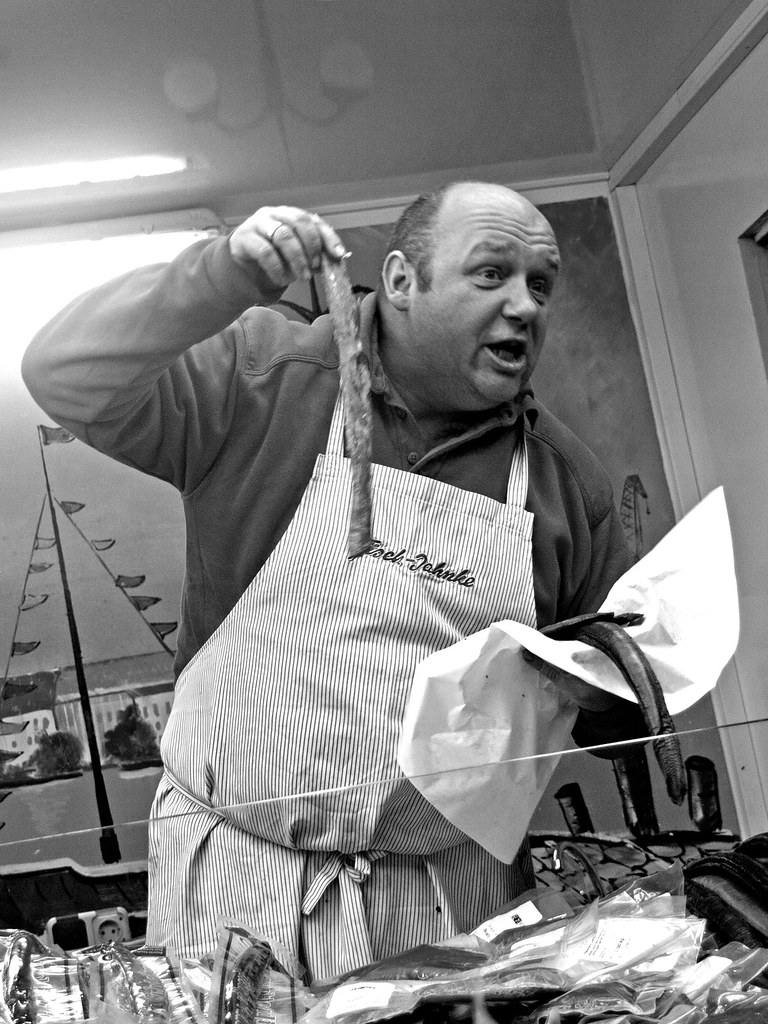
Photo: “Fischmarkt (2)” by Gerry Balding is licensed under CC BY-NC-ND 2.0.
Sonnet: RHL, ‘Why I Lie’

When hitchhiking, inevitably tasked
with answers to ‘Where from?’ and ‘Origin?’
I lie to simplify the tales I’d spin
if my odd background really were unmasked.
(The childhood travels, seas in which I’ve basked;
prep school: Jamaica. Teen years schooling in
a former English palace, slept where Queen
Victoria stayed…) because then I’d be asked:
‘Why hitchhike? Spoiled kid! Don’t lie! Get out!’

Therefore of course I have to cut some slack
for other people with their bogus tales:
big boasters may have nothing to boast about,
while quiet ones may not want to go back,
whether to jobs or spouses, wars or jails.

*****

I thought I’d pair this with Marion Shore’s reflection on lies, which I republished here in the previous post. The issue of deliberate lies is unresolved for me, along with so many other things. But at least I (rarely) lie about my confused background any longer – I just mention bits that seem relevant in the context.

‘Why I Lie’ was first published in the Sonnet Scroll of the Poetry Porch.

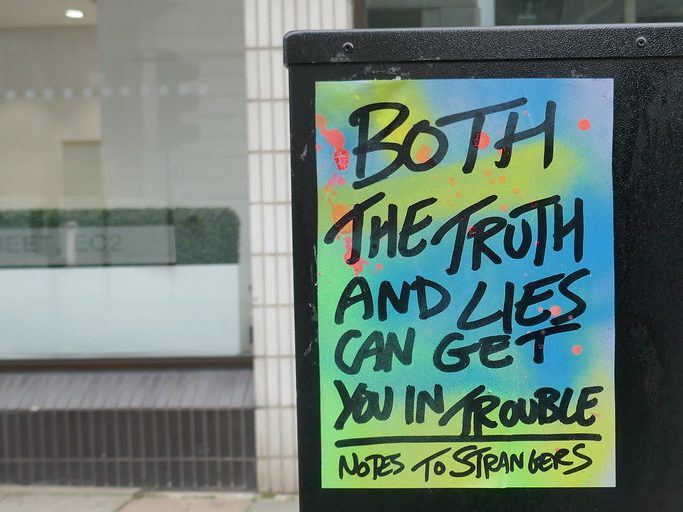
“Both the truth and lies can get you in trouble” by duncan cumming is licensed under CC BY-NC 2.0.

Semi-formal sonnet: Red Hawk, ‘Old Age Requires the Greatest Courage’

The greatest courage is not needed for war,
but for ordinary people growing old.
Like soldiers, the aged are never very far
from death: many are called,
all are chosen. A soldier faces danger
then retreats, but for the old, going back
is not possible; they may hunger
for youth but pray for the luck
of a quick death. When one by one
the body’s systems fail, they must be brave
and face annihilation of the flesh and bone,
the Soul clinging like a shipwrecked sailor, to love;
finally, love is all we are given
to navigate between exhaustion and heaven.

*****

Red Hawk writes: “What inspired this poem is the School of Hard Knocks, surviving on Earth for 83 years, observing the chaos and madness of the human species, 45 years of self observation to see my own inner chaos & madness, and the Objectively Clear understanding that we all die, we all pay for our emanations, our lives, and finally there is the revelation that all & everything is the Love of Our Creator (whatever that is) & we are how that Love manifests in human form; the Love of Our Creator manifests disguised as our life. Following that, the chaos & madness which that Love takes in human beings is the result of it passing through the human mind & being corrupted and perverted by that screening process. Absent the interference of the ego structure, that Love manifests cleanly, clearly, and without judgment.

“The sonnet form is one of my favorite poetry disciplines & owes much to Shakespeare, Keats, & Edna St. V. Millay! Being one given to speaking too much & too often, this discipline has been a tremendous ally in taming that compulsion & mastering the tongue. Rhyme, though not in favor just now, is another tremendous discipline: it opens the gateway to the unknown—I may begin with a plan or an idea, but the demands of the rhyme send me at once into unknown territory: I don’t know what or how will come next to satisfy the demand of the rhyme and now I am subject to intuition & inspiration, the opening to the Divine.

“Red Hawk (aka Robert Moore) is not an Indian name, nor was it ever intended to be one or pretend to be one; it is an Earth name, given by Mother Earth many years ago after a 4-day water fast at the Buffalo River in an effort to save my life in one of the darkest periods of my life. Given to me during one of the worst ice storms in recent Arkansas history, it was given as an answer to prayer. It came about through conscious labor, prayer and wish, and was paid for by intentional suffering and remorse. It indicates a deep love & reverence for the Earth and how it has shaped my life. It is an honoring of Conscience and of the source which named me: our Mother Earth. To not acknowledge Her gift would be to disrespect Her and Her power to name and direct the course of my life; I am Her legitimate son. As the illegitimate son of unknown parents, Robert Moore is my adopted name given to me by 2 people who died of alcoholism; I honor it and them by the way I live my life.
You can google many of my books at Amazon, or find many of them at www.hohmpress.com. The book on self observation is now in 14 languages.”

‘Old Age Requires the Greatest Courage’ was first published in Rattle.

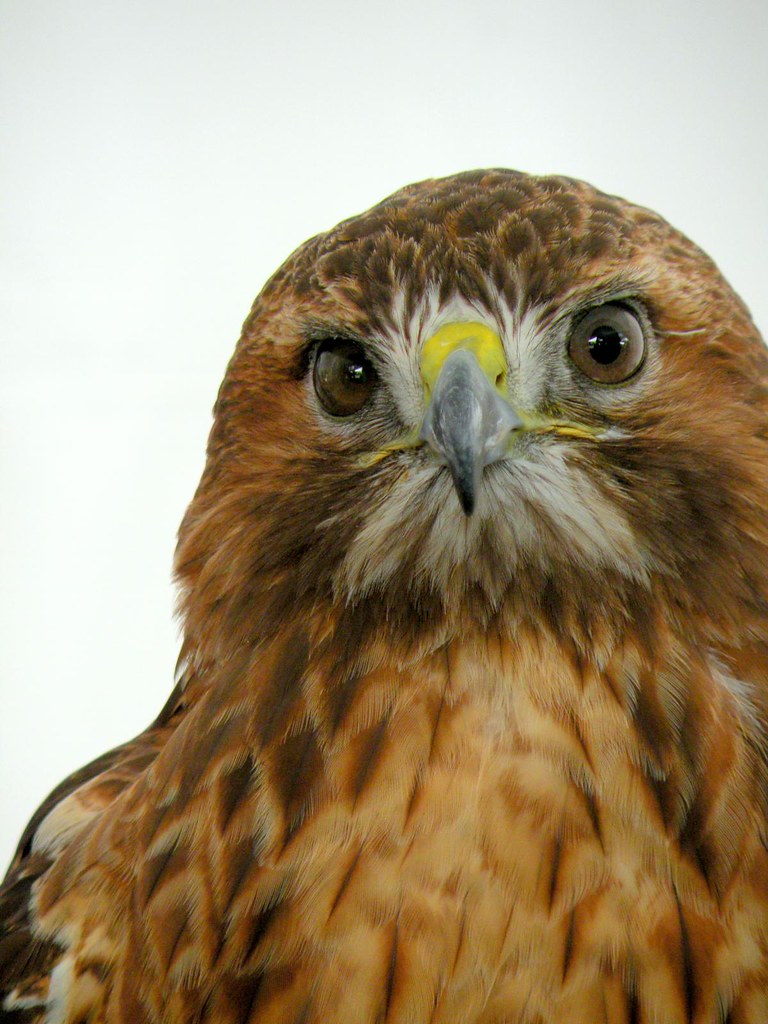
Photo: “Red Hawk” by Kiesha Jean is licensed under CC BY-NC-ND 2.0.