Tag Archives: Spanish

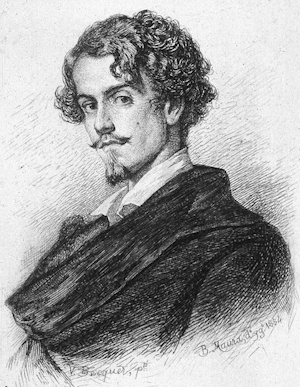
Gustavo Adolfo Bécquer, ‘Qué hermoso es ver el día’, translated by Paul Burgess

Gustavo Adolfo Bécquer (1836-1870)

How beautiful to view the crown
of fire encircling day, to watch its rise,
to see its kiss illuminate
the brilliant waves, its blaze ignite the skies!

How beautiful in gloomy fall
to drink perfume from flower petals still
a little moist from morning rain,
to breathe in sweetness ‘til you’ve had your fill!

How beautiful to watch as white
descends in silent flakes of powdered snow,
to gaze at crimson tongues that stir
within the hearth that frames their crackling glow!

How beautiful when feeling tired
to rest a snoring head on pillows’ fluff,
to eat and drink and fatten up!
And what a shame these things are not enough!

*****

Paul Burgess writes: “Instead of providing a strict, academic translation, I have sought to recreate the experience of reading Bécquer. While recognizing that this is “my” Bécquer, I hope that this version will help contemporary English speakers enjoy the nearly untranslatable musicality and lyricism of one of the finest lyric poets to have ever written in Spanish.”

‘A Translation from Bécquer’ was originally published in Snakeskin.

Rima LXVII: Qué hermoso es ver el día

¡Qué hermoso es ver el día
coronado de fuego levantarse
y a su beso de lumbre
brillar las olas y encenderse el aire!

¡Qué hermoso es, tras la lluvia
del triste otoño en la azulada tarde,
de las húmedas flores
el perfume aspirar hasta saciarse!

¡Qué hermoso es cuando en copos
la blanca nieve silenciosa cae,
de las inquietas llamas
ver las rojizas lenguas agitarse!

¡Qué hermoso es cuando hay sueño
dormir bien… y roncar como un sochantre…
Y comer… y engordar… y qué desgracia
que esto sólo no baste!

Paul Burgess is the sole proprietor of a business in Lexington, Kentucky that offers ESL classes in addition to English, Japanese, and Spanish-language translation and interpretation services. He has contributed work to Blue UnicornThe Road Not Taken, Light, The OrchardsSnakeskin, Pulsebeat, Lighten Up Online, Apricity, Star*Line, Asses of Parnassus, The New Verse News, and many other publications.
Nonce Poem: “Roughing It In Europe”

One two three four
Is OK, but you need more:

Un deux trois quat’
If you want a welcome mat

En to tre fire
With the krone getting dearer,

Bir iki uç dirt
Selling off your jeans or shirt

Wahid zoozh teleta arba
In a cafe by the harbour

Üks kaks kolm neli
For some food to fill your belly;

Jeden dwa trzy cztery
Language may be shaky, very,

Uno dos tres cuatro
But they’ll love you if you’re up to

Eins zwei drei vier
Trying freely, laughing freer.

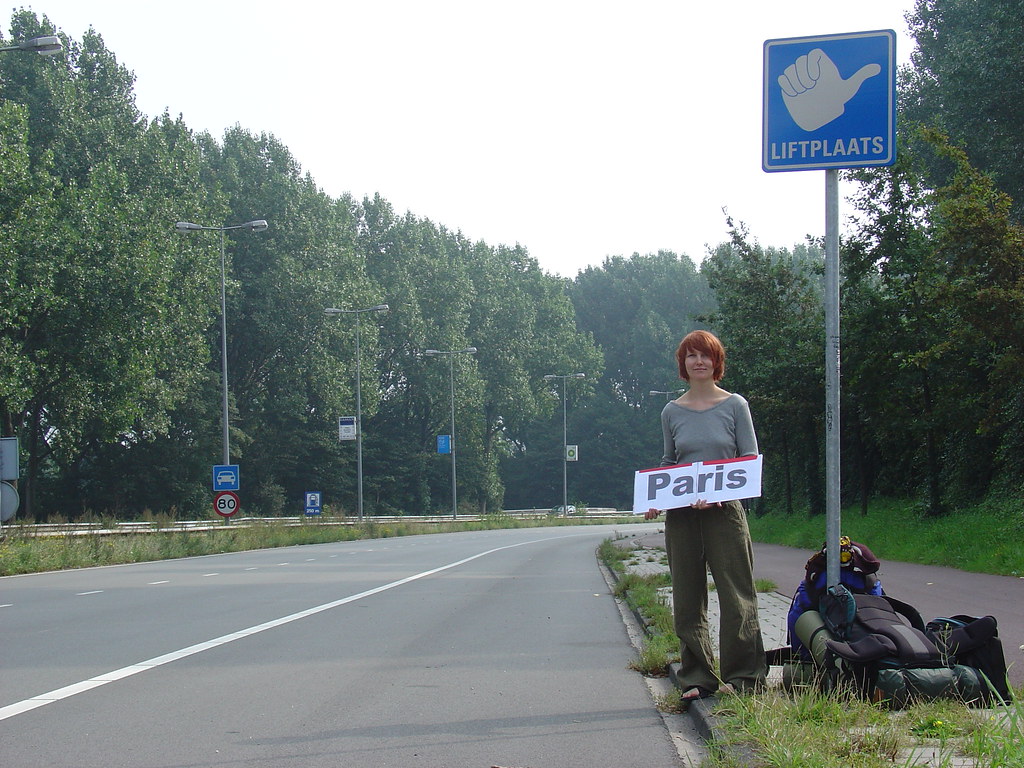
This poem, more fully titled “(On the value of learning languages, when) Roughing It In Europe”, was originally published in Unsplendid, actually a splendid magazine that unfortunately has been quiet for the past couple of years. Now the poem is just being reprinted in The Orchards Poetry Journal whose Summer edition is due out today. The poem dates back to my early hitchhiking days, when I was based in Copenhagen but wandering around Europe, North Africa and North America. My experience was that you could wander into any country without any plans, prior contacts or knowledge of the language, and survive so long as you quickly learned to say Yes, No, Please, Thank you, Hello, Goodbye and to count from one to ten – and so long as you smiled, and were comfortable being laughed at for all kinds of mistakes. Case in point: the word “zoozh” that I learned for “two” in Morocco won’t get you very far in most Arabic-speaking countries… So it goes.

Technically, this poem was written in a simple form, nine rhymed couplets, four feet to a line. The second line of each couplet has mostly trochaic feet (i.e. with two syllables, a stressed or accented one followed by an unstressed one). But the first line of each couplet is simply counting out 1-2-3-4 in different languages, and therefore the feet vary with the words of the language. But as we are used to counting to four in a steady rhythm, everything sounds rhythmic regardless of the number of syllables.

So this shows another type of “form”: each couplet is structured the same with the first line counting 1-2-3-4, always in a new language, and the second line having four feet and rhyming with its first line’s “four”. And therefore the poem has a “nonce” form – I created this form for this specific poem; it was created “for the nonce”. You’d be unlikely to find another poem structured quite like this.

Photo: “Hitchhiking in Amsterdam” by Teppo is licensed under CC BY-NC 2.0

Poem: “Roughing It In Europe”

One two three four
Is OK, but you need more:

Un deux trois quat’
If you want a welcome mat

En to tre fire
With the krone getting dearer,

Bir iki uç dirt
Selling off your jeans or shirt

Wahid zoozh teleta arba
In a cafe by the harbour

Üks kaks kolm neli
For some food to fill your belly;

Jeden dwa trzy cztery
Language may be shaky, very,

Uno dos tres cuatro
But they’ll love you if you’re up to

Eins zwei drei vier
Trying freely, laughing freer.

This poem, more fully titled “(On the value of learning languages, when) Roughing It In Europe”, was originally published in Unsplendid, actually a splendid magazine that unfortunately has been quiet for the past couple of years. The poem dates back to my early hitchhiking days, when I was based in Copenhagen but wandering around Europe, North Africa and North America. My experience was that you could wander into any country without any plans, prior contacts or knowledge of the language, and survive so long as you quickly learned to say Yes, No, Please, Thank you, Hello, Goodbye and to count from zero to ten – and so long as you smiled, and were comfortable being laughed at for all kinds of mistakes. Case in point: the word “zoozh” that I learned for “two” in Morocco won’t get you very far in most Arabic-speaking countries… So it goes.

Technically, this poem written in a simple form, 11 rhymed couplets, four feet to a line. The second line of each couplet has mostly trochaic feet (i.e. with two syllables, a stressed or accented one followed by an unstressed one). But the first line of each couplet is simply counting out 1-2-3-4 in different languages, and therefore the feet vary with the words of the language. But as we are used to counting to four in a steady rhythm, everything sounds rhythmic regardless of the number of syllables.

So this shows another type of “form”: each couplet is structured the same in the sense of the first line counting 1-2-3-4, always in a new language, and the second line having four feet and rhyming with its first line’s “four”. And therefore the poem has a “nonce” form – I created this form for this specific poem; it was created “for the nonce”.