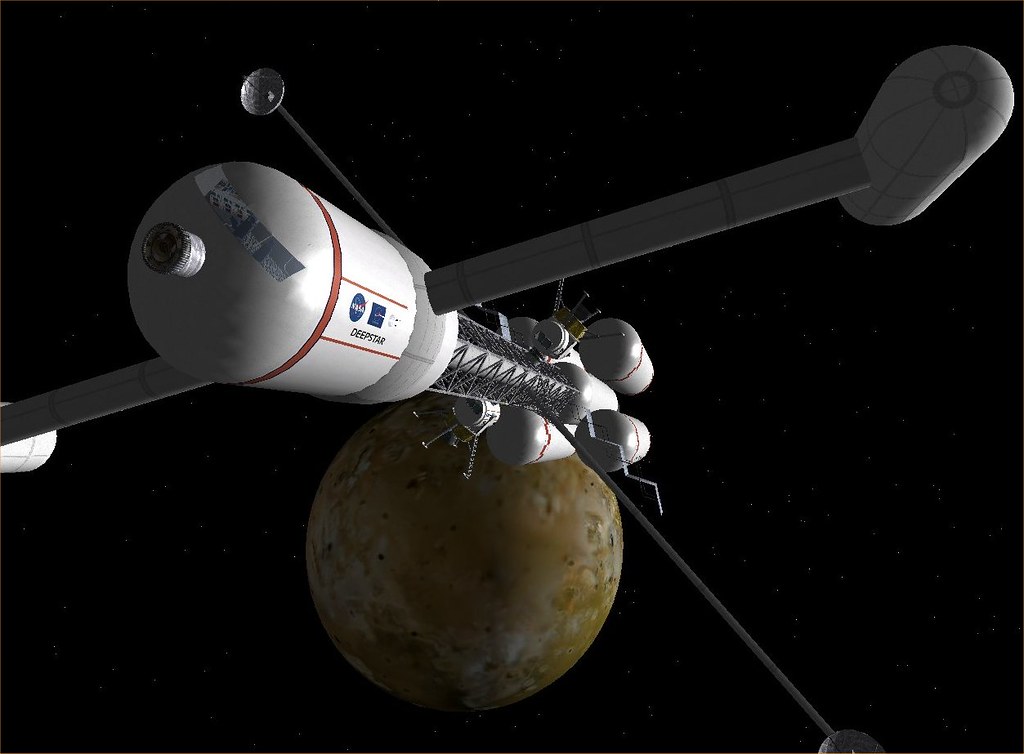
On a dead spaceship drifting round a star, the trapped inhabitants are born and die. The engineers’ broad privileges lie in engine room and solar panel power. The fruit and vegetables and protein co-ops are run by farmers with genetics skills: the products of their dirt and careful kills help service trade between the several groups. Others — musicians, architects — can skip along the paths of interlinking webs. Beyond these gated pods that the rich carve for their own selves (but still within the ship), in useless parts, are born the lackluck plebs. Heard but ignored, they just hunt rats or starve.
*****
This sonnet was republished in Bewildering Stories in April 2024 – original publication had been in Star*Line five years previously. I find something very satisfying about using a formal sonnet structure to express science fiction and speculative fiction ideas – the ideas are by nature open-ended, unconstrained, and it feels good to tie them down as in a neat package with a bow on top. Topiary.
As for what political comments can be read into the poem, read away!
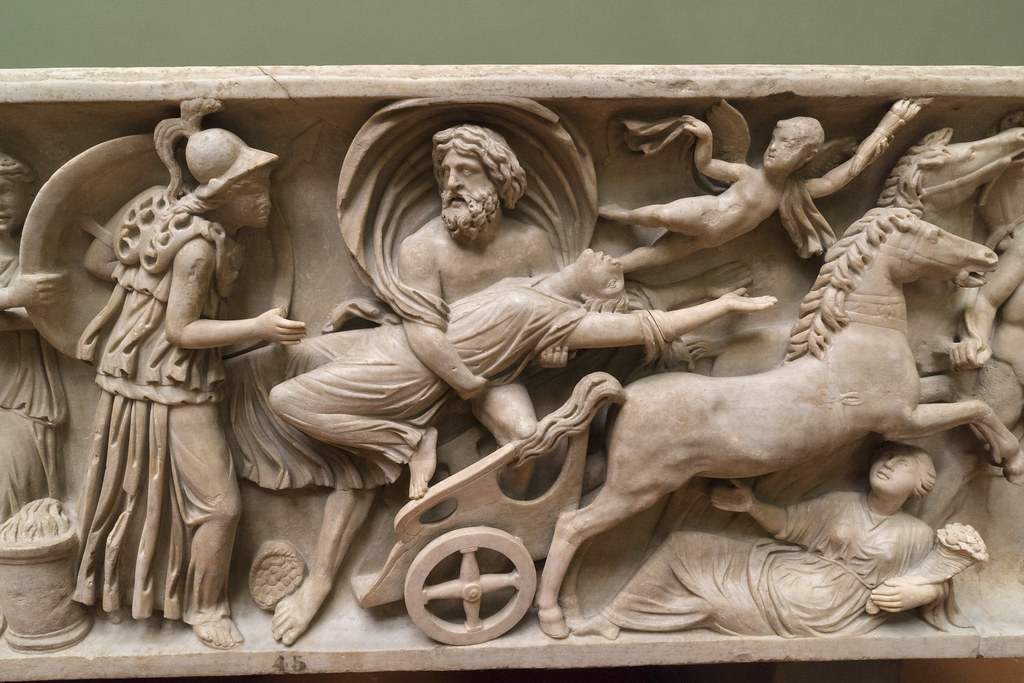
Makaría, my girl, though you’ve heard Every word Of this myth I’ve recounted before, I implore You—indulge me again. For at last You’ve surpassed Fragile childhood’s constraints. Now hold fast And let fantasy shift into creed. You’re Persephone’s daughter; please heed Every word, I implore. You’ve surpassed
Expectations I set at your birth. From my dearth You drew bountiful joy; from disgrace You forged grace. And it’s clear that your eyes could induce Mighty Zeus To devise an elaborate ruse That would send you careening unseen Down to Hades, where I was once queen. From my dearth, you forged grace mighty Zeus—
Who, three decades ago sent me bound Underground As a chthonian bride—would aspire To acquire. Once, Demeter’s stray heart, all aglow For the beau She’d just met, allowed Zeus to sow woe. He pared back the earth’s crust, laying waste To her harvest and left me displaced Underground to acquire. For the beau
Who then claimed me, I burned seven years. Through her tears, Fair Demeter cursed Earth and repealed Springtime’s yield, Vowing Winter would linger ‘til I Bid goodbye To the underworld. Hades complied, For the innocent girl he’d once craved Was no more. As I rose, Mother waved Through her tears. Springtime’s yield bid goodbye
To its seven-year drought. But although Status quo Seemed to flourish again, when detained I’d retained Hades’ seed. It entrenched its black song For so long In my belly, no matter how wrong, The abyss still enthralled me. When eight More years passed, I spit out the innate Status quo I’d retained for so long,
And descended at twenty to reign Hell’s domain. Disavowing my schooling to seek Dark’s mystique, In the city, I stripped on a stage To assuage What convention had trapped in a cage. And I deemed each male patron a thrall On whose worship I’d draw to recall Hell’s domain—dark’s mystique. To assuage
The lacuna lost innocence spread In its stead, I sought lust, ‘til a man who’d paid much Dared to touch Me as Zeus had once touched. But his ploy To destroy My esteem served instead to deploy Comprehension. Mercurial youth Had to forfeit illusion that truth, In its stead, dared to touch—to destroy.
While these decades I’ve learned to delight In the light, I acknowledge I’ll always endure Dark’s allure. For the Hades against which I strain Lives to reign. Makaría, I’ll need not explain When, from underworld’s embers you rise And return to me, blinking your eyes In the light—dark’s allure lives to reign.
Originally appeared in Star*Line, Fall 2018
Mindy Watson writes: “‘(Under)worlds Collide,’ which originally appeared in Star*Line’s Fall 2018 issue, constitutes my most ambitious attempt at restructuring a prior creative nonfiction/memoir essay (the initial ‘Underworlds Apart: A Story for Ailie’ piece appeared in Adelaide Magazine’s online March 2017 edition) into poetic form—in this case, an 8-stanza string of linked ovillejos. While the poem follows the original memoir’s metaphorical trajectory and overarching narrative—that is, a mother leverages a well-known Greek myth’s parallels to her own coming of age story to relay a “moral” (of sorts) to her burgeoning young daughter—I wanted the compressed, verse form to read less like a dark bedtime story and more like a literary song… but without losing the original’s intensity. While in hindsight I concede that my chosen form’s line/length constraints hampered my ability to clearly align my real-world characters to their mythological counterparts (a far easier feat via prose), I believe the form’s stipulation that each terminal ovillejo line contain a convergence of previously distinct phrases conferred a sense of interconnectedness between one elapsed past and another possible future that no mere prose ever could. I applaud George Simmers for penning ‘Strip,’ which made me remember my prior manifesto, and Robin for posting it.”
Mindy Watson is a formal verse poet and federal writer who holds an MA in Nonfiction Writing from Johns Hopkins University. Her poetry has appeared in venues including Snakeskin, Think Journal, the Poetry Porch, Orchards Poetry Journal, Better Than Starbucks, Eastern Structures, the Quarterday Review, and Star*Line. She’s also appeared in Sampson Low’s Potcake Poets: Form in Formless Times chapbook series and the Science Fiction and Fantasy Association’s 2019 Dwarf Stars Anthology. You may read her work at: https://mindywatson.wixsite.com/poetryprosesite.
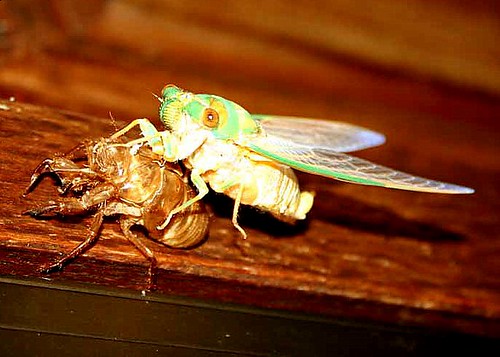
After a billion years of larval hit-and-miss humans emerged, stood up, and fed, and grew, started to build their city chrysalis from which, 3,000 years entombed, now formed anew, they burst in wild bright flight with wings deployed out to the stars. The egg case of this final birth, the Earth, was, naturally, destroyed.
We have good news and bad news. The bad news is that the rate of change is ever-increasing in all aspects of human life–from our bodies to our planet–and we will never return to the old normal. The good news is that this is the process by which life advantages to higher levels of organisation and intelligence.
This poem was originally published in Star*Line, one of the two magazines of the Science Fiction and Fantasy Poetry Association (SFPA). The other magazine is Eye to the Telescope (ETTT).
The poem rhymes and is written in iambics; but the rhymes are not structured to a pattern, and the lines are of uneven length. This casual form is used by Matthew Arnold and T.S. Eliot among others, in some of my favourite poems such asA Summer Night (I have always loved the three paragraphs beginning with:
For most men in a brazen prison live, Where, in the sun’s hot eye, With heads bent o’er their toil, they languidly Their lives to some unmeaning taskwork give, Dreaming of naught beyond their prison wall.)
and The Love Song of J. Alfred Prufrock. The form doesn’t have the musicality of more regular forms like the sonnet or limerick, but it provides all the memorising strength of rhythm and rhyme within a more conversational flow, and facilitates different lengths of thought including, if wanted, a punchline.
We live in difficult times, what with the unprecedented challenges of climate change, mass migration, infectious diseases, unpredictable technological advances in weaponry, and more. And the problems will continue to multiply and get larger, even as we develop solutions to the smaller, simpler ones. And from the inevitable destruction of our form of life will emerge… what? We cannot know, we probably cannot even imagine.
The evangelists of the apocalypse,
our old friends Murder, Murk, Lucre and Grab,
advance, all slinging guns and swinging hips–
valkyries, horsemen, ravens – rend and stab,
corporate-coloured red, blue, yellow, green–
give opiate online lives, plant-meat kebabs,
while sucking out the everything between
to flesh and farm their diabolic labs
where rats, replaced by chimps, replaced by us
are harvested, dissected and thrown out.
The Evangelists, a giant octopus,
seize and build all that maximizes clout
till A.I., comet-like (think Yucatan)
wipes homo sapiens out, grows Superman.
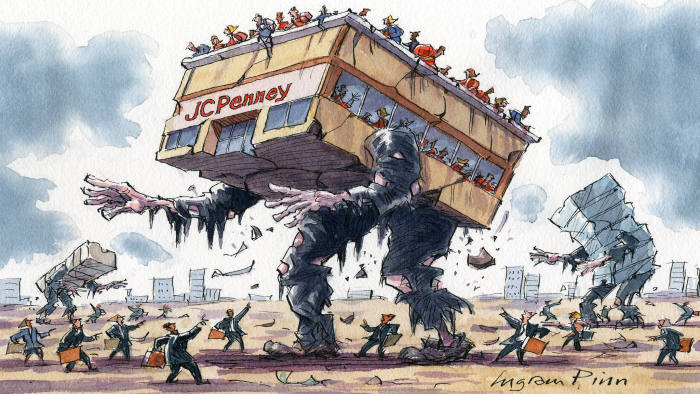
This apocalyptic SF sonnet was published in Star*Line, now edited by F. J. (Jeannie) Bergmann of Wisconsin. Think of it as pure optimism: the evil corporate giants were sucking humanity dry, but then A.I. takes over and, yes, wipes us out altogether, but at least replaces us with something better! The optimism being that we may not be actually eliminated, more like upgraded…
Do I believe that? No. But I also don’t think we can even guess at what the world will be like by the end of this century. Humans will be transforming themselves unpredictably by then. So hopefully the planet will still have some form of us around, and not just postnuclear cockroaches.
I, Robin, being of sound mind, declare
the Cryonics Institute shall have my corpse.
That’s where I’ll rest, if I can get shipped there,
no matter how friends stare, family gawps.
“I”, “corpse” and “rest” are contradictory, true,
because we’re into science frontier realms
where problem-solving causes problems anew,
where human thought both helps and overwhelms.
Limitless lifespan, or apocalypse?
Both feasible as we reach out through space.
Cryonics is a ticket for both trips…
or none at all, if humans lose our race.
Enjoy this puzzle-path, solve it and thrive.
Drive to arrive alive. Strive to survive.
Another of my existential sonnets, this one just published in Star*Line, the quarterly publication of SFPA, the Science Fiction & Fantasy Poetry Association, now in its 43rd year. Star*Line is one of those tolerant poetry magazines which will publish anything that appeals to editor Vince Gotera, from formal verse to experimental poetry–so long as it deals with space ships or time travel, dragons or golems and so on, of course.
Technically this is a Shakespearean sonnet, i.e. it’s in iambic pentameter and rhymes ABAB CDCD EFEF GG. Each of the 4-line blocks is a complete thought, describing the existential situation being faced. There is a volta or turn (but it’s weak) before the final couplet which moves from description to prescription: the couplet is a call to action.
By the way, I am changing the poem’s title with this blog post–it appears in Star*Line with the first line as the title.

 Form in Formless Times