All human nature, conflicts, nations, and all races will be washed as by tides on beaches, all loves and lusts will with Time disappear, all human traces washed under as all plates are washed by the subduction of Earth’s crusts.
This poem was published this month in Lighten Up Online – an excellent place to read light verse on subjects both light and heavy. Every issue has a mixture of longer and shorter poems, and a competition. This March 2021 edition concludes with the results of the eco-crisis competition, headed ‘The Airing of the Green’; ‘Subduction’ was one of the winners. Other sections of the magazine were also focused on the environment. Pollution and climate change are twin disasters, and you can express outrage, despair, or (more usefully) proposals for action. The million-year view of my poem isn’t useful but it’s low-hanging fruit, there to be taken.
I’m delighted to be in a magazine along with poems by fellow Potcake Poets Martin Elster, Michael R. Burch, D.A. Prince, George Simmers, Nina Parmenter, Gail White, Chris O’Carroll, Tom Vaughan, Jane Blanchard, Jerome Betts, Martin Parker and Melissa Balmain, as well as two poets who will be appearing in the next Potcake Chapbook, Bruce McGuffin and Julia Griffin, and the ever-anomalous Max Gutmann. Several of us have more than one poem in this issue.
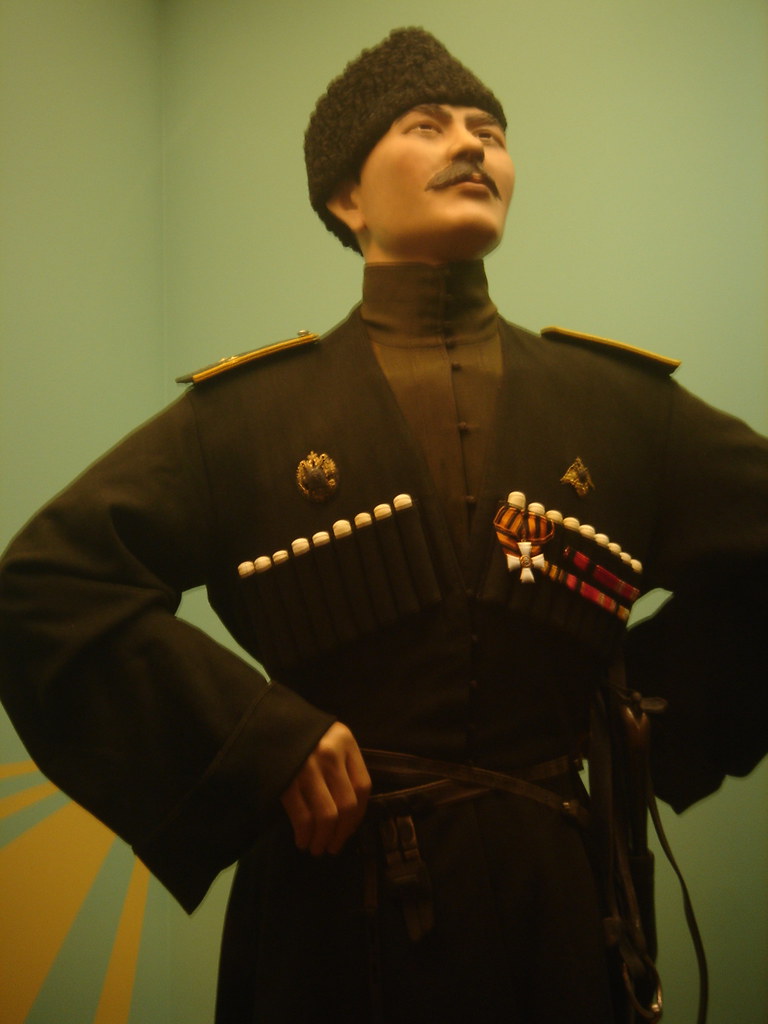
An Austrian army, awfully arrayed, Boldly by battery besieged Belgrade. Cossack commanders cannonading come, Dealing destruction’s devastating doom. Every endeavour engineers essay, For fame, for fortune fighting – furious fray! Generals ‘gainst generals grapple – gracious God! How honours Heaven heroic hardihood! Infuriate, indiscriminate in ill, Just Jesus, instant innocence instill! Kindred kill kinsmen, kinsmen kindred kill. Labour low levels longest, loftiest lines; Men march ‘mid mounds, ‘mid moles, ‘mid murderous mines; Now noxious, noisy numbers nothing, naught Of outward obstacles, opposing ought; Poor patriots, partly purchased, partly pressed, Quite quaking, quickly “Quarter! Quarter!” quest. Reason returns, religious right redounds, Suwarrow stops such sanguinary sounds. Truce to thee, Turkey! Triumph to thy train, Unwise, unjust, unmerciful Ukraine! Vanish vain victory! vanish, victory vain! Why wish we warfare? Wherefore welcome were Xerxes, Ximenes, Xanthus, Xavier? Yield, yield, ye youths! ye yeomen, yield your yell! Zeus’, Zarpater’s, Zoroaster’s zeal, Attracting all, arms against acts appeal!
Belgrade was besieged nine times between 1440 and 1806. It is right on the edge of the area the Ottoman Turks were able to wrest from the Christians, and control went back and forth. This poem is about the 1789 Siege of Belgrade, when the Austrians showed up in mid September with 120,000 troops and 200 siege guns to try to take control of the Belgrade fortress that was held by 9,000 Ottoman troops with 456 cannon. On 6th October the Austrians began a devastating bombardment. Two days later, in exchange for the surrender of Belgrade, the Ottoman garrison was given a free passage with their personal and private possessions to Orșova; a prisoner exchange was also arranged between the combatants.
The poem was written by British journalist and poet Alaric Alexander Watts (1797-1864) and published in 1828. There are a couple of versions floating about on the internet, with various spellings and typos, and with and without the ‘Just Jesus’ line which deteriorates from J’s to I’s. The rhyme pairing isn’t perfect, the metre is imperfect, the syntax is stretched in places, and meanings and references are sometimes obscure. (‘Suwarrow’ for instance is the brilliant Russian general Alexander Suvorov who, though instrumental in winning battles with Turkey and others in the late 18th century, was not present at the 1789 Siege of Belgrade. He was defeating the Turks elsewhere at the time, but how can you ignore a general credited with winning 63 major battles, and never losing one?)
My initial impression is that the metre is an easy-to-read, easy-to-recite ‘four beats to the bar’, but the number of syllables varies with the needs of the alliteration:
But then it dawns on me that the poem is actually in iambic pentameter, with five beats… but the first line is so technically weak that it’s misleading: it has eleven syllables instead of ten unless you pronounce the second word ‘Austrin’, and also requires the ‘-ly’ of ‘awfully’ to be a stressed syllable. But once you reinterpret the rhythm of that line, the poem settles down properly. (There is a good lesson in poetics here: the technical purity of your opening line is super important!)
Anyway, I think we can cut Watts some slack: I don’t know of any other alliterative abecedarian poem at all, though surely there must be some. Wikipedia quotes this fragment from the Harper Handbook to Literature:
An abecedarius always alliterates Blindly blunders, but blooms: Comes crawling craftily, cantering crazily, Daring, doubtless, dark dooms.
My muse is angered by my Covid cares – “You worry if the shops have food and beer, and what a Zoom attendee rightly wears! You’re just as mortal as you were last year, and wrote of life and death, sickness and health. Well, now’s an actual existential crisis! Think family and friends, the world, your self… forget the shopping and the product prices! You’ll die; the question’s When. The only tool for immortality is me, that clear? You should be writing poetry, you fool! This is your chance. Focus on me.” (Yes, dear.) “Respect me as your muse: I’m not your shill. If you can’t write a poem, write your will.”
This sonnet has just been published in Allegro in the UK, edited by Sally Long. The magazine comes out twice a year, one issue themed and the other open. It focuses on formal verse, but on a long continuum between fully formal and free.
Jumbled in the common box Of their dark stupidity, Orchid, swan, and Caesar lie; Time that tires of everyone Has corroded all the locks, Thrown away the key for fun.
In its cleft the torrent mocks Prophets who in days gone by Made a profit on each cry, Persona grata now with none; And a jackass language shocks Poets who can only pun.
Silence settles on the clocks; Nursing mothers point a sly Index finger at the sky, Crimson with the setting sun; In the valley of the fox Gleams the barrel of a gun.
Once we could have made the docks, Now it is too late to fly; Once too often you and I Did what we should not have done; Round the rampant rugged rocks Rude and ragged rascals run.
In January 1941, W.H. Auden had been living in New York for nearly two years. The Second World War had started, but not yet in the US. Auden had fallen in love with Chester Kallman who was now turning 20 and was too young to want to be sexually faithful; Auden had also returned from atheism to the existential Christianity that is common in the Anglican/Episcopalian church. It was a period of change, backgrounded by the widening war.
Regarding the poem from this time, I choose to imagine Auden rambling, reminiscing, muttering to himself: “Around the rugged rocks the ragged rascal ran… Nice metre as well as alliteration and, for people with difficulty pronouncing their Rs, a twuly tewwible tongue-twister. Rhythmic, memorable. Nonsense; not meaningful, but not meaningless; nonsense and nursery rhymes are right on the border. And it splits in two, you could easily rhyme it: rocks, box, blocks, brocks, cocks, cox, clocks, crocks… ran, Ann, ban, bran, can, clan, cran… or easy to change to run, or runs. A lot of rhymes, anyway. Run them out, see what transpires.
“Once we could have made the docks, / Now it is too late to fly; that adds another rhyme, not a problem, maybe a 6-line stanza. Once too often you and I / Did what we should not have done; and into the last two lines, have to fill them out a bit to maintain the metre, keep the alliteration of course: Round the rampant rugged rocks / Rude and ragged rascals run… So that’s all right, that would make an ending.
“Then of course we can have more stanzas leading up to it. Flick a bit of paint at the canvas, see what sort of patterns we can find to elaborate on. Time, decay, trepidation, warnings… out come the words and images around the rhymes, and suddenly it’s all as evocative and semi-coherent as a reading of tarot or yarrow or horoscope. Hm, tarot or yarrow, I hadn’t noticed that before, wonder if I can use that somewhere else…”
(Remember, this is a fantasy analysis, presupposing the poem to have been written with full skill to capture both rhymes and a mood, but without any serious intent beyond that. For a completely different intellectual analysis, you can always try this…)


 Form in Formless Times