Monthly Archives: October 2024

Short poem: RHL, ‘Tease’

I feel good that you want it;
you know it’s under there;
it makes me feel important
but I don’t like your stare.

I wear enough to hide it
though all around is bare;
it’s treasure, ’cos you want it;
who you are, I don’t care.

*****

This poem was first published in Rat’s Ass Review (as are many politically incorrect poems), Fall/Winter 2024 – thanks, Roderick Bates!

Photo: “Lustful model teasing on a boat in a bikini.” by @yakobusan Jakob Montrasio is licensed under CC BY 2.0.

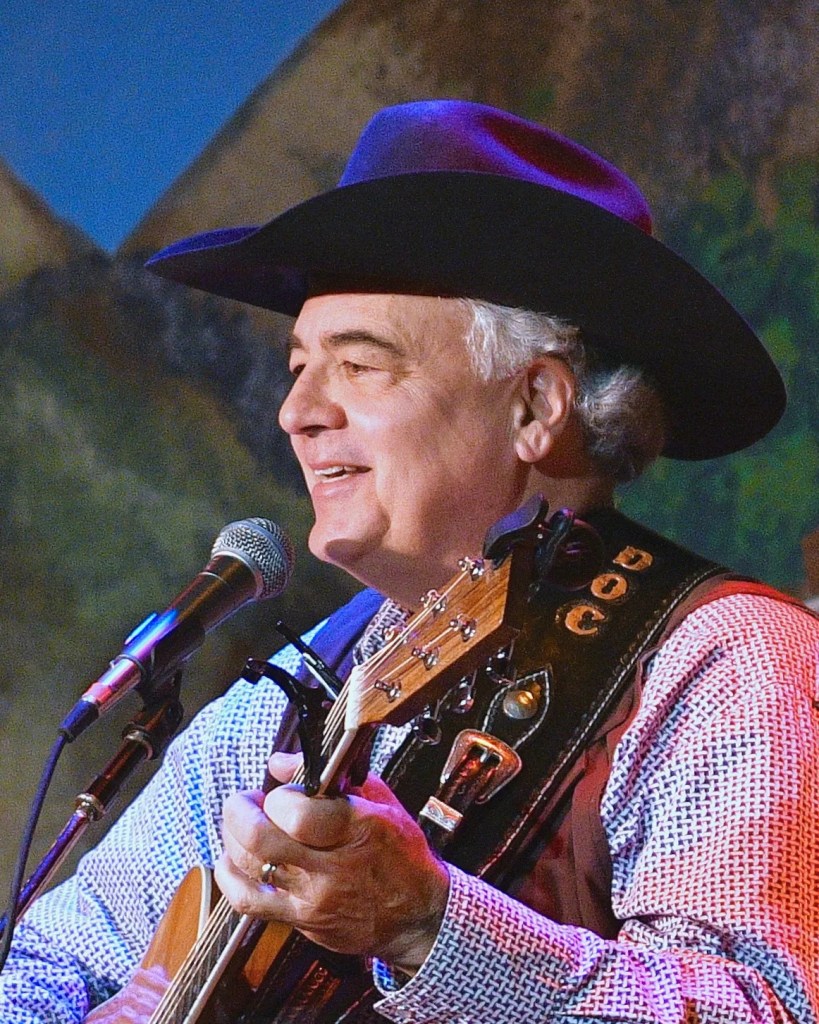
Cowboy poetry: Using form: Doc Mehl, ‘Poems Used To Rhyme’

Poems used to rhyme.
In time, the couplets were dispensed.
Incensed, today’s poet rebels from rhyming schemes,
It seems. The writer, newly shedding the shackles of quatrains,
Refrains from even a modicum of lilt.

And built now from unpaired diphthongs,
His songs have lost a measure of glue.
It’s true. No longer does the ear delight
In flight of fancy, in teeter-totter,
Like water on the endless sand, the to-and-fro,
And no, this tide will not abate.

Of late, I find that poems no longer draw me in.
They’re thin.

*****

Doc Mehl writes: “For the last two decades I’ve written rhyming western poetry, and I’ve performed both the poetry and my original western-themed music at cowboy poetry events in the western U.S. and Canada. I’ve recorded two spoken-word CDs of my rhyming poetry, and several CDs of my original music.
I’m not averse to free verse. (OK, I must pause momentarily to savor the rhyme in that sentence.) Still, the author of a free verse poem ought to be able to convincingly answer this question: “Why do you maintain that this work should be categorized as poetry rather than prose?”
In this poem (“Poems Used To Rhyme”), I liked the gamesmanship of sneaking the rhyming word of each “couplet” into the beginning of the second line rather than at the end of the second line. The resulting poem might first appear to be a tongue-in-cheek free verse poem about why rhyme is important. Still, the magic of the closely juxtaposed rhyming words can’t help but rise from the ether.”

‘Poems Used To Rhyme’ was first published in Rattle #85 with a link to audio.

Newly transplanted from Colorado to Black Diamond, Alberta, Al “Doc” Mehl traces his family roots to central Kansas, where his grandfather raised six children on the family homestead. His debut music CD is titled “Asphalt Cowboy,” and his second music CD titled “I’d Rather Be…” was released in 2008. Doc Mehl has also published a CD of original poetry titled “Cowboy Pottery,” and a second spoken-word poetry CD titled “The Great Divide,’ named 2013 “Cowboy Poetry CD of the Year” by both the Western Music Association and the Academy of Western Artists. In 2020, Doc published his first collection of poetry, “Good Medicine: Read Two Poems and Call Me in the Morning.” And in 2022, Doc released two new CDs of music, “West of the 22” and “Tried and True. Doc’s poems and musical lyrics have been featured on the website http://www.CowboyPoetry.com, he has been published in the poetry journal “Rattle,” and he was a first-place silver buckle winner at the National Cowboy Poetry Rodeo in Montrose, Colorado in 2009.

Photo: https://docmehl.com/photo-gallery

The Two-State Dissolution (2): Landsman, Burch, Lehr, Foster, Galef, Soderling, Kenny, Helweg-Larsen, Smith, Bales, Shore

Peggy Landsman, ‘Go Tell It On The Mountain

Hagar and Sarah should have talked,
Laughed together when alone.
Who did Abraham think he was?
Ha-Yehudi ha-rishon?*

Ishmael and Isaac should have been
Boon companions, closer than brothers,
Passing their days doing their chores,
Tending their father’s sheep together…

Staying up late entertaining themselves
Arguing over the numbers of stars
Each was the first to have named.

*”Ha-Yehudi ha-rishon” means “The first Jew” in Hebrew.

Michael R. Burch, ‘Frail Envelope of Flesh’
for the mothers and children of Gaza

Frail envelope of flesh,
lying cold on the surgeon’s table
with anguished eyes
like your mother’s eyes
and a heartbeat weak, unstable…

Frail crucible of dust,
brief flower come to this—
your tiny hand
in your mother’s hand
for a last bewildered kiss…

Brief mayfly of a child,
to live two artless years!
Now your mother’s lips
seal up your lips
from the Deluge of her tears…

Quincy Lehr, ‘Passive Voice’

History is back in passive voice.
All you can do is watch. The teams were picked;
the commentary doesn’t match the plays.
The game is rigged, and everybody sees.

The game is rigged, and everybody sees,
but referees ignore it, and debate
is limited to the cheap seats far away.
The villains are the only proper nouns.

The villains are the only proper nouns,
the only ones worth mentioning besides
the nebulous abstractions for the rest.
None believe what everyone accepts.

History is back in passive voice.
The game is rigged, and everybody sees
the villains are the only proper nouns.
None believe what everyone accepts.

Gail Foster, ‘The Heap’

How many does it take to make a right?
Go fling another on. The heap grows high
Before too long it will obscure the light
And then where will we be. The end is nigh
And still it reaches up towards the sky
How many more, the village women weep
Of all our sons and brothers have to die
While we pile wrong on wrong upon the heap

Remember sky, how blue it was and bright
And wide, when only birds and clouds did fly
And moons and stars were visible at night
When women laughed and children didn’t cry
What use is wrong for wrong and eye for eye
The world grows blind and bitter and we reap
What we have sown and see our rivers dry
While we pile wrong on wrong upon the heap

What use a pile of pacifists? The sight
May cause a running man to stop and sigh
The wise man said, and think about the fight
And for a fleeting moment wonder why
They chose to sacrifice themselves, deny
The life force and there lie in peaceful sleep
They make a monument, he said, nearby
While we pile wrong on wrong upon the heap

Dear God, when will it end? When will you try?
The heap grows higher and the sides too steep
We love our neighbours with the guns we buy
While we pile wrong on wrong upon the heap

Daniel Galef, ‘Desert Kite’

These endless shifting sands—
They’re always changing hands,
But you can’t make bricks without breaking a little hay.
With oil the streets are pavèd;
Since Solomon and David,
They draft a brand-new atlas every day.
The apostles! The epistles!
And the fossil fuels and missiles—
Like manna in the wilderness they fall!
The land of Abrahamics
Now hosts General Dynamics
With their guardian angels gliding over all.

Janice D. Soderling, ‘Out of Paradise’

A closely woven stillness lines the air,
like linen bedding in a lifted coffin.
Though silence is a hallmark of our time, not often
has the hush been so oppressive. Where
the sand fox sprawls, sprawls too the shattered hare.
Cadavers of gazelle and roe deer stiffen;
the wadded pods of thorn trees burst. If when
you ponder on this devastated garden,
its wretched shame, its bottomless despair,
think not animal, but human, shreds in Eden.
And human was the animal lately passing there.

Janet Kenny, ‘After’

We saw them sweep in like a wolf on the fold.
We hypocrites judge as if time was involved.

Lament, all you lovers whose loved ones are gone.
Condemn, all you judges now grief is your song.

After the fury what’s left to repair?
Oh impotent jury, your conscience is there.

No poem will save us no tears will avail.
No weapons will spare us from history’s gale.

No art can encompass the scale of this rage.
“Tomorrow” is yesterday trapped in a cage.

Robin Helweg-Larsen, ‘Books’

When Science and Experiment
were done through myth and dream, it meant
that Bronze Age herders showed their bent
in naïve tribal Books.

The Israelites searched 40 years
for good land, unprotected, bare,
and slaughtered all those living there –
justified by their Book.

The Muslims conquered far and wide
(and called it peace, and millions died)
to spread new tales we now deride,
new versions of that Book.

The Christians sent wave after wave
crusading, claiming that they’d save
the “Holy Land”… made it a grave,
thanks to their stupid Book.

You advertise benevolence
but justify intolerance
by quoting this or that sentence
from one or other Book.

You bomb a house, a baby dies…
lift up your eyes so we can rise
above the vicious tribal lies:
those stupid, stupid Books.

J.D. Smith, ‘Report from the Field’

I rang the doorbell
of the demolished house
and was met by its generations,
fully armed.

Marcus Bales, ‘Heal or Hate’

You lift or do not lift the weight;
You’re either dealt-to or you deal.
Pick the other, pick the one,
The choice you have is heal or hate,
And you can’t ever hate and heal

Call it nature, nurture, fate
Genetics, fantasy, or real —
Blame whatever – when you’re done
You lift or do not lift the weight.
You’re either dealt-to or you deal.

Short-term crooked looks like straight;
Short-term truth sounds like a spiel.
In both the short and longer run
The choice you have is heal or hate —
And you can’t ever hate and heal

I know, the choices don’t seem great.
They lack in zip or sex appeal.
But no one said this would be fun.
You lift or do not lift the weight.
You’re either dealt-to or you deal.

You must massage your mental state
To organize the way you feel
In spite of all the bullshit spun.
The choice you have is heal or hate,
And you can’t ever hate and heal

You often have to simply wait
And sift to see what’s really real
Since growing needs both rain and sun.
You lift or do not lift the weight;
You’re either dealt-to or you deal.

Late or early, it’s too late.
You’re living through the slow reveal.
The game is rigged: it can’t be won
Or even stopped once it’s begun.
You lift or do not lift the weight;
And though you’re dealt-to or you deal
The choice you have is heal or hate.
You cannot ever hate and heal.

Marion Shore, ‘Peace’

I came upon a garden in the sun,
where children ran and played among the trees,
and entering, I asked two little ones:
“Why are you here? And where are your families?”
One answered, “I was with my dad and mom.
We went into a café for a Coke.
And then I heard somebody scream ‘a bomb!’
and all that I could see was fire and smoke.”
The other said, “I went outside to play,
the street was crowded. Tanks were all around.
Soldiers were shooting. I tried to run away.
I heard a shot and fell down on the ground.
No one heard me crying for my mother.”
The first child said. “I wish I could go home.”
“So do I. But at least we have each other.”
The sun was rising higher in the sky:
my dream was fading, and as I waved goodbye,
‘Salaam,’ said one. The other said ‘Shalom.’


Yuval Noah Harari: We suffer not from the narrowness of the land, but from the narrowness of the mind. https://youtu.be/Uncfi9cgZWo

It’s all about stories: https://youtu.be/L82XOw9sVkY


Acknowledgements:
Peggy Landsman: ‘Go Tell It On The Mountain’, first published in The HyperTexts
Michael R. Burch: ‘Frail Envelope of Flesh’, first published in The Lyric
Daniel Galef: ‘Desert Kite’, first published in Light
Janice D. Soderling: ‘Out of Paradise’, first published in The Rotary Dial and included in her collection ‘War: Make that City Desolate’

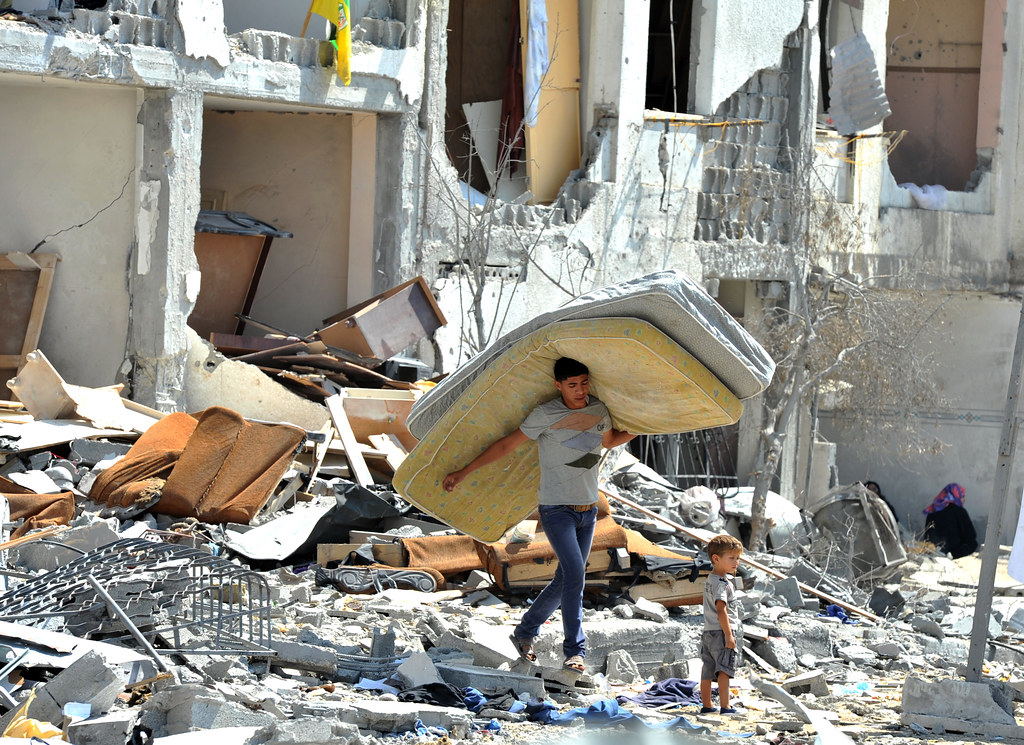
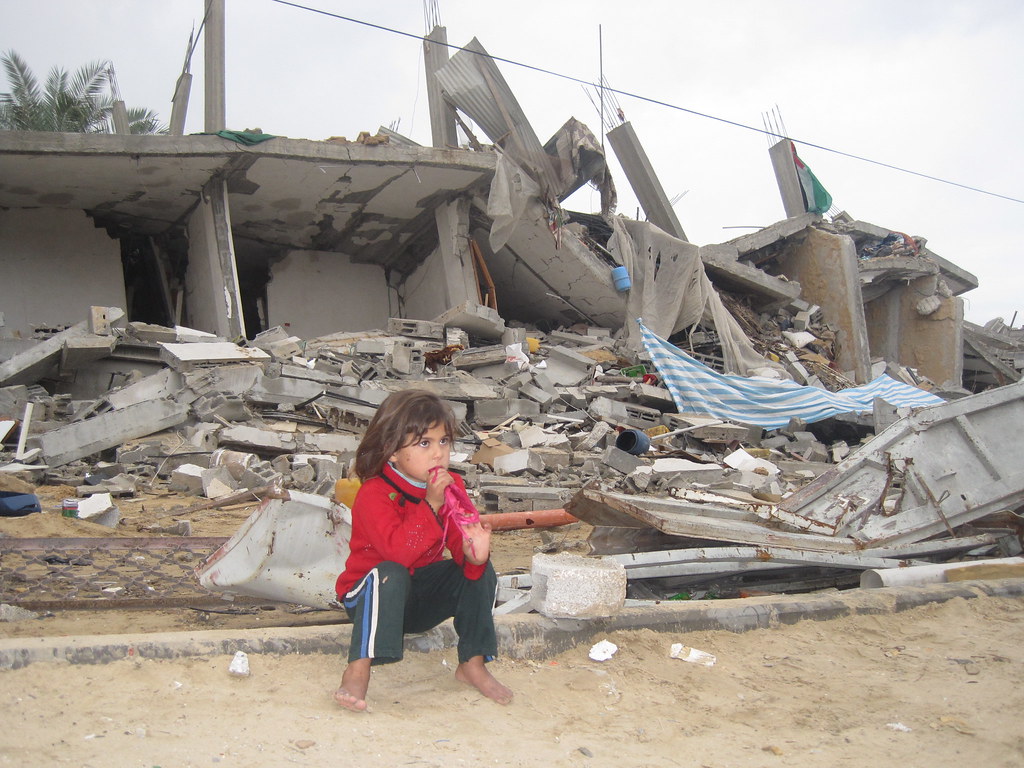
Photo: “Scenes from Gaza Crisis 2014” by United Nations Photo is licensed under CC BY-NC-ND 2.0.

Using form: Nonce form, riddles: Aaron Poochigian, ‘The New New Amsterdam’

I am the scam
you go in for, the diamonds in the pavement,
ecstatic evenings caught on traffic cam,
rare toilets and consensual enslavement.

Scholars and brawlers are inside of me.
What could I be?

I am
the new New Amsterdam.

I am those glam
high-rises and the derelicts’ despair,
graffiti worthy of the Met, and sham
Versace hawked to chumps in Union Square.

Purists and tourists are inside of me.
What could I be?

I am
the new New Amsterdam.

I am the ham
ironist, the perverse poobah of shock,
the firetruck stranded in a rush-hour jam
while conflagration rages round the block.

Birders and murders are inside of me.
What could I be?

I am
the new New Amsterdam.

I am the slam
Where Subway Ends, a scrum of mad musicians,
Sunday phone calls with a far-off fam,
Halal street food, and infinite ambitions.

Shoo-ins and ruins are inside of me.
What could I be?

I am
the new New Amsterdam.

*****

Aaron Poochigian writes: “Riddles go back to a time before ‘English’ was our English, before Shakespeare and Chaucer, the time of bards and Beowulf. The Anglo-Saxon riddles have the rhythms of poetry. They tell it slant like poetry does sometimes. The tantalizing, first-person self-description that defines the genre gave me a ‘way in’ to talk about a subject that would have been too vast otherwise—New York City.”

‘The New New Amsterdam’ was first published in The Rising Phoenix Review.

Aaron Poochigian earned a PhD in Classics from the University of Minnesota and an MFA in Poetry from Columbia University. His latest poetry collection, American Divine, the winner of the Richard Wilbur Award, came out in 2021. He has published numerous translations with Penguin Classics and W.W. Norton. His work has appeared in such publications as Best American Poetry, The Paris Review and Poetry.
aaronpoochigian.com
americandivine.net

Twitter: @Poochigian
Facebook: Aaron Poochigian
Instagram: aaronpoochigian

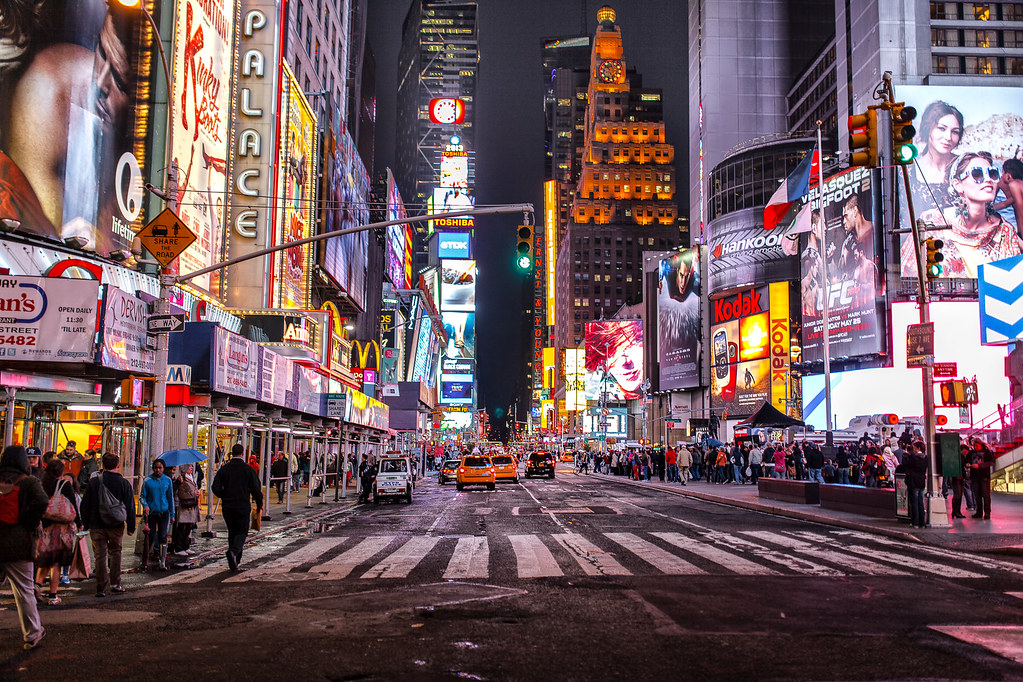
Photo: “NYC Night Life” by Tom Roeleveld is licensed under CC BY-NC-ND 2.0.

Short poem: RHL, ‘Neanderthals’

Watch how the status of the poor
Neanderthals will rise
when we admit we thank them for
red hair, white skin, blue eyes.

*****

“All non-Africans today may have a roughly equal proportion of Neanderthal DNA, but some of the most visible physical traits appear to have been inherited especially by modern Europeans, and northern Europeans in particular. Here is a list of traits that distinguished Neanderthals from Homo sapiens, but that you could also have inherited if you are of European or Western Eurasian descent.

  • Rufosity : i.e. having red hair, or brown hair with red pigments, or natural freckles.
  • Fair skin, hair and eyes : Neanderthals are believed to have had blue or green eyes, as well as fair skin and light hair. Having spent 300,000 years in northern latitudes, five times longer than Homo sapiens, it is only natural that Neanderthals should have developed these adaptive traits first.”

I skipped 11 traits to get to these two. If you want the whole list, they’re at https://www.eupedia.com/europe/neanderthal_facts_and_myths.shtml

I’m just amused, of course, by the chance to label famously red-white-and-blue flag-waving countries as Neanderthals: the US, UK, France, Netherlands, and Russia… (as well as many other less historically aggressive countries around the world).

This poem was first published in Rat’s Ass Review (as are many politically incorrect poems), Fall/Winter 2024 – thanks, Roderick Bates!

Image: ChatGPT from RHL prompt

Using form: Susan Jarvis Bryant, ‘To Autumn’

Your flare of red turns Winter’s hoary head
To gaze upon your blaze and feel the heat
      And fever of your beat.
Your spice and sizzle catch his breath and spread
Through icy sighs to melt the lick of frost
      That dusts the dawn
With hints of chill intent. His plot is lost
In honeyed-apple charm and plummy balm.

You temper smitten Winter’s bitter breeze.
Your foxy bronze and lush rufescent blush;
      Your gold and ruby rush
 Ignite the leaves that shiver on the trees.
You burn through thickest wisps of morning mist.
      Birds laud your glow.
The granite skies grow blue as clouds are kissed
By dreams so hot they thaw all thoughts of snow.

When it’s your time to go you’ll fade with grace
As branches shed their tawny tears of grief –
      Each crisp and crinkled leaf
Will pool and pile. As Winter shows his face
Your fluffy, brush-tailed fans will slump and sleep.
      They’ll hit the sack
Until they spy the coyest crocus peep –
Spring’s message to the world that you’ll be back!

*****

Susan Jarvis Bryant writes: “My poem is a quirky nod to Keats’ timeless and beautiful ode with a much louder and sassier version of the fall with not a mellow trait in sight.  There is no time for mourning loss in this poem. Autumn vows (in true Terminator style) she’ll be back! The form I chose is a nod to the traditional but with two short lines in each stanza – an act of rebellion in keeping with this fiery season.”

‘To Autumn’ was originally published in Snakeskin 321.

Susan Jarvis Bryant is originally from the U.K., but now lives on the coastal plains of Texas. Susan has poetry published on The Society of Classical Poets, Lighten Up Online, Snakeskin, Light, Sparks of Calliope, and Expansive Poetry Online. She also has poetry published in The Lyric, Trinacria, and Beth Houston’s Extreme Formal Poems and Extreme Sonnets II anthologies. Susan is the winner of the 2020 International SCP Poetry Competition and has been nominated for the 2024 Pushcart Prize. She has just published her first two books, Elephants Unleashed and Fern Feathered Edges.

Photo: “Fall Color on the Pond” by fossiled is licensed under CC BY-NC-SA 2.0.

The Two-State Dissolution: Yankevich, Kenny, Helweg-Larsen, Foster, Vaughan, Jackson, Bales, Burch

Leo Yankevich: ‘The Terrorist’

Only six, she stands before a tank,
looking at its armour, while inside
soldiers heed orders from a higher rank.
There isn’t any place for her to hide,
no door to head for, no abandoned car
to slide beneath. Pure terror rules her land.
When finally crushed, she rises past the star
of David, with a stone clutched in her hand.

Janet Kenny: ‘Didn’t They Know?’
(In memory of a lost poem by Robert Mezey)

Didn’t they know that when they swarmed
and slashed and slaughtered what they saw
as an oppressor’s nest, the rage
that they aroused would turn and pour
with molten heat back on their house?

Their captive children now must pay,
small targets in a concrete cage.
No treaty, pact, no peace no truce.
Didn’t they know? Didn’t they know?

No map to show another way.
Olive farmers pay for crimes
of other nations, other times.
No mercy here, no one is just.
Two agonies, two brains concussed.

Nothing to see here. False alarm.
Police not needed to disarm
two weeping peoples each aware
that no solution slumbers there.
Hearth and cradle now makes clear
an ancient poem brought them here.

Where is the psalm that both can share?

Robin Helweg-Larsen: ‘Both Sides Justify Their Terrorism’

When pleas for justice are of no avail,
when governments praise death and theft,
and courts say you’re in error;
when the UN is blocked to fail,
the only recourse left
is terror.

When no one cares that Yahweh willed
that Jews alone should have this land
(and God’s never in error)
and prior residents must be killed,
yet they won’t leave, they force your hand:
to terror.

Gail Foster: ‘On The Occasion of Benjamin Netanyahu Quoting Dylan Thomas’

Don’t tell me that you fight a righteous fight
How many children have you killed today
I’ll give you rage. I’ll give you rage alright

Your anger and your ego burning bright
Are razing all that’s standing in your way
Don’t tell me that you fight a righteous fight

How many have you sent into the light
Before they even had the time to pray
I’ll give you rage. I’ll give you rage alright

How many have you saved or sent in spite
Up to the sky in ashen clouds of grey
Don’t tell me that you fight a righteous fight

In clouds as those who in the fog and night
Were put in trains and disappeared away
I’ll give you rage. I’ll give you rage alright

You speak as if your soul was white as white
Yet deep inside you darkness holds its sway
Don’t tell me that you fight a righteous fight
I’ll give you rage. I’ll give you rage alright

Tom Vaughan: ‘The Land’

Let’s pretend that the war
could be over, and peace
reigned even if only
this evening. O please

pick up your anger
and soak it with mine
in six large barrels
of miracle wine

and then let us dance
like lovers, as though
this land’s many meanings
didn’t all signal no

and we could make ploughshares
out of our swords
and translate the past
into one shared world

and even if dawn
will scatter the night
and send us both stumbling
into the light

where smooth olives glisten
in the warm sun
like belts of bright bullets
ripe for a gun.

Jean MacKay Jackson: ‘War’

Some say that war is bright flares and drama,
A glory of fireworks illumining skies.
This is all lies.
War is a child calling out for his mama
And getting no answer.
War is a merchant of hatred and grief:
War is a thief,
War is a cancer.
Some say that war is hell. Perhaps that is so.
Yet hell has a lack
Of innocent bystanders, hell has no
Collateral damage, no accidental black
Body-bags for old women and babies.
Hell has no maybes;
Everything makes sense.
In hell there is no defense:
You belong there. You chose your path.
Hell has a cold, hard justice drained of wrath.
War is the horrified look in the eye
Of a young person dying without knowing why.

Tom Vaughan: ‘Aleppo’

Never again we say, each time
never, never again,
and every time we mean it so
when it happens again

we watch it on our screens, and say
never, never again

we meet and vote and all agree
never, never again.

Marcus Bales: ‘Genocide is Genocide’

Genocide is genocide. There’s no
Legitimacy on the table. None.
Your killing and your maiming only show
What horrors piled on horrors you have done.

The US taught the method to the Germans
The Trail of Tears leads to the Holocaust.
And now Israeli policy determines
They’ll do the same in Gaza. That boundary’s crossed.

Why not, instead, a reconciliation,
Where all the old and evil wounds can be
Accepted by each side without probation?
With zealotry forgiven, all are free.

Until that happens, hate corrupts you all,
With “Ams Yisrael Chai” the new decree —
Unless it turns out that the final call
That wins is “From the river to the sea.”

And that’s the choice: that each side does the worst
That it can do to keep the hatreds growing,
Shouting slogans of revenge, and cursed
To trade atrocities that keep the business going.

The other choice is reconciliation.
Yes, all the old and evil wounds will be
Accepted by each side without probation,
And zealotry forgiven, to be free.

If “Look at what they did to us!” is your
Refrain, then all you’ve done is to condemn
Your children to a world where they’ll endure
Their children’s gloat: “Look what we did to them!”

There’s always someone left to live resenting
The evils your revenges made you do —
And they will spend their hearts and souls inventing
A suitable revenge to take on you.

Be strong enough for reconciliation
Where all the old and evil wounds must be
Accepted by each side without probation.
With zealotry forgiven, all are free.

Michael R. Burch: ‘Epitaph for a Palestinian Child’

I lived as best I could, and then I died.
Be careful where you step: the grave is wide.

*****

Acknowledgements:

Leo Yankevich: ‘The Terrorist’, collected in ‘Tikkun Olam & other poems’, Counter Currents, 2012
Tom Vaughan: ‘The Land’, published on Hull University Middle East Study Centre website, 2022, and in Professor Raphael Cohen-Almagor’s December 2022 Politics Newsletter
Tom Vaughan: ‘Aleppo’, published in Snakeskin 233, October 2016
Michael R. Burch: ‘Epitaph for a Palestinian Child’, first published in Romantics Quarterly, and many places since. Michael R. Burch is the founder and editor-in-chief of The HyperTexts, and its extensive collections of poetry include ones on both the Holocaust and the Nakba.

Photo: “Gaza war Nov2012” by EU Civil Protection and Humanitarian Aid is licensed under CC BY-NC-ND 2.0.

Tom Vaughan, ‘Safe’

We hurried back, struggling to comprehend
the scale of devastation and what journey’s end
would mean – wondering indeed whether
we still had a home to go to. Aghast, we scanned
fields the dead had sown and reaped forever

transformed to lakes, then villages where cars
had been tossed aside like toys, and scooped-out bars,
churches, schools, where dark lines marked
the height reached by the water, left as scars.
There’d been no warning signs, no Noah’s ark

though those of us who’d been on higher ground
could now inherit the world the tempest drowned
though too few to repopulate
that morning’s massive, muddy funeral mound,
reminding us what might have been our fate.

The radio was silent, even if the word
on the street was help would come – soon enough we heard
helicopters. But the broken men
who landed only muttered something blurred
about how this was it till God knows when.

A black market opened – which only the rich could afford.
The rest of us survived on what we’d stored
in better days, skimping until
re-learning the ancient ways, we could once more
live off the land with long-forgotten skills.

Sometimes I look back, yet I know the past
has gone for good, that no one can forecast
when the day will come we’ll dare to hope
the storm which killed so many was the last,
and trust again illusion’s horoscope.

*****

Tom Vaughan writes: ” ‘Safe‘s working title was Sanctuary, and the poem was inspired – if that’s the word – by the sense that there is none. The form reflects the fact that it was written during one of my regular bouts of reading Larkin. I was lucky enough to visit his office in the library at Hull University in July, with a copy of The Whitsun Weddings in my backpack for the train trip back to London . . . “

Tom Vaughan is not the real name of a poet whose previous publications include a novel and three poetry pamphlets (A Sampler, 2010, and Envoy, 2013, both published by HappenStance; and Just a Minute, 2024, from Cyberwit). His poems have been published in a range of poetry magazines, including several of the Potcake Chapbooks and frequently (as with ‘Safe‘) in Snakeskin.
He currently lives in Brittany.
https://tomvaughan.website

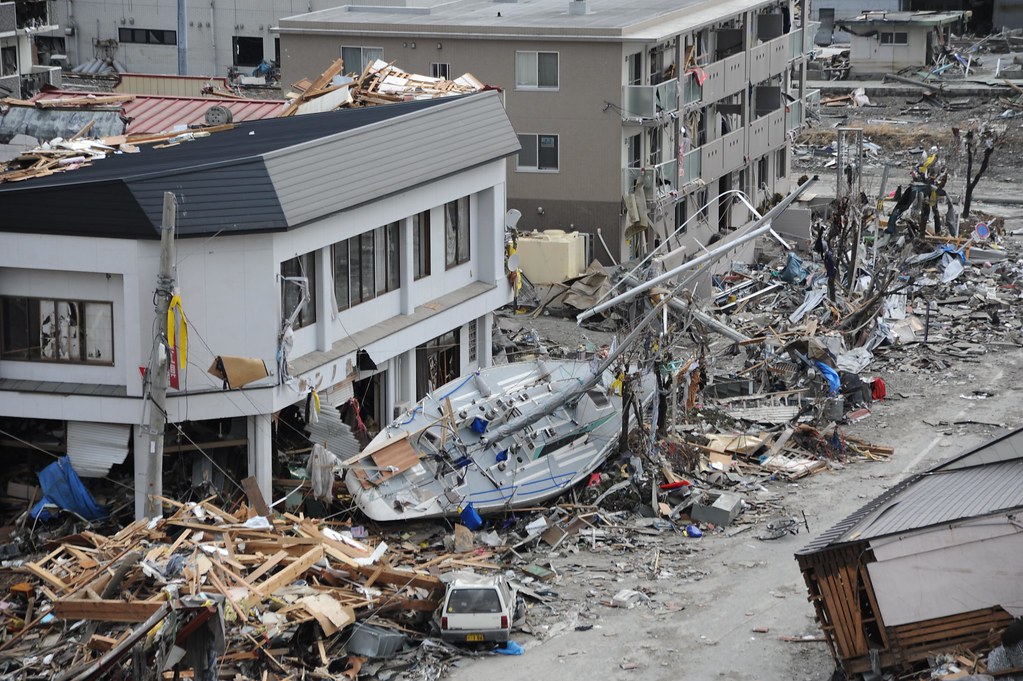
Photo: “Search-and-Rescue Workers Arrive in Ofunato [Image 1 of 23]” by DVIDSHUB is licensed under CC BY 2.0.

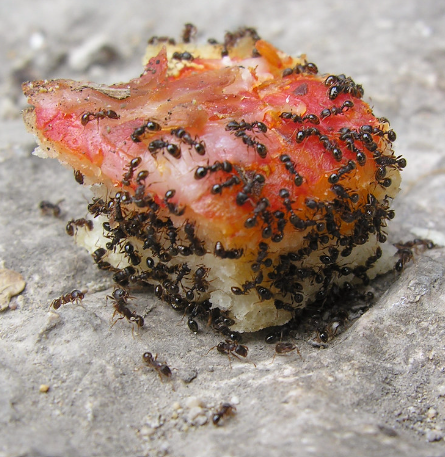
Short poem: RHL, ‘The Self-Aware’

Most insecure are those, the self-aware:
for all their acts are pointless and they know it,
scurrying like ants on an eclair…
the universe, indifferent, looks askance.

This insecure mode breeds defensiveness
and therefore arrogance, not least in poets
who know their work especially valueless…
even to other ants.

*****

I think we poets, who can be so rude about other people, need to be rude about ourselves occasionally. Not that the universe cares one way or the other.

This poem was originally published in The Road Not Taken – A Journal of Formal Poetry – in Fall 2016. Thanks, Dr. Kathryn Jacobs!

Photo: “Ant picnic” by dmcneil is licensed under CC BY-NC-ND 2.0.
Using form: Heterometric verse: Susan McLean, ‘Teaching to the Test’

I know you have no use for them,
poems with their sly quicksilver words
that won’t just speak their minds,
but carom through your head like startled birds.
Is that despair or longing in their cries?
Their dolors make no sense.
They’ll never buy you larger-screened TVs
or seats at sports events.

But someday, as you watch a pair hold hands
and leap from a burning tower,
as you wait for test results or hear
your phone ring at an unaccustomed hour,
what you feel will circle wordlessly—
tense, accusing, gaunt.
You’ll find that you are tested and found wanting,
and these are what you’ll want.

*****

Susan McLean writes: “As a professor myself and a person who once worked on writing standardized tests, I am familiar with the complaint of teachers that they are often forced to “teach to the test,” i.e., teach only the sort of knowledge and skills that students need for passing that sort of test. But as a poet, I know that we are tested in life in all sorts of ways. Most people think that they can get through life just fine without poetry. They tend to find poetry annoying and impenetrable, something that needs to be decoded, that has no practical use. Yet in tragedies, when all hope and comfort are gone, there is some comfort in hearing that others who have been in similar situations were able to put into words the feelings that you can’t. And the most memorable and condensed of those responses are often poems.
This poem is rhymed and metrical, but the lines are of different lengths in unpredictable patterns, a form called “heterometric,” and the rhymes occur only every other line. That unpredictability is meant to mirror life, in which the bad news always seems to come out of nowhere. The poem originally appeared in Able Muse and later in my second poetry collection, The Whetstone Misses the Knife.”

Susan McLean has two books of poetry, The Best Disguise and The Whetstone Misses the Knife, and one book of translations of Martial, Selected Epigrams. Her poems have appeared in Light, Lighten Up Online, Measure, Able Muse, and elsewhere. She lives in Iowa City, Iowa.
https://www.pw.org/content/susan_mclean

Photo: “When Young Children ‘Hate’ School” by wecometolearn is licensed under CC BY 2.0.