Monthly Archives: September 2025

Simon MacCulloch, ‘The Sign of the Cross’

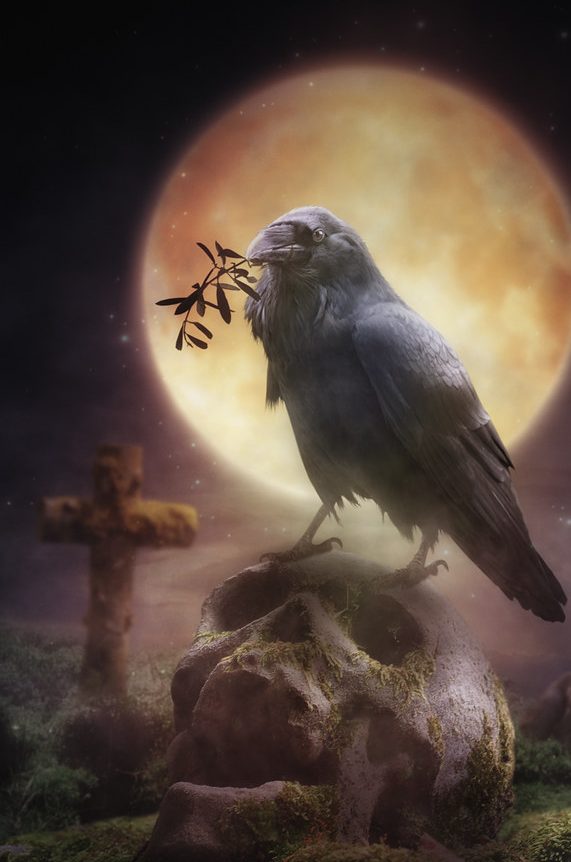
There’s a cross in the field where the scarecrow stood
And the ravens have all come back
And the ravens would say, if they only could
That a scarecrow is straw and a cross is wood
And the wings of a famine black.

There’s a cross on the grave where the hero lies
He whose war was to end all wars
And his empty skull holds a thousand why’s
And the crow that struts on his grave replies
With a thousand triumphant caws.

There’s a cross on the hill where the scapegoat hung
Like a scarecrow to ward off sin
And the prayers are said and the hymns are sung
And the gorcrows perch on their hills of dung
Where the plagues of the world begin.

There’s a cross in the dark of the Southern sky
Where the stars wink a long farewell
As the ghosts of the ravens prepare to fly
To return to the void of their black god’s eye
With a tale that they’ll never tell.

*****

Simon MacCulloch writes: “This poem melds the Christian symbol of death and resurrection with the Four Horsemen of the Apocalypse in an attempt to express how one feels after reading the world news in recent times.”

‘The Sign of the Cross’ was first published in Pulsebeat Poetry Journal.

Simon MacCulloch lives in London and contributes poetry to a variety of journals including Reach Poetry, View from Atlantis, Spectral Realms, Altered Reality, Aphelion and others.

Illustration: “tomorrow….” by begemot_dn is licensed under CC BY-NC 2.0.

Semi-formal verse: RHL, ‘False Analogies’

The Universe is made of false analogies –
flawed observations, secondhand “I see”s,
discarded dreams.
Nothing is truly as it seems.
We build our intellectual shelter from life’s gales
from scraps of lumber and found nails,
anything within reach,
rope washed up on a beach,
a sliding glass door, still intact,
used as a wall. And all because
the Universe we sense has flaws,
disobeys its own laws,
is just a framework for the Mind That Plays,
a sketch, hypothesis; a tract, not fact;
a work in process, changing with the days.
Dig deeper, and find fresh discrepancies.
Our shelter, in fair weather, keeps us warm,
can stand up to a breeze…
will be no shelter in the coming storm.

*****

I marvel at the impossibilities of the quantum mechanisms of the universe being revealed. I enjoy Nick Bostrom’s speculations on everything being a simulation. I wonder at the powerful who are jockeying for development and control of AI, at our Nietzschean will to power, at our eternal quest for immortality. I am aware that nature constantly sacrifices billions in the process of advancing a few. I wonder if we are in that process now. I am not bothered that I have no answers.

This poem was first published in the current edition of Pulsebeat. Thanks, David Stephenson!

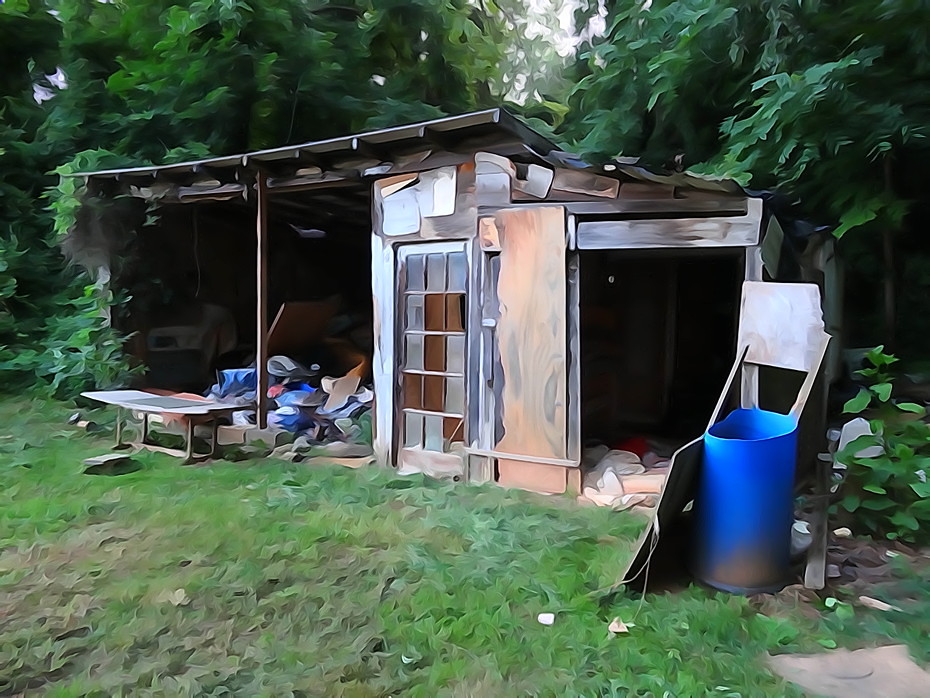
Photo: “wc west avl homeless gathering spot” by zen is licensed under CC BY-NC-SA 2.0.

Lindsay McLeod, ‘Harvest’

There’s just so many nows in forever
if we’re apart or together as one,
we’d better cherish them all if we’re clever
make the most of our time in the sun,

‘coz it’s where we are led whether up or in bed
there’s one funeral we all must attend,
because somewhere ahead the sea kisses the sky
and the name of that place is the end.

*****

Lindsay McLeod writes: “‘Harvest’ was made as an end piece for the second book I wrote for my daughter.” It was originally published in Grand Little Things.

Lindsay McLeod currently lives by the sea on the Southern edge of the world, where he trips over the offing every morning. He has been published here and there in the past and won a few awards. He has started messing about with words again lately after a few necessary years away. You might expect him to know better by now, but oh no.

Photo: “Another Timor Sea sunset from Casuarina Beach, Darwin, NT, Australia” by Geoff Whalan is licensed under CC BY-NC-ND 2.0.

Ballade variant: Johnny Longfellow, ‘Like Normal People Do’


Ya’ ever wanna go someplace?
I mean…jus’ disappear.
Leave ev’rythin’. But, leave no trace.
Git your ass out o’ here
To somewhere – could be far or near –
Where you’re no longer you.
Where you can dwell, year after year,
Like normal people do.

Ya’ ever stare at your own face
But still can’t see it clear? –
Ya’ struggle hard jus’ keepin’ pace,
While neighbors, they all steer
‘Tween college, marriage, an’ career,
‘Til – somehow coastin’ through –
They barbeque, an’ drink col’ beer
Like normal people do…

Ya’ ever think they won that race,
But still, fall prey to fear
Them dreams ‘n’ rainbows they all chase,
Once gone, won’t reappear?
Or, do they jus’ choke back each tear
As one beer turns to two,
Findin’ it’s Hell to persevere
Like normal people do?

Ya’ see? You ain’t the first to veer
Off course. That much is true.
Or, last to lose all you hol’ dear
Like normal people do.

*****

First published in The Rotary Dial, Issue 34, December 2015 – best dial poems of 2015

Johnny Longfellow writes: “I’ve discussed the personal circumstances that partially inspired this poem in interviews at the Talk with Me podcast and at the now defunct Sonnetarium, both of which can be linked to in the bio below. So, I’ll just note here, the poem was written roughly six months after a heavy bout of depression. During said bout, I inadvertently stumbled upon The Geographies of Missing People website, hosted by Glasgow University, wherein I took special interest in their Stories of Missing Experience page. Listening to those mashed-up accounts of people who’d elected to go voluntarily missing was profoundly helpful to me during a dark period in my life. With that, I can only recommend to anyone going through a similar period in their own lives that they consider listening to those accounts. For, I can confidently say they helped inspire in me more than just a poem.”

Johnny Longfellow is a poet from Massachusetts. His work has appeared in The Five-Two, The Literary Hatchet, Misery Tourism, Punk Noir, and other fine literary venues, with more work forthcoming in Form in Formless Times. You can learn more about both him and his poetry at Heeeeeeere’s Johnny . . . Longfellow, that is.   

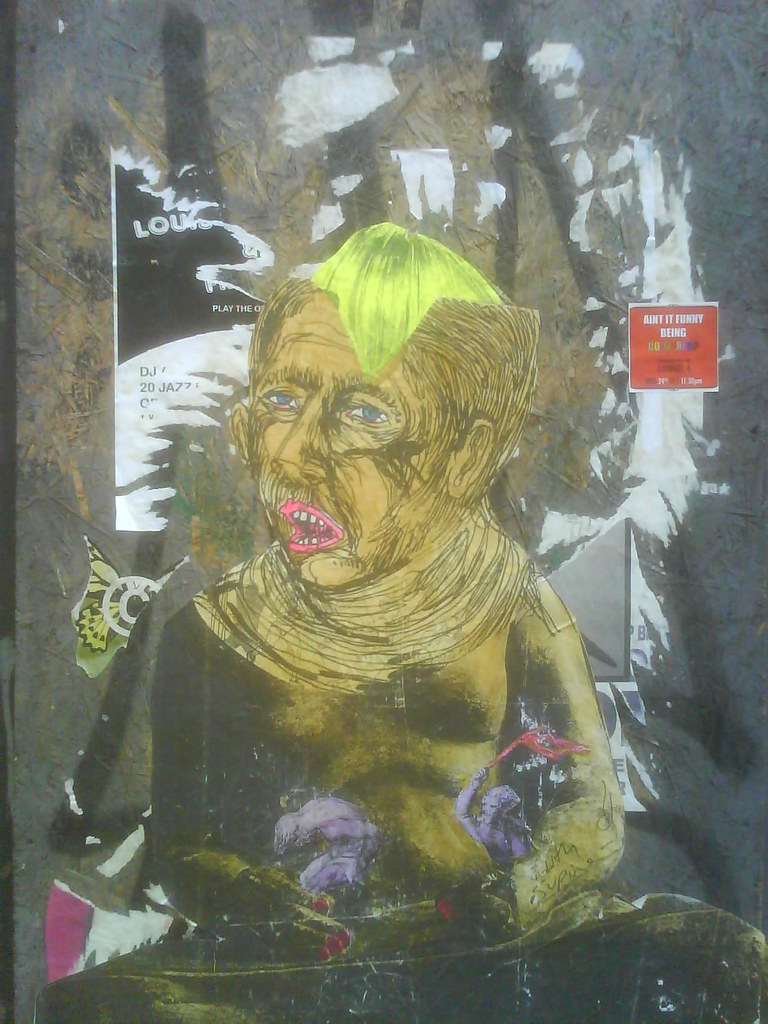
Photo: “Missing Persons” by ChiralJon is licensed under CC BY 2.0.

Michael R. Burch, ‘How It Goes, or Doesn’t’

My face is getting craggier.
My pants are getting saggier.
My ear-hair’s getting shaggier.
My wife is getting naggier.
I’m getting old!

My memory’s plumb awful.
My eyesight is unlawful.
I eschew a tofu waffle.
My wife’s an Eiffel eyeful.
I’m getting old!

My temperature is colder.
My molars need more solder.
Soon I’ll need a boulder-holder.
My wife seized up. Unfold her!
I’m getting old!

*****

Michael R. Burch adds the disclaimer “that the poem is pure comedy and my wife Beth is an absolute jewel. I’m lucky to have her. (Rodney Dangerfield put me up to it!)”

Michael R. Burch’s poems have been published by hundreds of literary journals, taught in high schools and colleges, translated into 23 languages, incorporated into three plays and four operas, and set to music, from swamp blues to classical, 75 times by 34 composers. He is also the founder and editor-in-chief of The HyperTexts.

OLD old Man” by bixentro is licensed under CC BY 2.0.

Marcus Bales, If Elizabeth Browning Had Written “I Will Survive”

How do I love you? Well, not any more —
I love you? Not even to bread slice height
That has been toasted, buttered, rye or white,
And dropped the wrong side down upon the floor.
I love you like a mildew or a spore
Or pestilential fungal blastocyte
That makes one’s breath itself a mortal fight
And living life seem like a choking chore.
I love you? The one who made the try
To break me with goodbye, yet kept that key
Because you thought that I’d lay down and die
If you returned, assuming I’d be free?
Oh no — I snarl and spit, deny your lie,
And save my love for one who’s loving me.

*****

I Will Survive‘ – Song by Gloria Gaynor ‧ 1978 on YouTube

At first I was afraid, I was petrified
Thinking I could live without you by my side
And after spending nights
Thinking how you did me wrong
I grew strong
And I learned how to get along

Now you’re back
From outer space
And I find you here
With that sad look upon your face
I should’ve changed that stupid lock
Or made you leave your key
If I’d’ve known for a second
You’d be back to bother me

Go on, go, walk out the door
Turn around now
You’re not welcome anymore
You’re the one who tried to hurt me with goodbye
Think I’d crumble?
You think I’d lay down and die?

No, not I, I will survive
Long as I know how to love, I know I’ll stay alive
I’ve got my life to live
And all my love to give and
I will survive
I, I, I will survive

It took all my strength not to fall apart
Trying with all my might to mend my broken heart
I spent so many nights feeling sorry for myself
How I cried
But now I hold my head up high

And you see me, somebody new
I’m not that lonely little person
Still in love with you
Now you come droppin’ in
Expectin’ me to be free
Now I’m saving my lovin’
For someone who’s loving me

Go on and go, walk out the door
Turn around now
You’re not welcome anymore
You’re the one who tried to hurt me with goodbye
Thinkin’ I’d crumble
Did you think I’d lay down and die?

No, not I, I will survive
Long as I know how to love, I know I’ll stay alive
I’ve got my life to live, and all my love to give
And I will survive
I, I will survive

Go on, go, walk out the door
Turn around now
You’re not welcome anymore
You’re the one who tried to hurt me with goodbye
Think I’d crumble?
You think I’d lay down and die?

No, not I, I will survive
Long as I know how to love
I know I’ll stay alive
I’ve got my life to live
And all my love to give and
I will survive
I, I, I will survive

Songwriters: Frederick J. Perren / Dino Fekaris

Marcus Bales writes: “It started after I’d posted If Shakespeare Had Written ‘Itsy Bitsy Spider’ to Sonnet Central, and Mike Alexander asked me if I was going to do the entire Mother Goose in Shakespearean sonnets. That sounded too much like real work to me, so I said I hadn’t thought of it, but I did have another “If Shakespeare Had Written” poem, “If Shakespeare Had Written ‘I Will Survive‘”. Looking that up in my files produced “If Yeats Had Written ‘I Will Survive‘”, as well, so I posted both those, and then Milton tapped me on the shoulder and cleared his throat. So I wrote that one. 

“My method is to find a stash or cache of poems by the next poet who seems particularly likely — or unlikely — to have written ‘I Will Survive‘ if they’d been asked, and read through it, looking for characteristic modes, moods, tones, concerns, and sometimes just an old favorite that seems ripe for it. A sort of instant immersion in a poet’s work, and then try to flow into their tonality. Like a singer interpreting a song I try to inhabit the poet’s mise en scene.  Some are more successful than others.”

Marcus Bales has now produced a dazzling array of his “If X Had Written ‘I Will Survive‘”, over 40 and still growing, with a dozen in the current Brazen Head, including this Elizabeth Browning as well as Dorothy Parker, Dylan Thomas, Wendy Cope, Robert Frost and of course Shakespeare. Go ahead, give them a try! – RHL

Not much is known about Marcus Bales, except he lives and works in Cleveland, Ohio, USA, and his work has not appeared in Poetry or The New Yorker. His latest book is 51 Poems; reviews and information at http://tinyurl.com/jo8ek3r

Illustration: Portrait of Elizabeth Barrett Browning in 1859. Public domain
RHL, ‘The Beat Goes On’

A pounding beat to drug, enhance, enfold –
iambics are the dance floor of the old.

*****

Published in The Asses of Parnassus, home of “short, witty, formal poems”. Thanks, Brooke Clark!

Illustration: ‘Iambics’ by RHL and ChatGPT

D.A. Hosek, ‘Chicago Sonnet 26’

 Ain’t no one gon’ choose to live in no tent
Inna park with the trash and the dirt and the cold,
But you fresh outta jail ain’t got one damn cent
And every single place you go you told,
 
“This ain’t no place for you we got children here,
Folks with jobs, responsibility and you—and you—
Some broke, broke-down ex-con. You wanna be near
These straight folk with your criminal life? Who

Would ever stand for such a thing?” So I got
Myself a tent, don’t ask how or where,
Claimed me a patch of grass with this whole lot.
Now I gotta leave cause the straight folk get scared.
 
Spent all day looking for a place, started at dawn,
The city came by and took my shit while I was gone.

*****

D.A. Hosek writes: “The Chicago Sonnets sequence is a planned sequence of fifty sonnets, one for each Aldermanic Ward of the city. This is a rare bit of reported poetry in that I went out and talked briefly to one of the people in a homeless encampment (not the one that’s in the poem though) wondering how he ended up living in a tent on the streets. Then, after discovering that I’d already written a sonnet for the ward that his encampment was in, I had to find a different encampment in a different ward and learned about the city destroying a camp in Humboldt Park and that provided the last pieces of the poem.”

D. A. Hosek’s poetry has appeared or is forthcoming in Hanging LooseBig Score Lit, Dodging the RainAfter HoursRat’s Ass Review (including this sonnet) and elsewhere. He earned his MFA from the University of Tampa. He lives and writes in Oak Park, IL and spends his days as an insignificant cog in the machinery of corporate America.  https://dahosek.com @dahosek.bsky.social 

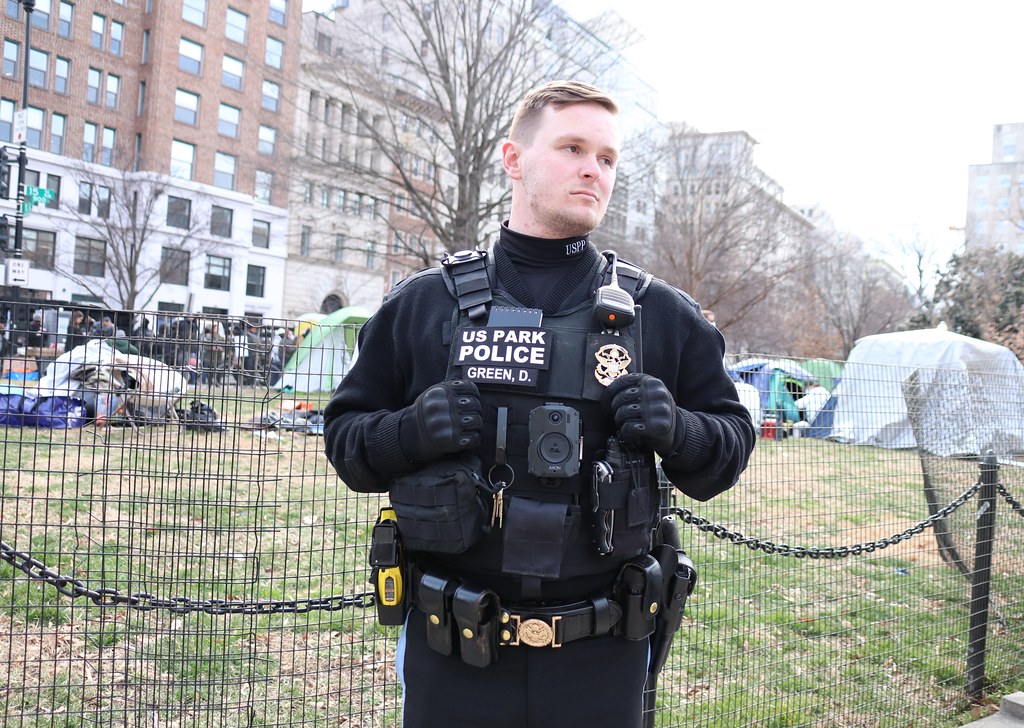
Photo: “IMG_2971a” by Elvert Barnes is licensed under CC BY-SA 2.0.

Anushka Sen, ‘Good Neighborhood’

Another poisoned squirrel hits the street,
stopping short your jaunty midday tread.
The city lays its secrets at your feet.
 
It rots more still and slow than fallen leaves;
the resting pose as definite as lead.
Another poisoned squirrel hits the street.
 
Classic mixup: rat for squirrel, bait for feed.
POISON, posters scold, PROTECT YOUR PET.
The city lays its secrets at your feet.
 
Someone went too far, we all agreed,
and left the vermin running wild instead!
And yet, a poisoned squirrel hits the street,
 
so stiff, so angular, no longer sweet,
the stare indecent on the outsize head.
The city lays its secrets at your feet—
 
you learn how light your step is, how discreet,
how intricate the alleys of your dread.
Another poisoned squirrel hits the street.
The city lays its secrets at your feet.

*****

Anushka Sen writes: “This poem was inspired by a rat-induced furore in Rogers Park, my Chicago neighborhood. Someone (or some people) had finally flipped a switch and started putting out rat poison indiscriminately. The poem takes off from that point. It seems relevant to me all over again, since I’m now encountering a slew of dead birds. Residential life is built on a gnarly underbelly.”

‘Good Neighborhood’ was originally publlished in the current Rat’s Ass Review.

Anushka Sen is originally from Kolkata, India and now teaches English Literature at Loyola University, Chicago. She is drawn to musicality, animals, and a strong sense of place in art. She occasionally translates from Bengali to English and her poems (original and translated) have been published in Rust and Moth the Asymptote blog, and Eunoia Review, among other places.

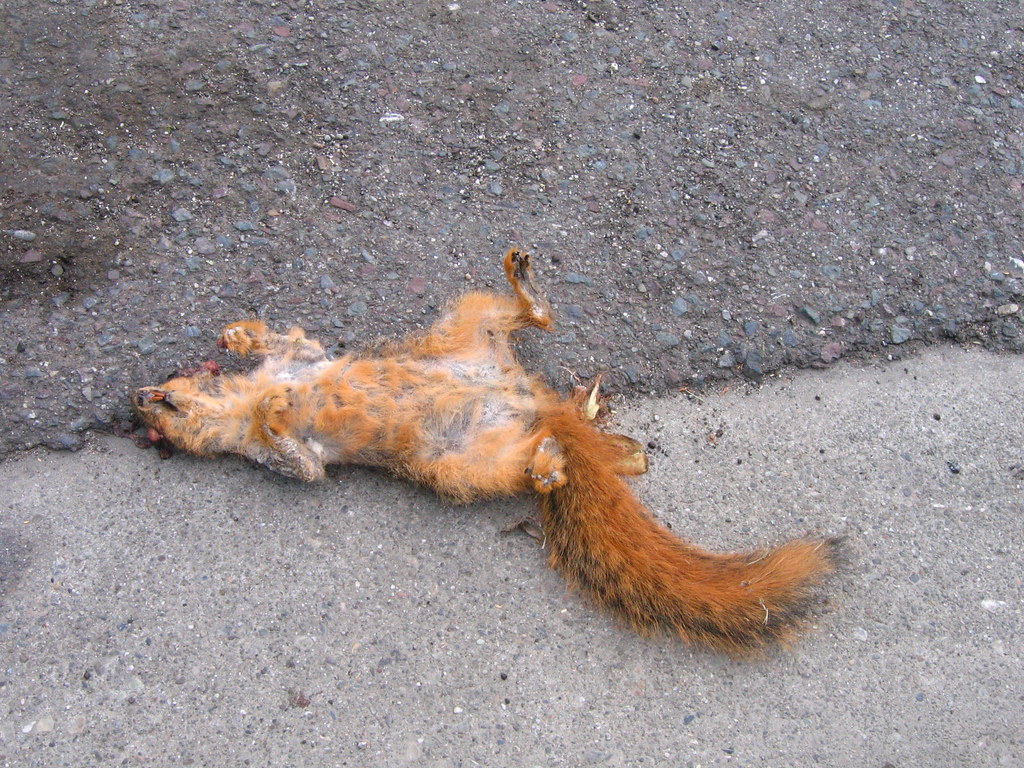
Photo: “Alvin? Alvin? Alvin?” by lionelvaldellon is licensed under CC BY-NC 2.0.