Director, Andromeda Simulations International, Bahamas: a global education company providing online and in-person workshops in business finance.
Series Editor, Sampson Low's 'Potcake Chapbooks'. Formal verse about traveling, family, love, etc...
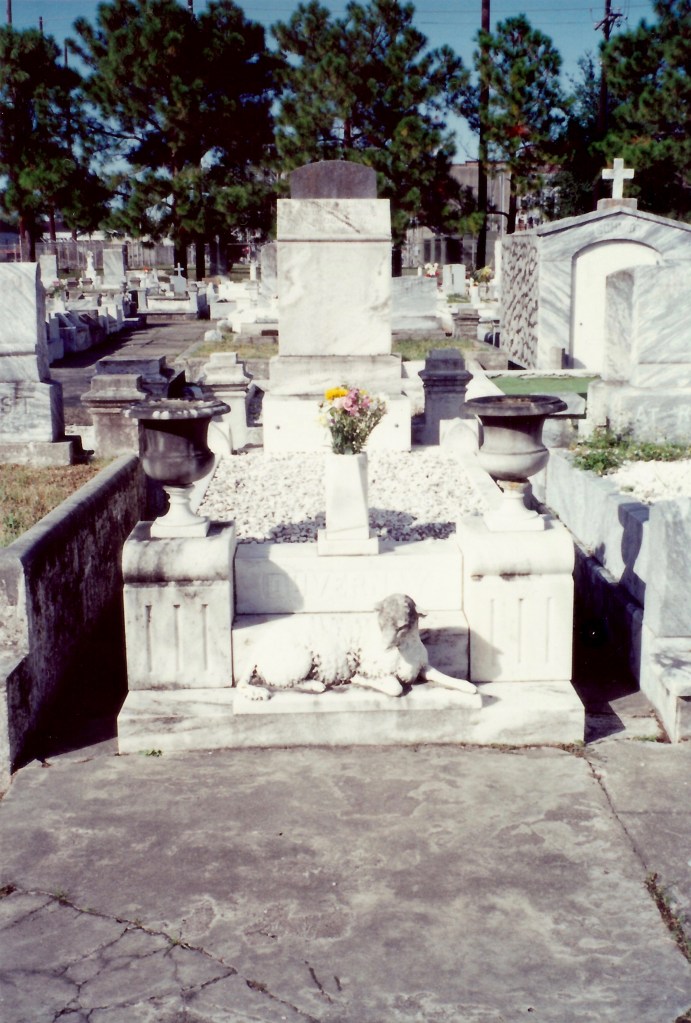
Hello. I’ve brought your favorite flowers again. How is going under there, my dead? On this side, we’re no better off than when you walked beside us. (Yes, I know I said the same last year.) The human race is not improvable. Ask any saint you meet. We’ve gone to war again without a thought. Our leaders shuffle bribes, our heroes cheat. Your children haven’t turned out awfully well, but who expected it? You’re not to blame. They’ll manage, and nobody burns in hell. Goodbye for now. I’m always glad I came. I make no promises about next year, but one way or another, I’ll be here.
*****
Gail White writes: “I wrote this while living in New Orleans, where the dead are buried above ground (mostly) because the city is below sea level. All Saints Day is still a big deal, when the family tomb gets a new coat of whitewash and flowers are placed on every grave. It’s time to reflect on family and faith and our all ending up in the same place, as I’ve tried to do here.”
Gail White is the resident poet and cat lady of Breaux Bridge, Louisiana. Her books ASPERITY STREET and CATECHISM are available on Amazon. She is a contributing editor to Light Poetry Magazine. “Tourist in India” won the Howard Nemerov Sonnet Award for 2013. Her poems have appeared in the Potcake Chapbooks ‘Tourists and Cannibals’, ‘Rogues and Roses’, ‘Families and Other Fiascoes’, ‘Strip Down’ and ‘Lost Love’. ‘A Visit on All Saints Day’ was originally published in Mezzo Cammin, and collected in her chapbook, ‘Sonnets in a Hostile World‘, also available on Amazon.
A poem is so obdurate and small Compared to what you wanted it to say And sometimes isn’t even close at all. For instance, this. I’ve worked on it all day, A metaphor for all of love’s affairs. I failed to ride the energy it gave, My form and balance gone. Nothing prepares You for the wildness of the standing wave. Possessing and possessed and then propelled Abruptly past the point of no control To merely peril, having once beheld The moving stillness of it all, all whole. Your head’s what every poem wants to split, While you stroke hard to stay ahead of it.
*****
Marcus Bales writes: “My online pal, the poet Liam Guilar, was a kayak adventurer, sneaking across borders to paddle the most dangerous rivers in the world. I went white water rafting once. You’re stuck in cold, wet, awkward positions that often turn suddenly painful. Why people do it over and over seems not just unreasonable but cold, wet, and painful. There are exhilarating moments, but you’re still cold, wet, and out of control. I could feel in my one experience that the out of controlness might be the point. Still, it was wet and cold. Very wet. Very cold.
“The confluence of Liam’s many tales, my paltry experience, and he and I both struggling to write poems is the impetus for this poem. I’ve often thought that maybe what it needs is a bucket of ice water suspended over the reader like a, well, like a bucket of Damocles, that sloshes over the head and down the back of the neck in order to make it work.”
Not much is known about Marcus Bales except that he lives and works in Cleveland, Ohio, and that his work has not been published in Poetry or The New Yorker. However his ‘51 Poems‘ is available from Amazon. He has been published in several of the Potcake Chapbooks (‘Form in Formless Times’).
Sew, sew, sew your coat Gently down the seam; Threadily, threadily, threadily, threadily, Joseph wants a dream.
*****
A throwaway poem. For anyone unfamiliar with the references, it blends what is often sung as a round: Row, row, row your boat Gently down the stream; Merrily, merrily, merrily, merrily, Life is but a dream with the idea behind the Andrew Lloyd Webber / Tim Rice musical ‘Joseph and the Amazing Technicolour Dreamcoat‘.
The poem was published in Lighten Up Online (aka LUPO). Thanks, Jerome Betts!
You can almost see Vincent Price, black-robed, hunched above the console of a jumbo organ in the bowels of his creaky haunted manse; or maybe a stadium of damned souls, strobed in lurid red and howling nettle-robed as they plummet into Pandemonium, pore and pith aflame. It’s no troubadour, undoubtedly, this vast atonal gob.
As with the Roach Motel, we’d check in, but never out—us or anything, since it can swallow errant planets whole, and still, however much the mass, can’t eat its fill. Though it’s larger far than Jupiter or Mars, we can barely see it, thank our lucky stars.
*****
William Trowbridge writes in Rattle, where this poem was published: “I’ve spent most of my years as a poet writing free verse, though lately I find myself turning toward form. Unlike those who see formalist verse as dry and effete, I find it can generate power by means of barriers to play against—‘the net’ as Frost put it, by which he also meant boundary lines. If you pour gunpowder in a pile and light it, a mere flash occurs. But pack it tightly into a container, and you can get something more powerful. And, as opposed to the notion that form is restrictive, I agree with Richard Wilbur that it often liberates one from choosing the easy word in order to discover the better, surprising one. I haven’t moved into this part of town yet, but I stop there more and more.”
William Trowbridge’s tenth poetry collection, Father and Son, was published by Wayne State College Press Press in April. His poems have appeared in more than 45 anthologies and textbooks, as well as on The Writer’s Almanac, AnAmerican Life in Poetry, and in such periodicals as Poetry, The Gettysburg Review, The Georgia Review, The Southern Review, Plume, Rattle, The Iowa Review, Prairie Schooner, Epoch, and New Letters. He is a mentor in the University of Nebraska-Omaha Low-residency MFA in Writing Program and was Poet Laureate of Missouri from 2012 to 2016. For more information, see his website, williamtrowbridge.net.
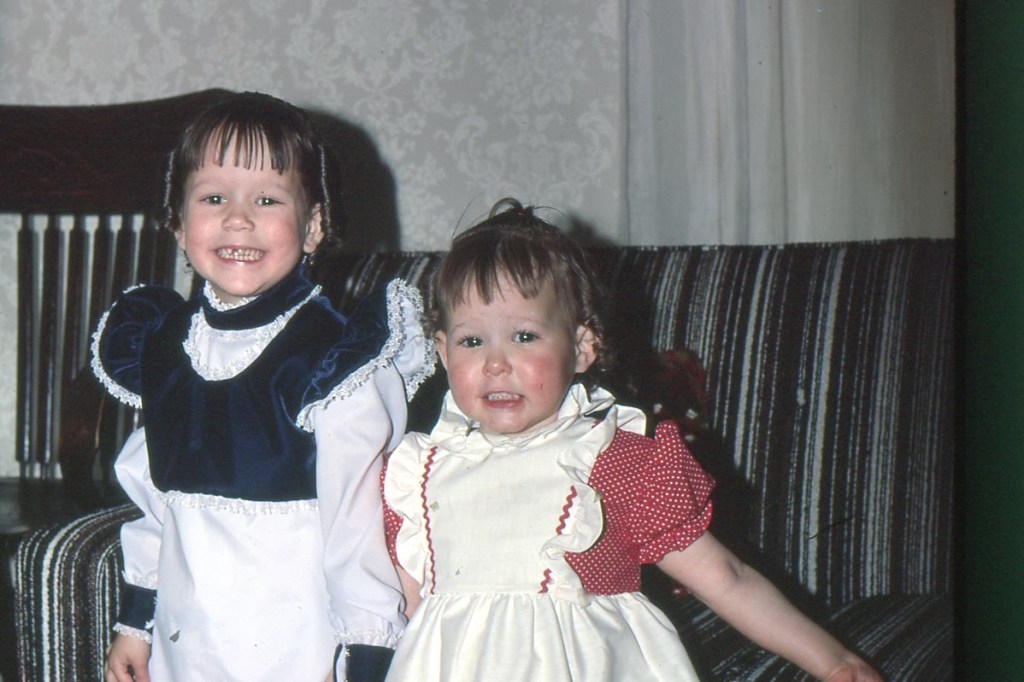
Litter mates. Glitter mates. Mirror of what you hate, what you adore about yourself. Sleep together on the floor. Giggles and snorts, kicks, forts of chairs and furry blankets. Fury. Tangle. Tussle and brush. Braid and wrangle, pulling hair; it’s just not fair. One of you is picked. Not it! On your mark, get set and go! Kicked gameboards; slam and pout. Crossing the street when the mean dog is out. I dare you. A secret meeting place under the willows against the fence. Sheets and pillows. Toothbrushes, blood, things buried in mud. All-ee, All-ee in free! Quit looking at me. Canned peaches, cold beaches. You and not-you; anyone but you.
So sick of that piano song! Scented markers. Shotgun! Wishing she was anyone. Wanting to be anyone. Else. Lure the cat to your lap from hers, pointing out how loud he purrs. Making cookies. Making up. Stealing make-up. Just shut up. Together, bang the pots on New Year’s. Pretend that you don’t hear her tears. Her bad boyfriend that you hate. And yours. Get home late. Will you, won’t you? Tattle-tell. Pounding on the bathroom door, shirt that’s wadded on the floor. You, not you.
Share a mattress in the tent, trees and stars and what you meant. The thrilling doorbell. That weird noise she makes in her throat. You both finish the movie quote. Belting songs in underwear, saying that you love her hair. Midnight soda run, car windows down—U2 blasting to the edge of town. Knowing look, shared favorite book, all the things you’ll always keep. Someday, you’ll rock her child to sleep.
*****
‘Sisters’ was published in New Verse Review, and nominated for a Pushcart Prize. Darlene Young writes: “I’ve been blessed with two radiant, hilarious, gifted sisters. The one closest to my age has been battling cancer this year, something that took our mother when we were in our early twenties. I wrote this poem in honor of her, her courage, and all she has meant in my life.”
Darlene Youngis the author of three poetry collections (most recently, Count Me In from Signature Press, 2024). She teaches writing at Brigham Young University and has served as poetry editor for Dialogue and Segullah journals. Her work has been noted in Best American Essays and nominated for Pushcart Prizes. She lives in South Jordan, Utah. Find more about her at darlene-young.com and @darlylar.
Always to long for someone else’s gift— To blow that blistering alto sax, to lift Into the flash-bulbed air
For a reverse slam dunk while stunned guards gawk, To have a punster’s cheek or porn star’s cock, To capture, share by share,
Gold-plated Wall Street fame, to meditate Beyond nirvanic depths or radiate Beatitudes of prayer
Like any frescoed saint, even to make A perfect triple-decker dark-fudge cake Or master the éclair—
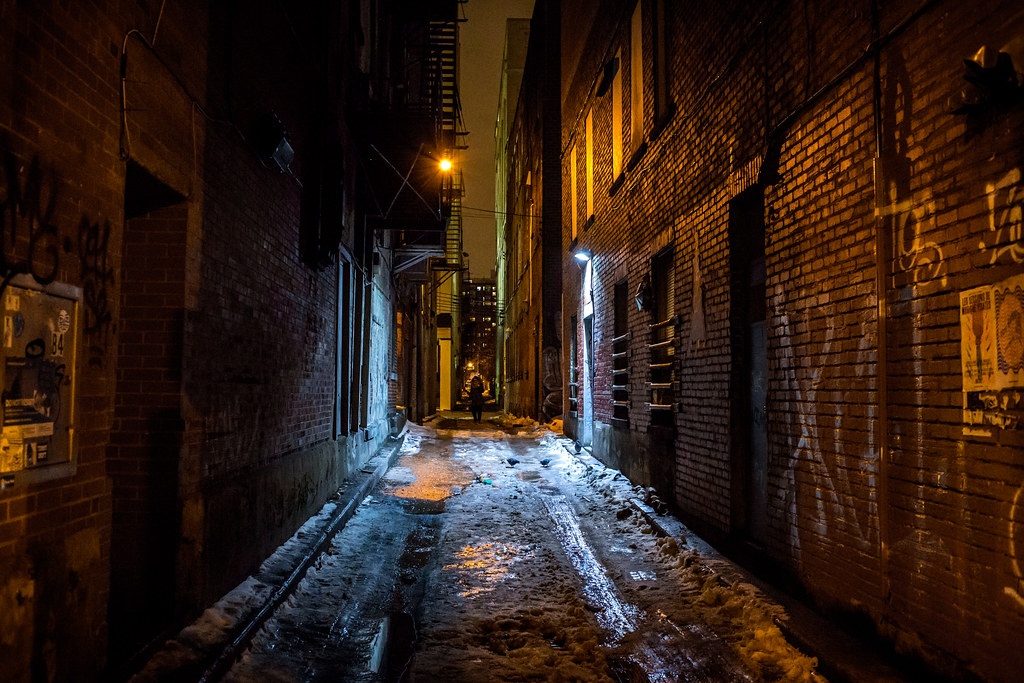
Means answering a roguish shout we follow Down some smashed-bottle alley to a hollow Recess, a doorway, where
If luck has tailed us on that lonely walk, When we knock, because we have to knock, No one will be there.
*****
‘Someone Else’s Gift’ was first published in Literary Matters, and then in Best American Poetry 2024. As I was unable to capture the original indentation, I have taken the liberty of introducing line spaces as an alternative way of clarifying the structure; it will sound the same when read aloud… – RHL
Stephen Kampa has three books of poems: Cracks in the Invisible (Ohio University Press, 2011), Bachelor Pad (Waywiser Press, 2014), Articulate as Rain (Waywiser Press, 2018), and World Too Loud to Hear (Able Muse Press, 2023). He teaches at Flagler College in St. Augustine, FL and works as a musician.
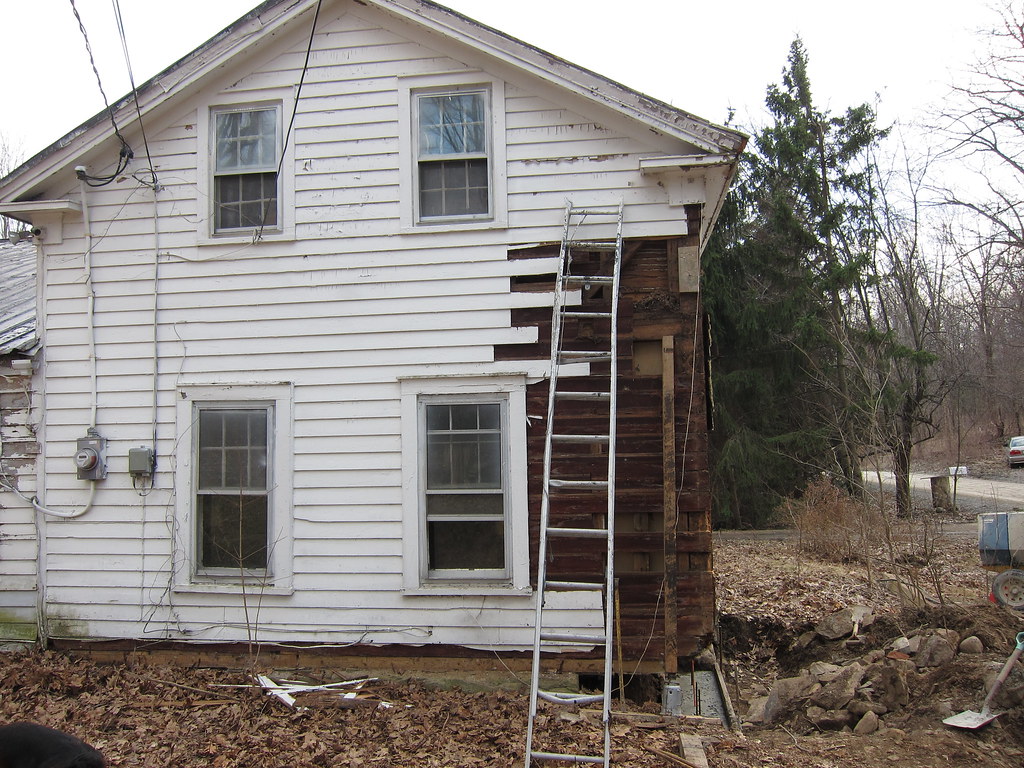
Time was, we spent our muscle and our nous propping an aging house against the pummeling of its hundred years. Clean paint, neat gardens, upkeep rarely in arrears, sober as Donne. Yet now each year afresh burdens us with new failings of the flesh:
Legs that once mounted ladders without qualm tremble. Nor are we calm confronting pipework; torsos will not shrink, backs bend, or shoulders fold to grope below a sink. Hands shake; eyeballs glaze over. What appalls is that our bodies buckle like our walls:
plaque in arteries, soot in chimney stacks, stubborn and troublous cracks in teeth, in plaster. House! Ought we to call ourselves—and you—new poster children for the Fall, for that hard doctrine grumbling down the ages that Sin’s to blame, with Death and Rot its wages?
Entropy as theology—would Donne jape at it? Wink and pun as in his randy youth? Or solemnly robed in his winding sheet, sing Mutability, spinning into the praise of God in Art the fact that all things earthly fall apart?
Or pull from air some bit of modern science, yoking (even by violence) thermodynamics, shortened telomeres, transplants, genetics, sex, the music of the spheres? Strange physics and wild metaphors—all grand, but Rot and Death, plain woes we understand,
are better fought with checkbooks than with verse. We’ll sit, these days. We’ll nurse our beers, while able bodies stir their dust. A distant siren whines—we sigh; it whines for us. Let plumbers, painters, carpenters begin this season’s round of battling Death and Sin.
*****
Maryann Corbett writes: “Last summer, Clarence Caddell was just beginning work on a new magazine, The Borough, and was planning a second issue while the first came together. He had in mind an issue centered on Donne, and he commissioned me to contribute a poem. I’d read the wonderful biography Super-Infinite: The Transformations of John Donne by Katherine Rundell not many months before, so a lot of the life was fresh in my mind–but it was also the season of endless repair that is the eternal truth of owning a house that’s 113 years old. It wasn’t hard to pull together a poem about the woes of home ownership with tidbits that “everyone knows” about Donne–his worldly-to-holy conversion, the familiar line about his yoked-by-violence metaphors–under an allusive title, and in a stanza form a bit like one of his. (Alas, this blog can’t show you the indents that would best imitate Donne’s way of laying out a poem. You’ll have to imagine all the trimeter second lines indented and the hexameter fourth lines hanging out farther left.) In the end, Clarence had to use the poem to fill out his first issue, so it sat alone, unassisted by an issue theme.”
Maryann Corbett earned a doctorate in English from the University of Minnesota in 1981 and expected to be teaching Beowulf and Chaucer and the history of the English language. Instead, she spent almost thirty-five years working for the Office of the Revisor of Statutes of the Minnesota Legislature, helping attorneys to write in plain English and coordinating the creation of finding aids for the law. She returned to writing poetry after thirty years away from the craft in 2005 and is now the author of two chapbooks and six full-length collections, most recently The O in the Air (Franciscan U. Press, 2023). Her work has won the Willis Barnstone Translation Prize and the Richard Wilbur Award, has appeared in many journals on both sides of the Atlantic, and is included in anthologies like Measure for Measure: An Anthology of Poetic Meters and The Best American Poetry.
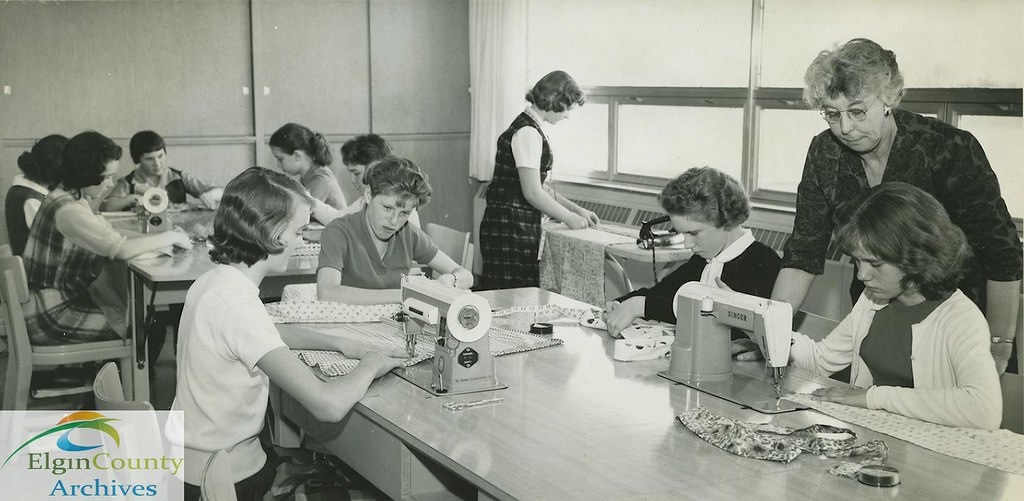
Like other teenage girls in ‘65, I learned to knit, embroider, and crochet, so if I’m teleported back in time a century or two, I’ll do okay.
I learned the way to wrap a package neatly, to tie a range of plain and froufrou bows, to minimize my body flaws discreetly, using the cut and pattern of my clothes.
I also learned to iron, hem, and baste, to sew on zippers, trim, and appliqué, to choose a hairdo that would suit my face— and nothing that I ever use today.
*****
Susan McLean writes: “In the mid-Sixties, the times were changing, but the education of teenage girls was not. In junior high school home economics classes, which girls were required to take, the girls were trained in sewing and cooking skills as preparation for their future roles as wives and mothers. The ideas that men might need to know any of those skills or that women might have full-time careers were not considered. In addition to teaching girls domestic skills, the classes served to reinforce the gender roles and expectations of the time (which had not changed significantly from those of the previous few centuries).
“I slightly overstate my case when I say that I never use anything now that I learned in the two years of sewing classes I took. I still wrap a package and sew on a button occasionally, but I had learned both of those skills well before I took the classes. And even when I was taking the classes, I was already determined to have a career of my own. I petitioned successfully to be allowed to skip the cooking classes so that I could take art classes in their place (though, ironically or not, I am now an enthusiastic home cook). I didn’t mind learning various sewing skills, which had an artistic side, but I had no interest in spending a lot of time using them afterwards, and the view of my options that the classes conveyed was quite dispiriting. No one foresaw how radically the roles of many women would be changing soon afterwards. But I am very glad that they changed.
“The rhymed quatrains that the poem is written in are a standard poetic form, though the mix of slant rhymes with true rhymes suggests an underlying dissonance that ties in with the poem’s themes. The poem originally appeared in the online journal Umbrellaand was later published in my second poetry book, The Whetstone Misses the Knife.”
Susan McLean has two books of poetry, The Best Disguise and The Whetstone Misses the Knife, and one book of translations of Martial, Selected Epigrams. Her poems have appeared in Light, Lighten Up Online, Measure, Able Muse, and elsewhere. She lives in Iowa City, Iowa. https://www.pw.org/content/susan_mclean





 Form in Formless Times