Author Archives: Robin Helweg-Larsen

Unknown's avatar

About Robin Helweg-Larsen

Director, Andromeda Simulations International, Bahamas: a global education company providing online and in-person workshops in business finance. Series Editor, Sampson Low's 'Potcake Chapbooks'. Formal verse about traveling, family, love, etc...

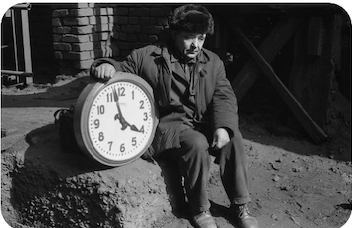
Short poem: Richard Fleming, ‘The Clock Collector’

He didn’t hurry, took his time
to gradually collect the clocks:
large clocks, small clocks, clocks with a chime,
he gathered stocks of ticks’n tocks
time-pieces, chronographs, all gold,
he harvested them like a crop.
He hoped to put his life on hold
but time, unmeasured, did not stop.

*****

Richard Fleming writes: “I think I was just playing with rhyme on this one. That it says something serious was an unexpected bonus.”

Richard Fleming is an Irish-born poet (and humorist) currently living in Guernsey, a small island midway between Britain and France. His work has appeared in various magazines, most recently Snakeskin, Bewildering Stories, Lighten Up Online, the Taj Mahal Review and the Potcake Chapbook ‘Lost Love’, and has been broadcast on BBC radio. He has performed at several literary festivals and his latest collection of verse, Stone Witness, features the titular poem commissioned by the BBC for National Poetry Day. He writes in various genres and can be found at www.redhandwriter.blogspot.com or Facebook https://www.facebook.com/richard.fleming.92102564/

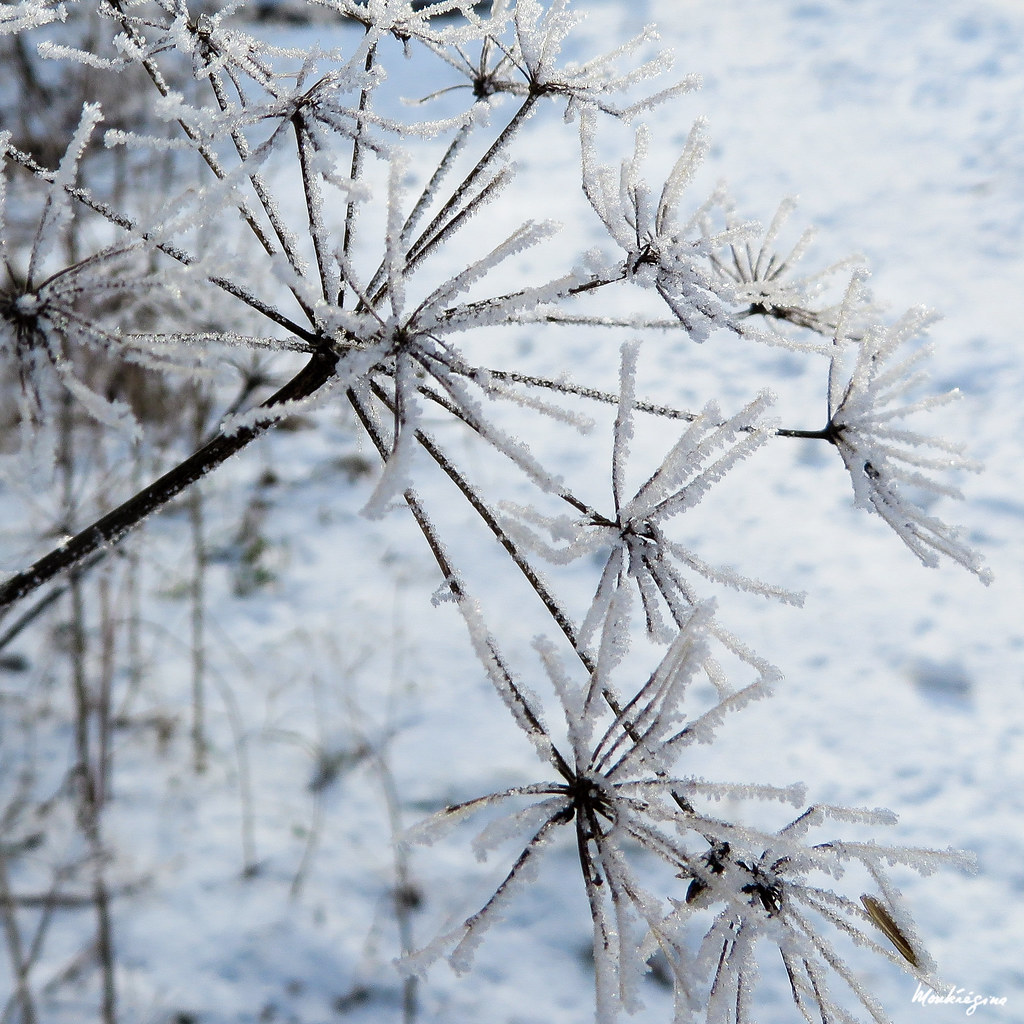
Using form: Monorhyme: D.A. Prince, ‘Cold’

Outside the glittering air is bright,
frost crystals glisten in the light,
a bitter wind sharpens its bite,
teasing a few stiff leaves to flight.
It finds in restlessness a tight
fierce chill, like muscles clenched to fight,
needling uncovered skin with spite
and then breathes out a cloud of white,
a moment’s ghost, a shape so slight
it freezes almost before sight
has marked its passing. Snowflakes write
their shaky message to unite
cold’s elements in silver night.

*****

D.A. Prince writes: “This poem came together very quickly: the garden thick with frost and the idea of catching the vowel sound in ‘ice’ as a way of capturing the sharpness of the scene. A mono-rhyme, playing with this crispness, seemed the way forward. It was fun, and that’s an important element in poetry.” The poem was published in the February 2024 Snakeskin (issue 314).

D. A. Prince lives in Leicestershire and London. Her first appearances in print were in the weekly competitions in The Spectator and New Statesman (which ceased its competitions in 2016) along with other outlets that hosted light verse. Something closer to ‘proper’ poetry followed (but running in parallel), with three pamphlets, followed by a full-length collection, Nearly the Happy Hour, from HappenStance Press in 2008. A second collection, Common Ground, (from the same publisher) followed in 2014 and this won the East Midlands Book Award in 2015. HappenStance subsequently published her pamphlet Bookmarks in 2018, with a further full-length collection, The Bigger Picture, published in 2022.

Frost Blooms – Fleurs de givre” by monteregina is licensed under CC BY-NC-SA 2.0.

Using form: Experimental: Edmund Conti, ‘Solace’

I know, I know it’s tough.
I know. It’s tough. I know.
It’s tough. I know it’s tough.
I know. I know. It’s tough.
I know it’s tough. I know.

It’s tough.

I know.

*****

Edmund Conti writes: “I guess I like because it uses just four words to say a lot.”

Edmund Conti has recent poems published in Light, Lighten-Up Online, The Lyric, The Asses of Parnassus, newversenews, Verse-Virtual and Open Arts Forum. His book of poems, Just So You Know, is published by Kelsay Books,
https://www.amazon.com/Just-You-Know-Edmund-Conti/dp/1947465899/
and was followed by That Shakespeherian Rag, also from Kelsay
https://kelsaybooks.com/products/that-shakespeherian-rag

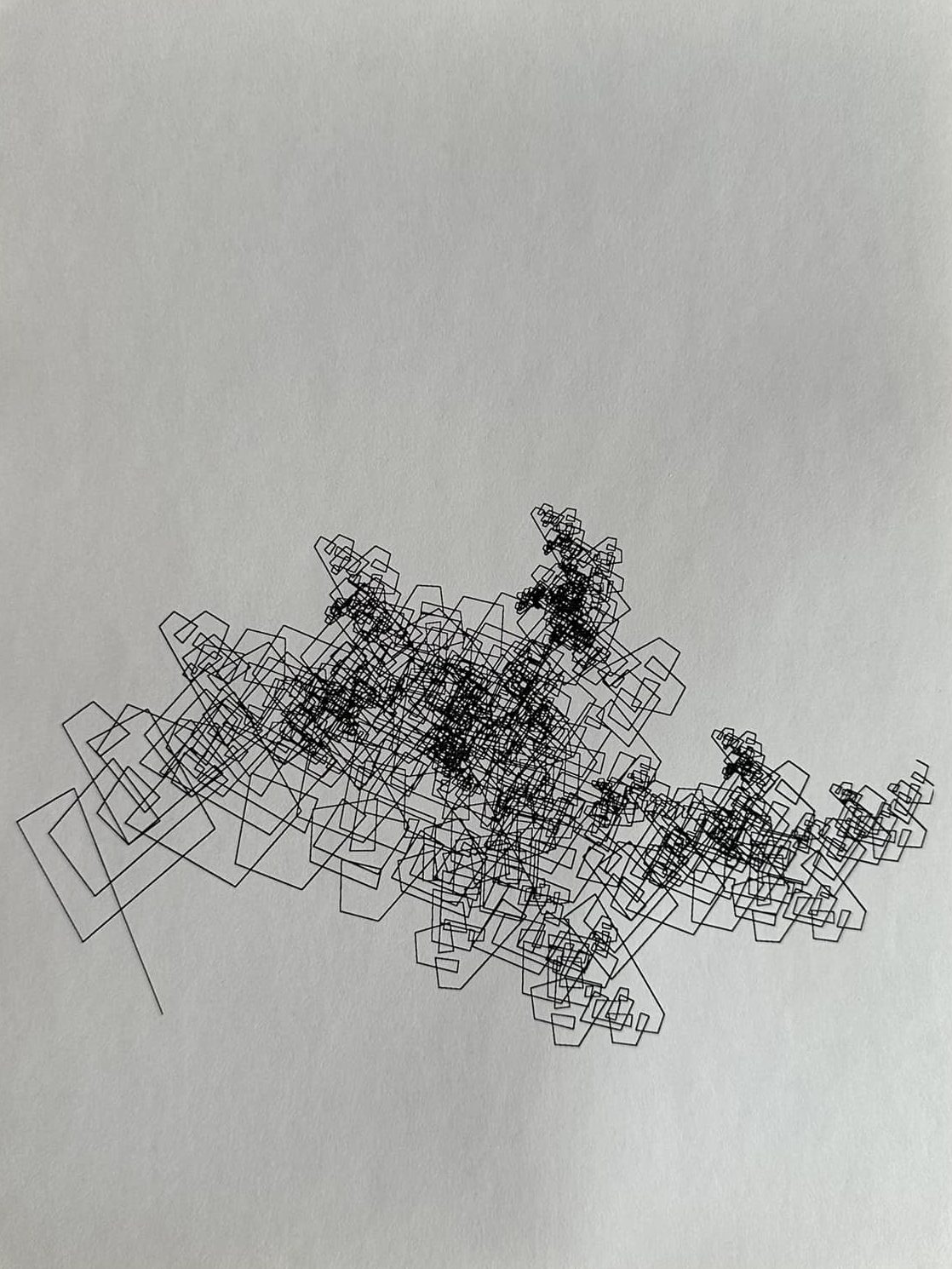
Photo: ‘Solace’ by Edmund Conti

Sonnet: J.D. Smith, ‘Elegy’

We weren’t allowed the time to contemplate
What talents he in time might come to show,
What fame or wealth he might accumulate,
What love and other passions he might know.

We had, instead, the chance to see him crawl
And graduate to solid food, to take
Some wobbling steps that ended in a fall,
To hand an uncle’s dog a piece of cake.

To say more is to claim a flare’s bright arc
Could have reached high, though it had scarcely flown
Before dissolving in the larger dark.
We fall back on the facts, which stand alone.

He seldom cried. He used to point at birds.
And now he will be missed beyond all words.

*****

J.D. Smith writes: “I will not say much about this poem, as it is based on actual events. I took  liberties with details in following formal constraints, but the sense of devastation is unchanged.”

J.D. Smith has published six books of poetry, most recently the light verse collection Catalogs for Food Loversand he has received a Fellowship in Poetry from the United States National Endowment for the Arts. This poem is from The Killing Tree (Finishing Line Press, 2016). Smith’s first fiction collection, Transit, was published in December 2022. His other books include the essay collection Dowsing and Science. Smith works in Washington, DC, where he lives with his wife Paula Van Lare and their rescue animals.
X: @Smitroverse

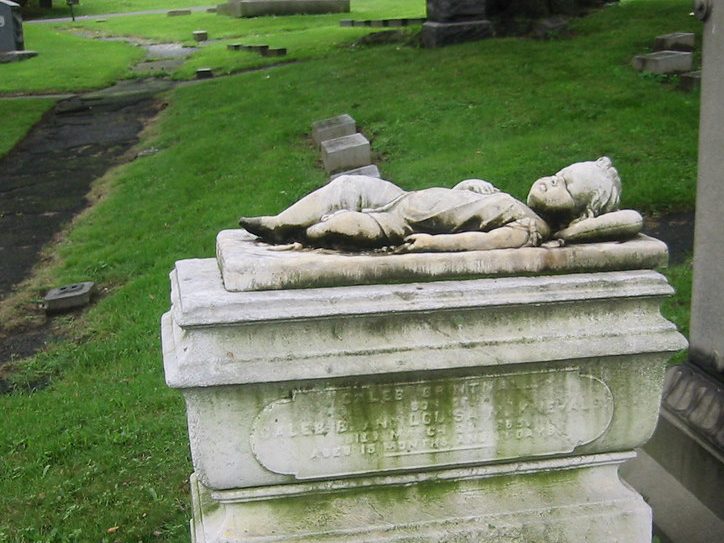
Photo: “Sleeping Child Tombstone Baby Grave Woodlawn 115-1593” by Brechtbug is licensed under CC BY-NC-ND 2.0.

Short verse: Susan McLean, ‘Jeopardy’

The first thing she requests post-surgery,
awake but drifting in the morphine glow,
is that my sister turn on the TV
so that the two can watch her favorite show.
Weak but alive, unsure if she has cancer,
my mother turns to questions she can answer.

*****

Susan McLean writes: “I wrote this poem while I was over a thousand miles away from the scene it describes, based on my sister’s phone account of what happened. The irony of the show’s title under the circumstances was the first stimulus for the poem, but also I almost laughed when I thought of how characteristic my mother’s action was. Given that she was in her eighties when she had major surgery, my mother’s jeopardy was very real, and I wrote the poem while we still didn’t know whether she had cancer. She did not. There is another irony, in that the game show Jeopardy! provides answers for which the contestants have to supply the appropriate questions. Yet, in context, those questions are answers.
The hardest challenge when writing about an emotional situation is to focus on the facts and let the emotions emerge by suggestion. A hint of humor acts as a counterweight to unspoken anxieties. The poem was first published in Measure and later appeared in my second poetry book, The Whetstone Misses the Knife.”

Susan McLean has two books of poetry, The Best Disguise and The Whetstone Misses the Knife, and one book of translations of Martial, Selected Epigrams. Her poems have appeared in Light, Lighten Up Online, Measure, Able Muse, and elsewhere. She lives in Iowa City, Iowa.

Susan McLean has two books of poetry, The Best Disguise and The Whetstone Misses the Knife, and one book of translations of Martial, Selected Epigrams. Her poems have appeared in Light, Lighten Up Online, Measure, Able Muse, and elsewhere. She lives in Iowa City, Iowa.
https://www.pw.org/content/susan_mclean

Photo: “Filming Jeopardy!” by jurvetson is licensed under CC BY 2.0.

Using form in translation: Virgil, tr. George Simmers, ‘Rumour’

Through Africa vile Rumour raced,
Of all the plagues the fastest-paced.
She’s supple, smart, light on her toes,
And gains momentum as she goes.
She may start small as creeping mouse
But soon she’ll overtop the house
Till, though in muck her feet may stand,
Her head is in Cloud-Cuckoo-Land.
Watch Rumour go! Her huge black wings
Hide fearful eyes, a tongue that stings,
Lungs that can bellow till they burst
And ears fine-tuned to hear the worst.
By night she’ll hiss round that odd place
Nor earth nor sky, but cyberspace,
And through those small hours she will keep
Alert and growing — she won’t sleep.
Come daylight she’ll observe with malice
Events in cottage and in palace.
Great cities then will shake in fear
At the enormities they hear,
And shudder when they taste the brew
In which she’s mixed the false and true.
Whenever men, fraught with disgust,
All eye each other with mistrust,
Great Rumour grins, her strength unfurled.
She relishes our post-truth world!

from Aeneid, Book Four

*****

George Simmers writes: “Plodding through a book of the Aeneid for O-level Latin when I was fifteen, many many years ago, I took a strong dislike to Virgil. But several decades later, a talk I attended made me think he might not be entirely tedious. The talk’s handout included a prose translation of this ‘Rumour’ passage. I decided to versify it myself, and found that it slipped quite easily into tetrameters. The eight-syllable line is fast and sharp, and avoids the temptation to ponderousness that always lurks within the pentameter.
Since then I’ve read more of Virgil, and have found that he is one of those poets whose writings have the knack of seeming topical. I have attempted some more translations. If I had to choose a top ten of poems that say something profound about the human condition, I would include his description of the souls purged of suffering, re-crossing the Styx to attempt a new life.”

Editor’s note: Both ‘Rumour’ and the Styx-recrossing passage that Simmers mentions are in his recent volume of translations, Riffs, along with his translations from Ovid, Catullus, the Greek Anthology and Francois Villon. Riffs costs £5, and should be available from Amazon, but if you’d like a signed copy, email him: simmersgeorge@yahoo.co.uk and he’ll arrange one for you at no extra cost.

George Simmers used to be a teacher; now he spends much of his time researching literature written during and after the First World War. He has edited Snakeskin since 1995. It is probably the oldest-established poetry zine on the Internet. His work appears in several Potcake Chapbooks, and his recent diverse collection is ‘Old and Bookish’.

Photo: “Dark Angel” by Novafly is licensed under CC BY-SA 2.0.

Using form: John Beaton, ‘Killing a Coho’

I grip its tail, hammock its back,
and swing its head down with a crack
on rock, then feel its spasms judder
through my hands as, with a shudder,
it stills,
a grand finale that fulfills
some ancient impulse in my mind.

Poking my finger through a gill,
I cause the raker fronds to spill
blood that drip drips as I carry
the silver deadweight of my quarry,
my kill,
toward a tidal pool
the sunset has incarnadined.

My knife begins behind its throat
and blood-clouds billow out and bloat
then seep into an outflow, seaward,
where baitfish burrow in the seaboard
in schools,
their heads in sand, small fools
kidding themselves they’re hard to find.

I slit its stomach. From that sac
their half-digested eyes peer back,
sandlance dumbstruck at being hunted
in shallow flats this prowler haunted,
this fish
whose every feeding flash
signalled flesh to seals behind.

Somewhere nearby a black bear roars;
wolves salivate; an antler gores
a starving cougar; orcas cripple
humpbacks, bite their fins, then grapple
great bulks
till bleeding, savaged hulks
sink; and then there’s humankind.

No kindness here. This salmon swam
full speed to seize my lure then, wham,
became a madcap, hell-for-leather,
death-row inmate on a tether
and fed
the caveman in my head.
This coast is one big hunting blind.

*****

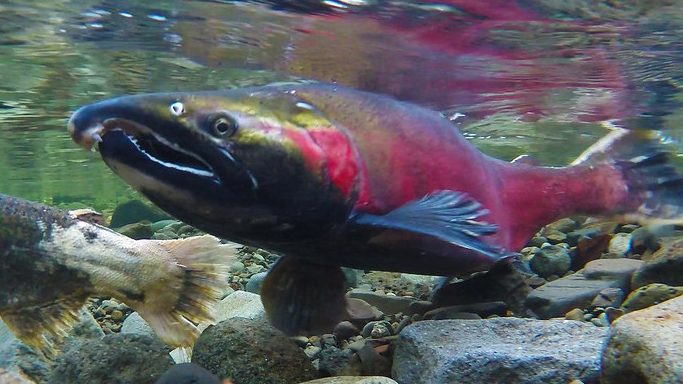
John Beaton writes: “I’m a lifelong fly-fisher but I’ve always had twinges of conscience about hurting and killing fish. Catch-and-release makes me question whether I’m being cruel. But there’s also a part of me that still connects with the beautiful brutality of the eat-or-be-eaten ecosystems in which we live. This poem tries to express that perspective in the context of an actual experience—the catching and killing of a coho salmon off a rocky shoreline near Tofino.

I chose a form to tell the story with some element of shock and violence. Each stanza has seven lines: one and two are tetrameter with masculine rhymes; three and four are also tetrameter but with feminine rhymes to cushion what comes next; five and six are monometer and trimeter respectively with masculine rhymes and these cropped lines set up a sense of surprise and violence; and line seven is tetrameter with a masculine ending that ties the poem together by rhyming with all the other seventh lines.

There’s some justification for killing the coho—the victim is itself a killer. And the turn at the end of the penultimate stanza connects humans with the savagery of the wildlife.

Sometimes you find a ‘eureka’ word—one that fits rhyme, meter, and sense so well you think ‘wow.’ This poem has one I think of that way: incarnadined.”

John Beaton’s metrical poetry has been widely published and has won numerous awards. He recites from memory as a spoken word performer and is author of Leaving Camustianavaig published by Word Galaxy Press, which includes this poem. Raised in the Scottish Highlands, John lives in Qualicum Beach on Vancouver Island.
https://www.john-beaton.com/

Photo: “Coho Spawning on the Salmon River” by BLM Oregon & Washington is licensed under CC BY 2.0.

Very short poem: RHL, ‘The End is Nigh’

The end is an A.I.

*****

This very short (poem?) was just published in The Asses of Parnassus – thanks, Brooke Clark! I chose this post’s accompanying photo for its enigmatic mixture of futuristic construction and threatening natural conditions – the building is the Globe, or Avicii Arena, in Sweden but that is irrelevant.

An alternative photo I considered had a doomsday prophet holding a sign saying “The beginning is nigh”, which would be equally true: the end of homo sapiens being the beginning of some unguessable post-humanity. I read Ray Kurzweil and Yuval Noah Harari, and ponder. And then I look back at (others’) 2015 predictions of what the next ten years would bring, and, well, not so fast…

Photo: “the end is nigh” by dan.boss is licensed under CC BY-NC-SA 2.0.

Max Gutmann, “Ozymandias” Meets “Casey at the Bat”

The outlook wasn’t brilliant for the Sandville One that day.
The boundless, barren, lone, and level sands stretched far away.
The traveler who’d tell the tale now gazed on it alone.
A king’s cracked visage lay beside vast, trunkless legs of stone.

His name was Ozymandias, a name of great renown;
Upon his monumental visage glared a potent frown;
A wrinkle curled his lip; he wore a sneer of cold command,
Asserting the calm certainty that he would always stand.

Oh, somewhere in this antique land the sun is shining fair;
Great Works that tower somewhere cause the Mighty to despair;
And somewhere there is more than pedestals and sand about;
But the King of Kings is joyless—mighty Ozy has struck out.

*****

Max Gutmann writes: “This was part of a series of comic pieces crossing famous poems with each other, not a particularly unique idea, as proven by The Spectator, which ran a contest on a similar premise a few months after I wrote the first of the batch. One of the early ones appeared in that Spectator issue. This one appeared in Light.”

Max Gutmann has worked as, among other things, a stage manager, a journalist, a teacher, an editor, a clerk, a factory worker, a community service officer, the business manager of an improv troupe, and a performer in a Daffy Duck costume. Occasionally, he has even earned money writing plays and poems.

Graphic: “The Pharaoh Ozymandias at bat”, Robin Helweg-Larsen and DALL-E.

Amit Majmudar, ‘Nocturne’

“A healthy man can expect to get hard three to five times per night….Doctors call these erections while you sleep “nocturnal penile tumescence.” — Men’s Health

Why do they happen at all, much less
five times a futile night—
nested, within the circadian, their
sprung rhythm of delight?

Unless delight misreads the message.
Unless they choke and strain
against their loneliness like starved
Rottweilers on a chain.

Who visits in the witching hour
as REM begins
and slides her darkling mouth around
his hardening and grins?

Lascivious sylph or cocktease yakshi
or ex from some past life,
coaxing a husband into sin
at arm’s length from his wife.

Or else someone that when awake
he would not dare to daydream,
verboten body, evanescent
pelvis figure-eighting,

or maybe all his fantasies
since age twelve coalesce,
voluptuous ghosts that flash him their
aurora borealis.

A hundred mayflies in his blood
take wing at once above
the hushed and shingled houses, seeking
the ones they shied to love,

desperately swooping down and left,
back up, around, and right,
a minute to mate, then drift and fade
on a humid summer’s night.

*****

Editor’s note: I see this poem, which was first published in Only Poems, as existing where one’s various worlds overlap: the body, the mind, work (Amit Majmudar is a medical doctor), family… Amit Majmudar wisely provides no comment on his poem.

Amit Majmudar is a poet, novelist, essayist, translator, and the former first Poet Laureate of Ohio. He works as a diagnostic and nuclear radiologist and lives in Westerville, Ohio, with his wife and three children. He is the author of twenty books so far in a variety of categories, with different bodies of work published in the United States and in India.
His poetry collections include 0’, 0’ (Northwestern, 2009), shortlisted for the Norma Faber First Book Award, and Heaven and Earth (2011, Storyline Press), which won the Donald Justice Prize. These volumes were followed by Dothead (Knopf, 2016) and What He Did in Solitary (Knopf, 2020). His poems have won the Pushcart Prize and have appeared in the Norton Introduction to LiteratureThe New Yorker, and numerous Best American Poetry anthologies as well as journals and magazines across the United States, UK, India, and Australia. Majmudar also edited, at Knopf’s invitation, a political poetry anthology entitled Resistance, Rebellion, Life: 50 Poems Now.
One of Majmudar’s forthcoming volumes is a hybrid of prose, drama, and poetry, entitled Three Metamorphoses (Orison Books, 2024). A new poetry collection is forthcoming from Knopf in 2026.

For links to Majmudar’s Nonfiction, Fiction, Mythology and Translations, please see his website.

Photo: “I Dream Of Love” by toddwshaffer is licensed under CC BY-NC-ND 2.0.