Category Archives: Chapbooks

Potcake Poet’s Choice: Geoffrey A. Landis, ‘If Angels Ate Apples’

If angels ate apples, potatoes and pears
they’d soon be chubby and cheerful as bears
nibbling knishes and other such things,
tickling your face with the tips of their wings.

If seraphim shouted and whistled at girls,
drank drafts from thimbles, all friends with the world
drained the best ale and chased it with rye,
then fluttered in circles while trying to fly.

Angels on tables! (Watch out for your glass!)
Slipping on puddles, right plop on their ass!
Laughing at music that only they hear,
then tweaking the barmaids a pinch on the rear.

Fuzzy fat angels, that’s something to see,
as they dance to the jukebox at quarter to three,
and ace out the pinball, a marvelous feat,
the lights and bells flashing (though sometimes they cheat).

If angels made merry, would that be so odd?
Must they always be solemn, to stay friends with God?
It’s a pity that Heaven is so far away
angels hardly ever come down and just play.

Geoffrey A. Landis writes: “It’s impossible to chose just one poem as a favorite, of course, and even if I could, which poem I’d pick would change from day to day, maybe even from minute to minute. Still, I’ve alway been fond about ‘If Angels Ate Apples’; it’s one that reads well out loud, and I had fun writing it. Mostly I was playing with meter and alliteration. I was happy that Gardner Dozois picked it up for Asimov’s Science Fiction, and since then it’s seen a couple of reprints.”

Geoffrey A. Landis is a rocket scientist who sometimes plays at being a science-fiction writer, and a science-fiction writer who sometimes plays at being a poet. In the process he’s picked up a handful of awards, ranging from science fiction’s Hugo and Nebula awards to the Science Fiction Poetry Association’s Rhysling award, and had his stories and poems appear in twenty languages. He lives in Berea, Ohio, with his wife (who is also a science fiction writer and a poet) and four cats.

Website: http://www.geoffreylandis.com/poetry.html

Potcake Poet’s Choice: F.J. Bergmann, ‘Further’

The hyperspace viewer shows a flowing plane
of treebark, roots; a distorted approximation
of what we aren’t permitted to see. Clearing again
with each rugose transformation,
limited by the speed of post-quantum rendering,
the map of our passage grows:
an icebound dimensional lake thaws, remembering
the hot pulse of its creation, shows
palpable vestiges of times, energies and matters
through which our wake will trace.
The reflection of our ship shimmers, spatters
light back to streaming stars. We race
onward, out to where no atmospheres and skies
of planets can frustrate our vision;
the provocation of empty black where no suns rise
unbearable without acquisition.
Particular silence surrounds us like a felt of absence,
itself the sinuous, tentacular touch
of a void-god whose cult is abstinence,
who meditates on dark too much—
those distances between the stars and galaxies—
and has a singular affection
for black holes and cosmic fallacies.…
Sometimes we overreach. Each direction
(up? down? sideways?) seems different now;
our ship’s brain’s blocked—no ability
to calculate location. We tell it to go back: how—
why these results? We’ve lost mobility,
it says; the only options are charm and strange.
We clear its cache, then re-install the route.
On the viewscreen, no known space in range;
nothing but the false stars of snow. About
fifty-six hours in, the background gigahertz hiss
of relic radiation is finally broken:
our A.I. transmits a mad-dog growl. Something’s amiss.
What does it mean? Unspoken
fears flicker on our faces like shadows cast
by entities we feel but cannot see,
leaving invisible tracks across the vast
cosmic chasm, preceding one more tangibly
manifesting. A small silver embryo afloat
in amnion of atrament, our ship
is dwarfed by tentacles of terror. We’re but a mote
in the eye of a demonic god, a blip
cascading down through superimposed dimensions
to our doom, where something pines
beyond a threshold, longs to enter our attention—
and hungers for the taste of human minds.
Our Earth’s a pale blue memory, a ripe prize
to harvest; our civilization will revert
to a predawn whence no human can ever rise.
The God Void sits in judgment—but won’t convert
one soul. Its vastness grows, membranous and bloody,
slithers back into the open portal of a queer
dwelling where it withdraws to sleep and let the muddy
waters of vacuum clear.

F. J. Bergmann writes: ” ‘Further’ first appeared in the Lovecraft eZine. I selected ‘Further’ because I’m fond of cosmic horror, and I was pleased with being able to maintain the form and narrative at this length. The process I used for this poem is what I call ‘transmogrification’: starting with a text source, which can be anything, from another poem to spam, I write a different poem or story using most or all of the words from the source, generally in reverse order. The source for this poem was ‘Let Muddy Water Sit and It Grows Clear,’ a considerably shorter nature poem by Ted Mathys, whose title is reflected in the last two lines of my poem.”

F. J. Bergmann is the poetry editor of Mobius: The Journal of Social Change (mobiusmagazine.com), past editor of Star*Line, the journal of the Science Fiction & Fantasy Poetry Association (sfpoetry.com), managing editor of MadHat Press (madhat-press.com), poetry editor for Weird House Press (weirdhousepress.com), and freelances as a copy editor and book designer. She lives in Wisconsin with a husband, intermittent daughters and a horse or two, and imagines tragedies on or near exoplanets. Her writing awards include SFPA Rhysling Awards for both long and short poems and SFPA Elgin Awards for two recent chapbooks: Out of the Black Forest (Centennial Press, 2012), a collection of conflated fairy tales, and A Catalogue of the Further Suns, first-contact reports from interstellar expeditions, winner of the 2017 Gold Line Press manuscript competition. She was a 2019 quarter-winner for Writers of the Future. Venues where her poems have appeared include Asimov’s SF, Missouri Review, Polu Texni, Spectral Realms and Vastarien; her speculative fiction has been published in Abyss & Apex, Little Blue Marble (CA), Pulp Literature (CA), Soft Cartel, WriteAhead/The Future Looms (UK), and elsewhere. She has competed at National Poetry Slam with the Madison Urban Spoken Word slam team. While she has no academic literary qualifications,. she is kind to those so encumbered. In a past life, she worked with horses. She thinks imagination can compensate for anything.

Contact F. J. Bergmann: demiurge@fibitz.com

Launch: Potcake Chapbook 9, ‘Robots and Rockets’

I’m very happy to announce that the ninth in the series of Potcake Chapbooks has been launched into orbit: ‘Robots and Rockets’ is an SF issue (could you guess?) and has poems by five newcomers to the series: Bruce McGuffin, Juleigh Howard-Hobson, F.J. Bergmann, Julia Griffin and Geoffrey A. Landis – many already known outside SF through Light poetry magazine and other places. Returning poets are Maryann Corbett, Nina Parmenter, Marcus Bales, A.E. Stallings, Martin Elster and myself.

Copies can be ordered from Sampson Low for four or five Pounds or Dollars, including postage worldwide. Enjoy it! It is, of course, a blast(-off)!

Potcake Poet’s Choice: Kate Bernadette Benedict, ‘The Sureties’

Some things you can still rely on.
Forsythia hedges contribute their usual yellow;
Callery pears exhibit their annual white.
The vernal light is cast as it was cast last year—
Cimmerian, then milky, then bright.
Tulips accrue, woodpeckers adhere
to their nourishing boles, a piccolo.
sounds in the park. Lovers have new grass to lie on.

Some things you can still depend on.
I buried my mother today in the family plot.
Her ashes were housed inside a simple casket—
an easy-to-carry container with little heft,
light as an already plundered Easter basket
when only a couple of elegant eggs are left.
I’d been there before; I’d stood on the very spot.
I’m accustomed to the conditions that lives end on.

Kate Bernadette Benedict writes: “Sureties are few in life yet I feel sure that many of us today are going through our daily motions in an elegiac mood—because of the pandemic, of course, and the illness and deaths we learn of on the news and experience in our lives. Last spring (2020), we were all in a panic and this spring we are, perhaps, inured to loss, at least to some degree. So I feel this poem about spring and death fits my mood perfectly, and perhaps the mood of you, the reader, too.”

Kate Bernadette Benedict may have lost a portion of herself when she took on her pen name; still, she has grown accustomed to its saintly qualities which represent, she well knows, an unattainable goal. She is the author of three full-length collections, the most recent being Earthly Use: New and Selected Poems. Kate has been holed up for a year in her apartment in Riverdale, the Bronx, but is now twice-jabbed and hopes to be re-materializing very soon. Her website suffered a crash but some content is still readable at katebenedict.com, where links to three formal-friendly publications may be found: Umbrella, Bumbershoot, and Tilt-a-Whirl.

Potcake Poet’s Choice: Susan McLean, ‘A Woman of a Certain Age’

I read more slowly now, because I read
between the lines.  The heroes of my youth,
who gave their lives for justice, art, or truth
(consumed with purpose, driven to succeed),
now seem like puppets pulled by strings of need,
while those who died unknown (except by those
they fed, taught, nursed through illness, mended clothes
and cared for) doled out grace unmixed with greed.

A quilt, a tablecloth she hand-crocheted,
some tips for making piecrust, kneading dough,
the memory of a gumdrop tree she made—
small things of use, of beauty, of delight
are what they leave when they have left our sight.
Don’t tell me what such gifts are worth.   I know.

Susan McLean writes: “This poem was inspired by reading that people read more slowly as they get older, because everything they read reminds them of something else. As I thought about that, I also thought about the people I would have called the ones I admired the most, and about the people I actually loved most and why I loved them. The former were mainly men, which made me realize that the lives of women (until recently) have often been invisible in the world and have left no written record. What they leave instead is the impact they have had on those around them, and little things they have said and done and made. My maternal grandmother and my mother are both unseen presences in this poem. My life has been very different from theirs, with opportunities they never had. But that does not mean that I value less what they did.”

Susan McLean grew up in Oxon Hill, Maryland, attended Harvard University and Rutgers University, and taught English for thirty years at Southwest Minnesota State University. She has published two books of poetry, The Best Disguise and The Whetstone Misses the Knife, and one book of translations of the Latin poet Martial, Selected Epigrams. She lives in Iowa City, Iowa.

https://www.pw.org/directory/writers/susan_mclean

Potcake Poet’s Choice: Daniel Galef, ‘Proverbs for Engraving onto Imperial Monuments’

War is the price of freedom. Depths bewilder.
The blow aimed at the beast hits him who shields it.
The sword of Justice best serves him who wields it.
The gibbet’s final victim is its builder.
A round coin rolls to him who most deserves it.
A tree outlives its leaves; an age, its fashions.
A carthorse needs its blinders; man, his passions.
The word of Justice best shields him who serves it.
The ardent spirit breaks the firm retort.
Power bears scrutiny like the sun the gaze.
God speaks His queer commands one thousand ways.
The worm awaits. The butterfly is dreaming.
The price of peace is bondage. Chains support.
Persuasion is a proof. Seeing is seeming.

Daniel Galef writes: “I majored in philosophy in college, and it’s very rare that I get a chance to use my degree in any way! (Even everyday critical thinking I engage in not without a little self-conscious embarrassment to be reliving those madcap cogitating days of my youth.) This sonnet began as an un-metrical list of aphorisms, vaguely inspired by Blake’s Marriage of Heaven and Hell, but with an eye less to individual ideas and more to “ideology.” I’m very interested in how philosophy is appropriated by the state, in the form of slogans or anthems or little red books—it’s all fine and dandy to debate competing theories of morality until it’s time to order the transplant waiting list, or convene the board of censors.

“I don’t always do a lot of surgical revision on a poem, but it was after about two years of lying in a drawer [a digital drawer] that I took the loose collection of prose sentences and started pruning, finding and inserting rhymes, and arranging them into pentameter. I’m a poor free verse poet, and verses that start off free end up in metrical shackles much more often than the reverse, even though logically it ought to be tougher to turn prose into verse than vice-verse-a.

“I could write a page on every line in this sonnet, which says much more about my own pretentiousness than about the poem, but will limit myself to saying I chucked in snips and snatches from Plato, Maimonides, Zhuangzi, Lucullus, David Hume, Thomas Jefferson, Aesop, W. H. Auden, Slavoj Žižek, Wernher von Braun, George Orwell, and Groucho Marx. Just about every maxim in the poem has certain levels, interpretations, or applications that I agree with and others which lead to perverse, abhorrent, or outright dangerous positions—which is of course what makes them so useful.

“The poem was published in Philosophy Now, a glossy magazine with a specialized readership but a glossy magazine nonetheless, and one of the highlights of the first summer after I graduated was driving to the Barnes and Noble in Clifton Commons and finding myself there on the shelf along with the movie tie-in reprints and tote bags with snarky quotations on them. It’s probably normal for most poems published, even in larger or well-respected publications, to go essentially unnoticed. I don’t hear back from strangers about the majority of poems I send out into the world and my meager stream of fanfiction is archived in an email folder I dip into when depths start to bewilder. Yet this is the poem that keeps coming back—and the comments I receive on it indicate that different readers draw very different conclusions from it. The year after it was published it was awarded second place in the “Best Poems of 2020” list at the Society of Classical Poets Journal. Someone sent me a Chinese blog where it had been translated into Mandarin, with (Google Translate revealed) a spirited discussion in the comments section as to whether the “blinders” were the same device whether the line was translated as “horse” or as “donkey” (the verdict: they are distinct: the blindfold put on a donkey driving a wheel totally blocks its vision, whereas the blinders put on a horse drawing a vehicle do so only selectively).”

Daniel Galef is a graduate instructor of English at Florida State University and Associate Poetry Editor of Able Muse. His poetry has appeared in Atlanta Review, Able Muse, Measure, The Lyric, Light, First Things, The Christian Century, and Philosophy Now. He is listed in Webster’s dictionary under the entry for “interfaculty (adj.),” which means “brilliant and handsome.” Besides poems he also writes short fiction, humor, and plays, with a story published last year in Juked just awarded a spot in the 2020 Best Small Fictions anthology. He is currently searching for a publisher for a debut poetry collection, Imaginary Sonnets.

More of his work is listed at http://goo.gl/mpRUrs
Potcake Poet’s Choice: Marilyn L. Taylor, ‘Reading the Obituaries’

Now the Barbaras have begun to die,
trailing their older sisters to the grave,
the Helens, Margies, Nans—who said goodbye
just days ago, it seems, taking their leave
a step or two behind the hooded girls
who bloomed and withered with the century—
the Dorotheas, Eleanors and Pearls
now swaying on the edge of memory.
Soon, soon, the scythe will sweep for Jeanne
and Angela, Patricia and Diane—
pause, and return for Karen and Christine
while Nancy spends a sleepless night again.
Ah, Debra, how can you be growing old?
Jennifer, Michelle, your hands are cold.

Marilyn Taylor writes: “The older I get, the more my poems seem to turn to thoughts of mortality, especially when I find myself reading the obituary pages in the Sunday paper. After having indulged this habit for several years (it’s something old people do, kids), I discovered that a reader-of-obits can often tell approximately how old the deceased was—especially in the case of a woman—at the end of her life, simply by noting her name. Women’s names have a strong tendency to go in and out of fashion over the course of several decades, albeit with a few exceptions—think “Catherine,” and the ever-popular “Elizabeth” and its many offshoots (although, oddly, “Betty,” now seems dated). I mulled over it for a few months and came up with the sonnet below. Sorry if your name is included; I have no dark motives.”

Marilyn Taylor, former Poet Laureate of the state of Wisconsin and the city of Milwaukee, is the author of six poetry collections. Her work has appeared in many anthologies and journals, including Poetry, Light, American Scholar, and Measure. She was recently awarded the Margaret Reid Prize for verse in forms. http://www.mltpoet.com/

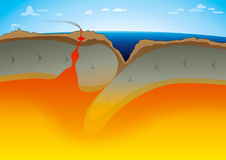
Short poem: ‘Subduction’

All human nature, conflicts, nations, and all races
will be washed as by tides on beaches, all loves and lusts
will with Time disappear, all human traces
washed under as all plates are washed
by the subduction of Earth’s crusts.

This poem was published this month in Lighten Up Online – an excellent place to read light verse on subjects both light and heavy. Every issue has a mixture of longer and shorter poems, and a competition. This March 2021 edition concludes with the results of the eco-crisis competition, headed ‘The Airing of the Green’; ‘Subduction’ was one of the winners. Other sections of the magazine were also focused on the environment. Pollution and climate change are twin disasters, and you can express outrage, despair, or (more usefully) proposals for action. The million-year view of my poem isn’t useful but it’s low-hanging fruit, there to be taken.

I’m delighted to be in a magazine along with poems by fellow Potcake Poets Martin Elster, Michael R. Burch, D.A. Prince, George Simmers, Nina Parmenter, Gail White, Chris O’Carroll, Tom Vaughan, Jane Blanchard, Jerome Betts, Martin Parker and Melissa Balmain, as well as two poets who will be appearing in the next Potcake Chapbook, Bruce McGuffin and Julia Griffin, and the ever-anomalous Max Gutmann. Several of us have more than one poem in this issue.

“File:Tectonic-plates-subduction-zone-17280738.jpg” by Benjilrm is licensed under CC BY-SA 4.0

Potcake Chapbooks: Updated Call for Submissions

The “Potcake Chapbook” series is named for the dogs of the Bahamas and the Caribbean – strays that live off the burnt scrapings of cooking pots. The poems in the series are a mixed bunch – but the potcake of our logo wears a bow tie to show that he and all the poems are formal. These poems are memorable in part because they rhyme and scan, as all truly memorable (i.e. easily memorisable) poetry does. We subscribe to the use of form, no matter how formless the times in which we live.

Potcakes hunt around the back streets and beaches, looking for something unguarded to eat. Like a potcake, I’m always looking to see if there is some good poem to carry off. The plans for the chapbooks are a bit sketchy, always changing–everything depends on what I run across and what Alban Low would like to illustrate. Perhaps half the poems we have published have come from my poking around back issues of online poetry magazines; and the other half have come from material that has been sent for me to look at.

When there is enough good material on a single theme to fill 13 pages of a chapbook (still leaving room for Alban’s work, of course), then it may become the next project. But until a chapbook actually goes to print everything is subject to change. An even better poem may show up and displace one tentatively placed. A slew (or slough) of poems on a new theme may cause a reprioritisation of planned chapbooks.

This is one of the reasons that I prefer to consider only poems that have already been published–so that I don’t feel guilty about having a bunch of poems that will sit with me for months, years, and may or may not be included in the Potcake series. I have flagged a thousand poems that interest me; but I can only publish a dozen in a chapbook, and only a few chapbooks will get produced in a year.

However I am always keen to read and consider rhymed and metered verse that has already been published. There are several chapbooks that are jostling in the queue for completion and publication:

Travels and Travails (travel)
City! O city! (urban life)
Just a Little Naughty
Portraits Unpleasant
Various Heresies (religion)
Lost Loves
The Horror of Spring! (seasons)

and there are more; but the next one in the series, to come out early in 2021, will be one of science fiction, tentatively ‘Rockets and Robots’. Like all the chapbooks listed above, it is nearly full already. As with all of them, if I run across another poem I really like, I’ll include it.

Poems in the chapbooks run from two or three lines to some 40 lines in length–obviously, with space at a premium, poems over 20 lines and running over one page are less likely to be included… but it does happen. Other criteria: I’m looking for wit, elegance, a variety of traditional and nonce forms, a variety of voices and moods: happy, sad, angry, sardonic, meditative… anything interesting I can scrounge. If you have something you think I might like, on any topic, please send it along to robinhelweglarsen@gmail.com

I can’t promise to use it, but I will read it and reply!

Potcake Poet’s Choice: ‘Squelch’ by Nina Parmenter

I heard the squelch of death again –
or was it just a neuron firing
deep within my boggy brain,

or possibly a cell expiring
down amongst a mucus mess?
It could have been my heart perspiring

(that may be a thing I guess)
or, deep down in the adipose,
the squealing of a fat-lump pressed

to serve as fuel, and I suppose
it might have been a small mutation –
‘Pop!’ (we get a lot of those),

a bronchiole’s sharp inhalation,
‘Hiss!’ a membrane’s gooey breath,
a bile-duct’s bitter salivation…

Probably, it wasn’t death.


Nina Parmenter writes: “I had such a good time writing this poem. For a start, I got to have a lovely little geek-out researching a few anatomical details. I do like writing poems which require a little research, and biology seems to be a favourite subject at the moment. With bronchioles and bile ducts firmly in place, I granted myself permission to fill the rest of the poem with as many gooey, yucky words and noises as I pleased. And who wouldn’t enjoy doing that?

To compound the pleasure, I wrote the poem in terza rima form – such an elegant, flowing puzzle of a form, and one of my favourites to write in.

Honestly, this is one of those poems that I wish had taken me longer, because I didn’t want the (slightly dark) fun to stop.”

Nina Parmenter has no time to write poetry, but does it anyway. Her work has appeared in Lighten Up Online, Snakeskin, Light, The New Verse News and Ink, Sweat & Tears, as well as the newest Potcake Chapbook, ‘Houses and Homes Forever‘. Her home, work and family are in Wiltshire. Her blog can be found at http://www.itallrhymes.com. You can follow the blog on Facebook at http://www.facebook.com/itallrhymes