Category Archives: Poems

Poem: Sonnet: “My Thunder-Galloping Unconscious Mind”

A sonnet from a couple of years ago, published in Snakeskin, November 2016 :
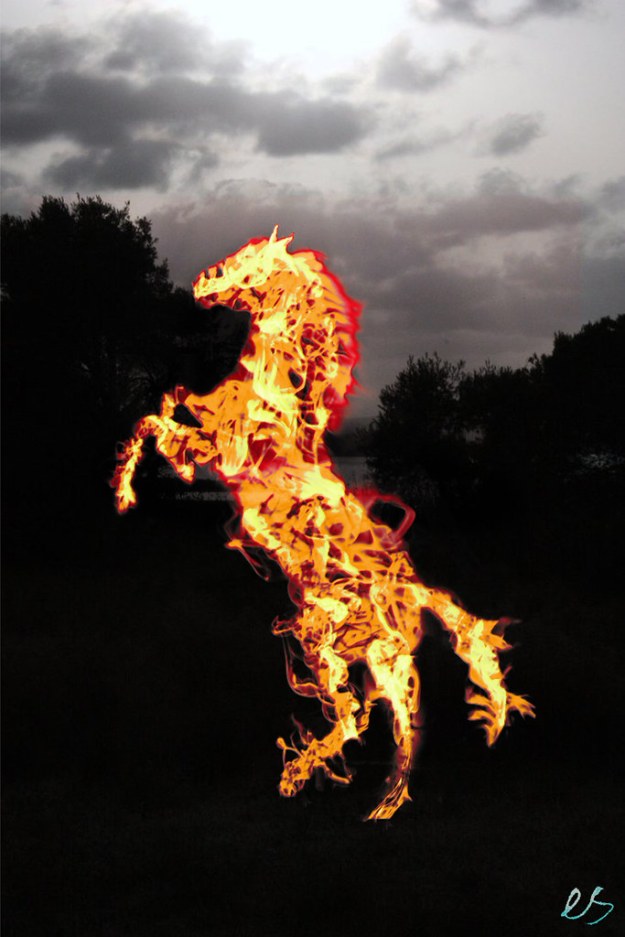
Fire Horse

“fire horse” by sk8rboi90 is licensed under CC BY-NC-SA 2.0


MY THUNDER-GALLOPING UNCONSCIOUS MIND

My thunder-galloping unconscious mind –
On which I, jolly joking jockey, perch
And whose divine intentions I besmirch
With claims its selfishnesses I’ve divined –
This powerhouse, this generator blind,
With pattern-seeking data-crunch research,
Unschooled, ungoverned, then will trip and lurch
Drunk as a soul must be in a mad mind.
But loved and honoured it’s a thundering horse
That powers all the body’s work and health
And flushes poisons in its daily course
And monitors all dangers in its stealth
And feeds uplifting feelings, love and right…
And gifts these images to me at night.

This encapsulates a lot of my thoughts about the way the world works: a lot goes on under the surface of the mind, and we are not as much in charge as we think. In that sense I agree with those who say there is no free will – we think we are consciously deciding to act, but when the brain is monitored we find that we begin to act before the conscious decision – the conscious mind merely rubber-stamps the decision already taken by the unconscious and then, like any figurehead, takes credit for the action.

Also, I am of the opinion that acknowledging the power and healthfulness of the subconscious is key to a happy, balanced and creative life.

The structure of the poem – well, it’s a sonnet, but not pure in form. The first lines rhyming ABBA ABBA are Petrarchan, but after the (weak) volta the CDCD EE is Shakespearean. The effect to a purist is messy, muddy. But honestly, the awareness of four-line chunks is driven by either of those types of fundamental rhyme, just as it is by a rubaiyat’s AABA. When the final couplet comes, the sonnet feels complete – and this couplet is the strength of the Shakespearean sonnet. (The Petrarchan would have ended CDE CDE.)

I am only aware of one sonnet where switching between Petrarchan and Shakespearean was done deliberately and appropriately: a sonnet by Keats in which he was discussing form, and clarifying his new-found preference for the Shakespearean over the Petrarchan.

In anyone else, switching is not ideal, but it’s also not a major obstacle. It is a sign of slight imperfection. But I think this poem still holds. 

New Poem: “Buried in the Garden”

I have a poem published in May’s Snakeskin which (shock, horror!) is not formal.

Snakeskin logo

Buried in the Garden

Now I lie dead, buried in the garden,
And the plants take over.
Two hibiscus bushes grow from my eyes,
Oleander from my nose,
A sapodilla will fruit from my mouth,
Casuarinas grow to sigh from my ears.
From my chest a love vine straggles out
And black crabs live in the cavities of my lungs.
A chicken boa curls around and hunts up and down
And from my private parts grows
That least private of plants, a coconut palm.
From my feet termites are building tunnels out around the world.
So is my body divided, reused, and the birds take hair for their nests
And the calcium of bones and teeth for their eggs
And the body, the body is gone.
And what am I, but a body? What would remain in your sieve if you sift my remains?
Only some thoughts, others’ memories of some thoughts,
Blown away on the wind when the rememberers themselves are gone.

At a stretch, you could claim it has elements of formality. It has a structured sequence of appropriate tropical plants and other creatures growing from body parts – the most visually arresting from the eyes, the most highly scented from the nose, and so on. It has a volta, a turn in the argument from the description of transformation as positive, to the dismissal of that process as being mere erasure.

But are those things enough to make the whole piece word-for-word memorable? Because that is my test of poetry. And I think the answer is no. So no, it is not real poetry. There may be one or two memorable phrases, but that’s not enough. The underlying concept may be memorable, the images may be memorable; still not enough. Only if the entire piece is easy to recite because of the actual expression of the words, I argue, can it be called poetry.

Should you then put your time into transforming the images into formal verse, creating perhaps a Shakespearean sonnet, iambic pentameter and all?

Buried in the Garden (Take 2)

In garden buried, I sprout from my eyes
Hibiscus; oleander from my nose;
From mouth, a sapodilla; a pine sighs
From out my ear; from chest a love vine grows;
Black crabs in lungs, small boa in my guts;
From feet, ants tunnel out around the world;
My privates sprout a palm with coconuts.
Birds peck my bones, my teeth, hair that once curled,
For calcium for eggs and for a nest…
Sift my remains: what remains in your sieve?
Of my whole body I’ve been dispossessed,
Only the memory of some thoughts still live
Within the thoughts of others’ memories;
When those rememberers go, all traces cease.

So we come back to the old questions of poetry: is the expression itself richer or poorer for having been put into verse? And is the formal verse expression (whether richer or poorer) more memorable than the non-formal expression? What do you think?

I wonder if Snakeskin editor George Simmers has an opinion.

Poem: “Success”

This couplet is from the Asses of Parnassus tumblr site, 6th February 2019.

Toast

Success

“Success!” he toasted. Though I wished him dead
I smiled and raised my glass: “Suck cess!” I said.

About the use of form in this poem: the point of the poem is a lighthearted pun, therefore the shorter the poem the better – all you want is the setup and the punchline. Although a long poem in iambic pentameter gets heavy in tone, a single couplet can feel rapid, light and natural. Cheers! 🙂


Poem: “Viking Sails South”

This poem was originally published in Snakeskin in March 2019. I wrote it for a variety Viking, Snakeskin 259reasons. I’ve often thought that when the Norse settlement of Greenland ended around 1450, not all of the settlers would have either died or sailed back toward Scandinavia… why not explore further in North America and look for somewhere pleasant?
VIKING SAILS SOUTH

Tired of ‘Greenland’ and its icy coast,
a band of us sailed south to Leif’s old place,
discussed old legends (drinking many a toast)
of Norman settlements in Spain and Thrace.
So why not us as well? Let the old stay
in frost-filled farms, friendly, familiar.
Go south! Long nights to lengthening days give way
until it seems like Equinox all year.
Bring our old gods, have garlands round them hung –
wind in soft pines like loneliness of girls –
where just to taste the water makes you young –
pink conch shells on pink sand yield up pink pearls –
we saw Njord, sea god, sleeping from our railings.
Brown women smile. Our children will be skraelings.

My own family history supports this possibility of Vikings being attracted to the Caribbean: my great-great-uncle was a (very reactionary) Governor of the Danish West Indies; my grandfather was a (very liberal) Lutheran minister there; so my father was raised on St. Croix for ten years until it was sold to the US in 1917 – he was sent “home” to Denmark but returned to settle in the Bahamas for the last 22 years of his life; and though I have kept my connection to Denmark, and lived there for five years, the Bahamas is my home. Some Scandinavians are perfectly happy in the islands!

About the use of form in this poem: it is a standard Shakespearean sonnet: 14 lines (sonnet) of iambic pentameter (standard), rhyming abab cdcd efef gg (Shakespearean). However, it doesn’t have a strong volta, or turn in the argument, which is normally considered a requirement for a sonnet – you set the argument up first, and after the volta you demolish and replace it, or give it a good twist. The best that can be said for this sonnet is that the last two lines provide a resolution to the argument. Regardless, the sonnet length and structure allows a full exposition of an idea, while requiring brevity and compression. It can be very satisfying to produce.

Poem: “Religions”

If it’s Sunday, maybe I should post a religious poem… Of course, the trouble is my

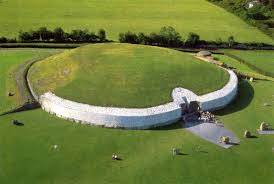
Newgrange

Newgrange – prehistoric Irish site aligned with the winter solstice

ambivalence about religion. I side with US statesman and orator Henry Clay: “All religions united with government are more or less inimical to liberty. All, separated from government, are compatible with liberty.” And if there’s a difference between history and religion, I’ll take history any time.

So this one was originally published in Snakeskin, August 2016…

Religions

Judaism

Genocide in Canaan
Gave God’s land to the Jews;
But genocides in other lands
Are Yahweh’s big taboos.

Buddhism

All life is suffering,
Yes, all our life is pain;
Then I must be a masochist –
I’d love to live again.

Norse religion

The first gods killed a giant,
From his skull to make
The sky, and mountains from his bones –
What lies! No talking snake?!

Christianity

Jesus wasn’t Jewish
And his killers weren’t from Caesar;
At least, so Paul said after
An epileptic seizure.

Islam

There is no God but One,
Perfect in every way;
All creatures do His unknown will –
So there’s no need to pray.

Mormonism

To teenage Joseph Smith
An angel showed gold plates
On which he read ‘Jesus Was Here’ –
It got him lots of dates.

Modern Paganism

Pretentious modern pagans
Confused by mystic spoof
Have got no clue what Stonehenge was
With its old Newgrange roof.

Atheism

I don’t see gods on clouds,
I don’t hear angels sing;
There’s just one question bothers me –
How come there’s anything?

About the use of form here: flippant comments, as in the above poem, are well served by simple quatrains with a bit of bounce to them. Iambics are not in themselves bouncy, but in this pattern of 3 feet, 3 feet, 4 feet, 3 feet they work fine. There’s not a lot of thought in any of the verses, just a set-up and a quick jab. The form works well for its purpose.

New Poem: “Modern Cars”

So, following up on the previous post about Lighten Up Online, I get my own short, light things in there once in a while. Tucked in as one of the Seven Sixes, in the current issue I have “Modern Cars”:

Dealing with the modern automobile
is like a farrier fixing a steering wheel.
Forget your happy thrills
with metal tools, familiar skills.
This is no horse and carriage.
Just take it to a garage.

Yes, my American and Canadian friends, that last word rhymes… at least in the UK… at least to some people. I suspect that’s one of the reasons I wrote the poem (together with expressing the futility of trying to fix modern things oneself). I enjoy hearing all the variations of the word “garage“!

Poetry Resources: “Best Remembered Poems”

578776Perfectly competent, and with interesting trivia and useful background notes by Martin Gardner, this selection of “Best Remembered Poems” is pedestrian almost by definition: these are the ones that are best remembered by Americans, so there will be very little that is new and exciting–and honestly, a lot of the poems best remembered from high school English lessons on the 19th and early 20th century… are downright boring.

But if you’re looking for a book that contains most poems that most non-poets vaguely remember… that contains both ‘The Charge of the Light Brigade’ and ‘Casey at the Bat’… then this is the one for you!

Poems: “Beach and Mountain”, “Now I Know Death”

This month’s edition of Snakeskin has two of my poems in it – and neither is formal. How Linda Ronstadtembarrassing! All the more so as the issue also contains two very nice sonnets by D.A. Prince and Diane Elayne Dees, and a truly excellent transforming poem by Daniel Galef which can be read as either a loose-rhythm 14-line sonnet or, with identical words broken into shorter lines and different rhymes, as five quatrains in the style of Robert Service.

But having given you the links to those, I return to my own poor contributions:

Beach and Mountain

Oh! I said, Look at that Beach!
What! said the Mountain, So go live down there.
See if I care.
Oh Mountain, I said, don’t be so silly,
I choose to live here,
complex and craggy, rich in forests and streams,
here where you rise up, taller than the clouds,
up where the air itself is rarefied
with views over all the world below.
But still… look at that pretty little beach
with its soft white sand,
its smooth clear water…

Now I Know Death

I know how I will die – sadly, slowly,
Regretting all I leave behind
In the spirit of taking a train to school,
Of seeing the holidays pass without a girl,
Of moving out of a good house, leaving the keys
On the table, carefully locking myself out.
Watching the first leaves fall, warning that
The summer comes to an end.
Going to bed only because I am so tired.
Hearing the wind in the pines, hinting at loss.
Feeling without my children, grown,
Transcontinental, unreachable.
The sadness that comes from depths of happiness
And knowing I’m too frail to hold it.

New Poem: “My Eliza”

The latest issue of The Lyric is out – although I won’t get my copy for weeks or months yet, depending on the Bahamas Post Office’s mood and inclination – and apparently “My Eliza” has been awarded the Leslie Mellichamp Prize (with $100, no less!). Judge Michael Ferris wrote: “A smart and charming love poem with island images (I learned some new words) that finishes on the striking picture of two sea otters drifting hand in hand.” Of course I’m delighted! So here it is:

My Eliza

As through Canada I wandered,
Winters cold and summers cool,
Companionship precipitated
Out a girl wild, beautiful.

Come, she said, share games and reading,
Come and play and let’s share beds;
Let’s move south for warmth and business,
Raise our children, use our heads.

Eliza with the hair like lightning,
Hair like ragged moonlit clouds,
Like a cloud of wild mosquitoes,
Junkanoo’s drunk noisy crowds.

Sexy, vital, dogged, honest,
Game designer, engineer,
Eliza: genius aphantasic,
A no-see-um who sees clear.

Now like two strays by the roadside,
Like two potcakes on the beach,
She and I will scrap and forage,
Take the treasures in our reach,

Clean up beaches, plant some flowers,
Read all books and plan things grand,
Roam through cities and through seascapes,
Drift like otters hand in hand.

Sea_otters_holding_hands

Sea Otters holding hands

Poetry Resources: Snakeskin

Probably the oldest continuously published poetry zine on the web – possibly the oldest literary zine of any type – is Snakeskin, published monthly by George Simmers since December 1995.

George Simmers

George Simmers, editor of Snakeskin

There are many unique aspects to Snakeskin, including in the archives:

  • the pervasive wit and humour, tolerantly secular, expressed in the zine’s name from the first issue with Wayne Carvosso’s poem “Credo” – “we are the kindred of the snake.”
  • a long interview of George conducted by Helena Nelson, entirely in iambic pentameter (for George is a skilled and fluent poet, though he rarely publishes in Snakeskin these days)
  • projects and experiments, including various hypertexts
  • and a standard feature for the past several years, Bruce Bentzman’s blog-like soliloquies, or essays – a very sensitive and deeply emotional journey.

But what is particularly nice for poets is that George has no interest in names, reputations or bios – he just reads the poems, and chooses what takes his fancy. Very few of the issues are themed in advance, but they may reflect his mood or the time of year or whatever, and end up with a mood of their own.

And, despite what the Credo states —

“Nor shall we sit to lunch with those
Who moralise in semi-prose.
A poem should be rich as cake,
Say the kindred of the snake” —

George takes any form or lack of form, so long as the piece works for him. This may reflect the tolerance of someone who had a career as a teacher; or it may reflect the Yorkshireman’s well-known preference for the practical over mere theory. In either case, it presents a wonderful opportunity for a new poet to break into publication in an internationally recognised magazine.

Read an issue or two – there’s something for everyone!