Category Archives: Poems

Evocative fragment: W.H. Auden, ‘On the Circuit’

Another morning comes: I see,
Dwindling below me on the plane,
The roofs of one more audience
I will not see again.

God bless the lot of them, although
I don’t remember which was which:
God bless the U.S.A., so large,
So friendly, and so rich.

*****

Auden emigrated from the UK to the US in 1939, and lived as an Anglo-American academic who lectured all over the country. A left-wing poet, his ‘On the Circuit’ shows his amusement at living well in the United States. His wry reflections are built on a simple ABCB rhyme scheme in iambic tetrameter, with the last line of each stanza shortened to a trimeter for the stanza’s punchline. I’ve quoted the last two of 16 stanzas.

Speaking as a foreigner who lived in the US for 25 years, teaching business seminars across the continent to corporate audiences, I confirm the resonance of Auden’s general attitude. Parenthetically I note that despite his approval of the US as a place to live and work, it’s not where he chose to vacation each year, or where he bought a house, or where he ended his days.

Photo: “From yesterday: @southwestair #flight 2500 #DAL-#SAT with #downtown #dallas behind the #winglet. I’m doing the opposite route later today heading back to #KC for the night before another trip. #latergram #swapic #city #texas #plane #airplane #instaplane #” by JL Johnson // User47.com is licensed under CC BY-SA 2.0.

Short poem: RHL, ‘Friendship, Not Passion’

I had a friendship, more than passionate love, for you;
we could have been so good, easy, together.
But there’s that issue of your strong religious thoughts,
whereas I let my thoughts change with the weather.

I… well, and who’s the I you think that you address?
I ramble, googly-eyed, my arms elastic.
There are so many sweet but sadly firm believers.
I’m – more than atheist – iconoclastic.

*****

If you’re used to iambic pentameter the meter of this poem feels just a little off, with its lines of alternating 12 and 11 syllables, i.e. alternating hexameters and feminine-ending pentameters… not quite comfortable. Which is perfectly in keeping with the relationship described. And I don’t remember precisely which long-ago not-quite-girlfriend I had in mind when I wrote it; I’ve been attracted to more than one charming female, wonderfully calm and sane except for some unfortunate religious orientation or other.

I’m reminded of the 19th century Punch cartoon of the two guests at a dinner party:
She: “And what is your religion, sir?”
He: “Madam, all men of sense are of the same religion.”
She: “And which religion is that, pray tell?”
He: “Madam, men of sense never say.”

Which is all very well for friendship, but hardly a solid basis for a deeper relationship. You’re better off if you hold out for someone philosophically compatible, unless you (and they) really don’t care. In which case, you’re philosophically compatible!

‘Friendship, Not Passion’ was originally published in Lighten Up Online, edited by Jerome Betts.

Illustration: “Friendship” by h.koppdelaney is licensed under CC BY-ND 2.0.

Gail White, ‘In Answer to Your Questions’

Your Uncle Harry doesn’t know himself
where he left his will. You’ve tried his desk? The dresser?
the farthest reaches of the kitchen shelf?
The dead are under a great deal of stress,

and they forget. As for your other question–
whether you’ll find true love–Venus and Mars
are conjoined over Pisces, which suggests an
absolute negative on singles bars.

It’s a good year for travel, cooking classes,
learning the waltz and the electric slide.
Go where the people are. Going to Mass is
recommended if you’ve never tried.

In late July, beware of traffic fines.
That’s it. You’ve only paid for fourteen lines.

*****

Gail White writes: “This is a favorite of mine. I was trying to think like a medium. (I don’t believe in fortune-telling really, but I was once told to beware of traffic fines, and I got one.) Also, I think I really stuck the landing on this one.”

Gail White is the resident poet and cat lady of Breaux Bridge, Louisiana. Her books ASPERITY STREET and CATECHISM are available on Amazon. She is a contributing editor to Light Poetry Magazine. “Tourist in India” won the Howard Nemerov Sonnet Award for 2013. Her poems have appeared in the Potcake Chapbooks ‘Tourists and Cannibals’, ‘Rogues and Roses’, ‘Families and Other Fiascoes’, ‘Strip Down’ and ‘Lost Love’. ‘In Answer to Your Questions’ is collected in ‘Asperity Street‘. Her new light verse chapbook, ‘Paper Cuts‘, is now available on Amazon.

Photo: “Fortuneteller” by eric.minbiole is licensed under CC BY-NC 2.0.

Using form: biform poem: Daniel Galef, ‘A Poke of Gold to the Lady That’s Known as Lou’

I saw the sigh in your pretty eye
    When you dreamed that I’d be yours,
But those who steal me fast reveal
    My shine is the start of wars.

First I passed through the purse of a miner who nursed
    A chill. He seemed to be
Just a helping of hurt in a flannelette shirt
    From Plumtree, Tennessee.

It’s the goal of gold to be bought and sold
    And melted and poured in a mould.
From the day they scratched me out of that patch
    Of dirt, I’ve been near as cold.

Now again I change hands, and again the sands
    Run out, and men lie dead.
Good chances, I’d rate, that the heftier weight
    Is a couple of rounds of lead.

I’ve been sought by those men—half a dozen or ten—
    Who flash gold in pokes and pounds,
Who begged you for dances and killed for your glances—
    It’s not as nice as it sounds.


I saw the sigh in your pretty eye when you dreamed
That I’d be yours, but those who steal me fast
Reveal in my shine is the start of wars. First I passed
Through the purse of a miner who nursed a chill. He seemed
To be just a helping of hurt in a flannelette shirt
From Plumtree, Tennessee. It’s the goal of gold
To be bought and sold and melted and poured in a mould.
From the day they scratched me out of that patch of dirt,
I’ve been near as cold. Now again I change hands, and again
The sands run out, and men lie dead. Good chances,
I’d rate, that the heftier weight is a couple of rounds
Of lead. I’ve been sought by those men—half a dozen or ten—
Who flash gold in pokes and pounds, who begged you for dances
And killed for your glances—It’s not as nice as it sounds.

*****

Daniel Galef writes: “Last month Robin posted ‘Casey to His Bat,’ a poem which scans as both a sonnet and as fourteeners in ballad meter. The intro mentioned that I’d written a few more of this type of poem after ‘Casey,’ one of which was titled ‘A Poke of Gold to the Lady That’s Known as Lou.’
As much as I loved the challenge of writing the Casey sonnet, I felt the form had to be justified somehow by the subject, and so, just as ‘Casey’ followed Ernest Thayer* in its alternate scheme of iambic heptameter couplets, each of the subsequent convertible sonnets, part of my Imaginary Sonnets series of persona poems, is also a response to or parody of a specific existing poem in a different meter which the sonnet doubles.
The second convertible sonnet, ‘A Poke of Gold to the Lady That’s Known as Lou’, is a riff on the famous narrative poems of Robert Service ‘The Shooting of Dan McGrew’ and ‘The Cremation of Sam McGee’ in his 1907 collection Songs of a Sourdough. (Like Thayer, Service is sometimes scorned as a jingle-writer partly because of his popularity and his populism, writing in the vernacular voice of Yukon prospectors.) Both of these narrative poems are written in a much looser anapestic ballad meter with more inversions and extra syllables than sonnets normally allow. While ‘McGrew’ has the basic ballad rhyme scheme, scanning as heptameter couplets like ‘Casey,’ ‘McGee’ has a much denser scheme, adding on top of these end-rhymes a pattern of dimeter internal rhyme. I loved the much greater challenge of compounding this rhyme scheme with that of a Petrarchan sonnet, but, due to the anapests, the finished product feels less like a sonnet than ‘Casey ‘did.
This poem appeared in Snakeskin Poetry in 2017, and, although it is not included in my book Imaginary Sonnets published this year, you will find, in the poems there, these same immortal threads: gold (p. 41), murder (p. 71), poetic parody (p. 72), and Canada (p. 19). danielgalef.com/book/
*Thayer’s poem, possibly the last American poem to have massive popular appeal to the extent that it was commonly memorized for fun and performed on the vaudeville stage, was published in 1888, the same year as the florid Victorian sonneteer Eugene Lee-Hamilton published Imaginary Sonnets, which inspired my book.”

*****

Daniel Galef’s first book, Imaginary Sonnets, is a collection of persona poems all from the point of view of different historical figures and objects, including Nossis the Epizephyrian, Christopher Smart’s cat, and a breakfast taco. Besides poetry, he has written plays that won the McGill University Drama Festival, flash fiction selected for the Best Small Fictions anthology, and last year he placed second in the New Yorker cartoon caption contest, which doesn’t really mean anything but he’s been telling everyone anyway.

Sonnet: RHL, ‘Halloween’

I sing the changing seasons of the year
And, as leaves fall, I celebrate my death.
Each inhalation may be my last breath;
Each year I lose another near and dear.
So many people live life in Death’s fear,
The very word <cough> Dead’s a shibboleth –
Paint on false youth like old Elizabeth –
Yet half the planet’s Spring, while it’s Fall here.

Eternal life is ever to be felt,
For death, rebirth, are always intertwined
In pious hopes, in science still unseen.
The pagan in me – Viking, Druid, Celt –
All celebrate when Life’s return’s divined.
It’s Halloween, so I will dress in green.

*****

This sonnet with its Petrarchan rhyme scheme (ABBA ABBA CDE CDE) was originally published in The Lyric a couple of years ago. “Founded in 1921, The Lyric is the oldest magazine in North America in continuous publication devoted to traditional poetry.”

Green pumpkin carved into witch face jack-o-lantern” by Chris Devers is licensed under CC BY-NC-ND 2.0.
Using form: Edmund Conti, ‘A Clutch of Clerihews’

Barack Obama
Doesn’t do drama.
The play’s not the thing
Wherein he’ll catch the conscience of Larry King.

Hillary Clinton
Likes to have a mint on
Her hotel pillow
Whether she’s in Islamabad or Amarillo.

Joe Biden
Can never decide on
Which words to use to ready us for the long haul.
So he uses them all.

Sean Hannity
Doesn’t think sanity
Should be one of the necessary talents
For reporting the news with fairness and balance.

Sarah Palin
Drives another nail in
Her chances for success
when she answers a question with anything but ‘No’ or ‘Yes’.

*****

Edmund Conti writes: “The problem with Clerihews is that when you start you can’t stop writing them. I don’t think Edmund Clerihew Bentley had any strict rules for them, except finding the fitting rhyme for the principal’s name. I was fortunate at that time to find five notable persons with easy rhymable names. Anyway, we Edmunds have to stick together.”

Edmund Conti has recent poems published in Light, Lighten-Up Online, The Lyric, The Asses of Parnassus, newversenews, Verse-Virtual and Open Arts Forum. His book of poems, Just So You Know, released by Kelsay Books
https://www.amazon.com/Just-You-Know-Edmund-Conti/dp/1947465899/
was followed by That Shakespeherian Rag, also from Kelsay
https://kelsaybooks.com/products/that-shakespeherian-rag

Photo detail of: “Holder, Napolitano, Baker, Biden, Obama, Clinton, Jones, Rice” by scriptingnews is licensed under CC BY-SA 2.0.

Poem: RHL, ‘On Doing Nothing’

Here where the royal poinciana’s blaze
pales to haze in the full midday craze
of light on shallows stiller than you can see
and all time stops, worn out from timeless sun
in a land and season where nothing’s to be done,
futility stretching to eternity,
and nothing is, except for heat and light…
accept the heat and light, the dazzling green and blue,
do nothing: for there’s nothing here to do.
Although elsewhere the world’s a ruin of smoke—
democracy and leadership a joke—
I unapologetically sit out the war
(whether on virus, climate change, or rich v. poor),
I’m Swede or Swiss to their corrupted plight.
A fish, a coconut—I don’t need more.
And so I sit and think, and read, and write.

*****

I should probably write a little about this poem’s form (iambic pentameter and rhyme, and could have had more shape if I had put more effort into it) or inspiration or whatever… but that would be work, and who needs that?

Published this month along with two others in Shot Glass Journal, anyway… thanks, Mary-Jane Grandinetti!

Photo: “Lazy Afternoon” by cybertoad is licensed under CC BY-NC-ND 2.0.
Using form: John Beaton, ‘Stillbirth’

I.

The day I left for Canada my mother
and father quelled their tears. We held and hugged.
He said, “We three may never see each other
alive again.” That leaving
hooked my gut and tugged.

We never did. He died and left her widowed
so next time we three met was at his tomb.
Our parting afterwards had been foreshadowed–
the breakage of the cord
that fed me from her womb.

We rode on gondolas to summits she
had never dreamed of. Mountains could not buy
her heart from where they’d raised the family–
we shared reunions linked
by contrails in the sky.

II.

Hi, Mum. It’s me, from Canada, your John.
Och, John! You’ve caught me in an awful state!
I know. I’m sad to hear that Henry’s gone.
The one that was my brother?
My memory’s not great.


He’s back now, from the War. Oh dear, they’re here.
Who? They’re all against me. Who? The clique.
They’ve done such nasty things. They think I’m queer.
I think I’ll kill myself.

So how’s the house this week?

Och this one’s grand. I moved two days ago.
And Johnny helped. I think he’s at the door.
I’ll have to run now, Henry. Cheerio.

Don’t go. The phone is dead.
The cord exists no more.

III.

A winter storm comes sweeping down the hills
and, gusting, blasts umbrellas inside-out.
They ring the grave like blighted daffodils
and rain-black mourners hold,
like buffeted peat-burn trout.

I take the tasselled pall rope, let it slide,
and with my brothers ease the coffin down;
it slips across the lip of a great divide
and sinks what was my mother–
a shuck, a wrinkled gown.

Gales carry off the prayer as it is spoken.
I cast the rope adrift. The rains of Skye
slap my back. Again, a cord has broken–
this time my lungs won’t fill.
I try but cannot cry.

*****

John Beaton writes: ” This one is autobiographical. Using the metaphor of an umbilical cord, it tells how emigration stretches and breaks family connections. The title refers to the old practice alluded to in the last stanza of holding the newborn upside down and slapping it on the back till a cry indicates its lungs have started to work and it is breathing on its own. At the end of the poem, grief prevents such a cry. 
The dementia dialog is taken pretty much verbatim from an international phone call to my mother. That’s the part that crystallized the abacb rhyme scheme and 55533 meter. The dialog fell into place with that pattern and I felt it worked for the rest of the poem too. I think the last two lines of each stanza, with the first being unrhymed and the second linking through masculine rhyme with line two, act like an alexandrine and combine to give a closure effect.
The three-part structure represents three stages of escalating disconnection.”

John Beaton’s metrical poetry has been widely published and has won numerous awards. He recites from memory as a spoken word performer and is author of Leaving Camustianavaig published by Word Galaxy Press, which includes this poem. Raised in the Scottish Highlands, John lives in Qualicum Beach on Vancouver Island.
https://www.john-beaton.com/

Cill Chriosd Graveyard Isle of Skye Scotland” by Tour Scotland Photographs is licensed under CC BY-NC-ND 2.0.

Short poem: Peggy Landsman, ‘Speech Impediment’

My every breath
An inspiration—
Breathlessness
My deathtination.

*****

Peggy Landsman writes: “About ‘Speech Impediment’: Need I say more?”

Peggy Landsman is the author of the full-length poetry collection, Too Much World, Not Enough Chocolate (Nightingale & Sparrow Press, 2023), and two poetry chapbooks, Our Words, Our Worlds (Kelsay Books, 2021) and To-wit To-woo (Foothills Publishing, 2008). She lives in South Florida where she swims in the warm Atlantic Ocean every chance she gets. ‘Speech Impediment’ was originally published in The Lyric, and a selection of her poems and prose pieces can be read on her website:  https://peggylandsman.wordpress.com/

Breathless” by eeblet is licensed under CC BY-NC-ND 2.0.
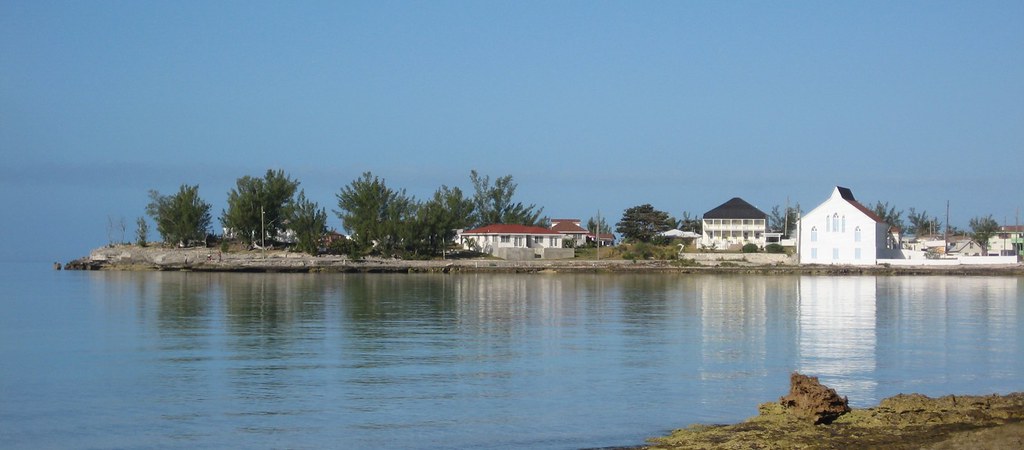
Non-traditional sonnet: RHL, ‘The Range of Change’

In times of no change, the advantage lies
with those who are receptive to being taught.
Parents and teachers may seem truly wise,
avoiding dangers with which life is fraught;
the stories of the old none would despise
when they hold all the answers that are sought.

In times of constant change, advantage shifts
to those who, hating school, go and explore.
Old answers fail. Fresh questions cause great rifts
with parents who are seen as wise no more;
questions now turn up unexpected gifts
in crossing unknown seas to virgin shores.

Remain alert that there’s a range of change
from none, to gradual, to fast, to strange.

*****

A sonnet, or not? 14 lines of iambic pentameter, rhyming regularly and with a final couplet. Though not in either of the standard English forms, it has the organised, compressed, reflective sense of the sonnet. Recently published in Shot Glass Journal, Online Journal of Short Poetry. Thanks, Mary-Jane Grandinetti!

Climate change icon” by Tommaso.sansone91 is marked with CC0 1.0.