Category Archives: Poems

Edmund Conti, ‘Two’s Company’

Sweet are the uses of divinity
And sweeter yet in keeping us engrossed
Is the simple complex concept of the trinity
The Father, Son and Holy Ghost.

Is making sense of Them too much a bother?
Is there any way to master Three-in-One?
The son, the Holy Ghost and Father,
The Holy Ghost, the Father and the Son.

I use this ancient form, the cranky sonnet
To crank out my aberrant Dunciad
And what evolves from overthinking on it:
The Spook, the Kid and–dare I say it?–Dad.

It’s true that poems are made by fools like me
But only God can make himself a three.

*****

Edmund Conti writes: “I wasn’t going to get into any interpretations of the Trinity. Just noting that scholars writing about it don’t shed much light. So I decided to shed my own. Somewhere along the line I may have gone a little overboard. (Pray for me.) I think my cranky sonnet has its own rhyme scheme, not one from the books. Meanwhile I’ve forgotten what ”Dunciad” means except that it was a good rhyme word. Forgetting all that, I guess this whole thing was inspired by Joyce Kilmer’s memorable last line.”

Edmund Conti has recent poems published in Light, Lighten-Up Online, The Lyric, The Asses of Parnassus, newversenews, Verse-Virtual and Open Arts Forum. His book of poems, Just So You Know, released by Kelsay Books
https://www.amazon.com/Just-You-Know-Edmund-Conti/dp/1947465899/
was followed by That Shakespeherian Rag, also from Kelsay
https://kelsaybooks.com/products/that-shakespeherian-ragHis poems have appeared in several Potcake Chapbooks: Tourists and Cannibals
Rogues and Roses
Families and Other Fiascoes
Wordplayful
all available from Sampson Low Publishers

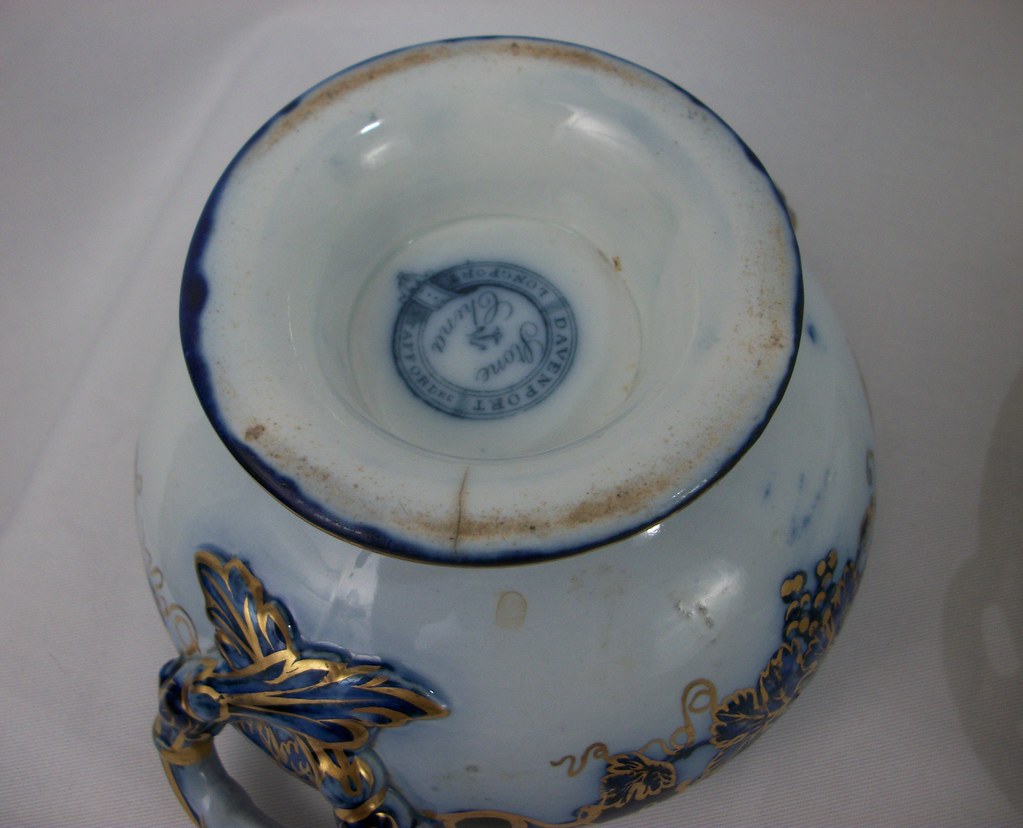
Photo: “Father, Son & Holy Ghost” by elston is licensed under CC BY-NC-ND 2.0.

Edmund Conti, ‘The Straight Skinny’

To say that only I am fat,
To say that I am only fat,
To say only that I am fat,
To only say that I am fat,
Is not to say, however, that
They equally are definitive.

One statement says fat’s mine alone,
One says no other trait I own,
One just has a plaintive tone,
And–overlooked and overblown–
One just splits the infinitive.

*****

Edmund Conti writes: “I guess this began with the observation that ‘only I am fat’ and ‘I am only fat’ have different meanings depending on the placement of one word. Which made me wonder if placing ‘only’ in other parts of the sentence would change it again. Which it did. Why did I use ‘fat’ as a trait? Well, it’s an easy rhyme and people can relate to it—in themselves or others. Also, it gave me a good excuse for the title.
I thought writing the second stanza would be trickier, but the rhymes just fell into place. And noticing the split infinitive and using it saved the poem. Assuming it was worth saving.”

Edmund Conti has recent poems published in Light, Lighten-Up Online, The Lyric, The Asses of Parnassus, newversenews, Verse-Virtual and Open Arts Forum. His book of poems, Just So You Know, released by Kelsay Books
https://www.amazon.com/Just-You-Know-Edmund-Conti/dp/1947465899/
was followed by That Shakespeherian Rag, also from Kelsay
https://kelsaybooks.com/products/that-shakespeherian-rag

His poems have appeared in several Potcake Chapbooks:

Tourists and Cannibals
Rogues and Roses
Families and Other Fiascoes
Wordplayful
all available from Sampson Low Publishers

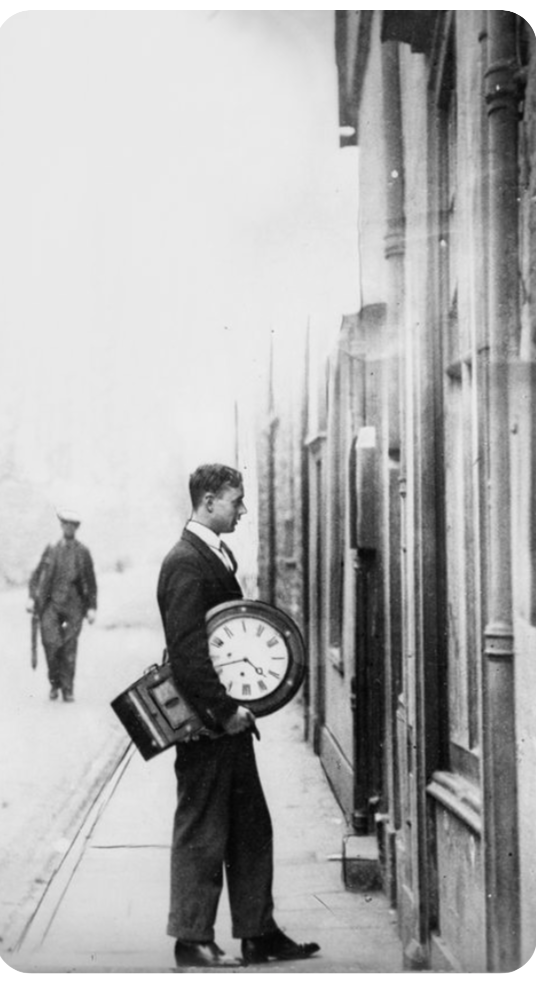
Photo: “Why Am I So Fat?” by morroelsie is licensed under CC BY-NC 2.0.

Review: ‘Burial Grounds’ by Brian Gavin

Gavin’s poems are quiet, elegant reflections on people—alive and dead—in danger of being forgotten, in towns not in the mainstream of modern life. His verse is quietly formal, usually rhymed, always rhythmic. Sometimes as brief as a sonnet, as with my personal favourite ‘Grand Opening’: an ex-serviceman, mopping floors and putting the coffee on at 4 a.m., running a business at which (apparently) four previous owners have failed, but simply doing what has to be done…

It isn’t so much hope behind these doors
as work to do. (…) He reaches for the light.
He sets his OPEN sign against the night.

There is an inherent mournfulness in these stories of people in places which once thrived but are now hanging on without major farming or industrial or commercial opportunities. Many poems are about people towards the end of their lives, or even later as the title suggests. And even when youth is included it shows up as a teen alone on a swing on a November evening, working her phone:

and nothing moves, but for the falling dark
and the quiver of her thumbs at work.

Railway stations close, businesses relocate, fires happen, towns empty out… but people are still there, poorer, aging, their prospects reduced. The overall tone is an almost religious attitude of accepting where you are, fighting the good fight, doing what must be done… moving, as we all must, into life’s inevitable landscape of burial grounds.

*****

Brian Gavin is a retired Distribution Manager who started writing poetry 10 years ago. His poems have appeared in The Journal of Formal Poetry, Peninsula Poets and Snakeskin Magazine, and in the Potcake Chapbook ‘Careers and Other Catastrophes. He lives in Lakeport, Michigan, USA, with his wife Karen. ‘Burial Grounds’ is available from Kelsay Books.

Odd poem: Henri Rousseau, ‘Inscription pour La Rêve’

Yadwigha dans un beau rêve
S’étant endormie doucement
Entendait les sons d’une musette
Dont jouait un charmeur bien pensant.
Pendant que la lune reflète
Sur les fleuves [or fleurs], les arbres verdoyants,
Les fauves serpents prêtent l’oreille
Aux airs gais de l’instrument.

Yadwigha in a beautiful dream
Having fallen gently to sleep
Heard the sounds of a reed instrument
Played by a well-intentioned [snake] charmer.
As the moon reflected
On the rivers [or flowers], the verdant trees,
The wild snakes lend an ear
To the joyous tunes of the instrument.

*****

Henri Rousseau‘s last completed work, ‘The Dream‘ is huge – almost 7′ x 10’ – and is remarkable for a couple of reasons: it features his Polish mistress of decades before, and it was the first of his pieces to bring him wide-spread acceptance. Completed and sold in early 1910, it was exhibited for six weeks in the early spring, was praised by poet and critic Guillaume Apollinaire, and gave him long-sought recognition. He died in September of that year.

Picasso and Matisse understood and admired Rousseau’s work, but many people did not. Rousseau wrote the poem to help viewers understand the painting; he also wrote in a letter to art critic André Dupont, “The woman asleep on the couch is dreaming she has been transported into the forest, listening to the sounds from the instrument of the enchanter.”

‘The Dream’ is one of the most striking pieces of art on display in MoMA, the Museum of Modern Art, in New York.

Melissa Balmain, ‘Shopper’s Life List’

Nine thousand quarts of orange juice
Five thousand loaves of bread
Eight hundred fifty bars of soap
Three hundred lipsticks (red)
A gross of bras
A score of scarves
A dozen wallets (black)
Ten cars
Eight dogs
Six cats
Three homes
Two canes
One granite plaque

*****

From Walking in on People © Melissa Balmain, 2014. Used by permission of Able Muse Press.

Editor’s note: If this poem doesn’t look like formal verse to you, and the only structure you see is the declining number of the items listed, then read it aloud to pick up the swing!

Melissa Balmain writes: “As you might guess, this one came about when I’d been doing some birdwatching. I considered starting one of those ‘life lists’ that birders have—then thought: what if there were other kinds of life lists? I never did get around to listing birds.”

Speaking of shopping, Melissa Balmain’s third poetry collection, Satan Talks to His Therapist, can be preordered from Paul Dry Books (and from all the usual retail empires). Balmain is the editor-in-chief of Light, America’s longest-running journal of comic verse. Her poems and prose have appeared in such places as The American Bystander, McSweeney’s Internet Tendency, The New Yorker, The New York Times, Lighten Up Online,The Hopkins Review, Poetry Daily, Rattle, and The Washington Post. Her other poetry collections are Walking in on People (chosen by X.J. Kennedy for the Able Muse Book Award) and The Witch Demands a Retraction: Fairy Tale Reboots for Adults.A member of the University of Rochester’s English Department since 2010, she lives nearby with her husband and (for now) one of their two children. She is a recovering mime.

Missing Plaque” by QuesterMark is licensed under CC BY-SA 2.0.

Poem, ‘Honesty’

Honesty’s doing nothing you’re ashamed
to talk of; otherwise you’re being gamed
by a smooth angel with a cloven shoe.
Man, know thyself; to thine own self be true;
accept you’re not some other one’s ideal
from their religion or philosophy;
accept your thoughts are yours, impure and real
with lust, greed, envy, anger, vanity–
normal in that we’re powered by an ape’s drive
that needed those traits to survive and thrive.
Whether you act on them’s different again.
Do nothing that, if done, would make you lie–
but don’t be shamed you’ve had the thoughts within.
Don’t stifle, don’t suppress, and don’t deny.
Acknowledge, but don’t act. In that’s no sin.

*****

Published in Snakeskin, January 2018

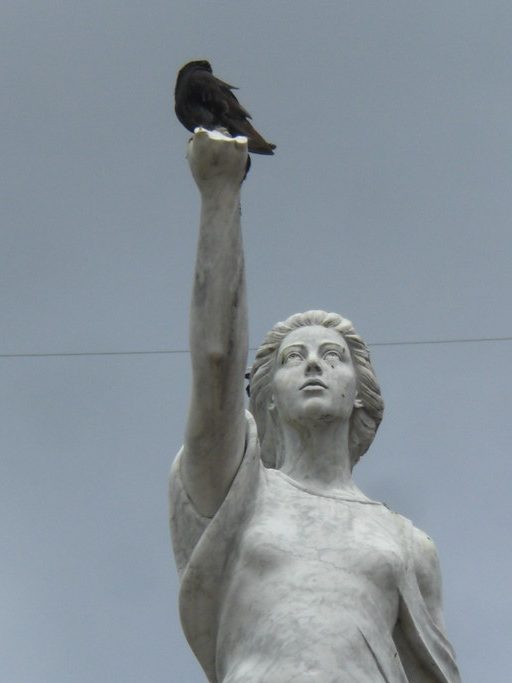
Photo: “Here is contained ‘Self-Liberation through Seeing with Naked Awareness,’ this being a Direct Introduction to the State of Intrinsic Awareness, From ‘The Profound Teaching of Self-Liberation in the Primordial State of the Peaceful and Wrathful Deities.’” by Wonderlane is marked with CC0 1.0.

Marcus Bales, ‘Lighthouse’

She needed constant, searching light
And some firm continent
From which to dive into the night
To find what darkness meant.

She fought the horses of the tides
And they her urgency.
She caught their lunar reins and rides
Triumphant out to sea.

And now she knows the powers of
The dark sea’s character,
And scorns the note her former love
Moans out, moans out to her.

*****

Marcus Bales writes: “Probably poets ought not tell this sort of story about their work. I found a stash of very old poems, carefully typed out on now-yellowed paper in a metal file box amid 5” Tandy floppy discs, and printed on a dot-matrix printer, a little faded, some months ago, and have started the often painful task of retyping them into my little electronic library of my work. Many of them are obviously student stuff, but this one seemed a little less studious than the rest. It brought back its context in my mind pretty clearly.
This is a very early poem, maybe sophomore year. I’d read someone’s comment that Yeats wrote about his friends as if they were characters in a Greek myth, and it had struck me as a sudden truth — to me, anyway. Nothing would do, of course, except to try the thing on my friends. Then a woman I knew gave me a copy of Adrienne Rich’s ‘Transformations’, which tells the stories of ancient myths about women, mostly, as if they had much more contemporary attitudes, and that seemed like a much better model than the Yeats tone and manner — and besides, Yeats had already done that tone and manner. So though the idea originated in Yeats, it is really Rich’s idea that I tried to follow, trying for the tone of metaphor in a contemporary voice. And Larkin was in there somewhere too, as I recall, having discovered him when asked to write a paper contrasting and comparing one of his poems to one of Wilbur’s. The Larkin was the one starting:
Sometimes you hear, fifth-hand,
As epitaph:
He chucked up everything
And just cleared off,

And that led me to many others, notably ‘The Trees’, with its amazingly unlarkinish  repetition at the end.
Steal from the best has long been my motto.”

Not much is known about Marcus Bales except that he lives and works in Cleveland, Ohio, and that his work has not been published in Poetry or The New Yorker. However his ’51 Poems’ is available from Amazon. He has been published in several of the Potcake Chapbooks (‘Form in Formless Times’).

Photo: “my father was the keeper of the eddystone light” by sammydavisdog is licensed under CC BY 2.0.

The Kipling Boom, 1890

“Rudyard Kipling, gifted stripling”… a lot of his work is superb: the voices caught in his poems and short stories, the endlessly rereadable Just So Stories with his own lush illustrations and catchy peripheral poems, his novels. It’s more than just the verse that has lasting strength.

George Simmers's avatarGreat War Fiction

Researching (i.e. idly Googling) Kipling, I came across this rather good bit of verse printed in the San Francisco Examiner of 1890. It’s a reaction to the sudden and seemingly unstoppable vogue for the works of Kipling. The Examiner credits it to the Saturday Review, but since the references are mostly American, I don’t think this would be the London Saturday.

View original post 90 more words

Poem: ‘Milking the Stars’

My Milky Way muse
Is spread through the skies.
I’ll tickle and tweak
Those nipples the stars,
Till, teased and engorged,
They fill out and stretch;
I milk them to books
To leather-bound books,
To leather-bound buckets of books.
A two-handed milking,
Steady and rhythmic,
As generations
Before me have milked them.
Then when the pail’s full,
Star needs being met,
Stars twinkle and glow.
The Milky Way muse
Thrives on such use.
I drink and give thanks,
Bound to give thanks,
Leather-bound star-shining thanks.

*****

Published in this month’s Snakeskin (No. 307, June 2023). Thanks, George Simmers!

Photo: “Milky Way” by be creator is licensed under CC BY 2.0.

John Beaton, ‘A Many-Splendoured Thing?’

Is love a beaming, eye to eye? An oath—you-only-till-I-die?
A U that comes before an I? A hullabaloo-cum-lullaby?
A flirt? A tilting of the neck? An art? A Machu Picchu trek
back in time to that valiant peck on virgin cheek, that what-the-heck?

A brace of lovebirds who embrace instead of pecking cheeks, a plaice
whose eyes achieve a state of grace—as one on one side of its face?
A willing ear we learn to ration between soliloquies? A fashion?
The winning chips we hope to cash in from laying on the wheel of passion?

A bridle? Or a bridal dress? An if-you-love-me-you’ll… duress?
A scandal in the gutter press? A touch-me-there-uh-huh caress?
A smile without the crow’s-feet creases? A summer fling that never ceases?
A joining of two jigsaw pieces? A joke? A yoke with quick-releases?

Love grins with its beret askew, climbs up the sky and paints it blue
then turns the sun to shine on you and says, “You’re puzzled? Hey, me too!”

*****

John Beaton writes: “This started with recollection of a joke by British comedian, Benny Hill: there’s quite a difference between ‘What is this thing called love?’ and ‘What is this thing called, love?’ I decided to come up with humorous answers and they started occurring to me in pairs of rhymed pairs.
I want this to be light and playful. I cobbled the answers together in octameter lines, each with two rhymed tetrameter halves, and configured the lines in three quatrains (aabb) and a rhymed couplet. The result has elements of the sonnet form—fourteen lines and a turn at the end of line twelve. I’ve also played with alliteration and internal rhyme.”

John Beaton’s metrical poetry has been widely published and has won numerous awards. He recites from memory as a spoken word performer and is author of Leaving Camustianavaig published by Word Galaxy Press, which includes this poem. (It is also in the Potcake Chapbook Rogues and Roses.) Raised in the Scottish Highlands, John lives in Qualicum Beach on Vancouver Island.
https://www.john-beaton.com/

What do you see through love?” by TW Chang is licensed under CC BY 2.0.