Category Archives: quatrains

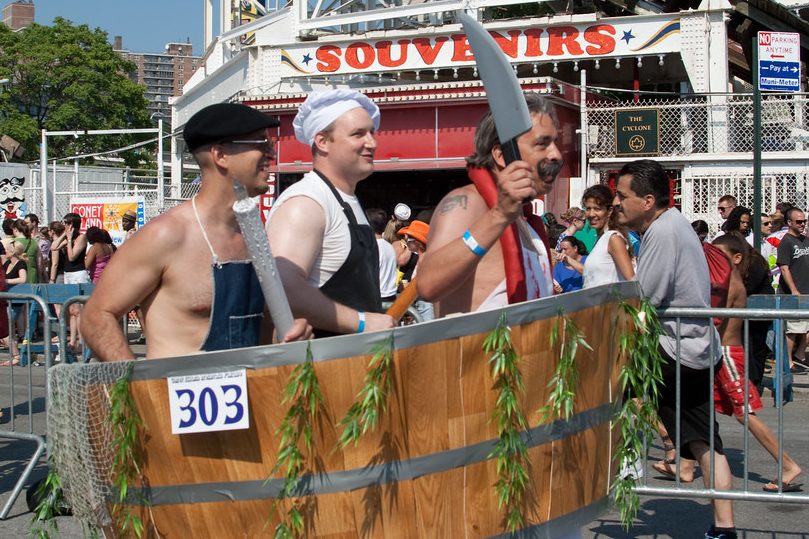
Lindsay McLeod, ‘Last Call’

If this isn’t what you’ve yearned for
or indeed what you are craving
then cup your hands, drink deeply
of a sweeter misbehaving.

If you cannot find your wine inside
the glass that you were given,
taste the new with eyes and thighs
and dye your lips a deep vermillion

with a juice that has been pressed
from vines let grow out of control
that taste of summertime and
sex and drugs and rock and roll

because if you…

find distaste in your final breath
dressed in another’s ill fit clothes
remember, this did not just happen
sweetheart, this is what you chose.

*****

Lindsay McLeod is an Australian poet that has won a few things and is widely published. He just had to start messing about with words again lately. You’d think he’d know better by now, but oh no. Some of his most recent work can be found in DILLYDOUN REVIEW, GRAND LIL THINGS, DRAWN TO THE LIGHT, POETiCA and MORTAL MAGAZINE.

RHL: In addition to Mr McLeod’s self-description, let me add that I have been trying and failing to contact him. I don’t even have permission to post this poem. If anyone can put me in touch with him, I would be grateful.

Photo: “98/365: ♫ Red, Red Wine…” by rogersmj is licensed under CC BY-NC 2.0.

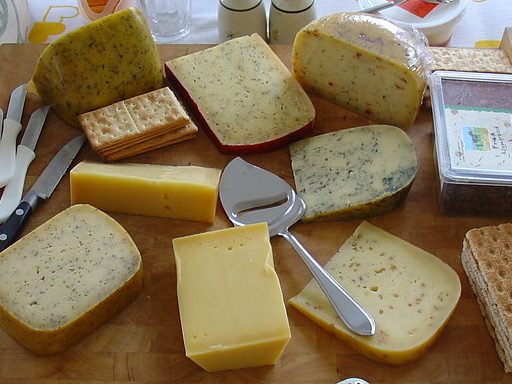
Odd poem: Brian Bilston, ‘Brie Encounter’

the skies are gruyere since she left me
i’ve never felt so danish blue
caught between a roquefort and a hard cheese
i stilton’t know what to do

don’t give edam about the future
now my babybel’s walked out the door
can’t believe i’ve double gloucester
i camembert it any more

i’ve ricotta get myself together
and build my life back caerphilly
cheddar tear for the final time
say goodbye to us and halloumi

*****

Brian Bilston is “the Banksy of the poetry world”.
You can find a daily poem on Facebook, and his books here.

Photo: “Cheese, cheese, cheese” by kurafire is licensed under CC BY-NC 2.0.

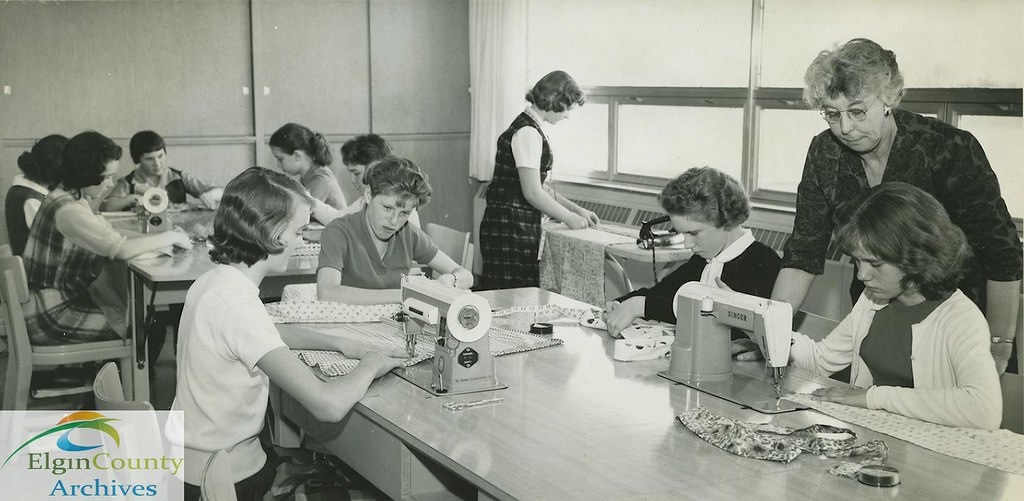
Susan McLean, ‘Home Economics’

Like other teenage girls in ‘65,
I learned to knit, embroider, and crochet,
so if I’m teleported back in time
a century or two, I’ll do okay.

I learned the way to wrap a package neatly,
to tie a range of plain and froufrou bows,
to minimize my body flaws discreetly,
using the cut and pattern of my clothes.

I also learned to iron, hem, and baste,
to sew on zippers, trim, and appliqué,
to choose a hairdo that would suit my face—
and nothing that I ever use today.

*****

Susan McLean writes: “In the mid-Sixties, the times were changing, but the education of teenage girls was not. In junior high school home economics classes, which girls were required to take, the girls were trained in sewing and cooking skills as preparation for their future roles as wives and mothers. The ideas that men might need to know any of those skills or that women might have full-time careers were not considered. In addition to teaching girls domestic skills, the classes served to reinforce the gender roles and expectations of the time (which had not changed significantly from those of the previous few centuries).

“I slightly overstate my case when I say that I never use anything now that I learned in the two years of sewing classes I took. I still wrap a package and sew on a button occasionally, but I had learned both of those skills well before I took the classes. And even when I was taking the classes, I was already determined to have a career of my own. I petitioned successfully to be allowed to skip the cooking classes so that I could take art classes in their place (though, ironically or not, I am now an enthusiastic home cook). I didn’t mind learning various sewing skills, which had an artistic side, but I had no interest in spending a lot of time using them afterwards, and the view of my options that the classes conveyed was quite dispiriting. No one foresaw how radically the roles of many women would be changing soon afterwards. But I am very glad that they changed.

“The rhymed quatrains that the poem is written in are a standard poetic form, though the mix of slant rhymes with true rhymes suggests an underlying dissonance that ties in with the poem’s themes. The poem originally appeared in the online journal Umbrella and was later published in my second poetry book, The Whetstone Misses the Knife.”

Susan McLean has two books of poetry, The Best Disguise and The Whetstone Misses the Knife, and one book of translations of Martial, Selected Epigrams. Her poems have appeared in Light, Lighten Up Online, Measure, Able Muse, and elsewhere. She lives in Iowa City, Iowa.
https://www.pw.org/content/susan_mclean

Photo: “Home Economics Class at Elgin Court School, St. Thomas, 1961” by Elgin County Archives is licensed under CC BY-NC-ND 2.0.

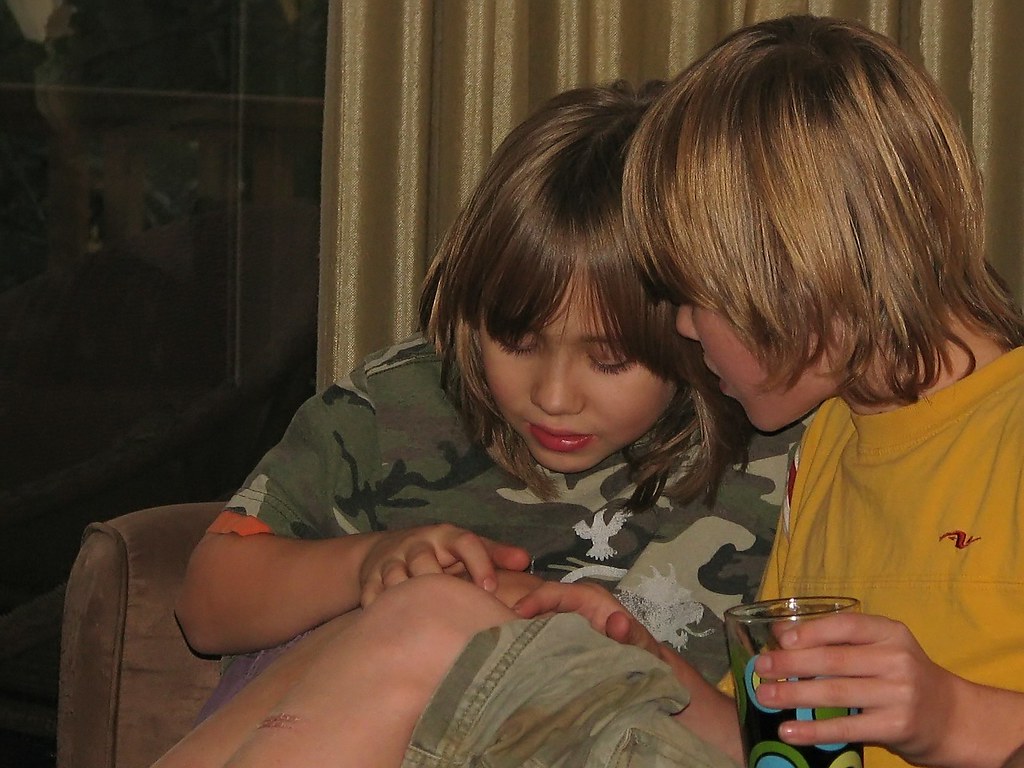
RHL, ‘Boy With Scab’

The boy he’s always been still takes delight
In testing scabs on elbows, knees,
To see if fingernails can assert their right
To lift with satisfying ease
The lid from off the mystery healing box
And see the flesh beneath the skin
Where the wise body-mind slowly unlocks
Corpuscles and white pus within.
The hint of pain, like some itch that you scratch,
Is fun alongside look-and-see.
What does the boy do with that useless patch,
The scab? Easy: autophagy.

*****

Curiosity is a useful aspect of intelligence. This poem first published in Lighten Up Online (aka LUPO). Thanks, Jerome Betts!

Photo: “War Stories” by Noël Zia Lee is licensed under CC BY 2.0.

Morri Creech, ‘Mileage’

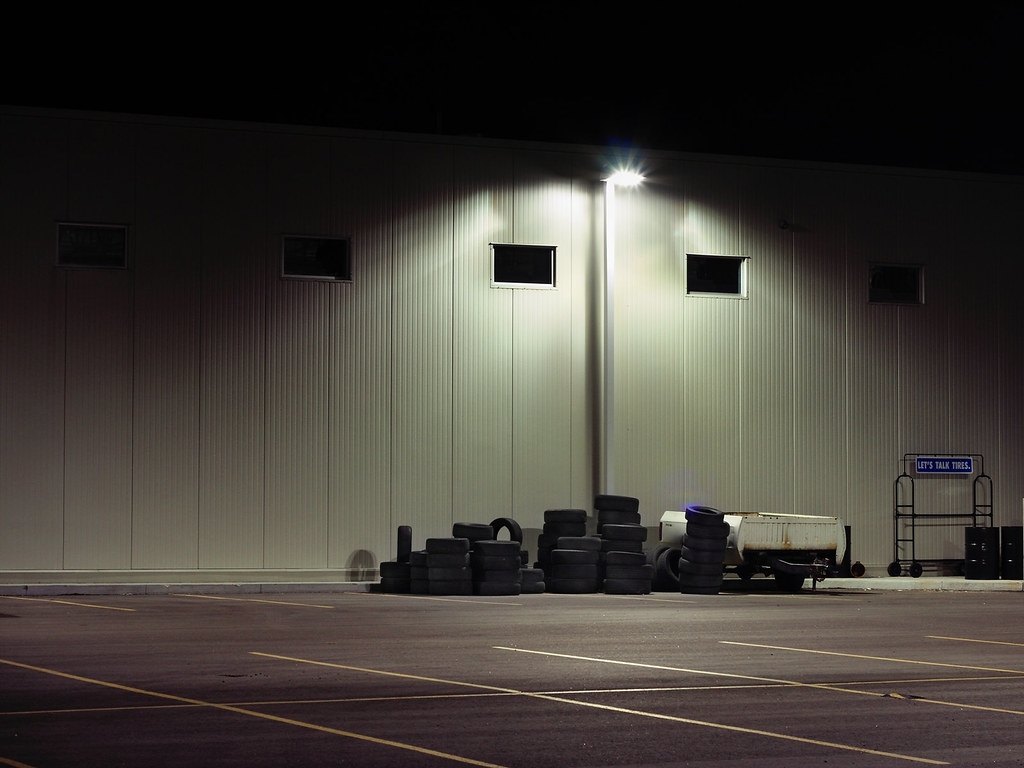
The car mechanic’s counting out his bills
behind the E-Z Mart at one a.m.;
he’ll toss rocks at beer bottles just for thrills
until his dealer comes, it’s fine with him.

He draws in a deep breath and sees the light
swerve from the highway, puzzling the back wall
he leans against just to keep out of sight.
A quarter bag and some fentanyl, that’s all.

His phone vibrates again though nothing’s wrong.
For two years he’s been living in a trailer
with a girl who works at Publix. They get along
even if sometimes she says he’s a failure—

what can he say to that? Sure. He lives cheap.
They’ll fight until she forces a decision,
then roll around on the couch. Once she’s asleep
he’ll take a dose and watch some television.

At night he dreams of cylinders and sprockets,
the trucks and cars too busted up to fix;
startled awake, eyes aching in their sockets,
he’ll watch the clock hands grope their way to six.

A car pulls up but he can see it’s not
his hookup. Just kids with nothing else to do
but drink a six-pack in the parking lot
before they head out to the lake to screw.

He had his share of mischief, too, Lord knows.
The girls don’t eye him in the check-out aisle
much anymore, the ones with painted toes.
A few years back, at least, they used to smile.

The boys can see the grease that stains his hands;
they all think, damn, who wants to work that hard?
He spends the day beneath their dads’ sedans
while they play tackle football in the yard.

Chasing a football blew out both his knees
and broke his wrist. That was three years ago.
Customers say, “go Stags,” and toss their keys,
then look at him real close as if they know.

A text says no one’s coming. The BP sign
flickers over the pumps, and though it’s half-
past two now, and he’s tired, he’s feeling fine
enough to think it’s all a bust, and laugh.

And, anyway, it’s good to be alone
with the gas fumes and blinking traffic light
and fifteen missed calls lighting up his phone.
Later, he thinks, once he and his girl fight,

and once she falls asleep on his left arm,
he’ll stare at the divots on the ceiling tile
and wait to hear the clock sound its alarm
while the night’s odometer counts one more mile.

*****

Morri Creech comments: “As Mark Strand once said, I write to find out what I have to say. I don’t start a poem with an idea; I start with a line, an image, a rhetorical stance. Then I write in search of context: how can I situate this in a situation, a narrative moment, an argument, a meditation? The language takes me wherever I end up. This poem was constructed like that. I started with a first line and then wrote toward trying to figure out the context of the line. In this case, it led me to a character sketch. It was fine to discover what this character was about; the decisions I made about his character and circumstances were largely directed by rhymes. They steered me in what I hope was the right direction.”

Morri Creech is the author of five collections of poetry, including the Sleep of Reason, a finalist for the Pulitzer Prize, Blue Rooms, and The Sentence (published by LSU Press, and which includes this poem). A recipient of NEA and Ruth Lilly Fellowships, as well as North Carolina and Louisiana Artists Grants, he teaches at Queens University of Charlotte.
www.morricreech.com

Photo: “Let’s Talk Tires” by gfpeck is licensed under CC BY-ND 2.0.

John Claiborne Isbell, ‘Mousse au chocolat’

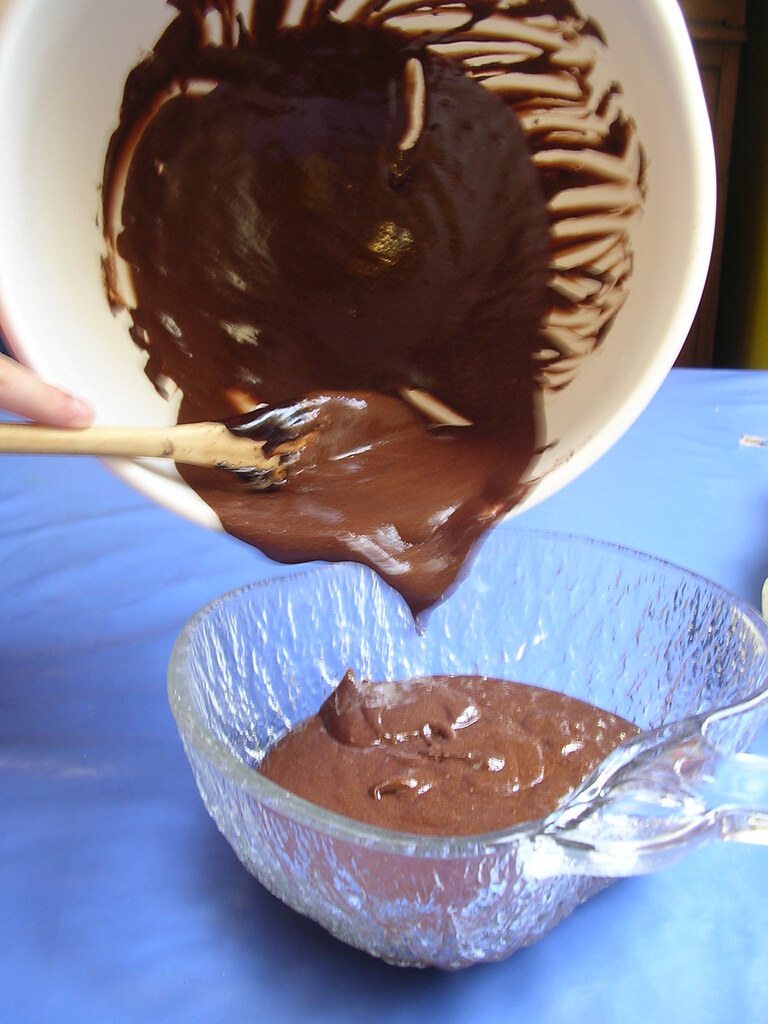
Rita is in her summer dress. She’s got
the mixer out and she is hard at work
perfecting home-made mousse au chocolat.
I for my part am typing like a clerk
 
at my computer. Rita’s got cacao
and mascarpone and banana, all
to form her own concoction. And just now,
she brings a spoon to sample it. You’d call
 
her labor sui generis – you won’t
turn up this recipe. And yet, the tongue
delights – the eyes close – as the do or don’t
of custom pales. The mousse is made. I’ve sung
 
my wife in her blue dress with its red spots,
I’ve sung the kitchen where she takes her ease –
the house’s heart, with all its pans and pots.
I’ve sung the afternoon. Bring more of these.

*****

John Claiborne Isbell writes: ” ‘Mousse au chocolat’ is a true story inspired by my wife Rita’s taste for improvisation when cooking. The results are invariably delicious. As for the form, it’s just four quatrains of iambic pentameter. My volume Allegro is light verse; I ought really to write more of it.”

‘Mousse au chocolat’ was published in Snakeskin 321, October 2024.

John Claiborne Isbell is a writer and now-retired professor currently living in Paris with his wife Margarita. Their son Aibek lives in California with his wife Stephanie. John’s first book of poetry was Allegro (2018), with a cello on the cover and available on Amazon; he also publishes literary criticism, for instance An Outline of Romanticism in the West (2022) and Destins de femmes: Thirty French Writers, 1750-1850 (2023) both available free online. John spent thirty-five years playing Ultimate Frisbee, representing France in the European Championships in 1991, and finds it difficult not to dive for catches any more.

An Outline of Romanticism in the West https://www.openbookpublishers.com/books/10.11647/obp.0302

Destins de femmes: Thirty French Writers, 1750-1850  https://www.openbookpublishers.com/books/10.11647/obp.0346

Staël, Romanticism and Revolution: The Life and Times of the First European  https://www.cambridge.org/core/books/stael-romanticism-and-revolution/E808497413C10F2814375C7CF131E221

Photo: “Mousse au chocolat” by eric.delcroix is licensed under CC BY-NC-SA 2.0.

Shamik Banerjee, ‘The Auto Drivers of K.G. Street’

They know well when I clock out. Sharp
At five, on K.G. Street,
They welcome me with every tooth
And lead me to their seat.

Five friends—senescent, pyknic, bald,
In Khakis—ironed, clean,
With brand-new autorickshaws that
Are painted taupe and green.

One masticates areca nuts.
The shortest one takes khaini.
The other two smoke beedis by
A tall Mahogany.

They fall in with a mental pact
That tells them not to seek
To win me, for each one’s assigned
A fixed day of the week

To drive me home. “Today’s my turn,”
One says and bids me in.
While driving he tells stories that
Block off the traffic’s din:

The student loan he’s willing to
Take for his only daughter;
The municipal board has swelled
The price of urban water.

Arrived, I ask about the fare.
“Ah! Saab“, he shyly says.
I take a fifty rupee note—
A glow upon his face.

*****

Shamik Banerjee gives the following word meanings:
Khaki: A type of cloth.
Khaini: A type of chewable tobacco
Beedi: Indian cigarette
Saab: Sir
K.G. stands for Kasturba Gandhi, the wife of Mahatma Gandhi. Most streets/ lanes/ roads in India are named after famous personalities, especially those who fought for our freedom.” 
‘The Auto Drivers of K.G. Street’ was first published by Willow Review.

Shamik Banerjee is a poet from Assam, India, where he resides with his parents. His poems have been published by Sparks of Calliope, The Hypertexts, Snakeskin, Ink Sweat & Tears, Autumn Sky Daily, Ekstasis, among others. He secured second position in the Southern Shakespeare Company Sonnet Contest, 2024.

Photo: Auto Drivers in Guwahati, Assam.

Using form: Ruba’i: RHL, ‘Ancient Tales of Love and War’

The pipes and women wail and skirl,
deaths following the flowering girl.
Ancient tales of love and war
show costs of dimple or a curl.

Tamil spear tips illustrate
intent before the towering gate;
bangles slide on her young wrists;
kings make war when made to wait.

Gods and goddesses choose sides:
a Trojan steals a youthful bride.
Who Trojans were we’ll never know –
Greeks burn the city, once inside.

A lovely face, a swelling bust –
and treasure, fame – inspired by lust
kings storm the ramparts, steal the girl,
before, like all, they turn to dust.

*****

This poem was inspired by a blog post in ‘Horace & friends’ on ‘Doing without consolation – Tamil poetry, Yeats and Simone Weil‘. The author, Victoria, touches on a lot more topics than my small piece does; visit her blog to see how Yeats’ “Like a long-legged fly upon the stream / Her mind moves upon silence” connects to ancient Tamil as well as ancient Greek poetry…

My poem here is in iambic tetrameter (with some liberties taken), rhyming AABA in English ruba’i form. It was published in the current (August 2024) Snakeskin, issue 320.

Illustration: The Fall of Troy by Johann Georg Trautmann (1713–1769)

Shamik Banerjee, ‘A Summer Evening’

The sky begins to cloak its face,
Removing every streak of red.
Above, two weary fliers trace
The way back to their bough-held bed.

A boy, awash with joy, returns
Soil-vested from a football field.
To celebrate the victory earned,
He swaggers with his pride revealed.

Along the lined tobacco stands,
Pen-pushers at long last release
Workloads with cigarettes in their hands,
Exhaling little rings of peace.

Now earthen lamps begin to glow
In homes–it’s time for evening prayer.
Sweet wafts of scented incense flow,
Cleansing the jaded summer air.

*****

‘A Summer Evening’ was first published in 3rd Wednesday.

Shamik Banerjee is a young poet from Assam, India where he resides with his parents. His poems have been published by The Society of Classical Poets, The Hypertexts, Third Wednesday, Thimble, Ink Sweat and Tears, Shot Glass, and The Pierian, among others.

Photo: “Purity and” by HumanityAshore is licensed under CC BY-NC-ND 2.0.

Susan McLean, ‘The Only Feminist in High School’

Two roads diverged in high school when a student
chose to study women’s liberation
to write her senior paper. Though imprudent,
that choice provided her an education

in bias, inequality, derision,
The Second Sex, The Feminine Mystique,
historical erasure, long division,
and talent gagged and shackled by physique.

She swore off make-up, wanted a career
but maybe not a family. She read
Kate Millett, Gloria Steinem, Germaine Greer,
and gave a speech on beauty, which, she said,

turned women into objects and betrayed
their goals. She didn’t want to be a mom
or movie star. When she went out, she paid.
Though never asked, she boycotted the prom.

The boys were baffled and the girls disdainful,
for who would want to talk to, much less date her?
And what she lost was obvious and painful,
while what she gained was only clear years later.

*****

Susan McLean writes: “This poem starts with the opening phrase from Robert Frost’s ‘The Road Not Taken‘ and it records a turning point in my own life of the sort that his poem describes. Though I hope that feminists are not such a rarity among high school students anymore, the term “feminist” is still so loaded that I tend to think of it as “the new F-word.” At one level, it still mystifies me that looking for equal opportunity and equitable treatment remains so controversial, but at another level, every society has been built on unequal opportunity and inequitable treatment since recorded history began, so it is not surprising that each step away from that system has made some people feel that the world was ending.

“I learned long ago that what a poem doesn’t say is as important as what it does say, so the ending of this one does not specify what was lost or what was gained. I want the readers to think about those things, so I don’t want to tell them what to think. As for why I wrote this in the third person, these events happened so long ago that it almost feels as though they happened to someone else. I am and am not that girl.

“The poem first appeared in my second poetry book, The Whetstone Misses the Knife.”

Susan McLean has two books of poetry, The Best Disguise and The Whetstone Misses the Knife, and one book of translations of Martial, Selected Epigrams. Her poems have appeared in Light, Lighten Up Online, Measure, Able Muse, and elsewhere. She lives in Iowa City, Iowa.
https://www.pw.org/content/susan_mclean

Photo: “Two Road Diverged…” by wackybadger is licensed under CC BY-SA 2.0.