Category Archives: Robin Helweg-Larsen

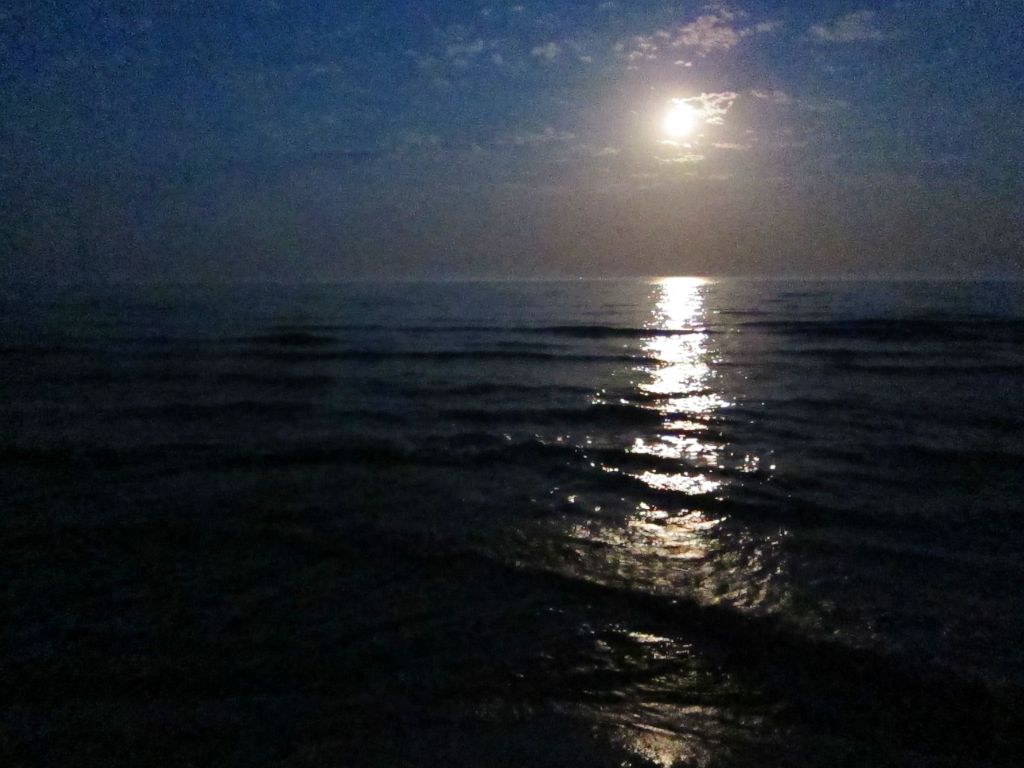
Poem: ‘The Moon’

The birds of dawn
Sing Come out on the lawn.

Flowers
Say Seize the hours.

The day, the sun
Say Don’t stay – look, laugh, run.

Warm rain
Says More! Again!

A tree
Simply says Be.

Beyond the trees, the beach
Rumbles Extend your reach.

A cliff
Asks: If?

The sand
Calls for a handstand.

A wave
Says Misbehave.

Sunset
Asks you, Done yet?

The moon, that overhanging stone…
The moon says You’re alone.

This poem was originally published in Snakeskin. It was an attempt to capture the bittersweetness of living in–or perhaps specifically growing up in–a rural or isolated environment. It’s wonderful to be wild in the wilderness except that, almost by definition, you’re likely to be on your own. And that’s fine, a lot of the time…

Anyway, that freedom is what my childhood and stretches of my 20s were like, and what I came back to after decades away–the difference being that now I’m no longer alone! 🙂 

Photo: “Full Moon Beach Ride July 2012” by gasmith is licensed under CC BY-NC-ND 2.0

Poem : ‘Some Who Would Teach’

Some who would teach
Preach,
But speech cannot reach
As far as silence.

Even the stars perhaps are noisy, but, far as they are,
We hear their silence, not their sound.

Words are not for teaching, adding or changing.
Words can only express
What is already known
To one who already knows.

Words feathered together
Can lift aloft
Any body of men.
Opinions are pinions
With which men fly.
But they come down again
And with their descent
What was meant
Is often lost, or is known
To have never been known.
For a word is a wing
But a body’s a thing
And the body is always the body
But the wing only is when it flies.

Therefore not by talking but being
Does one teach how to be,
And words are for singing–
A song sung
By those knowing their winging as being but having no meaning.
And the best words
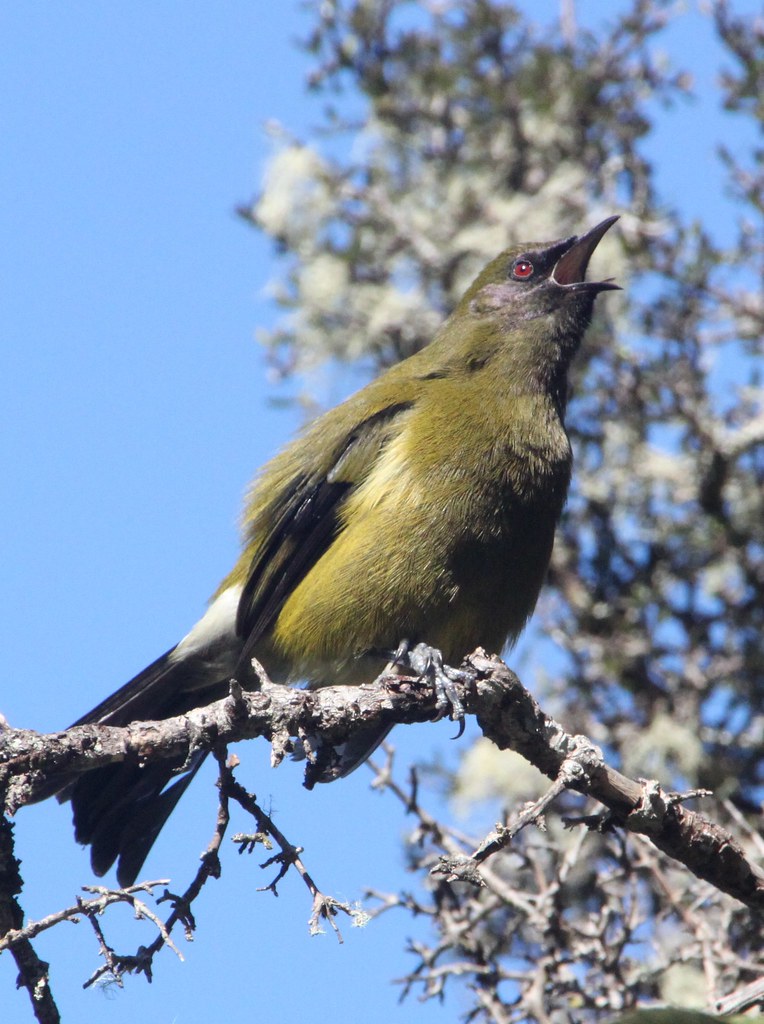
Come from birds.

I wrote this, but do I subscribe to the ideas? Did I ever? Not in any absolute sense, but as a rejection of all noisy preachers of faiths, and a rejection of those who put academic lectures ahead of experiential learning. In that sense this (early) poem prefigured my 25-year career teaching business finance through the Income-Outcome interactive games we developed for global clients like Beam Suntory, Michelin and hundreds of other companies and universities.

In another sense this poem is just about the enjoyment of words and songs, regardless of any meaning that the words may have.

It was published by Anima Magazine in the UK, unfortunately quiescent since 2018.

Photo: “Korimako (Bell Bird) singing” by theirishkiwi is licensed under CC BY-NC-ND 2.0

Short poem: ‘Nothing’s Yours Always’

Nothing’s yours always, anyhow,
And Time shall lift from off your brow
Your troubles, wrinkles, hat and wig,
Leave you the basis for “long pig”.

So many unusual foods are described as “tastes like chicken”; it’s worth remembering that there is one that apparently tastes like pork. And really, when you’re dead, does it matter who benefits from the recycling of your atoms? The picture is of a figure from Ethiopian legend, Belai the Cannibal.

This poem was published in Metverse Muse, a long-established Indian journal that champions traditional verse, edited by Dr. Tulsi Hanamanthu.

Photo: “Belai the Cannibal” by A.Davey is licensed under CC BY 2.0

Short Poem: ‘The Hitchhiker’

Sometimes you’d sell your soul just to get warm! –
Your clothes are rags in the wind, your skin goes blue,
You doubt your mouth can ever smile again;
The lonely world grows dark before the storm
Whose icy rain’s a mile away… and then,
The sun breaks through!

I used to do a lot of hitchhiking – 25,000 miles is my best estimate, on five continents. It can be miserable, it can be ecstatic, but as a way of exploring the world without plans and preconceptions, it’s hard to beat. It used to be safe, then it became unsafe, but now it’s probably safe again – if you send a picture of the vehicle from your cell phone before you get in. Or if you live on an island with no public transportation, where everyone seems to know everyone and it’s just common courtesy to give people a ride.

The poem was published in the now-defunct Candelabrum, a twice-yearly British publication that championed traditional verse through the darkest days of “free verse” from 1970 to 2010. The magazine has ceased publication, but thank goodness the sun has broken through again!

“Winter Road” by ryanmcgilchrist is licensed under CC BY-SA 2.0

Poem: ‘Spring Sprang’

Spring sprang full force with sudden storms then stopped.
Of which vertu engendred were the floods. We mopped.
Summer so wet dried into humid dank.
Sweat dripped, dried, dripped, and as we worked we stank.

This little poem was published in The Asses of Parnassus, where poems range from the short to the very short. Epigrams translated from the Greek or Latin alternate with modern insults and with odd little observations such as this post’s verse. It is a site for people who enjoy the occasional small random thought.

Why I wrote the poem, I don’t know. It probably started with the evocative sounds of “spring sprang”. Spring rains always bring Chaucer’s Prologue to my mind, whence the “of which vertu engendred” phrase. The whole thing is inconsequential, except that in one very important sense no creative act, not even the most trivial, is inconsequential: your creativity speaks to you, and your decision of whether or not to act on it determines many aspects of your life: not just your creative output, but your sense of satsfaction, your happiness, your mental balance, even your physical health. When the muse speaks, listen and act – the output doesn’t have to be significant, but keeping the lines of communication open to the inner and unconscious (but in several ways wiser and more knowledgeable) parts of yourself is supremely important. Call it the soul, if you want. Call it God, for all I care. There is something essential there: honour it. Your happiness, maybe even your life, depends on it.

OK, rant over. Back to other inconsequentialities.

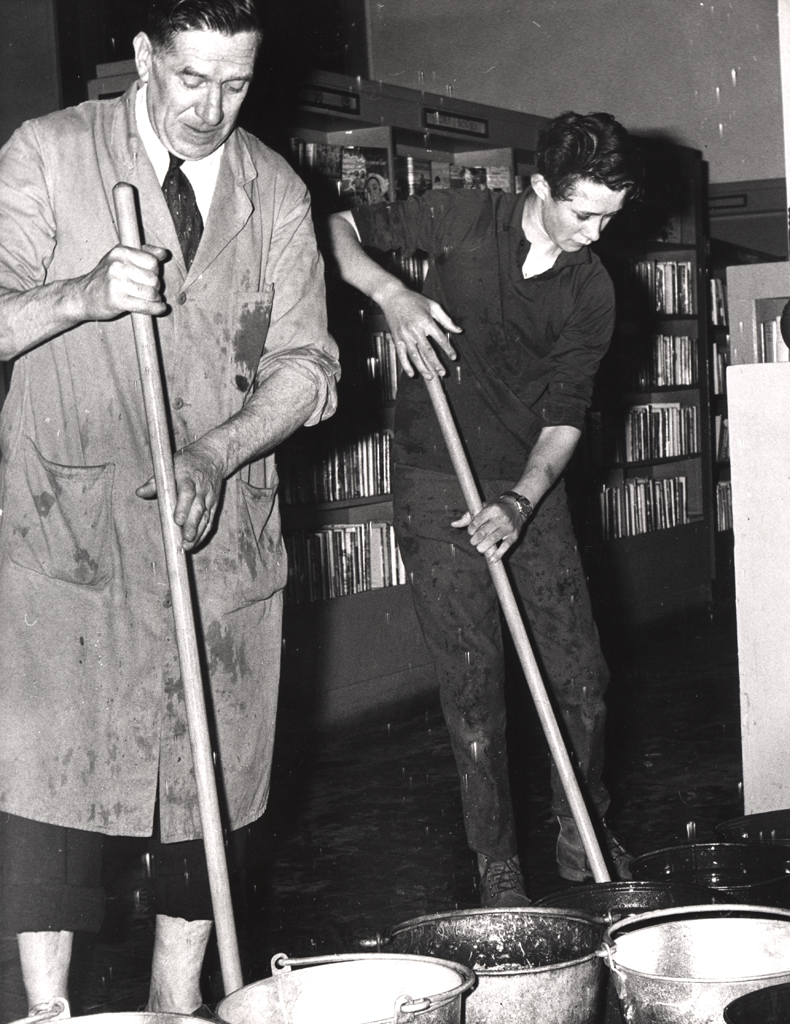
Photo: “025457:Floods Central Library New Bridge Street Newcastle upon Tyne Unknown 1966” by Newcastle Libraries is marked with CC PDM 1.0

Short poem: ‘Subduction’

All human nature, conflicts, nations, and all races
will be washed as by tides on beaches, all loves and lusts
will with Time disappear, all human traces
washed under as all plates are washed
by the subduction of Earth’s crusts.

This poem was published this month in Lighten Up Online – an excellent place to read light verse on subjects both light and heavy. Every issue has a mixture of longer and shorter poems, and a competition. This March 2021 edition concludes with the results of the eco-crisis competition, headed ‘The Airing of the Green’; ‘Subduction’ was one of the winners. Other sections of the magazine were also focused on the environment. Pollution and climate change are twin disasters, and you can express outrage, despair, or (more usefully) proposals for action. The million-year view of my poem isn’t useful but it’s low-hanging fruit, there to be taken.

I’m delighted to be in a magazine along with poems by fellow Potcake Poets Martin Elster, Michael R. Burch, D.A. Prince, George Simmers, Nina Parmenter, Gail White, Chris O’Carroll, Tom Vaughan, Jane Blanchard, Jerome Betts, Martin Parker and Melissa Balmain, as well as two poets who will be appearing in the next Potcake Chapbook, Bruce McGuffin and Julia Griffin, and the ever-anomalous Max Gutmann. Several of us have more than one poem in this issue.

“File:Tectonic-plates-subduction-zone-17280738.jpg” by Benjilrm is licensed under CC BY-SA 4.0

Sonnet: ‘Irritated Muse’

My muse is angered by my Covid cares –
“You worry if the shops have food and beer,
and what a Zoom attendee rightly wears!
You’re just as mortal as you were last year,
and wrote of life and death, sickness and health.
Well, now’s an actual existential crisis!
Think family and friends, the world, your self…
forget the shopping and the product prices!
You’ll die; the question’s When. The only tool
for immortality is me, that clear?
You should be writing poetry, you fool!
This is your chance. Focus on me.” (Yes, dear.)
“Respect me as your muse: I’m not your shill.
If you can’t write a poem, write your will.”

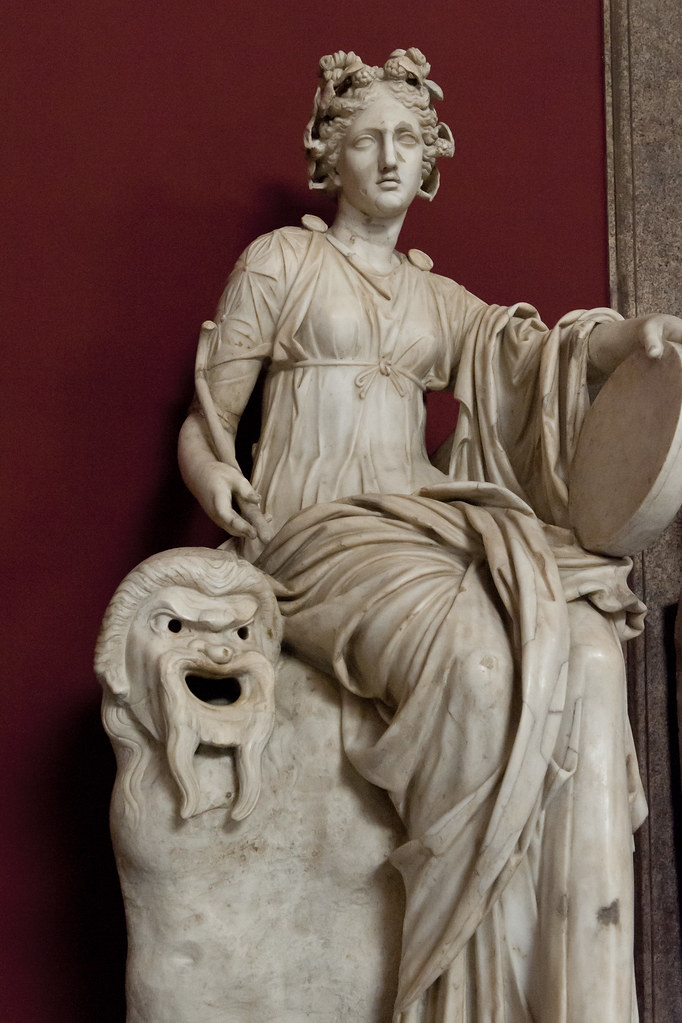
This sonnet has just been published in Allegro in the UK, edited by Sally Long. The magazine comes out twice a year, one issue themed and the other open. It focuses on formal verse, but on a long continuum between fully formal and free.

Photo: “Thalia, Muse of comedy.” by Egisto Sani is licensed under CC BY-NC-SA 2.0

Poem: ‘The Tale of Jesus’

Jesus, you came with Peter Rabbit,
Mowgli and Pooh Bear.
School tried to make your prayers a habit
But it was hard to care.

Teachers said do what you said
(Though things you did were odd),
But didn’t follow where you led –
So, just a load of cod.

I saw you as a man forthwith –
If you were real at all,
And not some mushroom-inspired myth,
Tales primitive and tall.

Though stored away up in the attic
The image of you stays:
Wit, healing, laughter… enigmatic
Violent angry frays…

Bush/Cheney occupied Iraq
As Rome did Palestine;
Bin Laden tales came down a track
With yours to intertwine:

Lean, bearded, robed and cinematic
Striding over hills,
Laughing and angry, the fanatic
Invokes, inspires and kills.

Pig-eating, beardless Westerners
Uniformed and well-armed,
Are just thieving idolaters
Who leave God’s people harmed.

Seize, cleanse the Temple at Passover,
King of the Jews! But all
Faith fails against Rome, you discover…
(The tale was changed by Paul.)

Whatever Jesus was, he wasn’t “meek and mild”. The Gospels have him cursing and withering a fig tree, telling his followers to get weapons, trashing the moneychangers in the Temple because of their handling of idolatrous coins; early legends of his childhood have him killing and blinding other children in fits of rage.

Occupied by the Romans, Palestine went into revolt every 20 or 30 years for a couple of centuries, until Rome finally tore the place apart and exiled all the Jews. Jesus had a minor role in the political history of this (but, thanks to Paul, a greater religious impact). My novel on this is The Gospel According to the Romans.

The poem was published in Snakeskin.

Photo: this t-shirt is available from Zazzle
Poem: ‘So Listen Now’

      So listen now to what the prophet saith, 
          He teaches anything, he gladly learns, 
             He follows scientists and what they say, 
             And now, Philosophy of DNA. 
           Regard the spiral of it as it turns, 
      And listen now to what the prophet saith: 
  The two as one, entwining intercourse, 
Then separate from toes to very head, 
And, separated, seek another bed, 
  Their separation procreation’s cause. 
      So listen now to what the prophet saith— 
           And this the canniballed male spider learns, 
                Eaten by her, as her he’d try to lay, 
                Who procreates in separation’s day— 
           No spark of love or life or hate there burns, 
      But, listen now to what the prophet saith, 
      Only a life of procreating death. 

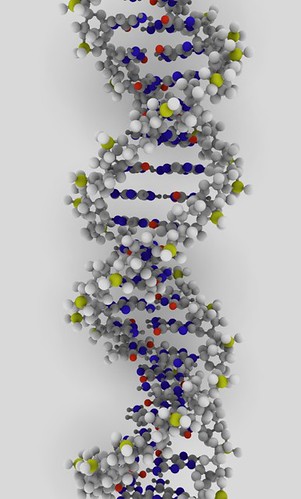
Another of my early poems: I wrote this when I was 17, in my last year at school. DNA was still a newish concept to the general public, and it appealed to my nihilistic teenage state of mind. My opinions decades later are still pretty similar, though my attitudes are much more relaxed and happy.

I had been thoroughly immersed in iambic pentameter by then, studying several of the Canterbury Tales, several of Shakespeare’s plays, and a whole slew (or slough) of poets from Donne and Milton to Cummings and Frost–learn enough poetry by heart, and you become very comfortable writing in the forms you know. I developed the rhyme scheme to allow the indentation-by-rhyme to reflect as best I could the spiral of the subject: ABCCBADEEDABCCBAA, the rhymes winding back and forth across the much-repeated central line, ending with a couplet to round it out at 17 lines.

The poem was originally published in Metverse Muse, an Indian periodical that champions traditional verse.

Photo: “DNA rendering” by ynse is licensed under CC BY-SA 2.0

(Loosely) Anapestic Sonnet: ‘A Run’

Over the island from beaches this side where it’s blowing,
it’s only a mile to the side where today it’s flat calm;
so over the hill’s potholed tarmac, to tracks of sand going
along under southern pine, seagrape, gum elemi, palm;
and then between sea-oats and cocoplums over the dunes
and down to the beach where the sand is as dusty as powder,
then lower across the high tide mark that seaweed festoons,
to harder packed sand under sun hot as bird-pepper chowder —
the sand at the ocean low tide, flat and hard as a ledge,
so flat you don’t feel that you’re running the side of a slope
where the ocean runs up inches deep and you splash through its edge,
one more mile to the end, where the sand is as pink as fresh hope,
is as pink as a conch shell, as pink as the still morning skies —
and you rest on the rocks in the shade while the southern pine sighs.

Eleuthera, the island where I was raised and where I live, is long and skinny like many of the Bahama Islands. A hundred and ten miles long, mostly a mile or two wide. I live on the south side (local name), the west side (tourist name), the sea side, the Sound side, the Caribbean side. It’s a great run of a mile over a 60 foot hill to the north side (or east side, ocean side, Atlantic side). On the south side the sand is white, and all the way out to the horizon the water is only 20 feet deep or so. On the north side the sand varies from powdery white to coarse pink, and long before you got to the horizon you would be in 8,000 feet of water. You can tell immediately from a photo which side you’re looking at: vegetation, beach, colour of the water, they’re all different.

This poem was published this month in Snakeskin, edited for 25 years by George Simmers. He is receptive to both traditional and free verse, everything depending on what appeals to him at the time. This is good for me, because I am inconsistent with what I produce. With this one, I went for the rhythm, the da-da-dum, da-da-dum which may not be the sound one person makes when running, but for me captures the mood of running. I can’t define it more than that. And so long as that rhythm is in the heart of each line, I don’t have a problem with being a syllable short at the beginning, or having an extra one at the end, so long as it all flows from one line to the next without a big hiccup.