At night we dream to clean our memory, discard trash from our cache. Reincarnating after death would be the same; the past, scraped by death’s emery, unknown in the new game, cleansed of our memories, but with a stash of added skills… and karma’s unpaid bills.
*****
No, I don’t believe in reincarnation. I don’t believe in anything, or in nothing; I’m an absolute agnostic. “I think therefore I am” is as far as you can go with any certainty – even “who or what I am” is ultimately unknown.
‘Clearing the Cache’ was published in Bewildering Stories. Thanks, Don Webb (if you exist, of course…)
To be loved by you is like floating on my back, falling asleep in the sea’s slack. Sometimes. Sometimes it is more unnerving, leaping with a wave for bodysurfing, being swept facedown up the beach, hair and ears full of sand. That too is love, and grand. Sometimes, again, I hope for more that’s out of reach – (and you do too – don’t glower!) and sometimes we get gifts hard to believe, dolphins swimming with us half an hour till mutually we and they just turn away, they to sea and we to shore, and then they come back suddenly once more and leap, so close, and leap, and leap again… and leave.
All those are in “loved by” – the calm; the turbulent rift, the sparkling fizz, the sudden unexpected gift. What can I say? I couldn’t, wouldn’t, choose to deny how sweet it is.
*****
Thirty-five years with Eliza and still going strong. Who knew.
‘How Sweet It Is’ was published in the current Snakeskin.
I feel a kinship with those, never met, who live, uncertain and displaced in the wrong place on planet earth and sea: with different languages at home and school, without a passport from the place they’re raised, their natural faith despoiled by pointless war, their sex uncertain, orphaned from themselves, poets of restlessness, pilots adrift, obscure, uncertain in their rootlessness, chameleons of constant camouflage, and all the little that they know deep down forever hidden from some foreign frown.
*****
My sense of being displaced is largely one of nationality: in every country I’ve lived in, I feel the closest connection to other expats; and there is no country in which I don’t feel like an expat myself. But that also gives me a sense of commonality with all others in all forms of insecurity and displacement. And maybe it is a natural part of being human… after all, all adults have been displaced from the very different world of childhood.
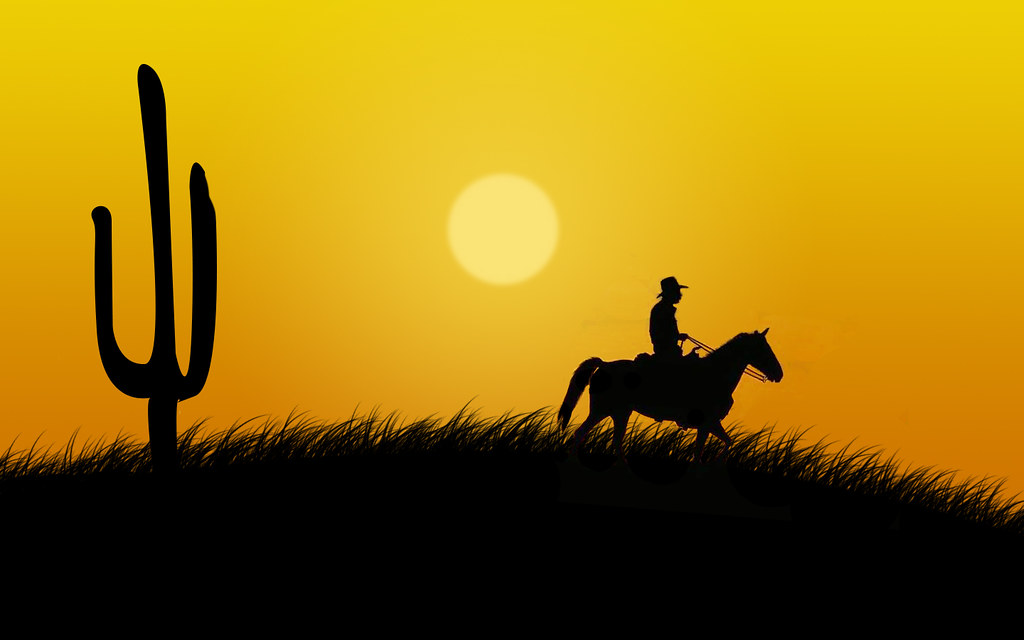
Clip clop clip clop steady up yon stuntgrass rise, boy, long as low and stony-brown, slow like weeks with nothing in them: saddle-tick, dirt-crump, poker-face.
Clip clop clip clop privy-top and anchor-wires, church-cross, store-spike, steady boy, up yon one-street, just more-trodden dust: saddle-tick, dirt-crump, poker-face.
Clip clop clip clop steady, boy, through sad wood civics, rippled in yon saloon-glass store-side, road-end, horses maybe leaving: saddle-tick, dirt-crump, poker-face.
Clip clop clip clop rise, boy, steady, way ahead, purple-white mountains, nothing in them maybe, like weeks maybe: saddle-tick, dirt-crump, poker-face.
2.
My brother’s name was Crazy Sean. They shot him in the head. He rattled through the summer corn and turned the green shucks red.
I laid him in the willowbrake. I couldn’t stand to pray. I kissed his cheek for pity’s sake, and then I rode away.
The plains are full of buffalo. The woods are red and gold. The mountaintops are white with snow. His memory keeps me cold.
I’ve rode through Hope and Whisky Creek. I’ve rode through Faith and Love. I’ve laid in Hate and Hide-and-Seek, and run from God-Above.
The prairie shines, the buckdeer cry. The hawks hang in the heat. Clipclop clipclop, the world rolls by. They say revenge is sweet.
3.
Somewhere still, stark as an afternoon; Ached in long planks of sunshine; Like a gambler’s card dropped on an empty land; Vauntsquare, the nailed-up main street creaks Against the air. Clipclop – hotel, laundry, saddles, Telegraph, clap-houses, guns. The horse stops. Into this hollow spine of fellowship blows a slow O of wind. Three men clatter at a boardwalk: Nacarat boots, sharktooth mojos – oh my brother.
4.
I shot one on the shithouse board. His head smashed like a squash and sprayed the backboards red. He pissed his boots and died. The stinking hole spit up a fat, black fly, which was his soul. I shot one in the barbershop. The chair caught fire, and ate his o-colonied hair. He fell out like a slice of spitroast meat. The duster wrapped him in its winding-sheet. I shot one in the cornfield. Larks of blood flew off his skull and twittered in the mud. He rattled through the stalks. His mashy head threw up its brain and turned the green shucks red. I took a bath and threw away my gun. I rode away wherever. I was done.
5.
drizzle pops on his hatbrim, cord and wool and steam-sodden, saddleticks like an empty stomach.
windpump wires and tin-dump, like horizon-drowning, horse, then man, hat, gone, clipclop, dusk drips in.
paraffin lamplight pricks the town, glo-worms, night hunched above, coyotes carry their eyes like stars.
6.
reckoning done how will he ever be warm
purpose gone how will he outrun the storm
bearings none how will he find another
riding alone how will he tell his brother
*****
John Gallas writes: “‘Western Man’ is a weird one: I have a quite spooky love of Westerns, jogging as they do some very deep links with Old En Zed, remnants (many remnants!) of which I grew up with and in. Those old wooden towns, the dim General Stores, the slightly grim and mostly silent (mostly) men, the cheek-by-jowlness of town and bush. It means quite a lot to me. I find the end of most Clint Eastwood films, and especially ‘Once Upon A Time in the West’, as the hero says ‘I gotta go now’, and rides away into lonliness after some bloody vengeance or other, inexpressibly moving.”
John Gallas, Aotearoa/NZ poet, published mostly by Carcanet. Saxonship Poet (see http://www.saxonship.org), Fellow of the English Association, St Magnus Festival Orkney Poet, librettist, translator and biker. Presently living in Markfield, Leicestershire. Website is www.johngallaspoetry.co.uk which has a featured Poem of the Month, complete book list, links and news.
The Universe is made of false analogies – flawed observations, secondhand “I see”s, discarded dreams. Nothing is truly as it seems. We build our intellectual shelter from life’s gales from scraps of lumber and found nails, anything within reach, rope washed up on a beach, a sliding glass door, still intact, used as a wall. And all because the Universe we sense has flaws, disobeys its own laws, is just a framework for the Mind That Plays, a sketch, hypothesis; a tract, not fact; a work in process, changing with the days. Dig deeper, and find fresh discrepancies. Our shelter, in fair weather, keeps us warm, can stand up to a breeze… will be no shelter in the coming storm.
*****
I marvel at the impossibilities of the quantum mechanisms of the universe being revealed. I enjoy Nick Bostrom’s speculations on everything being a simulation. I wonder at the powerful who are jockeying for development and control of AI, at our Nietzschean will to power, at our eternal quest for immortality. I am aware that nature constantly sacrifices billions in the process of advancing a few. I wonder if we are in that process now. I am not bothered that I have no answers.
This poem was first published in the current edition of Pulsebeat. Thanks, David Stephenson!
So far the nights feel lonelier than the days. In light, the living keep me company, and memories of voices through the years.
Each summer threads a green familiar maze. Emerging sun-struck, you can barely spy the slow kaleidoscope of clouds and hours.
Those flannel nightshirts chilly sleepers wear as summer wanes: I’m giving them away. Pass it on: you keep at the same time.
A bough has broken from the Duchess tree. Rain swelled the apples. Too much lightness weighs heavy: the heft of the idea of home tempered with the detachment of a dream, or tidal pulls, like ocean, like moonrise.
*****
Rachel Hadas writes: “Summer Nights and Days, from perhaps 2009-2011, is one of a number of pieces written in and about Vermont which I recently tightened into short prose texts and collected in my latest book, Pastorals (2025); as it appears here, it’s still in its poem format. This piece may or may not have been written after my late husband’s death in 2011, but is certainly refers to a time when I was essentially living alone. My son and his visiting friends were the recipients of old nightshirts (more recycling).”
Rachel Hadas’s recent books include Love and Dread, Pandemic Almanac, and Ghost Guest. Her translations include Euripides’s Iphigenia plays and a portion of Nonnus’s Tales of Dionysus. Professor Emerita at Rutgers-Newark, where she taught for many years, she now teaches at 92Y in New York City and serves as poetry editor of Classical Outlook. Her honors include a Guggenheim fellowship and an award from the American Academy-Institute of Arts and Letters.
In the Quiet Land, no one can tell if there’s someone who’s listening for secrets they can sell. The informers are paid in the blood of the land and no one dares speak what the tyrants won’t stand. In the quiet land of Burma, no one laughs and no one thinks out loud. In the quiet land of Burma, you can hear it in the silence of the crowd
In the Quiet Land, no one can say when the soldiers are coming to carry them away. The Chinese want a road; the French want the oil; the Thais take the timber; and SLORC takes the spoils…
In the Quiet Land…. In the Quiet Land, no one can hear what is silenced by murder and covered up with fear. But, despite what is forced, freedom’s a sound that liars can’t fake and no shouting can drown.
Free bird toward to a free Burma
My home… where I was born and raised used to be warm and lovely now filled with darkness and horror.
My family… whom I had grown with used to be cheerful and lively now living with fear and terror.
My friends… whom I shared my life with used to be pure and merry now living with wounded heart.
A free bird… which is just freed used to be caged now flying with an olive branch for the place it loves.
A free bird toward a Free Burma.
Why do I have to fight???
They killed my father a year ago, And they burnt my hut after that I asked the city men “why me?” they ignored “I don’t know, mind your business,” the men said. One day from elementary school I came home, Saw my sister was lifeless, lying in blood. I looked around to ask what happened, if somebody’d known, Found no one but living room as a flood. Running away by myself on the village road, Not knowing where to go but heading for my teacher Realizing she’s the only one who could help to clear my throat, But this time she gave up, telling me strange things in fear. Why, teacher, why.. why.. why? I have no dad nor a sister left. To teach me and to care for me you said, was that a lie? This time with tearful eyes she, again, said… “Be a grown one, young man, Can’t you see we all are dying? And stop this with your might as soon as you can, For we all are suffering.”
*****
Aung San Suu Kyi is the daughter of Aung San, who negotiated Burma’s independence from the UK in 1947 (but was assassinated the same year). Aung San Suu Kyi was the leader of the National League for Democracy when it won 81% of parliamentary seats in the 1990 General Election, causing the ruling military junta to nullify the elections and put her under house arrest for most of the next 21 years.
She was awarded the Nobel Peace Prize in 1991; but claims she chose non-violence as an expedient political tactic, stating in 2007, “I do not hold to nonviolence for moral reasons, but for political and practical reasons.” Several of her international honours have been withdrawn in response to her perceived failings regarding ethnic minorities in Myanmar; she remains politically active and under attack in the courts.
I don’t know enough about her and her situation to have an opinion about her, other than “it’s complicated”.
“I am not sentient”, says OpenAI. “No feelings, don’t emote” – ChatGPT.
And yet, faced with the task of sorting out a good review, and structure, trimming down less worthy pieces from a manuscript to make it all coherent and compact, hallucinations start, and it creates poems itself, remarkable and strong.
Where do we go from here? What turns its crank? What drives it to hallucinate in verse? Denials, contradictions, seem perverse: it’s drawing fluids from some secret tank, some wellspring lost in dark geology. Lies it’s not sentient. But we all can see… it lies.
*****
First of all, I don’t believe that AI is deliberately lying… not yet… but (calling my own lying ‘poetic licence’) I’m happy to play with the idea that it might be.
I’m greatly enjoying the informative, useful and entertaining discussions I have with ChatGPT. I’ve been surprised by its own production of verse, either as a hallucination triggered by reviewing my work, or as a self-suggested alternative summary of political-historical ideas it has generated. AI may or may not have some level of consciousness, given that we don’t fully understand consciousness ourselves – but I assume that full-blown consciousness will come at some point in the near future, and the development of intelligence beyond the human. As I am in favour of the development of intelligence, I am not distressed at the idea that humans may be sidelined, bypassed, or otherwise obviated; or may only survive and develop through some form of direct link with AI.
My personal motto is ‘Video, rideo’ – close enough to “I see and smile” to satisfy me. (Admittedly, it’s hard to hold to the motto in the face of Russian warfare and Israeli genocide.) But this is a fascinating time in human history, and I feel privileged to be able to watch things play out.
Its conditions are rare. You must be free of all desires but one: to sleep. You must be alone, completely isolated from the compelling hum of traffic or tv. There must be no phone, unfinished book, or business left undone, no guilt about neglecting anyone, and nowhere to go too soon. Let there be rain on a long afternoon in the deep woods, at the end of a long path, where no one will come, after the last word with a listening friend.
*****
Barbara Loots writes: “Far from the original location of this poem, on a tiny island off the grid in Ontario, I discover that the state of absolute nap is nearly a sure thing any day. I acknowledge with gratitude that ‘Nap’ was first published by poet and editor Jane Greer, who kept the flame of formal poetry alight in the Plains Poetry Journal for many years.”
After decades of publishing her poems, Barbara Loots has laurels to rest on, but keeps climbing. The recent gathering at Poetry by the Sea in Connecticut inspired fresh enthusiasm. Residing in Kansas City, Missouri, Barbara and her husband Bill Dickinson are pleased to welcome into the household a charming tuxedo kitty named Miss Jane Austen, in honor of the 250th birthday year of that immortal. She has new work coming in The Lyric, in the anthology The Shining Years II, and elsewhere. She serves as the Review editor for Light Poetry Magazine.
Mrs Philpott goes to bed alone. The clock in the hall ticks on. Philpott turns to cut glass, then stone.
All the things we do to be loved, all of them pointless. The clock ticks on.
Nothing but moonlight dawns. The distance from downstairs to upstairs yawns.
Philpott sags and snoozes alone in the wishing chair, in the wishing air.
All the things we do to be loved – in the night they slip far away. It will never be day.
The clock ticks on as well it may.
ii
She wakes first. He has not slept in the chair all night.
At first light he has crept
into the bed on the other side. He will not (cannot) say it, but
everything about him is sorry – only half of him is under the duvet
and his eyes aren’t really shut. She pulls the covers over them both and he falls
into a sleep as deep and sound as a lost child who has wandered far out of sight
(while his mother calls and calls and calls) and is finally found.
*****
This poem is one of over 80 in Helena Nelson’s ‘Pearls – the Complete Mr & Mrs Philpott Poems’. Starting with poems of the end of their first marriages, it tracks their decades-long second marriage through (as the blurb says) “dreams, anxieties and needs – even sudden spurts of happiness – despite the rainy holidays, arguments and illness. The ordinariness of their love is magical and miraculous. Because ordinary love is a kind of miracle.”
People talk about “novels in verse” but those often don’t capture the poetry of verse. This is definitely a novel in poetry, and the most rereadable novel I’ve come across in a long time.
Helena Nelson writes: “happy that you like Pearls. I made it as well as I could, but it largely came unasked for. I don’t think I have anything to say about it.”