Category Archives: short poems

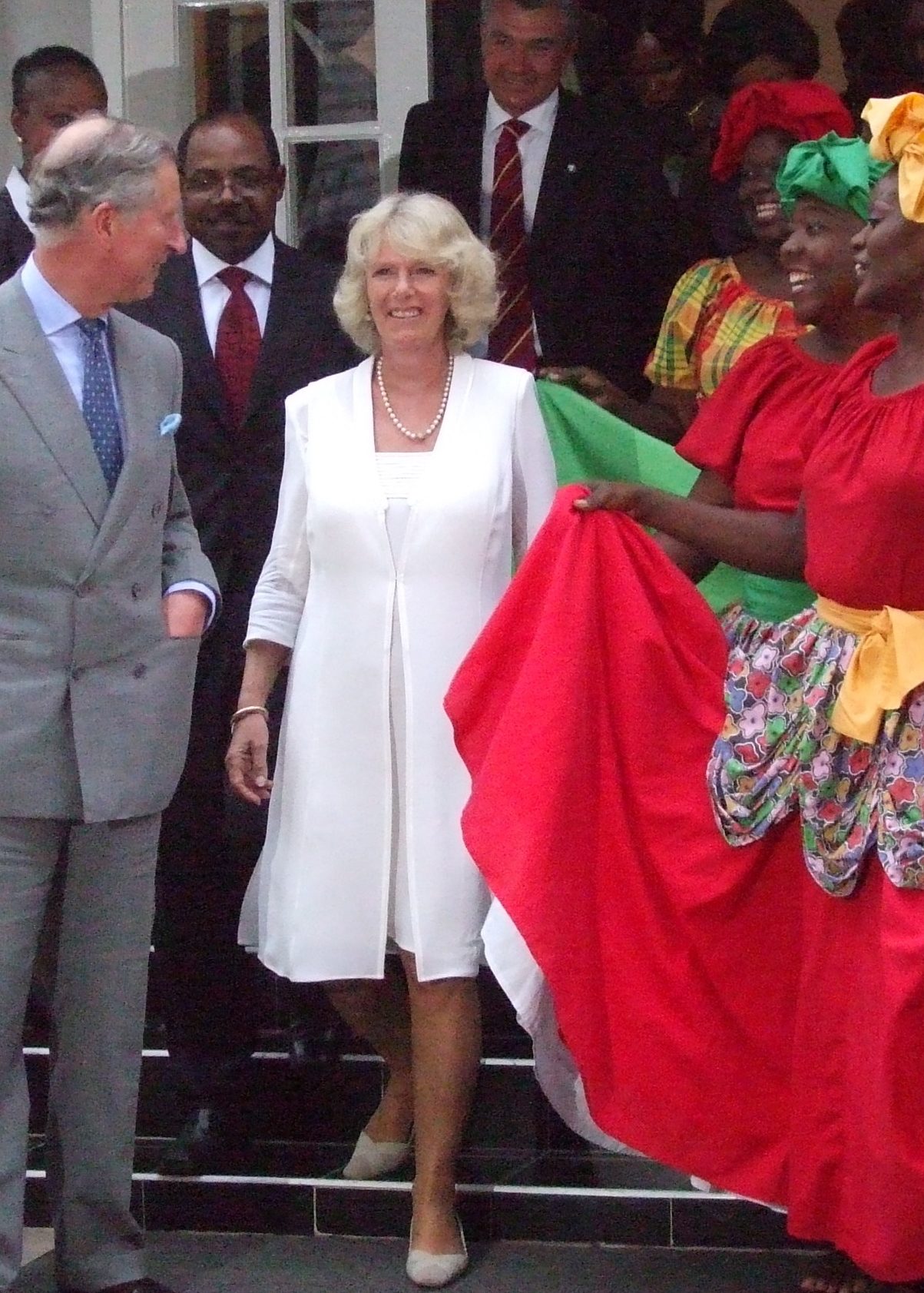
Short poem: RHL, ‘Many Marriages’

Lots of marriage is good –
go ahead! We all should…
but bigamy sadly‘s illegal.
The solution, of course,
is: Encourage divorce!
And remarry. Kings do it. Be regal!

*****

Just published in The Asses of Parnassus – thanks, Brooke Clark!

Photo: “Charles Camilla Jamaica 2008” by Mattnad is licensed under CC BY-SA 3.0.

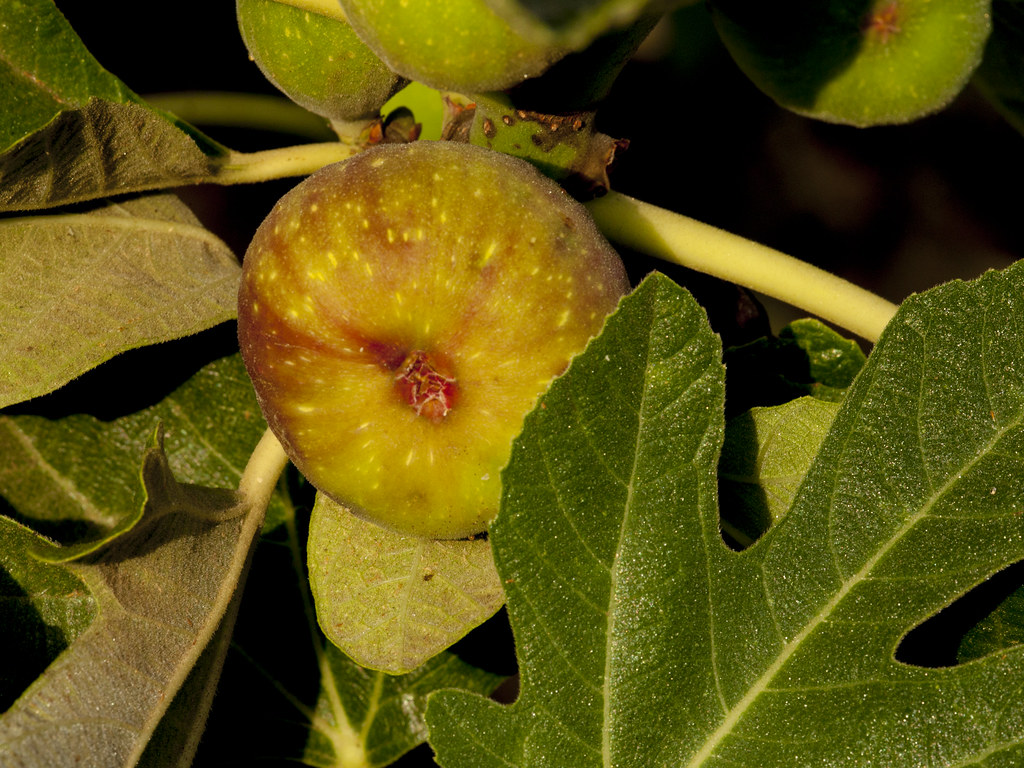
Short NSFW poem: RHL, ‘The Fig Tree’

The fig leaf symbol’s one of History’s greats
As, inter alia,
It hides, discloses and exaggerates
Male genitalia.
The fruit itself suggests the female form —
Dripping with honey
The little hole breaks open, pink and warm…
The Bible’s funny.

First published in The Asses of Parnassus, this poem was republished in Better Than Starbucks, which earned a “Kudos on your brilliant ‘The Fig Tree'” from Melissa Balmain, editor of Light. And it has now been added by Michael R. Burch to my page in The HyperTexts. That’s a wonderful set of editorial acceptances – it makes me proud, and I have to erase my lingering suspicion that the poem would be thought too rude for publication. Now I rate the poem more highly, as being not just a personal favourite but also acceptable to a wider audience.

It sometimes feels that all I write is iambic pentameter. It is always reassuring when a poem presents itself with half the lines being something else, and the result is a lighter, less sonorous verse. The rhymes are good; the poem’s succinct and easy to memorise. I’m happy with it.

Photo: “Ripe Fig at Dawn” by zeevveez is licensed under CC BY 2.0.

Short poem: RHL, ‘Flying to Majorca in March’

Drop me down out of the cold wet gloom
into the orange trees in bloom:
the olives, almonds, windmills, cypresses,
the black-eyed girls with wild tresses;
where once were barren hillsides, peasants, mules,
are now estates with swimming pools.

*****

Mallorca, or Majorca to the English, has always been an attractive destination for people from further north. Frederic Chopin and George Sand moved there at the beginning of their relationship, spending three months while Chopin completed his 23 preludes in each of the major and minor keys (but the locals were suspicious of his coughing, and were antagonised by George Sand’s avoidance of church; the couple moved on). Robert Graves (whose Wikipedia entry’s Sexuality section is mind-boggling) lived for decades in the village of Deia, also associated with Anais Nin, Richard Branson, Mick Jagger, Mark Knopfler, etc. And these days Mallorca gets over 10 million tourists a year.

My short poem is inconsequential, but it has just been published in the September issue of Allegro, which is themed on ‘Flight’. It was a simple reflection on revisiting Mallorca decades after summer holidays there.

Photo: “Parella i ase” by Arxiu del So i de la Imatge de Mallorca is licensed under CC BY-NC-ND 2.0.

Short poem: RHL, ‘I Started Out Alone’

I started out alone,
No numbers and no words.
The people gave me food and clothes.
I loved the sun and birds.

And when I reach the end
Numbers and words all done,
Have to be fed and dressed again,
I’ll love the birds and sun.

*****

This is one of my favourite poems, for several reasons:
First, it extols the combination of curiosity, enjoyment and acceptance that I believe is appropriate for this thing called life.
Second, it is simple in expression: simple words, simple rhythm, in iambics with simple full and slant rhymes.
And third (and perhaps most importantly) it is easy to memorise: it has lodged itself in my brain without any effort or even intent on my part and, as this blog frequently claims, that is the essence of poetry.

‘I Started Out Alone’ was originally published in Bewildering Stories in 2019. More recently it was included in a batch of my poems that Michael R. Burch spotlighted in The Hypertexts for August 2024.

Photo: “Baby face” by matsuyuki is licensed under CC BY-SA 2.0.

Using form: Short poem: Helena Nelson, ‘Duel’

Your false self says to my true self, Hate.
My true self says to your false self, No.

Your false self says to my false self, Shit.
My false self says to your false self, Go.

Your true self says to my false self, Love.
My false self says to your true self, Late.

Late, too late, too late, too late.
My true self sings to your true self, Wait.

*****

Helena Nelson writes: “I can’t explain this easily. It’s both simple and obscure, like a sealed box holding the idea of opposition: a duel between two people, a duet; dual positions. Then there’s the idea of a two-sided self: the true or authentic self versus the manipulative side, the side that does deliberate damage. I don’t even believe in ‘the true self’; but I do in this poem. And I recognise a dispute where one person (especially if for some reason acting from twisted emotion) can push another to come back from that same position, even when they don’t want to. From experience, I’ve known this. The rhyming words trace the development. The slant rhyme between Hate and Shit, for me, has a dark twist. Hate is powerful but Shit is horrible. Late is potentially the last word. The poem could end there, but it doesn’t. Each of these two people summons a ‘true self’. Each dismisses the ‘false’. ‘Late, too late, too late, too late’ is the line that breaks the pattern. No direct speech in that line, perhaps because it’s not a spoken statement but a feeling experienced by both. For me, there’s intense sadness at this point, and the shadow of death too, and because of this—just in time—true speaks to true. Only seventy words in the whole thing but most repeated several times. If you go by unique usage, fifteen words in total. It reminds me of one of R. D. Laings’ Knots. The switch from ‘says’ to ‘sings’ at the end? Yes—significant.”

Helena Nelson runs HappenStance Press (now winding down) and also writes poems, one of which is ‘Duel’. It was originally published in PN Review, collected in Plot and Counter-Plot, Shoestring Press, 2010, and was reprinted in the Potcake Chapbook ‘Lost Love’. Her most recent collection is Pearls (The Complete Mr and Mrs Philpott Poems). She reviews widely and is Consulting Editor for The Friday Poem.

Photo: “Argument” by helena_perez_garcia is licensed under CC BY-NC-ND 2.0.

Short poem: RHL, ‘Ghosts Twitter’

Ghosts twitter in my head like the memory of predawn birds.
Digging below my present house I find
a structural supportive past with rock veins to be mined.
Upstairs the future isn’t fully built or roofed.
Has someone goofed?
The Architect is vague on final thirds.

*****

I am finding many ways to say I don’t understand existence at all; this is one of them.

This short, semi-formal poem was published recently in The Lyric.

Photo: “unfinished house” by Lodigs is licensed under CC BY-NC-ND 2.0.

Kelly Scott Franklin, ‘ora et labora’

toil and spin
we begin
wool, stone
cloth and bone
fibers break
fingers ache
scarlet thread
daily bread
sisters bend
knots end
warp and weft
right, left
kneel and weep
till and keep

the slanted ladder forms a stair
work is prayer

*****

Kelly Scott Franklin writes: “Alvarado’s painting depicts women kneeling, which I think first suggested prayer. As a Catholic, I’m aware of the Benedictine idea of work and prayer as a spiritual pair; but St. Josemaría Escrivá and the Opus Dei movement have also proposed that work itself, done with love and patience and offered to the Original Giver of Creation, can be itself a form of prayer. I had fun with the truncated lines, and I focused on selecting the most evocative physical objects and simple gestures interwoven with Biblical phrases. Maximum density. The poem was first published in Ekphrastic Review” 

Kelly Scott Franklin lives in Michigan with his wife and daughters. He teaches American Literature and the Great Books at Hillsdale College. His poems and translations have appeared in AbleMuse ReviewLiterary MattersDriftwood Literary Magazine, Iowa City Poetry in Public, National Review, Thimble Literary MagazineEkstasis, and elsewhere. His essays and reviews can be found in Commonweal, The Wall Street JournalThe New CriterionLocal Culture, and elsewhere. 
https://www.hillsdale.edu/faculty/kelly-scott-franklin/

Women Making Textiles, by Mario Urteaga Alvarado, 1939

SF poem: RHL, ‘Outbreak of Humans’

Gods! Admire us;
we’re your virus
formed of land and sea.
Air and fire
take us higher,
a plague now breaking free;
a wild agent
of contagion
through the galaxy;
death-defying,
modifying…
infecting all we see.

*****

This brief poem was recently published in Bewildering Stories. Humans have already spread round the planet into all ecosystems like an uncontrollable virus; and now we’re seeing the beginnings of a far vaster expansion, presumably entailing endless mutations as we go. It’s going to be a wild ride and, once we’re established and self-sustaining off-planet, I don’t see anything stopping it.

(To those who don’t share this world view, I apologise for what must come across as a religious rant. Maybe it is. We’re all trying to make sense of a life that refuses to be pinned down, and quantum physics shows no more common sense than do tales of angels and demons.)

Having predicted the future in vague outline, I admit I think the future is unpredictable in detail. It is chaotic and formless… which is all the more reason for imposing what form we can in writing about it. Form is a good antidote to formless times. And understanding why we developed our cultural techniques over millennia, why we love song, dance, rhythm and rhyme, is useful in preparing ourselves for an unpredictably evolving future. We developed our cultural strengths for good reasons, and they speak to our evolving ape core. Yes, things will keep changing; but for good or ill we are social beings, and our rhythms and harmonies are part of what keep us grounded in society and prevent our mental collapse.

Photo: “NEXT GALAXY” by suRANTo dwi saputra is marked with CC0 1.0.

Annie Fisher: ‘Grumpy Grandad’s Nursery Rhyme’

Cock a buggery doodle doo!
I’m bending to lace up this buggery shoe!
You’d be buggery bad-tempered too
If the buggery cock
Woke you buggery up
At buggery, buggery five twenty two!

*****

Annie Fisher writes: “When our grandchildren were very small, we would sometimes visit to help with child care. The children would often burst into our bedroom early in the morning yelling ‘Cock-a-doodle-doo!’ (Probably encouraged by their parents). On one occasion my husband was staying with them for a few days without me. On the second day he sent me a text at the crack of dawn. The text read ‘Cockabuggerydoodledoo!’ and so I understood that his day had already begun! I thought ‘cockabuggerydoodledoo’ (a case of ‘expletive infixation’, Google tells me) had irresistible rhythmic force.
My poem is, of course, based on the traditional nursery rhyme:
Cock a doodle doo!
My dame has lost her shoe,
My master’s lost his fiddling stick
And knows not what to do.

Annie Fisher’s background is in primary education, initially as a teacher and later as an English adviser. Now semi-retired she writes poetry (this one appeared in Snakeskin) for both adults and children and sometimes works as a storyteller in schools. She has had two pamphlets published with HappenStance Press: (2016) and (2020), and is due to have another pamphlet published in the next couple of months with Mariscat Press. It will be called ‘Missing the Man Next Door’. She is a member of Fire River Poets in Taunton, Somerset and a regular contributor to The Friday Poem https://thefridaypoem.com/annie-fisher/

Photo: “cock-a-doodle-doo.” by alyssaBLACK. is licensed under CC BY-SA 2.0.

Using form: alliteration: RHL, ‘How Brashly Brave’

How brashly brave, embroiled in this brief life,
we chance our challenge to the unchanging gods!
Strike poses, strut the strident stage of strife,
take optimistic oaths against all odds.

Fearless of foes, false friends, futility,
we wrack our reason to reach, undestroyed—
though usually of no utility—
a burst of brightness bettering the void.

*****

Although I prefer to maintain an unobtrusive persona myself, I subscribe to this philosophy of bravado existentialism. The florid alliteration suits the message.

This poem is published in the current issue of Light – thanks, Melissa Balmain and all.

Photo: “Flamboyant Emperor of the United States” by PeterThoeny is licensed under CC BY-NC-SA 2.0.