Category Archives: sonnets

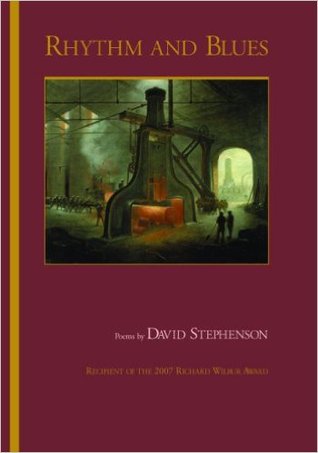
Review: ‘Rhythm and Blues’ by David Stephenson

David Stephenson’s ‘Rhythm and Blues’ was the 2007 Richard Wilbur Award winner, and contains some excellent poems. Its back-cover blurbs are accurate–as Kim Bridgford states, the collection has “wisdom, a plain-spoken, convincing style, and a sense of irony… all the time with impressive technical skill.”

Several of the sonnets are excellent: ‘Pilate’ meditates on the harshness of the law,
But why waste breath? In six months, who will mourn
This insect, or recall that he was born?

The ‘Geologist’ speaks of his passion for the history of rocks, ending:
The present is a world of dirt and sand
And people–they of the immortal soul–
Whom I do not pretend to understand,
Though I admire them in their long-term role
As precursors to limestone, chalk, and coal.

And beyond the sonnets are villanelles, and longer blank verse monologues in the voices of a toll collector, a housebreaker, a corporate hatchet man, and so on; and poems with various structures of stanza.

But there is a problem: the ruthless, relentless, metronomic use of iambics. The entire collection is in either iambic pentameter or iambic tetrameter. In general, the shorter pieces are good; the longer pieces are thematically interesting, but I find pages of blank verse unappealing. Stephenson can obviously think easily in iambic pentameter; but that skill tends towards blather. As the book title suggests, there is rhythm; but with insufficient variety for the claim of music.

But maybe this is expecting too much. Stephenson is a committed formalist, to the extent of having started his own Pulsebeat Poetry Journal for formal verse. His sonnets in particular are very good. And the book is highly readable and rereadable–though in small doses, not straight through in one go.

And there is actually one break in the unremitting use of iambics, in the shortest and most whimsical poem in the book–and for all those reasons perhaps my favourite. It is ‘To a Garbage Truck’:

Stop for me, romantic sloop,
When all your cargo is on board
And your ride low upon the waves,
For I would cast my lot with yours

And put forth on the open street
En route to some strange orient
Full of exotic ports of call
Beyond the gray horizon.
Potcake Poet’s Choice: David Galef, ‘Justification’

And malt does more than Milton can
To justify God’s ways to man.
—A. E. Housman

When I am beaten down by work and love,
And others head for local dives to drink,
I clench my soul and strive to rise above,
For stimulating words to make me think.
O show me Milton’s paradisial route,
Far airier than the foamiest of stout.
Of man’s first disobedience and the fruit
Are all I need and all I care about.
A bottled brew’s sufficient for the poor
In spirits, not for spirituality.
How can a tankard filled with beer quench more
Than slaking drafts of a theodicy?
I’d bring it to the bar, but I get looks
When I enact the fall from all twelve books.

David Galef writes: “Justification is both an appreciation and dig at Milton, an attitude older than Samuel Johnson’s comment about Paradise Lost, ‘None ever wished it longer than it is.’ It came out in Light.”

David Galef has published over two hundred poems in magazines ranging from Light and Measure to The Yale Review. He’s also published two poetry volumes, Flaws and Kanji Poems, as well as two chapbooks, Lists and Apocalypses. In real life, he directs the creative writing program at Montclair State University.
www.davidgalef.com

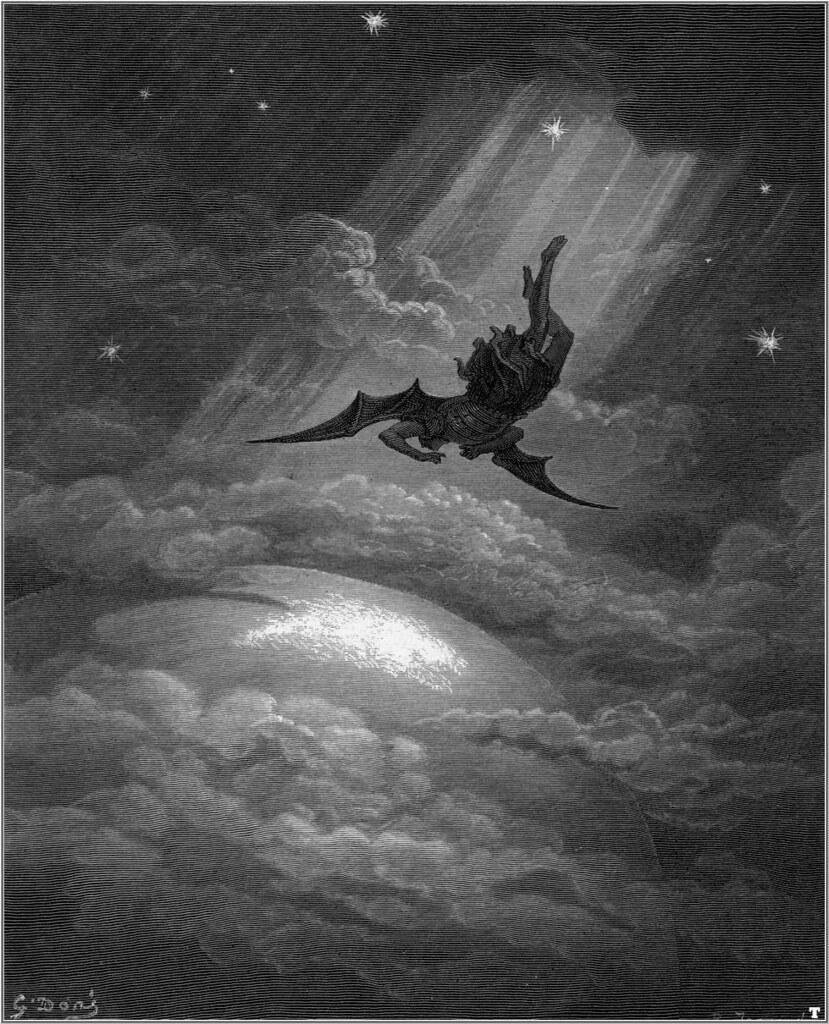
“DORÉ, Gustave Illustration for John Milton’s Paradise Lost 1866” by carulmare is licensed under CC BY 2.0

Potcake Poet’s Choice: D.A. Prince, ‘Horatio’

Always in shadow, on the edge, the light
falling on someone else. I’m used to it—
fidus Achates, and half-acolyte.
Besides, the sidelines are a safer bet
so I survive—at least, upon the page,
though never in imagination.
The curtain falls: I vanish with the stage.
Even Rosencrantz and Guildenstern live on
in other times but I—the dutiful
and sober pal, the philosophic friend—
dissolve. I fade. Meanwhile, the beautiful
capture your soul beyond the play’s neat end
where I’m to set, with due fidelity,
the record straight. You won’t remember me.

From: Common Ground, HappenStance Press, 2014.

D.A. Prince writes: “In the middle of a lively debate about which actor had played the definitive Hamlet, I realised I had no memory at all of any actor playing Horatio. There would have been an equal number, obviously. Horatio is on Elsinore’s battlements in the opening scene, questioning the existence of ghosts, and he’s there in the final scene, surrounded by corpses, giving the penultimate speech. In between he hovers in Hamlet’s shadow, necessary but—if I’m a typical theatre-goer—unmemorable. He doesn’t even get to cross the stage in Tom Stoppard’s Rosencrantz and Guildenstern are Dead. The world is full of people like Horatio so I thought I would give him a brief
acknowledgement: for turning up, for hanging on, for being there.”

D A Prince lives in Leicestershire and London. Her first appearances in print were in the weekly competitions in The Spectator and New Statesman (which ceased its competitions in 2016) along with other outlets that hosted light verse. Something closer to ‘proper’ poetry followed, with three pamphlets, followed by a full-length collection, Nearly the Happy Hour, from HappenStance Press in 2008. A second collection, Common Ground, (from the same publisher) followed in 2014 and this won the East Midlands Book Award in 2015. HappenStance published her pamphlet Bookmarks in 2018 and will bring out a further collection in 2022. There’s just the little matter of a title to resolve first.

Illustration: Hamlet and Horatio in the Graveyard (Eugène Ferdinand Victor Delacroix)

Potcake Poet’s Choice: Jane Blanchard, ‘The Kahler Grand Hotel (near the Mayo Clinic)’

I see the waitress cock her head to try
to figure out what I just said. Across
the booth my husband will not meet my eye
until she leaves to place our order. Sauce
for goose and gander holds that I will get
a turn to laugh (or not) at him. Neither
of us can hide where we are from. I let
him think his accent less than mine—either
of us can drawl a syllable into
a sentence. Fine. Most locals here speak plain
Midwestern as they welcome others who
seek remedies for matters inhumane.
How I may talk does not mean one iota
when visiting Rochester, Minnesota.

Jane Blanchard writes: “The Kahler Grand Hotel appeared in Third Wednesday (Winter 2020) right before COVID-19 changed all of our lives. This sonnet discloses how Jimmy and I tried to cope with a different medical crisis several years earlier. A little humor can go a long way when dealing with a scary situation. To this day we appreciate the many kindnesses shown to us when we were very vulnerable and very far from home.”

A native Virginian, Jane Blanchard lives and writes in Georgia. Her latest collection with Kelsay Books is Never Enough Already (2021).

Potcake Poet’s Choice: Gail White, ‘Orthodox Christmas Eve’

What am I doing here with all these Greeks?
Hoping, perhaps, at midnight Christmas Eve,
the unintelligible tongue God speaks
will summon even those who don’t believe
to Mary’s manger. Now the Virgin bears
the Master in the cave. As light through glass
he passes from her body. Joseph dares
believe the story; I can let it pass.
The incense rises like the church’s breath
into a frosty world. This night of birth
swells to a tide that tosses me past death.
But tides recede: I know this moment’s worth.
If love of beauty were the same as faith,
I’d walk in heaven with my feet on earth.

Gail White writes: “I love this poem and always secretly hoped it would become a classic, so I welcome the chance to bring it out again. The to-and-fro of faith and doubt is typical for me, as is the creeping into faith by way of aesthetics. But at this time of year faith wins, and I never let the day pass without listening to the King’s College choir singing ‘Once in Royal David’s City‘.”

Gail White is the resident poet and cat lady of Breaux Bridge, Louisiana. Her books ASPERITY STREET and CATECHISM are available on Amazon. She is a contributing editor to Light Poetry Magazine (lightpoetrymagazine.com). “Tourist in India” won the Howard Nemerov Sonnet Award for 2013. Her poems have appeared in the Potcake Chapbooks ‘Tourists and Cannibals’, ‘Rogues and Roses’, ‘Families and Other Fiascoes’ and ‘Strip Down’.
https://www.amazon.com/Asperity-Street-Gail-White/dp/1927409543

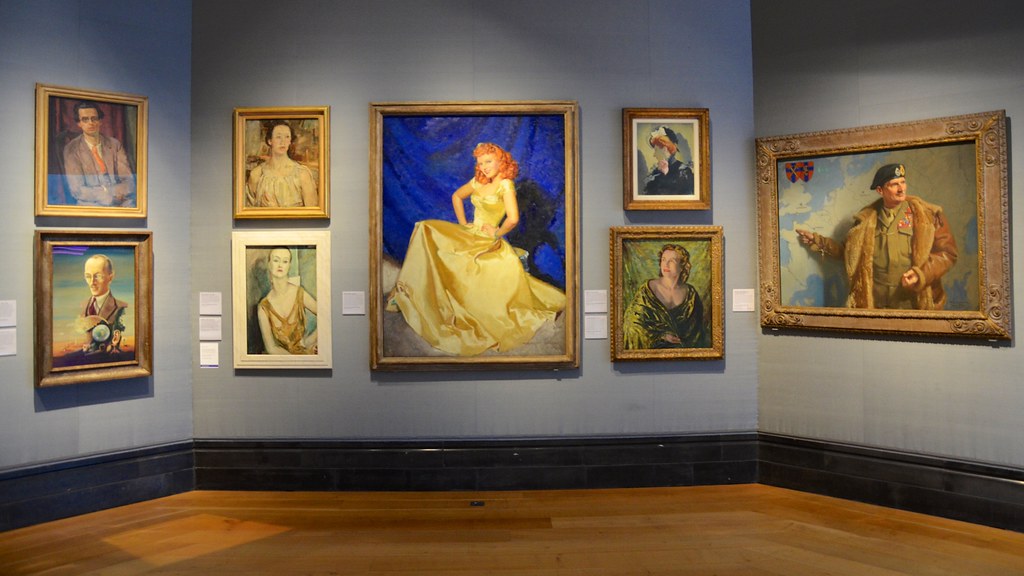
Sonnet: ‘Portraits’

Easy enough, the people in the park,
A subway addict, or some screaming child:
Knock off five lines from some chance-heard remark,
A tic observed, or mood or clothes gone wild.

A longer piece for loves, coworkers, friends,
People you’ve bonded with, played some life game;
Can’t be so flip – unless the portrait bends,
Fictionalizing thoughts in formal frame.

And closer to you than your own bed mate
Is, tougher yet, perspective and full view
Of parents, more than threaded through your fate,
They’re warp and weft, the loom, the weavers too.

So, last of all, the golden trophy shelf:
That great and grand grotesquery, yourself.

… which is merely to say that writing about people has difficulties that increase as the subjects are closer to you. Technically, a Shakespearean sonnet (iambic pentameter, rhyming ABAB CDCD EFEF GG), though without a volta, that delightful twist that reverses the mood or imagery or argument. Oh well.

Originally published in The Poetry Porch, edited by Joyce Wilson.

Photo: “National Portrait Gallery” by Joe Shlabotnik is licensed under CC BY-NC-SA 2.0

Sonnet (?): ‘Sleep is Like’

Sleep is like heading to the locker room at halftime
Sleep is like stepping into the wings between acts
Sleep is like going outside for a cigarette.

And then you go back to work
Back to the performance
Back to the game.

The game that may go thirty thousand rounds;
But who you really are is when you’re on break;
The rest is just your job, performance, game, not you.

And when at last it ends, and you go home,
Back to where you came from,
Who are you? and where do you go?

Perhaps you know this while you’re deep
Asleep…

This poem–if it is a poem–on (one of) the mysteries of the universe was just published in Snakeskin. I suppose you could call it a sonnet if you want… it has 14 lines. With four thoughts in four sets of three lines and a concluding sort of rhymed couplet, it has an organised form. Sonnetish. But it’s not elegant, it’s coarse–like life and death, consciousness and sleep.

It has no regular beat, let alone formal metre. And it’s not reasonable to claim that ABC DEF GHI JKL MM is a rhyme scheme. The piece simply doesn’t have the carefully balanced exposition of a sonnet, the flow of rhythm, the inevitability of rhyme.

If I put together a collection of my sonnets, I wouldn’t include it.

Probably.

“Smoking outside London Bar” by macabrephotographer is licensed under CC BY-SA 2.0

Sonnet: ‘Exiled Leader’ (from the series ‘Voices From The Future’)

I’ve few wants on my planet, fewer needs –
I like seas, trees, exploring what I’ve made,
Prospecting for the transgalactic trade,
Composing music while collecting seeds.
I like green islands, but won’t interfere
If eco climate needs a waste of ice
Or rock-filled deserts simply are the price
Of balancing the seas and atmosphere.
I’m rarely lonely, happy to create:
Atonal opera, atoning for
Those antisocial acts that led to war,
Jailed on the planet that I populate.
So I plant trees, make insects, have a swim,
Watch, read, compose… my life’s an endless whim.

This sonnet is one of four I wrote after Maryann Corbett commented on the bleakness of my future visions. I suppose this doesn’t really contradict that comment… we’ll have good news and bad news: the good news is, obnoxious leaders will still (occasionally) be deposed, jailed, or exiled to play golf; the bad news is, transgalactic warfare will be pretty awful. But to me, the future’s not bleak if humans keep on developing, changing, growing, exploring, discovering, creating. I think that’s the most likely scenario, that we move out into the galaxy as transhumans and then as post-humans. Though when I say “we” I don’t mean to suggest that includes me! Neither moon nor Mars excite me. I like woods and gardens by the sea.

This poem was published in Star*Line, the official print journal of the Science Fiction and Fantasy Poetry Association (thanks, Jean-Paul Garnier). Its poetry includes the full range of styles from formal to free. And the SFPA has another, online, journal called Eye To The Telescope. For reasons unknown my poems haven’t found lodging in ETTT yet.

“The Little Prince” by manfred majer is licensed under CC BY-SA 2.0

Potcake Poet’s Choice: Noam D. Plum, ‘Making a Clean Breast of It’

(Three of four men, according to a survey,) would rather take a shower with a beautiful celebrity than with their partner. “I’m not surprised,” said lifestyles counselor Carol Wise. – Reuters

Wise Wise
Replies,
“It’s no surprise.
It’s thighs–
Not ties–
That tantalize.

“True love’s the prize?
It’s otherwise.

“If four comprise
The sampling size,
Three guys
Revise
Their picks. Love dies.

“The fourth one lies.”

—–

Noam D. Plum writes: “The counselor’s name exerted a strong pull toward writing this. I like that the title is as funny as the poem. I was surprised and delighted that Mary Meriam considered this enough of a sonnet to include it in Irresistible Sonnets.”

Another poet’s pseudonym, Noam D. Plum has published in The Spectator, The Country Mouse, Light Poetry Magazine (where this poem was first published) and elsewhere. Having won several prizes, he is a more successful breadwinner than the poet for whom he fronts.

His poems have appeared in the Potcake Chapbooks ‘Wordplayful’ and ‘Murder!’

Review: ‘101 Sonnets’ edited by Don Paterson

This has to rank as one of the all-time great poetry anthologies. Yes, it contains only sonnets. Yes, several of them are dense in structure or in language (several are in Scots, with words and phrases translated in footnotes). Yes, there is only one sonnet per poet. It is very rich material, and took me a couple of weeks for a first read because there is a lot of absorb. And it has a fabulous Introduction by the British editor Don Paterson – a well-respected poet who avoided including any sonnet of his own.

The sonnets are not put into any formal grouping, but rather flow conversationally from one to the next, the themes often shifting through unexpected juxtaposition. So the first nine run through an amazing sequence of idealised love, woman as muse, kissing, sensual religiosity, obscenity, and charm. It starts with Robert Frost’s
She is as in a field a silken tent
and progresses to Robert Graves’ woman/muse
This they know well: the Goddess yet abides.
Though each new lovely woman whom She rides

to Jo Shapcott’s ‘Muse’
When I kiss you in all the folding places
to Alexander Montgomerie’s
So swete a kis yistrene fra thee I reft
to Wilfred Owen’s
Between the brown hands of a server-lad
The silver cross was offered to be kissed

John Donne’s
Batter my heart, three-personed God
William Alabaster’s ‘Upon the Crucifix’
Feed greedy eyes and from hence never rove,
Suck hungry soul of this eternal store,
Issue my heart from thy two-leaved door,
And let my lips from kissing not remove.

Craig Raine’s ‘Arsehole’
I dreamed your body was an instrument
and this was the worn mouthpiece
to which my breathing lips were bent.

to Robert Herrick
A sweet disorder in the dress
Kindles in clothes a wantonness

The 101 Sonnets provide a wild ride. The next in the book are Poe’s ‘An Enigma’, Wordsworth’s
The world is too much with us; late and soon,
Getting and spending, we lay waste our powers

(incidentally the first sonnet I learnt by heart, one that helped shape my life) and J.K. Stephens’ parody critique of Wordsworth
Two voices are there: one is of the deep (…)
And one is of the old half-witted sheep (…)
And, Wordsworth, both are thine
.

And so on through all aspects of life and death, English landscapes, Irish history, real parents, imaginary children, mythology, poetry, the seasons, the close observation of small everyday items… Wendy Cope paired with Edmund Spenser, Gwendolyn Brooks with John Milton… A very rich and rewarding collection.

And the 17-page Introduction is the single best essay on poetry that I’ve ever read. Naturally it is focused on the sonnet, covering its definition, its history, its structure; but in so doing it talks about wider issues such as the nature of iambic pentameter, and in a couple of places it goes into the nature of poetry itself: it mentions one of the advantages of the sonnet being that it is small enough
to be easily memorised, which is the whole point of the poem–that it should lodge itself permanently in our brains. We should never forget that of all the art forms, only the poem can be carried around in the brain perfectly intact. The poem is no more or less than a little machine for remembering itself: every device or trope, whether rhyme or metre, metaphor or anaphora, or any one of the thousand others, can be said to have a mnemonic function in addtion to its structural or musical one. Poetry is therefore primarily a commemorative act–one of committing worthwhile events and thoughts and stories to memory.

Later Paterson states
Poetic arguments appear to cohere simply because they rhyme. Rhyme always unifies sense, and can make sense out of nonsense; it can trick a logic from the shadows where one would not have otherwise existed. This is one of the great poetic mysteries.

All in all a brilliant book, and highly rereadable.