They lift and fix their heavy insect eyes upon the East, from where the sun will send the bees to stroke and lick and fertilize.
They wait, where once they craned their necks to see his passing arc. They wait, amazed. Surprise has painted yellow lashes, perfectly
coronal round a crowded, dark eclipse. Its buzzing beauty pixelates and stares. An alien array of cells unzips.
A thousand thousand sisters nurse the same regret. His warmth is gone. And left behind to hang their heads, disconsolate, they blame themselves. Their tears drop hard and black and blind
*****
Joe Crocker writes: “The French call them Tournesols because, when they are growing, the follow the sun. But when the flowerhead is fully formed, they all face East so they warm up quickly and are more attractive to the bees. The poem came about because I’ve been seeing them more frequently in our local supermarkets and my wife grew some this year. Seeing them close up, I was reminded of the reaction a friend from many years ago used to have. She liked them but kept her distance because she was spooked by their dense busy centres. So the insect eye was the starting metaphor and then the poem led me on. Big, beautiful, disturbing, and in the end, sad.”
Joe Crocker is no relation of the Sheffield-born rock singer. But he does live in Yorkshire and gets by (with a little help from his friends). He is a bit old now to be starting out in poetry but was infected by the muse during Covid lockdown a couple of years ago and has had a few things published, mainly in Snakeskin magazine (where this poem first appeared) and other online venues. He doesn’t have a website but if you Google him, you’ll learn a lot more about a certain Sheffield-born rock singer.
Two rows of heads puffed white for show are turned to watch the gurney go parade-like down the hall and through the double doors, and out of view.
They linger, as the swinging doors are gazed to stillness, and intercourse is but the mingling of silhouettes. Beyond the tumults of regret
and wonder, they are elsewhere, all their architecture of recall connecting lives to family plots, or maybe – further back – in what
may be a keepsake memory – light parade, perhaps – a child’s delight in clowns and cotton candy, high and wispy as puffed hair. Friends die
often, but not in violence – not here, where death comes to the sense in not-quite-joy, and not-quite-grief, but trembling, lightly, like a leaf
that might be blown, or not, or light as dandelion fields puffed white and wispy, wavering. In slow surmise they gaze on quiet with quiet eyes,
filling the hall with noiselessness, and dreaming but to acquiesce to dream, and but to linger some in thrall to stillness yet to come.
*****
Brian Gavin writes: “My poem sort of rips off (shamelessly!) the form and rhyme scheme of the famous A E Housman poem ‘To An Athlete Dying Young‘. It is, however, about a different kind of death – extreme old age – and the gentleness of it. It’s based on something I actually saw in a nursing home, when white heads once leaned out of their rooms to see a friend taken away on a gurney. The image of a parade struck me, and the heads of puffed white hair reminded me of cotton candy at the parades of my youth. Eventually the images of puffed hair and puffed candy morphed into a field of puffed white dandelions wavering in the wind. I almost left the title at ‘Death Watch‘ – which I kind of preferred for the double meaning – but opted to add the rest of it for the sake of clarity. This piece ran in my collection Burial Grounds.”
That is the country we go to, all of us Made young again by music, smooth with oil And lust, all generations generous With youth and laughter. Couples coil And uncoil, casually amorous, With booze in the blender and shrimp beginning to boil. Everybody dreams they have the chance To chase the charms and challenge of romance.
A laughing bard is the essential thing. A patterned shirt, an old six-string guitar, Who urges us to sing and louder sing And clap and dance and order from the bar, And thank hard-working servers as they bring The stuff that lubricates this whole bazaar. And though the bard is covering the bill, Tip well when you’re in Margaritaville.
Oh, parrotheads — imagination’s fire Illuminates the marvel of it all, And conjures every sorcery we require, The call to the response, response to call, A consummation fevered with desire, Beatified by the local alcohol. The song creates the dream. The dream creates Another song the dreamer celebrates.
And once reality is far away, Our youth returned, our stamina restored, We eat and drink and sing and dance and play And manifest ourselves within each chord As if we might entrance ourselves to stay Within this reverie we’ve found aboard The magic vessel Margaritaville, Distilling what distillers can’t distill.
*****
Marcus Bales writes: “Someone immediately floated a raft of shit my way over this poem, claiming, in a local Cleveland group generally given to local music, that I’m normalizing alcoholism. I know — it’s an astonishing misinterpretation, but there it is. And in spite of my protestations, he insisted on shouting that I was a lush, a drunk, and an idiot for promoting and approving a disease. Well, it’s not as if poets aren’t used to being misunderstood.
The odd thing to me about this is that I work hard to trigger people through poetry. That’s what art does, in my view, confront us with our frauds and foibles, and makes us look at them in detail. If, of course, we read poetry at all. There must be some corollary to Murphy’s Law that states that when a poem can be misinterpreted it will be misinterpreted. Normally I’m delighted by responses to my poems that are outraged and offended, because normally those responses are from the people I’m trying to outrage and offend. But this blindsided me. The entire Jimmy Buffett phenomenon was built on the fantasy of sun and sand and sea, which is only tangentially alcohol-fueled. No doubt alcohol plays a role in lubricating the enchantment, but it’s the enchantment people go for, not alcoholism.
And that enchantment is powerful. It makes people wear loud clothes and play loud music. But the central lure is that we can think of ourselves as all multi-talented and tanned, slim and young and horny. It’s not the lure of tales of drunkenness and cruelty on a summer afternoon, but rather the opposite: tales of slightly disreputable fun, but tales of the lure of the freedoms from regimentation for the freedoms of a more relaxed like-minded culture where everyone is youthfully attractive and eagerly lascivious.
And what a lure! Even those of us whose only encounter with youthfully attractive and eagerly lascivious were our own dreams had those dreams. And with Jimmy Buffett the price of admission was a seducing tune and a clever lyric. You didn’t need a white sportcoat, much less a pink crustacean. All you needed was a sense of lockstepness of the modern bourgeoisie and a desire to escape it. The whole thing is all in your mind. You create your own sensitive young poet self in a lubricious setting among the young and eager to love you. It’s thrilling, it’s fulfilling, it’s art.”
*****
(Editor’s note: From the title, to the ottava rima form, to the themes, ‘Sailing to Margaritaville’ pays homage to Jimmy Buffett by riffing on W.B. Yeats’ ‘Sailing to Byzantium‘. Beginning with Yeats’ opening words, “That is no country for old men” and all the way through, Bales echoes and plays with Yeats’ words, bringing everything to Buffett’s Margaritaville.)
Not much is known about Marcus Bales except that he lives and works in Cleveland, Ohio, and that his work has not been published in Poetry or The New Yorker. However his ‘51 Poems‘ is available from Amazon. He has been published in several of the Potcake Chapbooks (‘Form in Formless Times’).
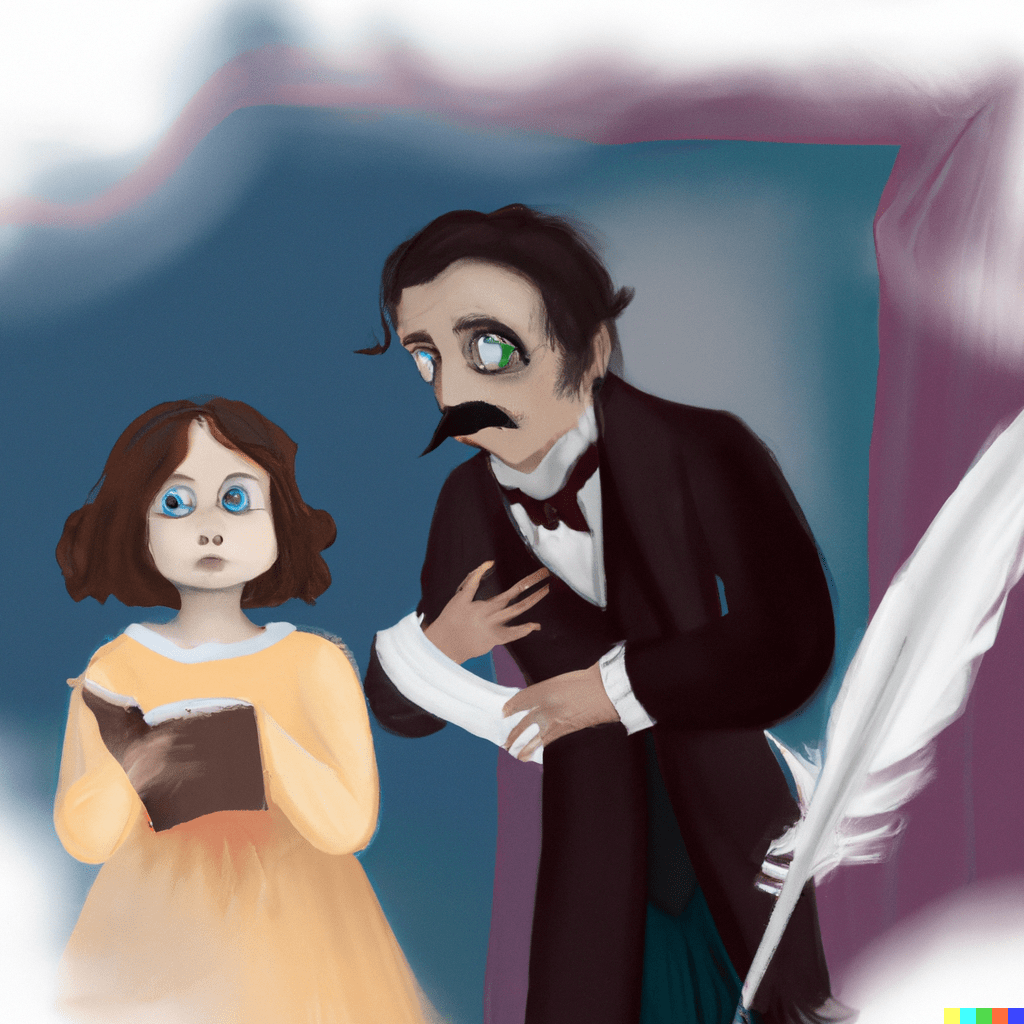
How unpleasant to meet Mr. Poe. It gives a young lady a chill when, just as she’s saying hello, he asks if she’s lately been ill.
It was mid-afternoon, yet he seemed to be tipsy or mildly sedated. How oddly his mournful eyes gleamed when he heard that we might be related.
He muttered some rhymes for my name, saying nothing could be more inspiring to a poet desirous of fame than the sight of young beauties expiring.
Then he asked if I had a bad cough or a semi-conversable crow. I informed him of where to get off. How unpleasant to meet Mr. Poe.
*****
Susan McLean writes: “In my teens, I was a big fan of Edgar Allan Poe‘s short stories and poetry. I loved his eerie subjects and crooning, incantatory lines. I memorized his poem ‘To Helen,’ and I parodied his iconic ‘The Raven.’ But in grad school, I read his essay ‘The Philosophy of Composition,’ in which he wrote that “the death . . . of a beautiful woman is unquestionably the most poetical topic in the world.” Hmmm. At that moment, it occurred to me that all of those dead women of his stories and poems might be less an outpouring of personal grief and more a product of an agenda. Years later, when responding to a challenge from the British journal The Spectator to write a poem modeled on Edward Lear’s ‘How pleasant to know Mr. Lear‘ but about another author, I imagined how Poe might seem to a young woman being introduced to him. This poem, which was originally published in Light Quarterly, was later reprinted in Per Contra and in my second poetry book, The Whetstone Misses the Knife.”
Susan McLean has two books of poetry, The Best Disguise and The Whetstone Misses the Knife, and one book of translations of Martial, Selected Epigrams. Her poems have appeared in Light, Lighten Up Online, Measure, Able Muse, and elsewhere. She lives in Iowa City, Iowa. https://www.pw.org/content/susan_mclean
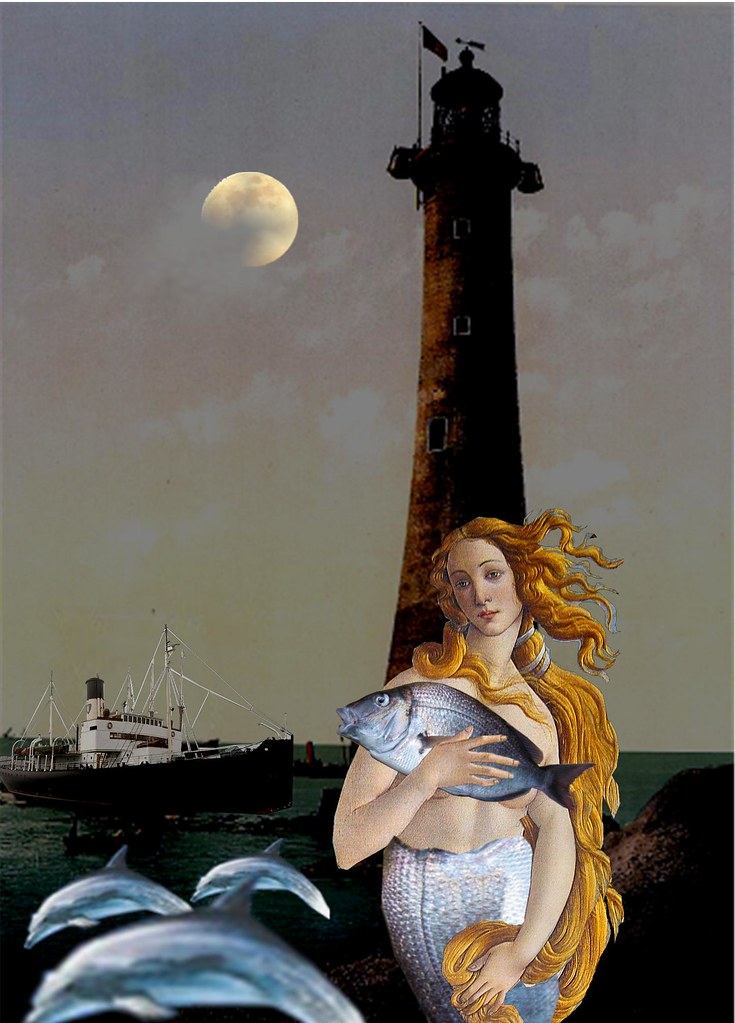
She needed constant, searching light And some firm continent From which to dive into the night To find what darkness meant.
She fought the horses of the tides And they her urgency. She caught their lunar reins and rides Triumphant out to sea.
And now she knows the powers of The dark sea’s character, And scorns the note her former love Moans out, moans out to her.
*****
Marcus Bales writes: “Probably poets ought not tell this sort of story about their work. I found a stash of very old poems, carefully typed out on now-yellowed paper in a metal file box amid 5” Tandy floppy discs, and printed on a dot-matrix printer, a little faded, some months ago, and have started the often painful task of retyping them into my little electronic library of my work. Many of them are obviously student stuff, but this one seemed a little less studious than the rest. It brought back its context in my mind pretty clearly. This is a very early poem, maybe sophomore year. I’d read someone’s comment that Yeats wrote about his friends as if they were characters in a Greek myth, and it had struck me as a sudden truth — to me, anyway. Nothing would do, of course, except to try the thing on my friends. Then a woman I knew gave me a copy of Adrienne Rich’s ‘Transformations’, which tells the stories of ancient myths about women, mostly, as if they had much more contemporary attitudes, and that seemed like a much better model than the Yeats tone and manner — and besides, Yeats had already done that tone and manner. So though the idea originated in Yeats, it is really Rich’s idea that I tried to follow, trying for the tone of metaphor in a contemporary voice. And Larkin was in there somewhere too, as I recall, having discovered him when asked to write a paper contrasting and comparing one of his poems to one of Wilbur’s. The Larkin was the one starting: Sometimes you hear, fifth-hand, As epitaph: He chucked up everything And just cleared off, And that led me to many others, notably ‘The Trees’, with its amazingly unlarkinish repetition at the end. Steal from the best has long been my motto.”
Not much is known about Marcus Bales except that he lives and works in Cleveland, Ohio, and that his work has not been published in Poetry or The New Yorker. However his ’51 Poems’ is available from Amazon. He has been published in several of the Potcake Chapbooks (‘Form in Formless Times’).
J.D. Smith writes: “I hesitate to say very much about this poem, as it plays so blatantly off of Shakespeare, but a short explanation seems in order. The third-person eloquence and loftiness of the original stands in contrast to how we experience the stages of life, and it occurred to me to bring the discussion down to earth with a series of plain first-person statements.”
J.D. Smith has published six books of poetry, most recently the light verse collection Catalogs for Food Lovers, and he has received a Fellowship in Poetry from the United States National Endowment for the Arts. This poem is from The Killing Tree (Finishing Line Press, 2016).Smith’s first fiction collection, Transit, will be published in December 2022. His other books include the essay collection Dowsing and Science. Smith works in Washington, DC, where he lives with his wife Paula Van Lare and their rescue animals. Twitter: @Smitroverse
The poem enters your head as a litter of kittens brought in by a cat from somewhere hidden, place of birth unknown. A word, image, rhyme, an idea, a tone, they are brought one at a time In no order, no preference, no ruling or schooling, they just need to come in, like refugees at the border. And they have no order, they crawl over each other, blind and mewling, and here comes another, and then here comes another. So the thoughts enter your head like kittens. Give thanks to the Mother.
*****
Where do ideas come from? No idea. (An oxymoronic observation that is not so different from saying that all the Universe comes from nothing, or that there was no time before the beginning of time.) But simply having ideas is nothing in itself – you can have ideas and ignore them (and generally irritate the Muse that is offering you ideas), and so you will have nothing to show for them. Canadian poet Pino Coluccio recently pointed me at an old piece by British poetPhilip Larkin, which begins:
“It is sometimes useful to remind ourselves of the simpler aspects or things normally regarded as complicated. Take, for instance, the writing of a poem. It consists of three stages: the first is when a man becomes obsessed with an emotional concept to such a degree that he is compelled to do something about it. What he does is the second stage, namely, construct a verbal device that will reproduce this emotional concept in anyone who cares to read it, anywhere, any time. The third stage is the recurrent situation of people in different times and places setting off the device and re-creating in themselves what the poet felt when he wrote it. The stages are interdependent and all necessary. If there has been no preliminary feeling, the device has nothing to reproduce and the reader will experience nothing. If the second stage has not been well done, the device will not deliver the goods, or will deliver only a few goods to a few people, or will stop delivering them after an absurdly short while. And if there is no third stage, no successful reading, the poem can hardly be said to exist in a practical sense at all.”
So, 1) become obsessed; 2) construct a verbal device that captures the obsessiveness; 3) have it read by people who thereby experience your obsession.
This series of poems in the ‘Calling the Poem’ chapbook focuses on how to be open to the internal wellspring of ideas, obsessions, emotions, words and images to reach Larkin’s first stage (these first 11 poems); and some thoughts about the construction of the “verbal device” of his second stage (the remaining four poems that are coming up). As for the third stage… well, if the poem is strong enough, it will resonate appropriately with those who read it; but how to get it read–that is a different problem entirely.
When the god’s in you, you’re not blessed nor raped; it’s not Zeus in whatever guise he wears, nor Yahweh taking Mary unawares, nor anything which could be fought, escaped; nor is it there where your complete orgasm– from curling toes to skull-top tingling hair– meets voodoo god who rides you as nightmare, meets “therapy” of ECG’s dead spasm.
But winkled from your shell by muse or god you’re in unmoving time, in time that seems to Rip Van Winkle ordinary, not odd, there where True Thomas by fay queen is smitten… and when you wake from momentary dreams two hours have gone by, and the first draft’s written.
*****
Even if, as some artists relate, they have been taken over by a god, muse, or supernatural force of inspiration, the feeling is not one of fear or terror as you might expect from being possessed. The process of inspired creation typically gives a feeling of calm, concentration and controlled excitement. The aftereffects can be completely different: exhaustion, exuberance, depression… The connection has been broken, the mind returns to a different state.
This version of the sonnet has been cleaned up from what was originally published as an e-chapbook by Snakeskin in issue 236 (unfortunately Archives are still down at time of writing). I have removed the four-letter words from the first four lines and generally reduced the probable offensiveness to my Christian and Muslim friends. However I think there are two points to be made that are more important than sacrilegious language:
Why is it acceptable to portray the coarseness of other people’s gods to schoolchildren, while it is forbidden to discuss the immorality of one’s own group’s preferred deity, even among adults?
And more importantly, why is it considered acceptable for a god (Yahweh) to impregnate a young female (Mary) without her consent? Isn’t this a Handmaid’s Tale level of thinking about the rights of the male and the insignificance of the female? Isn’t this a dangerously inappropriate story to be telling our children?
Of course the “Immaculate Conception” is just an unscientific fairytale. It is far more likely that, as contemporary Jewish rumour had it, Mary got pregnant by a Roman soldier called Pantera, and that Joseph (through love or pity) took her away to have the child in his home town of Bethlehem rather than have her stoned to death as would have been likely for having sex before marriage, especially with one of the idolatrous, beard-shaving, pig-eating Western soldiers of the Occupation…
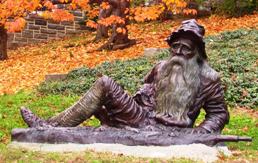
Photo: Life size bronze of Rip Van Winkle sculpted by Richard Masloski, copyright 2000; Photograph by Daryl Samuel
To bring that tiger you’re desiring, fearing, You place your own self in the clearing, Tied to a tree, chained at the throat, A monk who hopes, hopeless and lowly, A tethered goat, You bleat your prayers, and wait. Your offer (“offer” is an offering, An animal, coin, weapon, ring… Even yourself, for you are an oblate… “Offer” is “sacrifice”, “sacrifice” is “make holy”) Your offer, your self-sacrifice, is still “Take me, and pay me what you will.”
Begging for the orgasmic lightning bolt That gods blast blindly towards heath and holt, You make yourself into a lightning rod On some high tower to catch those blasts of god.
*****
American poet Randall Jarrell defined a poet as “a man who manages, in a lifetime of standing out in thunderstorms, to be struck by lightning five or six times.” Indeed, to be known to posterity for five or six poems is a wonderful achievement – although hopefully you were also doing other worthwhile and fulfilling things with your life. Tennyson, Dickinson, Yeats, Cummings… they may have written hundreds of poems, but very few remain widely known – the average well-read citizen would have a hard time naming more than two or three poems by each.
The artistic sensibility (including the musical, poetic, etc) is very similar to the religious one. For most, the lightning strikes are strictly personal and the payoffs from devotion, openness and sacrifice are largely intangible; but they give a powerful charge, a feeling of the essential within yourself and an understanding of connection to the whole universe.
Photo: ‘Lightning in the Western Sahara’ by Hugo! is licensed under WordPress Openverse.
That wild white wind that whips the world away – The darkness deep and dread in dazzling day – The light and dark that fuse with furious force – The leaping tiger that gives no recourse – Acknowledge, fear, that lurking tiger’s rage, The terrifying sense of spring-taut powers, Menacing, tail-tip twitching while it glowers, Lethal both to ignore or to engage. Acknowledge it, succumb: you’ve been rewarded. And now produce – because the debt’s recorded.
*****
This is the 7th of the 15 poems of the Snakeskin e-chapbook ‘Calling the Poem’. ‘The Tiger’ and the next few poems deal with the difficulties of first begging your Muse for inspiration and then finding that the inspiration is uncomfortable – personally, socially, politically, whatever. Perhaps the inspiration isn’t what you were hoping for… but what are your obligations once you have in effect contracted to receive something unknown?
The Muse, the gods, the unconscious or however you like to think of your source of inspiration is not to be trifled with. It is to be respected if you want to stay on good terms with it and benefit from it.
The word ‘music’, by the way, means Muse-ish, ‘of the Muses’. The following is blended from passages in Wikipedia: According to Pausanias in the later 2nd century AD, there were three original Muses, three original Boeotian muses before the Nine Olympian Muses were founded: Aoidē (“song” or “voice”), Meletē (“thought” or “contemplation”), and Mnēmē (“memory”). Together, these three form the complete picture of the preconditions of poetic art in cult practice.
So song, contemplation and memory are the Muses that together drive poetry. Poetry is totally Muse-ish. Therefore poetry is inherently musical. Its music is essential.
(And it was only after writing this blog that I found that the current Oglaf comic features a tiger…)






 Form in Formless Times