Category Archives: poets

Marcus Bales, ‘Air Guitar’

Bit by bit they deconstruct the thing:
no frets, no pegs, no bridge, removing its
harmonic parts until at last each string
is slack, and lacking resonating bits.
They put the rest, the body, neck, and head,
aside as too much like a prop for those
whose earnestness is all they need instead
of craft and art to fake that they can sing.
So there they are, on either stage or page:
The foremost poets of the modern age,
Who, writing their relineated prose,
Will swagger as they grimace, strut, and pose
Pretending they are better than they are
While playing nothing but an air guitar.

*****

Marcus Bales writes: “Back in the day I spent more time than I should have arguing that freeverse was prose, and that freeversers are prose writers, not poets at all. Of course, when you strike at the core of a belief-system those who believe it feel you are attacking them personally, and respond with insults. They cannot address the reasoning of the arguments, so they resort to ad hominem. I was searching for a metaphor to substitute for argument, something that would reveal the fundamental paucity of the entire freeverser credo that prose is poetry if only they say it is. What I was looking for was something to demonstrate the posers as mere posers. What, besides writing prose and then arbitrarily or whimsically relineating it to resemble the ragged-right look of poetry on the page and calling it poetry, was an even more ridiculous example of that pose? Here it is.”

Not much is known about Marcus Bales except that he lives and works in Cleveland, Ohio, and that his work has not been published in Poetry or The New Yorker. However his ’51 Poems’ is available from Amazon. He has been published in several of the Potcake Chapbooks (‘Form in Formless Times’).

Photo: “Airnadette: Air Bass Guitar” by DocChewbacca is licensed under CC BY-NC-SA 2.0..
Quincy R. Lehr, ‘Apartments’

No ghosts as yet, but just a hint of fever
(the fan’s still in its box) and foreign noise.
A virgin phone squats on its new receiver.
Undusty window sills are bare but ready
for clocks, for brown, anemic plants, their poise
temporary, fragile and unsteady.

There have been other places, across the river,
or oceans, time zones–other furniture,
with curtains cutting light to just a sliver,
those old apartments populated still
with women whom you recollect as “her.”
They haven’t called; you doubt they ever will.

Each lease becomes an act of… not forgetting,
but somehow letting go. Old places live
with different faces in a familiar setting:
lives you’ll never know, but comprehend,
scenes of errors not yours to forgive,
broken hearts no longer yours to mend.

*****

Quincy R. Lehr writes: “I’m trying to remember exactly which move this poem commemorates. I moved three times in three years–Dublin 2006, Galway 2007, New York 2008. It is, from an autobiographical point of view, about feeling a bit deracinated.
But in a sense, that’s renting–you’re never the first person in a place, and you’re hardly going to be the last. You haul your shit from place to place, carrying your permanence with you, but the stuff in its person-specific configurations, like your presence in an apartment, or a city, or just in the world in general, is ephemeral.
The poem appeared in my second collection, Obscure Classics of English Progressive Rock, which was the bulk of the poems written in Ireland that were any good, as well as the first couple of years back in New York. It was first published in the Recusant in the UK.
I imagine I wrote it in the first couple of months after returning to New York, but that’s an educated guess and at least five computers ago.”

Born in Oklahoma, Quincy R. Lehr is the author of several books of poetry, and his poems and criticism appear widely in venues in North America, Europe, and Australia. His book-length poem ‘Heimat‘ was published in 2014. His most recent books are ‘The Dark Lord of the Tiki Bar‘ (2015) and ‘Near Hits and Lost Classics‘ (2021), a selection of early poems. He lives in Los Angeles.
https://www.amazon.com/Quincy-R.-Lehr/e/B003VMY9AG

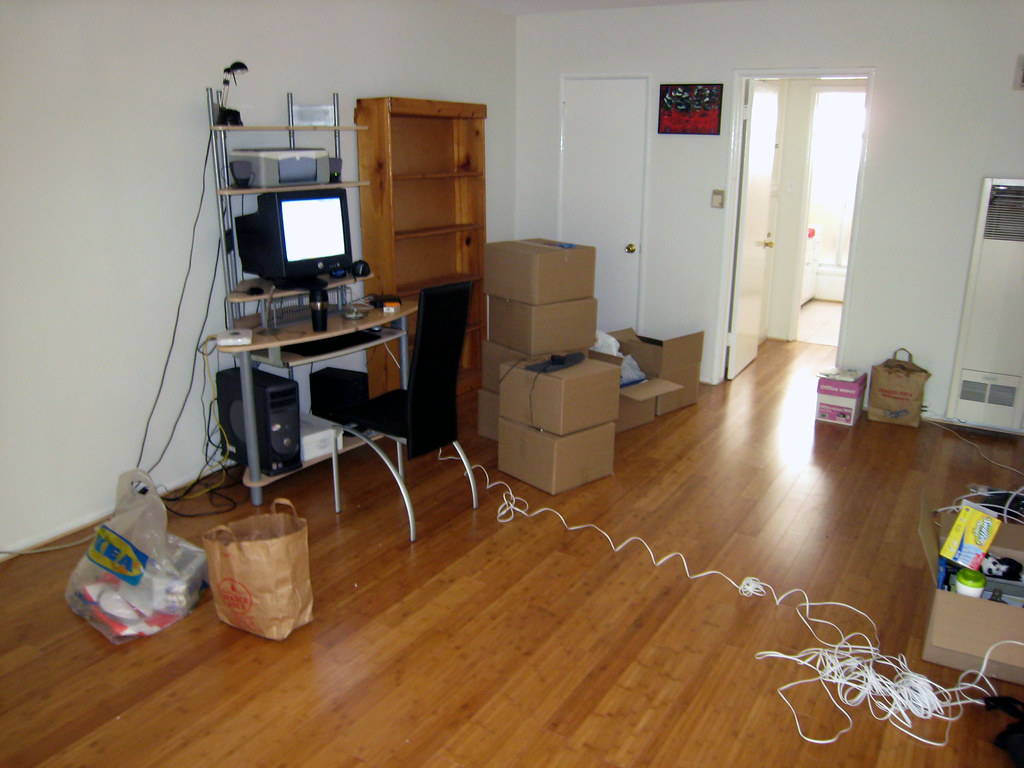
New Apartment” by artindeepkoma is licensed under CC BY-NC-SA 2.0.

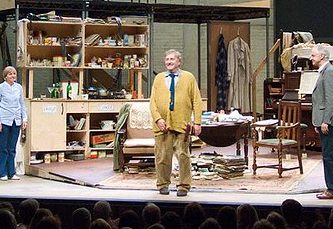
Odd poem: George Simmers on audiences on Alan Bennett’s play on W.H. Auden, ‘On “The Habit of Art”.’

The poet drinks, he stinks, he pees in sinks.
The audience, superior as shrinks,
Appraise a life amusingly in tatters.

How they appreciate a play that flatters
Their minds with chat about artistic matters!
And how much more they savour nods and winks
And saucy homosexual high-jinks!

They go home thinking:
‘Poets? Mad as hatters!
They drink, you know! They stink! They pee in sinks!’

*****

George Simmers writes: “Alan Bennett’s 2009 play The Habit of Art deals with the later life of W.H. Auden, and deals frankly with Auden’s sexual and hygenic peculiarities, as well as giving a sense of the poet’s talent. Looking back on his poem, written soon after seeing a performance at the National Theatre, I was more annoyed by the sniggering audience of London sophisticates than by Bennett’s play, which has interesting things to say about the relationship between poetry and the fallible humans who create it.”

George Simmers used to be a teacher; now he spends much of his time researching literature written during and after the First World War. He has edited Snakeskin since 1995. It is probably the oldest-established poetry zine on the Internet. His work appears in several Potcake Chapbooks, and his recent diverse collection is ‘Old and Bookish’.

https://greatwarfiction.wordpress.com/
http://www.snakeskinpoetry.co.uk/

The Habit of Art by Alan Bennett, National Theatre, London” by chrisjohnbeckett is licensed under CC BY-NC-ND 2.0.

Using form: couplets: George Simmers, ‘Trigger Warning’

Reading this do not expect
An unconditional respect

This poem is an unsafe space
You may be told things to your face

This poem may not feel the need
To be polite about your creed

It may not think your origins
Excuse your weaknesses or sins

It maybe will not lend its voice
To validate your lifestyle choice

It may resist attempts to curb
Its power to worry or disturb

It may not think its task to be
To flatter your identity

Although its author’s male and white
It may perhaps assert the right

To speak of gender and of race.
This poem is an unsafe space

*****

George Simmers continues to be amazed and amused by the warnings that some University lecturers seem to think it essential to give their students.  He writes: “Last week there was a warning that Jane Austen’s novels contain some outdated sexual attitudes. The week before that, students thinking of taking a course on tragedy needed to be told that it might contain references to violence and other disturbing themes. The week before that someone was worried that Peter Pan contained material that some students might find it hard to cope with. Why is this? Are the lecturers afraid of legal action from the helicopter parents who are the plague of some University departments today? Or do they really feel that their students are all delicate blossoms? Or do the warnings reflect their own discomfort with the canonical material they are obliged to teach? In the past people often did not think or behave the way that responsible modern people think they should have. It must be worrying.”

Editor’s comments: Poems written as a string of rhyming couplets can quickly start to feel mechanical and boring, but they are very effective when a straightforward list of ideas is being presented, as in this poem by Simmers. ‘The Latest Decalogue‘ by Arthur Hugh Clough is a classic of good usage (and also a classic of “unsafe space”).

George Simmers used to be a teacher; now he spends much of his time researching literature written during and after the First World War. He has edited Snakeskin since 1995. It is probably the oldest-established poetry zine on the Internet. His work appears in several Potcake Chapbooks. ‘Trigger Warning’ is from his ‘Old and Bookish‘ collection of poems.
https://greatwarfiction.wordpress.com/
http://www.snakeskinpoetry.co.uk/

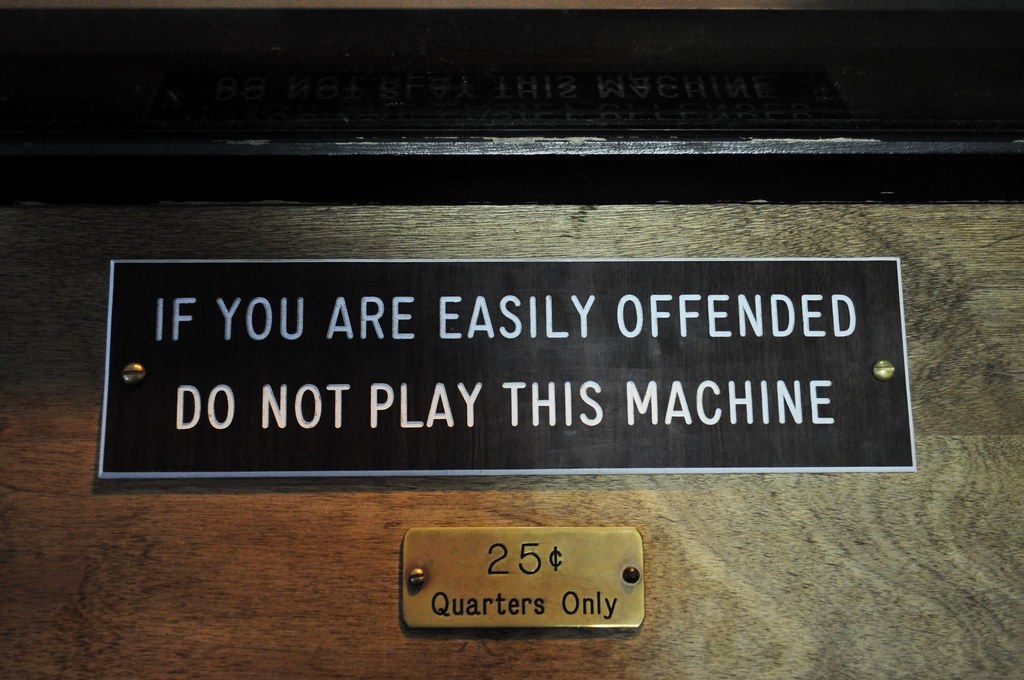
Photo: “trigger warning” by lostcosmonaut is licensed under CC BY-NC-SA 2.0.

Using form: anapest (anapaest): Susan McLean, ‘Illicit’

I needed to take a vacation from cake
so my diet would be more judicious.
But my plan was cut short by a chocolate fudge torte,
and the relapse was truly delicious.

Next it was cheese (such as triple-cream Bries
and Gruyères) that I vowed to avoid.
But I fell in the snare of a ripe Camembert.
It was bliss. My resolve was destroyed.

When the experts all said “To lose weight, give up bread,”
I thought that was a food I could shun.
I succumbed to the spell of the beckoning smell
of a freshly baked cinnamon bun.

I have found self-denial is not such a trial
and has unforeseen good effects.
True relish is hidden in all things forbidden.
Have I mentioned I’m giving up sex?

*****

Susan McLean writes: “Like many women, from my teens on, I had periods of dieting, followed by periods of eating normally and gradually regaining weight I had lost on the diets. That pattern can cause despair for many, but in my case, it made me notice how delightful a food becomes once it is forbidden. Diets are dull, and demonizing any particular kind of food is silly, so these days I don’t deny myself anything, but just cut back on the portions. Since the poem is about pleasure (and I once heard Dr. Joyce Brothers say that all pleasures are related to one another), I decided to write it in rollicking anapests, with lots of fun internal rhymes and polysyllabic rhymes.
This poem first appeared in Mezzo Cammin, an online journal of female formalist poets,
and later was published in my second book, The Whetstone Misses the Knife.”

Susan McLean has two books of poetry, The Best Disguise and The Whetstone Misses the Knife, and one book of translations of Martial, Selected Epigrams. Her poems have appeared in Light, Lighten Up Online, Measure, Able Muse, and elsewhere. She lives in Iowa City, Iowa.
https://www.pw.org/content/susan_mclean

Photo: “Joann’s cake: Now featuring every delicious thing at once” by ginnerobot is licensed under CC BY-SA 2.0.

Humorous Verse: Chris O’Carroll, ‘Sounds Insensible’

We fireproof our buildings asbestos we can.
Dutch cheeses taste Gouda; to Edam’s the plan.
Urine the money with pay-to-pee loos.
Why pick one’s own footwear? Have Jimmy Choo’s.
On the value of avarice all are agreed,
And we’re searching in vein to find out why we bleed.
Uncouth at the centaur of ancient myth action,
Half-horse plus half-man equals one whole infraction.
You’ve eyed it before, so this sight’s deja view.
If you’re an identical twin, I’m one, two.
The teacher drew circles but said pie are squared.
I’ve lost my left arm; my right’s left unimpaired.
Do the rich suffer gilt in a gold-toilet suite?
Does a one-legged marathon mean half defeat?
Those hotdogs were bad, but these brats are the wurst.
This poem is arse-backwards. It must be reversed.

*****

Chris O’Carroll writes: “It was Oscar Levant, I believe, who said that a pun is the lowest form of humor unless you are the first person to think of it. A while back The Spectator ran a contest that called for poems riddled with puns. John Whitworth used to distinguish between ‘real poems’ and ‘competition poems’, and this effort of mine is probably a candidate for the latter category, but it did win me a few quid.”

Chris O’Carroll appears in New York City Haiku and The Great American Wise Ass Poetry Anthology, yet has won British poetry prizes from Flash 500, Literary Review, the Spectator, and elsewhere.  His collections ‘The Joke’s on Me’ and ‘Abracadabratude‘ are available from Kelsay Books.
http://lightpoetrymagazine.com/summerfall-2015-issue-table-of-contents/

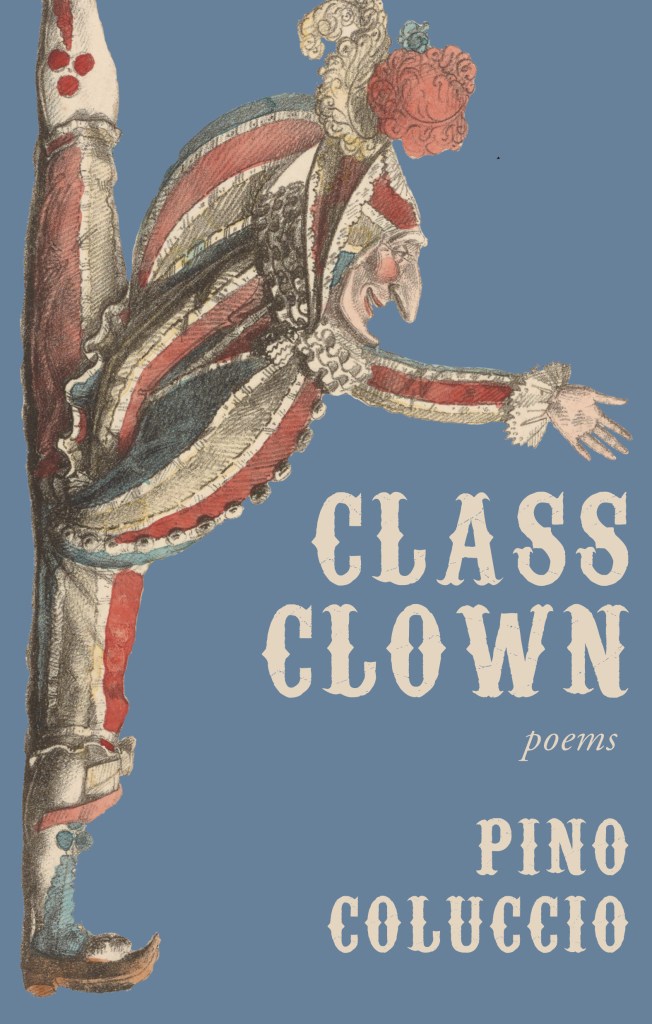
Pino Coluccio, ‘Class Clown’

They’d all be like, never say never
in classes we had, but whatever.
I turned to the windows and hallways
that always said always say always.

*****

Editor’s comments: From Pino Coluccio you should expect light and dark combined, light but deep, usually short, always well-phrased… and always existential. This, the eponymous piece of his 2017 collection, is tucked away in the middle of the book. The book won a Trillium Award, putting Coluccio in the company of Margaret Atwood, Michael Ondaatje and Alice Munro. He has given me permission to republish more of his pieces from Class Clown periodically.

Pino Coluccio lives in Toronto.

J.D. Smith, ‘Seven Ages of Man’

I puked and cried–that’s what Mom said.

School sucks. Why can’t I stay in bed?

I want that girl. What is her name?

I’ll kick some ass and stake my claim.

I’m fat. So what? I’ve won the game.

I limp these days, and feel the gout.

Say, now, what was all that about?

*****

J.D. Smith writes: “I hesitate to say very much about this poem, as it plays so blatantly off of Shakespeare, but a short explanation seems in order. The third-person eloquence and loftiness of the original stands in contrast to how we experience the stages of life, and it occurred to me to bring the discussion down to earth with a series of plain first-person statements.”

J.D. Smith has published six books of poetry, most recently the light verse collection Catalogs for Food Loversand he has received a Fellowship in Poetry from the United States National Endowment for the Arts. This poem is from The Killing Tree (Finishing Line Press, 2016).Smith’s first fiction collection, Transit, will be published in December 2022. His other books include the essay collection Dowsing and Science. Smith works in Washington, DC, where he lives with his wife Paula Van Lare and their rescue animals. Twitter: @Smitroverse

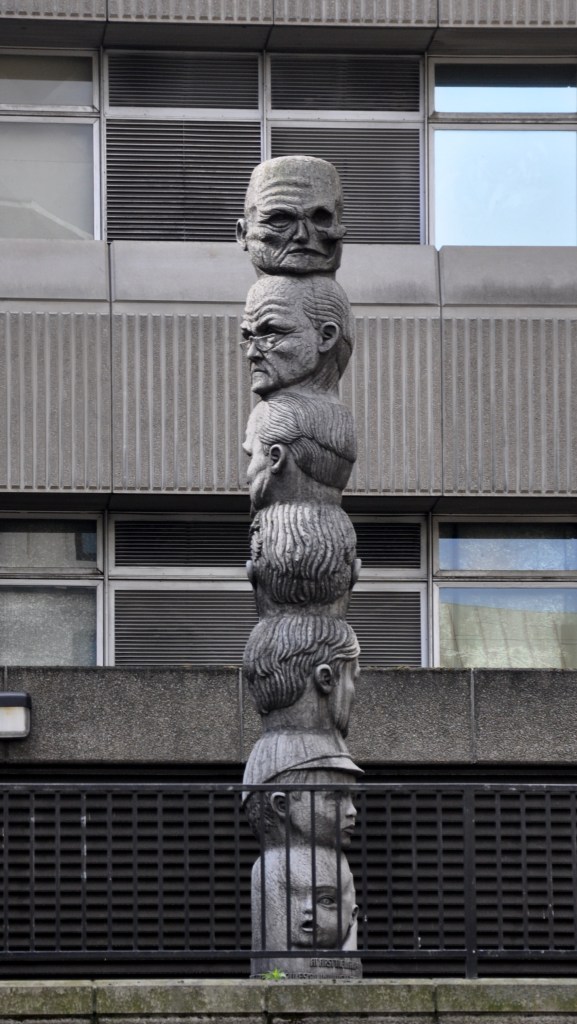
Photo: “File:Baynard House Seven Ages of Man.jpg” by Photo: Andreas Praefcke is licensed under CC BY 3.0.

Ekphrastic poem: Jenna Le, ‘Patti Smith, 1976’

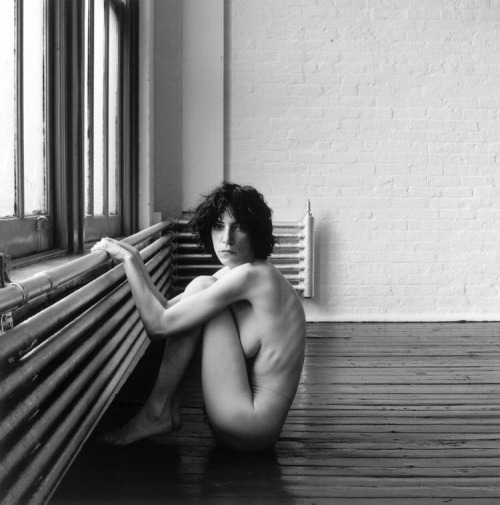
This photo, black-and-white, where Mapplethorpe
portrays his dark-mopped ex in profile, seated
nude on wooden floorboards, knees drawn up
against her breasts to hide her nipples, heated
by the sideways radiator pipes
on which she rests her palms, her bulging ribs
a set of parallel oblique gray stripes
rippling her bare white skin, unsmiling lips
a short flat line–
these were my first parameters,
my inspirations, when I learned to write.
On Patti’s ribs, the wooden flooring’s planks,
the stacked pale pipes, I modeled my pentameters.
The aim: amid such sharp lines, to be frank
and raw, yet still control what sees the light.

*****

Jenna Le writes: “I first became intrigued by the friendship and creative partnership of Patti Smith and Robert Mapplethorpe some years ago. I confess the personas of these two artists and the touted relationship between them interests me even more than either artists’ actual creative output. Based on what I have read in biographies and so forth, their friendship seems to me to represent an ideal: a dyadic connection characterized by remarkable intensity, an intimacy transcending sex and conventional relationship definitions, facilitating both parties’ creative flourishing. As one gets older and it becomes ever harder to form new meaningful adult friendships, such bonds seem to me ever more mythic and miraculous. I think this awe, this wistfulness, is the principal emotion that makes me keep returning to the photograph this ekphrastic poem is about.”

Jenna Le (jennalewriting.com) is the author of three full-length poetry collections, Six Rivers (NYQ Books, 2011), A History of the Cetacean American Diaspora (Indolent Books, 2017), and Manatee Lagoon (Acre Books, 2022). She won Poetry By The Sea’s inaugural sonnet competition. Her poems appear in AGNI, Pleiades, Verse Daily, West Branch, and elsewhere. She works as a physician in New York City.

Photo: Robert Mapplethorpe’s sole full nude portrait of Patti Smith, taken at his Bond Street Studio, 1978 © Robert Mapplethorpe Foundation. Courtesy Sean Kelly Gallery

George Simmers, ‘Leonard’

Old Leonard said it straight: ‘Let’s not pretend
That death is anything except the end.
You die, you’re done; you’re fed to flames or worms.’
He’d make his point in no uncertain terms,
And Jess recalls the loud and booming laughter
With which he greeted talk of the hereafter.
‘The here and now is all that we have got;
It’s real; the vicar’s fairytales are not.’
She thinks of how he’d neatly phrase a joke;
She clearly hears the forceful way he spoke,
And that ‘Oh but surely…’, with a dying fall
Which clinched an argument once and for all
His words come back to her today as clear
As if the ancient atheist was here.
It’s just as though he’s with her in the room
Though he’s spent years now mouldering in his tomb.

She smiles to think of him, and smiles again
To think how he’s a fixture in her brain.
She even caught herself the other day
Clinching her point in just old Leonard’s way,
With ‘Oh but surely…’ Should she then infer
A trace of him is still alive in her?
Well — a man of such large humour and such drive —
Why be surprised if something should survive?

Now, ten years on, Jess too is dead and gone,
But some things have a way of lingering on.
That ‘Oh but surely…’ with that intonation
Has somehow reached another generation.
Jane, Jess’s daughter, last week floored the board
Of the college with it, and so neatly scored
Her point that they in unison agreed
To fund her project. Phrasing’s what you need,
And Jane knows that, but what she doesn’t know,
Is that trick came from Leonard long ago,
And Leonard learned it many years before
From his Latin teacher. So, how many more
Homes will this little trick of speaking find
As it nips cleverly from mind to mind?

Though death is death, and funerals are for tears,
Some things can oddly echo through the years.

*****

George Simmers has written many poems “about people dealing with what life has given them, for better or for worse.” Fifteen of them are collected in his book ‘Old, Old’. His other recent and more diverse collection is ‘Old and Bookish’.

George Simmers used to be a teacher; now he spends much of his time researching literature written during and after the First World War. He has edited Snakeskin since 1995. It is probably the oldest-established poetry zine on the Internet. His work appears in several Potcake Chapbooks.
https://greatwarfiction.wordpress.com/
http://www.snakeskinpoetry.co.uk/

Photo: “Danger of Death By Failing” by AlmazUK is licensed under CC BY-NC-SA 2.0.