Category Archives: poets

Gail White, ‘The Girls Who Got Ahead’

When all the bright young women studied law
and medicine, I thought a PhD
in Women and the Novel would unthaw
the frozen heart of Academe for me.
When all the bright girls married, where was I?
Still shacking up with poets that I met
in bars, convinced that genius and rye
would write us into fame and out of debt.
The bright girls made investments by the rules.
I kept on writing novels in my mind.
They sent their handsome kids to private schools
and I became the girl they left behind.
Bright girls got married and ahead and rich,
while I’m in debt again, and life’s a bitch.

*****

Gail White writes: “The Girls Who Got Ahead is a poem from the 90’s. Yes, everyone was in the professions or in graduate school but me. I was a poet and that means taking a vow of poverty. I thought I might as well make a sonnet out of it.”

Gail White is the resident poet and cat lady of Breaux Bridge, Louisiana. Her books ASPERITY STREET and CATECHISM are available on Amazon. She is a contributing editor to Light Poetry Magazine. “Tourist in India” won the Howard Nemerov Sonnet Award for 2013. Her poems have appeared in the Potcake Chapbooks ‘Tourists and Cannibals’, ‘Rogues and Roses’, ‘Families and Other Fiascoes’, ‘Strip Down’ and ‘Lost Love’. ‘Money Song’ is collected in ‘Asperity Street‘. Her new light verse chapbook, ‘Paper Cuts‘, is now available on Amazon.

Photo: “Women Entrepreneurs Blazing Trails” by World Economic Forum is licensed under CC BY-NC-SA 2.0.

Richard Fleming, ‘The Railway Line – in memory of John Simpson’

We walked together side by side,
at dusk along the disused line,
restless and glad to be outside.
I had Woodbines, you brought cheap wine.
Fifteen, unthinkingly alive,
truants from our suburban drive,
we talked excitedly of life
how we had cracked it, knew the score.
We worked the cork out with your knife
then drank sweet wine and wanted more.
We smoked our fags, ignored the cold,
could not imagine being old.

*****

Richard Fleming writes: “The Railway Line is an old poem, rescued from the archives, that remains dear to me. In it, I’ve attempted to recapture the heady recklessness of my early teenage years when the world seemed full mysteries, and friendships were more intense than those I later formed in adulthood. John didn’t make it past his early twenties so he remains, in my memories of him, forever rebellious and young.”

Richard Fleming is an Irish-born poet currently living in Guernsey, a small island midway between Britain and France. His work has appeared in various magazines, most recently Snakeskin, Bewildering Stories, Lighten Up Online, the Taj Mahal Review and the Potcake Chapbook ‘Lost Love’, and has been broadcast on BBC radio. He has performed at several literary festivals and his latest collection of verse, Stone Witness, features the titular poem commissioned by the BBC for National Poetry Day. He writes in various genres and can be found at www.redhandwriter.blogspot.com or Facebook https://www.facebook.com/richard.fleming.92102564/

“railway lines” by apdk is licensed under CC BY 2.0.

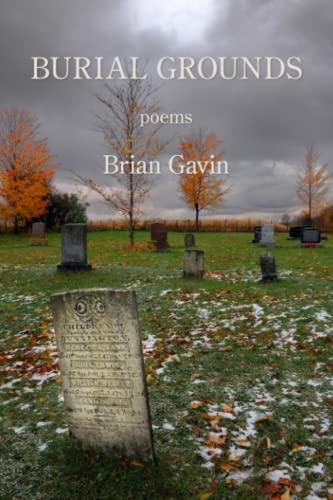
Review: ‘Burial Grounds’ by Brian Gavin

Gavin’s poems are quiet, elegant reflections on people—alive and dead—in danger of being forgotten, in towns not in the mainstream of modern life. His verse is quietly formal, usually rhymed, always rhythmic. Sometimes as brief as a sonnet, as with my personal favourite ‘Grand Opening’: an ex-serviceman, mopping floors and putting the coffee on at 4 a.m., running a business at which (apparently) four previous owners have failed, but simply doing what has to be done…

It isn’t so much hope behind these doors
as work to do. (…) He reaches for the light.
He sets his OPEN sign against the night.

There is an inherent mournfulness in these stories of people in places which once thrived but are now hanging on without major farming or industrial or commercial opportunities. Many poems are about people towards the end of their lives, or even later as the title suggests. And even when youth is included it shows up as a teen alone on a swing on a November evening, working her phone:

and nothing moves, but for the falling dark
and the quiver of her thumbs at work.

Railway stations close, businesses relocate, fires happen, towns empty out… but people are still there, poorer, aging, their prospects reduced. The overall tone is an almost religious attitude of accepting where you are, fighting the good fight, doing what must be done… moving, as we all must, into life’s inevitable landscape of burial grounds.

*****

Brian Gavin is a retired Distribution Manager who started writing poetry 10 years ago. His poems have appeared in The Journal of Formal Poetry, Peninsula Poets and Snakeskin Magazine, and in the Potcake Chapbook ‘Careers and Other Catastrophes’. He lives in Lakeport, Michigan, USA, with his wife Karen. ‘Burial Grounds’ is available from Kelsay Books.

Susan McLean, ‘Morbid Interest’

How unpleasant to meet Mr. Poe.
It gives a young lady a chill
when, just as she’s saying hello,
he asks if she’s lately been ill.

It was mid-afternoon, yet he seemed
to be tipsy or mildly sedated.
How oddly his mournful eyes gleamed
when he heard that we might be related.

He muttered some rhymes for my name,
saying nothing could be more inspiring
to a poet desirous of fame
than the sight of young beauties expiring.

Then he asked if I had a bad cough
or a semi-conversable crow.
I informed him of where to get off.
How unpleasant to meet Mr. Poe.

*****

Susan McLean writes: “In my teens, I was a big fan of Edgar Allan Poe‘s short stories and poetry. I loved his eerie subjects and crooning, incantatory lines. I memorized his poem ‘To Helen,’ and I parodied his iconic ‘The Raven.’ But in grad school, I read his essay ‘The Philosophy of Composition,’ in which he wrote that “the death . . . of a beautiful woman is unquestionably the most poetical topic in the world.” Hmmm. At that moment, it occurred to me that all of those dead women of his stories and poems might be less an outpouring of personal grief and more a product of an agenda. Years later, when responding to a challenge from the British journal The Spectator to write a poem modeled on Edward Lear’s ‘How pleasant to know Mr. Lear‘ but about another author, I imagined how Poe might seem to a young woman being introduced to him.
This poem, which was originally published in Light Quarterly, was later reprinted in Per
Contra
and in my second poetry book, The Whetstone Misses the Knife.”

Susan McLean has two books of poetry, The Best Disguise and The Whetstone Misses the Knife, and one book of translations of Martial, Selected Epigrams. Her poems have appeared in Light, Lighten Up Online, Measure, Able Muse, and elsewhere. She lives in Iowa City, Iowa.
https://www.pw.org/content/susan_mclean

Illustration: DALL-E

Formalist poet A.E. Stallings elected the next Oxford Professor of Poetry

Congratulations to Alicia Stallings on winning election to one of the most prestigious poetry positions on the planet – the Oxford Professorship of Poetry! A thoroughly deserved success for one of the absolute best poets writing today. And how nice for all of us, that a formalist is recognised as the best choice. Her term of office begins in October and runs for four years.

Here is the University’s report on it: https://www.ox.ac.uk/about/oxford-people/professor-of-poetry

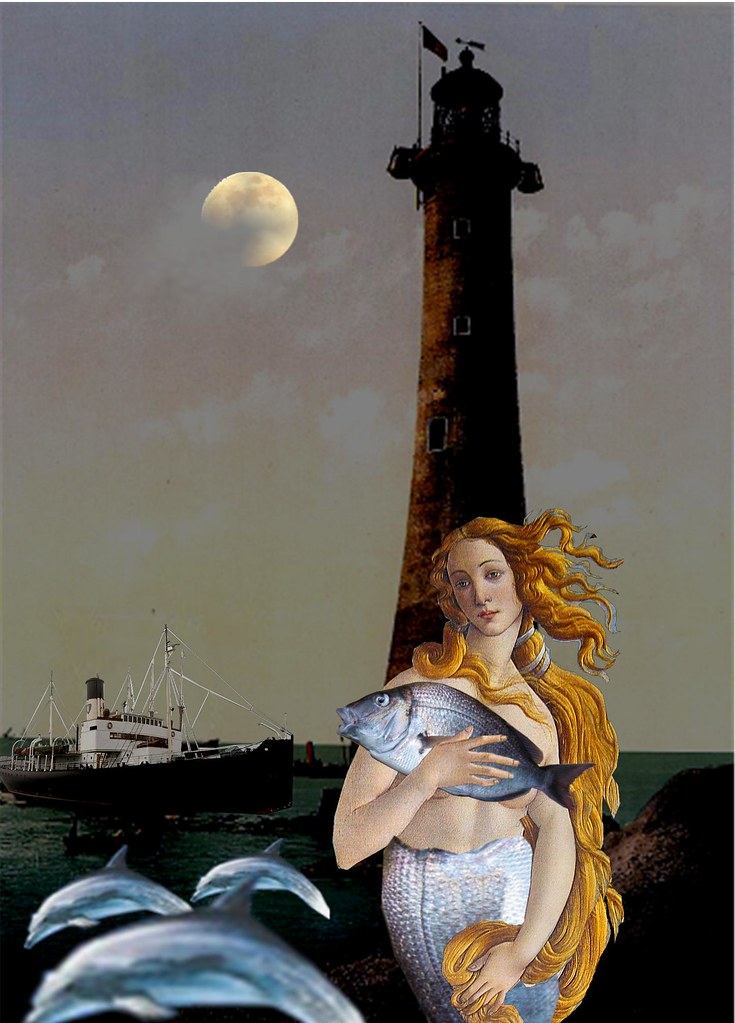
Marcus Bales, ‘Lighthouse’

She needed constant, searching light
And some firm continent
From which to dive into the night
To find what darkness meant.

She fought the horses of the tides
And they her urgency.
She caught their lunar reins and rides
Triumphant out to sea.

And now she knows the powers of
The dark sea’s character,
And scorns the note her former love
Moans out, moans out to her.

*****

Marcus Bales writes: “Probably poets ought not tell this sort of story about their work. I found a stash of very old poems, carefully typed out on now-yellowed paper in a metal file box amid 5” Tandy floppy discs, and printed on a dot-matrix printer, a little faded, some months ago, and have started the often painful task of retyping them into my little electronic library of my work. Many of them are obviously student stuff, but this one seemed a little less studious than the rest. It brought back its context in my mind pretty clearly.
This is a very early poem, maybe sophomore year. I’d read someone’s comment that Yeats wrote about his friends as if they were characters in a Greek myth, and it had struck me as a sudden truth — to me, anyway. Nothing would do, of course, except to try the thing on my friends. Then a woman I knew gave me a copy of Adrienne Rich’s ‘Transformations’, which tells the stories of ancient myths about women, mostly, as if they had much more contemporary attitudes, and that seemed like a much better model than the Yeats tone and manner — and besides, Yeats had already done that tone and manner. So though the idea originated in Yeats, it is really Rich’s idea that I tried to follow, trying for the tone of metaphor in a contemporary voice. And Larkin was in there somewhere too, as I recall, having discovered him when asked to write a paper contrasting and comparing one of his poems to one of Wilbur’s. The Larkin was the one starting:
Sometimes you hear, fifth-hand,
As epitaph:
He chucked up everything
And just cleared off,

And that led me to many others, notably ‘The Trees’, with its amazingly unlarkinish  repetition at the end.
Steal from the best has long been my motto.”

Not much is known about Marcus Bales except that he lives and works in Cleveland, Ohio, and that his work has not been published in Poetry or The New Yorker. However his ’51 Poems’ is available from Amazon. He has been published in several of the Potcake Chapbooks (‘Form in Formless Times’).

Photo: “my father was the keeper of the eddystone light” by sammydavisdog is licensed under CC BY 2.0.

The Kipling Boom, 1890

“Rudyard Kipling, gifted stripling”… a lot of his work is superb: the voices caught in his poems and short stories, the endlessly rereadable Just So Stories with his own lush illustrations and catchy peripheral poems, his novels. It’s more than just the verse that has lasting strength.

George Simmers's avatarGreat War Fiction

Researching (i.e. idly Googling) Kipling, I came across this rather good bit of verse printed in the San Francisco Examiner of 1890. It’s a reaction to the sudden and seemingly unstoppable vogue for the works of Kipling. The Examiner credits it to the Saturday Review, but since the references are mostly American, I don’t think this would be the London Saturday.

View original post 90 more words

Richard Fleming, ‘Memento Mori’


An ambulance howls like a hurt cat;
parts traffic as Moses did the waves.
Worms burrow in awaiting graves.
A police car buzzes like a gnat.

Stuck in a jam of steaming cars,
I contemplate how life transforms
in moments. How they wait, those worms,
so patiently, for us, for ours.

*****

Richard Fleming writes: “Ambulance sirens have been part of the soundtrack of my adult life, from the troubled years in Belfast to, more recently, my relatively tranquil life on the island of Guernsey.
There’s something about the sound, like that of a modern-day banshee, that chills the blood like no other. In common with all those who love unreservedly, I live with a constant fear of loss and a keen awareness of the terrible fragility of those things that we hold dear. This short poem attempts to articulate that fear.”

Richard Fleming is an Irish-born poet currently living in Guernsey, a small island midway between Britain and France. His work has appeared in various magazines, most recently Snakeskin, Bewildering Stories, Lighten Up Online, the Taj Mahal Review and the Potcake Chapbook ‘Lost Love’, and has been broadcast on BBC radio. He has performed at several literary festivals and his latest collection of verse, Stone Witness, features the titular poem commissioned by the BBC for National Poetry Day. He writes in various genres and can be found at www.redhandwriter.blogspot.com or Facebook https://www.facebook.com/richard.fleming.92102564/

Photo: “Ambulance” by gwire is licensed under CC BY 2.0.

Maryann Corbett, ‘Dissonance’

We dress ourselves
from the Goodwill store
since Art has kept us
genteelly poor
and we laugh together
at how we’ve slummed
amid vocalises
and arias hummed
and the mirth for both of us
seemed sincere
so I joked, where others
would overhear,
about our finds
in the plaids and prints

and saw you wince.

*****

Maryann Corbett writes: “Perhaps every poem that seems to portray one small moment is really a goulash of hundreds of moments. That’s certainly true of ‘Dissonance‘. There really was a friend who was a fellow singer, fellow poet, and fellow fan of the bargains to be found in charity shops. And there really was an awkward moment when I misjudged her feelings about artistic penury, a penury I’d escaped in a very un-artistic job. But folded into the writing of the poem were all my student years, years when I was much younger, much poorer, and much more in solidarity with friends still following their dreams.”

‘Dissonance‘ was first published in Mezzo Cammin, and gave its name to a 2009 chapbook collection published by Scienter Press.

Maryann Corbett earned a doctorate in English from the University of Minnesota in 1981 and expected to be teaching Beowulf and Chaucer and the history of the English language. Instead, she spent almost thirty-five years working for the Office of the Revisor of Statutes of the Minnesota Legislature, helping attorneys to write in plain English and coordinating the creation of finding aids for the law. She returned to writing poetry after thirty years away from the craft in 2005 and is now the author of two chapbooks and five full-length collections. Her work has won the Willis Barnstone Translation Prize and the Richard Wilbur Award, has appeared in many journals on both sides of the Atlantic, and is included in anthologies like Measure for Measure: An Anthology of Poetic Meters and The Best American Poetry. Her sixth book, The O in the Air, is forthcoming from Franciscan University Press.

Photo: “Goodwill outlet store” by sparr0 is licensed under CC BY-SA 2.0.

Using form: Susan McLean, ‘Cul-de-Sac’

The man who had a perfect lawn
forced his three kids to toil outside
till every dandelion was gone.

His wife, gentle and put-upon,
dusted the trophies of his pride
(for tennis, not his perfect lawn).

His son, advancing like a pawn
to keep his father satisfied,
chose, when his girl and job were gone,

to hit a bridge (or gun) head-on.
The neighbors whispered “suicide”
while walking past that perfect lawn.

The youngest, timid and withdrawn,
lived with her parents till she died
of cancer, but the oldest, gone

for decades, had skipped town one dawn.
When she died too, her parents lied
that she was fine. Their perfect lawn
remains. But all the kids are gone.

*****

Susan McLean writes: “From the ages of six to sixteen, I lived on a suburban cul-de-sac, a more elegant term for a dead end. The neighbors I knew best, whose three children were around the same ages as the oldest three children in my family, came to symbolize for me the dark side of suburbia, the disturbing realities that lie behind the manicured exteriors and are never spoken of. Not until the father of that family died did we learn, from his obituary, that his oldest daughter, the one who was my age, had died several years earlier, of undisclosed causes. The mother, who played bridge weekly with my mother, had always said when asked about that daughter that she was ‘fine’.

I chose to tell this story in a variant on a villanelle in which only the last words of the repeating lines reappear: ‘perfect lawn’ and ‘gone’. That loosening of the form allowed more narrative to fill the lines, but the tolling repetitions of those words encapsulate, for me, the irony and tragedy of keeping up appearances in suburbia. The villanelle itself can be a straitjacket of a form, and the short tetrameter lines tighten it further, till it feels as though there is no way out.”

Susan McLean has two books of poetry, The Best Disguise and The Whetstone Misses the Knife, and one book of translations of Martial, Selected Epigrams. Her poems have appeared in Light, Lighten Up Online, Measure, Able Muse, and elsewhere. She lives in Iowa City, Iowa.
https://www.pw.org/content/susan_mclean

“An 8 Bedroom Vacation Rental” by Discount Vacation Rentals Online is licensed under CC BY 2.0.