Category Archives: Uncategorized

Lee Evans, ‘Late in the Evening’

The more she strained her mother wit
To put the jigsaw into place,
The more the pieces wouldn’t fit.
 
Too bad the cat had felt the need
To leap into the midst of things—
The puzzle would have been complete.
 
Somehow she had misplaced the lid,
Which had a picture stamped on it
Of what she searched for in her head.
 
The work lay spread in front of her;
The shapes appeared and disappeared,
Each morphing into metaphor.
 
Sometimes they’d stay where they belonged—
But then, to her weak eyes, it seemed
She’d put them all together wrong.
 
She kept on shuffling scattered bits;
Meanwhile a lifetime passed beneath
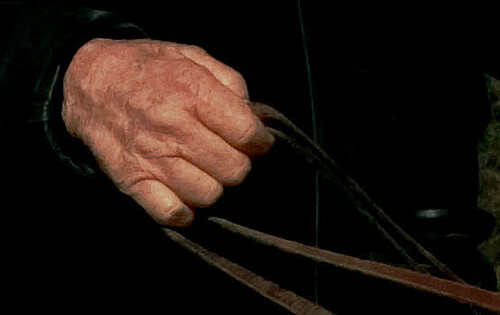
Her aged, trembling fingertips.

*****

Lee Evans writes: “This particular poem arose from the year-long habit my wife and I have of doing jigsaw puzzles. (Big surprise!) In such circumstances one gets to thinking a lot about putting the pieces of one’s life together, especially those of us who are in our mid seventies. I may have stolen the title from a Paul Simon song, but that has nothing to do with it. Several people I have known have suffered from dementia late in life, but the poem is more about trying to grasp fluid realities than dementia, and attempting this in the frailty of one’s declining years. But that’s not all there is to the poem…”

‘Late in the Evening’ was first published in Snakeskin.

Lee Evans was born in Annapolis, Maryland and worked for the Maryland State Archives. Having retired to Bath, Maine, he worked for the local YMCA and retired from there. He has self-published 13 books of poetry, which can be found on Amazon and Lulu.com. He occasionally puts poems on a blog, The Road and Where It Goes  (Formal purists should be forewarned that he has written a fair amount of free verse!)

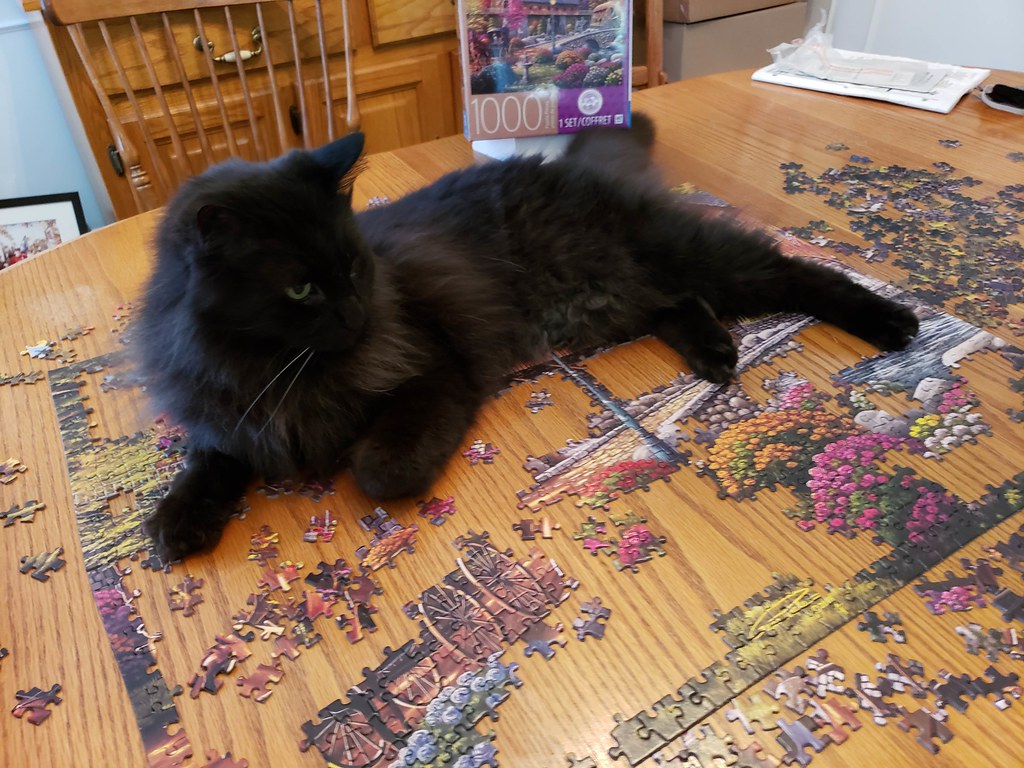
Photo: “Cosmo Helping with Jigsaw Puzzles – 2020” by cseeman is licensed under CC BY-NC-SA 2.0.

Using form: Iambic trimeter: Susan McLean, ‘Danse Macabre’

The dancers, taut as bows,
burn in their joyous fire.
They whirl, entwine, and pose
in friezes of desire.

No skeletons appear
to shock the celebration.
The dancers, bowing, hear
a rapturous ovation.

Outside, the wind blows colder.
Although she’d rather linger,
she senses on her shoulder
the tap of a light finger.

And, though she came alone
and doesn’t need a ride,
a shadow, thin as bone,
attends her, stride for stride,

then leaves her, still denied.
But the end is not in doubt.
The skeleton inside
eventually wants out.

*****

Susan McLean writes: “I wrote this poem after attending a performance of Ailey II, the junior corps of dancers in the company founded by Alvin Ailey. It was on a cold night in autumn around Halloween, and even though there was nothing sinister about the dances I witnessed, I was reminded of the medieval Dance of Death, in which skeletons appear to people in the midst of their daily routine to summon them away to death. One of the most memorable images of that theme occurs at the end of Ingmar Bergman’s film The Seventh Seal, and I have seen it portrayed also on the wooden bridge in Lucerne in Switzerland. The poem is written in three-beat lines of iambic trimeter, which reminded me of a stately waltz.”

‘Danse Macabre’ originally appeared in THINK Magazine.

Susan McLean has two books of poetry, The Best Disguise and The Whetstone Misses the Knife, and one book of translations of Martial, Selected Epigrams. Her poems have appeared in Light, Lighten Up Online, Measure, Able Muse, and elsewhere. She lives in Iowa City, Iowa.
https://www.pw.org/content/susan_mclean

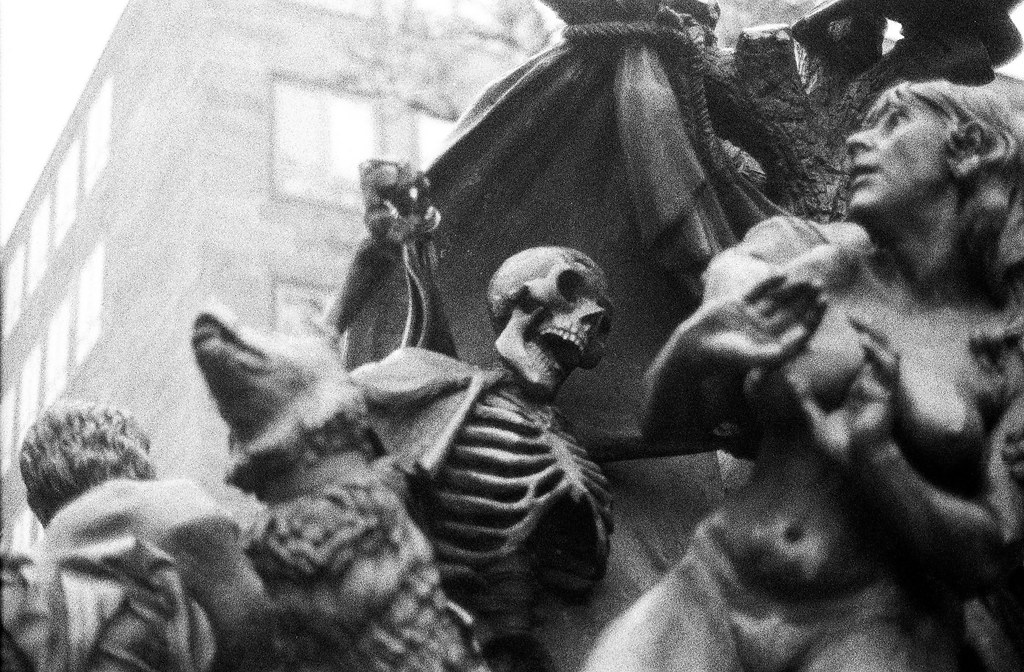
la danse macabre” by a magic monkey! is licensed under CC BY-NC-SA 2.0.

RHL, ‘The Beat Goes On’

A pounding beat to drug, enhance, enfold –
iambics are the dance floor of the old.

*****

Published in The Asses of Parnassus, home of “short, witty, formal poems”. Thanks, Brooke Clark!

Illustration: ‘Iambics’ by RHL and ChatGPT

Lucius Falkland, ‘Sado-Masochism in Love Poetry’

Some like being bound up in leather and chains,
Others spanked with a branch from a tree,
But the people who truly get turned on by pain
Try to publish their love poetry.

The poet’s not known for his psychical health:
He wrestles despair, feels dejected,
Not that undisposed to killing himself,
Yet his heart’s work so often rejected.

Sometimes he must wait the best part of a year,
Like an innocent man on death row,
To have to him confirmed his most terrible fear,
For they are quite sadistically slow.

And the hurt they inflict? It’s not over yet.
Do they find wounding fragile souls funny?
Some journals won’t read the submissions they get
If the poets don’t first send them money!

Once it’s crafted and honed and as good as Ted Hughes,
On a par with their earlier choices,
They find a new method to mentally abuse:
They prioritize “marginalised voices.”

The agony felt by a hounded young deer
As he’s brought to the ground by a predator
Is as nothing compared to the suffering and fear
That’s induced in a poet by an editor.

*****

Lucius Falkland writes: ‘I wrote this poem in response to having so many of my love poems rejected by poetry journals. It struck me as absurd that poets experience feelings, including being in love, so intensely that they must process them via poetry, they share the most poignant aspects of their lives with journal editors, and yet they know they will frequently get rejected. It is as though they write about their deepest pain only to then subject themselves to the further pain of being told that they can’t even express their pain properly. ‘Are we poets Masochists?’ I wondered. Naturally, this poem was itself rejected by a number of editors – with one even commenting that he was sympathetic to my plight. before rejecting it anyway because ‘it’s not the right fit’ (euphemism for ‘I don’t like it!) – before being published in The New English Review.”  

Lucius Falkland is the nom de plume of a writer and academic originally from London. His first poetry volume, The Evening The Times Newspaper Turned Into Jane Eyre, was published in 2025 with Exeter House Publishing. It can be purchased here.

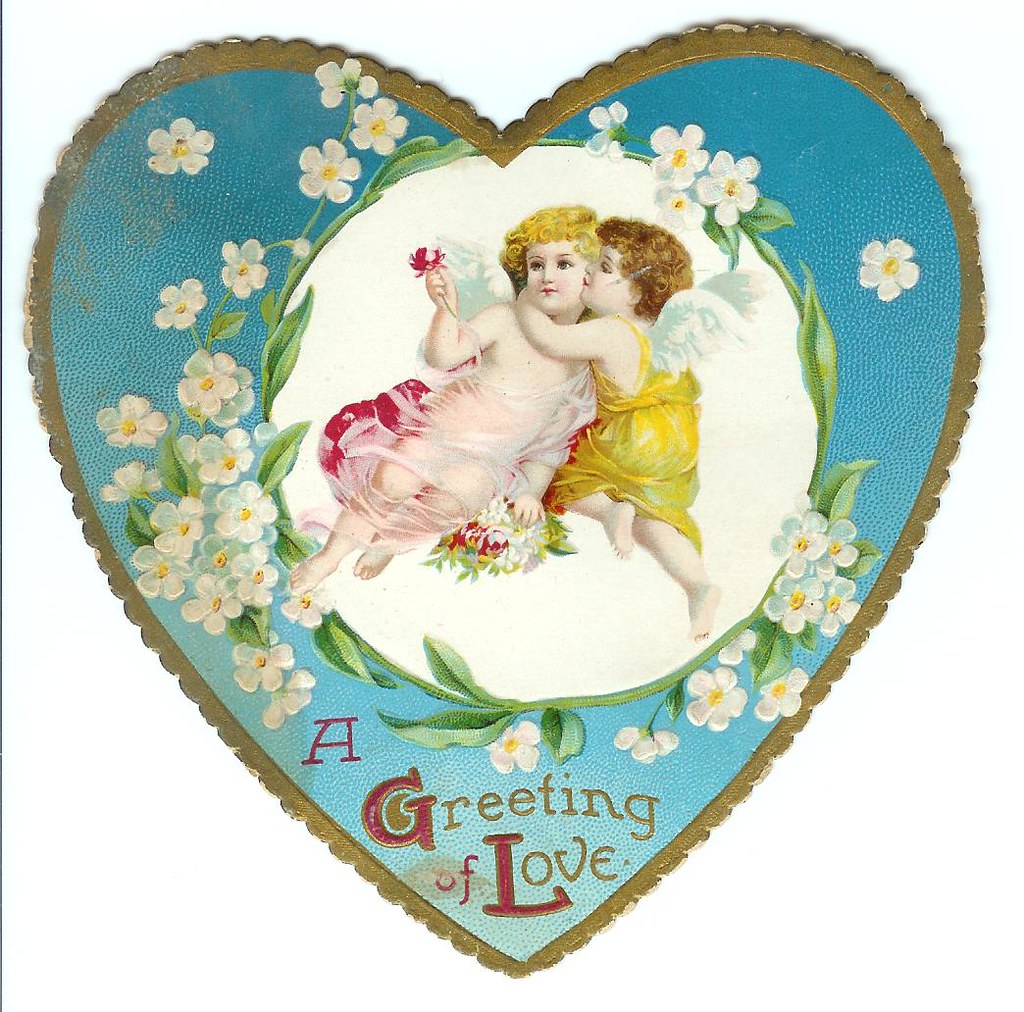
Illustration: “Vinegar Valentine – 05” by BioKnowlogy is marked with Public Domain Mark 1.0.

Stephen Gold: Bored Room

It ran up the flagpole
To not one salute.
No win-win was won,
We ate no low-hung fruit. 

The long view was taken,
We kicked every tyre.
No needles were moved 
As we sang to the choir.

There wasn’t the bandwidth
To see this one through.
Would the paradigm shift? 
We just hadn’t a clue. 

Our cutting-edge plan
To abolish cliché
From the meetings we’re forced
To endure every day

In the final analysis
Found no defender,
So we took a step back 
And right-sized the agenda. 

*****

Stephen Gold writes: “I didn’t have any deep philosophical reasons for writing it. It’s just a wry dig at corporate crapspeak and how often very bright people find it irresistible.”

Stephen Gold was born in Glasgow, Scotland, and practiced law there for almost forty years, robustly challenging the notion that practice makes perfect. He and his wife, Ruth, now live in London, close by their disbelieving children and grandchildren. His special loves (at least, the ones he’s prepared to reveal) are the limerick and the parody. He has over 700 limericks published in OEDILF.com, the project to define by limerick every word in the Oxford English Dictionary, and is a regular contributor to Light and Lighten Up Online (where this poem was first published).

Buzzword Bingo” by Zach ‘Pie’ Inglis is licensed under CC BY-NC 2.0.

J.D. Smith, ‘Monday in Las Vegas’

The skirts are off the tables.
A bucket’s on the floor
Until the plumber shows up.
In comped rooms, whales still snore.

An escort takes the day off
For visitation rights.
McCarran’s slots are ringing
With scores of outbound flights.

Housekeeping finds stray bits of
What happens and stays here:
Pawn tickets and a red chip,
Three shoes and one brassiere.

Booms or busts in housing
Roll through the neighborhoods,
And long-haul trucks deliver
All necessary goods.

Lit hard against the evening,
Severe and even grand,
The Luxor’s daytime profile
Recedes into the sand.

*****

J.D. Smith writes: “What happens behind the scenes—backstage, in the restaurant kitchen, under the metaphorical hood, what have you—has long fascinated me. Most of the time we don’t get to see the mechanics, the furious underwater paddling of the duck.
“In my experience, nowhere is the gap between the making and the made more pronounced than in Las Vegas. In the previous century a town of about five thousand people has grown to a metropolitan area of a million or so and well beyond its ecological carrying capacity, now accommodating a major airport with slot machines at the gates. Entertainment of all kinds depends on relatively low-paid labor, and pawn shops can be found off the Strip but conveniently close to it.   
“The city’s artifice if not hubris arguably culminates in the Luxor Hotel, which my friend the writer and editor Henry Perez has called “the world’s largest piece of kitsch.” I would also call it an embodied non sequitur. A glass pyramid with a massive Sphinx, it imitates the most famous structures of a civilization based on floodplain agriculture, generally not a viable option in Nevada. The Luxor is part of a small break in the desert, and my money is on the latter.”

This poem was collected in The Killing Tree.

J.D. Smith’s seventh collection of poetry, The Place That Is Coming to Us, will be published in September by Broadstone Books. His first fiction collection, Transit, is available from Unsolicited Press. Further information and occasional updates are available at www.jdsmithwriter.com.

Photo: “Why I hate Las Vegas” by mayhem is licensed under CC BY-NC-SA 2.0.

Iambic heptameter: Simon MacCulloch, ‘Jasmina’

Jasmina is the doorway, Jasmina is the key;
Jasmina walks the path beside the pearl-infested sea.
The angels peer bewildered from the god-infested sky;
Jasmina is the only how that doesn’t need a why.

I see her in the morning in her robe of melting frost;
She visits me at noontime when the meaning has been lost.
At evening she invades the nooks the spiders thought their own
Till night demands a moon; she stoops, and hurls it like a stone.

I used to think her complicated, now I know she’s not
(A how that doesn’t need a why has little use for what).
I used to think she’d care for me, if only for a while;
I used to think a lot of things before I saw her smile.

I never hear her speaking though I think she has a song
Which many claim to know although they always get it wrong.
She feels like furry gossamer and tastes like perfumed smoke;
I often hear her laughter but I never learn the joke.

Jasmina is a destiny, Jasmina is a doom;
Jasmina is a woman but with stars within her womb.
The demons peer demented from their hope-infested hell
And beg her for a story, but she hasn’t one to tell.

*****

Simon MacCulloch writes: “Jasmina is a slightly offbeat take on the great western goddess motif (Aphrodite, the Virgin Mary etc). It is not based on anyone I know.”

Simon MacCulloch lives in London and contributes poetry to a variety of print and online publications, including Reach Poetry, View from Atlantis, Pulsebeat Poetry Journal, Spectral Realms, Black Petals and others. Jasmina was originally published in Blue Unicorn.

Photo: “mask” by new 1lluminati is licensed under CC BY 2.0.

Blank verse: Gail White, ‘Eve Discusses Adam’s First Wife’

You tell me Lilith has become a fiend,
a vampire, a screech-owl, one who preys
on children (I‘ve had three and she has none),
sentenced for disobedience to run wild,
hideous now, howling for all she lost.
You tell me I was taken from your side
that I might always find a refuge there,
a warm and nestling creature like the cat,
safe from the free but haunted world of dark.
And I’ve adjusted splendidly, I think.
My apple fritters are the best you’ll eat,
go where you will.  I keep domestic life
tidy and clean.  I never stir abroad
for fear of Lilith’s shriek and bat-like wings.
Yet when our first son killed our second son,
I – the good mother and obedient wife –
had one quick moment’s envy of her life.

*****

Gail White writes: “You won’t find the story of Lilith in Genesis, but in later Jewish commentary.  She was created simultaneously with Adam – God made them out of mud – and she used this joint creation to claim equality with him.  The world was not ready for Lilith as First Feminist.  She was banished, and Eve was created within Eden and presumed to be more docile.  I tried to give her a little flash of independent thought.”

First published in Blue Unicorn.  

Gail White lives in the Louisiana bayou country with her husband and cats.  Her latest chapbook, Paper Cuts, is available on Amazon, along with her books Asperity Street and Catechism.  She appears in a number of anthologies, including two Pocket Poetry chapbooks and Nasty Women Poets.  She enjoys being a contributing editor to Light Poetry Magazine.  Her dream is to live in Oxfordshire, but failing that, almost any place in Western Europe would do.

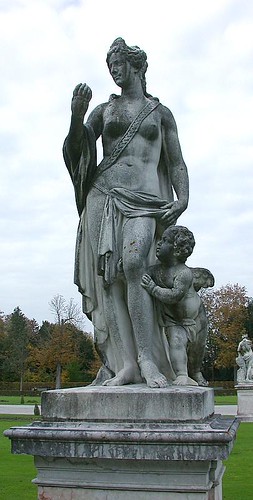
Photo: “Adam and Eve (and Lilith, the serpent) (Notre Dame, Paris, France)” by runintherain is licensed under CC BY-NC-SA 2.0.

A.E. Stallings, ‘Anosmia’

Without it, what is lemon, what is mint? –
Coffee and chocolate, caffeinated brown.
Ghosted by a sense that takes no hint,
I feel let down.

It’s hardly tragedy that I can’t tell
The milk’s gone off, eggs rotten. It’s no joke
With other things though – no internal bell
That signals smoke

(The toast burned or the house on fire). Sweet
I have, and bitter, I have sour and salt,
But without smell, no flavour is complete.
There’s no … gestalt.

It’s something I’d predict of old, old age,
This weaning from the welter of the world
The better, perhaps, to leave it. I’m no sage,
I’d rather the impearled

Jasmine flowers – fragrance of the stars –
Light up the brain’s grey matter, and the hurt
Of memory, the human musk of ours
In an unwashed shirt.

‘To have a nose for’– isn’t it a skill,
A wry intelligence, a kind of knack?
What thought trails do I lose, untraceable,
What wisdom lack?

I miss the laundry scent they call ‘unscented’.
Like a depression, it makes it hard to write.
What is is less, less there, half uninvented,
And I, not quite.

But there are days I almost have a whiff:
I slice a lemon open for the crisp
Sun-saturated redolence, and sniff
And stand in the eclipse.

*****

A.E. Stallings writes: “My sense of smell is coming back gradually, but it was completely wiped out for about six months! Unnerving.”

‘Anosmia’ was first published in the London Review of Books.

A.E. Stallings is the current Oxford Professor of Poetry. This Afterlife: Selected Poems was published in 2022. Her forthcoming book is Frieze Frame: How Poets, Painters, and their Friends Framed the Debate Around Elgin and the Marbles of the Parthenon

Smell” by Dennis Wong is licensed under CC BY 2.0.

Ruth S. Baker, ‘Moneykind’

That kind of money is swishy and flashy.
That kind of money’s a bore, I find;
That kind of money is fishy and splashy.
That kind of money is not my kind.

My kind of money is somewhat quieter.
My kind of money won’t hog the stage.
My kind of money’s a long-term dieter:
My kind of money is slim for its age.

That kind of money is horribly tethering.
That kind of money one’s better without.
My kind of money’s enough for anything.
(Anything more I’ve forgotten about.)  

*****

‘Moneykind’ was originally published in The Asses of Parnassus. Ruth S. Baker writes: “It was triggered really just by catching myself out trying to feel superior to people with that kind of money!  As for bio, I’ve published in a few journals on line, mostly on animals and visual art.”

Photo: “Cooperate game companies have too much money and control of the market” by The People Speak is licensed under CC BY-NC 2.0.