Tag Archives: A.E. Stallings

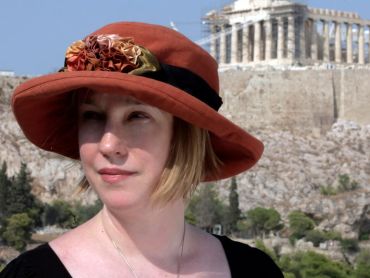
Political poem: A.E. Stallings, ‘An American Wakes Up in Athens, Greece After the 2024 Elections’

I wake up in the dark.
In dark I went to sleep.
There is a kind of stark
Accounting of lost sheep.

The day breaks with a dawn
So much like yesterday’s.
I turn the kettle on
And brew a dark malaise.

Things go from bad to worse,
Let’s call it entropy.
The blessing is a curse,
And treachery goes free

Or something. Never mind,
Here in the cradle of
Democracy I find
There’s history enough —

There on the shining rock
The entasis of state,
The subtle curves that lock
The crooked to the straight.

The centuries were slow
Where stood its solid scenes,
It took one night to blow
The roof to smithereens.

It boasts of Marathon,
It boasts of Salamis
Five generations on,
Of hemlock’s bitterness,

Between, the city nations
Of Greeks warred tribe with tribe
Why trouble with invasions?
It’s easier to bribe.

We still read Athens’ versions,
As though the Spartans lost,
As though the prudent Persians
Did not know what they cost.

Pericles died of plague,
And Phidias in prison.
Division’s sown, and vague
Suspicions have arisen.

It took nine years to build
Those columns in the air,
But half its marbles spilled,
Over fifty to repair.

It’s like a foundered ship,
That ruin on the hill.
It makes my heartbeat skip.
I’m afraid it always will.

*****

A.E. Stallings writes: “I [wrote this] poem the day after the elections. It was written on the fly, and has not been revised.”

‘An American Wakes Up in Athens, Greece After the 2024 Elections’ was originally published in Liberties Journal.

A.E. Stallings is the current Oxford Professor of Poetry. This Afterlife: Selected Poems was published in 2022. Her forthcoming book is Frieze Frame: How Poets, Painters, and their Friends Framed the Debate Around Elgin and the Marbles of the Parthenon

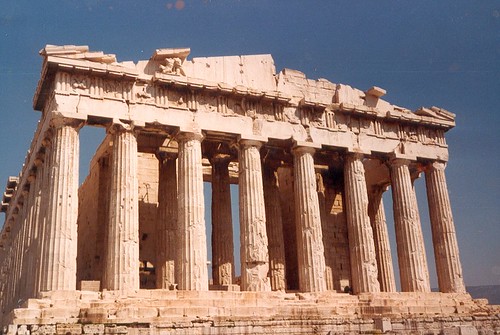
Photo: “Parthenon” by R~P~M is licensed under CC BY-NC-ND 2.0.

A.E. Stallings, ‘Anosmia’

Without it, what is lemon, what is mint? –
Coffee and chocolate, caffeinated brown.
Ghosted by a sense that takes no hint,
I feel let down.

It’s hardly tragedy that I can’t tell
The milk’s gone off, eggs rotten. It’s no joke
With other things though – no internal bell
That signals smoke

(The toast burned or the house on fire). Sweet
I have, and bitter, I have sour and salt,
But without smell, no flavour is complete.
There’s no … gestalt.

It’s something I’d predict of old, old age,
This weaning from the welter of the world
The better, perhaps, to leave it. I’m no sage,
I’d rather the impearled

Jasmine flowers – fragrance of the stars –
Light up the brain’s grey matter, and the hurt
Of memory, the human musk of ours
In an unwashed shirt.

‘To have a nose for’– isn’t it a skill,
A wry intelligence, a kind of knack?
What thought trails do I lose, untraceable,
What wisdom lack?

I miss the laundry scent they call ‘unscented’.
Like a depression, it makes it hard to write.
What is is less, less there, half uninvented,
And I, not quite.

But there are days I almost have a whiff:
I slice a lemon open for the crisp
Sun-saturated redolence, and sniff
And stand in the eclipse.

*****

A.E. Stallings writes: “My sense of smell is coming back gradually, but it was completely wiped out for about six months! Unnerving.”

‘Anosmia’ was first published in the London Review of Books.

A.E. Stallings is the current Oxford Professor of Poetry. This Afterlife: Selected Poems was published in 2022. Her forthcoming book is Frieze Frame: How Poets, Painters, and their Friends Framed the Debate Around Elgin and the Marbles of the Parthenon

Smell” by Dennis Wong is licensed under CC BY 2.0.

Louise Walker, ‘Octave/Sestet’

With each deep breath, the flute will utter prayer,
its voice vibrating with the purest note
of G in the first octave. Then you can float
up to the next because you know it’s there.
The painter knows how to balance sea and air,
concealing rules that have been learned by rote;
the same that give the poet secret hope
that all will be in order, nothing spare.

But look – the sunflower makes a perfect turn
with each new seed; at heart it knows the code
which gives each one sufficient space to grow,
facing the light. It never had to learn
to ask the question Fibonacci posed
of eight and six, the golden ratio.

*****

Louise Walker writes: “After 35 years of teaching English to 11–18-year-olds, I retired to have more time for writing,but I also started flute lessons. Learning my first instrument is fascinating, exhilarating and frustrating by turns; the experience has found its way into my poetry in unexpected ways.
In ‘Octave/Sestet’ I’m exploring the idea that there is a beauty in the proportions of the natural world, which finds its way into painting, architecture, the musical scale and the sonnet. I love the idea that we respond to this beauty instinctively, without conscious recognition of the maths – not my strongest subject, by any means!
Don Paterson’s introduction to his anthology ‘101 Sonnets’ was the final push to get me started on this poem. I often write sonnets, sometimes unrhymed, sometimes with slant rhyme, because I find the division into eight and six really helpful in developing my ideas. But here, I was faithful to the rhyme scheme and iambic pentameters of the Petrarchan sonnet. Recently, I’ve been trying forms such as triolets and terza rima, inspired perhaps by A.E. Stallings who I saw read in London last Spring.”

Louise Walker’s poems have appeared in anthologies by the Sycamore Press and Emma Press, as well as journals such as South, Oxford Magazine, Acumen, and Prole. She was Highly Commended in the Frosted Fire Firsts Award in 2022; in 2023 she was long-listed by The Alchemy Spoon Pamphlet Competition and won 3rd prize in the Ironbridge Poetry Competition. Commissions include Bampton Classical Opera and Gill Wing Jewellery for their showcase ‘Poetry in Ocean’. She is working on her first collection; at its core is her journey onwards from the sudden death of her brother in his/her twenties.
Instagram @louise_walker_poetry; direct message if you would like one of the last few
copies of her pamphlet ‘An Ordinary Miracle’.
‘Octave/Sestet’ was first published in Acumen; you can read a couple more sonnets here:
https://foxglovejournal.wordpress.com/2023/02/14/longwood-louise-walker/
https://acumen-poetry.co.uk/louise-walker/
and a prize-winning psalm:
https://pandemonialists.co.uk/ironbridge-poetry-competition-2023/

Photo: “Sunflower” by auntiepauline is licensed under CC BY-NC 2.0.

Formalist poet A.E. Stallings elected the next Oxford Professor of Poetry

Congratulations to Alicia Stallings on winning election to one of the most prestigious poetry positions on the planet – the Oxford Professorship of Poetry! A thoroughly deserved success for one of the absolute best poets writing today. And how nice for all of us, that a formalist is recognised as the best choice. Her term of office begins in October and runs for four years.

Here is the University’s report on it: https://www.ox.ac.uk/about/oxford-people/professor-of-poetry

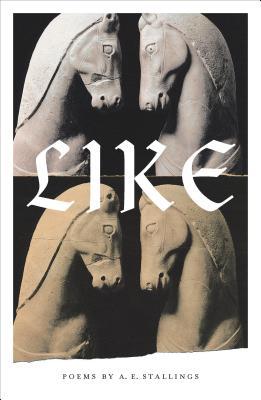
Review: A.E. Stallings, ‘Like’

‘Like’ is the fourth volume of poetry from A.E. Stallings, the best poet that I know of who is writing in English today. The themes in ‘Like’ are the same as in her earlier collections: American childhood, Greek adulthood, children, memory, local wildlife, Greek mythology… and concern for the abused, whether women in the patriarchy or refugees in the Mediterranean. There is a difference of organization, though: instead of four or five different sections, ‘Like’ lumps all the poems together and arranges them alphabetically by title; the result is a smooth, wide-ranging read.

Stallings has a superb mastery of form, and plays endless tricks with it. Start on ‘Battle of Plataea: Aftermath’ and the apparent prose in 11 lines when read alertly turns out to be a rhymed sonnet in iambic pentameter. Or take the eponymous ‘Like, the Sestina’ which uses the word “like” as the rhyme for every one of the requisite 39 lines plus 3 mid-line rhymes (with such variations as “unlike”, “dislike”, “look-alike”). See how the most substantial poem, ‘Lost and Found’, carries its rambling dream-and-memory dissertation on for 36 stanzas of ottava rima in iambic pentameter, whereas the shorter and more time-sensitive ‘Swallows’ uses 6 stanzas in iambic tetrameter. Her ‘Refugee Fugue’ attacks the unmanageable and unimaginable horrors of the desperate and drowned through a blues poem, a host of epigrams, a found poem – an appropriately confused assemblage of forms for a situation not amenable to coherent resolution.

But forget the technicalities! The beauty is in the easy music of her verse, the casual wordplay as with the doorbell that
Portended importunity from Porlock,
the throwaway etymological observations as of nighttime thoughts:
To consider means to contemplate the stars,
the poem on a ‘Pencil’ that ends
And Time the other implement
That sharpens and grows shorter,
the playfulness of ‘Night Thoughts’ that begins
Night thoughts are not like bats
and then goes on to describe the flight of bats in extended lyrical detail, before finally ending with how night thoughts are different…
And always the underlying awareness of thousands of years of history, showing through in the description of sky, contemporary but ancient, as
the contrailed palimpsest of blue.

And that leads me to my only regrets about Stallings’ verse: too much Greek literature with which I’m barely familiar. I’m not saying it’s a failing on her part, it’s merely a regret on my part that I can’t keep up. Although I would love to come across work by her with Norse themes…

But I will settle for what she offers: a very wide range. She can be very succinct as with ‘Paradox’:
Of the ones that happened to die, the little ones and the old,
Of hypothermia, or drowning, all died of cold.

Equally, she can be extensive and thorough in her exploration of a theme as with ‘Lost and Found’, where she is wandering through a dream of mountainous moonscapes, landfill landscapes, of things lost – toys, gloves, loves, baby teeth, time, opportunities, keys, coins – led by Mnemosyne, Memory herself, the mother of all the muses. The smooth formal stanzas of ottava rima, maintained steadily for 288 lines, provide the same meditative state as the 250 lines of Matthew Arnold’s ‘Scholar Gypsy’ or Edward FitzGerald’s even longer ‘Rubaiyyat of Omar Khayyam’.

My personal favorite in ‘Like‘ is her semi-formal ‘Crow, Gentleman’ (whose title I am guessing was changed from the original ‘Gentleman Crow’ to prevent it from coming between two poems in ‘Like’ addressed to her daughter). It begins:
Pacing to and fro
Along the autumn shore
Among the wrack and reek

With your arms clasped behind your back
And sporting your grey frock coat
Trimmed in black

And your black hat and your lean long-legged stride,
Up and down the strand perusing
The headlines of the tide:

and ends:
Life is a joke you crack,
Wry and amusing,
And death a dainty snack.

I find Stallings’ work altogether delightful: by turns sardonic, detached, passionate, compassionate, always observing carefully, always expressing wittily, always in masterful control of rhythm and rhyme. I repeat: I don’t know of a better poet writing in English today.
Review: ‘Archaic Smile’ by A.E. Stallings

‘Archaic Smile’ was the debut poetry collection by A.E. Stallings, an American who moved to Athens, Greece, a couple of decades ago. Published in 1999, it won that year’s Richard Wilbur Award and its opening poem, ‘A Postcard from Greece’, is perhaps my favourite of all her work. It is a sonnet with slant rhymes describing a car accident:
Hatched from sleep, as we slipped out of orbit
Round a clothespin curve new-watered with the rain,
I saw the sea, the sky, as bright as pain
That outer space through which we were to plummet.
Stallings lives in the modern world of cars and planes and thinks in terms of orbits and outer space; the Greece of this poem is not there yet – there is no guardrail on the cliff-sided road, the only warnings are the memorials to those who have died there, who
sliced the tedious sea once, like a knife.
Luckily, her car hits an olive tree on the edge of the cliff and they don’t go over.
We clung together, shade to pagan shade,
Surprised by sunlight, air, this afterlife.
And so the ancient world steps in to save her from rash modernity, and in this first poem she weaves the present and the past together, living as a pagan shade in a refreshed existence. And the rest of the book, and indeed all her work, carries on this integration of past and present.

The first section of the book is titled ‘Underworld’, appropriate for that near-death event, but mostly being poems such as ‘Hades Welcomes his Bride’ and ‘Persephone Writes a Letter to her Mother’ – there is a lot of Greek mythology in Stallings’ work, but filtered through a modern sensibility:
Death, the deportation officer,
Has seen your papers and has found them wanting.

In the second section, ‘A Bestiary’, she writes of her American experiences of animals and birds, in life and death and freedom and captivity, with her customary detached amusement. Take ‘Watching the Vulture at the Road Kill’:
We stopped the car to watch. Too close.
He bounced his moon-walk bounce and rose
With a shrug up to the kudzu sleeve
Of a pine, to wait for us to leave.
She observes that most other birds have to get in and out in a hurry, whether raptors or prey, and draws a lesson from it:
There is no peace but scavengers.

The third section, ‘Tour of the Labyrinth’, returns to Greek themes, but again weaving past and present, as in the reaction to an antique pot being broken. The final section is ‘For the Losers of Things’, echoing the sense of loss or near-loss in the rest of the book, but staying in the present – ‘Watching the News After the Tornados’ – or even the far future, with another of my personal favourites, ‘The Machines Mourn the Passing of People’:
The air now is silent of curses or praise.
Jilted, abandoned to hells of what weather,
Left to our own devices forever,
We watch the sun rust at the end of its days.

As can be seen from the excerpts quoted, Stallings is a formalist, and very comfortable with whatever form and metre is appropriate for the particular piece she is producing. ‘Archaic Smile’ is a superb collection, readable and rereadable, memorable, quotable. Her subsequent collections have been equally impressive. If there is a better poet currently writing in English, I haven’t run across them.

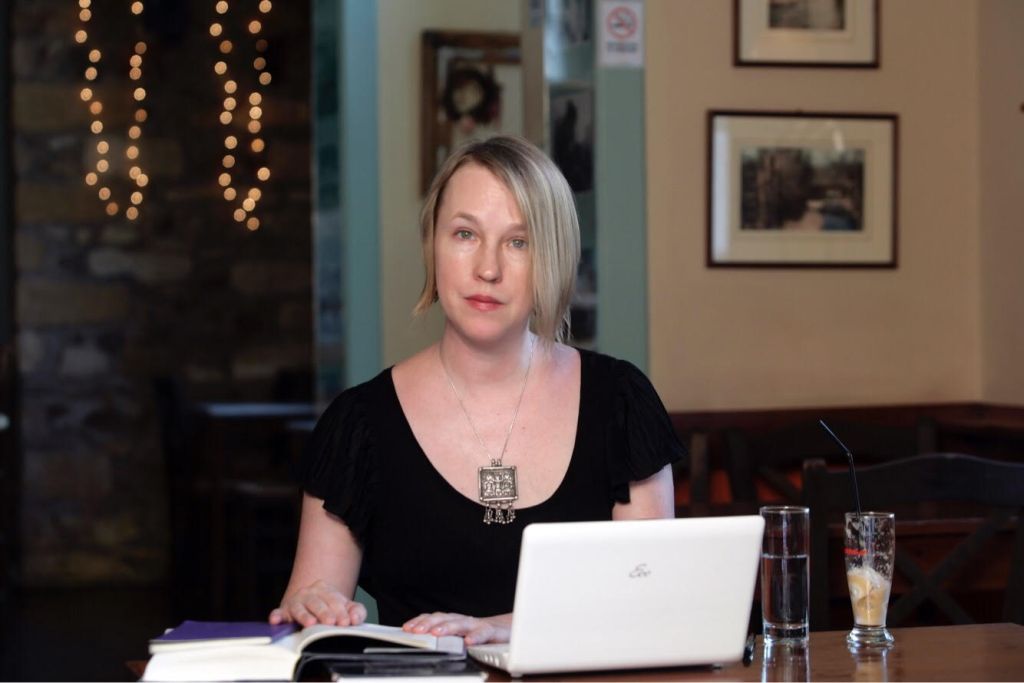
Photo of A.E. Stallings by Milos Bicanski

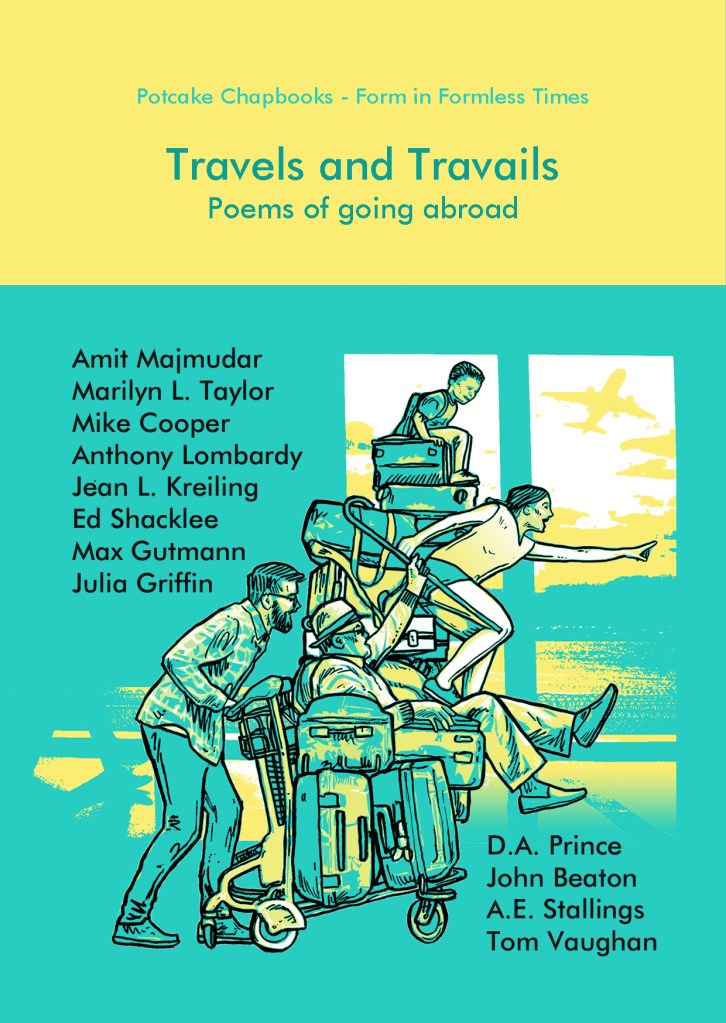
Launch: Potcake Chapbook 10, ‘Travels and Travails’

Maybe it’s just wishful thinking, but surely we’re going to get back to casual international travel again some day soon? The 10th chapbook in the Potcake series is now being mailed out from London, and I trust it augurs well for the happily peripatetic. As usual, the chapbook contains an assortment of the bright (D.A. Prince), the dark (Tom Vaughan) and the flippant (Max Gutmann), with everything in between, and all in rhythm and rhyme–and illustrated of course by Alban Low!

Returning poets are A.E. Stallings, John Beaton, Julia Griffin, Anthony Lombardy, Marilyn L. Taylor, D.A. Prince and Tom Vaughan; joining them are Amit Majmudar, Mike Cooper, Jean L. Kreiling, Ed Shacklee and Max Gutmann. (The links in the names are a mixture of websites, bios, and places to buy their books.) Most, but not all, of the poets are listed on Sampson Low’s webpage of Potcake Poets.

Let’s get everyone vaccinated so we can all start travelling again!

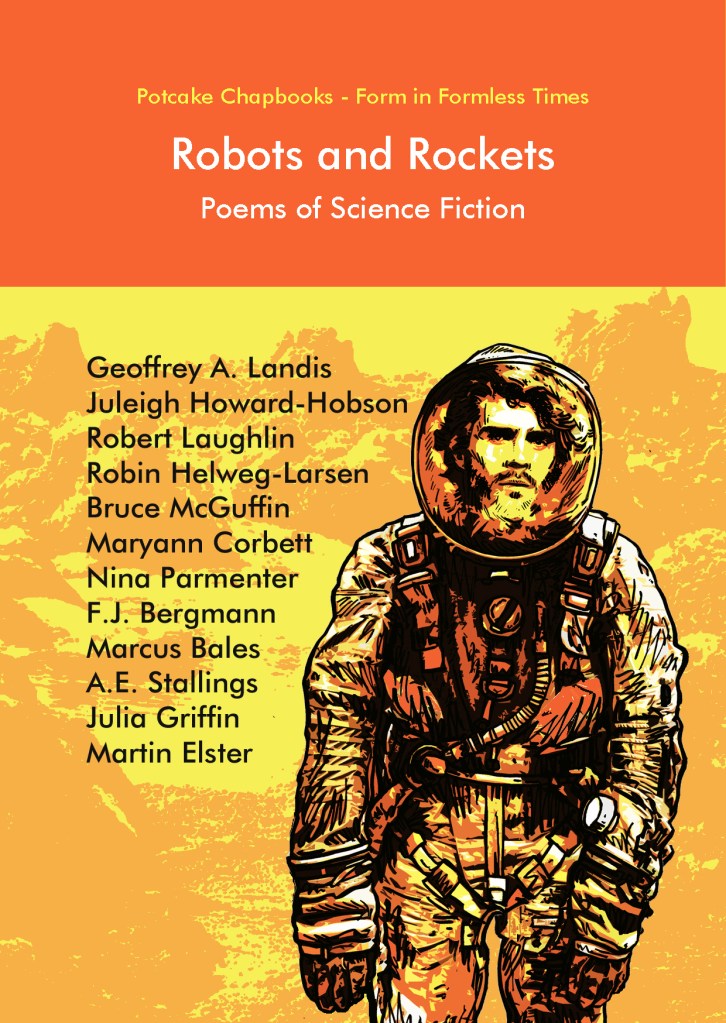
Launch: Potcake Chapbook 9, ‘Robots and Rockets’

I’m very happy to announce that the ninth in the series of Potcake Chapbooks has been launched into orbit: ‘Robots and Rockets’ is an SF issue (could you guess?) and has poems by five newcomers to the series: Bruce McGuffin, Juleigh Howard-Hobson, F.J. Bergmann, Julia Griffin and Geoffrey A. Landis – many already known outside SF through Light poetry magazine and other places. Returning poets are Maryann Corbett, Nina Parmenter, Marcus Bales, A.E. Stallings, Martin Elster and myself.

Copies can be ordered from Sampson Low for four or five Pounds or Dollars, including postage worldwide. Enjoy it! It is, of course, a blast(-off)!

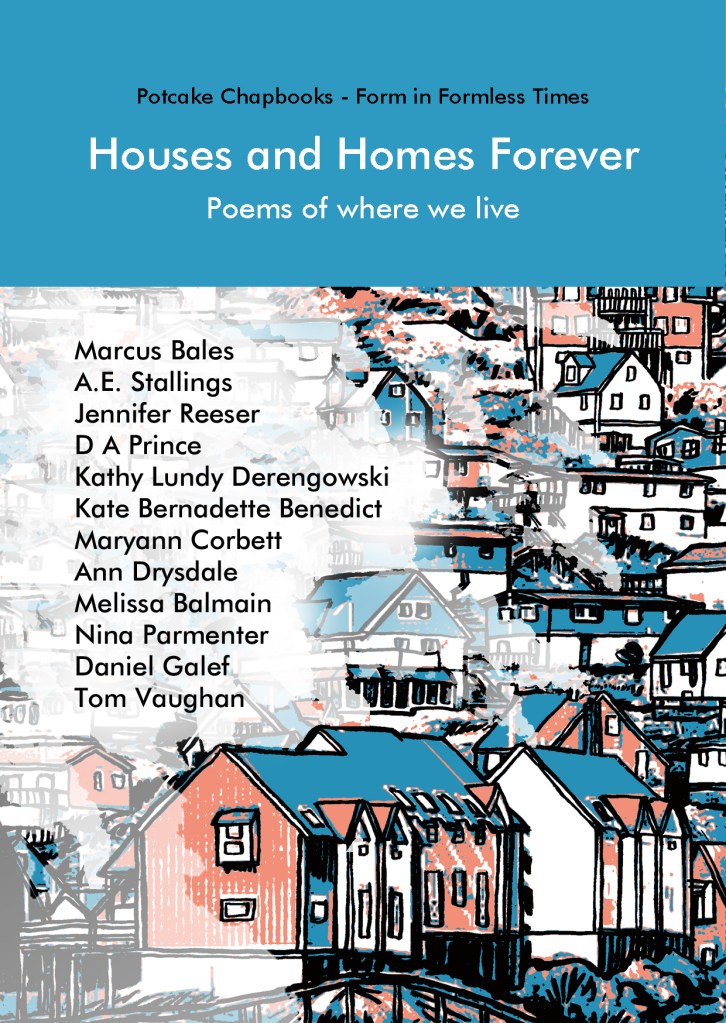
Launch: Potcake Chapbook 8, ‘Houses and Homes Forever’

Home is where you hang your hat, as they say, but it’s more than that. It can be a place of endless work and frustration, or a place of peace and relaxation and deep, strong memories. Houses and homes are part of what makes us who we are.

These poems–all formal, of course!–are as usual in a variety of forms. They were authored by Potcake newcomers Melissa Balmain, Kate Bernadette Benedict, Kathy Lundy Derengowski, Nina Parmenter and Jennifer Reeser, and returning contributors Marcus Bales, Maryann Corbett, Ann Drysdale, Daniel Galef, D A Prince, A.E. Stallings and Tom Vaughan. And well illustrated, as always, by Alban Low.

For the price of a fancy greeting card you can, through the wonders of PayPal, get this 16-page chapbook online for £2.60 + £1.20 P&P to a UK or European address, or £2.60 + £2.20 P&P to a Worldwide address; the seven earlier chapbooks in the series are available as well.

An overview with photos and bios of all the Potcake Chapbook poets is here, all having a home in this big, rambling house.

Poem: “Hurricane Irma”

Hurricane Irma

Hurricane Irma forecast

With islands as appetisers before the main course
Irma prepares to swallow Florida whole
With a sword-swallower’s brash control,
The fellatrix without remorse.

The circular saw of Irma prepares to slice the length of Florida…
But trim the east coast? Trim the west? Or just go forth
And cut a clean line up the center, south to north,
Right through the Magic Kingdom like some sarcastic orator?

And here comes Hurricane Jose,
Pursuing Irma like a barracuda,
A dog lifting a leg on poor Barbuda
To piss where the bigger dog pissed yesterday.

Meanwhile off Africa there forms a new farrago
As God prepares another bowling ball along the hurricane alley…
Can He slide one between Cuba and the Bahamas with this sally
And curve it in to take out Mar a Lago?

With the new hurricane season just kicking off, it seems like a good time to reflect on the hopes and fears we live with all the time: the fears of things going really wrong, the hopes that they will mostly go wrong for the people we dislike. Humans, what can I say…

This poem was first published in The Hypertexts, the massive anthology of poetry–predominantly contemporary, English-language and formal–assembled by Michael R. Burch. It’s an honour to have my own page in the company of some 300 contemporary poets from Wallace Stevens to A.E. Stallings… and others from Lorca to Blake and right back to Sappho.

“Hurricane Irma” happens to meet the preferences of The Hypertexts in several ways: casually formal, flippant about religion, and with a loathing for Donald Trump. A perfect storm, as it were, for inclusion in the anthology.