Tag Archives: Bewildering Stories

Short poem: RHL, ‘Clearing the Cache’

At night we dream to clean our memory,
discard trash from our cache.
Reincarnating after death would be the same;
the past, scraped by death’s emery,
unknown in the new game,
cleansed of our memories, but with a stash
of added skills…
and karma’s unpaid bills.

*****

No, I don’t believe in reincarnation. I don’t believe in anything, or in nothing; I’m an absolute agnostic. “I think therefore I am” is as far as you can go with any certainty – even “who or what I am” is ultimately unknown.

‘Clearing the Cache’ was published in Bewildering Stories. Thanks, Don Webb (if you exist, of course…)

Glitch 183” by mikrosopht [deleted] is licensed under CC BY 2.0.

Sonnet: RHL, ‘Mirror Shades’

Trust’s been essential to our global rise,
and humans have a unique way to build trust:
we’ve left all other primates in the dust
because, alone, we have whites to our eyes.

With dark eyes, what they look at they disguise,
whether they see it with disgust or lust.
Why we look may leave other folks nonplussed,
but that they know what we’ve seen stops some lies.

We’ve sacrificed a natural secrecy
to raise our social aspects several grades.
Hiding your eyes now means active deceit.
So, those upholding laws and decency
can’t be allowed sunglasses; mirror shades,
especially, alienate and self-defeat.

*****

I guess this isn’t a good example of a sonnet. There’s no real turn, it’s just an essay beating on the same point over and over: the eyes being the windows of the soul (even to an agnostic), if you are trying to build trust and community you have to be able to see each other’s eyes. If you are just trying to dominate, then sure, go ahead, hide behind shades and mirrors and blinds and curtains… but you’re giving up one of the greatest innovations that let our species of ape achieve social complexity.

The poem was recently published in the weekly ‘Bewildering Stories‘.

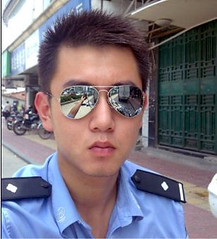
As for the photo, it appears to be a selfie by a young Chinese police officer, more concerned with style and image than with making his community safer. But who knows what is important in his life and for his career.

Cutie Police” by Beijing Patrol is licensed under CC BY 2.0.

Sonnet: RHL, ‘An Observation’

If particles only exist as waves,
precipitating out only when measured, seen,
till then just ghostly, nebulous, roughed-in…
If that’s the way the universe behaves,
then who’s to say the moons of Jupiter
existed before Galileo scoped
them out? Our simple world had coped,
pre-Hubbell, without needing to infer
a billion galaxies. Again, if things
newly observed are different than before,
then things that once were real are real no more,
especially nebulous, wave-form, with wings,
hence dragons, fairies, elves all now seem odd…
and angels, demons, giants, ghosts… and God.

*****

This sonnet was recently published in Bewildering Stories (thanks, Don Webb), and seems to have touched a chord with that issue’s theme of esse est percipi; so it leads off that week’s questions in the magazine:

  1. In Robin Helweg-Larsen’s An Observation:
    1. George Berkeley’s philosophy of Idealism is based upon the principle: “To be is to be perceived.” How does the theory of Quantum Physics support the principle of perception? Or does it?
    2. The poem concludes by listing a number of supernatural beings whose reality is implicitly denied as long as they have not been perceived. How does “God” differ — by definition — from the others in the list?
    3. By whom or what must something be perceived in order to exist? And how does a perception take place?

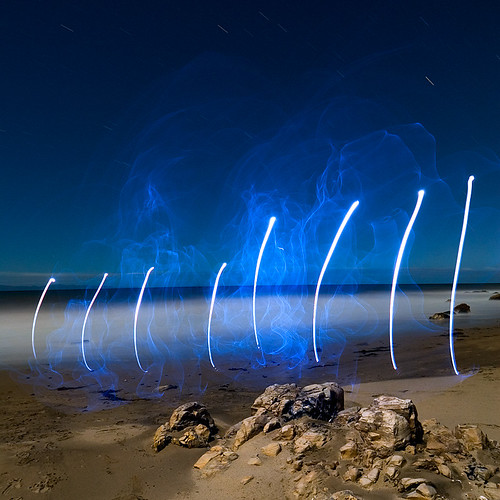
Photo: “Nebulous in Blue” by Toby Keller / Burnblue is licensed under CC BY-NC-SA 2.0.

RHL, ‘In the Spring’

In the spring, an old man’s fancy
ruefully reviews his youth;
thinks of girls both past and present,
wonders can he hide time’s truth.

His always googly gardening eyes
all ever which ways scan and glower
at the bud-bursting blossoming girls
exploding in their flower of power.

What is this green and noisy growth
that’s flourishing, fresh and unkempt?
Old’s good, so’s young… could one be both?
O Fates! from fate make me exempt!

*****

‘In the Spring’ was published in Bewildering Stories, an online weekly of Speculative Fiction, Poetry, Art, etc. Thanks, Don Webb!

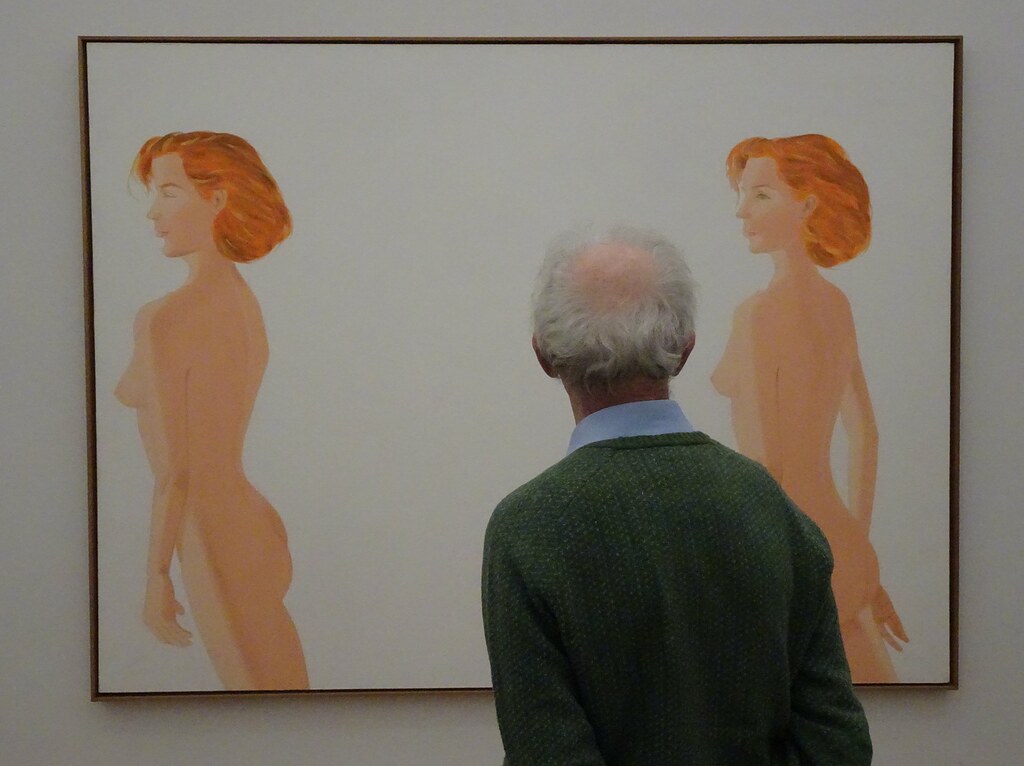
at the museum” by derpunk is licensed under CC BY-NC-SA 2.0.

SF poem: Don Webb, ‘Mars Draws Near’

Do you know where now or in what lands
Are the voices that sang of vibrant Mars?
Of slender spires on iron-red sands
And canals, night-necklaces with stars?
They sang of visions that once seemed clear.
Who sings of the Mars of yesteryear?

Does sadness tinge new Eden’s rainbows
Or the sin-abrading void of space?
Close now, does Mars now close
Its alien, inviting face?
Today we hear triumphant fear.
Who hears the Mars of yesteryear?

Man, covet not the power of stones
Nor jails, nor ruins. Mars draws near.
It once gave flesh to now-dry bones:
Return to the Mars of yesteryear.

*****

Don Webb writes: “I wrote this poem in 2003. That happened to be a special time in astronomy, when Mars was closest to Earth. The ‘yesteryear’ reference was prompted by fond memories of the literature of Ray Bradbury and C.S. Lewis, among others.  The poem’s relevance to today’s world is explained in Bewildering Stories’ series of review articles: ‘Cassandra’s Voices: Warnings to the Modern Age‘  ( https://www.bewilderingstories.com/includes/toc/cassandra_toc.html). All of the works discussed shine important light on 21st-century civilization and continue to be of immediate interest in U.S. and world politics. The nostalgia of Mars invading Earth seems preferable to Trusk & Mump’s earthly imperialism and dreams of an Invasion of Mars.”

Don Webb is a teacher of French language and literature. B.A., Dartmouth College; Ph. D., University of Wisconsin. Major: French; minor: German. Thesis: Jean Jacques Rousseau’s La Nouvelle Héloïse. Most of his career was spent at California State University, Sacramento. Ten years moonlighting as a professional translator of French and Italian. He is currently retired and has taught an on-line course in French for Reading Comprehension for several years and, occasionally, French for Listening Comprehension at the University of Guelph, in Ontario.

For a more complete (and highly amusing) bio with reflections on the various people he has been mistaken for – and the doppelgänger who has been mistaken for him – visit www.bewilderingstories.com/bios/donbio.html

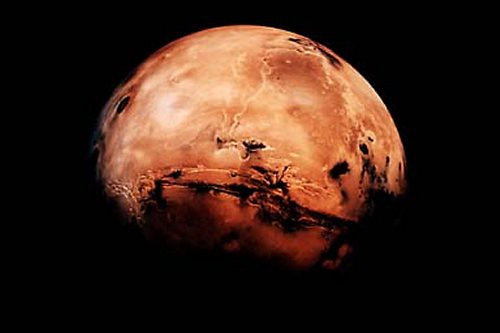
Photo: “Mars the Mysterious (NASA, 1997)” by NASA’s Marshall Space Flight Center is licensed under CC BY-NC-ND 2.0.

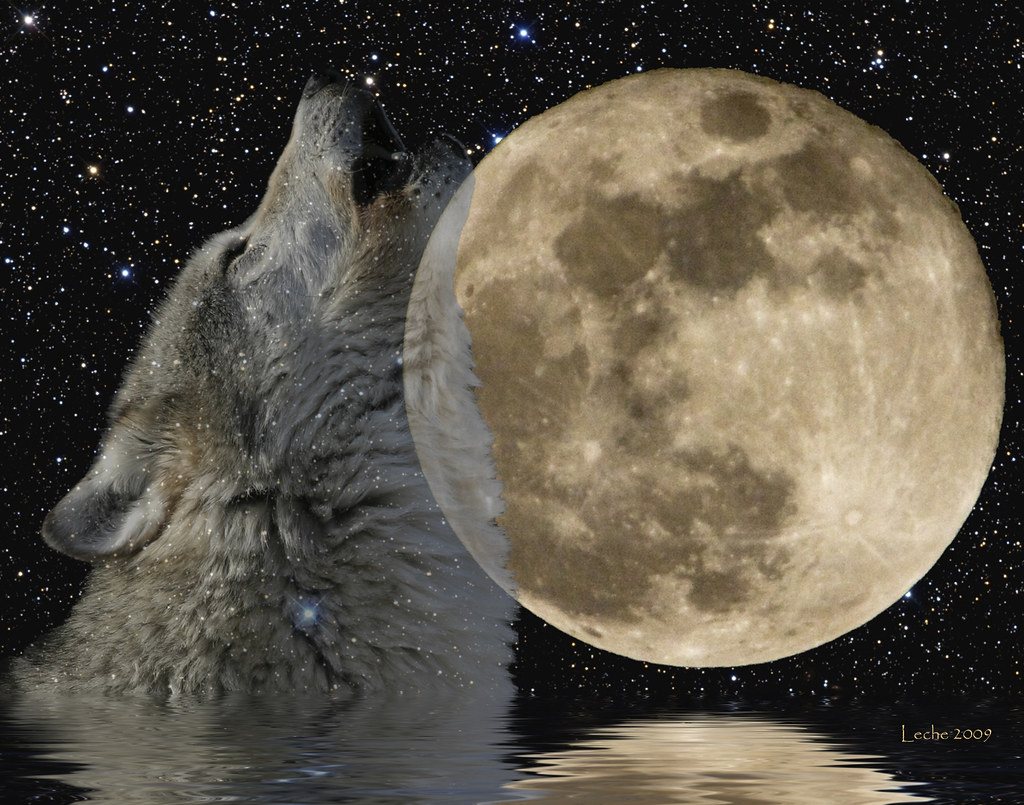
Sonnet: RHL, ‘Zombies and Wolves’

Women I’ve failed or wronged or left behind
approach my thoughts like zombies for the kill;
I’ve literary walled defences – still
given the chance, they’ll eat my brains, my mind.

Through forest, orchard, farmyard in decay,
a shadow of a wolf slips greyly in,
my thoughts of death, grim, wasted, ill, rib-thin,
tracking my weak resolve, hungry to slay.

Mountaintops blown apart, forests clear-cut,
where’s there to hide? Nature doesn’t exist;
her landscapes crushed in patriarchal fist.
This former farmland hides my ruined hut.

Impotent, I still write, thus giving birth
to future wolves and zombies of the earth.

*****

This sonnet was originally published in Candelabrum (a twice-yearly print magazine of formal verse that ran bravely from 1970 to 2010… now sadly defunct, eaten by wolves or zombies or whatever snacks on print poetry magazines), and republished in Bewildering Stories #1039, a decades-old online magazine of primarily speculative fiction.

Photo: “Full ‘Wolf’ Moon – January 22, 2008” by Rick Leche is licensed under CC BY-NC-ND 2.0.

Short poem: RHL, ‘I Started Out Alone’

I started out alone,
No numbers and no words.
The people gave me food and clothes.
I loved the sun and birds.

And when I reach the end
Numbers and words all done,
Have to be fed and dressed again,
I’ll love the birds and sun.

*****

This is one of my favourite poems, for several reasons:
First, it extols the combination of curiosity, enjoyment and acceptance that I believe is appropriate for this thing called life.
Second, it is simple in expression: simple words, simple rhythm, in iambics with simple full and slant rhymes.
And third (and perhaps most importantly) it is easy to memorise: it has lodged itself in my brain without any effort or even intent on my part and, as this blog frequently claims, that is the essence of poetry.

‘I Started Out Alone’ was originally published in Bewildering Stories in 2019. More recently it was included in a batch of my poems that Michael R. Burch spotlighted in The Hypertexts for August 2024.

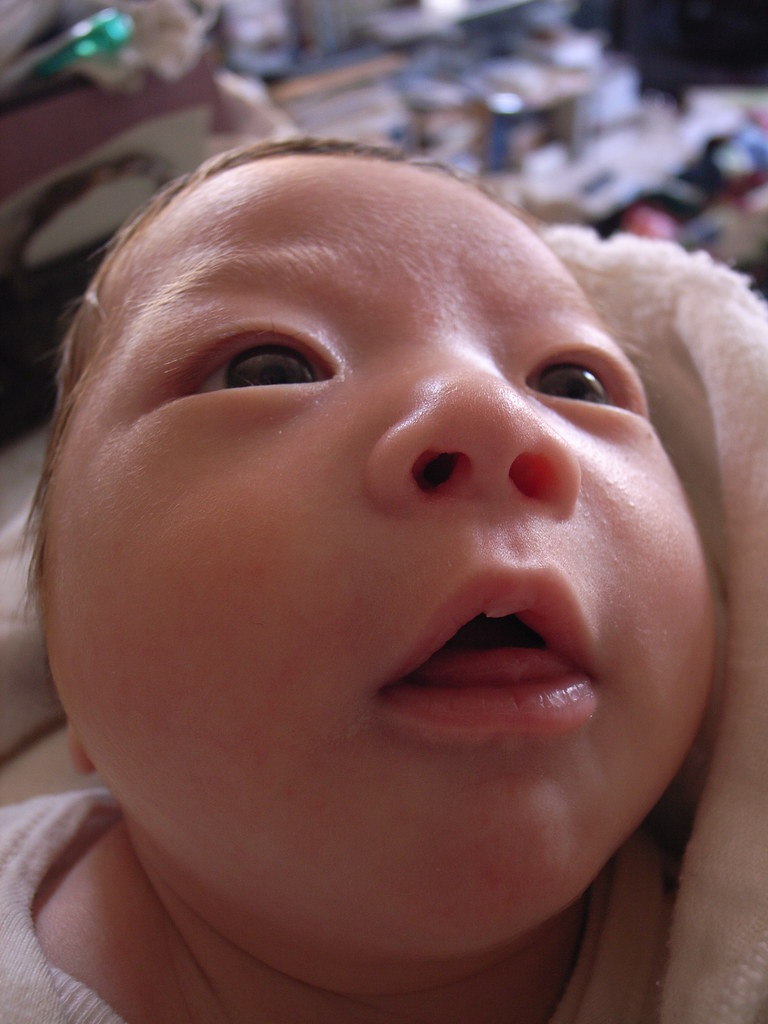
Photo: “Baby face” by matsuyuki is licensed under CC BY-SA 2.0.
SF poem: RHL, ‘Outbreak of Humans’

Gods! Admire us;
we’re your virus
formed of land and sea.
Air and fire
take us higher,
a plague now breaking free;
a wild agent
of contagion
through the galaxy;
death-defying,
modifying…
infecting all we see.

*****

This brief poem was recently published in Bewildering Stories. Humans have already spread round the planet into all ecosystems like an uncontrollable virus; and now we’re seeing the beginnings of a far vaster expansion, presumably entailing endless mutations as we go. It’s going to be a wild ride and, once we’re established and self-sustaining off-planet, I don’t see anything stopping it.

(To those who don’t share this world view, I apologise for what must come across as a religious rant. Maybe it is. We’re all trying to make sense of a life that refuses to be pinned down, and quantum physics shows no more common sense than do tales of angels and demons.)

Having predicted the future in vague outline, I admit I think the future is unpredictable in detail. It is chaotic and formless… which is all the more reason for imposing what form we can in writing about it. Form is a good antidote to formless times. And understanding why we developed our cultural techniques over millennia, why we love song, dance, rhythm and rhyme, is useful in preparing ourselves for an unpredictably evolving future. We developed our cultural strengths for good reasons, and they speak to our evolving ape core. Yes, things will keep changing; but for good or ill we are social beings, and our rhythms and harmonies are part of what keep us grounded in society and prevent our mental collapse.

Photo: “NEXT GALAXY” by suRANTo dwi saputra is marked with CC0 1.0.

Weekend read: Michael Murry, ‘Inconspicuous Conclusions’

A play’s last scene has often served as trope,
where theater, as metaphoric scheme,
enables authors to compose a dream
of Life as it exhausts its mortal scope.
The actors in our own Life’s play, we “hope”
and “love;” some “challenge fate;” some “sob” and “scream,”
but all personify Forever’s theme:
that with its ending, Life must simply cope.
I cannot speak for others in the cast,
but my bit-part as extra in The Show —
as son and father, husband to the last —
gave me such joy as any man could know.
I’ve lived a lucky life. Of this I’m certain.
So when my last scene ends, ring down the curtain.

*****

Michael Murry writes: “The background concerns the passing away of my 48-year-old son, Stuart Langston Murry, in a freak accident while visiting his mother in northern Taiwan. As part of the grieving process, I turned to reading some of my favorite poets – especially Edna St. Vincent Millay’s ‘Dirge Without Music’ – before composing an elegy for my son’s funeral: ‘A Song for Stuart’ published as a Memoir in Bewildering Stories Issue 1032, followed by a companion sonnet ‘Anticipating Anonymity’ published in Bewildering Stories Issue 1042. So much for the composition’s background. ‘Inconspicuous Conclusions’ was published in Bewildering Stories Issue 1043.

As for the formal sonnet structure of the composition, I chose to use as a model John Donne’s Holy Sonnet (VI) with its opening “This is my play’s last scene” for metaphorical theme. The sonnet’s 14 lines consist of iambic pentameter (5 stress accents and 10 syllables) lines: 12 with masculine endings and 2 lines for the closing couplet’s feminine endings (5 stress accents and 11 syllables): ABBAABBACDCDee.

For relevant biographical information, see my website:  http://themisfortuneteller.com/  with my verse compositions under the “Poetic License” menu tab. Consider me a 76-year-old Vietnam Veteran Against The War – the one that never seems to end – retired and living in Taiwan for the last two decades. I started writing formal verse compositions in 2004 as a sort of DIY bibliotherapy for Delayed Vietnam Reaction. I haven’t stopped yet and see no reason why I should. You and your audience may find my work too polemical for most refined poetic tastes, so if you choose not to quote any of my verses, I will certainly understand. As you please . . .”

Photo: Michael Murry at Advance Tactical Support Base ‘Solid Anchor’, Vietnam, early 1970s.

Weekend read: SF poem: RHL, ‘The Uncertainty of Light’

On an asteroid
there was an alien artefact.
If such it was… a droid…
I’ve no idea, in fact.
Its metal (leg?) seemed (deployed?)
and so I touched it, but responses lacked.

Once there were women; once I was a man
(touching a leg then always brought response)
before the search for life and light began
to change me into this dark renaissance.
The teacup storms on which I’ve tossed,
when she or I have bitched and bossed
till all the loves I’d ever marked
were all the women that I’ve lost.
They chose the certainty of Dark
over the uncertainty of Light.

The joys of life are what’s uncertain:
hopes of what’s behind the curtain,
knowing the results will grate
of things that you anticipate,
knowing your life could be wrecked
by what you never could expect.
And though you think you’re circumspect,
you can’t deflect, inspect, collect.
Knowing the harvest is unknown
with crops that grew from deeds you’d sown,
while all your greatest hopes and dreams
will be exceeded by the future’s smallest gleams.

Because change never stops, you find what matters
is never really known.
You may get verbal assurance of your future status,
but was it “throne” or “thrown”?
The only certainty would be
if, offered immortality,
you feared what such an altered world would lose, would save,
and chose instead to go into the Dark
with furnace no less dark than the grave
wherein there lies no risk of further blight.
Most people choose the Certainty of Dark
over the Uncertainty of Light.

But we who strive to stay alive
long enough for rejuvenation
hope, hope only, we will thrive,
post-humans in a re-Creation,
unknowing what our ape-based genes
will do with power dominance,
with war, with sex, Earth mined and undermined,
but glad to take the chance.
How else can we see scenes
of how it all turns out — destroyed? refined? —
unless we scrape through, level up with wounds and scars
and watch a world we love and leave behind?
So at last I am here, between the stars,
transiting the darkness of the Void,
the empty galaxy’s apparent night,
chanting the mantra that keeps spirits buoyed:
Let there be Post-Humanity’s own light!

Between the spiral arms in the near-void
there’s still thin light of distant galaxy and star,
still specks of dust, rarely an asteroid.
Earth left (millennia in old Earth years ago),
I cross the dark immortally, beyond, afar,
through what is darkness only to Earth-eyes
which myriad wavelengths up and down can’t know,
but which I now apprize.
Light here abounds,
and boundlessly surrounds, astounds.

Take the smallness from slight,
take the bad from the blight,
take the fear out of flight
and you’re left with the light, the light, the light.
We stumble from dark caves of night
into day, trying not to tumble;
our parents the dark; post-humans the light;
ourselves just the stumble.

*****

This poem (published in this week’s Bewildering Stories) is a response to conversations in which people have expressed pessimism about the value of life extension, rejuvenation, cryonic preservation and resuscitation… anything beyond the certainties of a clear end to life after a normal lifespan. “How will you… why would you… what if they… you won’t understand… you won’t have…” Ah, but everyone who has immigrated into a foreign culture has done this: had to learn a new language in order to find a job and start making friends and find out how everything works. Some of us are comfortable doing this; some people aren’t. I’ll take the uncertainty, and enjoy its discomforts… because it’s just so interesting!

Photo: “Into the Light: The Future is Uncertain” by tenzin.peljor is licensed under CC BY-SA 2.0.