Tag Archives: careers

Morri Creech, ‘Mileage’

The car mechanic’s counting out his bills
behind the E-Z Mart at one a.m.;
he’ll toss rocks at beer bottles just for thrills
until his dealer comes, it’s fine with him.

He draws in a deep breath and sees the light
swerve from the highway, puzzling the back wall
he leans against just to keep out of sight.
A quarter bag and some fentanyl, that’s all.

His phone vibrates again though nothing’s wrong.
For two years he’s been living in a trailer
with a girl who works at Publix. They get along
even if sometimes she says he’s a failure—

what can he say to that? Sure. He lives cheap.
They’ll fight until she forces a decision,
then roll around on the couch. Once she’s asleep
he’ll take a dose and watch some television.

At night he dreams of cylinders and sprockets,
the trucks and cars too busted up to fix;
startled awake, eyes aching in their sockets,
he’ll watch the clock hands grope their way to six.

A car pulls up but he can see it’s not
his hookup. Just kids with nothing else to do
but drink a six-pack in the parking lot
before they head out to the lake to screw.

He had his share of mischief, too, Lord knows.
The girls don’t eye him in the check-out aisle
much anymore, the ones with painted toes.
A few years back, at least, they used to smile.

The boys can see the grease that stains his hands;
they all think, damn, who wants to work that hard?
He spends the day beneath their dads’ sedans
while they play tackle football in the yard.

Chasing a football blew out both his knees
and broke his wrist. That was three years ago.
Customers say, “go Stags,” and toss their keys,
then look at him real close as if they know.

A text says no one’s coming. The BP sign
flickers over the pumps, and though it’s half-
past two now, and he’s tired, he’s feeling fine
enough to think it’s all a bust, and laugh.

And, anyway, it’s good to be alone
with the gas fumes and blinking traffic light
and fifteen missed calls lighting up his phone.
Later, he thinks, once he and his girl fight,

and once she falls asleep on his left arm,
he’ll stare at the divots on the ceiling tile
and wait to hear the clock sound its alarm
while the night’s odometer counts one more mile.

*****

Morri Creech comments: “As Mark Strand once said, I write to find out what I have to say. I don’t start a poem with an idea; I start with a line, an image, a rhetorical stance. Then I write in search of context: how can I situate this in a situation, a narrative moment, an argument, a meditation? The language takes me wherever I end up. This poem was constructed like that. I started with a first line and then wrote toward trying to figure out the context of the line. In this case, it led me to a character sketch. It was fine to discover what this character was about; the decisions I made about his character and circumstances were largely directed by rhymes. They steered me in what I hope was the right direction.”

Morri Creech is the author of five collections of poetry, including the Sleep of Reason, a finalist for the Pulitzer Prize, Blue Rooms, and The Sentence (published by LSU Press, and which includes this poem). A recipient of NEA and Ruth Lilly Fellowships, as well as North Carolina and Louisiana Artists Grants, he teaches at Queens University of Charlotte.
www.morricreech.com

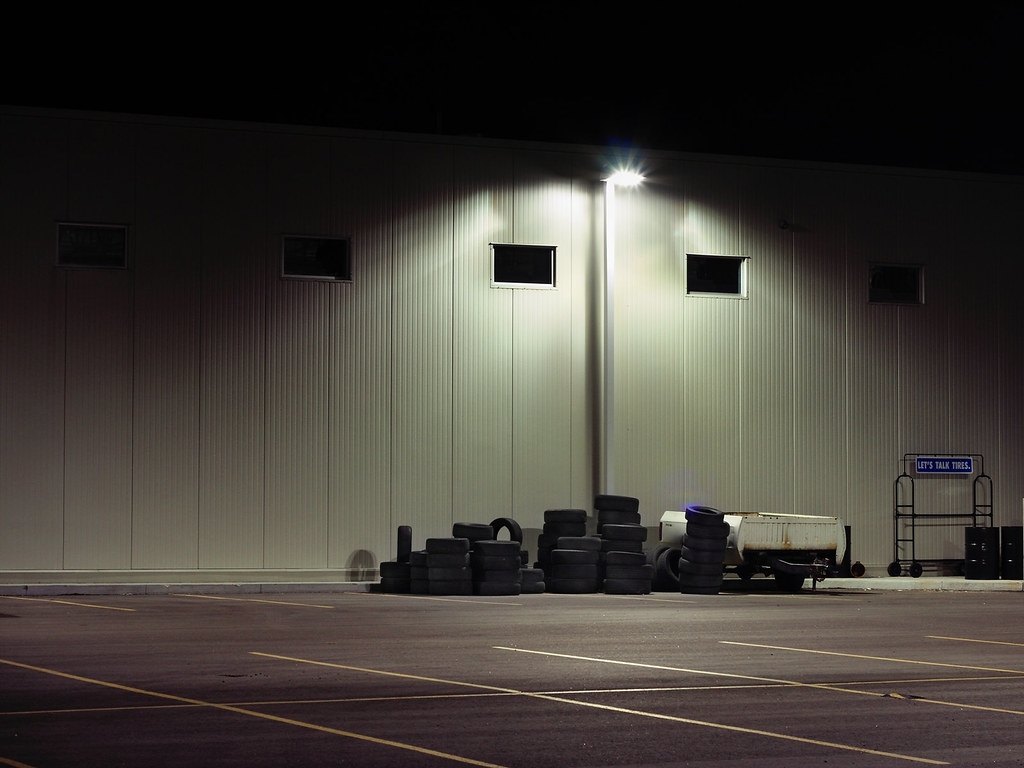
Photo: “Let’s Talk Tires” by gfpeck is licensed under CC BY-ND 2.0.

Using form: John Beaton, ‘Legacy’ (excerpt)

Inside his penthouse office
he views his Inuit artwork,
carvings from a culture
reduced to buy-and-hold,
then scans the evening city,
his bar chart on the skyline
where real estate has grown his stake
but cost him bonds he’s had to break –
he hadn’t meant to so forsake
his parents. They looked old

that day outside the croft house
when cowed farewells were murmured
as cattle lowed in wind blasts
keening from the sea.
His mother and his father
stood waving from the porch step;
next year she’d crack her pelvic bone,
when winter iced that slab of stone,
and never walk again. I’ll phone,
and he was history.

(…)

He downs his drink and glances
again at his computer –
an email from a neighbour:
Your father died last night.
He’d lately gotten thinner
and seldom had a fire on –
what little peat he had was soft.
Some things of yours are in the loft
so mind them when you sell the croft.

The city lights are bright;

he turns again and faces
his metamorphic sculptures
of walruses in soapstone
that never will break free
from rock that locks the sea waves –
past fused against the future.
Another gin? That’s six. Or eight?
So be it. Clarity’s too late.
His real estate’s no real estate –
he’s left his legacy.

*****

John Beaton writes: “This is a composite. Elements of it are taken from my life but I’ve borrowed significantly from the trajectories of others, especially some of my father’s contemporaries who left Camustianavaig physically but never in their hearts. There are also aspects of the lives of some people I’ve known in business. 

I worked out the form so that each stanza would start out steadily and rhythmically for six trimeter lines then build pace for three rhymed tetrameter lines and rein to a halt with a single trimeter line that has a masculine rhyme with line four. Even though they limit word-choices, I thought feminine endings for the first three lines and lines five and six were worth it for the rhythm. And I like how they form a sort of rhyme and closure gradient with lines four and seven to ten.”

John Beaton’s metrical poetry has been widely published and has won numerous awards. He recites from memory as a spoken word performer and is author of Leaving Camustianavaig published by Word Galaxy Press, which includes this poem. Raised in the Scottish Highlands, John lives in Qualicum Beach on Vancouver Island.
https://www.john-beaton.com/

Photo: “‘V for Vendetta’, United States, New York, New York City, West Village, Skyline View” by WanderingtheWorld (www.ChrisFord.com) is licensed under CC BY-NC 2.0.

Sonnet: “What Will You Be When You Grow Up?”

Historically, this never was a thing.
You did what you were born to do, were told,
Fitting yourself into your parent’s mold,
A farmer’s son a farmer, king’s son a king,
A girl to be a mother and a wife.
But then came education, travel, choice,
Awareness of the wishes you could voice,
Countries, careers, sex partners — it’s your life!
And though just who you are you cannot know,
Nor what you want, yet all is your decision.
You’ll make mistakes, find failures and derision,
But life is long: so have another go . . .
Retry, and then try something else; take; give.
Do what you love. You die, regardless. Live!

This sonnet is a mirror of the short poem I posted most recently – and I’m happy to see that my outlook has a certain consistency, even over a 50 year period.

The sonnet has just been published in the formal verse section of the current Better Than Starbucks – thanks, Vera Ignatowitsch!

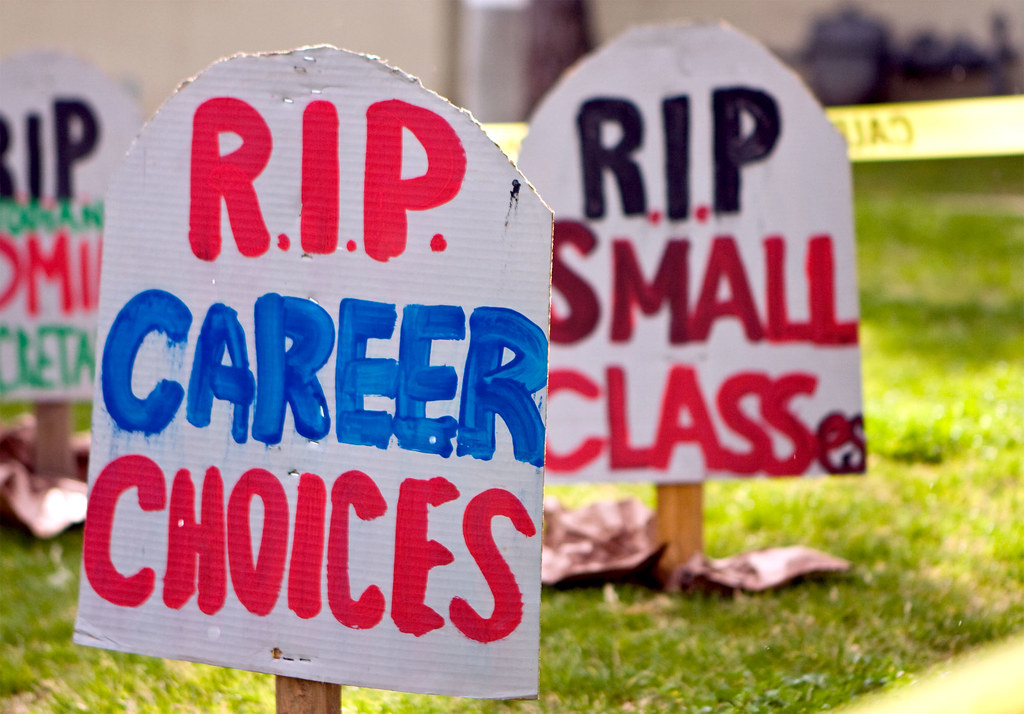
Photo: “career choices” by Jerome T is marked with CC BY-NC-ND 2.0.

Call for Submissions: Careers, Families

The next titles in the Potcake Chapbooks series are tentatively named “Careers and Other Catastrophes” and “Families and Other Fiascoes”. This is a call for submissions to them.

Potcake Chapbooks

Poems should be in formal verse, from 2 to 24 lines in length preferred but up to 50 lines possible, witty, vivid, elegant, and previously published.  Contributors receive five copies, and a discounted rate on additional purchases.

By submitting you acknowledge you are the sole author and give us the right to publish your poem; you retain copyright. Please identify the place of prior publication so that we can acknowledge it. Simultaneous submissions are fine. The chapbooks are scheduled for publication in January/February 2019.

Email in a doc file to robinhelweglarsen -at- gmail.com