All things dull and ugly, all creatures gross and squat,
All things vile and tedious, the Lord God made the lot.
He made the sly hyena, the hookworm and the slug,
Your moaning Auntie Margaret and pervy Uncle Doug.
He made that dreary Welshman who so often reads the news,
And he made us, the ragtag lot who worship at St. Hugh’s.
We’re far from high achievers, we don’t have gorgeous bods;
At best you’d call us humdrum, a group of odds and sods.
We’re verging on the useless and we have got a hunch
No deity could think we were a preposessing bunch.
That’s why we’re rarely cheerful, but feel a bit less blue
When thinking how the mighty Lord can be ham-fisted too.
‘Cause frankly we’d be daunted by a more efficient chap.
We feel a lot more comfy with a God who’s slightly crap.
*****
George Simmers writes: “This is a poem that would never have existed had it not been for the Spectator magazine, which each week sets a challenge to its readers, demanding produce a short piece of writing (it might be 16 lines of verse or 150 words of prose) on a particular theme. The task is often a silly one. A couple of years ago the demand was for a hymn beginning ‘All things dull and ugly…’
“Competitive light verse is a tradition that stretches back a long way in Britain. In the early years of the twentieth century Naomi Royde-Smith of the Saturday Westminster Gazette set challenges that were responded to by up-and-coming writers like Rupert Brooke and Rose Macaulay, among others. In the thirties the Weekend Review was notable for its literary competitions, and when that magzine was incorporated into the New Statesman, the comp came with it.
“Those New Statesman competitions became a notable feature of English literary life, producing star writers such as Allan M. Laing, Stanley J. Sharpless, Roger Woddis, E.O. Parrott, Martin Fagg, Bill Greenwell and Basil Ransome-Davies.. look in any good anthology of light verse, and you’ll find glittering examples of some of their work. The Spectator and Punch were later in running competitions that attracted many of the same writers.
“I first entered a New Statesman competition in 1981, earning a pound for a one-line joke. Easy money! I entered a few more, mostly prose, and it was a while before I had a verse winner. Before that my verse writing had been a bit modernist and self-indulgent; no more. To succeed in the comps you need to master rhyme and metre. It’s a great training ground. Wendy Cope, one of the best writers of neat epigrammatic verse today began in New Statesman competitions (Much of her first, and arguably best, book, Making Cocoa for Kingsley Amis, is made up of her competition winners.) At about the same time, D.A. Prince began her competition career, which continues in the Spectator today (and I’m proud to have her as regular poet in Snakeskin.)
“From the thirties to the seventies, the New Statesman was a crucial publication in British culture, with a left-wing front-end but back half that was welcoming to all sorts of attitudes and points of view. A couple of dull editors diminished its appeal and importance in the eighties, but the comps continued to flourish, though in the twenty-first century they mostly seemed to welcome only rather predictable political humour. A few years ago the editor, Jason Cowley arbitrarily cancelled them. I’ve not looked at the magazine since then, but I’m told that it has gone from bad to worse.
“The Spectator, meanwhile, has flourished. My first Spectator winner (which imagined Wordsworth doing a snooker commentary) was in 1983. It was the top winner that week, and in addition to a small cash prize I was sent a very good bottle of wine. Those were the days. At that time the competition was run by James Michie, himself a good poet notable for his translations of Horace and Catullus. His was a generous welcoming personality, and many talents flowered under his watch.
“After him, Lucy Vickery ran the comp for many years, showing good judgement Though when she went away on maternity leave for a while, a substitute was brought in who gave prizes to some very inept stuff. It’s not an easy job. At present Victoria Lane is the adjudicator. I like her, because she has awarded me a good few prizes. Others may have grumbled.
“The Spectator competition is today just about the only forum for light verse in Britain. While the respectable poetry outlets have mostly given up on traditional rhyme and metre (Have you ever tried to read the stuff printed in the heavily subsidised Poetry Review?) the Spectator comp still demands well-formed and witty verse. Bill Greenwell and Basil Ransome-Davies are still star turns, and they have been joined by Adrian Fry, Janine Beacham, Sylvia Fairley, Chris O’Carroll and others.
” ‘All things dull and ugly…’ was a task that appealed to me, because I’ve always been struck by the way church congregations can make even sprightly tunes like ‘All Things Bright and Beautiful’ sound really drab and tedious. The ‘dreary Welshman’ is Huw Edwards, a BBC news-reader whom I had always found obnoxious, especially when toadying to the Royals. I’m rather proud of having had a dig at him in this poem, which pre-dates his fall from grace when he was dismissed after his appalling taste in pornography was discovered.”
George Simmers used to be a teacher; when he retired he then amused himself by researching a Ph.D. on the prose literature of the Great War. He now spends his time pottering about, walking his dog and writing a fair bit of verse. He is currently obsessed by the poetry of Catullus, and may be issuing a volume of translations within the next year or so. He has edited Snakeskin since 1995. It is probably the oldest-established poetry zine on the Internet. His work appears in several Potcake Chapbooks, and his recent diverse collection is ‘Old and Bookish‘. ‘
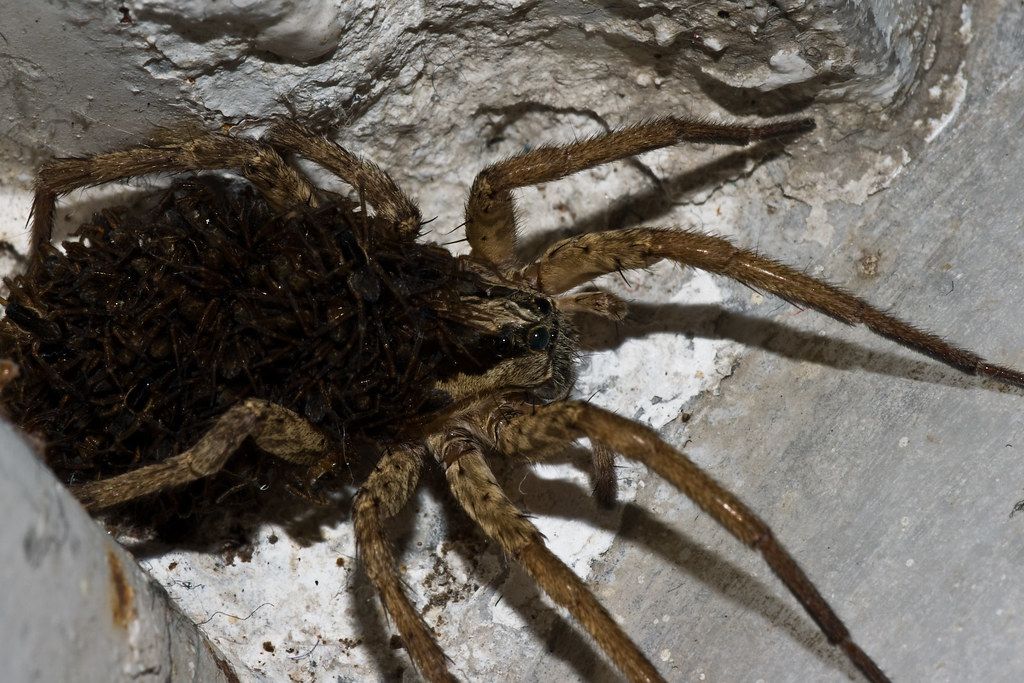
Photo: “Mother Spider” by agelakis is licensed under CC BY-NC-SA 2.0.



 Founded over ten years ago by Martin Parker, it is now edited by Jerome Betts – both of them being accomplished formal poets, of course. They and the magazine are very English (reflected, to the bemusement of Americans, in some of the spelling, rhymes, slang and references) but contributors come from around the globe. Their front page states:
 Form in Formless Times