Tag Archives: death

Using form: Rondeau: Gail White, ‘Opera Rondeau’

And then she dies—since men are no damn good—
Mimi, consumptive and misunderstood,
or Desdemona, most defamed of brides—
the woman is abandoned on all sides—
she so believes in love (as women should)
and in the end she burns like firewood.

Here Tosca on the tower a moment stands,
first throwing back her hood and then her hands
and then one step—invisibly she flies—
and then she dies.

Poor Butterfly, who meant to be so good.
Tough Carmen, using all the wiles she could
to get her man. So many suicides,
so many murders. Violetta hides
but can’t escape—she’s found, she’s understood—
and then she dies.

*****

Gail White writes: “One of my favorites in my new book Paper Cuts is ‘Opera Rondeau’.  It was written after a friend pointed out to me that most summaries of opera plots could end with the words “then she dies.” Although the poem doesn’t conform perfectly to the rondeau rhyme scheme, it does provide the perfect refrain. And gives me a chance to mention a few of the many opera heroines who win, lose, or miss love altogether – and die.”

Gail White is the resident poet and cat lady of Breaux Bridge, Louisiana. Her books ASPERITY STREET and CATECHISM are available on Amazon. She is a contributing editor to Light Poetry Magazine. “Tourist in India” won the Howard Nemerov Sonnet Award for 2013. Her poems have appeared in the Potcake Chapbooks ‘Tourists and Cannibals’, ‘Rogues and Roses’, ‘Families and Other Fiascoes’, ‘Strip Down’ and ‘Lost Love’. ‘Opera Rondeau’ was first published in Mezzo Cammin and is collected in her new light verse chapbook, ‘Paper Cuts‘, also available on Amazon.

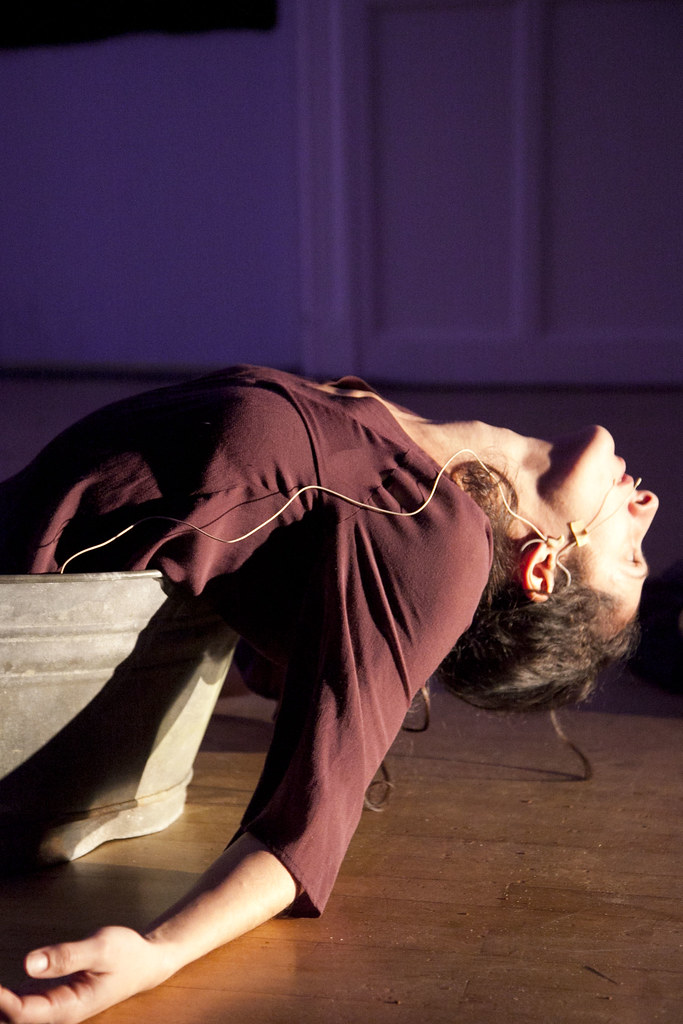
Photo: “Heroine – a female lament” by Yo! Opera is licensed under CC BY-NC-SA 2.0.
Sonnet: RHL, ‘Halloween’

I sing the changing seasons of the year
And, as leaves fall, I celebrate my death.
Each inhalation may be my last breath;
Each year I lose another near and dear.
So many people live life in Death’s fear,
The very word <cough> Dead’s a shibboleth –
Paint on false youth like old Elizabeth –
Yet half the planet’s Spring, while it’s Fall here.

Eternal life is ever to be felt,
For death, rebirth, are always intertwined
In pious hopes, in science still unseen.
The pagan in me – Viking, Druid, Celt –
All celebrate when Life’s return’s divined.
It’s Halloween, so I will dress in green.

*****

This sonnet with its Petrarchan rhyme scheme (ABBA ABBA CDE CDE) was originally published in The Lyric a couple of years ago. “Founded in 1921, The Lyric is the oldest magazine in North America in continuous publication devoted to traditional poetry.”

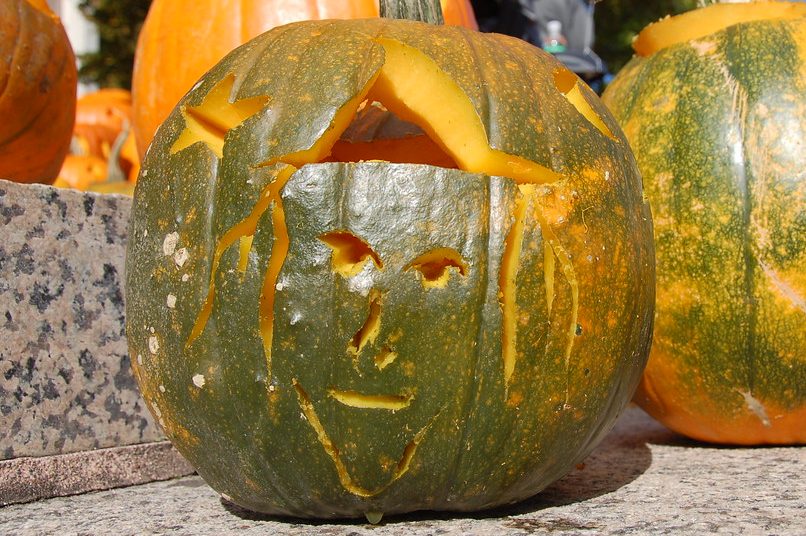
Green pumpkin carved into witch face jack-o-lantern” by Chris Devers is licensed under CC BY-NC-ND 2.0.

Brian Gavin, ‘Death Watch at the Nursing Home’

Two rows of heads puffed white for show
are turned to watch the gurney go
parade-like down the hall and through
the double doors, and out of view.

They linger, as the swinging doors
are gazed to stillness, and intercourse
is but the mingling of silhouettes.
Beyond the tumults of regret

and wonder, they are elsewhere, all
their architecture of recall
connecting lives to family plots,
or maybe – further back – in what

may be a keepsake memory – light
parade, perhaps – a child’s delight
in clowns and cotton candy, high
and wispy as puffed hair. Friends die

often, but not in violence –
not here, where death comes to the sense
in not-quite-joy, and not-quite-grief,
but trembling, lightly, like a leaf

that might be blown, or not, or light
as dandelion fields puffed white
and wispy, wavering. In slow surmise
they gaze on quiet with quiet eyes,

filling the hall with noiselessness,
and dreaming but to acquiesce
to dream, and but to linger some
in thrall to stillness yet to come.

*****

Brian Gavin writes: “My poem sort of rips off (shamelessly!) the form and rhyme scheme of the famous A E Housman poem ‘To An Athlete Dying Young‘. It is, however, about a different kind of death – extreme old age – and the gentleness of it. It’s based on something I actually saw in a nursing home, when white heads once leaned out of their rooms to see a friend taken away on a gurney. The image of a parade struck me, and the heads of puffed white hair reminded me of cotton candy at the parades of my youth. Eventually the images of puffed hair and puffed candy morphed into a field of puffed white dandelions wavering in the wind.
I almost left the title at ‘Death Watch‘ – which I kind of preferred for the double meaning – but opted to add the rest of it for the sake of clarity. This piece ran in my collection Burial Grounds.”

Brian Gavin is a retired Distribution Manager who started writing poetry 10 years ago. His poems have appeared in The Journal of Formal Poetry, Peninsula Poets and Snakeskin Magazine, and in the Potcake Chapbook ‘Careers and Other Catastrophes. He lives in Lakeport, Michigan, USA, with his wife Karen. ‘Burial Grounds’ is available from Kelsay Books.
You can see more of his work at briangavinpoetry.com

Photo: “Dandelions Gone to seed, Dandelion puff ball seeds weeds lawn infestation roundup herbicide Pics by Mike Mozart of TheToyChannel and JeepersMedia on YouTube #Dandelions #Weeds #DandelionSeeds #Lawn #DandelionFlowers #Dandelion” by JeepersMedia is licensed under CC BY 2.0.

Richard Fleming, ‘Memento Mori’


An ambulance howls like a hurt cat;
parts traffic as Moses did the waves.
Worms burrow in awaiting graves.
A police car buzzes like a gnat.

Stuck in a jam of steaming cars,
I contemplate how life transforms
in moments. How they wait, those worms,
so patiently, for us, for ours.

*****

Richard Fleming writes: “Ambulance sirens have been part of the soundtrack of my adult life, from the troubled years in Belfast to, more recently, my relatively tranquil life on the island of Guernsey.
There’s something about the sound, like that of a modern-day banshee, that chills the blood like no other. In common with all those who love unreservedly, I live with a constant fear of loss and a keen awareness of the terrible fragility of those things that we hold dear. This short poem attempts to articulate that fear.”

Richard Fleming is an Irish-born poet currently living in Guernsey, a small island midway between Britain and France. His work has appeared in various magazines, most recently Snakeskin, Bewildering Stories, Lighten Up Online, the Taj Mahal Review and the Potcake Chapbook ‘Lost Love’, and has been broadcast on BBC radio. He has performed at several literary festivals and his latest collection of verse, Stone Witness, features the titular poem commissioned by the BBC for National Poetry Day. He writes in various genres and can be found at www.redhandwriter.blogspot.com or Facebook https://www.facebook.com/richard.fleming.92102564/

Photo: “Ambulance” by gwire is licensed under CC BY 2.0.

Short poem: ‘Convalescence’

Demonic nurses, finding little sin,
all leave my bedside. Doctor Death comes in.
He looks around, “I’m only here
To get a rough sense of the atmosphere. ”
“Please, don’t get up…”
He sits. “Not healing with your usual speed,
Eh, you young pup?
You’ve got a few years left still, don’t you worry.
Take all the time you need.
I’m in no hurry.”

*****

I wrote this in mid-2020; I think Doctor Death was in all our minds at that point, though I didn’t catch Covid myself for another couple of years. The poem was published in the current issue of Rat’s Ass Review – thanks, Rick Bates!

Photo: “1974 Madhouse with Vincent Price playing Dr Death 9599” by Brechtbug is licensed under CC BY-NC-ND 2.0.

Short poem: ‘Possessions’

What do you want possessions for?
You’ll die, then you’ll have nothing more.
You lost your house in a fire? The fact is
That was just for practice.

*****

We live (as always) in a time of existential threat to us as individuals and as a species. This short poem was recently published in The Asses of Parnassus – thanks, Brooke Clark! “Light verse”? I like to think so…

Photo, popularly known as ‘Disaster Girl‘. The young Zoë Roth had been taken by her parents to watch the controlled burning of a structure for training purposes when her father took this prize-winning picture of her. To her ongoing delight, the photo became a viral internet meme, and its NFT sold two years ago for close to $500,000.

George Simmers, ‘Leonard’

Old Leonard said it straight: ‘Let’s not pretend
That death is anything except the end.
You die, you’re done; you’re fed to flames or worms.’
He’d make his point in no uncertain terms,
And Jess recalls the loud and booming laughter
With which he greeted talk of the hereafter.
‘The here and now is all that we have got;
It’s real; the vicar’s fairytales are not.’
She thinks of how he’d neatly phrase a joke;
She clearly hears the forceful way he spoke,
And that ‘Oh but surely…’, with a dying fall
Which clinched an argument once and for all
His words come back to her today as clear
As if the ancient atheist was here.
It’s just as though he’s with her in the room
Though he’s spent years now mouldering in his tomb.

She smiles to think of him, and smiles again
To think how he’s a fixture in her brain.
She even caught herself the other day
Clinching her point in just old Leonard’s way,
With ‘Oh but surely…’ Should she then infer
A trace of him is still alive in her?
Well — a man of such large humour and such drive —
Why be surprised if something should survive?

Now, ten years on, Jess too is dead and gone,
But some things have a way of lingering on.
That ‘Oh but surely…’ with that intonation
Has somehow reached another generation.
Jane, Jess’s daughter, last week floored the board
Of the college with it, and so neatly scored
Her point that they in unison agreed
To fund her project. Phrasing’s what you need,
And Jane knows that, but what she doesn’t know,
Is that trick came from Leonard long ago,
And Leonard learned it many years before
From his Latin teacher. So, how many more
Homes will this little trick of speaking find
As it nips cleverly from mind to mind?

Though death is death, and funerals are for tears,
Some things can oddly echo through the years.

*****

George Simmers has written many poems “about people dealing with what life has given them, for better or for worse.” Fifteen of them are collected in his book ‘Old, Old’. His other recent and more diverse collection is ‘Old and Bookish’.

George Simmers used to be a teacher; now he spends much of his time researching literature written during and after the First World War. He has edited Snakeskin since 1995. It is probably the oldest-established poetry zine on the Internet. His work appears in several Potcake Chapbooks.
https://greatwarfiction.wordpress.com/
http://www.snakeskinpoetry.co.uk/

Photo: “Danger of Death By Failing” by AlmazUK is licensed under CC BY-NC-SA 2.0.

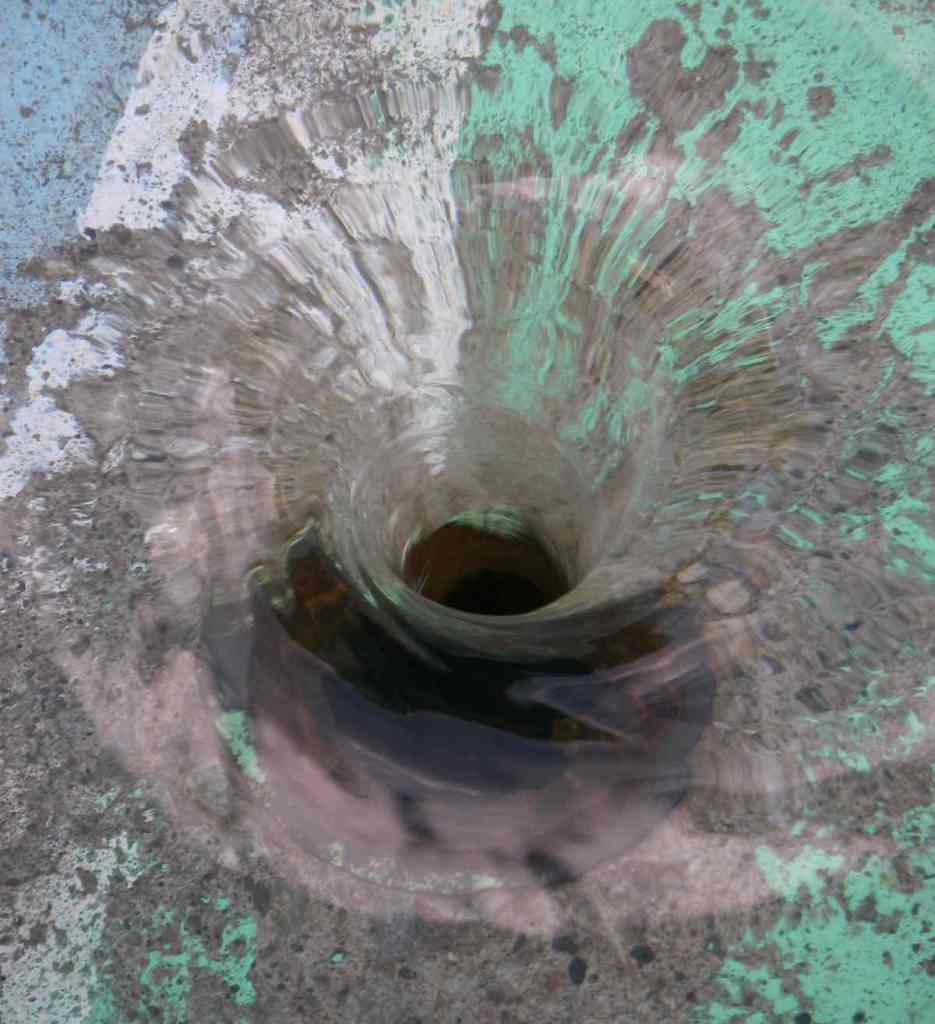
Short poem: ‘Death Spiral’

We spiral round the sun, like water
spirals round a drain;
herded like sheep to the slaughter,
it’s an old refrain–
what you coulda, what you oughta…
so few years remain.

*****

This short poem was recently published in The Asses of Parnassus – thanks, Brooke Clark! Btw sorry if the poem seems morbid – fall/winter has always made me reflective; I’ve been feeling time running out since my teens.

File:Pool drain vortex as viewed from above the water at Grange Park wading pool.jpg” by Glogger at English Wikipedia is licensed under CC BY-SA 3.0.

A.M. Juster: ‘Cancer Prayer’

Dear Lord,
Please flood her nerves with sedatives
and keep her strong enough to crack a smile
so disbelieving friends and relatives
can temporarily sustain denial.

Please smite that intern in oncology
who craves approval from department heads.

Please ease her urge to vomit; let there be
kind but flirtatious men in nearby beds.

Given her hair, consider amnesty
for sins of vanity; make mirrors vanish.

Surround her with forgiving family
and nurses not too numb to cry. Please banish
trite consolations; take her in one swift
and gentle motion as your final gift.

*****

A.M. Juster writes: “One of my favorites.”

A.M. Juster is the Plough Quarterly poetry editor. His work has appeared in Poetry, Paris Review, Hudson Review and other journals. His tenth book is Wonder and Wrath (Paul Dry Books 2020) and his translation of Petrarch’s Canzoniere is due from W.W. Norton in early 2024.
www.amjuster.net

Photo: “A Silent Calling” by Alyssa L. Miller is licensed under CC BY 2.0.

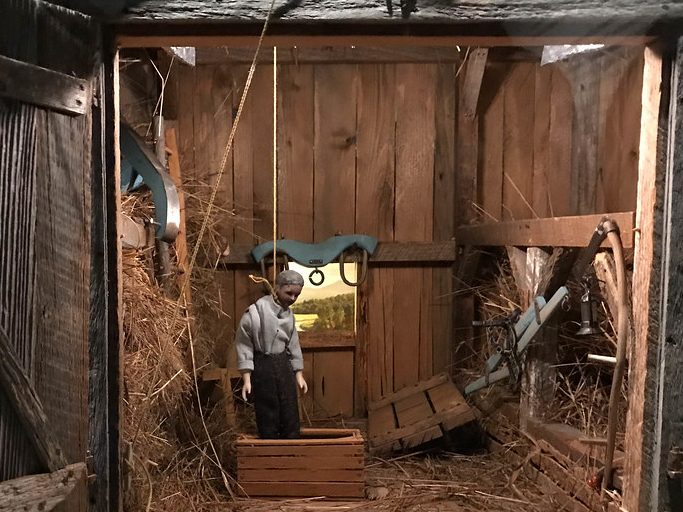
Maryann Corbett: ‘The Nutshell Studies of Unexplained Death’

Crime scene dioramas created as teaching tools by Frances Glessner Lee
Renwick Gallery, Washington, D.C.

Well-behaved voyeurs
bend above these exquisite
dollhouse miniatures

where the small-scale poor
die in ’40s dailiness.
Blood speckles a floor

tiled in one-to-twelve
scale. Ditto bath fixtures, beds,
plates shocked from a shelf—

Here’s a girl’s sliced neck.
Here’s another, legs jutting
from a tub, freaklike.

Is this Dresden head
brush-tipped with the purpling
livor of the dead?

To appreciate
such intently crafted pain,
one must contemplate

finger-cramping care:
quarter-inch-high postcards, penned
with a single hair.

A close eye for sin’s
rigor vitae: tiny socks
hand-knitted with pins.

Strict detail is key.
Look there for the rage of God.
Search for that and see,

sisters. As will I,
taken with the pains by which
quiet women die.

*****

Maryann Corbett writes: “In the autumn of 2018, I visited Washington, D.C. to speak at Catholic University, and while I was there, my sister-in-law took me to visit the Renwick Gallery. Its permanent displays are all lovely, but what stayed with me was a visiting exhibition: the Nutshell Studies. The quaintness of the doll-sized views and the perfection of craft in the recreated period interiors contrasted eerily with the bloody crimes laid out in them. They all stayed with me for a long time, and I did more digging about their creator and her work. The resulting poem—in haiku stanzas, because a small form seemed appropriate—was first published in Pangyrus. It’s included in the book In Code, which centers on my years in the Revisor’s Office but talks about all sorts of social evils.”

Maryann Corbett earned a doctorate in English from the University of Minnesota in 1981 and expected to be teaching Beowulf and Chaucer and the history of the English language. Instead, she spent almost thirty-five years working for the Office of the Revisor of Statutes of the Minnesota Legislature, helping attorneys to write in plain English and coordinating the creating of finding aids for the law. She returned to writing poetry after thirty years away from the craft in 2005 and is now the author of two chapbooks, five full-length collections already published, and a forthcoming book. Her fifth book, In Code, contains the poems about her years with the Revisor’s Office. Her work has won the Willis Barnstone Translation Prize, has appeared in many journals on both sides of the Atlantic, and is included in anthologies like Measure for Measure: An Anthology of Poetic Meters and The Best American Poetry 2018.

Her web page: maryanncorbett.com

Photo: “Murder is Her Hobby Exhibition” by massmatt is licensed under CC BY 2.0.