I disrespect my ancestors fighting in wars, Europeans fighting Europeans, blame without cause; my English grandfather killed fighting the Germans, my Danish uncle executed for killing with Germans, my earlier German ancestors fighting the French, my French ancestors fighting (and marrying) the English… and the cause of the wars always indefensibly wrong. Why should anyone glorify them in song? Pride, greed and stupidity – these are the drivers of war. I turn my back on all of them, stand on the sea shore, marvel at wind and wave, at sun, moon and stars, despising, ignoring, forgetting their idiot wars.
*****
I’m so sick of Putin, Netanyahu… and Bush Jr, Dick Cheney, Tony Blair… war criminals, the lot of them. But they’re the products of our genetic makeup as social animals, dividing everything into “us” and “them”, and then through crafty hysteria and massively organised mob violence, grabbing everything they can for themselves.
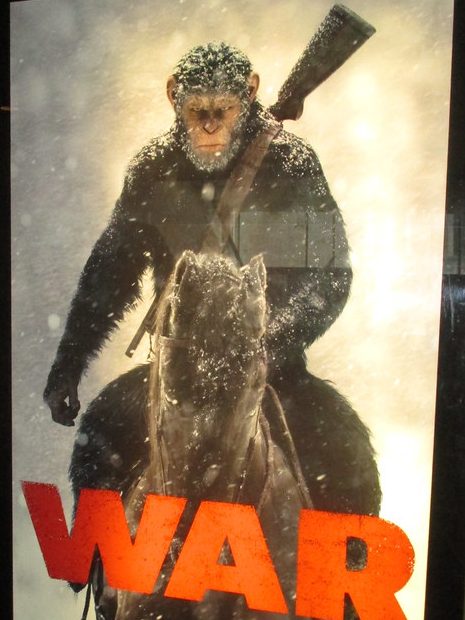
Anyway, this semi-incoherent rant of a poem was published in the current Amsterdam Quarterly, and editor Bryan R. Monte wanted one change in my submission: to change the last line’s “ape-idiot wars” to “their idiot wars”. As usual, I acquiesced. Also as usual, I’m not sure whether it is a good suggestion or not. Apes figure in a lot of my verse, as being an underlying reality of humans, essential to acknowledge, equally essential to try to control. In the context of my other work, I think I prefer “ape-idiot”.
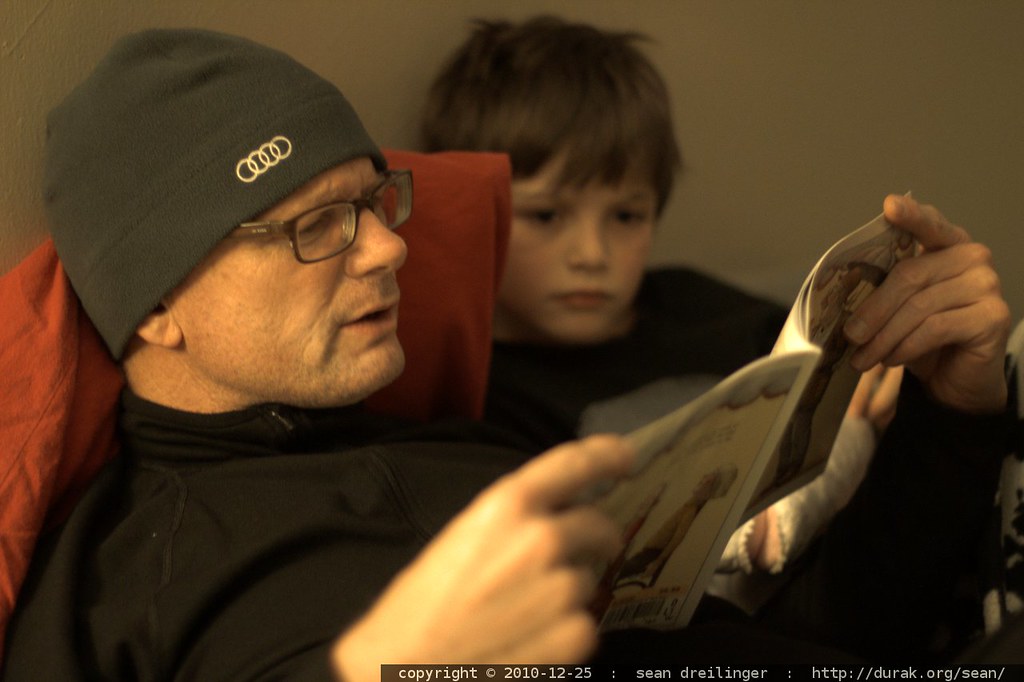
Read me a bedtime poem, said my son. So I read him this:
We say hippopotami But not rhinoceri A strange dichotomy In nature’s glossary.
But we do say rhinoceri, he said. Look it up. So I read him this:
Life is unfair For most of us, therefore Let’s have a fanfare For those that it’s fair for.
I smell a slant rhyme, he said, sniffing. So I read him this:
While trying to grapple With gravity, Newton Was helped by an apple He didn’t compute on.
My teacher says that’s not poetry, he said. So I read him this:
René Descartes, he thought And therefore knew he was. And since he was, he sought To make us think. He does.
That made me think, he said. But not feel. So I read him this:
My hair has a wonderful sheen. My toenails, clipped, have regality. It’s just all those things in between That give me a sense of mortality.
Did the earth move? I asked. Anything? Nothing moved. He was asleep.
*****
Edmund Conti writes: “This is one of my favorites today. Tomorrow I might have different ones. I like it because it makes me nostalgic for an event that never happened. (My persona has a better life than me.) It came about after I sent the following quatrain to John Mella of Light Magazine (with appropriate punning title, of course).
We say hippopotami But not rhinoceri A strange dichotomy In nature’s glossary.
John liked it and accepted it. I few weeks later he wrote and said he couldn’t use. Talking to a fellow editor, he learned there is such a plural as ‘rhinoceri.’ But now I was in love with my little piece and wanted to salvage it. But how? All I could think of was to take advantage of the poem’s failing. I came up with the idea of showing several possibly flawed quatrains to my son and having him disparage each one. And lo, the poem! I have 2 sons and when either one questions the reality, I just say it was the other one.”
Edmund Conti has many reasons for wanting his poems published—Power! Fame! Money!—but not (as you can see) as a venue for his bio notes.
Inside his penthouse office he views his Inuit artwork, carvings from a culture reduced to buy-and-hold, then scans the evening city, his bar chart on the skyline where real estate has grown his stake but cost him bonds he’s had to break – he hadn’t meant to so forsake his parents. They looked old
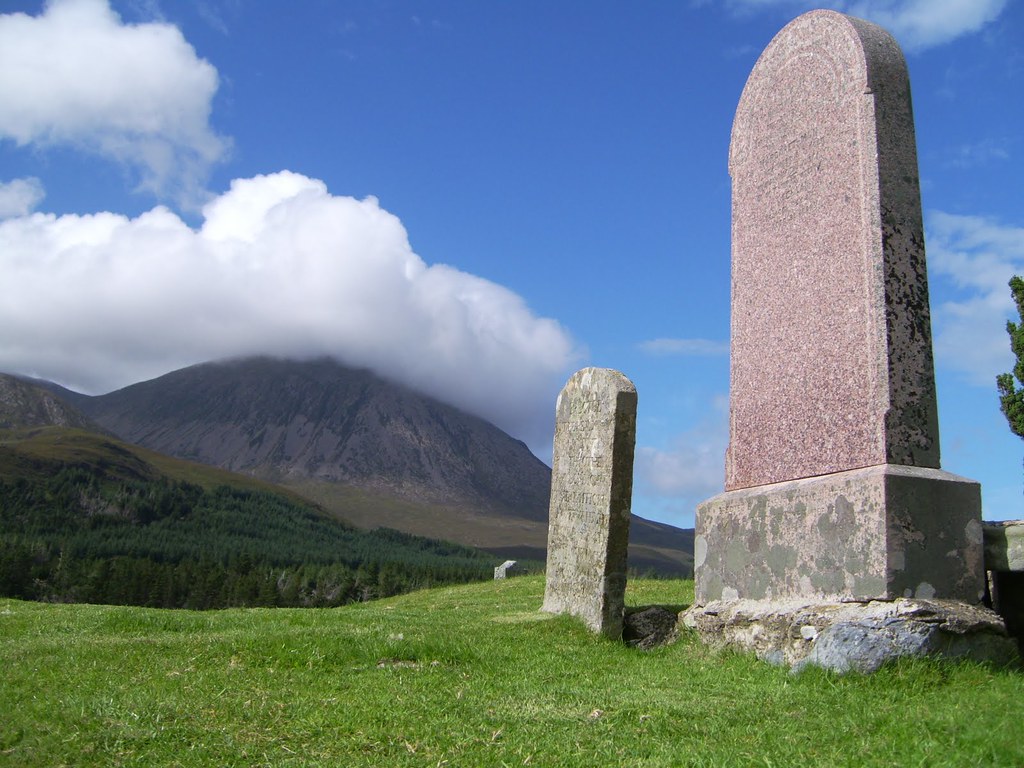
that day outside the croft house when cowed farewells were murmured as cattle lowed in wind blasts keening from the sea. His mother and his father stood waving from the porch step; next year she’d crack her pelvic bone, when winter iced that slab of stone, and never walk again. I’ll phone, and he was history.
(…)
He downs his drink and glances again at his computer – an email from a neighbour: Your father died last night. He’d lately gotten thinner and seldom had a fire on – what little peat he had was soft. Some things of yours are in the loft so mind them when you sell the croft. The city lights are bright;
he turns again and faces his metamorphic sculptures of walruses in soapstone that never will break free from rock that locks the sea waves – past fused against the future. Another gin? That’s six. Or eight? So be it. Clarity’s too late. His real estate’s no real estate – he’s left his legacy.
*****
John Beaton writes: “This is a composite. Elements of it are taken from my life but I’ve borrowed significantly from the trajectories of others, especially some of my father’s contemporaries who left Camustianavaig physically but never in their hearts. There are also aspects of the lives of some people I’ve known in business.
I worked out the form so that each stanza would start out steadily and rhythmically for six trimeter lines then build pace for three rhymed tetrameter lines and rein to a halt with a single trimeter line that has a masculine rhyme with line four. Even though they limit word-choices, I thought feminine endings for the first three lines and lines five and six were worth it for the rhythm. And I like how they form a sort of rhyme and closure gradient with lines four and seven to ten.”
John Beaton’s metrical poetry has been widely published and has won numerous awards. He recites from memory as a spoken word performer and is author of Leaving Camustianavaig published by Word Galaxy Press, which includes this poem. Raised in the Scottish Highlands, John lives in Qualicum Beach on Vancouver Island. https://www.john-beaton.com/
The day I left for Canada my mother and father quelled their tears. We held and hugged. He said, “We three may never see each other alive again.” That leaving hooked my gut and tugged.
We never did. He died and left her widowed so next time we three met was at his tomb. Our parting afterwards had been foreshadowed– the breakage of the cord that fed me from her womb.
We rode on gondolas to summits she had never dreamed of. Mountains could not buy her heart from where they’d raised the family– we shared reunions linked by contrails in the sky.
II.
Hi, Mum. It’s me, from Canada, your John. Och, John! You’ve caught me in an awful state! I know. I’m sad to hear that Henry’s gone. The one that was my brother? My memory’s not great.
He’s back now, from the War. Oh dear, they’re here. Who? They’re all against me. Who? The clique. They’ve done such nasty things. They think I’m queer. I think I’ll kill myself. So how’s the house this week?
Och this one’s grand. I moved two days ago. And Johnny helped. I think he’s at the door. I’ll have to run now, Henry. Cheerio. Don’t go. The phone is dead. The cord exists no more.
III.
A winter storm comes sweeping down the hills and, gusting, blasts umbrellas inside-out. They ring the grave like blighted daffodils and rain-black mourners hold, like buffeted peat-burn trout.
I take the tasselled pall rope, let it slide, and with my brothers ease the coffin down; it slips across the lip of a great divide and sinks what was my mother– a shuck, a wrinkled gown.
Gales carry off the prayer as it is spoken. I cast the rope adrift. The rains of Skye slap my back. Again, a cord has broken– this time my lungs won’t fill. I try but cannot cry.
*****
John Beaton writes: ” This one is autobiographical. Using the metaphor of an umbilical cord, it tells how emigration stretches and breaks family connections. The title refers to the old practice alluded to in the last stanza of holding the newborn upside down and slapping it on the back till a cry indicates its lungs have started to work and it is breathing on its own. At the end of the poem, grief prevents such a cry. The dementia dialog is taken pretty much verbatim from an international phone call to my mother. That’s the part that crystallized the abacb rhyme scheme and 55533 meter. The dialog fell into place with that pattern and I felt it worked for the rest of the poem too. I think the last two lines of each stanza, with the first being unrhymed and the second linking through masculine rhyme with line two, act like an alexandrine and combine to give a closure effect. The three-part structure represents three stages of escalating disconnection.”
John Beaton’s metrical poetry has been widely published and has won numerous awards. He recites from memory as a spoken word performer and is author of Leaving Camustianavaig published by Word Galaxy Press, which includes this poem. Raised in the Scottish Highlands, John lives in Qualicum Beach on Vancouver Island. https://www.john-beaton.com/
Unreconstructed, with unhealthy heft— the image of uncivilised great ape— a fraud who tries to win by lies and theft, a man who’d propagate by power and rape, racist extoller of his genes alone, a would-be genocidal patriarch, successful in some twilight Darwin zone, uncultured as a mugger in the park… But note, behind the thin success veneer, the shallow love of gold and gilt and glitz, gloating dismissals and the bloated sneer, the self-aggrandisement that never quits: an unloved child’s in some deep down recess, the secret of the man’s unhappiness.
*****
I can’t help feeling sorry for people who were raised so badly that they have never learnt to find security, inner peace, personal meaning. On the other hand I can’t help rejoicing when some destructive, selfish racist is exposed as a cheat and a fraud under the control of a foreign power, and is removed from positions of authority. I think of that sympathy/schadenfreud dichotomy as a healthily balanced contradiction; but then, I’m a Libra…
This sonnet (Shakespearean, being in iambic pentameter and rhyming ABAB CDCD EFEF GG) has just been published in Shot Glass Journal, an online journal of short poetry. Most of what they publish is not formal verse, but most of mine is.
Fire steals from slow decay the frame Of one who wished for us to claim This small relief:
The words are said, the ashes flown. What’s left? A weight, a shard of bone Still sharp as grief.
*****
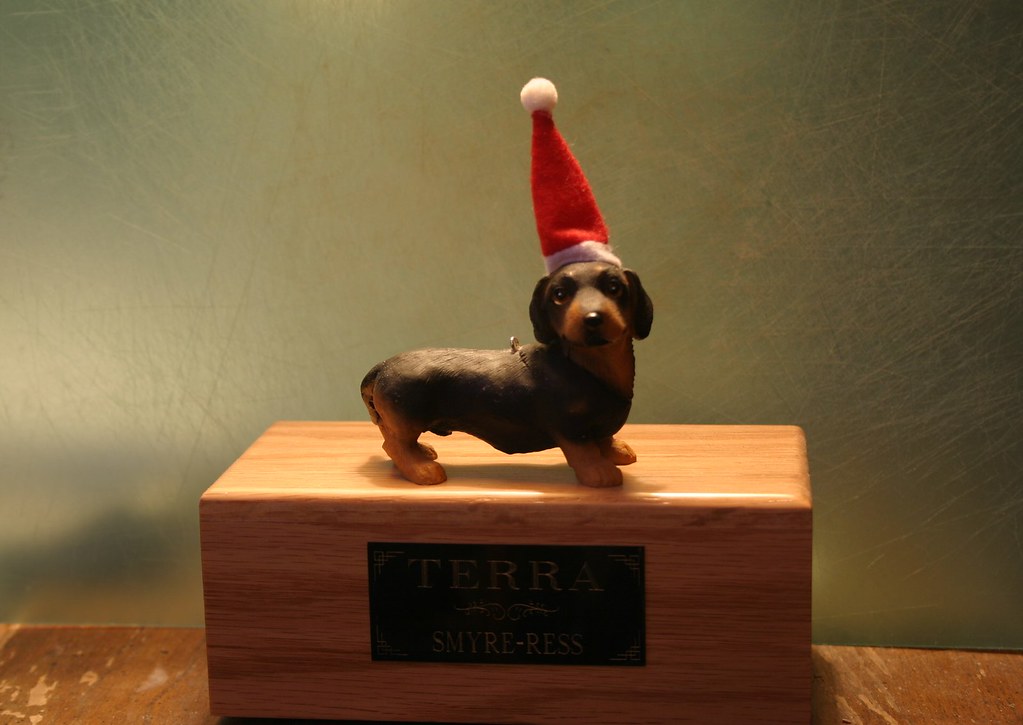
J.D. Smith writes: “This poem came about in response to the death of a very beloved and quirky dog. Though she was already 10, she was a small dog and could have been expected to live longer. Her ashes, and those of her littermate, were interred with those of my parents.”
J.D. Smith has published six books of poetry, most recently the light verse collection Catalogs for Food Lovers, and he has received a Fellowship in Poetry from the United States National Endowment for the Arts. This poem is from The Killing Tree (Finishing Line Press, 2016). Smith’s first fiction collection, Transit, was published in December 2022. His other books include the essay collection Dowsing and Science. Smith works in Washington, DC, where he lives with his wife Paula Van Lare and their rescue animals. Twitter: @Smitroverse
Amidst a sere Midwestern winter night December 1917, she’s born, A staunch Germanic woman’s child. Bedight In dearth and loss, she learns too young to mourn A mother’s death. She knows a woman must Prepare the meals, evoke good cheer, and thrust Her bitter tears inside where no one sees. She weds a Coast Guard vet and oversees His household — bears three girls, subsists on grace. And steadfast ‘til succumbing to disease, Upon her own, she wears her mother’s face.
Unwanted infant hurtles toward the light In 1944, her mam too worn And poor to greet her daughter with delight. The wealthy gent who claims the babe has sworn To sate her whims, exchange her doubts for trust. But Virgin-named, she’s Snake incarnate, trussed In greed. She flaunts her swindling expertise, Yet knows that costly baubles won’t unfreeze Her heart, or fill an absent mother’s space. And void, despite full coffers overseas, Upon her own, she wears her mother’s face.
She’s born in 1945, clasped tight Within her mother’s arms. And ne’er forlorn, This nurtured daughter dreams she’ll wed a knight Who’ll grant her nuptial bliss, and — fast foresworn To loyalty — a doe-eyed child who’ll just Love her. When falseness renders faith to dust And pregnant prayers produce no guarantees, She nonetheless adheres to memories Of Mother’s happy tales. She weighs her case, Then smiling, phones adoption agencies. Upon her own, she wears her mother’s face.
From birth, a target of her small town’s spite, She sprints through cornfields, fleeing bullies’ scorn, Hurled stones, and taunts of “freak”! Wisconsinite In ragtag 1980s garb, she’s borne Her share of tyranny. Her heart’s robust Enough to weather gibes, but grief’s the gust She can’t withstand. At forty-one, she frees Herself and downs the sleeping pills that squeeze Her breath away. Her mother deems her base Look odd, but with some rouge — an eyebrow tweeze — Upon her own, she wears her mother’s face.
Abandoned infant left upon a white Korean orphanage’s stoop, she’s shorn Of roots upon her trans-Pacific flight To Heartland serendipity. She’s torn Between identities, but must adjust: Refute all claims of foreignness. Nonplussed, Her heart aligns to these: Wisconsin cheese And apple pie. She’d always deemed “Chinese” A slight, but now she sees each buried trace Of her within her children’s eyes. And pleased, Upon her own, she wears her mother’s face.
A steadfast matron, serpent quick to tease, She’s part Korean, one-eighth Japanese, Idealist, rebel geek without a place — My post-millennial, she’s all of these. Upon her own, she wears her mother’s face.
Mindy Watson writes: “I’m probably most proud of this chant royal titled ‘Her Mother’s Face’ that narratively links the most influential women in my life, ultimately culminating in my daughter’s overall connection to her (mostly unknown) maternal lineage. It was an unconventional topic for me (as my go-to inspirations are normally bugs, science, mythology, etc. and I’ve a hard-wired aversion to delving into my lost cultural roots—Midwestern U.S. white Protestant upbringing and all that), but it just intuitively sprang from the 11-line stanza/repeated refrain/converging envoi-type structure. Humorously, the poem’s impetus was a poet e-friend of mine mentioning that this form (I’d never heard of) was the most difficult he’d ever tried and hadn’t ever conquered—so of course I took that as a dare/challenge, lol… but I ended up unexpectedly enjoying the composition process (and reminiscing about a few souls lost too soon. Also I disagree with my friend—I personally think pantoums are among the most vexing forms…”
Mindy Watson is a formal verse poet and federal writer who holds an MA in Nonfiction Writing from Johns Hopkins University. Her poetry has appeared in venues including Snakeskin, Think Journal, the Poetry Porch (where ‘Her Mother’s Face’ was first published, April 2018), Orchards Poetry Journal, Better Than Starbucks, Eastern Structures, the Quarterday Review, and Star*Line. She’s also appeared in Sampson Low’s Potcake Poets: Form in Formless Times chapbook series and the Science Fiction and Fantasy Association’s 2019 Dwarf Stars Anthology. You may read her work at: https://mindywatson.wixsite.com/poetryprosesite.
Easy enough, the people in the park, A subway addict, or some screaming child: Knock off five lines from some chance-heard remark, A tic observed, or mood or clothes gone wild.
A longer piece for loves, coworkers, friends, People you’ve bonded with, played some life game; Can’t be so flip – unless the portrait bends, Fictionalizing thoughts in formal frame.
And closer to you than your own bed mate Is, tougher yet, perspective and full view Of parents, more than threaded through your fate, They’re warp and weft, the loom, the weavers too.
So, last of all, the golden trophy shelf: That great and grand grotesquery, yourself.
… which is merely to say that writing about people has difficulties that increase as the subjects are closer to you. Technically, a Shakespearean sonnet (iambic pentameter, rhyming ABAB CDCD EFEF GG), though without a volta, that delightful twist that reverses the mood or imagery or argument. Oh well.
Originally published in The Poetry Porch, edited by Joyce Wilson.
On the funeral road, five miles beyond the farm it looms still, like a silo, then diminishes as you get close. Your sound won’t raise alarm out here. There’s none but you. The wishes of no one left alive will keep you out, or let you in. The door is probably locked anyway, closed upon itself, redoubt for certainties. Surrounding it the block foundations — reservoirs of ice and weed — still cluster, like white holes around the heart. You will not try the door — where it might lead, you cannot say. The dead have done their part, for here you are among them once again, between the legacies of grief — the snow, the boxes of white quiet, the leaving, then the watching it loom larger as you go.
Brian Gavin writes: “I like this piece because the church-image haunted (or taunted!) me for several years before I got around to giving it some context in a poem. When it finally came to the page it felt like I had paid off a debt — like I had finally given the image a chance to tell its story. The fact that this story turned out to be no story at all — just a bunch of hints and implications — seemed to fit the image.“
They trust us, and they shouldn’t: butterflies and earnestly pursuing preschoolers careen among us, prone to accidents, disasters in the making. Both of them
incapable of short-cuts, see-sawing oblivious among the negligent, convinced that we know best, who disregard how short their legs and lives are.
Some of them (the lucky and unswatted) mobilize their stubby forces to stay out of reach,
But most of them launch headlong, more afraid of being left behind or swallowed, than
of damaged wings and feelings, wedged against rude curb-stops or cupped hands –
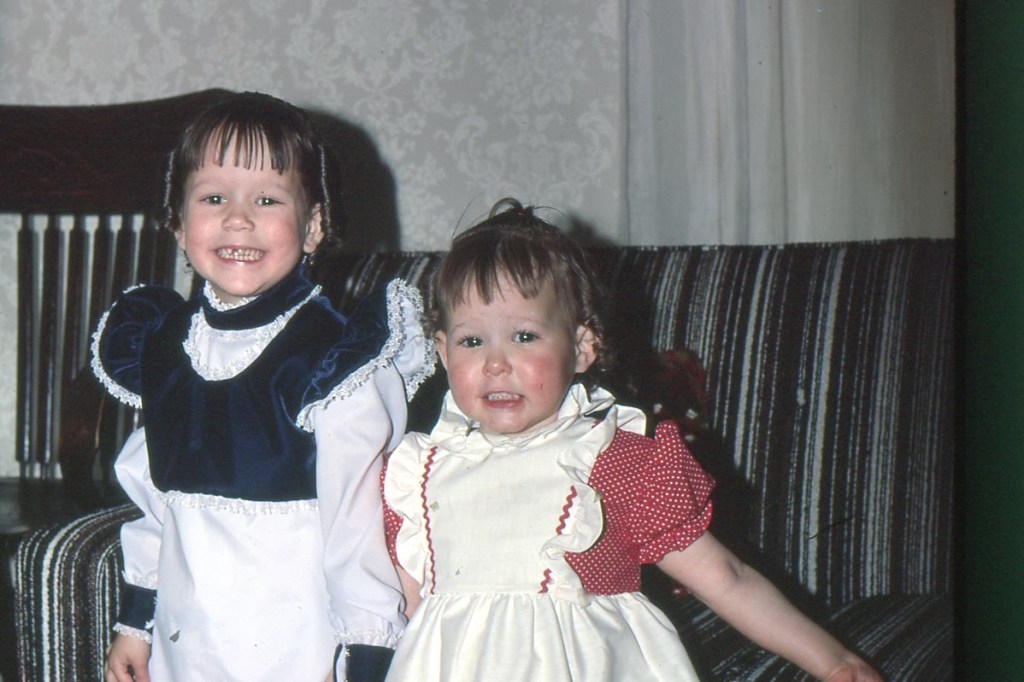
Kathryn Jacobs writes: “I am choosing The Innocent because it reminds me of what I’ve lost: of my son Raymond in particular (though he is not in the poem overtly). Ray died at 18. I am sending a photo of Ray with his twin: it’s a photo that reminds me of more Innocent days.”
Kathryn Jacobs is a professor at Texas A&M-C and editor of The Road Not Taken. Her fifth book of poetry (Wedged Elephant) appeared in Kelsay Books. Her poems have appeared in Measure, The New Formalist, Southern Poetry Anthology, Mezzo Cammin, etc. Currently she is working on a book of Dan. http://journalformalpoetry.com/