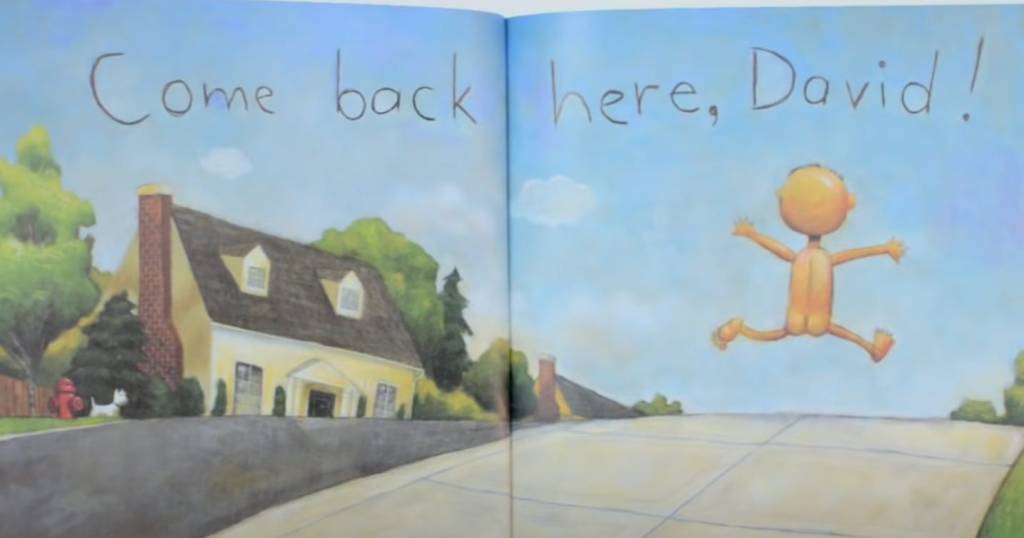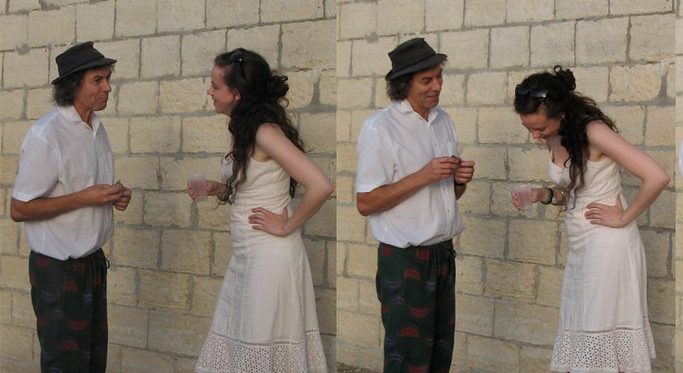
Mama never horsewhipped me or shoved things up my fanny. She wasn’t hooked on PCP and didn’t bump off Granny. Daddy never climbed in bed to open my pyjamas. He read me Charlotte’s Web instead; the bed he shared was Mama’s. In college, I did not turn tricks or date warped literati. I haven’t starved myself to sticks, joined cults, or loved John Gotti. The guy I married doesn’t drink, or French-kiss other fellers. It really makes me sad to think I’ll never write best sellers.
Melissa Balmain writes: “This is the first poem I ever published outside of a school journal–in Light, then known as Light Quarterly. Thanks in no small part to the encouragement of Founding Editor John Mella, I never looked back.”
Melissa Balmain’s third poetry collection, Satan Talks to His Therapist, is available from Paul Dry Books (and from all the usual retail empires). Balmain is the editor-in-chief of Light, America’s longest-running journal of light verse, and has been a member of the University of Rochester’s English Department since 2010.
How brashly brave, embroiled in this brief life, we chance our challenge to the unchanging gods! Strike poses, strut the strident stage of strife, take optimistic oaths against all odds.
Fearless of foes, false friends, futility, we wrack our reason to reach, undestroyed— though usually of no utility— a burst of brightness bettering the void.
*****
Although I prefer to maintain an unobtrusive persona myself, I subscribe to this philosophy of bravado existentialism. The florid alliteration suits the message.
This poem is published in the current issue of Light – thanks, Melissa Balmain and all.
Resign yourself, my heart’s delight, To me before a better offer Comes along with hair and height, A sea-deep chest, a bulging coffer.
Don’t wait for him: if love’s a song, I am the toad’s primeval croak. If love’s a wheel, then I belong Among its rusty, broken spokes.
If I mean nothing in the world To you, that nothing could be all, A version of transcendence, curled And primed to blossom from your soul.
Who else is equal to this test, This cup of gall? You’ve had a sip– In our shared life you’ll taste the rest. Come join me on this sinking ship.
*****
J.D. Smith writes: “This poem explains, if nothing else, why I didn’t go into sales. It was not written for a specific person, but it does capture a time earlier in my adulthood when I was frustrated on all fronts. The poem also partakes of self-parody. If Philip Larkin had proposed in writing, it might have gone something like what I did.”
J.D. Smith has published six books of poetry, most recently the light verse collection Catalogs for Food Lovers, and he has received a Fellowship in Poetry from the United States National Endowment for the Arts. This poem is from The Killing Tree (Finishing Line Press, 2016). Smith’s first fiction collection, Transit, was published in December 2022. His other books include the essay collection Dowsing and Science. Smith works in Washington, DC, where he lives with his wife Paula Van Lare and their rescue animals. X: @Smitroverse
Illustration: by Edward Lear for his poem ‘The Courtship of the Yonghy-Bonghy-Bo’.
God’s ruthless. Just read Deuteronomy, believers get zero autonomy: “You must kill all non-Jews in this land that I choose.” Just back then? Or still now? (Love His bonhomie!)
Luke says Jesus says: (Luke 19:27)
Christ was often less peaceful than stormy, with disciples both pushy and swarmy; to the rest he made plain if they’d not have him reign: “Bring them hither and slay them before me.”
Muhammad says God says: (Qur’an 9:5)
“Polytheists, wherever you find them, you should ambush and capture and bind them, and only relax if they pray and pay tax; elsewise kill them, and in the dust grind them.”
*****
Given that Jews, Christians and Muslims all claim to be worshipping the same god, the only God, the God of Abraham, it’s somewhat surprising how much time they spend fighting each other. But then, factions within the same religion have been known to slaughter each other. It seems to be something inherent in religions, especially monotheistic ones – if you believe there is only one god, your god, then everyone else’s belief is blasphemy.
Somehow these tribal religions of preliterate herders have continued to the present. They are so illogical and – despite beautiful architecture etc – so frequently violent that the best response I can think of is the mockery of limericks and other forms of light verse. That, and mourning the dead children, and supporting efforts to impose peace.
These limericks were first published in The HyperTexts, Michael R. Burch’s enormous anthology which includes extensive poetry about both the Holocaust and the Nakba, the Palestinian Catastrophe.
Forty farty arty asses Taking “Art and Humor” classes. We can easily dispense of Ten of those who have no sense of Why they’re spending time in class. Perhaps they hope the time will pass.
Thirty dirty-thinking students Driving cars with one or two dents All with New York license plates (no one comes from other states). None of them are Trappist Monks. Three of them are from the Bronx.
Twenty seven, several standing All of them aloud demanding Knowledge and some satisfaction Looking for a little action. Which brings in play some other factors: Like, the class has fourteen actors.
Thirteen thirsty knowledge seekers Most of them in hi-tech sneakers Fast-lane Yuppies causing sparks Passing Jeffs and passing Marks, Easily outclassing Freds Four of them are wearing Keds.
Nine no-nonsense neophytes New to Art and its delights Also new to thoughts of Humor Each of them a Baby Boomer. Mostly what they make is money. Eight don’t think that humor’s funny.
One remaining arty ass Thirty nine aren’t in his class. He has a strong artistic bent A witty and amusing gent But he (who is the poet) copped out, Fell between the cracks and dropped out.
*****
Edmund Conti writes: “I think was inspired by a reference somewhere to an “Art and Humor” class. And naturally I had to have students dropping out, one by one, or two by two or more. The poem immediately became a lab for rhymes and puns and whatever could go under the banner of art and humor. Just riffing mostly.”
Everyone’s naked under their clothes, everyone’s bald under their hair; hide if you like, everyone knows! Everyone sees what you’re like under there.
Everyone’s meat under their skin, everyone’s bones under their meat; we know what your outside is hiding within: hiding will always end in defeat.
So banish the words and censor the book, draw little clothes on the cartoons for kids; everyone knows where your dirty eyes look, everyone sees that your life’s on the skids.
This poem was a response to the news out of Florida that elementary schools are being forced to draw clothing on cartoon characters in children’s books if the printed images show nakedness of either front or back. The right-wing nutcase group ‘Moms For Liberty’ is causing the trouble. This link https://popular.info/p/pressed-by-moms-for-liberty-florida gives details and shows some of the results. Incidentally, one co-founder of the Moms for Liberty group is Bridget Ziegler. Apparently she and her husband Christian Ziegler had sexual threesomes with another woman; and when Bridget backed out of a planned threesome event in October 2023, Christian went along anyway; the third party declined sex, saying she was in it more for Bridget; so Christian raped her. The woman then filed a complaint with the police. Why is it that the hysterically over-moral types seem to be the ones causing most of the problems?
If you can make her laugh, that’s half the battle, Especially if she’s married to a bore; If you can make her glad to be your chattel, Yet treat her like a lady, not a whore; If you can undo bra-straps single-handed While murmuring enticements in her ear; If you can make her think you’re being candid When telling her just what she wants to hear; If you, my friend, can easily persuade her To sample things she’s never tried before, Or if she sighs with pleasure when you’ve laid her, And smiles as you sneak out by the back door; If you can tolerate her endless prattle, (And never tell her “Darling, get a life”), Her gossip and her foolish tittle-tattle— Then you’re the bastard who seduced my wife!
*****
Brian Allgar writes: “Written with a particularly amoral friend of mine in mind, although I am glad to say that the narrator is not me.”
Brian Allgar was born a mere 22 months before Adolf Hitler committed suicide, although no causal connection between the two events has ever been firmly established. Despite having lived in Paris since 1982, he remains immutably English. He started entering humorous competitions in 1967, but took a 35-year break, finally re-emerging in 2011 as a kind of Rip Van Winkle of the literary competition world. He also drinks malt whisky and writes music, which may explain his fondness for Mendelssohn’s Scottish Symphony. He is the author of “The Ayterzedd: A Bestiary of (mostly) Alien Beings” and “An Answer from the Past, being the story of Rasselas and Figaro”, both available from Kelsay Books and Amazon.
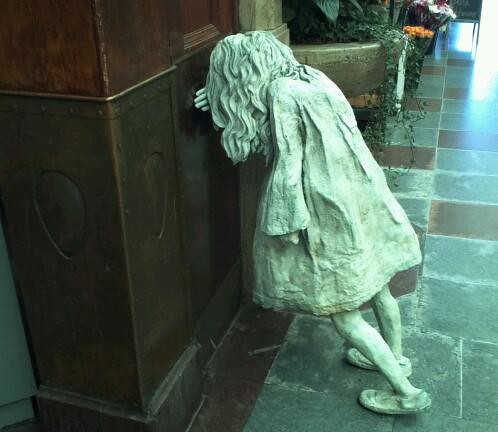
It’s footwear that I recognise not faces but that’s no surprise: I don’t look up, they don’t look down except occasionally to frown then look away and hurry on and moments later they are gone. There’s city Oxfords, polished, black, worn by the older, banking pack, and Converse sneakers for the lads, whose work is fabricating ads. The women, they too, dress that way: I rarely see high heels today. A constant stream of passing feet flows by me on this busy street while I sprawl here, small in my shawl, and ask, do I exist at all?
*****
Richard Fleming writes: “During my early life I wrote non-rhyming verse, having been conditioned to believe that rhyme and metre were old-fashioned and therefore to be avoided: the last thing a young person wants is to be thought of as old-fashioned. I was also prejudiced against humorous verse: my enjoyment of it was something of a guilty secret as my contemporaries all wrote dark, navel-gazing, stream-of-consciousness nonsense. During Covid lockdown I found myself with time to reevaluate these blinkered views and finally embraced my love of nonsense verse. I set myself a goal of writing a light-hearted rhyme a day for the duration of lockdown, to assuage boredom, but once I had established a routine, I just kept on writing a bit of rhyming verse each day. That was more than a thousand days ago and the rhymes just keep rolling out, one per day on Facebook, often inspired by the quirky images I find online but frequently the verse bubbles up of its own accord and I have to seek a suitable accompanying image. As you might image, I now have an embarrassment of poems that, like the mayfly, live for, at most, one day and are gone. There’s no obvious long-term home for them.”
Richard Fleming is an Irish-born poet (and humorist) currently living in Guernsey, a small island midway between Britain and France. His work has appeared in various magazines, most recently Snakeskin, Bewildering Stories, Lighten Up Online, the Taj Mahal Review and the Potcake Chapbook ‘Lost Love’, and has been broadcast on BBC radio. He has performed at several literary festivals and his latest collection of verse, Stone Witness, features the titular poem commissioned by the BBC for National Poetry Day. He writes in various genres and can be found at www.redhandwriter.blogspot.com or Facebook https://www.facebook.com/richard.fleming.92102564/
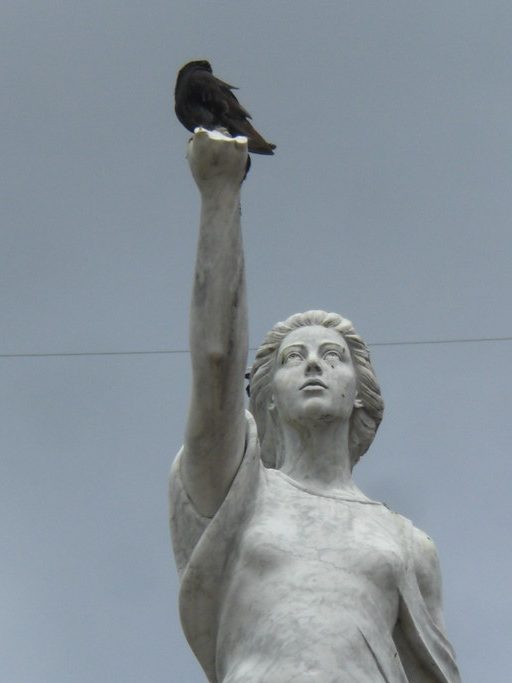
It doesn’t caw or hunt or fly. It can’t peck anybody’s eye, or even grow a single lousy feather. One-clawed, no match for any tom, it’s stranded on a leafless palm, regardless of the season, time or weather.
Yet what’s the bird that, all alone, sticks up for you when gibes have flown and you don’t care to verbalize or linger; when someone’s mocked you to your face or cut you off or swiped your space – what bird? The one that moonlights as a finger.
*****
Melissa Balmain writes: “I’m pretty sure this would have been the Sphinx’s riddle if she had guarded the Brooklyn Bridge.”
Melissa Balmain’s third poetry collection, Satan Talks to His Therapist, is available from Paul Dry Books (and from all the usual retail empires). Balmain is the editor-in-chief of Light, America’s longest-running journal of light verse, and has been a member of the University of Rochester’s English Department since 2010. She will teach a three-day workshop on comic poetry at the Poetry by the Sea conference in Madison, CT, in May 2024.
One sunny morning, strolling in my garden, I stumbled, and my foot crushed something’s head. “Me dammit!” I exclaimed, “I beg your pardon”, Looked down, and saw my Serpent lying dead.
Now this was most vexatious, for I’d planned That this poor snake would implement my scheme To give my little friends a helping hand, And lead them gently from their childish dream.
The Serpent was supposed to tempt the couple With luscious fruit that Eden’s trees bedecks; My chosen agent, sinuous and supple, Would lead the pair to knowledge – and to sex.
Omniscience can have its limitations, And even Godly schemes may gang agley. I’d once envisaged teeming populations, But this, perhaps, was better, in its way.
No Spanish Inquisition, no Crusades, No slaves, and no Industrial Revolution, No mining sites where once were leafy glades, No factory chimneys belching out pollution.
No nation-states, no border wars to settle, No Holocaust, no tribal genocide, No Rap, no Hip-Hop, Punk or Heavy Metal, No hamburgers with coleslaw on the side.
No guns, no bullets, no demented shooters, Since nothing could be made, except of wood; No mobile phones (thank Me!) and no computers … I looked on all of this, and found it good.
Yet what of those who should have lived hereafter? No Homer, Shakespeare, Mozart, Botticelli? No P. G. Wodehouse? (I was fond of laughter, Though, being God, I didn’t have a belly).
Descendants all, but only if they had ’em. (No Michelangelo, no Sistine Chapel?) My mind made up, I called to Eve and Adam: “I wondered if you’d care to try an apple?”
*****
Brian Allgar writes: “As a devout atheist, I felt it my duty to shed some light on the truth behind the Creation myth.”
Brian Allgar was born a mere 22 months before Adolf Hitler committed suicide, although no causal connection between the two events has ever been firmly established. Despite having lived in Paris since 1982, he remains immutably English. He started entering humorous competitions in 1967, but took a 35-year break, finally re-emerging in 2011 as a kind of Rip Van Winkle of the literary competition world. He also drinks malt whisky and writes music, which may explain his fondness for Mendelssohn’s Scottish Symphony.