Tag Archives: mortality

R.I.P. Anthony Watkins – untitled poem

Log some star date or another

All systems are failing
shadows flicker around
the darkened room

There is no captain
to report to, I am he.

Lost among the leaves.

*****

Poet, author, editor, publisher and digital creator Anthony Watkins passed away this week after a long illness. I knew him only through his creation of Better Than Starbucks, the wonderfully broad tent poetry-fiction-and-interviews magazine that came out monthly and provided for writers of all styles. It was a generous and inclusive publication, well reflective of its creator.

The poem above is one of the last messages posted by Anthony Watkins on his Facebook page, as everything was winding down.

Photo: “Hubble’s New Eyes: Butterfly Emerges from Stellar Demise in Planetary Nebula NGC 6302” by NASA Goddard Photo and Video is licensed under CC BY 2.0.

Using form: Triolet: Susan McLean, ‘In Arcadia’

We hadn’t pictured paradise
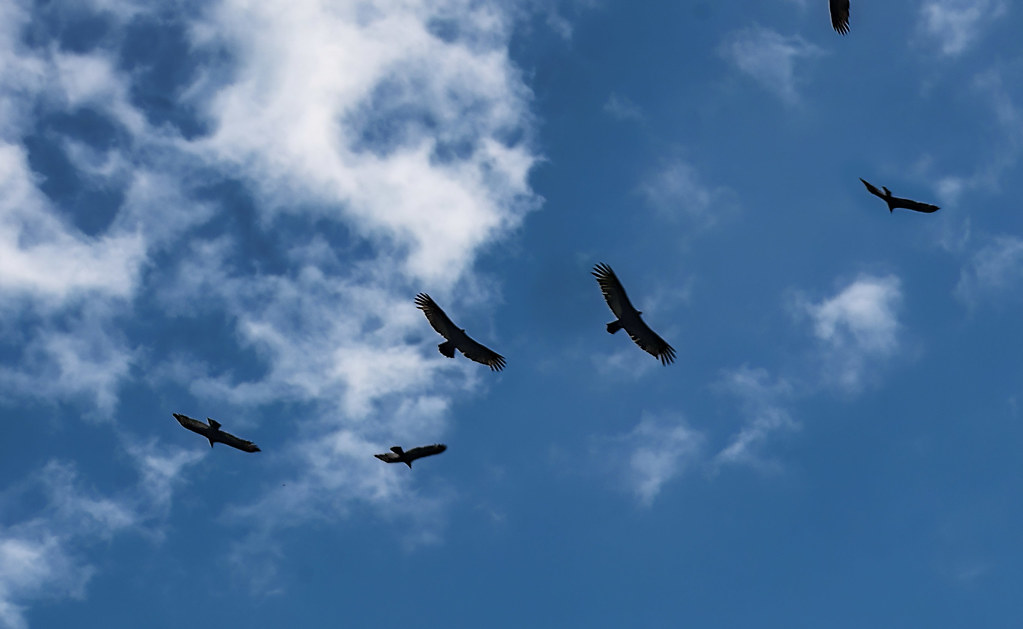
with vultures circling overhead.
Edenic lushness has a price
we hadn’t pictured. Paradise
seems changeless, but its clock’s precise.
“It’s feeding time,” the watchers said.
We hadn’t pictured paradise
with vultures, circling overhead.

*****

Susan McLean writes: “This triolet was inspired partly by the Latin phrase “Et in Arcadia ego” (which means “I too [am or was] in Arcadia”), partly by the famous Nicolas Poussin painting in which that phrase appears on a tombstone surrounded by gawking Arcadian shepherds, and partly by a family trip to Florida at Christmas, to celebrate my parents’ sixtieth wedding anniversary. Arcadia, a region in Greece, was made famous by Vergil in his Eclogues as an idyllic rural land mainly populated by shepherds. “Arcadia” thus came to be associated with a relaxed bucolic paradise. Yet the Latin phrase reminds us that no earthly location is immune to death.

“In contemporary America, one of the locations associated with tropical warmth and pleasant leisure is Florida, where many Americans from more northerly locales go to vacation or retire. While my family was staying at a rented home near Sarasota Bay, on the highway we often passed signs for Arcadia, Florida, which was not far away. The weather and the natural beauty of Sarasota came up to our expectations, but we did not foresee that every time we went outside we would see vultures circling overhead. Given our parents’ ages, the vultures were a poignant reminder of mortality.

“A triolet is one of the shorter French repeating forms. One of the challenges it presents is how to vary the repeated lines so that they do not become boring, usually done by adding slight changes to the punctuation of those lines. This poem originally appeared in Able Muse and later in my second poetry book, The Whetstone Misses the Knife.”

Susan McLean has two books of poetry, The Best Disguise and The Whetstone Misses the Knife, and one book of translations of Martial, Selected Epigrams. Her poems have appeared in Light, Lighten Up Online, Measure, Able Muse, and elsewhere. She lives in Iowa City, Iowa.
https://www.pw.org/content/susan_mclean

Photo: “Road Trip Santa Clara to Camajuani via Central Road of Cuba (banda Placetas) passing through La Movida, Pelo Malo, Manajanabo, Miller town and Falcon city. Villa Clara province, Cuba, November 2023” by lezumbalaberenjena is licensed under CC BY-NC-ND 2.0.

Johnny Longfellow, ‘Epitaph’

If you’re dead, an’ ya’ ain’t on a mantle,
Then ya’ go in a hole in the groun’.
From a slab to a coffin, ya’ don’t move very often.
When you’re dead you’re jus’ lyin’ aroun’. 

If you’re dead, an’ you’re hauled to a graveyard,
A few fam’ly ‘n’ friends might arrive,
An’ the buzzards ‘ll buzz up above ya’ because
When you’re dead you’re no longer alive.

If you’re dead, there’ll be those who hol’ Judgment—
Say your Soul is in Heaven or Hell;
But Whatever is True (an’ regardless o’ you)
When you’re dead, that’s their story to tell.

If you’re dead . . . well, ain’t none o’ that matters.
It’s the livin’ who toss in the dirt.
What remains goes to rot. An’ though like it or not
When you’re dead ya’ don’t feel any hurt.

*****

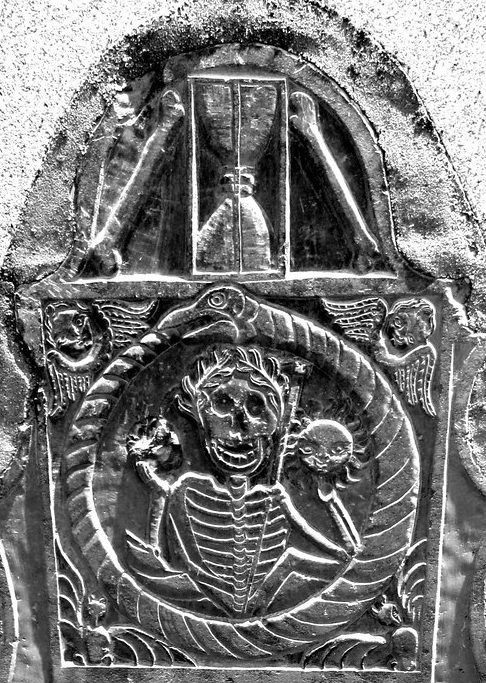
Johnny writes: “Inspired—in part, at least—by my interest in gravestones of the Colonial era, ‘Epitaph’ utilizes a second person voice. A tip of the hat, if you will, to the ‘As I am now, so you must be’ subgenre of epitaph, wherein the dead address the living to forewarn of Death’s inevitability. Seven stanzas too long at one point, I chopped it down to four. Reason being, the three stanzas I rather begrudgingly removed were written in a confessional mode that conflicted not just with the second person voice, but also with the Everyman vibe that I began sensing the Muse actually desired from me, along with greater brevity. Having made such cuts, I shelved the piece, thinking I’d revisit it in the future with a fresh(er) set of eyes. But then, a recent, troubling news event and its subsequent media fallout brought ‘Epitaph’ to the forefront of my mind. So, on a whim, I posted the abridged version on Facebook. To my pleasant surprise, that led to Robin querying me about its availability, and ultimately, its appearance here at Form in Formless Times.”

Johnny Longfellow is a poet from Massachusetts. His work has appeared in The Five-Two, The Literary Hatchet, Misery Tourism, Punk Noir, and other fine literary venues. You can learn more about both him and his work at Heeeeeeere’s Johnny . . . Longfellow, that is.

Photo: “Susanna Jayne” by In Memoriam: Mr. Ducke is licensed under CC BY-NC 2.0.

https://newenglandfolklore.blogspot.com/2022/03/the-grave-of-susanna-jayne-bats-angels.html

Lindsay McLeod, ‘Harvest’

There’s just so many nows in forever
if we’re apart or together as one,
we’d better cherish them all if we’re clever
make the most of our time in the sun,

‘coz it’s where we are led whether up or in bed
there’s one funeral we all must attend,
because somewhere ahead the sea kisses the sky
and the name of that place is the end.

*****

Lindsay McLeod writes: “‘Harvest’ was made as an end piece for the second book I wrote for my daughter.” It was originally published in Grand Little Things.

Lindsay McLeod currently lives by the sea on the Southern edge of the world, where he trips over the offing every morning. He has been published here and there in the past and won a few awards. He has started messing about with words again lately after a few necessary years away. You might expect him to know better by now, but oh no.

Photo: “Another Timor Sea sunset from Casuarina Beach, Darwin, NT, Australia” by Geoff Whalan is licensed under CC BY-NC-ND 2.0.

Sonnet series: Jean L. Kreiling, ‘My Brother’s Last Year’

  1. What My Brother Says

He says I’m not myself, but in my eyes
and in my arms, he is. I hug him, feeling
that he’s lost weight, but brother-warmth defies
that deficit. Disease and “cure” both stealing
small pieces of him, he has had to quit
his role as family cook, and he can’t drive.
But he retains his reason and his wit,
so much so that it seems clear he’ll survive;
they say he won’t. He says his life’s been great,
though certainly too short. He still stands tall
and truthful: he unblinkingly looks straight
ahead, says what he sees, and leads us all.
He looks thin, but he always has been slim.
He says I’m okay, mostly. He’s still him.

  1. What Looms

It’s always there: a cloud—no, more than that,
a monstrous weight, insistent, ugly—no,
invisible, but foul. Its habitat
is everywhere; there’s no place he can go
to break away from its unfailing grip
and find a self not poisoned by his own
insidious insight, where he can strip
his days of its unnerving undertone.
His daughter’s funny story makes him chuckle,
he briefly cares about a football game,
but you can almost see his psyche buckle
again as deathless facts and fears reclaim
their sure dominion, making him aware
again of all that looms. It’s always there.

  1. Walking with My Brother and His Wife

They’re holding hands, as they so often do,
as we three walk a path in woods behind
their house, our sneakers swishing through
mid-fall’s crisp russet leaves. This path will wind
predictably through acres of old trees
and end at their backyard. Along the way,
we talk of plans, the weather, memories;
most of their plans are now in disarray,
like scattered leaves in autumn’s chill. They stroll
as easily as if they could predict
more than this path, own more than land, control
the odds that he’ll grow old. What fears afflict
them, they defer; they face the chill unbowed.
They’ll hold hands for as long as they’re allowed.

  1. Therapy

I write these sonnets as if that might ease
my mind; it doesn’t, and these lines can’t do
a thing for him. Like stopgap therapies
that promise him another month, a few
neat poems only shuffle deck chairs, shaping
elaborations on the theme that dulls
his days with brain fog. He won’t be escaping;
he knows he’s sinking. As my brother mulls
his measureless calamity, I count
out syllables, choose metaphors, debate
rhyme schemes, and watch the icy water mount
in seas that he cannot long navigate.
I write as if I’d find breath in a word,
as if safe passage might yet be secured.

  1. Progress

It’s not the kind of progress we would hope
for; it’s the damned disease that’s making strides.
My brother’s gaining only ways to cope
with each new deficit as it divides
him further from the life that he once led—
a life he’d thoughtfully constructed, made
of love, ideas, and work. Inside his head,
the enemy destroys the cells that weighed
the sense of printed words, and so he learns
to listen to the Post; when his synapses
don’t fire at numbers anymore, he turns
the checkbook over to his wife. The lapses
disturb but don’t defeat him; he finesses
each injury as the assault progresses.

  1. Nothing

I visit him again, this time by train.
(The ten-hour drive gets tougher as I age,
but then, what right do I have to complain?
To grow old is a gift.) This may assuage
my sense there’s nothing I can do, although
a visit’s nearly nothing. Yes, I care;
that’s what my presence demonstrates, I know,
but it will make him strain for things now rare
or difficult: the teasing repartee,
a walk outdoors, shared meals and memories.
He reassures me that he feels okay,
though I watch him declining, by degrees.
I bring his favorite chocolates, as if sweets
could mask the bitter taste nothing defeats.

  1. Want

Not long before the end, he made it clear:
there was so little that he wanted—just
to stay with those he loved, not disappear
into the latter part of dust to dust.
So many of us want so much: we crave
the shiny toy, the extra buck, and more
when less would do—stuff that will never save
our souls or bodies. I knew that before
my brother’s diagnosis, and today
I can’t claim to have unlearned pointless greed.
I find, though, that it’s easier to weigh
the worth of things desired, to measure need,
to understand there isn’t much I lack.
He wanted only time. I want him back.

*****

Jean L. Kreiling writes: “My brother Bill was wise and witty and loving, and deserved a far longer life; I miss him every day. He was teased and adored by his three older sisters, he made our parents proud, and he created a beautiful family of his own.  His magnificent wife and his three devoted grown children took good care of him in the year between his brain cancer diagnosis and his death, but it was a very difficult year for Bill and all who loved him.”

This tribute to him as a series of shakespearean sonnets was originally published in Pulsebeat Poetry 11.

Jean L. Kreiling is the author of four collections of poetry; her work has been awarded the Frost Farm Prize, the Rhina Espaillat Poetry Prize, the Kim Bridgford Memorial Sonnet Prize, and three New England Poetry Club prizes, among other honors.  A Professor Emeritus of Music at Bridgewater State University, she has published articles on the intersections between music and literature in numerous academic journals.  She lives on the coast of Massachusetts.

Photo: “Holding Hands on the Hornby Separated Bike Lane” by Paul Krueger is licensed under CC BY 2.0.

Sonnet: Gail White, ‘A Visit on All Saints Day’

Hello. I’ve brought your favorite flowers again.
How is going under there, my dead?
On this side, we’re no better off than when
you walked beside us. (Yes, I know I said
the same last year.) The human race is not
improvable. Ask any saint you meet.
We’ve gone to war again without a thought.
Our leaders shuffle bribes, our heroes cheat.
Your children haven’t turned out awfully well,
but who expected it? You’re not to blame.
They’ll manage, and nobody burns in hell.
Goodbye for now. I’m always glad I came.
I make no promises about next year,
but one way or another, I’ll be here.

*****

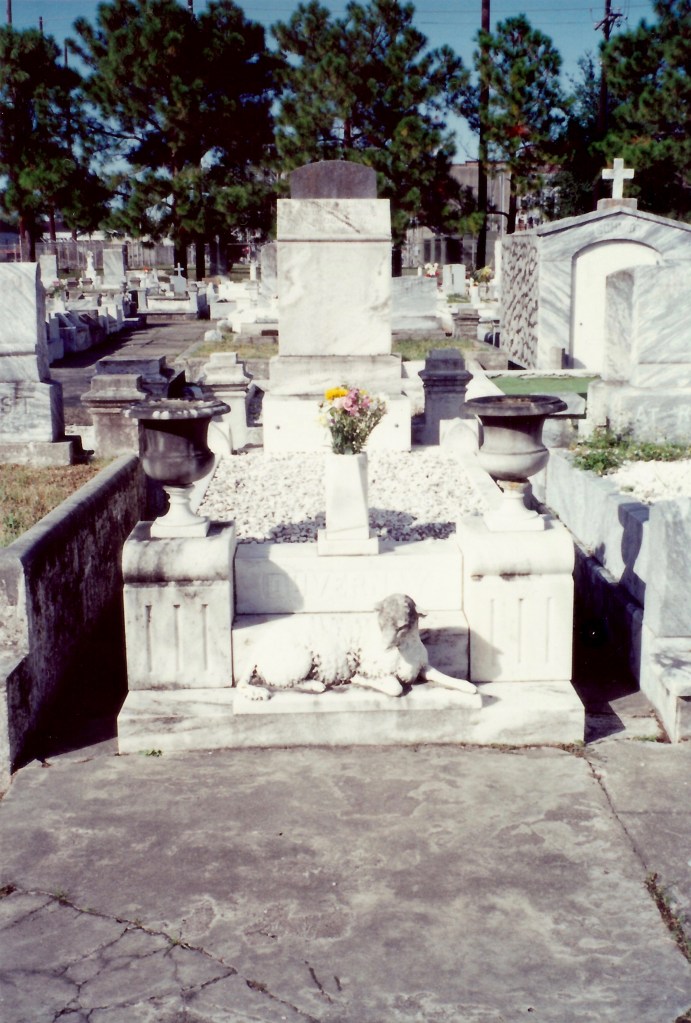
Gail White writes: “I wrote this while living in New Orleans, where the dead are buried above ground (mostly) because the city is below sea level.  All Saints Day is still a big deal, when the family tomb gets a new coat of whitewash and flowers are placed on every grave.  It’s time to reflect on family and faith and our all ending up in the same place, as I’ve tried to do here.”

Gail White is the resident poet and cat lady of Breaux Bridge, Louisiana. Her books ASPERITY STREET and CATECHISM are available on Amazon. She is a contributing editor to Light Poetry Magazine. “Tourist in India” won the Howard Nemerov Sonnet Award for 2013. Her poems have appeared in the Potcake Chapbooks ‘Tourists and Cannibals’, ‘Rogues and Roses’, ‘Families and Other Fiascoes’, ‘Strip Down’ and ‘Lost Love’. ‘A Visit on All Saints Day’ was originally published in Mezzo Cammin, and collected in her chapbook, ‘Sonnets in a Hostile World‘, also available on Amazon.

Photo: “New Orleans Cemetery DUVERHAY tomb” by Infrogmation of New Orleans is licensed under CC BY-SA 4.0.

Sonnet: Melissa Balmain, ‘Memo to Self, in Bed’

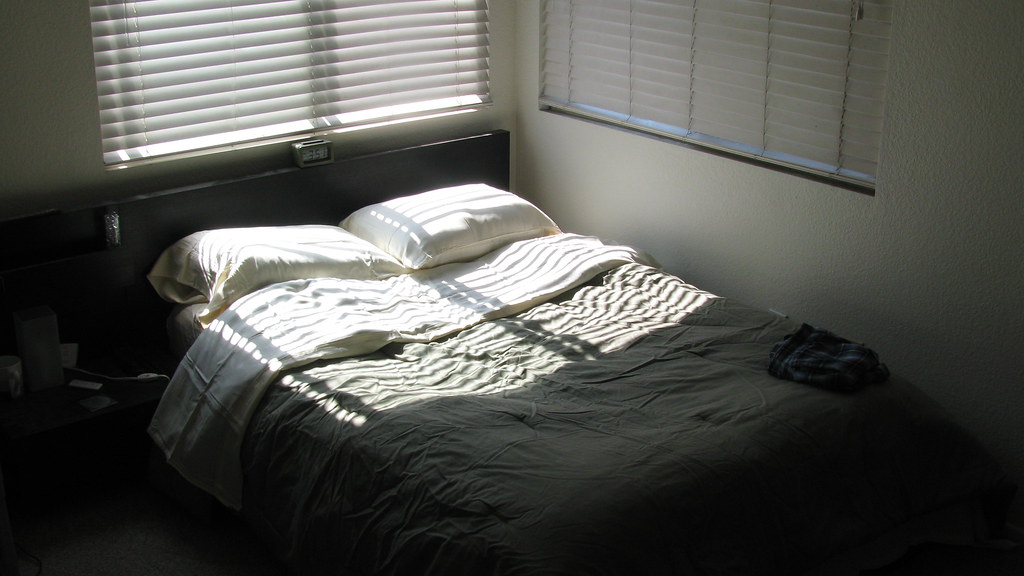
Don’t think, while you are holding him, of deadlines,
of monster Visa bills you haven’t paid,
of NPR reports on gangs and breadlines
and kooks with nukes available for trade.

Don’t think of whom you owe a three-course dinner,
of editors you wish you had impressed,
of whether you should be two sizes thinner
and twice as nice to look at when undressed.

Above all, never think of how time’s racing
toward commonplaces you’re afraid to name–
white halls, bleak calls, the foregone mortal ending;

how you or he (which one?) will soon be facing
long nights where solitaire’s the only game.
Don’t think: just wink at him and keep pretending.

*****

From Walking in on People © Melissa Balmain, 2014. Used by permission of Able Muse Press.

Melissa Balmain writes: “Like many formalist poets, I miss the Nemerov Sonnet Award (for which this poem was a finalist). The Nemerov spurred many of us to write more sonnets, and gave us terrific ones to read when the winners and finalists appeared in The Formalist and, later, Measure. Other contests have emerged to fill the post-Nemerov void, including the wonderful Kim Bridgford Memorial Sonnet Contest, sponsored by Poetry by the Sea. Still, I’d love to see the Nemerov come back somehow–the more good sonnets, the merrier.”

Editor’s comment: In addition to the sonnet’s expected rhymes at the end of each line, Melissa Balmain has thrown in a bonus internal rhyme at the beginning of the last line of each quatrain and tercet. It is quietly done, but adds lightness to a poem that is both light and dark in subject matter.

Melissa Balmain’s third poetry collection, Satan Talks to His Therapist, is available from Paul Dry Books (and from all the usual retail empires). Balmain is the editor-in-chief of Light, America’s longest-running journal of light verse, and has been a member of the University of Rochester’s English Department since 2010.

Photo: “New Bedding!” by Andrew Love is licensed under CC BY-NC-SA 2.0.

Short poem: Peggy Landsman, ‘Speech Impediment’

My every breath
An inspiration—
Breathlessness
My deathtination.

*****

Peggy Landsman writes: “About ‘Speech Impediment’: Need I say more?”

Peggy Landsman is the author of the full-length poetry collection, Too Much World, Not Enough Chocolate (Nightingale & Sparrow Press, 2023), and two poetry chapbooks, Our Words, Our Worlds (Kelsay Books, 2021) and To-wit To-woo (Foothills Publishing, 2008). She lives in South Florida where she swims in the warm Atlantic Ocean every chance she gets. ‘Speech Impediment’ was originally published in The Lyric, and a selection of her poems and prose pieces can be read on her website:  https://peggylandsman.wordpress.com/

Breathless” by eeblet is licensed under CC BY-NC-ND 2.0.

Marcus Bales, ‘Helpless’

Life is one long horrible disease.
As victim or as witness it’s the same:
There are no opportunities to seize,
And helplessness leaves no one left to blame.
The path ahead seems only downward, slick
As running water on a plastic slide,
And pausing seems to be a magic trick
That never works however hard you’ve tried.
Eventually of course that blame gets laid,
No matter what you want. A gap, a fault,
A wall, some outside force that can’t be stayed,
And you become at one with the gestalt.
Some love, some fear, some cry, some laugh to death.
You cannot talk to addicts. Save your breath.

*****

Marcus Bales writes: “This sonnet began as a set-up for a re-write of one of the terrible-pun-spoonerism poems from February 2023, and it sort of got away from me. It happens sometimes — you start out with one idea of what a poem is about and then the poem just won’t cooperate. At every line i was trying to tell the story of the alcoholic swami with cirrhosis who had been unfortunate enough to have married a woman who was impatient of inheriting, and who finally killed him when she weighed down upon the swami’s liver. As you can see, the poem was determined to have none of that, and went its own way, cleverly taking all the addiction and death for itself and leaving me with nothing I could use for my purposes. So to punish it I let it sit for a few months, hoping it would come to its senses and realize that the only way to see the light of day was to accept the purposes I had had in mind for it, but even there it was too smart for me, and kept quietly to itself until a day came when I hadn’t finished anything else. With a sigh and a shake of my head I posted it. So here it is.”

Not much is known about Marcus Bales except that he lives and works in Cleveland, Ohio, and that his work has not been published in Poetry or The New Yorker. However his ’51 Poems’ is available from Amazon. He has been published in several of the Potcake Chapbooks (‘Form in Formless Times’).

Helpless” by Scarlizz is licensed under CC BY-NC 2.0.

Richard Fleming, ‘Memento Mori’


An ambulance howls like a hurt cat;
parts traffic as Moses did the waves.
Worms burrow in awaiting graves.
A police car buzzes like a gnat.

Stuck in a jam of steaming cars,
I contemplate how life transforms
in moments. How they wait, those worms,
so patiently, for us, for ours.

*****

Richard Fleming writes: “Ambulance sirens have been part of the soundtrack of my adult life, from the troubled years in Belfast to, more recently, my relatively tranquil life on the island of Guernsey.
There’s something about the sound, like that of a modern-day banshee, that chills the blood like no other. In common with all those who love unreservedly, I live with a constant fear of loss and a keen awareness of the terrible fragility of those things that we hold dear. This short poem attempts to articulate that fear.”

Richard Fleming is an Irish-born poet currently living in Guernsey, a small island midway between Britain and France. His work has appeared in various magazines, most recently Snakeskin, Bewildering Stories, Lighten Up Online, the Taj Mahal Review and the Potcake Chapbook ‘Lost Love’, and has been broadcast on BBC radio. He has performed at several literary festivals and his latest collection of verse, Stone Witness, features the titular poem commissioned by the BBC for National Poetry Day. He writes in various genres and can be found at www.redhandwriter.blogspot.com or Facebook https://www.facebook.com/richard.fleming.92102564/

Photo: “Ambulance” by gwire is licensed under CC BY 2.0.