Tag Archives: rhyme

Marcus Bales, ‘Suddenly’

Suddenly the kids, the car,
the house, the spouse, the local bar,
the work, have made you what you are.
What doesn’t chill you makes you fonder.

Should you stay or should you go?
The thrill you’re looking for, you know,
could be right here at home, although
what doesn’t thrill you makes you wander.

If, avoiding common truth,
you dye your hair and act uncouth,
will you find your misplaced youth –
really, will you if you’re blonder?

It doesn’t matter if you’re strong
or if you sing a pretty song,
something, and it won’t be long,
will come to kill you, here or yonder.

You’re human in the human fray,
and choose among the shades of grey.
No matter if you go or stay
what might fulfill you makes you ponder.

*****

Marcus Bales writes: “This is a little more than a decade old, back when I still had a full time job. There is something looming in a life about a full time job that’s hard to escape entirely even when you’re determined to try. Must have been a bad day on the sales floor.

“This is one of those poems where a rhythm enters my mind and won’t go away until I put words to it. Of course it already HAD words to it, but I couldn’t use those. So after one quatrain it became a challenge to see how many of that refrain rhythm it was possible to make sense with. That’s actually sort of freeing, because once that becomes the challenge, it opens the poem, for me anyway, to using the randomness of the rhyme words, as they arise, to drive each stanza’s, and thus the whole poem’s, sensibility. This is a good example of how the aleatory dice of rhyme can be used to open up opportunities to say things I wouldn’t have thought of to say at all without having to work toward the rhyme word. This can be very bad for a poem, of course — one of the main ways to judge poems in meter and rhyme is on how hard it is to tell whether the poet was using the rhyme words that way or not. The goal, of course, in almost all rhyme, is to delicately decorate the poem rather than for it to be clear that the poet was merely chasing a rhyme. And when there’s a rhyming refrain line the danger is extreme.

“I remember being pretty happy with it at the time. I do like the way something seems to loom over the narrator, pressing him onward through his meditation, and providing, I hope, the reason that meditation is needed.”

‘Suddenly’ was first published in The Rotary Dial, which is now offline… but this issue, the Best of 2015, is at https://midnightlanegalleryii.wordpress.com/wp-content/uploads/2014/10/7c8e9-december15.pdf

Not much is known about Marcus Bales, except he lives and works in Cleveland, Ohio, USA, and his work has not appeared in Poetry or The New Yorker. His latest book is 51 Poems; reviews and information at http://tinyurl.com/jo8ek3r

Photo: “Decisions decisions ..” by monkeywing is licensed under CC BY 2.0.
Ekphrastic SF poem: Simon MacCulloch, ‘Rocket Ride’

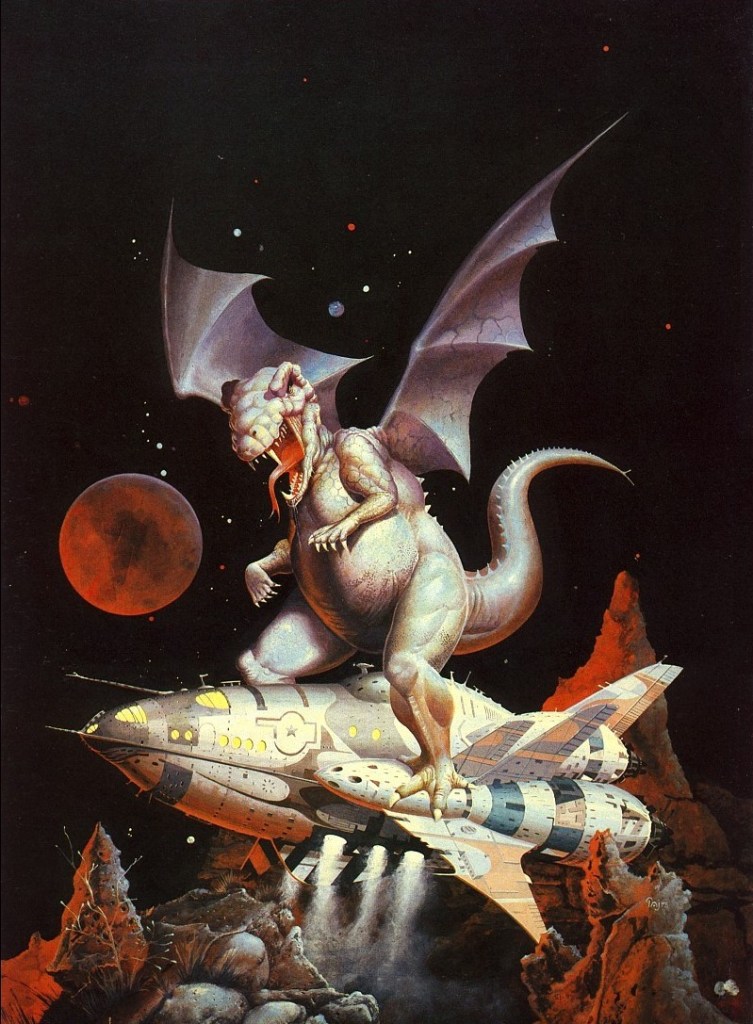
A dinosaur straddles a rocket
And whether the pilot within
Was trying to launch it or dock it
To finish a trip or begin,
It looks like a fight that the dinosaur might
By weight and ferocity win.

But how did it mount there? Its wings
Though bat-like are really too small
To soar to the perch where it clings
Indeed, to get airborne at all
It better hold tight as the rocket takes flight
For if it slips off it will fall.

The monster can only have boarded
The spaceship when close to the ground
(Its huge-muscled hind legs afforded
The strength for a crouch and a bound)
And as it gains height in the star-speckled night
It will squat, legs and tail firmly wound.

A rodeo cowboy! Each buck
Of boosters a challenge to greet!
A contest of power, skill, luck
To see if a lizard can beat
This beast that takes fright at the terrible sight
Of a dragon that thinks it’s in heat.

For that is the heart of the matter:
This brute who bears down from above
Will scrabble and buffet and batter
Then, spent, wrap as close as a glove
With licks to invite its cold mate to requite
Its misallied dinosaur love.

*****

Simon MacCulloch writes: “Rocket Ride was inspired by Peter Andrew Jones’s book cover painting for The Second Experiment (Granada Books, 1975); the poem was first published in Aphelion.”

Simon MacCulloch lives in London and contributes poetry to a variety of print and online publications, including Reach Poetry, View from Atlantis, Pulsebeat Poetry Journal, Spectral Realms, Black Petals and others.

Image © Peter Andrew Jones 1975


Using form: Odd Sonnet: Brian Bilston, ‘Neither Rhyme Nor Reason’

To make poems rhyme can sometimes be tough
as words can seem to be from the same bough,
yet each line’s ending sounds different, though,
best covered up with a hiccough or cough.

Was this upsetting to Byron or Yeats?
Dickinson, Wordsworth, Larkin or Keats?
Did they see these words as auditory threats?
Could they write their lines without caveats?

What does it matter when all’s said and done
if you read this as scone when I meant scone?
It’s hardly a crime. There’s no need to atone:
language is a bowl of thick minestrone.

So mumble these endings into your beard –
this poem should be seen, rather than heard.

*****

Brian Bilston is a poet who knows it. He writes about the human condition, relationships, and buses. Agent: Jane Finigan (email: info@lutyensrubinstein.co.uk)

Photo: Brian Bilston, Facebook

Nonce form: RHL, ‘Buccaneer’

These are the waters of the buccaneer–
they live large lives and lounge around with liquor,
floating on waters calm, gin-clear,
their risks outrageous and their thinking thin,
alert to bargain and to dicker
and not averse to sin–
a life erratic.

The time of storms starts… ends… another year
has gone by, always it seems quicker–
thoughts of a distant home fade, disappear–
beard covers sunken cheeks and chin
and there’s no comment, jibe or snicker,
only a rueful grin,
wry, enigmatic.

There’s no reflection or confession here,
for there’s no use for church or vicar.
Security is in the bandolier;
here, courts and coppers don’t look in,
the flame of justice can no more than flicker.
More feared is the shark’s fin:
steady, emphatic.

But years creep up–ears deafen and eyes blear–
dry stone gets harder and wet walkways slicker,
and friends go out upon a bier.
It’s hardly worthwhile trying to begin
new quests once you’ve absorbed this kicker:
‘Really, what’s there to win?’
Change becomes static.

O pirate with your dwindling sense of cheer,
while lounging on rattan and wicker!
Though others lack your lazy lack of fear,
their fine awards, like yours, are only tin.
Enjoy your days and friends; don’t bicker:
soak in life’s warmth and din.
Be undramatic.

*****

I wrote this poem two years ago, and thought it was strong enough to get me into a good new magazine for the first time. And so it turned out… after 20 rejections, the 21st accepted it. So now I’m proud to be featured on the promo page for the latest Magma.

And about time too – after being brought up in a house called ‘Buccaneer Hill‘, by parents who started the ‘Buccaneer Club‘ guest house and restaurant, this poem was long overdue.

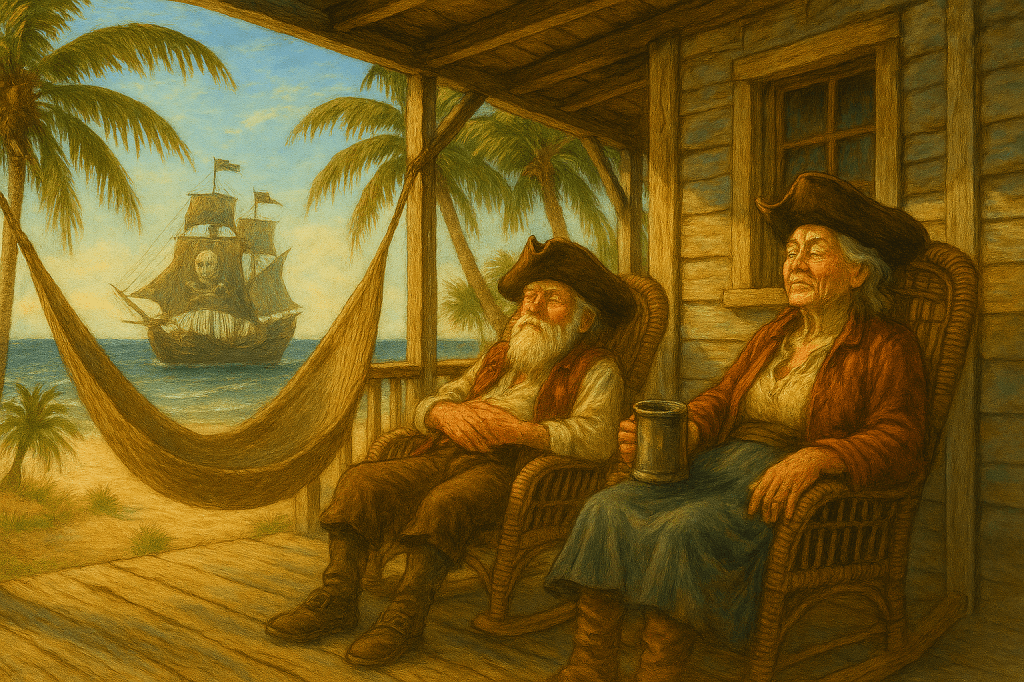
Illustration: RHL + ChatGPT

Simon MacCulloch, ‘Mouth Harp’


The doctor raised an eyebrow. He’d pronounced the sentence (death)
And expected her to die now; yet the patient still drew breath.
The woman was a smoker, and the cancer had a hold
That was strong enough to choke her. She was ninety-three years old.
Her lungs must be a sump, awash with nicotine and tar,
And with a clogged-up pump like that she wasn’t going far.

Well, any trouble breathing? Not at all, I just can’t walk!
(I see her, thick smoke wreathing, still unpausing in her talk.)
A cough, perhaps? Not really – nothing wrong that I’m aware.
The doctor starts to feel she must be using different air.
There’s nothing more to say, his grim prognosis is complete;
The science of today must now acknowledge its defeat.

Back home, I watch my mother as she settles in her chair,
Sips coffee, lights another and inhales without a care.
I pass her the harmonica, she takes it, has a blow,
And jaunty and euphonic her recital starts to flow.
The angels have their harps but death’s a word they never knew;
Down here it’s flats and sharps and death’s a song on air turned blue.

*****

Simon MacCulloch writes: “A largely true account of the somewhat surreal day on which my uncomprehending late mother was diagnosed with terminal lung cancer. I’m still quite proud of having rhymed “harmonica” without anyone called Veronica to help out.”

‘Mouth Harp’ was originally published in The Cannon’s Mouth 92.

Simon MacCulloch lives in London and contributes poetry to a variety of print and online publications, including Reach Poetry, View from Atlantis, Pulsebeat Poetry Journal, Spectral Realms, Black Petals and others.

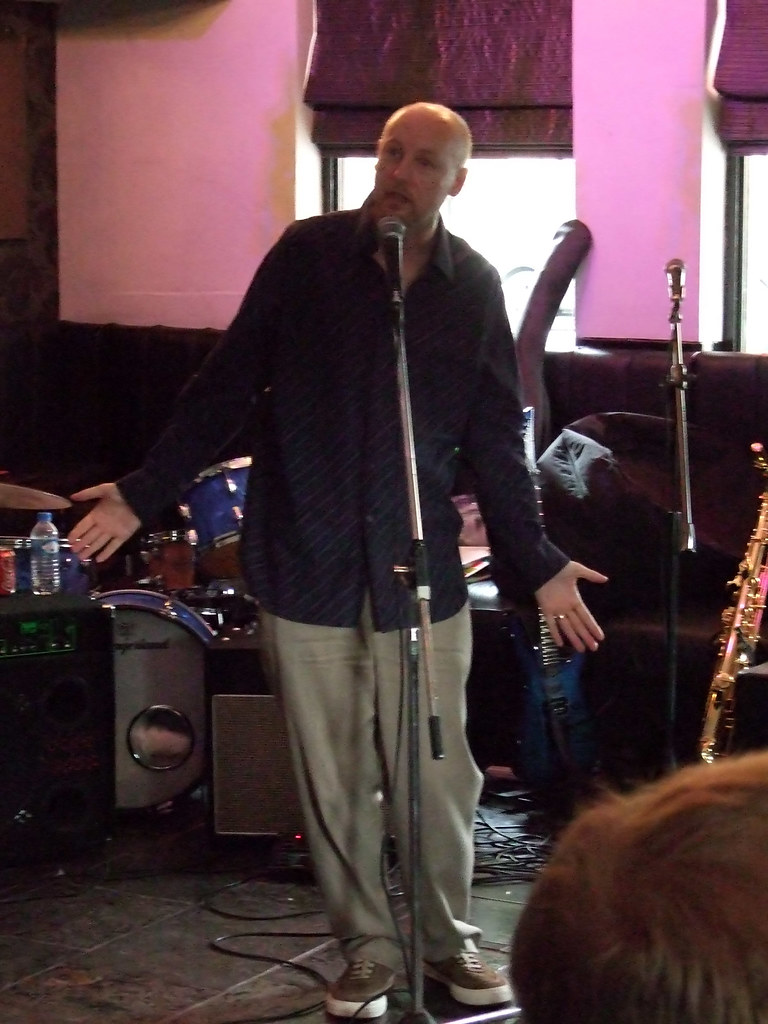
Photo: “Music Maker” by darkday. is licensed under CC BY 2.0.

RHL, ‘On a Modern “Poem”’

The thoughts are fresh, the images are good;
the style is clean, the tone both wise and terse;
the whole thing would be memorable, it would…
if only it had been expressed in verse.

*****

I’m always embarrassed if I have an idea for a poem, and I fail to find an expression of it in rhyme as well as rhythm. That’s because, of the hundreds of poems or pieces of poems in my head, all but a tiny handful are remembered because they are expressed in verse. You can remember the gist of an idea on the strength of the idea; but if you want to remember its exact expression, word for word, it’s far easier if it’s in verse. For this purpose, blank verse is better than prose; but rhymed verse is superior.

You may have lots of partial memories of Winnie the Pooh from childhood – the Hundred Acre Wood, Eeyore’s moans and groans – but actual word-for-word memory is likely to attach to the few snippets of verse in the book, such as:
Isn’t it funny
How a bear likes honey.
Buzz! Buzz! Buzz!
I wonder why he does?

My little gripe above was originally published in Light earlier this year.

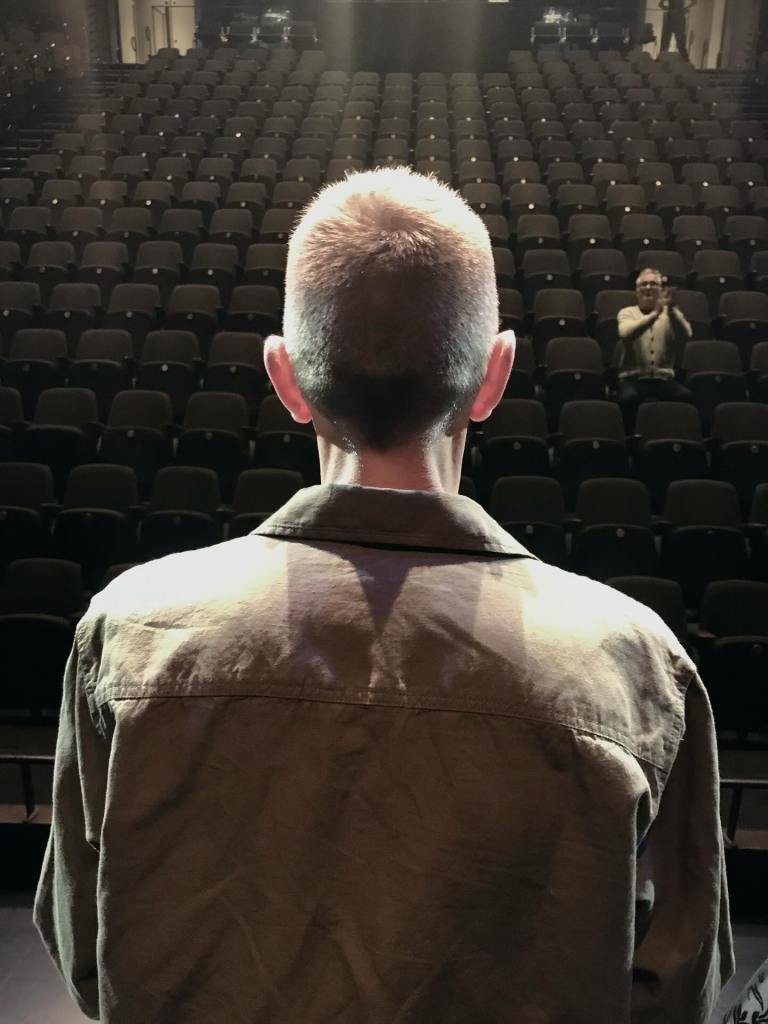
Photo: “Al declaims” by jovike is licensed under CC BY-NC 2.0.

Julia Griffin: Translation: ‘C.P. Cavafy’s Waiting For The Barbarians’

Why are we here in the agora, say?

We’ve got the Barbarians coming today.

Why are the senators resting their jaws?
Why don’t they legislate?  What about laws?

We’ve got the Barbarians coming today.
Nobody knows how it’s going to play;
If any legislate, it will be they.

Why is our Emperor out of his bed,
Sitting in state at the gate there instead,
Wearing a gorgeous great crown on his head?

We’ve got the Barbarians coming today.
They must be met in an elegant way:
Greeting their chieftain, the Emperor’s goal
Is to award him an exquisite scroll,
Giving him titles to make his eyes roll.

Why do our consuls and praetors appear
Dressed to the nines in their purplest gear?
Why are there amethysts all up their arms,
Emeralds everywhere, greener than palms?
What are those fabulous sceptres they hold,
Fancily fashioned in silver and gold?

We’ve got the Barbarians coming today.
This sort of thing’s their idea of cachet.

Why are our orators keeping us waiting,
Not, as per usual, loudly orating?

We’ve got the Barbarians coming today.
Oratory bores them.  They like a display.

Why does it suddenly seem such a mess?
Why the confusion, the seriousness?
Why is there emptiness now in the square?
Why the pervasively secretive air?

Not one of them came, and the day is now done.
People are saying the war has been won;
Hence there are no more Barbarians.  None.

No more Barbarians – what shall we do?
I’ve not come up with an answer yet.  
                                                         You?

*****

Julia Griffin writes: “I’ve always loved Cavafy’s ‘Waiting for the Barbarians’ and had the thought that it would go well into rhyme.  This somehow necessitated changing the ending a little…” Her translation appears in the current Lighten Up Online.

See also the Wikipedia article, https://en.wikipedia.org/wiki/Waiting_for_the_Barbarians_(poem)

Julia Griffin lives in south-east Georgia/ south-east England. She has published in Light, LUPO, Mezzo Cammin, and some other places, though Poetry and The New Yorker indicate that they would rather publish Marcus Bales than her. Much more of her poetry can be found through this link in Light.

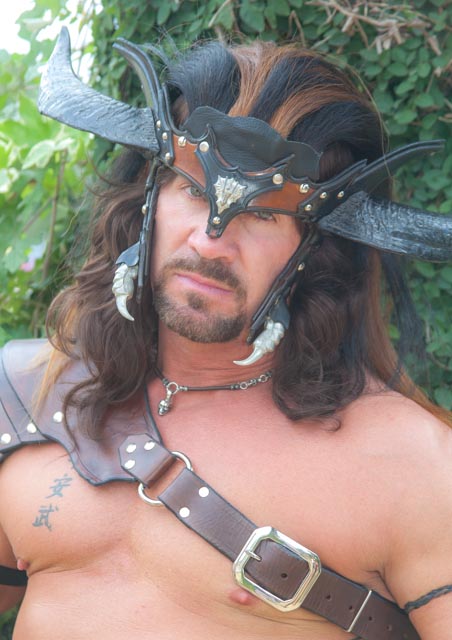
Photo: “Barbarian looking but a real cool dude (8197985443)” by Frank Kovalchek from Anchorage, Alaska, USA is licensed under CC BY 2.0.

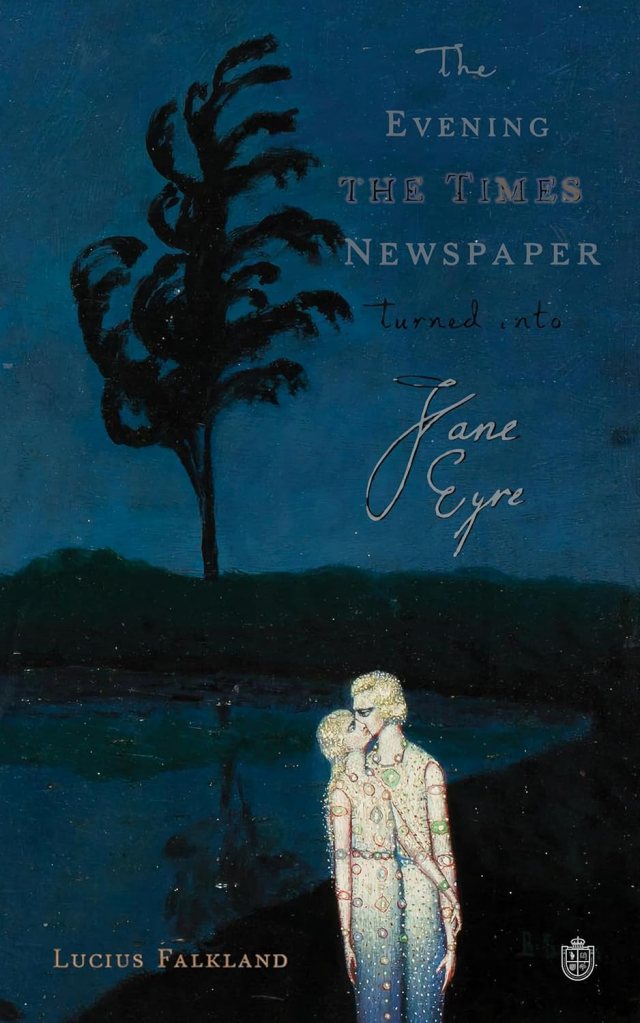
Lucius Falkland, ‘The Evening The Times Newspaper Turned Into Jane Eyre’

My life had become like a broadsheet,
The Telegraph, maybe The Times:
The financial section—prose sober and neat;
Inflation—the yen falls and climbs.
While reading this daily, and ever more jaded,
By boring discussions of wages,
My newspaper tore, the ink quickly faded:
You ripped your way up through the pages.

The suits on the concourse at Waterloo Station
All noticed my joy and my fright.
My Times underwent a divine transformation
Like someone regaining his sight.
You stood by the clock where they waited for trains,
Familiar, reserved, but with flair.
My journal of record? It went up in flames:
In a flash, I was reading Jane Eyre.

My feelings, so dulled by SSRIs
And age with the wealth of a hovel,
Without any warning felt very alive;
I was suddenly part of a novel.
My wife was now Bertha, enraged in the attic,
Your boyfriend was St. John, I guess.
Attraction was instant, inspiring, emphatic:
This burgundy-nailed governess.

The prose promptly altered: transcendent, noetic,
No longer the stark black and white;
Facts, figures, but beauty so very poetic:
A sunset one Thornfield Hall night.
I’m not quite as brooding as him, that I’m sure,
And you’re not as serious or neat.
The Times had become such a hideous bore,
All it took was for us two to meet.

Within half an hour we both felt so certain
But English restraint and control
Meant it took time to say we were clearly one person,
Each making the other one whole.
I’ve accepted my life’s not The Times but Jane Eyre
And in Brontë my future I’ll find.
Let’s hope if this moves beyond an affair
I don’t get myself burnt and go blind.

*****

Lucius Falkland writes: “This poem (first published in The Society of Classical Poets) recalls how my sometime paramour and I first met and very quickly felt that we had encountered ourselves in each other. Due to the large age gap, her friend referred to me as Mr Rochester, from Jane Eyre. This is how we started referring to each other. Her boyfriend also became known as St John thereafter. It also tries to capture the feeling, when you are deeply in love, that life seems fateful and inherently profound, as though you are just a character in a novel written by someone else. The jocular tone attempts to encapsulate the joy and absurdity of the experience.”

Lucius Falkland is the nom de plume of a writer and academic originally from London. His first poetry volume, The Evening The Times Newspaper Turned Into Jane Eyre, was published in 2025 with Exeter House Publishing. It can be purchased here.

RHL, ‘Cultural Context’

Between the Prime primeval Evil
with its shaky tale of taily snake and fruit,
and the (only medi-evil)
Renaissance and lute,
come Greeks and Romans, Arabs, and
(skirting the border
of anything that looks like law and order)
Vikings searching for new land.
From all of these
I draw my science and mythologies.
It’s all intriguing, never scary –
at least, to me;
ymmv.

*****

For those not familiar with this particular piece of slang, “ymmv” is an abbreviation for “your mileage may vary”, itself an abbreviation for the idea that different people have difference experiences and perceptions. What I like about its use here is that it provides the missing rhyme for either of the two previous lines, depending on how you say it.

‘Cultural Context’ was published recently in Blue Unicorn.

Photo: “Straight out of the Holy Land!” by One lucky guy is licensed under CC BY-NC-SA 2.0.

Odd poem: Marilyn Monroe, ‘Rhyme’

From time to time
I make it rhyme
but don’t hold that kind
of thing
against
me—
Oh well, what the hell,
so it won’t sell.
What I want to tell—
is what’s on my mind:
‘taint Dishes,
‘taint Wishes,
it’s thoughts
flinging by
before I die—
and to think
in ink.

*****

Marilyn Monroe read voraciously and wrote somewhat epigrammatically. She was friends with Dorothy Parker and Carson McCullers, and many other literary figures through her work as well as her marriage to Arthur Miller. Apart from movie scripts, she read widely: Thurber and Bemelmans, Dostoevsky and Camus, Yeats and Frost, Lewis Carroll and Harold Robbins and Rudolf Steiner and Sigmund Freud… In 1999 hundreds of her books were auctioned by Christie’s in New York. The whole list, together with more of her poems and epigrams and photos and mentions of literary friends can be found here in The HyperTexts.

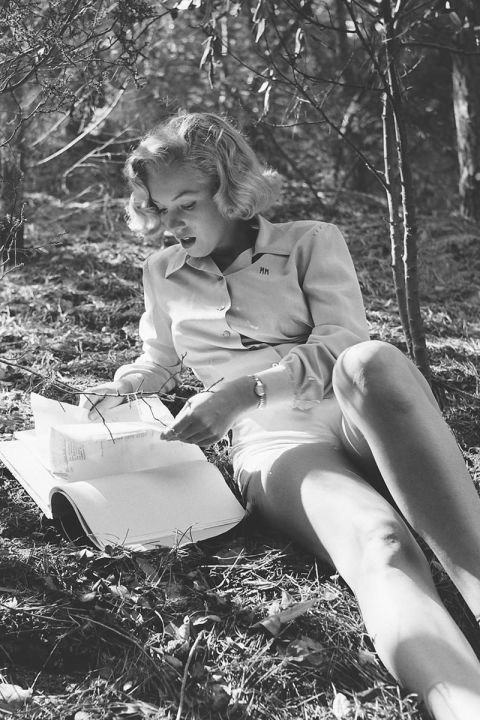
Photo: Marilyn Monroe reading in the woods, from The HyperTexts.