Tag Archives: Robin Helweg-Larsen

Calling the Poem: 12. ‘Memorableness’

That* for an idea, for an idea’s transmission.
But that isn’t poetry. Poetry’s mission
is memory – every quick trick of the tongue
to give ear-to-mouth memory,
words sung and strung
from an ear to an ear,
bearing clear repetition,
not just the idea,
but the idea’s expression,
silk wrapping the emery –
rhythm and rhyme,
form, pattern, compression,
feet, movements, beat, time,
iter-, reiter- and alliteration,
sense, nonsense and assonance, insinuation,
barbs and allusions,
hooks, jokes and confusions,
directions, inflections, creating connections…
So memory favours your chanting, reciting,
enchanting beyond all mere reading and writing –
and magicking into the mind of forever.
You’ve taken control of poetic endeavour.

*****

*The first word, “That”, is referring back to the previous poem in the e-chapbook’s sequence, dealing with the process of obtaining the thoughts and ideas for a poem. This poem shifts the focus to the wordsmithing that makes a poem word-for-word memorable, memorisable, repeatable, recitable.

Consider the pieces of verse that are easiest for you, personally, to recite… nursery rhymes, passages of Shakespeare, bits of Tennyson’s ‘Charge of the Light Brigade’, quatrains from FitzGerald’s ‘Rubaiyat of Omar Khayyam’, an Emily Dickinson or Edward Lear poem?

Then consider how many prose passages of similar length you can recite – perhaps a Bible passage or part of Lincoln’s ‘Gettysburg Address‘? There will be some, prose passages you have heard many, many times. But poetry is going to win out over prose by number of pieces, length of pieces, and accuracy, because poetry is deliberately uses a variety of tricks that make memorisation as easy as possible.

Poetry is not just the idea but also, essentially, the idea’s expression.

Photo: “Maori Chant” by pietroizzo is licensed under CC BY-NC-SA 2.0.

Calling the Poem: 9. ‘The Poem Comes’

Do you see the tigerish poem, or is it seeing you?
Sensing you, sizing up your form…
(You know that lovely feeling, warm,
When you’re stared at by somebody you like…
How creepy though, if someone you dislike…)
Perhaps it will ring true,
Perhaps the lines
Will just ring hollow…
But having offered yourself up like some bonbon,
Prayed at the shrines
Of lares and penates, Mercury, Apollo,
Ganesh and Odin, Legbas Atibon,
Liminal gods of paths and gates,
And stories, lies, poetry and fates,
You have no right, nor no ability,
To choose between rough trade or some civility;
Stared at by god or demon, grand or scum,
You’ve whored yourself to gods. Take what may come.

*****

This is the ninth in the 15-poem series of the ‘Calling the Poem’ e-chapbook that Snakeskin published a couple of years ago. (Unfortunately the Snakeskin Archives are currently down.) It reflects my sense that you can evoke artistry by invoking those unconscious inner forces that can only communicate with your conscious self through dreams and images, hints and melodies, words that well up but are not quite random…

The invocation requires two things to be successful: alertness to your changing moods, and showing respect for whatever “inspiration” you receive by writing it down, sketching it out, formalising it as appropriate – and thereby encouraging further communication.

I’m aware that all this sounds pretentious. But I think that the unconscious mind knows different things, in some ways truer things, than the conscious mind, especially about physical health, mental balance and the process of changes in life. Finding a way to tap into this – through prayer, meditation or the arts – is life-affirming for most people… but perhaps dangerous for a few.

The next poems in this series deal with things going right, going wrong, needing work…

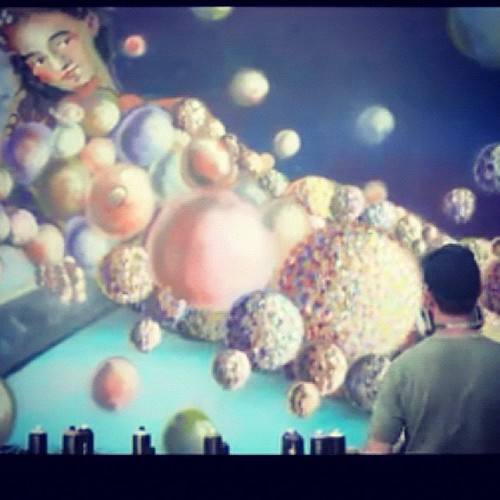
Photo: “Streetart at the state of art #art #streetart #dublin #graffiti #montana #street #woman #beautiful #poetic #inspiring #graffiti #artistic #gorgeous #wall #graff” by Romana Correale is licensed under CC BY-ND 2.0.

NSFW poem: ‘The Zeus Credit Card Company’

Homeless and eyes cast down, young Danae found
the credit card just lying on the ground.
‘Zeus Credit’… with her name on it… and it said
it had no limit. So she thought
‘Why not just try it?’ and she bought
sandals, silk underwear, a dress;
it worked… so then, why not,
a light lunch in the choicest, chicest spot.
It worked again. Its back was odd:
no legalese, just logos, ads…
‘Insert in slot for all dreams to come true.’
Tearful, she checked into Hotel Princess,
went up and had the best bath in some years,
Reading again with happy tears
‘Insert in slot for all dreams to come true’
and thought again ‘Why not?’
and put it in her slot…
in sudden stir
Zeus filled the room and her.

*****

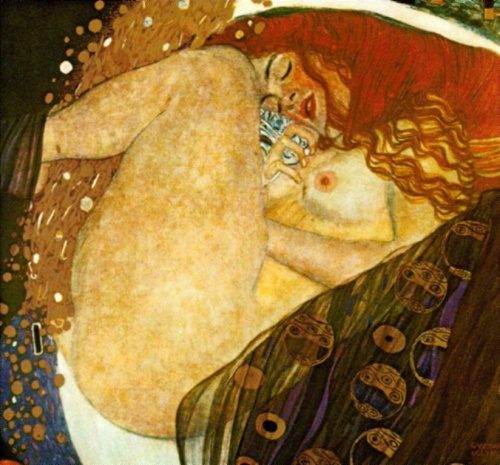
This poem, semi-formal at best, was published in this month’s Snakeskin (thanks, George Simmers!) with the accompanying Gustav Klimt ‘Danae’. I wrote the poem earlier this year but I have very little memory of doing so, and no sense of what triggered it. I put it down to the mysterious workings of the subconscious or whatever else the Muse may be.

This is an appropriate poem to post before I head into the next set of poems from the e-chapbook ‘Calling the Muse’. Is it always correct to offer up art (of any kind) that is edgy? What if the expression is sexist, even obscene? What if the work is irreligious, even blasphemous in the eyes of a believer? Is it enough to say “If you don’t like it, don’t look at it”? Is it enough to post a warning, “NSFW”?

And the Greek gods often tend toward the sexist and the licentious. Zeus is not a clean-living figure. But no one seems to object to his being depicted and popularised, even if he is a rapist. Because “that was then, this is now”? And if the Muse offers you a fresh take on an ancient rape legend, just use it because after all, the Muse must be listened to?

More on this shortly.

Calling the Poem: 7. ‘The Tiger’

That wild white wind that whips the world away –
The darkness deep and dread in dazzling day –
The light and dark that fuse with furious force –
The leaping tiger that gives no recourse –
Acknowledge, fear, that lurking tiger’s rage,
The terrifying sense of spring-taut powers,
Menacing, tail-tip twitching while it glowers,
Lethal both to ignore or to engage.
Acknowledge it, succumb: you’ve been rewarded.
And now produce – because the debt’s recorded.

*****

This is the 7th of the 15 poems of the Snakeskin e-chapbook ‘Calling the Poem’. ‘The Tiger’ and the next few poems deal with the difficulties of first begging your Muse for inspiration and then finding that the inspiration is uncomfortable – personally, socially, politically, whatever. Perhaps the inspiration isn’t what you were hoping for… but what are your obligations once you have in effect contracted to receive something unknown?

The Muse, the gods, the unconscious or however you like to think of your source of inspiration is not to be trifled with. It is to be respected if you want to stay on good terms with it and benefit from it.

The word ‘music’, by the way, means Muse-ish, ‘of the Muses’. The following is blended from passages in Wikipedia: According to Pausanias in the later 2nd century AD, there were three original Muses, three original Boeotian muses before the Nine Olympian Muses were founded: Aoidē (“song” or “voice”), Meletē (“thought” or “contemplation”), and Mnēmē (“memory”). Together, these three form the complete picture of the preconditions of poetic art in cult practice.

So song, contemplation and memory are the Muses that together drive poetry. Poetry is totally Muse-ish. Therefore poetry is inherently musical. Its music is essential.

(And it was only after writing this blog that I found that the current Oglaf comic features a tiger…)

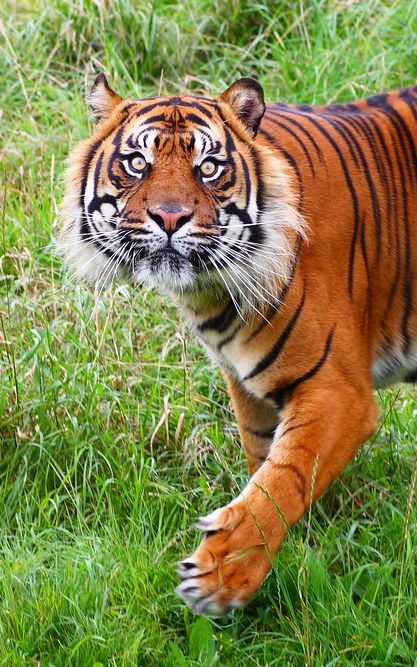
Photo: ‘Tiger’ by Captain Chickenpants is licensed under WordPress Openverse.

Calling the Poem: 5. ‘Of Muses’

When thoughts, fantastic dreams, bright images,
invade you from inside without relief –
thoughts that aren’t yours, nor come from the outside –
then, heedless of the real world’s scrimmages,
you can’t ignore, forget, refute, refuse.
Forces not you, that ride you and bestride,
when viewed with self-delusion, self-belief,
must therefore be some spirit, god, or muse.

*****

This is the fifth of the 15 poems in the ‘Calling the Poem’ series, published as a Snakeskin e-chapbook. From the awareness of the creative mood to the valuing of an idea, to the attempt at expression, to the crafting and polishing of the item, there are several stages in the creation of a piece of art. I am trying to lay out my sense of this process, and of how any individual can choose to develop it, and produce more and better art.

It’s my belief that many, many people could be the most amazing poets or other creators, but they don’t go down that path because they choose not to pay attention to the stray thoughts and images that come their way. For those of us who try to follow and develop the images, there is always the question of where they come from: from within us, or from the outside? I think humanity’s self-understanding is very primitive so far, and that there are layers under layers still to be peeled back. All our answers are best guesses, working hypotheses, delusions… but they are all we have, and valid and valuable when seen in that light.

Most of the poems in this series are semi-formal – they have enough rhythm and rhyme to facilitate their recitation, but lack the formal structures, the appropriate patterns, that can be aspired to. To me the recitation is key, because poetry is auditory in nature, in its origin, at its heart. It is almost as old as singing, which is in turn almost as old as rhythmic babbling and drumming. The poem printed on the page is not the poem itself, it needs to be read (aloud, or in your mind’s voice) in order to become the poem.

So I don’t have strong opinions on whether to capitalise the first letter of each line of a poem: it doesn’t impact the sound. But if it can help with the reading and comprehension – by not capitalising and thereby showing the flow of the sentence, or by capitalising in order to differentiate from spillover part-lines and thereby retaining the metre or rhythm – then an appropriate choice should be made. The version of this work that I am using is all first-letter capitalised. I’ve modified that today because I felt the poem was more comprehensible when the individual sentences were more clearly marked; the issue isn’t otherwise important.

And, no, I’m not impressed with concrete poems or shape poems as verse, although they can be excellent as jokes and witticisms.

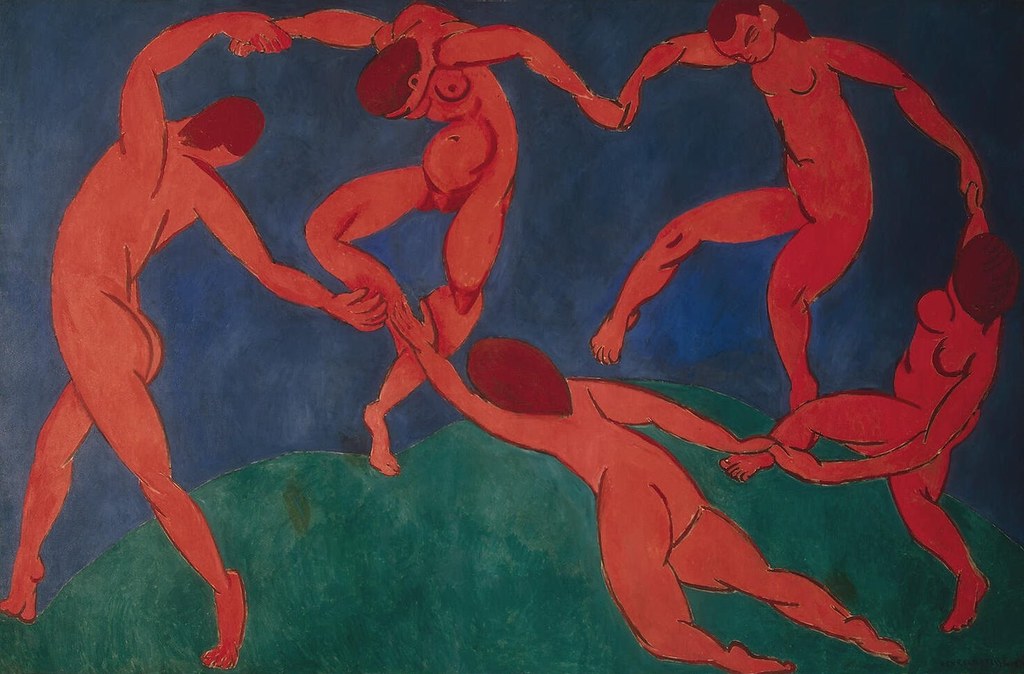
Photo of “Henri Matisse – Dance [1910]” by Gandalf’s Gallery is licensed under CC BY-SA 2.0.
Calling the Poem: 4. ‘Of Gods’

What are the gods? Are they true? Fake? Wild? Tame?
They are in you, and/or you are in them.
They are the joy that apes feel in the storm –
They are the hearth that keeps the caveman warm –
Societies the shaman’s dreams create –
They are Fertility, Love, Hunting, War,
And tools, pots, crops that clutch the god-robe hem,
And Trickster’s tales and lies, the Path, the Door…
Conflicting aspects flesh the human frame,
Demand obedience to some inner Law
To which no individual can conform.
Changing and arguing, they made Rome great
Before the MonoFossilizers came.

*****

It’s difficult for me to express the comfortable balance I have between belief and disbelief. On the one hand, something is the Creator and Sustainer of All the Worlds – in rough numbers, a billion galaxies of a billion stars each, and who knows how many planets with billions of life forms. On the other hand, all the stories of Heaven and Hell, of Odin and Hel, are such simplistic preliterate nonsense that I have to be an atheist. On the third hand, that preliterate sensibility is who we are, how we evolved, and is the key to a holistic understanding of oneself. Therefore I try to pay respectful attention to the simplistic preliterate nonsense that wanders into my consciousness. “Primitive” religion is more useful than “advanced” religion because it is inchoate, formless, shifting, full of alternatives, ambiguous – and that appears closer to the forces that underlie Material Reality than rigid “advanced” religion can manage… and it is also closer to the unconscious that communicates with you through dream and intuition.

But as for exactly what the gods are, and what their relationship to the underlying Creator of the Universe… who knows!

This semi-formal poem is the 4th of 15 in the ‘Calling the Poem’ chapbook from Snakeskin.

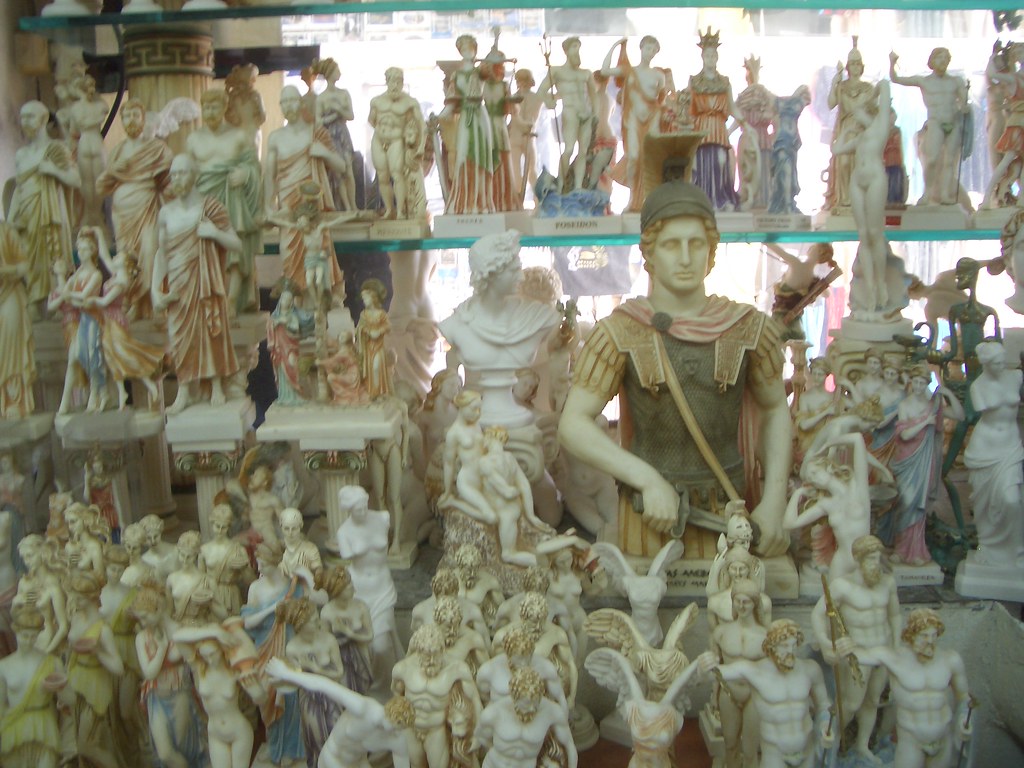
Photo: “Greek Gods, take your pick” by dullhunk is licensed under CC BY 2.0.

Calling the Poem: 2. ‘Awareness of the Mood’

The possibility before the poem, the mood,
Is premonition more than vision: loath
To admit, like the repressed and skewed
Response on seeing god-like demon, or young witch…
Not even genitals’ light twitch,
But mere awareness of that energy, potential thrust,
That tightness in the chest,
A heart-tight feeling of both loss and lust.
Then don’t ignore that feeling, for you’re blessed:
A poem is lurking in your undergrowth.

*****

This series of poems, ‘Calling the Poem’, is about the process of writing poetry – an art for which some people appear to have an affinity, an intangible ability. My sense is that such creativity is available to all humans, but requires a certain mindset, an openness to the unconscious, an interest in unplanned internal upwellings and dreams and fortuitous images; in other words, it is not available to those who plan and schedule their lives rigorously, who meticulously follow the teachings imposed from the outside by others.

The process starts before the poem begins to appear. I find it starts with a mood that feels like… like a mixture of curiosity (whether filled with hope or despair), and of awareness of the vastness of the world (whether manifested in a sunset or an ant), and of some small but significant personal power even in the presence of the forces of the universe, and of that formless twitch of yearning desire when glimpsing an unconnected but desirable object for the first time.

My sense is that when you find yourself in this mood – and I trust you’re aware of having experienced it – you are entering a state of receptivity to the messages that your unconscious wishes to share with the conscious you; and those messages will come as creative images, or dreams, or ideas, or words and phrases. But they will only come if you are receptive to them. So honour the mood: relax, listen, observe, and be prepared to express in rough draft whatever occurs to you. The mood is not the creativity; but if you accept the mood, the creative communication of the unconscious can occur.

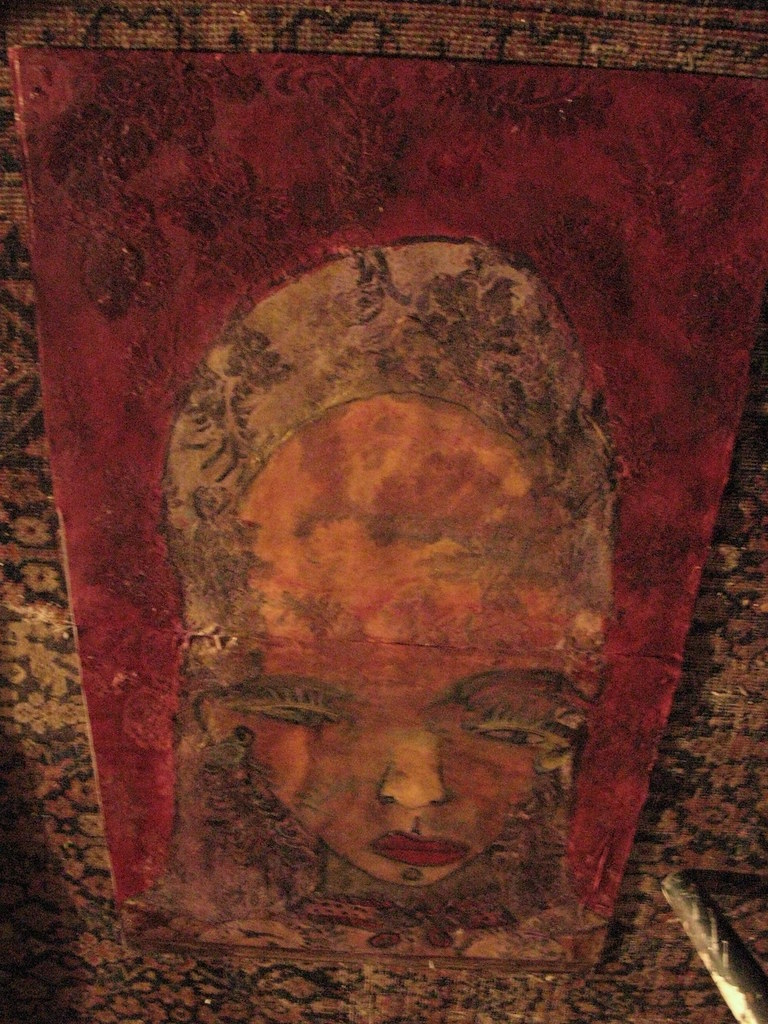
Photo: “14. Premonition of Concusia 2009” by Anne Marie Grgich is licensed under CC BY-NC-ND 2.0.

Calling the Poem: 1. ‘Invocation’

O Odin,
Living outside me or within,
Share your mead of poetry you earned in night’s delight,
Spare me from the mead you shitted out in flight and fright.
By Thought and Memory, I swear
A poem needs your care,
For poems… magic poems… are nothing,
and come from your nowhere…

A poem comes in flurries:
A phrase that catches, sticks,
A rhyme that matches
With some thought that dog-worries,
And a verse that clicks.

*****

Just to be clear, I’m no more a believer in the Norse gods than I am in Yoruba, Hindu or Christian deities. Also, I’m not a white nationalist. But mythology has a couple of uses for me: pure enjoyment of the tangled tales; a way of looking at historical mindsets; and a tool for trying to communicate with the unconscious, i.e. to let the creative unconscious funnel ideas and images to the conscious mind.

What I do believe is that invoking the Muse, or a god, is a way of telling your unconscious that you are receptive to its comments… it is a fishing expedition, and you never know what you’re going to get. But I believe it is a system that works (sometimes), and I don’t practise another. (Various drugs are alleged to get results, too.)

So a few years ago I set out to describe the process that I follow to try to bring poetry to me. The result was a series of 15 poems, published by Snakeskin as an e-chapbook in January 2017. It was available as a free download from Snakeskin No. 236, and it should be again, when the Snakeskin archives are again operational. I named it ‘Calling the Poem’.

‘Calling the Poem’ starts by invoking the Muse – male, female, human, animal, I think the Muse can be however you choose to imagine it. But the Muse should be a dream-image, for the Muse, the unconscious, is as likely to communicate through dream as anywhere. Odin is a good figure, with his ravens of Thought and Memory who give him the news of the world, his eight-legged horse Sleipnir who can carry him through all the worlds, his ability to shapeshift and prophesy, the sacrifices he made to obtain wisdom such as gouging out an eye to put in Mimir’s well, and of course the mead of poetry that he stole and disburses as he feels.

And so the first poem – somewhat rough-hewn, semi-formal – is the invocation addressed to Odin.

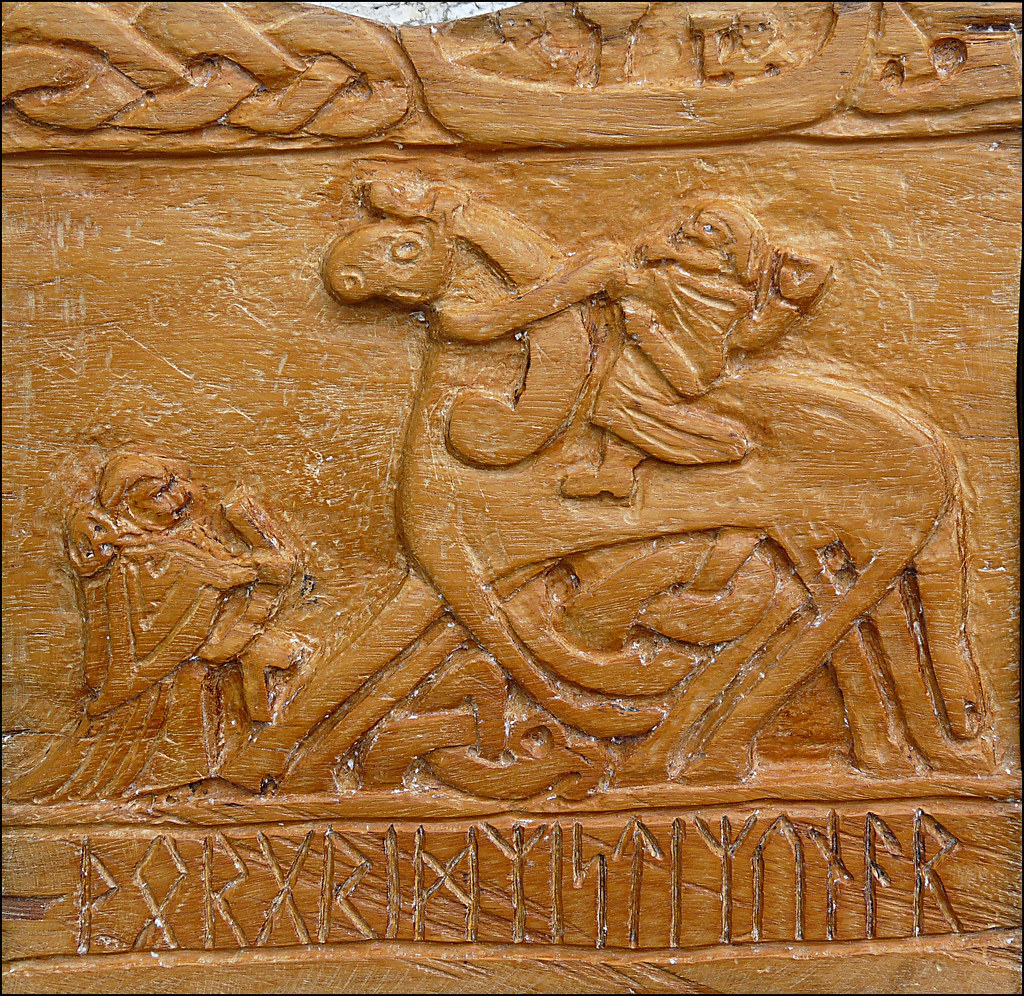
Photo: “Odin on Sleipnir” by Hornbeam Arts is licensed under CC BY-NC 2.0.

Sonnet: ‘Zombies and Wolves’

Women I’ve failed or wronged or left behind
Approach my thoughts like zombies for the kill;
I’ve literary walled defences – still,
Given the chance, they’ll eat my brains, my mind.
Through forest, orchard, farmyard in decay,
A shadow of a wolf slips greyly in,
My thoughts of death, grim, wasted, ill, rib-thin,
Tracking my weak resolve, hungry to slay.

Mountaintops blown apart, forests clear-cut,
Where’s there to hide? Nature doesn’t exist;
Her landscapes crushed in patriarchal fist.
This former farmland hides my ruined hut.
Impotent, I still write, thus giving birth
To future wolves and zombies of the earth.

*****

What on earth triggered this sonnet 15 years ago? I have no idea. What’s it really about? Well, it seems the volta between the octave and the sestet moves the narrative from purely personal regrets to our current planetary destruction. More than that, I can’t say. Your suggestions are welcome!

Anyway, the poem was published in that now-defunct British beacon of formal verse, Candelabrum.

Photo: “Wolves in Action” by iam_photography is licensed under CC BY-NC-SA 2.0.Copy text

Short poem: ‘Into the Cryonics Dewar’

We had no destination ever, from birth,
save into the ultimate ocean, or ultimate fire, or ultimate earth.
Now we have not quite so ultimate ice.
For now, it will have to suffice.

The chance of reanimation from cryonic suspension may be small, but still greater than the chance of reanimation after cremation or burial in land or at sea. And I guess we now have a fifth option – ending up off-planet, adrift in space. But in effect that will be a variant on “not-quite-so-ultimate ice”. In space you’d end up near Absolute Zero, as with cryonics – but whereas with cryonics there is the miniscule hope of eventual reanimation, in space your ultimate fate would be that of all space debris: drifting for millions of years until burning up into a star or planet, or getting sucked into a black hole.

Life, death, quite fascinating. Not many options for changing the outcome, though various billionaires are throwing some of their money at the search for immortality, as people have done since at least the time of the pharaohs and early Chinese emperors. And why not? think it’s “just science fiction”? For thousands of years we used to dream we could fly to the moon, and that happened eventually…

This poem was originally published in Snakeskin #274, July 2020. Thanks, George Simmers!

Photo: cryonics.org