Tag Archives: Robin Helweg-Larsen

Poem: ‘Ticking Away’

You have hopes. You don’t expect
that they’ll ever come to pass
but you drink, think and reflect
as you look into the glass…
And you wonder what will happen
while your life just ticks away:
Tick, tick, tick, tick… end of play.

Science’s prognostications,
things you’d pick up in a flash:
soon they’ll start rejuvenations
if you only had the cash…
Cash cuts those who’d live forever
from the rest as with a knife:
Tick, tick, tick, tick… end of life.

But you don’t like thoughts of dying
so you hope you’ve got a soul;
and though preachers are caught lying
Heaven seems attainable…
But there’s got to be a Heaven
or prayer’s just a waste of breath:
Tick, tick, tick, tick… towards death.

Though you think that you’re so clever,
you’ve got goals but not the How.
Play the lottery for ever
it must pay off – why not now?
But you never do the homework
so at question time you’re stuck:
Tick, tick, tick, tick… out of luck.

That affair you never had
with the person down the street
for you’re really not that bad
and besides, you rarely meet…
But it sits there like a present
that’s unopened on a shelf:
Tick, tick, tick, tick… end of self.

So there’s all the other options
for the things you’d like to do:
travel, study, home, adoptions,
building family anew,
but you’re aging while you’re thinking
and the chances go on by:
Tick, tick, tick, tick… till you die.

*****

On this funereal day I take happy morbid pleasure in remembering that we are all mortal. Let’s keep on ticking as long as we can! ‘Ticking Away’ was published in the most recent edition of David Stephenson’s ‘Pulsebeat Poetry Journal‘, a recent and welcome addition to the growing cadre of formal-friendly magazines. It’s a nonce form, shaped in the writing of it; the lines rhyming ABABCDD, and the metre being a rapid patter broken by the ticking in the last line of the stanza.

You could say it’s mostly written in incomplete trochaic tetrameter, the form of Longfellow’s ‘Hiawatha’

By the shore of Gitche Gumee,
By the shining Big-Sea-Water,
At the doorway of his wigwam,

But I prefer to read it with the rapid beat of W.S. Gilbert’s

I am the very model of a modern Major-General
I’ve information vegetable, animal, and mineral

which, technically, you could read as iambic octosyllable

I am the very model of a modern Major-General
I’ve information vegetable, animal, and mineral

but not all of those stressed syllables have equal weight. Gilbert’s lyrics are patter, built on highly stressed, semi-stressed and unstressed syllables. English poetry is flexible and chaotic, and its analysis can be contradictory, because the poetry is a fusion of casual Anglo-Saxon verse which counts stresses but not syllables, and formal French verse which counts syllables but not stresses. This mirrors the creation of English itself which is a fusion of various Germanic and Romance languages… with a dash of Celtic grammar thrown in. (Where do you think the pointless auxiliary verb “do” comes from in the phrase “Where do you think”, rather than a more straightforward “Whence think you”? Answer: Celtic.) But the educated literati of the past few hundred years learned all their analysis of grammar and poetry from the French who in turn were drawing on the Greeks and Romans. And some of that thinking is irrelevant to Germanic and Celtic structures.

TLDR: Write what feels natural, enjoyable and memorable. Personally, I’m always glad to remember I don’t have to write everything in iambic pentameter…

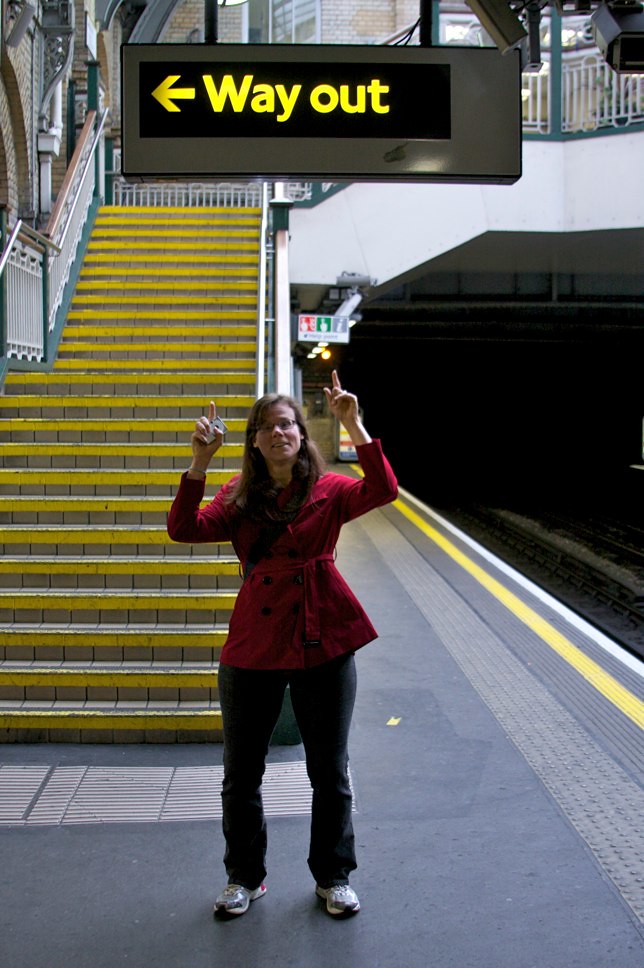
Photo: “Self portrait – Ticking away” by MattysFlicks is licensed under CC BY 2.0.

Sonnet: ‘Ultimate Control’ (from the series ‘Voices from the Future’)

If you’ve the aptitude and love the role,
the Army’s always been the place to be.
Rise in the ranks, absorbing strategy:
coordinate, consolidate, control.
And what a blessing when those new implants
gave mind-to-mind awareness… and command.
Like the unthinking fingers on your hand
you can maneuver thousands with a glance.
The battle then’s to see what you can wrest
from other leaders, fighting mind-to-mind;
you have to grow, or you get left behind:
can you control ten million, like the best?
Of would-be kings there’s never been a dearth…
will it be only one who rules all Earth?

*****

This sonnet has just been published in Pulsebeat Poetry Journal’s 3rd issue (thanks, David Stephenson!) It is one of a series written in response to a comment from Maryann Corbett (a brilliant formalist poet) about the bleakness of my vision of the future. Well, she’s a Christian, so she has a totally different take on humanity’s future from my irreligious SF-infused speculations. Another sonnet in the series, ‘Exiled Leader‘, was published by Star*Line.

I don’t find it bleak to think that there will be unprecedented individual and planetary disruptions. I’m not distressed at the thought of humans being supplanted some posthuman higher intelligence. Should the earliest rat-like mammals of 145 million years ago be upset to learn that their human descendants build cities and kill any rats they find in them? Should they identify only with the familiar rats and wish that evolution had stopped there, or instead be proud that they have also developed into humans (and dogs, and whales, etc)?

For myself, life is a wild ride, and I long to see where it will take humans in a hundred or in a thousand years. Because of the current revolutions in genomics, robotics, AI and nanotechnology, I doubt we can reasonably forecast even a hundred years into the future. We can speculate all we like but once we merge a human with AI, create a cyborg, all bets are off.

20120401 – Hand – IMG_2898” by Nicola since 1972 is licensed under CC BY-NC-ND 2.0.

Poem: ‘Village Fetes’

Come learn your fates at the village fêtes,
hosted by kindly vicars;
there’s lots to eat, don’t be discreet –
but your attention flickers…

the boys want toys with lots of noise,
the girls want glittery stickers,
while a gypsy tent, being devil-sent,
offers both lust and snickers.

The fêtes are fine for beer and wine,
less so for fancy liquors;
if you want to cruise for a bit of booze,
they’re not for city slickers;

but the real thrust builds on the trust
of godly, sinful vicars –
it’s being caressed by a gypsy breast
that puts a twist in their knickers.

*****

The latest edition of Rat’s Ass Review (for Fall/Winter 2022) has just been published, and I’m delighted to have this irreverent (pun intended) piece included. (As the journal’s title suggests, the editor doesn’t care if you don’t agree with his selections and opinions.) Thanks, Rick Bates!

Romany Rose” by timnutt is licensed under CC BY-NC-SA 2.0.

Semi-formal poem: ‘The Viking in Winter’

O it is a wide winter, windy with gales,
Hard, harsh and horizonless, cold,
And I can do nothing more this year
But sharpen the swords, mend the gear,
Mend cloth, patch sails,
Listen to tales told by the old,
Listen to horses stamp in stalls.
Feel the blood in my veins going nowhere,
Feel the river halt, the bay iced in,
The sun brief and thin
The food dried, smoked, salt
And no fresh fruit, fresh meat,
No fresh lands, fresh goods,
No fresh deeds, fresh girls,
No seas running and blood running
And people running and tales running…
For what is the good of inaction
Save to prepare for fresh action;
And what is the good of fresh action
Save for fresh tales;
And what is the good of fresh tales
Save for the glory and the name
And the fame that lives past the death rattle
For the sword singer,
Word winger,
The Bard of Battle?

*****

I feel the same fascinated connection to my Viking ancestors that I feel to my even earlier chimp-like forbears and modern chimp and bonobo cousins. All have social networks, hierarchies, politics, violence and ways of overcoming violence, cherished families, a sense of fairness and ways of cheating. I suspect the Viking gods would be far easier for chimps and bonobos to accept than modern scientific understanding could ever be. I greatly enjoy Vikings, chimps and bonobos, recognise that a lot in me comes from them, and am thankful to have outgrown much of their limitations. (And to neo-Nazis who think they are Vikings, I say this: “You’re not; don’t be so stupid.”)

This rambling semi-formal poem was first published in Snakeskin; thanks, George Simmers!

Icy sea” by piropiro3 is licensed under CC BY 2.0.

Short poem: ‘Bantering’

Bantering needs many, not one voice:
you need ‘response’ as well as ‘call’.
Or else it’s only masturbantering –
with no real intercourse at all.

*****

You make up a word, and then you have to use it… a short poem is one way to do it. This poem was first published in Rat’s Ass Review (as you might have guessed, if you know that no-holds-barred magazine). Thanks, Rick Bates!

Photo: “banter” by Andrew G Thomas is licensed under CC BY 2.0.

Short poem: ‘Disappearance’

I’ve always been around, since before I can remember,
so it just would be so strange, if one day I should dismember,
and my body disappear, like a swallow in September…
Will there be no glowing coal? Of my life survive no ember?

*****

This short poem was published on a page of ‘Senior Moments’ in the current Lighten-Up Online. I like the rhythm (there’s a pause in the patter in the middle of each line) but the simile is bogus: unlike with swallow migration, dead people are unlikely to show up again the next spring…

Photo: “Swallows” by Marie Hale is licensed under CC BY 2.0.

Short poem: ‘Land of the Free’

Homicide, suicide, what’s it to me?
We all carry guns in the Land of the Free.
Free to be Christians and free to be whites –
The rest ain’t included in our Bill of Rights.
The rest want to come here (or blow us sky high),
They get smuggled in, so they cheat, steal and lie.
Servants and slaves since the US begun:
Tell ’em: Sit! and shut up! and don’t carry no gun!

*****

This short poem was published minutes ago in the Allegro Poetry Journal, put out by Sally Long in the UK. The spring edition is always unthemed, the autumn edition themed; and this time the theme is ‘Freedom’ – a word which means many things to many people.

Charlottesville ‘Unite the Right’ Rally” by Anthony Crider is licensed under CC BY 2.0.

Semi-formal poem: ‘Thin Thin Skin’

Life on the earth is thin as dust on an apple.
25,000 miles round the planet, and if we go 2 miles high
we struggle to breathe, claw at the air, fight it, grapple.
25,000 miles round the planet, mostly sea
and if sea levels rise a foot, whole communities are lost
and if a storm gives 10 foot waves, houses and lives are lost.
We live on the thin thin skin of the earth.
Is the soil three inches deep, or a foot, or five?
Can we grow enough to survive?
We live on that thin thin skin of dirt.
And people too are fragile, their bones, organs, held in
by their thin thin skin. A knife,
a bullet, even too much sun,
will break the thin thin skin and drain the life.
And society too is fragile, with too many knives and guns,
too little respect for sun, ocean, climate change;
too many people with a thin thin skin
leading their ignorant people into the razorwire of unpredicted change.

*****

This poem was originally published in Lighten-Up Online (or LUPO) last year – thanks, Jerome Betts! It’s not really a formal poem, though there are some rhymes. As for the subject matter, all I can say is: If you haven’t run across the delightful XKCD graphic of the past 12,000 years of temperature change, please click here!

Photo by Allison Shelley for EDUimages: A middle school science teacher explains a lesson on climate change using a SMART board. Copyright CC BY-NC 4.0

Short Poem: ‘Darkness’

I miss the dark.
Nights pitchblack as pitch in the seams of the planks of boats on a starlit sea
when you walk in a garden
with hands out in front in case you walk into a tree.
Moonless nights
where stars let you grope over rocks at the beach with blind eye –
and then the moon rises
like the sunlit reflecting rock that it is. Then you can see. Can see why.
Why I miss the dark.

*****

This poem was originally published in Snakeskin. It seems to have a structure, i.e. it isn’t completely formless. Perhaps it needs more work. But it’s very much like the rural moonless nights where I was brought up, and where I have returned. I stumble around happily in many aspects of life.

A Forest / At Night (The Cure photographic cover)” by Max Sat is licensed under CC BY-NC-ND 2.0.

Irregular Sonnet: ‘Where Do They Go?’

Where do they go, those children asleep?
Do they roost, or do angels put them on shelves?
Or do they go home, to some place they keep
locked far away from us and themselves,
Or an alternate universe? In, out, up, down?
Into a not-place, past care and past fear?
Past love and past tired, past smile, yawn and frown
into subtracted space, full of not here?

And where do they go, the dead?
We say we can’t know where they go,
just that they’re gone. But the crow
says, There is more to know that you don’t know –
says, Better ask instead
where do we go, when dead?

*****

This almost-regular sonnet was originally published in Bewildering Stories (thanks Don Webb). I thought it might be nice to emphasise (after some of irreligious poems) that I am not an atheist (except in the eyes of the organisedly religious). I am a Militant Agnostic: “I don’t know, and neither do you.”

Photo: “Good sleeping children in the morning” by michibanban is licensed under CC BY-NC-ND 2.0.