Tag Archives: Susan McLean

Susan McLean, ‘The Only Feminist in High School’

Two roads diverged in high school when a student
chose to study women’s liberation
to write her senior paper. Though imprudent,
that choice provided her an education

in bias, inequality, derision,
The Second Sex, The Feminine Mystique,
historical erasure, long division,
and talent gagged and shackled by physique.

She swore off make-up, wanted a career
but maybe not a family. She read
Kate Millett, Gloria Steinem, Germaine Greer,
and gave a speech on beauty, which, she said,

turned women into objects and betrayed
their goals. She didn’t want to be a mom
or movie star. When she went out, she paid.
Though never asked, she boycotted the prom.

The boys were baffled and the girls disdainful,
for who would want to talk to, much less date her?
And what she lost was obvious and painful,
while what she gained was only clear years later.

*****

Susan McLean writes: “This poem starts with the opening phrase from Robert Frost’s ‘The Road Not Taken‘ and it records a turning point in my own life of the sort that his poem describes. Though I hope that feminists are not such a rarity among high school students anymore, the term “feminist” is still so loaded that I tend to think of it as “the new F-word.” At one level, it still mystifies me that looking for equal opportunity and equitable treatment remains so controversial, but at another level, every society has been built on unequal opportunity and inequitable treatment since recorded history began, so it is not surprising that each step away from that system has made some people feel that the world was ending.

“I learned long ago that what a poem doesn’t say is as important as what it does say, so the ending of this one does not specify what was lost or what was gained. I want the readers to think about those things, so I don’t want to tell them what to think. As for why I wrote this in the third person, these events happened so long ago that it almost feels as though they happened to someone else. I am and am not that girl.

“The poem first appeared in my second poetry book, The Whetstone Misses the Knife.”

Susan McLean has two books of poetry, The Best Disguise and The Whetstone Misses the Knife, and one book of translations of Martial, Selected Epigrams. Her poems have appeared in Light, Lighten Up Online, Measure, Able Muse, and elsewhere. She lives in Iowa City, Iowa.
https://www.pw.org/content/susan_mclean

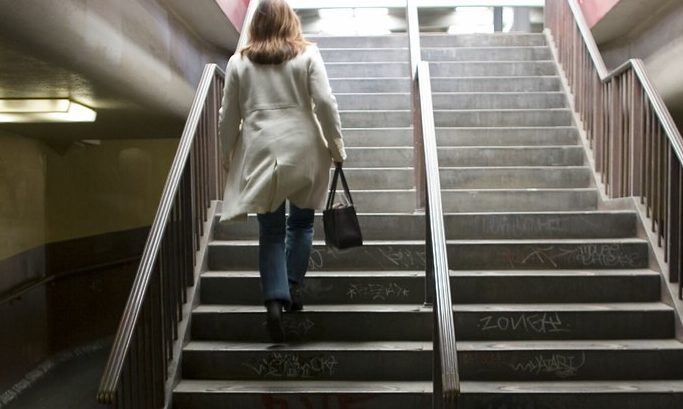
Photo: “Two Road Diverged…” by wackybadger is licensed under CC BY-SA 2.0.

Using form: Hybrid sonnet: Susan McLean, ‘Your Other Women’

Your secretaries, eager to assist you;
your colleagues, protégées, even your dean;
the shopgirls who, you joke, cannot resist you;
my own best friends; the maid who comes to clean;
the women whom you’ve charmed in conversation;
the students who adore you from afar—
how can I resent their admiration,
knowing, better than they, how good you are?

So pick your favorite starlets for your spree,
and rent each film they’ve been in from the start—
I won’t complain. How can I say you’re wrong
to ogle blondes you swear all look like me?
For when our jobs require long weeks apart,
we both know what it takes to get along.

*****

Susan McLean writes: “I was surprised to discover the range of interpretations this poem has received. I had meant to subvert the title with the poem’s content, but I have learned in the past that readers are more likely to twist the content to fit the title than to suspect that the title might be ironically meant. A poem can have many different interpretations, depending on what the reader brings to it, so I have accepted that what a reader sees in it may not be what I intended. This poem was originally written in response to Alfred Nicol’s poem ‘Your Other Men’, a much edgier poem. But mine was intended as a humorous love poem to my partner, a man who likes women and whom women tend to like.
The sonnet is a hybrid, with the first eight lines conforming to the Shakespearean model and the last six lines to the Petrarchan model. That dichotomy felt right for decribing an often-long-distance relationship in which our similarities and differences have learned to work together in harmony.”

‘Your Other Women’ was originally published in Hot Sonnets: An Anthology. Eds. Moira
Egan and Clarinda Harriss. Washington, DC: Entasis, 2011. It later appeared in her second poetry book, The Whetstone Misses the Knife.

Susan McLean has two books of poetry, The Best Disguise and The Whetstone Misses the Knife, and one book of translations of Martial, Selected Epigrams. Her poems have appeared in Light, Lighten Up Online, Measure, Able Muse, and elsewhere. She lives in Iowa City, Iowa.
https://www.pw.org/content/susan_mclean

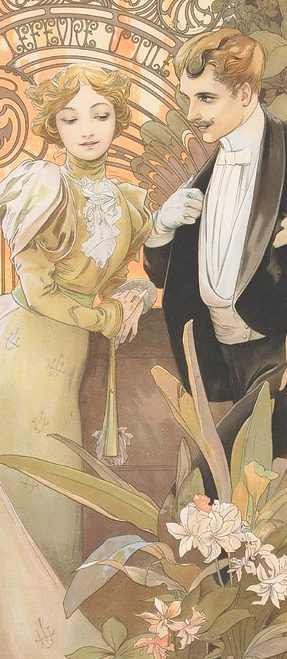
Photo: “Alphonse Mucha – Flirt Biscuits” by sofi01 is licensed under CC BY-NC 2.0.

Short verse: Susan McLean, ‘Jeopardy’

The first thing she requests post-surgery,
awake but drifting in the morphine glow,
is that my sister turn on the TV
so that the two can watch her favorite show.
Weak but alive, unsure if she has cancer,
my mother turns to questions she can answer.

*****

Susan McLean writes: “I wrote this poem while I was over a thousand miles away from the scene it describes, based on my sister’s phone account of what happened. The irony of the show’s title under the circumstances was the first stimulus for the poem, but also I almost laughed when I thought of how characteristic my mother’s action was. Given that she was in her eighties when she had major surgery, my mother’s jeopardy was very real, and I wrote the poem while we still didn’t know whether she had cancer. She did not. There is another irony, in that the game show Jeopardy! provides answers for which the contestants have to supply the appropriate questions. Yet, in context, those questions are answers.
The hardest challenge when writing about an emotional situation is to focus on the facts and let the emotions emerge by suggestion. A hint of humor acts as a counterweight to unspoken anxieties. The poem was first published in Measure and later appeared in my second poetry book, The Whetstone Misses the Knife.”

Susan McLean has two books of poetry, The Best Disguise and The Whetstone Misses the Knife, and one book of translations of Martial, Selected Epigrams. Her poems have appeared in Light, Lighten Up Online, Measure, Able Muse, and elsewhere. She lives in Iowa City, Iowa.

Susan McLean has two books of poetry, The Best Disguise and The Whetstone Misses the Knife, and one book of translations of Martial, Selected Epigrams. Her poems have appeared in Light, Lighten Up Online, Measure, Able Muse, and elsewhere. She lives in Iowa City, Iowa.
https://www.pw.org/content/susan_mclean

Photo: “Filming Jeopardy!” by jurvetson is licensed under CC BY 2.0.

Susan McLean, ‘Received Wisdom’

Unpacking it, we wondered who had sent it
and why they felt we needed it. We thought
we’d managed fine without it. Had they meant it
as tribute or rebuke? We had been taught
to view unsought donations with suspicion.
Inspecting it, we found a hairline crack.
It doesn’t suit our taste or disposition.
In short, we must insist they take it back.

*****

Susan McLean writes: “Finding new meanings in old phrases is one of my favorite games. In the case of the poem’s title, I was thinking about how each generation wants to pass along advice to the next generation, which the next generation tends to reject. Advice always feels like criticism, however well intended it may be. Moreover, the world is changing so fast that advice that worked for one generation no longer fits the reality of the next generation.

“The alternating feminine and masculine rhymes in the poem are meant to mimic the interplay between two generations, or any two groups that have differing views. ‘Received Wisdom’ was originally published in Free Inquiry and later appeared in my second book of poems, The Whetstone Misses the Knife.”

Susan McLean has two books of poetry, The Best Disguise and The Whetstone Misses the Knife, and one book of translations of Martial, Selected Epigrams. Her poems have appeared in Light, Lighten Up Online, Measure, Able Muse, and elsewhere. She lives in Iowa City, Iowa.
https://www.pw.org/content/susan_mclean

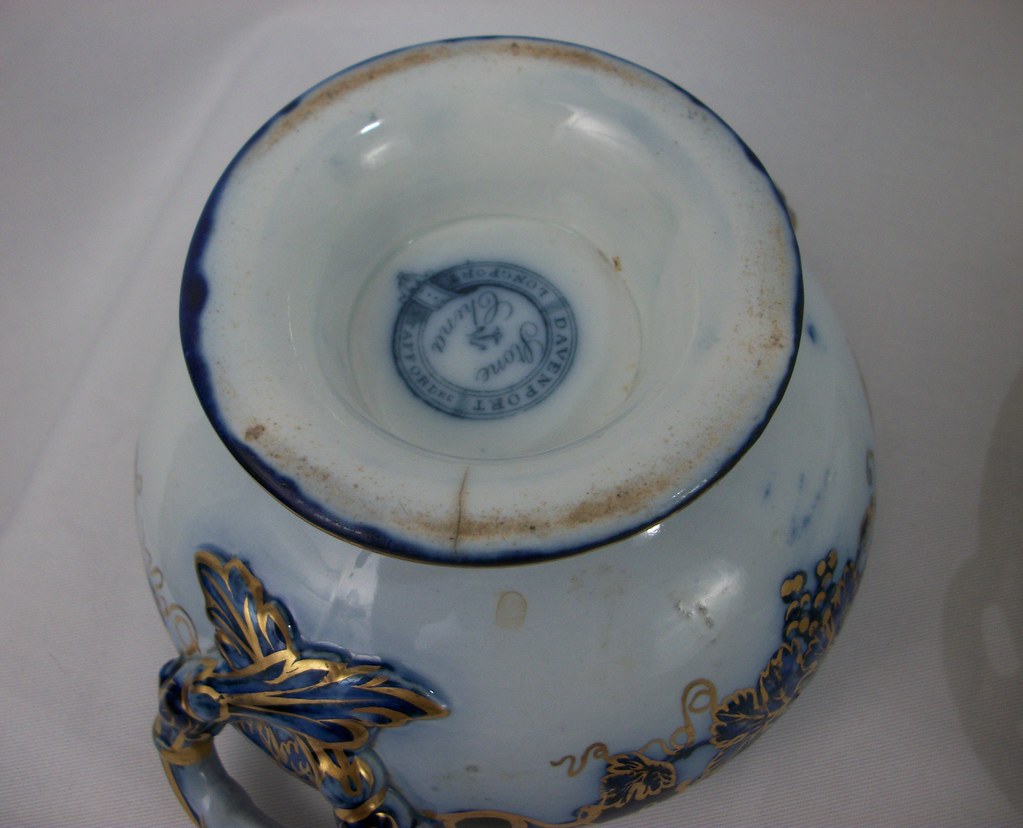
Photo: “sauce tureen 2, hairline” by pgintx1128 is licensed under CC BY-SA 2.0.

Susan McLean, ‘High School Pride’

Sleek in their strength and beauty, haughty, lithe,
prowling alone or stalking in a pack,
they cut down herds of victims like a scythe,
then search for fresh meat, never looking back.
The world is theirs, and all the grazers in it.
They cull the weak, the callow, the unwary.
The pack itself can change at any minute,
for all alliances are temporary.

How fine to be the hunters, not the prey,
to ambush, wound, or take down all they see!
While we, their hapless quarry, would contrive
to be as cruel and merciless as they
if we could share in their ascendancy—
not noticing how few of them survive.

*****

Susan McLean writes: “High school can be as harsh as any nature documentary in demonstrating Darwinian survival of the fittest. It is a time when popularity and fitting in can seem all-important, and when those at the top of the social hierarchy often take pleasure in harassing or snubbing those below. Two scientific studies gave the impetus for this poem. One was a study of apex predators such as lions, which showed that despite their power and ferocity, they had a surprisingly high mortality rate. The other was a study of people who were unpopular in high school, which found that later in life they tended to be happier and better adjusted than those who had been popular in high school. The whole concept of “high school pride,” which stoked artificial rivalries between schools that were then played out on the battlefield of sports and other competitions, was part of a mentality that endorsed winning and belittled losers.

“This sonnet first appeared in the online journal 14 by 14, and later was published in my second poetry book, The Whetstone Misses the Knife. The octave follows the pattern of an English sonnet, with quatrains rhymed in alternating lines: ABABCDCD. But the sestet switches to the less predictable rhyme scheme of the Italian sonnet: in this case, EFGEFG. The surprises of the rhyme scheme are meant to mirror the surprises in the twists of the conclusion.”

Susan McLean has two books of poetry, The Best Disguise and The Whetstone Misses the Knife, and one book of translations of Martial, Selected Epigrams. Her poems have appeared in Light, Lighten Up Online, Measure, Able Muse, and elsewhere. She lives in Iowa City, Iowa.
https://www.pw.org/content/susan_mclean

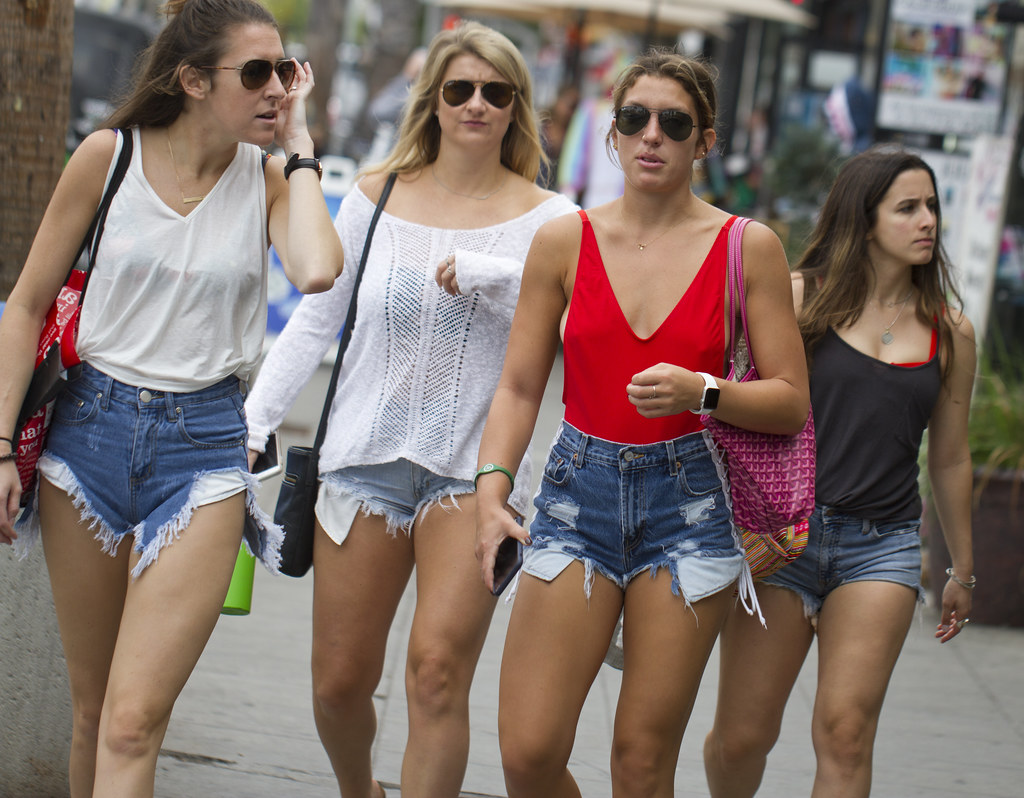
Photo: “Clique” by San Diego Shooter is licensed under CC BY-NC-ND 2.0.

Using form: Accentual Metre: Susan McLean, ‘Stone’

Offered bread,
I asked for a stone.
The stone was good,
but I ate alone.

I took my bows
in a hail of rocks,
and built my house
of stumbling blocks.

But its walls are aligned
so true and tight
that they keep out the wind
that blows all night.

*****

Susan McLean writes: “And when the tempter came to him, he said, If thou be the Son of God, command that these stones be made bread.” Matthew 4:3 (King James Version)
“Or what man is there of you, whom if his son ask bread, will he give him a stone?” Matthew 7:9 (King James Version)

“I am not a religious believer, nor have I been one for many decades. But the poetry of the Old Testament and the metaphorical language of the New Testament both left their mark on me. Paradoxes and counterintuitive arguments, so integral to parables, are also at the core of poetry. Bread and stones—what does it mean to refuse the former in favor of the latter? To reject the normal and necessary, while choosing the impossible and unsustaining, can only lead to being misunderstood and rejected oneself, possibly even persecuted. Yet in this poem I argue that, paradoxically, taking the hard and lonely path has its own rewards. A stumbling block is solid; with a sufficient number of them, one can build a shelter that can withstand the strongest winds.
“The slant rhymes in lines 1 and 3 of each stanza, with their hint of dissonance, meet the resolution of the true rhymes in lines 2 and 4. Because dimeter lines, with just two stresses per line, can quickly become monotonous if the lines are too regular, I chose to use accentual meter instead of the more predictable accentual-syllabic meter. Therefore, the number of syllables per line varies from a low of three to a high of six. “This poem, originally published in the online journal The Chimaera, later appeared in my second poetry book, The Whetstone Misses the Knife.”

Susan McLean has two books of poetry, The Best Disguise and The Whetstone Misses the Knife, and one book of translations of Martial, Selected Epigrams. Her poems have appeared in Light, Lighten Up Online, Measure, Able Muse, and elsewhere. She lives in Iowa City, Iowa.
https://www.pw.org/content/susan_mclean

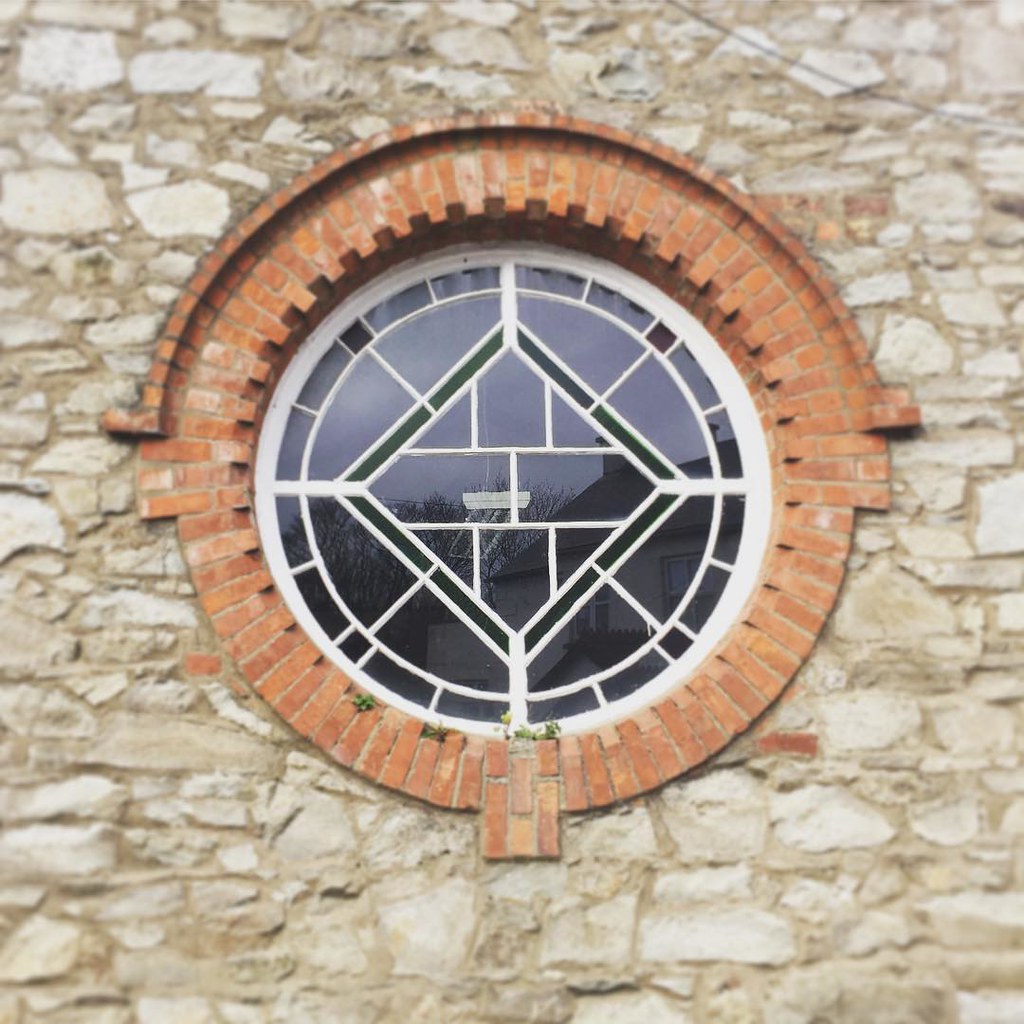
Photo: “Beautiful circular window and rough stone wall on this quaint little former school house in Arklow from the 1800s #windows #arklow #irisharchitecture” by irishhomemagazine is licensed under CC BY-SA 2.0.

Using form: Susan McLean, ‘What Goes: A Rondelet’

You were the one
who always told me what to do.
You were the one
who said I ought to buy a gun.
So when you said that we were through,
one of us had to go. I knew
you were the one.

*****

Susan McLean writes: “I have to credit Allison Joseph for introducing me to the rondelet, a French repeating-form poem that has not been in fashion for a very long time. She was teaching a workshop on repeating forms at the West Chester University Poetry Conference, and I was one of the students. The rondelet is a short form with such short lines and so many repetitions of the first line that it doesn’t give the writer much wiggle room for an interesting twist in the meaning of the repeated line. I settled on “you were the one” as my repeated line, because it is associated with the standard swoony romantic line, but it could easily change its meaning depending on the context. Once I chose “gun” as a possible rhyme for “one,” that word suggested to me a scenario in which the controlling partner in a relationship comes to regret influencing his partner to arm herself. The poem’s title is a pun. At first, it looks as though naming the form in the title is just an effort to identify an unfamiliar form, but if you say it aloud, it evokes the common phrase “what goes around comes around,” suggesting that the man’s comeuppance is partly his own fault. In French, “rondelet” means “a little circle.” This poem first appeared in New Trad Journal and was later published in my second poetry book, The Whetstone Misses the Knife.

Susan McLean has two books of poetry, The Best Disguise and The Whetstone Misses the Knife, and one book of translations of Martial, Selected Epigrams. Her poems have appeared in Light, Lighten Up Online, Measure, Able Muse, and elsewhere. She lives in Iowa City, Iowa.
https://www.pw.org/content/susan_mclean

Photo: “#Siena #streetart #guns #woman” by Romana Correale is licensed under CC BY-ND 2.0.

Susan McLean, ‘Dead Giveaway’

Who’ll take my dead? I’ve carried them so long
my mind is swaybacked from their aching weight.
I can’t just cast them off. It would be wrong
to leave them in some shed, like unclaimed freight.
How could I walk away as Cathy’s smile
collapsed, as Brian gently said “Take care,”
and Grammy begged “Please take me home now” while
I shut them in the dark and left them there?

I’ve jettisoned so much I took to heart—
the afterlife, belief in justice, prayer.
I’ll have to lay my dead down too, I know.
After a party, when my friends depart,
I wash up, stow away what’s left, yet they’re
still here. The dead are always last to go.

*****

Susan McLean writes: “I love the way a cliché can take on new life if the words are interpreted in a nontraditional way. The title of this poem seemed painfully poignant to me when I imagined it applying to the dead we all carry around with us. It would be nice to be able to walk away from that sadness, but of course who among us could bring ourselves to do it? Though I try to keep the voice of the poem sounding natural, I pay attention to the play of sounds in the words, as in the echoes of consonant and vowel sounds in the first two lines: “take,” “swaybacked,” “aching,” and “weight.” In the sestet of the sonnet, the imagined action of the speaker’s leaving her dead behind in the octave is reversed when she is herself left behind by her departing friends, with only her dead to keep her company.
This poem first appeared in the online journal 14 by 14, and later was published in my
second poetry book, The Whetstone Misses the Knife.”

Susan McLean has two books of poetry, The Best Disguise and The Whetstone Misses the Knife, and one book of translations of Martial, Selected Epigrams. Her poems have appeared in Light, Lighten Up Online, Measure, Able Muse, and elsewhere. She lives in Iowa City, Iowa.
https://www.pw.org/content/susan_mclean

Photo: “Ghosts of the old house” by Tree Leaf Clover is licensed under CC BY 2.0.

Susan McLean, ‘The Mirror’s Desolation’

Once you adored me. I would bask
in looks you saved for me alone,
giving no hint—if any ask—
of secrets only I have known.
But now you find me hard to face.
I care for you too much to lie,
copying lines you would erase.
You hurry past, head down, and I,
sensing your pained indignity,
return your look of mute distress.
Though you no longer cherish me,
I do not love you any less.

*****

Susan McLean writes: “I took the idea of a talking mirror from Sylvia Plath’s poem ‘Mirror,’ but whereas she presents the mirror as being totally dispassionate, my mirror reflects the emotions as well as the faces of those who look into it. Sometimes, if you see someone beautiful, you may think “the mirror loves her (or him).” But it occurred to me that mirrors love everyone. They just as gladly reflect the old and ugly as the young and beautiful. In this poem, I imagine the mirror’s sorrow that its love is not returned. In French, “I’m sorry” is “je suis désolé” (“I’m desolated”), which always seemed charmingly over-the-top to me. It occurred to me that the phrase “the mirror’s desolation” could refer both to the sorrow the mirror feels and to the devastation it causes. This poem first appeared in Valparaiso Poetry Review, and then in my second poetry book, The Whetstone Misses the Knife.

Susan McLean has two books of poetry, The Best Disguise and The Whetstone Misses the Knife, and one book of translations of Martial, Selected Epigrams. Her poems have appeared in Light, Lighten Up Online, Measure, Able Muse, and elsewhere. She lives in Iowa City, Iowa.
https://www.pw.org/content/susan_mclean

Illustration: DALL-E

Susan McLean, ‘Morbid Interest’

How unpleasant to meet Mr. Poe.
It gives a young lady a chill
when, just as she’s saying hello,
he asks if she’s lately been ill.

It was mid-afternoon, yet he seemed
to be tipsy or mildly sedated.
How oddly his mournful eyes gleamed
when he heard that we might be related.

He muttered some rhymes for my name,
saying nothing could be more inspiring
to a poet desirous of fame
than the sight of young beauties expiring.

Then he asked if I had a bad cough
or a semi-conversable crow.
I informed him of where to get off.
How unpleasant to meet Mr. Poe.

*****

Susan McLean writes: “In my teens, I was a big fan of Edgar Allan Poe‘s short stories and poetry. I loved his eerie subjects and crooning, incantatory lines. I memorized his poem ‘To Helen,’ and I parodied his iconic ‘The Raven.’ But in grad school, I read his essay ‘The Philosophy of Composition,’ in which he wrote that “the death . . . of a beautiful woman is unquestionably the most poetical topic in the world.” Hmmm. At that moment, it occurred to me that all of those dead women of his stories and poems might be less an outpouring of personal grief and more a product of an agenda. Years later, when responding to a challenge from the British journal The Spectator to write a poem modeled on Edward Lear’s ‘How pleasant to know Mr. Lear‘ but about another author, I imagined how Poe might seem to a young woman being introduced to him.
This poem, which was originally published in Light Quarterly, was later reprinted in Per
Contra
and in my second poetry book, The Whetstone Misses the Knife.”

Susan McLean has two books of poetry, The Best Disguise and The Whetstone Misses the Knife, and one book of translations of Martial, Selected Epigrams. Her poems have appeared in Light, Lighten Up Online, Measure, Able Muse, and elsewhere. She lives in Iowa City, Iowa.
https://www.pw.org/content/susan_mclean

Illustration: DALL-E