Tag Archives: The HyperTexts

Michael R. Burch, ‘How It Goes, or Doesn’t’

My face is getting craggier.
My pants are getting saggier.
My ear-hair’s getting shaggier.
My wife is getting naggier.
I’m getting old!

My memory’s plumb awful.
My eyesight is unlawful.
I eschew a tofu waffle.
My wife’s an Eiffel eyeful.
I’m getting old!

My temperature is colder.
My molars need more solder.
Soon I’ll need a boulder-holder.
My wife seized up. Unfold her!
I’m getting old!

*****

Michael R. Burch adds the disclaimer “that the poem is pure comedy and my wife Beth is an absolute jewel. I’m lucky to have her. (Rodney Dangerfield put me up to it!)”

Michael R. Burch’s poems have been published by hundreds of literary journals, taught in high schools and colleges, translated into 23 languages, incorporated into three plays and four operas, and set to music, from swamp blues to classical, 75 times by 34 composers. He is also the founder and editor-in-chief of The HyperTexts.

OLD old Man” by bixentro is licensed under CC BY 2.0.

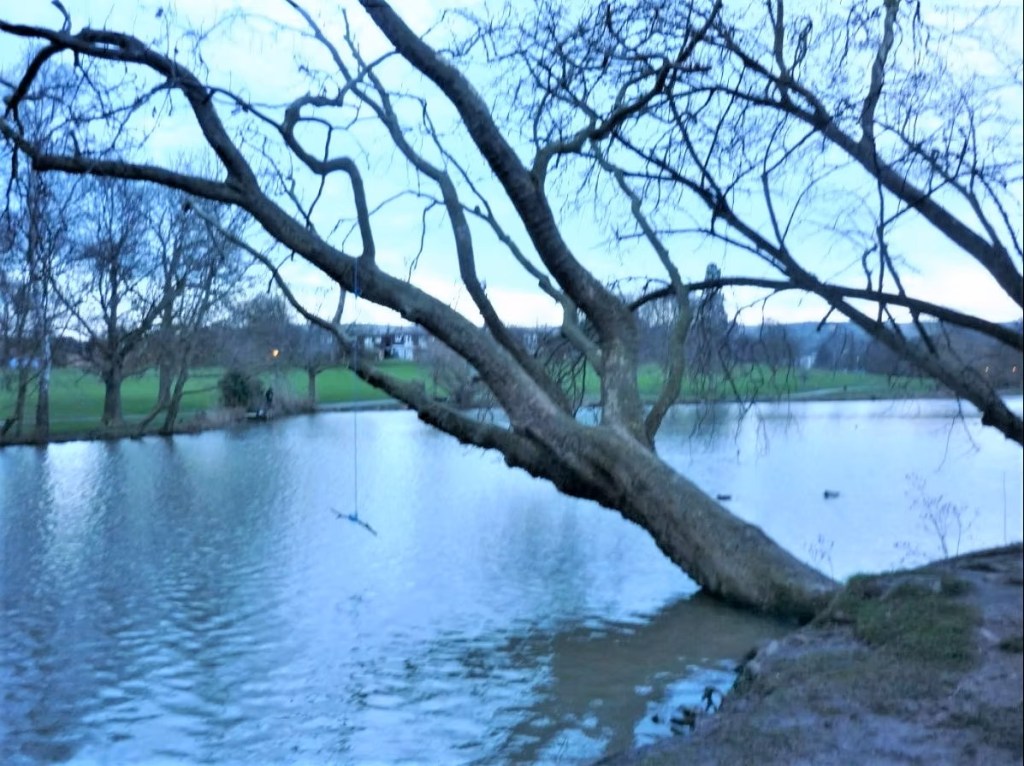
F.F. Teague, ‘Lament of the Leaning Trees’

We were planted to stand, not to sprawl in this way
  by the larger of lakes in the park,
to stare straight at the sky through the night and the day,
  not to ogle our own shades of bark.

But the lake has swelled swampily over the years,
  seizing soil in her cool clammy clench,
with a treasure of twigs-and-grass, sweet chestnut spheres,
  and a hoard of hard wood, once a bench.

How we cling to the earth with our tendrilous toes
  while the lake laps in sinister sheen,
rousing daily and nightly our powerless throes
  as we lean, and we lean, and we lean.

*****

​’Lament of the Leaning Trees’ was first published in The HyperTexts, July 2021​

F.F. Teague writes: “I composed this in January 2021, while recovering from a broken leg and a few complications. A photo of the leaning trees appeared on the Facebook page Pittville Swans & Friends. I hadn’t been out for a while and it was lovely to see the Leaning Trees again. Suddenly I started thinking about being able to leave my flat one day, which made me feel a bit more cheerful about things. When I got out, I took the above photo.
“The trees have been leaning ever since I can remember. I lived in an area of Cheltenham called Fairview, not far from Pittville, for about nine months in 2001 and they were certainly leaning at that point. Every time I visit the park, I half-expect to see at least one tree lying in the water. But they must have very strong roots, because they just keep leaning. The council has removed a few branches over the years yet the shape of the trees remains distinctive.”

Felicity Teague (Fliss) is a copyeditor by day and a poet come nightfall. She lives in Pittville, a suburb of Cheltenham (UK). Her poetry features regularly in the Spotlight of The HyperTexts; her work has also appeared in AmethystLighten Up OnlineNew Verse ReviewSnakeskinThe Dirigible Balloon, and The Ekphrastic Review. Her first collection (2022) is titled From Pittville to Paradise; her second (forthcoming 2025), Interruptus: A Poetry Year. Other interests include art, film, and photography.

Photo by F.F. Teague

Political poem: Michael R. Burch, ‘Not Elves, Exactly’

after Robert Frost’s “Mending Wall”

Something there is that likes a wall,
that likes it spiked and likes it tall,

that likes its pikes’ sharp rows of teeth
and doesn’t mind its victims’ grief

(wherever they come from, far or wide)
as long as they fall on the other side.

*****

Michael R. Burch writes: “Many people misunderstand the most famous phrase in Robert Frost’s poem ‘Mending Wall.’ In the poem Frost’s neighbor quotes his father’s adage that “Good fences make good neighbors” as they work together to repair an unnecessary wall on the border of their properties. Talk about a misunderstanding: this phrase has even been used by politicians to justify apartheid walls and similar barriers! But Frost did not share his neighbor’s belief and compared him to a stone-armed savage who moved in primitive darkness and could not go beyond his father’s saying. Frost’s own belief about such walls was expressed in the poem: “Before I built a wall I’d ask to know / What I was walling in or walling out / And to whom I was like to give offense.” At the end of the poem, Frost considers teasing his neighbor with the idea that mischievous elves are responsible for the wall falling down, but decides to hold his peace. My title questions who builds such walls: ‘Not Elves, Exactly’ but something much darker and more ominous.”

Michael R. Burch’s poems have been published by hundreds of literary journals, taught in high schools and colleges, translated into 22 languages, incorporated into three plays and four operas, and set to music, from swamp blues to classical, 61 times by 32 composers. He is also the founder and editor-in-chief of The HyperTexts.

The Wall Has Spikes” by Kevan is licensed under CC BY 2.0.

Semi-formal: ‘My Doctir’s Excus’ by Michael R. Burch, age 8

I can eggsplain why Im sick.
Sick as a brick
and my stule is thick.
I came to school
and I caught it from Rick.
Now I’m sick as a brick
and my stule is thick.
I cant do my homework
becus Im sick.
I cant take tests
becus Im a mess.
Blame Rick, the prick!
—signed, my doctir

PS, Thurd grade is hard enuff on kids nervs and bad graids make my simptoms worse! Liten up, doctirs orders!

*****

Michael R. Burch confesses: “I must admit that the whole thing is entirely fictional, and I lied about my age. Poet license! I came up with the poem this morning (December 17, 2024) as soon as I awoke. That happens to me quite bit: having a line in my head as soon as I wake up. I have even composed poems in my sleep a few times. The original poem had normal spelling, but then it occurred to me to turn it into a not-so-artful ‘doctir’s excuse.’
There was no Rick.”

Michael R. Burch’s poems have been published by hundreds of literary journals, taught in high schools and colleges, translated into 22 languages, incorporated into three plays and four operas, and set to music, from swamp blues to classical, 61 times by 32 composers. He is also the founder and editor-in-chief of The HyperTexts.

Illustration: WikiHow: https://www.wikihow.com/Make-Up-a-Good-Excuse-for-Your-Homework-Not-Being-Finished#/Image:Make-Up-a-Good-Excuse-for-Your-Homework-Not-Being-Finished-Step-18.jpg

The Two-State Dissolution: Yankevich, Kenny, Helweg-Larsen, Foster, Vaughan, Jackson, Bales, Burch

Leo Yankevich: ‘The Terrorist’

Only six, she stands before a tank,
looking at its armour, while inside
soldiers heed orders from a higher rank.
There isn’t any place for her to hide,
no door to head for, no abandoned car
to slide beneath. Pure terror rules her land.
When finally crushed, she rises past the star
of David, with a stone clutched in her hand.

Janet Kenny: ‘Didn’t They Know?’
(In memory of a lost poem by Robert Mezey)

Didn’t they know that when they swarmed
and slashed and slaughtered what they saw
as an oppressor’s nest, the rage
that they aroused would turn and pour
with molten heat back on their house?

Their captive children now must pay,
small targets in a concrete cage.
No treaty, pact, no peace no truce.
Didn’t they know? Didn’t they know?

No map to show another way.
Olive farmers pay for crimes
of other nations, other times.
No mercy here, no one is just.
Two agonies, two brains concussed.

Nothing to see here. False alarm.
Police not needed to disarm
two weeping peoples each aware
that no solution slumbers there.
Hearth and cradle now makes clear
an ancient poem brought them here.

Where is the psalm that both can share?

Robin Helweg-Larsen: ‘Both Sides Justify Their Terrorism’

When pleas for justice are of no avail,
when governments praise death and theft,
and courts say you’re in error;
when the UN is blocked to fail,
the only recourse left
is terror.

When no one cares that Yahweh willed
that Jews alone should have this land
(and God’s never in error)
and prior residents must be killed,
yet they won’t leave, they force your hand:
to terror.

Gail Foster: ‘On The Occasion of Benjamin Netanyahu Quoting Dylan Thomas’

Don’t tell me that you fight a righteous fight
How many children have you killed today
I’ll give you rage. I’ll give you rage alright

Your anger and your ego burning bright
Are razing all that’s standing in your way
Don’t tell me that you fight a righteous fight

How many have you sent into the light
Before they even had the time to pray
I’ll give you rage. I’ll give you rage alright

How many have you saved or sent in spite
Up to the sky in ashen clouds of grey
Don’t tell me that you fight a righteous fight

In clouds as those who in the fog and night
Were put in trains and disappeared away
I’ll give you rage. I’ll give you rage alright

You speak as if your soul was white as white
Yet deep inside you darkness holds its sway
Don’t tell me that you fight a righteous fight
I’ll give you rage. I’ll give you rage alright

Tom Vaughan: ‘The Land’

Let’s pretend that the war
could be over, and peace
reigned even if only
this evening. O please

pick up your anger
and soak it with mine
in six large barrels
of miracle wine

and then let us dance
like lovers, as though
this land’s many meanings
didn’t all signal no

and we could make ploughshares
out of our swords
and translate the past
into one shared world

and even if dawn
will scatter the night
and send us both stumbling
into the light

where smooth olives glisten
in the warm sun
like belts of bright bullets
ripe for a gun.

Jean MacKay Jackson: ‘War’

Some say that war is bright flares and drama,
A glory of fireworks illumining skies.
This is all lies.
War is a child calling out for his mama
And getting no answer.
War is a merchant of hatred and grief:
War is a thief,
War is a cancer.
Some say that war is hell. Perhaps that is so.
Yet hell has a lack
Of innocent bystanders, hell has no
Collateral damage, no accidental black
Body-bags for old women and babies.
Hell has no maybes;
Everything makes sense.
In hell there is no defense:
You belong there. You chose your path.
Hell has a cold, hard justice drained of wrath.
War is the horrified look in the eye
Of a young person dying without knowing why.

Tom Vaughan: ‘Aleppo’

Never again we say, each time
never, never again,
and every time we mean it so
when it happens again

we watch it on our screens, and say
never, never again

we meet and vote and all agree
never, never again.

Marcus Bales: ‘Genocide is Genocide’

Genocide is genocide. There’s no
Legitimacy on the table. None.
Your killing and your maiming only show
What horrors piled on horrors you have done.

The US taught the method to the Germans
The Trail of Tears leads to the Holocaust.
And now Israeli policy determines
They’ll do the same in Gaza. That boundary’s crossed.

Why not, instead, a reconciliation,
Where all the old and evil wounds can be
Accepted by each side without probation?
With zealotry forgiven, all are free.

Until that happens, hate corrupts you all,
With “Ams Yisrael Chai” the new decree —
Unless it turns out that the final call
That wins is “From the river to the sea.”

And that’s the choice: that each side does the worst
That it can do to keep the hatreds growing,
Shouting slogans of revenge, and cursed
To trade atrocities that keep the business going.

The other choice is reconciliation.
Yes, all the old and evil wounds will be
Accepted by each side without probation,
And zealotry forgiven, to be free.

If “Look at what they did to us!” is your
Refrain, then all you’ve done is to condemn
Your children to a world where they’ll endure
Their children’s gloat: “Look what we did to them!”

There’s always someone left to live resenting
The evils your revenges made you do —
And they will spend their hearts and souls inventing
A suitable revenge to take on you.

Be strong enough for reconciliation
Where all the old and evil wounds must be
Accepted by each side without probation.
With zealotry forgiven, all are free.

Michael R. Burch: ‘Epitaph for a Palestinian Child’

I lived as best I could, and then I died.
Be careful where you step: the grave is wide.

*****

Acknowledgements:

Leo Yankevich: ‘The Terrorist’, collected in ‘Tikkun Olam & other poems’, Counter Currents, 2012
Tom Vaughan: ‘The Land’, published on Hull University Middle East Study Centre website, 2022, and in Professor Raphael Cohen-Almagor’s December 2022 Politics Newsletter
Tom Vaughan: ‘Aleppo’, published in Snakeskin 233, October 2016
Michael R. Burch: ‘Epitaph for a Palestinian Child’, first published in Romantics Quarterly, and many places since. Michael R. Burch is the founder and editor-in-chief of The HyperTexts, and its extensive collections of poetry include ones on both the Holocaust and the Nakba.

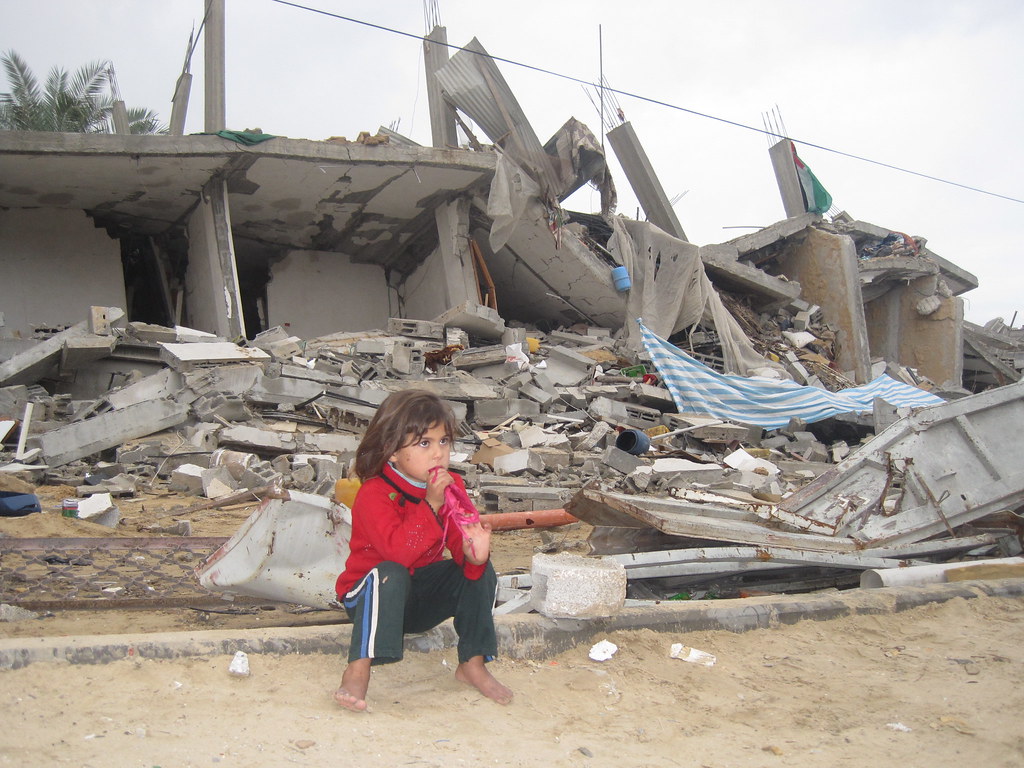
Photo: “Gaza war Nov2012” by EU Civil Protection and Humanitarian Aid is licensed under CC BY-NC-ND 2.0.
Weekend read: Sonnet variation: Michael R. Burch, ‘Erin’

All that’s left of Ireland is her hair—
bright carrot—and her milkmaid-pallid skin,
her brilliant air of cavalier despair,
her train of children—some conceived in sin,
the others to avoid it. For nowhere
is evidence of thought. Devout, pale, thin,
gay, nonchalant, all radiance. So fair!

How can men look upon her and not spin
like wobbly buoys churned by her skirt’s brisk air?
They buy. They grope to pat her nyloned shin,
to share her elevated, pale Despair …
to find at last two spirits ease no one’s.

All that’s left of Ireland is the Care,
her impish grin, green eyes like leprechauns’.

*****

Michael R. Burch writes: “My poem is set in the present and really has nothing to do with poverty. All that’s left of Ireland of yore is the young mother’s red hair, fair skin, a tendency toward melancholy (“despair), and her train of children. She’s a practicing Catholic except for a few affairs. Otherwise she’s a modern woman, drinking and flirting in a pub. I was trying to capture a bit of Ireland in a young mother, very loosely inspired by one of my Irish cousins who was a bit of a “wild child” in her youth.”

(Editor’s aside: My bad for thinking that “All that’s left” implied poverty, which was not in Michael R. Burch’s mind at all. True, Ireland goes through enormous swings of fortune, but the Ireland of even some years ago no longer matches the fabulously rich Ireland of today – the people are 50% richer than Americans or Norwegians…

2024 top GDP.png

… putting the UAE and Switzerland in the shade as well.)

Michael R. Burch’s poems have been published by hundreds of literary journals, taught in high schools and colleges, translated into 22 languages, incorporated into three plays and four operas, and set to music, from swamp blues to classical, 61 times by 32 composers. He is also the founder and editor-in-chief of The HyperTexts.

Photo: “Irish Fire at the Barn” by Trey Ratcliff is licensed under CC BY-NC-SA 2.0.

Using form: Nonce form: RHL, ‘Camelot at Dusk’

From under low clouds spreading from the south
The red sun drops slow to night’s waiting mouth.
Rush lamps are lit; the guards changed on the walls;
Supper will not be served in the Great Halls
With Arthur still away. Each in their room,
The members of the Court leave books or loom
To say their Vespers in the encroaching gloom.

Lancelot, up in his tower,
Sees the sunset storm clouds glower,
Feels his blood’s full tidal power,
Knows he has to go.
In her bower, Gwenivere
Puts a ruby to her ear,
Brushes firelight through her hair,
Feels her heartbeat grow.

Guard, guard, watch well:
For the daylight thickens
And the low cloud blackens
And the hot heart quickens
To rebel.

From his tower, caring not
For consequences, Lancelot
Crosses courts of Camelot,
Pitying his King.
In her bower, Gwenivere
Feels his presence coming near,
Waits for footfalls on the stair,
Lets her will take wing.

Guard, guard, watch well:
If attention slackens
When the deep bond beckons,
Evil knows Pendragon’s
In its spell.

And as the storm clouds, rubbing out the stars,
Deafened the castle and carved lightning scars,
Drenched Arthur rode for flash-lit Camelot
Where he, by Queen and Knight, was all forgot.

*****

‘Camelot at Dusk’ was originally published by Candelabrum, a now-defunct poetry magazine in the UK which appeared twice-yearly from April 1970 to October 2010. Candelabrum provided what was, in the 1970s, a very rare platform for British poets working in metrical and rhymed verse.

Technically, the poem uses a variety of forms. The opening and closing passages use iambic pentameter with simple sequential rhyme for a level of detachment (and the only times Arthur is mentioned by name). The passages with Lancelot and Gwenivere use shorter trochaic lines with denser rhymes for more intensity. The passages of warnings to the guards… well, they have a shifting but repeating structure all their own.

Because of the bracketing of the more emotional passages by the more detached opening and closing, the piece feels very complete. As a whole, it is a nonce form. Whether I can ever repeat it successfully, I don’t know. I have tried, but not been satisfied with the result.

‘Camelot at Dusk’ can also now be found in The Hypertexts, which gives it a very respectable Seal of Approval. And it features in the Potcake Chapbook ‘Lost Love’.

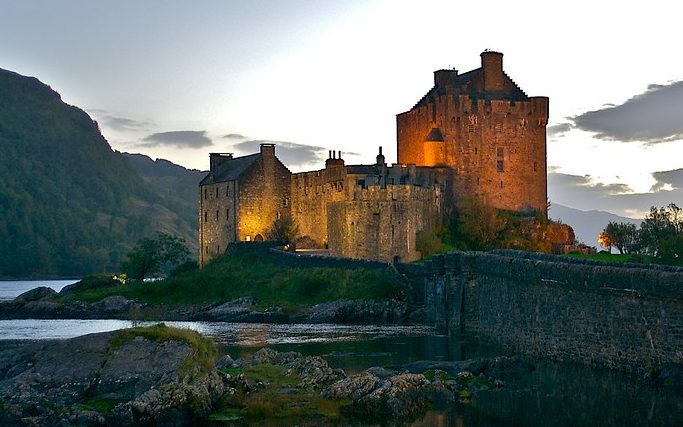
Photo: “Eilean Donan Castle at Dusk” by Bruce MacRae is licensed under CC BY-NC-SA 2.0.

Short NSFW poem: RHL, ‘The Fig Tree’

The fig leaf symbol’s one of History’s greats
As, inter alia,
It hides, discloses and exaggerates
Male genitalia.
The fruit itself suggests the female form —
Dripping with honey
The little hole breaks open, pink and warm…
The Bible’s funny.

First published in The Asses of Parnassus, this poem was republished in Better Than Starbucks, which earned a “Kudos on your brilliant ‘The Fig Tree'” from Melissa Balmain, editor of Light. And it has now been added by Michael R. Burch to my page in The HyperTexts. That’s a wonderful set of editorial acceptances – it makes me proud, and I have to erase my lingering suspicion that the poem would be thought too rude for publication. Now I rate the poem more highly, as being not just a personal favourite but also acceptable to a wider audience.

It sometimes feels that all I write is iambic pentameter. It is always reassuring when a poem presents itself with half the lines being something else, and the result is a lighter, less sonorous verse. The rhymes are good; the poem’s succinct and easy to memorise. I’m happy with it.

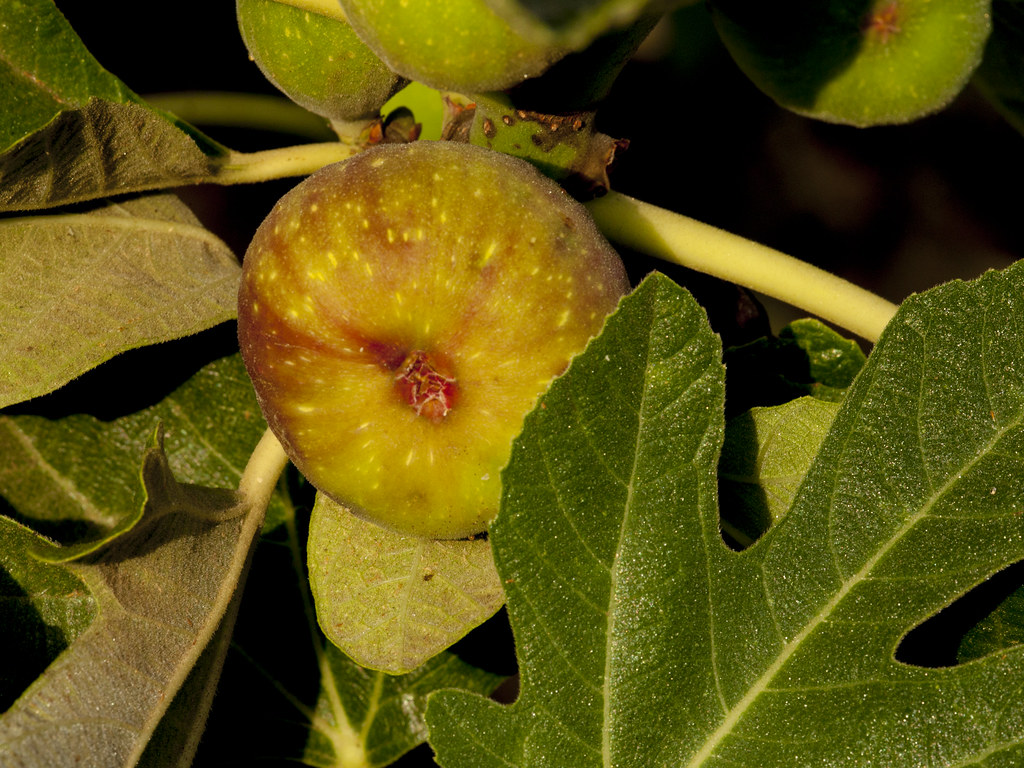
Photo: “Ripe Fig at Dawn” by zeevveez is licensed under CC BY 2.0.

Weekend read: Michael R. Burch, ‘Modern Orpheus, or, William Blake’s Whistle’

I.
Many a sun
and many a moon
I walked the earth
and whistled a tune.

I did not whistle
as I worked:
the whistle was my work.
I shirked

nothing I saw
and made a rhyme
to children at play
and hard time.

II.
Among the prisoners
I saw
the leaden manacles
of Law,

the heavy ball and chain,
the quirt.
And yet I whistled
at my work.

III.
Among the children’s
daisy faces
and in the women’s
frowsy laces,

I saw redemption,
and I smiled.
Satanic millers,
unbeguiled,

were swayed by neither girl,
nor child,
nor any God of Love.
Yet mild

I whistled at my work,
and Song
broke out,
ere long.

******

Michael R. Burch writes: “W. H. Auden famously (or infamously) said “poetry makes nothing happen.” I sympathize with his sentiment but beg to differ. William Blake has been a profound influence on modern culture and societies, not only through his own poetry, art and engravings, but also through his influence on singer-songwriters like Bob Dylan, John Lennon and Jim Morrison. When Dylan met the Beatles the first time, things were a bit cool at first, until Allen Ginsberg broke the ice by bringing up Blake. It turned out that everyone in the room was a fan. Morrison named his group the Doors after Blake’s ‘Doors of Perception’.

“William Blake has been a primary influence on my work, not only as a poet, but also as a translator, editor and publisher of poems about the Holocaust, the Palestinian Nakba, the Trail of Tears, and other similar instances of Blake’s three-headed hydra of church, state and industry doing its worst to make life on earth hell.

A Passing Observation about Thinking Outside the Box’ by Michael R. Burch

William Blake had no public, and yet he’s still read.
His critics are dead.

“William Blake was not an “art for the sake of art” adherent. Quite the contrary. Blake was an ardent reformer. For instance, he and Charles Dickens, who from what I understand lived on the same London street or nearby, wrote movingly about the plight of child chimneysweeps and other minors forced to work long, gruelling, sometimes dangerous, hours by unscrupulous businessmen, and before long England and other nations like the United States were passing child labor laws. Some poets do make things happen with their poetry…”

*****

Michael R. Burch is an American poet who lives in Nashville, Tennessee with his wife Beth, their son Jeremy, two outrageously spoiled puppies, and a talkative parakeet. Burch’s poems, translations, essays, articles, reviews, short stories, epigrams, quotes, puns, jokes and letters have appeared in hundreds of literary journals, newspapers and magazines. He is also the founder and editor-in-chief of The HyperTexts, a former columnist for the Nashville City Paper, and, according to Google’s rankings, a relevant online publisher of poems about the Holocaust, Hiroshima, the Trail of Tears and the Palestinian Nakba. Burch’s poetry has been taught in high schools and universities, translated into 19 languages, incorporated into three plays and two operas, set to music 61 times by 32 composers, from swamp blues to classical, and recited or otherwise employed in more than a hundred YouTube videos. To read the best poems of Mike Burch in his own opinion, with his comments, please click here: Michael R. Burch Best Poems.   

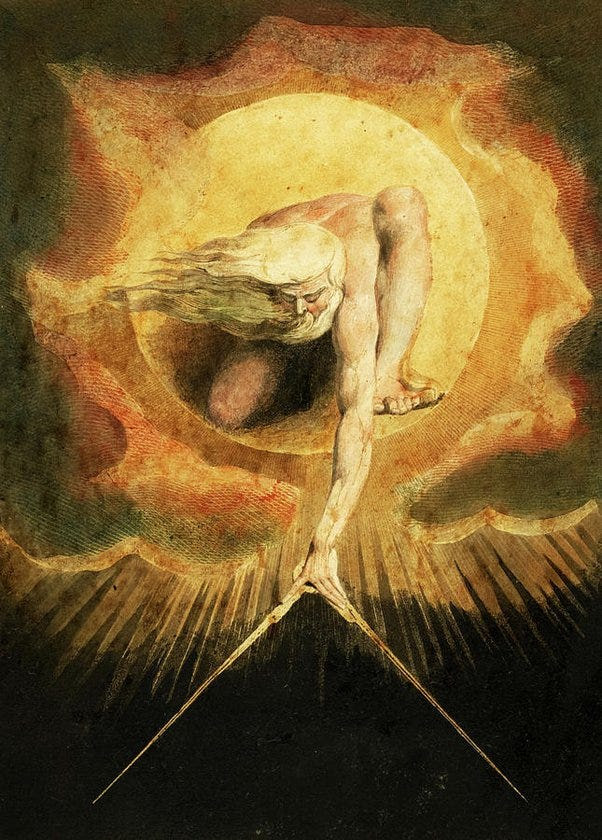
Illustration: ‘Ancient of Days’ by William Blake

Short poem: RHL, ‘I Started Out Alone’

I started out alone,
No numbers and no words.
The people gave me food and clothes.
I loved the sun and birds.

And when I reach the end
Numbers and words all done,
Have to be fed and dressed again,
I’ll love the birds and sun.

*****

This is one of my favourite poems, for several reasons:
First, it extols the combination of curiosity, enjoyment and acceptance that I believe is appropriate for this thing called life.
Second, it is simple in expression: simple words, simple rhythm, in iambics with simple full and slant rhymes.
And third (and perhaps most importantly) it is easy to memorise: it has lodged itself in my brain without any effort or even intent on my part and, as this blog frequently claims, that is the essence of poetry.

‘I Started Out Alone’ was originally published in Bewildering Stories in 2019. More recently it was included in a batch of my poems that Michael R. Burch spotlighted in The Hypertexts for August 2024.

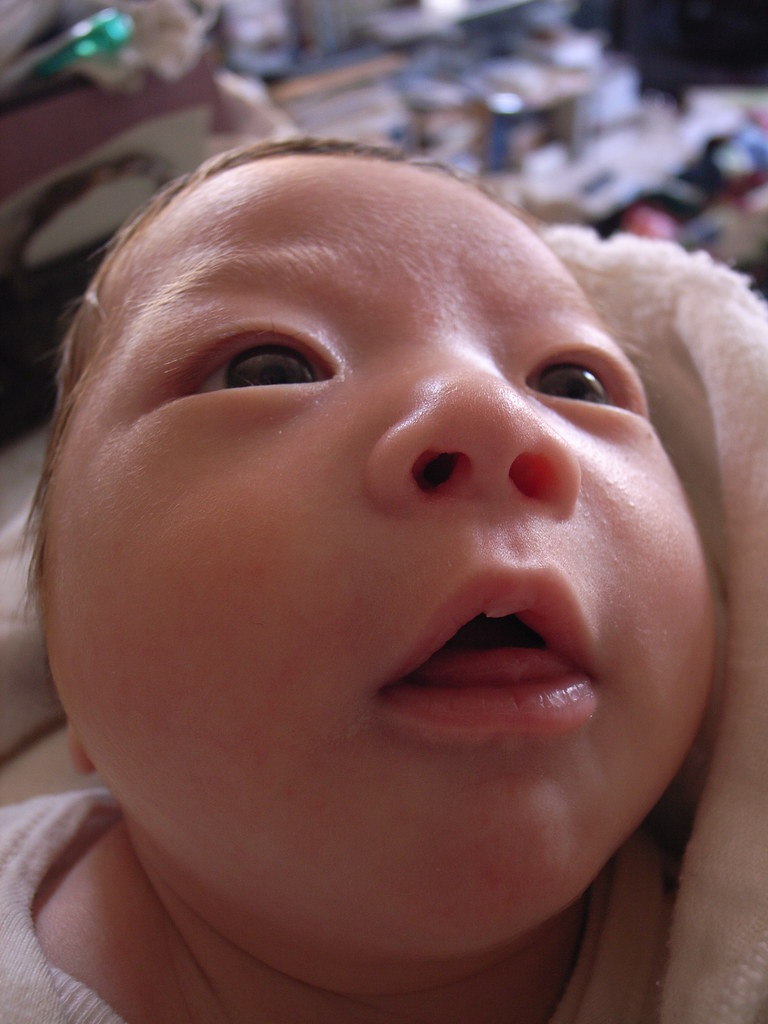
Photo: “Baby face” by matsuyuki is licensed under CC BY-SA 2.0.