Tag Archives: translation

Odd poem: Tchaikovsky, ‘Lilies of the Valley’

When at the end of spring I pick for the last time
My favourite flowers— a yearning fills my breast,
And to the future I urgently appeal:
Let me but once again look upon the lilies of the valley.

Now they have faded. Like an arrow the summer has flown by,
The days have grown shorter. The feathered choir is still,
The sun more charily grants us its warmth and light,
And already the wood has laid its leafy carpet.

Then when harsh winter comes
And the forests don their snowy cover,
Despondently I roam and wait with new yearning
For the skies to shine with the sun of spring.

I find no pleasure in books, or conversation,
Or swift-rushing sledges, or the ball’s noisy glitter,
Or Patti, or the theatre, or delicate cuisine,
Or the quiet crackling of smouldering logs on the fire

I wait for spring. And now the enchantress appears,
The wood has cast off its shroud and prepares for us shade,
And the rivers start to flow, and the grove is filled with sound,
And at last the long-looked-for day is here!

Quick to the woods!—I race along the familiar path.
Can my dreams have come true, my longings be fulfilled?—
There he is! Bending to the earth, with trembling hand
I pluck the wondrous gift of the enchantress Spring.

O lily of the valley, why do you so please the eye?
Other flowers there are more sumptuous and grand,
With brighter colours and livelier patterns,
Yet they have not your mysterious fascination.

Where lies the secret of your charms? What do you prophesy to the soul?
With what do you attract me, with what gladden my heart?
Is it that you revive the ghost of former pleasures,
Or is it future bliss that you promise us?

I know not. But your balmy fragrance,
Like flowing wine, warms and intoxicates me,
Like music, it takes my breath away,
And like a flame of love, it suffuses my burning cheeks.

And I am happy while you bloom, modest lily of the valley,
The tedium of winter days has passed without a trace,
And oppressive thoughts are gone, and in my heart in languid comfort
Welcomes, with you, forgetfulness of trouble and woe.

Yet now you fade. Again in monotonous succession
The days will begin to flow slowly, and stronger than before
Will I be tormented by importunate yearning,
By the agonizing dream of the happiness of days in May.

And then someday spring again will call
And raise the living world out of its fetters.
But the hour will strike. I shall be no more among the living,
I shall meet, like everyone, my fated turn.

And then what?—Where, at the winged hour of death,
Will my soul, heeding its command, soundlessly soar?
No answer! Be silent, my restless mind,
You cannot guess what eternity holds for us.

But like all of nature, drawn by our thirst to live,
We call to you and wait, beautiful Spring!
The joys of earth are so near to us, so familiar—
The yawning maw of the grave so dark!

*****

Lilies of the Valley (Ландыши) is a poem written by Pyotr Ilyich Tchaikovsky in December 1878 while he was in Florence.

“I am terribly proud of this poem”, he wrote when enclosing a copy to his brother Modest. “For the first time in my life I have managed to write a fairly good poem, which moreover is deeply heartfelt. I assure you that although it was very difficult, still I worked on it with the same pleasure as I do on music.”

Когда в конце весны последний раз срываю
Любимые цветы, – тоска мне давит грудь,
И к будущему я молитвенно взываю:
Хоть раз еще хочу на ландыши взглянуть.

Вот отцвели они. Стрелой промчалось лето,
Короче стали дни, умолк пернатый хор,
Скупее солнце нам дает тепла и света,
И разостлал уж лес свой лиственный ковер.

Потом, когда придет пора зимы суровой
И снежной пеленой оденутся леса,
Уныло я брожу и жду с тоскою новой,
Чтоб солнышком весны блеснули небеса.

Не радуют меня ни книга, нибеседа,
Ни быстрый бег саней, ни бала шумный блеск,
Ни Патти, ни театр, ни тонкости обеда,
Ни тлеющих полен в камине тихий треск.

Я жду весны. И вот волшебница явилась,
Свой саван сбросил лес и нам готовит тень,
И реки потекли, и роща огласилась,
И наконец настал давно желанный день!

Скорее в лес!.. Бегу знакомою тропою:
Ужель сбылись мечты, осуществились сны?..
Вот он! Склонясь к земле, я трепетной рукою
Срываю чудный дар волшебницы-весны.

О ландыш, отчего так радуешь ты взоры?
Другие есть цветы роскошней и пышней,
И ярче краски в них, и веселей узоры, —
Но прелести в них нет таинственной твоей.

В чём тайна чар твоих? Что ты душе вещаешь?
Чем манишь так к себе и сердце веселишь?
Иль радостей былых ты призрак воскрешаешь!
Или блаженство нам грядущее сулишь?

Не знаю. Но меня твоё благоуханье,
Как винная струя, и греет и пьянит,
Как музыка, оно стесняет мне дыханье
И, как огонь любви, питает жар ланит.

И счастлив я, пока цветешь ты, ландыш скромный,
От скуки зимних дней давно прошел и след,
И нет гнетущих дум, и сердце в неге томной
Приветствует с тобой забвенье зол и бед.

Но ты отцвел. Опять чредой однообразной
Дни тихо потекут, и прежнего сильней
Томиться буду я тоскою неотвязной,
Мучительной тоской о счастье майских дней.

И вот когда-нибудь весна опять разбудит
И от оков воздвигнет мир живой.
Но час пробьет. Меня – среди живых не будет,
Я встречу, как и все, черед свой роковой.

Что будет там?.. Куда, в час смерти окрыленный,
Мой дух, веленью вняв, беззвучно воспарит?
Ответа нет! Молчи, мой ум неугомонный,
Тебе не разгадать, чем вечность нас дарит.

Но, как природа вся, мы, жаждой жить влекомы,
Зовем тебя и ждем, красавица весна!
Нам радости земли так близки, так знакомы,-
Зияющая пасть могилы так темна!

English translation reproduced from Alexander Poznansky, Tchaikovsky. The quest for the inner man (1993), p. 336-337. https://creativecommons.org/licenses/by-nc-sa/4.0/

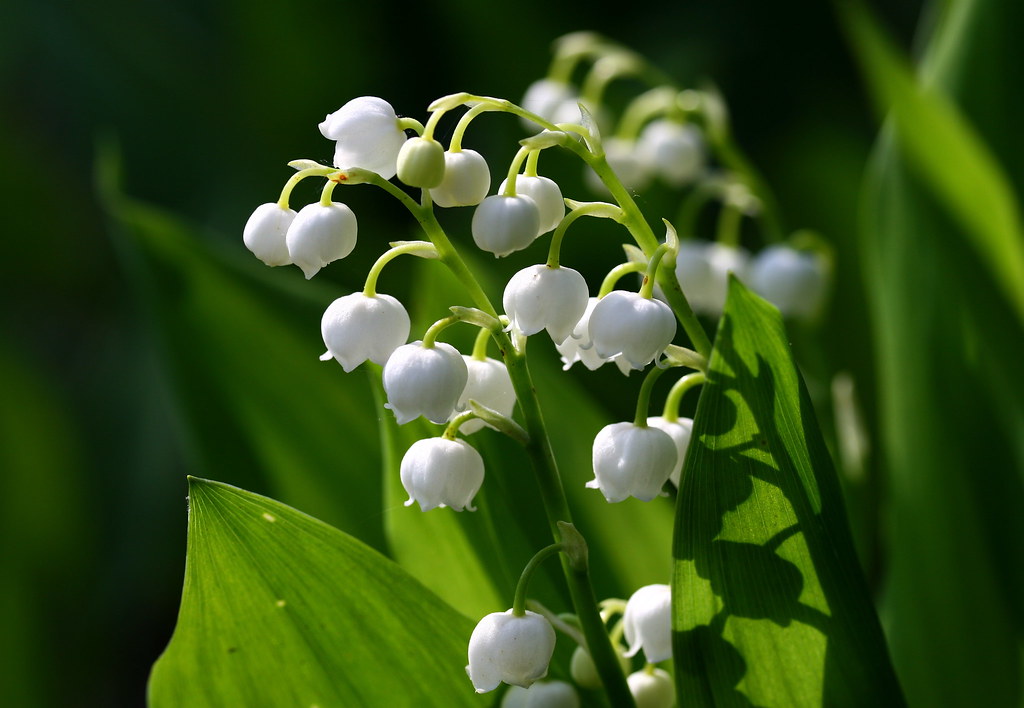
Photo: “lily of the valley” by Muffet is licensed under CC BY 2.0.
Drew Nathaniel Keane, ‘Seventy-Three’

He gave a careless shrug when he had heard
The Delphic Oracle’s prophetic word:
“Beware, my lord, the age of seventy-three”
(For Delphi was renowned for verity).
“I’m thirty now with years to plan for knives
Before the gods’ appointed day arrives.”
Reclining in his litter, bound for home,
Delighted Nero journeyed back to Rome.
 
When he returned, he felt a little drained;
With news like this, how could he be restrained?
Surrendering to pleasure on the way —
To gardens and gymnasia by day,
By night to dance and poetry and drink
In torchlit theatres where bodies slink
Whose dancing ever animates and soothes,
The naked bodies of Achaean youths.
 
Thus Nero rests, while on an arid plain
Far to the west of Rome, in distant Spain,
Old Galba drills his legions secretly,
Old Galba who was spry for seventy-three.

(After C. P. Cavafy’s ‘Η διορία του Νέρωνος’.)

*****

Drew Nathaniel Keane writes: “I’m enchanted by the verse of Constantine Cavafy — ‘a Greek gentleman in a straw hat, standing absolutely motionless at a slight angle to the universe’, as E. M. Forster once described him. In his wry and wistful, gossipy and subtle singing, the Alexandria of Cleopatra feels as immediate as one of his own one-night stands in modern-day Alexandria. It’s quite a contrast to the chest-thumping, hero-worshiping sort of classicism one too often sees on the app formerly known as Twitter. There are already many fine translations of the brief 1915 poem, 
Η διορία του Νέρωνος [‘The Deadline of Nero’], based upon an anecdote in Suetonius’s Life of Nero, of which my favorite is Ian Parks’s paraphrase, published in his little collection The Cavafy Variations (Rack Press, 2013). My paraphrastic version of the poem was inspired by Parks’s, of which one can hear echoes — the “shrug” of line 1, of course, and his turning the punchline into a rhyming couplet gave me the idea to give 
Η διορία του Νέρωνος the Drydenian-Popean treatment I have.

Δεν ανησύχησεν ο Νέρων όταν άκουσε
του Δελφικού Μαντείου τον χρησμό.
«Τα εβδομήντα τρία χρόνια να φοβάται.»
Είχε καιρόν ακόμη να χαρεί.
Τριάντα χρονώ είναι. Πολύ αρκετή
είν’ η διορία που ο θεός τον δίδει
για να φροντίσει για τους μέλλοντας κινδύνους.

Τώρα στην Ρώμη θα επιστρέψει κουρασμένος λίγο,
αλλά εξαίσια κουρασμένος από το ταξίδι αυτό,
που ήταν όλο μέρες απολαύσεως —
στα θέατρα, στους κήπους, στα γυμνάσια…
Των πόλεων της Αχαΐας εσπέρες…
Α των γυμνών σωμάτων η ηδονή προπάντων…

Αυτά ο Νέρων. Και στην Ισπανία ο Γάλβας
κρυφά το στράτευμά του συναθροίζει και το ασκεί,
ο γέροντας ο εβδομήντα τριώ χρονώ.

D. N. Keane (PhD St And) is a Lecturer of English at Georgia Southern University. His verse has been published in Snakeskin (including ‘Seventy-Three’), Spirit Fire ReviewLighten Up OnlineBetter Than StarbucksEarth & Altar, and other venues. More of his work can be found at drewkeane.com

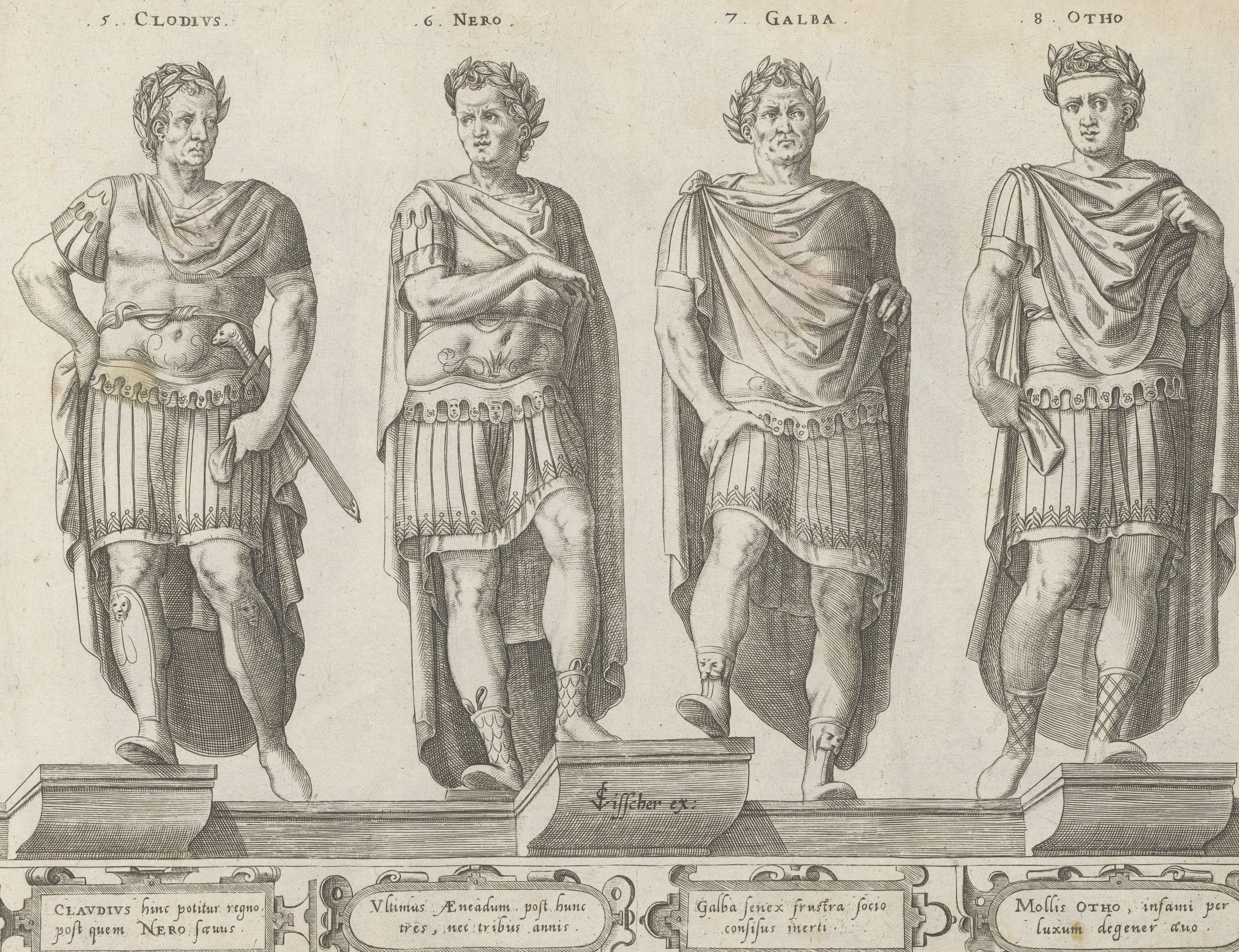
Photo: “Romeinse keizers Claudius I, Nero, Galba en Otho 5. Clodius 6. Nero 7. Galba 8. Otho (titel op object) Van de Roomsche Keyseren en ‘tgevolgh (serietitel) Twaalf Romeinse keizers (serietitel) Den Grooten Figuer-Bibel , RP-P-1982-306-594” by Rijksmuseum is marked with CC0 1.0.

Poem into poem: Translating François Villon: Robert Schechter, ‘Ballade of the Ladies’

Would someone kindly tell me please
Where the Roman, Flora, went?
And where is Alcibiades,
Her cousin? In what continent?
And Echo, singing merriment…
Speak up now, someone, if you know,
Is Echo’s lovely timbre spent?
And where did last year’s snowflakes go?

And where on earth is Heloise
Whose lover’s private parts were rent,
The subject of such cruelties
Brought down in such a foul descent?
And where’s the Queen whose heart was bent
Against young Buridan so low
She drowned him in the Seine, poor gent?
And where did last year’s snowflakes go?

And Blanche, the Queen, who sang with ease,
And Siren-like made men content?
And Big Foot Bertha, Beatrice?
And Arembourg, Maine’s resident?
And Joan, who still would not relent
Although the flames attacked her so?
Virgin, my poor ears are bent!
And where did last year’s snowflakes go?

Prince, don’t ask me to invent
Responses that seem apropos.
In this refrain my answer’s pent:
And where did last year’s snowflakes go?

*****

Ballade des dames du temps jadis

Dictes moy où, n’en quel pays,
Est Flora, la belle Romaine ;
Archipiada, ne Thaïs,
Qui fut sa cousine germaine;
Echo, parlant quand bruyt on maine
Dessus rivière ou sus estan,
Qui beauté eut trop plus qu’humaine?
Mais où sont les neiges d’antan!

Où est la très sage Heloïs,
Pour qui fut chastré et puis moyne
Pierre Esbaillart à Sainct-Denys?
Pour son amour eut cest essoyne.
Semblablement, où est la royne
Qui commanda que Buridan
Fust jetté en ung sac en Seine?
Mais où sont les neiges d’antan!

La royne Blanche comme ung lys,
Qui chantoit à voix de sereine;
Berthe au grand pied, Bietris, Allys;
Harembourges qui tint le Mayne,
Et Jehanne, la bonne Lorraine,
Qu’Anglois bruslerent à Rouen;
Où sont-ilz, Vierge souveraine ?
Mais où sont les neiges d’antan!

Prince, n’enquerez de sepmaine
Où elles sont, ne de cest an,
Qu’à ce refrain ne vous remaine:
Mais où sont les neiges d’antan!

*****

Robert Schechter writes: “I wrote this translation of François Villon‘s Ballade several years ago and I don’t remember a whole lot about the process, other than there was a thread at Eratosphere where many people were trying their hand at a translation, and this was my own go at it. I tried to take a breezy tone, almost but not quite humorous, and to my amazement the rhymes I started with didn’t peter out before the ending.” 

The poem is published in the current issue of Eclectica.

Robert Schechter is a past winner of the Willis Barnstone Translation Prize and the X.J. Kennedy Parody Award. His book of children’s poems, The Red Ear Blows Its Nose: Poems for Children and Others, was named one of the best books of 2023 by School Library Journal and Bank Street College, after receiving starred reviews from Kirkus Reviews, Booklist, and School Library Journal. His poems have appeared in The Washington Post, The Spectator, Highlights for Children, Cricket, Spider, Ladybug, The Caterpillar, The School Magazine, The Paris Review Online, Poetry East, Measure, Snakeskin, The Evansville Review, and Light, where he also appeared as a featured poet, as well as in several anthologies such as the Everyman’s Library Villanelles and The National Geographic Book of Nature Poetry.

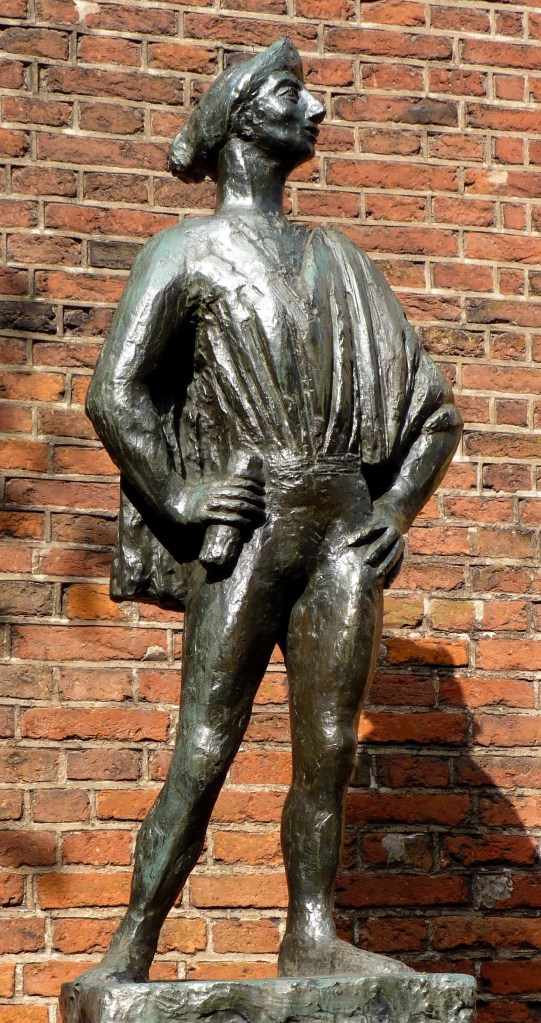
Photo: “Statue of Francois Villon in Utrecht” by Dudva is licensed under CC BY-SA 4.0.

Using form in translation: Virgil, tr. George Simmers, ‘Rumour’

Through Africa vile Rumour raced,
Of all the plagues the fastest-paced.
She’s supple, smart, light on her toes,
And gains momentum as she goes.
She may start small as creeping mouse
But soon she’ll overtop the house
Till, though in muck her feet may stand,
Her head is in Cloud-Cuckoo-Land.
Watch Rumour go! Her huge black wings
Hide fearful eyes, a tongue that stings,
Lungs that can bellow till they burst
And ears fine-tuned to hear the worst.
By night she’ll hiss round that odd place
Nor earth nor sky, but cyberspace,
And through those small hours she will keep
Alert and growing — she won’t sleep.
Come daylight she’ll observe with malice
Events in cottage and in palace.
Great cities then will shake in fear
At the enormities they hear,
And shudder when they taste the brew
In which she’s mixed the false and true.
Whenever men, fraught with disgust,
All eye each other with mistrust,
Great Rumour grins, her strength unfurled.
She relishes our post-truth world!

from Aeneid, Book Four

*****

George Simmers writes: “Plodding through a book of the Aeneid for O-level Latin when I was fifteen, many many years ago, I took a strong dislike to Virgil. But several decades later, a talk I attended made me think he might not be entirely tedious. The talk’s handout included a prose translation of this ‘Rumour’ passage. I decided to versify it myself, and found that it slipped quite easily into tetrameters. The eight-syllable line is fast and sharp, and avoids the temptation to ponderousness that always lurks within the pentameter.
Since then I’ve read more of Virgil, and have found that he is one of those poets whose writings have the knack of seeming topical. I have attempted some more translations. If I had to choose a top ten of poems that say something profound about the human condition, I would include his description of the souls purged of suffering, re-crossing the Styx to attempt a new life.”

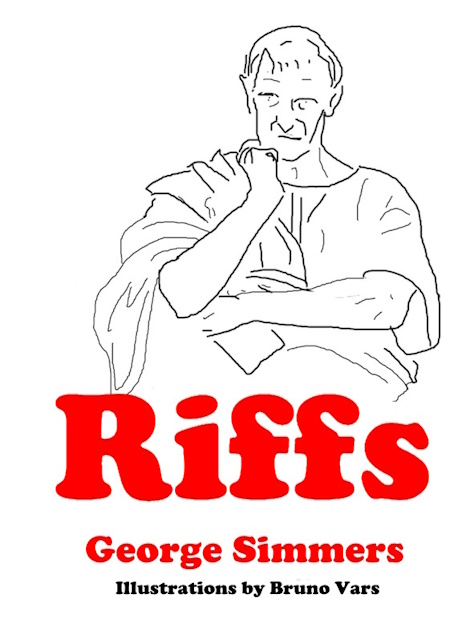
Editor’s note: Both ‘Rumour’ and the Styx-recrossing passage that Simmers mentions are in his recent volume of translations, Riffs, along with his translations from Ovid, Catullus, the Greek Anthology and Francois Villon. Riffs costs £5, and should be available from Amazon, but if you’d like a signed copy, email him: simmersgeorge@yahoo.co.uk and he’ll arrange one for you at no extra cost.

George Simmers used to be a teacher; now he spends much of his time researching literature written during and after the First World War. He has edited Snakeskin since 1995. It is probably the oldest-established poetry zine on the Internet. His work appears in several Potcake Chapbooks, and his recent diverse collection is ‘Old and Bookish’.

Photo: “Dark Angel” by Novafly is licensed under CC BY-SA 2.0.

Verse into Verse: George Simmers translates Catullus ‘VII’

Lesbia, you ask me quantify
How many of your kisses I
Might think enough. My answer? Count,
When you’re in Libya, the amount
Of tiny sand grains on the beach
Along the shining miles that reach
Between Jove’s shrine and Battus’s tomb.
Or count the stars that pierce the gloom
To stare all-seeing from above
Upon the privacies of love.
Let’s kiss and kiss with such excess
We’ll make all voyeurs’ minds a mess;
Add kiss on kiss, till we’ve a sum
So vast all gossips are struck dumb.

*****

This is one of the translations from Catullus to be found in the recently published pamphlet, Riffs, by George Simmers, editor of Snakeskin, the world’s longest-running monthly ezine for poetry. Riffs is a grab-bag of translations of poems that have appealed to him, from Ovid, Virgil, Catullus, the Greek Anthology and Francois Villon. For sample pages (featuring Ovid’s version of the myth of Narcissus) click here.

The plentiful illustrations are by Bruno Vars, whose pictures enlivened George’s previous pamphlet, Old, Old.

Riffs costs £5, and should be available from Amazon, but if you’d like a signed copy, email him: simmersgeorge@yahoo.co.uk and he’ll arrange one for you at no extra cost.

Robert Frost said that poetry is what gets lost in translation. George Simmers has tried to find it again. This is the ideal Christmas gift for the classicist in your life.

Poem: “Bee”

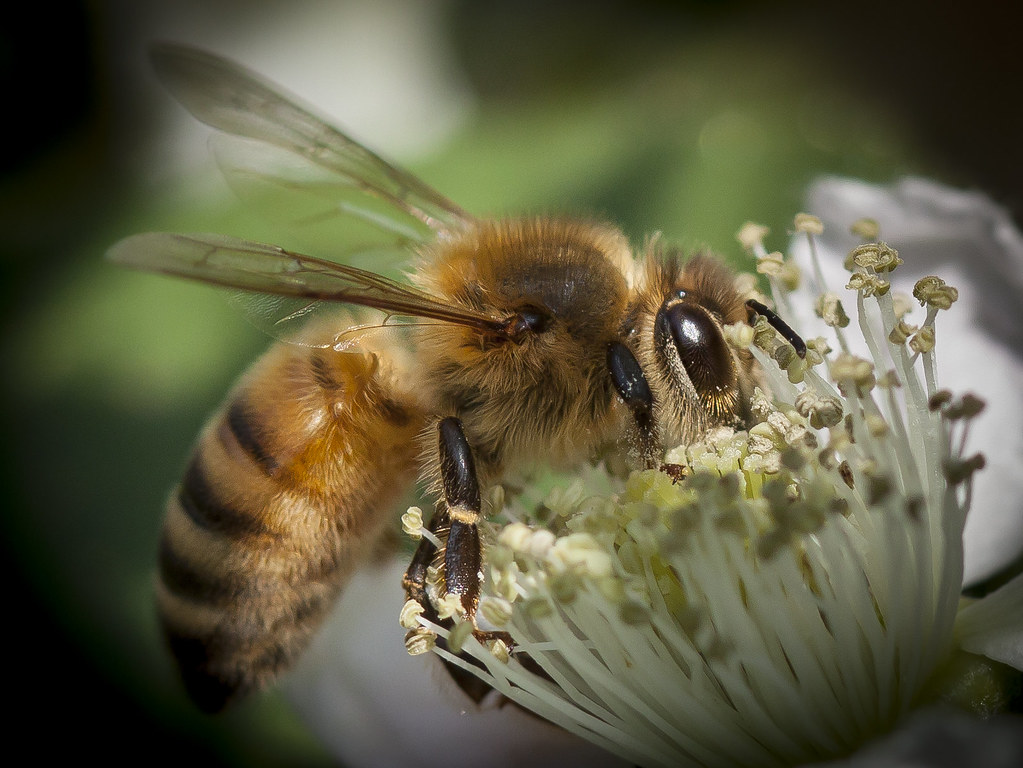
“July Honey Bee” by MattX27 
Through the honeyed halls of Autumn
Hums the angry ageing bee;
As its work faces fruition,
And its life, redundancy.

This little poem was originally published in Candelabrum, a 1970 formalist hold-out that ran for forty years in the UK under Leonard McCarthy. More recently, it was just republished in Jerome Betts’ latest Lighten-Up Online.

Epigrammatic couplets and quatrains, being rhyme- and stress-based, are common throughout Indo-European languages. They hold the same natural place that haiku, senryu and tanka have in syllable-counting Japanese. It is easier to learn by heart a poem whose form uses the natural strengths of the language, rather than something written in a language-inappropriate form.

Similarly, when reading a poem in translation, you get the ideas and the imagery but you normally lose the enhancement of mood caused by the metre, the rhythm of the verse, as well as by the rhyme. So ideas and imagery alone give you prose, not poetry.

Consider the differences in tone of gravity or levity set by rhythm in these opening lines (and you need to read them aloud–in your head if you can do that, otherwise really aloud, in order to hear the rhythm, the beat of the lines):

Let us go then, you and I,
When the evening is spread out against the sky...

I sprang to the stirrup, and Joris, and he;
I galloped, Dirck galloped, we galloped all three...

On the top of the Crumpetty Tree
The Quangle Wangle sat...

The first is meditative, the second full of action, the third is casual, informal… and those moods are set by the rhythm alone.

Metre is an essential component of English poetry. Make the metre-rule your yardstick. Don’t leave home without it.

Review: “Aniara” by Harry Martinson

Aniara has fascinated me for a long time because it combines three of my favourite literary interests: science fiction, poetry, and the works of Nobel Prizewinners.

Harry Martinson wrote the book in the 1950s, a decade after the bombing of Hiroshima and Nagasaki but before Sputnik launched the Space Age. It is the story of mass migration to Mars from the destroyed Earth, centred on a miles-long spaceship with thousands of emigrants that is knocked off course and is headed out of the solar system on a hopeless journey.

The existentialism of the situation – living lives of no destination in an inescapable vessel – is in practical terms no different from our own endless circling of the Sun… The issues of whether this feels different, and whether it should feel different, are never addressed but resonated with me nevertheless.

The characters are diverse and interesting. With the book having been written by a male, and with the narrator having a variety of sexual relationships with women, I was surprised to find that the recent film version has a female protagonist. Well, why not make it into a lesbian sf movie, though?

The book is divided into 103 ‘songs’ of half a page to seven pages in length – only 102 in the English translation by Hugh MacDiarmid and Elspeth Harley Schubert, as they and the author agreed that Song 42 is untranslatable.

This raises the question of what the verse is like in the original Swedish. A mixture of formal and free verse, apparently, but with much more rhyme and structure than in the translation. (That the translation is weaker is natural enough, but unfortunate). While I wait to find a full copy in Swedish (which I will be able to work my through, with the English translation in my other hand), I am glad to have found a Swede’s Goodreads review in English which gives samples of the poetry in both languages. (Thank you, Lisa!) For example:

“Försök till räddning genom tankeflykt
och överglidningar från dröm till dröm
blev ofta vår metod.
Med ena benet dränkt i känslosvall
det andra med sitt stöd i känslodöd
vi ofta stod.
Jag frågade mig själv men glömde svara.
Jag drömde mig ett liv men glömde vara.
Jag reste alltet runt men glömde fara. –
Ty jag satt fånge här i Aniara.”

In the MacDiarmid/Schubert translation:

“Attempts at respite through the flight of thought
and constant transference from dream to dream
was often our method of seeking relief.
With one leg steeped in a flood of feeling
and one supported by a lack of feeling
we often stood.
I questioned myself but quite forgot to answer.
I dreamt of life but quite forgot to live.
I ranged the universe–but could not travel farther
for I was imprisoned here, in Aniara.”

The MacDiarmid/Schubert translation is not great, as shown in this excerpt. Not only is there a general lack of rhyme, but the second-to-last line would translate correctly as “I traveled all around but forgot about danger”. The only justification for changing the meaning is to make the (very weak) rhyme of “farther” with “Aniara”.

But then again, translating poetry into a different language’s poetry is at least as difficult as translating a written story into a film… so, as for this translation: I’ll give it five (out of ten, for the try). But the original? From what I can see and guess, ten out of ten!