Tag Archives: using form

Stephen Edgar, ‘Dawn Solo’

First light beside the Murray in Mildura,
Which like a drift of mist pervades
The eucalypt arcades,
A pale caesura

Dividing night and day. Two, three clear notes
To usher in the dawn are heard
From a pied butcherbird,
A phrase that floats

So slowly through the silence-thickened air,
Those notes, like globules labouring
Through honey, almost cling
And linger there.

Or is it that the notes themselves prolong
The time time takes, to make it stand,
Morning both summoned and
Called back by song.

*****

Stephen Edgar writes: “This poem needs little comment, I think. The bird in question is the pied butcherbird, as the poem says, considered by some to have the most beautiful song of any Australian bird. Let me quote some field guides to Australian birds: “superb, slow, flute-like mellow notes”; “song is one of our finest: a varied sequence of pure fluty whistles, sometimes interspersed by throaty warbles”; “fluted, far-carrying notes that seem to reflect the loneliness of its outback haunts”. Perhaps that third quotation best suggests the quality I was trying to capture. The notes seemed to be in slow motion, slowing time. I was attending the Mildura Writers’ Festival. Mildura is on the southern bank of the Murray River in northwestern Victoria. This was the first occasion on which I had heard the pied butcherbird.

“The form is a quatrain rhyming ABBA, with lines progressively shortening from pentameter, though tetrameter, trimeter to dimeter. It was first published in Australian Book Review and then in my twelfth book The Strangest Place: New and Selected Poems (Melbourne, Black Pepper, 2020), which is available on the Black Pepper website.”

Stephen Edgar was born in 1951 in Sydney, where he grew up. From 1971 to 1974 he lived in London and travelled in Europe. On returning to Australia he moved with his then partner to Hobart, Tasmania, where he attended university, reading Classics, and later working in libraries. Although he had begun writing poetry while still at high school, it was in Hobart that he first began writing publishable poems and found his distinctive voice. He became poetry editor of Island Magazine from 1989 to 2004. He returned to Sydney in 2005. He is married to the poet Judith Beveridge.

He has published thirteen full collections: Queuing for the Mudd Club (1985), Ancient Music (1988), Corrupted Treasures (1995), Where the Trees Were (1999), Lost in the Foreground(2003), Other Summers (2006), History of the Day (2006), The Red Sea: New and Selected Poems (2012), Eldershaw (2013), Exhibits of the Sun (2014), Transparencies (2017), The Strangest Place: New and Selected Poems (2020) and Ghosts of Paradise (2023). A small chapbook, Midnight to Dawn, came out in 2025, and a new collection, Imaginary Archive,will be published in late 2025. His website is www.stephenedgar.com.au, on which publication details of his books, and where they can be purchased, are given.

He was awarded the Australian Prime Minister’s Award for Poetry in 2021 for The Strangest Place.

Photo: “Pied Butcherbird (Cracticus nigrogularis)” by aviceda is licensed under CC BY-NC-SA 2.0.

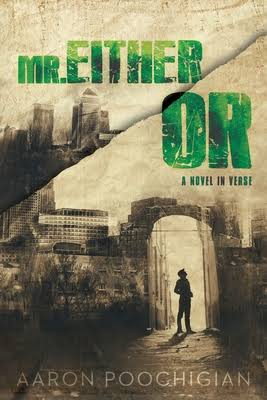
Aaron Poochigian, intro to ‘Mr. Either/Or’

Washington Square, playground of NYU,
and you are in the grass, your shoes and socks
like sloughed snakeskin around you. Speed-chess players
at concrete tables cuss and slap their clocks
as cops with nothing nine-one-one to do
roust dormant derelicts from greenhouse layers
of coats and trash. Nearby, a Gingko tree,
and under it a blonde in horn-rimmed glasses
eating up The Stranger by Camus.

You almost feel at home in this milieu;
for five years now you have been skipping classes,
tipping beers and averaging a ‘C’
to mask your hazardous identity,
the wicked one, known only to a few
code-numbered codgers in the F.B.I.
Somewhere at Quantico a dossier
redacts your selfless service as a fly
collecting wide-eyed snapshots for Defense,
a freak inferno burning evidence,
a ricin prick, a ‘beddy-bye’ bouquet,
and all too often the unlucky guy
sent in the long last seconds of suspense
to snip the ticker and defuse a war.

Who knows? Someday it might be nice to play
one person, but for now you live as two:
student and agent, Mr. Either/Or.

*****

Aaron Poochigian writes: “I think of the ‘Mr. Either/Or’ books as entertainments, airport novels to be devoured like genre fiction. I mixed together Pynchon’s ‘The Crying of Lot 49’, Byron’s ‘Don Juan’ and Lee Child’s Jack Reacher thrillers, and the adventures of Mr. Either/Or are what came out. I only hope that they are fun.

“The section published here introduces you to the main character, Zach Berzinski, an FBI agent undercover as an NYU student. This chapter is especially dear to my heart because it describes Washington Square Park with its cast of buskers and undergrads. It’s one of my favorite hang-outs. In 1917, Marcel Duchamp and other Bohemian artists declared the park ‘The free and independent Republic of Bohemia’, a sovereign polity outside of the USA.” 

Aaron Poochigian earned a PhD in Classics from the University of Minnesota and an MFA in Poetry from Columbia University. His latest poetry collection, American Divine, the winner of the Richard Wilbur Award, came out in 2021. He has published numerous translations with Penguin Classics and W.W. Norton. His work has appeared in such publications as Best American Poetry, The Paris Review and Poetry.
aaronpoochigian.com
americandivine.net

Using form: sonnet variation: Amit Majmudar, ‘List of Demands’

All the twists in all the tongues, all
the zeroes, all the ones, all the arms of all the goddesses, all
the names of the nameless and bodiless, all the ways the all-
one embodies, all at once, the alls there are, all
our alleles and alphabets, all the forms, yes all,
even the sestina, all our alternating lives and deaths, all
the kingdoms, phyla, classes, orders, all
the peoples borderless as breaths, all the altars, all the all,

none of the zealots with knives for minds, none
of the wars, proxy, holy, shadow, cold, none
of the for-profit prophets in pulpits of gold, none
of the land grabs in the names of the long lost, none
of the one true anything, book or way or son, none
of that nonsense, absolutely none.

*****

Amit Majmudar writes: “The monorhymed sonnet (each line of the octet ending with the same word, each line of the sestet ending with another) is a chance to goad one’s creativity with a constraint just light enough. You have to come up with lines that stay interesting to the reader even though the reader knows how each line is going to end. In that, the line resembles, say, a formulaic genre novel where the hero gets the girl and defeats the villain at the end. Or one of Conan Doyle’s detective stories: You know that Holmes is going to solve the mystery. The number of characters is so low in a Holmes short story that the culprit has to be one of the few people introduced. But the delight is all in how he figures it out. Poems can work like that, too. The foregone conclusion of all, all, all, all, all, all, all, all, none, none, none, none, none, none is the equivalent of the certainty that Holmes will crack the case. The internal rhymes and alliteration, the images, the poem’s message exalting pluralism over zealotry—these are, collectively, the equivalent of the mystery and the ingenious solution to the mystery, the Sherlock-unlock, the puzzle (hopefully) satisfyingly worked out.”

‘List of Demands’ was first published in Plume.

Amit Majmudar is a poet, novelist, essayist, and translator. He works as a diagnostic nuclear radiologist in Westerville, Ohio, where he lives with his wife and three children. Recent books include Twin A: A Memoir (Slant Books, 2023), The Great Game: Essays on Poetics (Acre Books, 2024), and the hybrid work Three Metamorphoses (Orison Books, 2025). A new poetry collection, Things My Grandmother Said, is forthcoming in 2026. 
More information at www.amitmajmudar.com

Photo: “Inclusive community (citation needed) (2205859730)” by Matt Mechtley from Heidelberg, Deutschland is licensed under CC BY-SA 2.0.

Using form: RHL, ‘(on the value of learning languages when) Roughing It In Europe’

One two three four
Is OK, but you need more:

Un deux trois quat’
If you want a welcome mat

En to tre fire
With the krone getting dearer,

Bir iki uç dirt
Selling off your jeans or shirt

Wahid zoozh teleta arba
In a cafe by the harbour

Üks kaks kolm neli
For some food to fill your belly;

Jeden dwa trzy cztery
Language may be shaky, very,

Uno dos tres cuatro
But they’ll love you if you’re up to

Eins zwei drei vier
Trying freely, laughing freer.

*****

This is one of my youthful hitchhiking days poems… It has just been republished in Firewords Campfire, but was originally in Unsplendid (and then in Better Than Starbucks, and Orchards Poetry Journal).

Firewords paired it with a short story, and commented they were “very different adventures, both centred on the art of connection: one through clumsy but charming attempts to bridge language gaps abroad, the other via a game that becomes a quiet battleground for attention, memory, and something close to intimacy. In both, every word counts.” It is always interesting to hear other people’s takes.

Artwork by Jay Carter, an illustrator from Lancashire who enjoys creating bold, colourful images, often finding inspiration in books, films, history, nature and travel. jaycarterillustrator.com

Using form: Couplets/Sonnet: Gail White, ‘Prayer Updated’

To Anyone who still may be
attentive from Infinity,
we bless you from our dot in space
and thank you for our privileged place.

Give us this day on which to feed
a bit more gluten than we need,
and when we’re adequately fed,
help us to get and stay ahead
and save for our retirement
enough plus twenty-five per cent.

May old age find us cheerful still,
our life in order like our will,
with neither pain nor care nor debt.
Thy kingdom come, but not just yet.

*****

Gail White writes: “Religion and irony are not incompatible I find that a good deal of poetry comes from taking a speculative or questioning view of Bible stories (e.g, how did Adam and Eve react to the murder of Abel by Cain? We don’t hear a peep out of them about it.) And I’ve often said that if God hadn’t wanted at least one cynical feminist poet, I wouldn’t exist.”

‘Prayer Updated’ was published in the current issue of Lighten Up Online.

Gail White is the resident poet and cat lady of Breaux Bridge, Louisiana. Her books ASPERITY STREET and CATECHISM and the chapbook SONNETS IN A HOSTILE WORLD are available on Amazon. She is a contributing editor to Light Poetry Magazine. “Tourist in India” won the Howard Nemerov Sonnet Award for 2013. Her poems have appeared in the Potcake Chapbooks ‘Tourists and Cannibals’, ‘Rogues and Roses’, ‘Families and Other Fiascoes’, ‘Strip Down’ and ‘Lost Love’.

Illustration: “Global Prayer” by thorntonsdigital is licensed under CC BY-ND 2.0.

Using form: Pantoum: Brian Allgar, ‘And then I told you’

We kissed. And then I told you (it was over
dinner at some fancy restaurant)
I loved you, but I couldn’t live like this,
meeting from time to time; I needed more.

Dinner at some fancy restaurant,
and timid sex at your place; that was all, each
meeting. From time to time, I needed more
than you were ready for, so reticent

and timid. Sex at your place – that was all. Each
meeting’s end, I tried not to ask more of you
than you were ready for. So, reticent,
I touched your face in silence, lovingly.

Meetings end. I tried not to ask more of you;
I loved you, but I couldn’t live like this.
I touched your face. In silence, lovingly,
we kissed, and then I told you it was over.

*****

Brian Allgar writes: “In general, I don’t much care for poetic forms, such as the triolet and the villanelle, with repeated lines. But I was attracted by the pantoum’s requirement that the repeated lines, though containing exactly the same words, should somewhat change in meaning each time.”

‘And then I told you’ was first published in Snakeskin.

Brian Allgar was born a mere 22 months before Adolf Hitler committed suicide, although no causal connection between the two events has ever been firmly established. Despite having lived in Paris since 1982, he remains immutably English. He started entering humorous competitions in 1967, but took a 35-year break, finally re-emerging in 2011 as a kind of Rip Van Winkle of the literary competition world. He also drinks malt whisky and writes music, which may explain his fondness for Mendelssohn’s Scottish Symphony. He is the author of The Ayterzedd: A Bestiary of (mostly) Alien Beings and An Answer from the Past, being the story of Rasselas and Figaro. He is also the co-author, with Marcus Bales, of Baleful Biographica, all published by Kelsay Books and available from the publisher or from Amazon.

Photo: “French restaurant with Jean” by obvio171 is licensed under CC BY-SA 2.0.

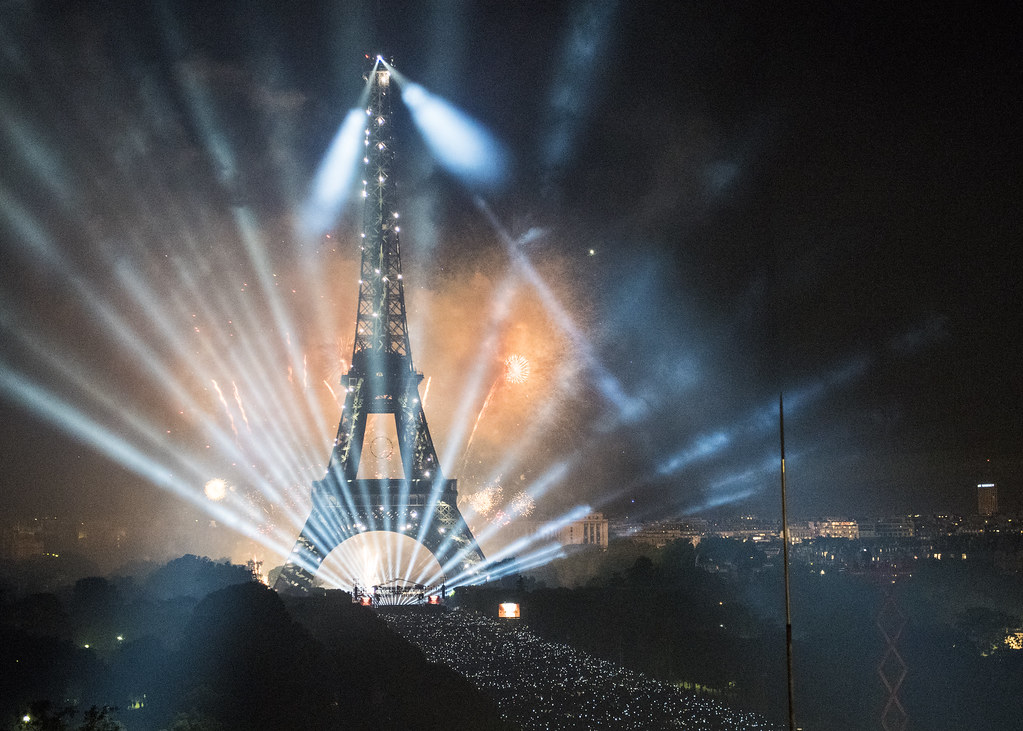
Weekend read: Odd poem: French President Emmanuel Macron, ‘Pour Sophie’

On a trip to Paris one day, little Sophie
Met a giant lady lighting up the night sky.
“What’s your name, you magical monster?”
“My many visitors call me the Eiffel Tower.”
“In all your attire, don’t you sometimes tire
Of being seen only as a humdrum tower?
You, a dragon, a fairy watching over Paris,
An Olympic torch held aloft in grey skies?”
“How you flatter me! So few poets these days
Ever sing the praises of my Parisian soul,
As did Cocteau, Aragon, Cendrars,
Trénet and Apollinaire… Since you’re so good
At seeing beneath the surface, you could
– If you like, when you’re back from France –
Take up your pen and write down
Why you like me – it would be nice and fun!”
“You can count on me! There’s so much to say!
I’ll write twenty lines… but who will read them?”
“Well, I know a man who’ll read your verse.”
“Really? Who?”
“The President of France.”

En voyage à Paris, la petite Sophie
Croisa une géante illuminant la nuit.
“Comment t’appelles-tu, monstre surnaturel?”
“Mes nombreux visiteurs m’appellent Tour Eiffel.”
“N’es-tu pas parfois lasse, avec tes mille atours
Que l’on ne voie en toi qu’une banale tour?
Toi le dragon, la fée, qui veille sur Paris,
Toi, immense flambeau planté dans le ciel gris!”
“Quel plaisir tu me fais! Ils sont devenus rares
Ceux qui comme Cocteau, Aragon ou Cendrars,
Trenet, Apollinaire, avaient su célébrer
Mon âme parisienne aux charmes singuliers.
Puisque tu sais si bien percer les apparences,
Tu pourrais, si tu veux, à ton retour de France,
Prendre à ton tour la plume et conter en anglais
(It would be nice and fun) ce qui chez moi te plaît!”
“Tu peux compter sur moi! Il y a tant à dire!
Je t’écrirai vingt vers… Mais qui voudra les lire?”
“Oh, moi j’en connais un qui lira ton cantique.”
“C’est?”
“Monsieur le président de la République.”

*****

This poem by French President Emmanuel Macron is in French alexandrine: 12 syllable lines, rhyming couplets. The translation is either by him (he is fluent in English) or by the French Embassy in London, as the poem was written for the English girl Sophie’s 13th birthday. She herself had initiated everything with the poem below, which she had sent in April 2017 to the French President… at that time the President was François Hollande, but Macron won the presidency later that year, and responded for Sophie’s birthday on November 1st. Her poem was 20 lines long, written out on her drawing of the Eiffel Tower; his response is also 20 lines long (counting the final question and answer as a single line, which it clearly is by metre and rhyme).

Here is 12-year-old Sophie’s ‘Centre of Attention’:

She has four beautiful legs,
Which help her stand proud,
She looks over everyone,
With her head in the clouds,
She is elegant and tall,
Wears a pretty, lacy skirt,
Whilst staring at her in awe,
Your eyes will not avert,
Her spine is amazingly straight,
Whilst her head touches the sky,
People look up and take pictures of her,
As they are passing on by,
You need to tilt your head up,
To be able to see all of her,
But when you do,
She is as pretty as a picture,
She is the centre of attention,
Noticed by everyone.
She is the Eiffel Tower,
She is second to none.

Macron created a nice circularity with his response to Sophie’s poem, by pretending it was written first and caused Sophie’s poem, rather than the other way round. All very playful.

Photo: “170714-D-PB383-151” by Chairman of the Joint Chiefs of Staff is licensed under CC BY 2.0.

Weekend read and listen: RHL, 3 audio + text poems

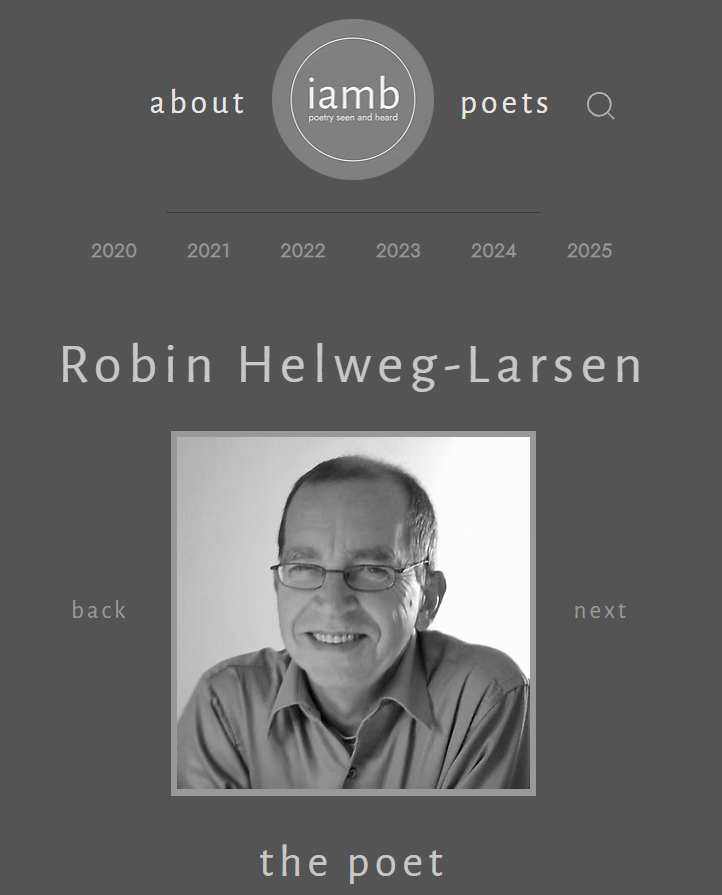
iamb – poetry seen and heard” is the creation of Mark Antony Owen, showcasing poets with their readings of three of their poems. Begun in 2021, Mark describes his project as “part library of poets, part quarterly journal, iamb is where established and emerging talents are showcased side by side. Not just their words, but their readings of them. Expect new poems, every three months, free to your device of choice.”

Accompanied by an out-of-date photograph, three of my poems are available here. They are not among my most recent work, but they are favourites and I chose them for their very different moods, themes, and forms: ‘Camelot at Dusk’, ‘Old Sailors’, and ‘This Ape I Am’. And their use of form sets them apart from all the other poems in this 21st ‘wave’ of iamb. I can’t decide if I am stuck in the past, or write in the style of the only verse that has a chance of being remembered in 100 years. But maybe that’s not an either/or – maybe only verse that is rooted in the historical rhythms of the language will last. So I suspect.

Auditions will reopen in September for next year’s waves.

Using form: Ballade variant: Barbara K. Loots, ‘Opera: a Ballade’

Sometimes the heroine is just a girl,
an innocent set up to be betrayed.
Whether she loves a hero or a churl,
she’ll face a three- or four-hour escapade
in which her feelings and her fate are swayed
by charm, by force, deception, or disguise
she’s helpless to resist or to evade.
And then she dies.

Sometimes around the heroine unfurl
fate’s sinister entrapments. Undismayed,
she feels the storm of accusation swirl
and knows the price of honor must be paid.
Beset by Powers That Must Be Obeyed,
she suffers while the chorus vilifies.
Her hopes of justice and redemption fade.
And then she dies.

Sometimes the heroine, a perfect pearl,
whether a princess or a village maid,
regardless of her protest or demurral,
becomes the object of an evil trade,
a bloody game, a sinister charade,
with hidden motives and transparent lies,
with clash of insult and with flashing blade.
And then she dies.

Through every lamentation and tirade,
each heroine embraces her demise
despite how fervently she might have prayed.
And then…

*****

First published in Light with the note “After watching 33 free streamed operas from the MET during quarantine.” Barbara Loots writes: “Watching those gorgeous productions from the MET day after day during COVID confinement was a saving grace. I have a journal with a complete list, where I starred the ones I liked best for future reference. Kansas City’s excellent Lyric Opera recording of the brand new opera “The Shining” (yes, based on the horror story by Stephen King) recently won a Grammy.”

Barbara Loots resides with her husband, Bill Dickinson, and their boss Bob the Cat in the historic Hyde Park neighborhood of Kansas City, Missouri. Her poems have appeared in literary magazines, anthologies, and textbooks since the 1970s. She is a frequent contributor to Light. Her three collections are Road Trip (2014), Windshift (2018), and The Beekeeper and other love poems (2020), at Kelsay Books or Amazon. More bio and blog at barbaraloots.com

Photo: “This picture makes me happy” by James Jordan is licensed under CC BY-ND 2.0.

Using form: Parody with a message: Marcus Bales, ‘The Easy Way Taken’

Two friends diverged in a yelling mood
And sorry I could not keep them both
And still maintain one attitude,
I scrolled down through one’s page, and viewed
Some green and gold of writing growth.

Then saw the other was just as good,
With maybe even a better claim
Because so well misunderstood
Within the writing neighborhood,
Though as for that they’re much the same.

And each that morning equally laid
The blame upon the other’s back.
I had no way to tell who’d made
The first or worst move; I’m afraid
I have no feel for clique or claque.

Online I have too many friends
To keep good track, so, nothing loath
To making enemies or ends
Where there are no real dividends,
I shook my head – and blocked them both.

*****

Marcus Bales writes: “Most of the fraught relationships online are due to people not being able to write very well on one end, or read very well on the other. Stuff that in in-person conversation would go completely unnoticed is taken up as deliberate slighting. Mostly its merely awkward phrasing, or one interlocutor is already two comments past when the reply to the third interaction scrolls by and it’s misinterpreted as an instant response to the most recent reply when it was really intended to answer something two or three comments back.

“Now in the case of political disagreements where the polarized sides are already firmly established and one side or the other or both are determined to fight that’s a whole other thing. There it’s got nothing to do with how well or ill something is read or written and everything to do with the sport of online woofing.

“It’s one of those things where over the years people block and get blocked and complain to their friends about either end of it and then it all goes away pretty fast as the opportunity to be triggered — again at either end — fades with the blocking.”

(The original poem on which this parody is based, for those not familiar with it, is Robert Frost’s ‘The Road Not Taken‘. – RHL)

Not much is known about Marcus Bales except that he lives and works in Cleveland, Ohio, and that his work has not been published in Poetry or The New Yorker. However his ‘51 Poems‘ is available from Amazon. He has been published in several of the Potcake Chapbooks (‘Form in Formless Times’).

Photo: “Yotsuba & Tech Support” by Liberty Photos is licensed under CC BY-NC 2.0.