Monthly Archives: May 2024

Odd poem: Couplet wordplay: Daniel Galef, ‘Letters to an Editor’

When I was in the printing biz,
in magazines (I worked at MS),
under my office door was slipped
a neatly-typed-out MS,
its cover letter curt and snippy,
return address in MS.
And what a scoop! New drug (its doses
prescribed for MS)
a fraud! The source, in bold defiance,
a chemist with a MS.
I showed my boss. “Yeah, right!” she reckoned,
and canned me in a MS.

*****

Daniel Galef provides this key to the various standard meanings of the abbreviation:
“Ms. Magazine; manuscript; Mississippi; multiple sclerosis; Master of Science degree; millisecond.”

Daniel Galef’s first book, Imaginary Sonnets, was published last year. ‘Letters to an Editor’ was published as part of his being the Featured Poet in Light Poetry Magazine. He is currently working on a book of comic poetry and wordplay, as well as on a PhD from the University of Cincinnati.

Photo: “Ms. magazine Cover – Winter 2015” by Liberty Media for Women, LLC is licensed under CC BY-SA 4.0.

RHL, ‘The Sun is Always Setting’

The sun is always setting, always setting on your day;
you sense the dark approaching, wish that it would stay away.
Do you want a life unchanging? Wish to still be a newborn?
Don’t you know life’s not a rosebud, but has root and leaf and thorn?

The sun is always setting and the black drapes are unfurled;
but notice that the sun sets on your world, not on the world:
it’s rolling into brightness in another’s happy land,
and the dark is evanescent and the brightening is grand.

The sun is always setting on the dinosaurs, but birds
are flocking into being, as are Serengeti herds;
and the sun that lights humanity? Of course it’s going to set,
and elsewhere light new tales of which we’ll just be a vignette.

The sun is always setting, but that view is just your choice;
I say the world is turning and evolving; I rejoice.

*****

Sometimes I’m told that my poetry is too bleak. But I think that’s only so if you want everything to stay as it is now. If, on the other hand, you expect change, and that change will ultimately provide more benefit than loss to the universe as a whole, then <shrug>… so it goes.

This poem has 14 lines but is hardly a sonnet. It was recently published in Pulsebeat Poetry Journal. Thanks, David Stephenson!

Photo: “Sunset Sadness” by BaboMike is licensed under CC BY-NC 2.0.

Annie Fisher: ‘Grumpy Grandad’s Nursery Rhyme’

Cock a buggery doodle doo!
I’m bending to lace up this buggery shoe!
You’d be buggery bad-tempered too
If the buggery cock
Woke you buggery up
At buggery, buggery five twenty two!

*****

Annie Fisher writes: “When our grandchildren were very small, we would sometimes visit to help with child care. The children would often burst into our bedroom early in the morning yelling ‘Cock-a-doodle-doo!’ (Probably encouraged by their parents). On one occasion my husband was staying with them for a few days without me. On the second day he sent me a text at the crack of dawn. The text read ‘Cockabuggerydoodledoo!’ and so I understood that his day had already begun! I thought ‘cockabuggerydoodledoo’ (a case of ‘expletive infixation’, Google tells me) had irresistible rhythmic force.
My poem is, of course, based on the traditional nursery rhyme:
Cock a doodle doo!
My dame has lost her shoe,
My master’s lost his fiddling stick
And knows not what to do.

Annie Fisher’s background is in primary education, initially as a teacher and later as an English adviser. Now semi-retired she writes poetry (this one appeared in Snakeskin) for both adults and children and sometimes works as a storyteller in schools. She has had two pamphlets published with HappenStance Press: (2016) and (2020), and is due to have another pamphlet published in the next couple of months with Mariscat Press. It will be called ‘Missing the Man Next Door’. She is a member of Fire River Poets in Taunton, Somerset and a regular contributor to The Friday Poem https://thefridaypoem.com/annie-fisher/

Photo: “cock-a-doodle-doo.” by alyssaBLACK. is licensed under CC BY-SA 2.0.

Shamik Banerjee, ‘In a Family Gathering’

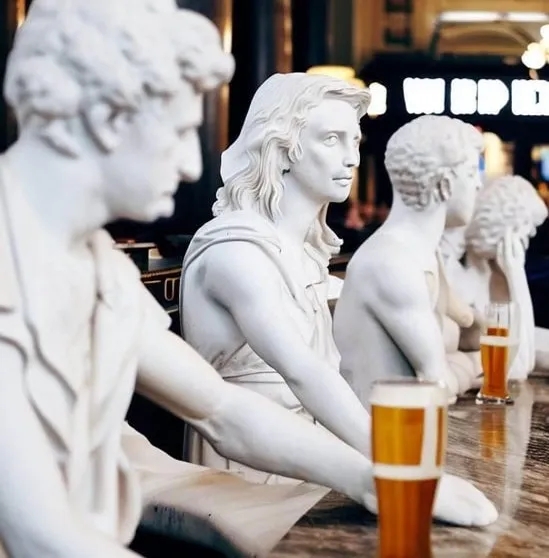
Before the booze-up session, all are statues.
Their prior falling-outs lodge doggedly
Upon their mouths like pillars of a building.
The visit’s just a plain formality.
But when the drinks are served, all lips begin
To open slow like rusty dungeon doors.
A glow of cheer unfolds upon their cheeks
Like dawn illuminates night-darkened shores.
Once they have reached the point of being swacked,
Then one by one they clear the awful air
Infected with self-pride, distaste, and spite.
The daftest cousin turns into Voltaire.
The silent uncle starts to sing his praises
Of how he’d saved three bullocks in a flood.
The two-faced aunt becomes a freedom fighter:
I’ll kill and die for us! We are one blood!
And I, the teetotaller, sit and weigh
If they’ll return to stone the coming day.

*****

Shamik Banerjee writes: “The absurd, ridiculous, and perennial drama between my relatives’ families inspired me to write this poem.”

Shamik Banerjee is a poet from India. He resides in Assam with his parents. Some of his recent works will appear in York Literary Review, Willow Review, Thimble Lit, and Modern Reformation, to name a few.

Photo: from original publication of the poem in Dear Booze: https://dearbooze.com/cocktales/f/in-a-family-gathering

Using form: alliteration: RHL, ‘How Brashly Brave’

How brashly brave, embroiled in this brief life,
we chance our challenge to the unchanging gods!
Strike poses, strut the strident stage of strife,
take optimistic oaths against all odds.

Fearless of foes, false friends, futility,
we wrack our reason to reach, undestroyed—
though usually of no utility—
a burst of brightness bettering the void.

*****

Although I prefer to maintain an unobtrusive persona myself, I subscribe to this philosophy of bravado existentialism. The florid alliteration suits the message.

This poem is published in the current issue of Light – thanks, Melissa Balmain and all.

Photo: “Flamboyant Emperor of the United States” by PeterThoeny is licensed under CC BY-NC-SA 2.0.

Sonnet: Helena Nelson, ‘Dream’

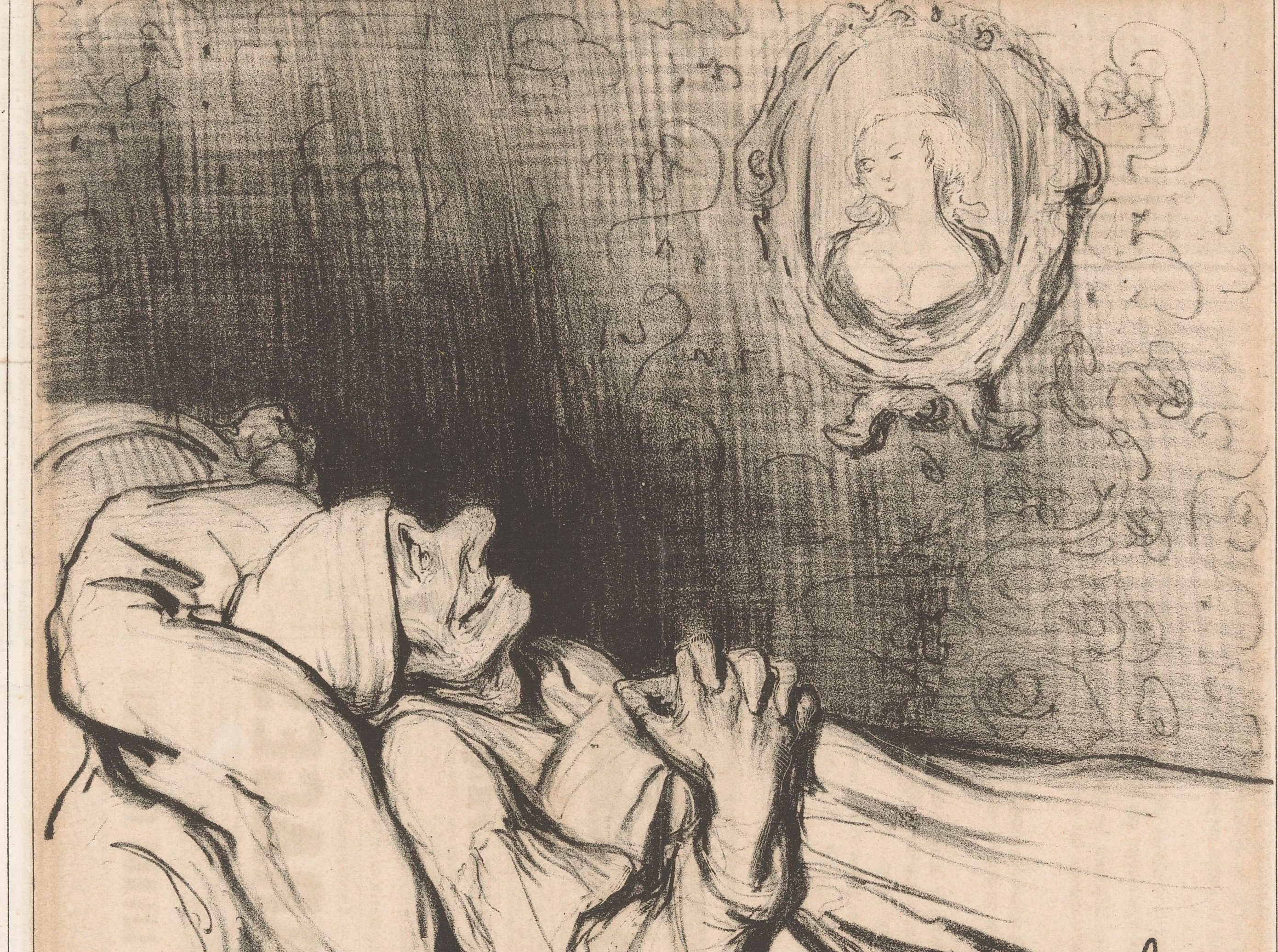
I found myself in bed with an old man.
His beard was silvery, his scrawny chest
a rack of ribs, his loose-lipped mouth open
and toothless as a baby. There he was,
there in our bed, as if he owned the place.
He snored and grunted like some ancient king
asleep after a banquet. But what feast
had led, dear heart, to this? What partying?
He turned his head to me. I saw his face—
a travesty. Some metamorphosis
had happened in our sleep, my love replaced
by a bag of windy bones. I need a piss,
he muttered, and got up. O then I knew
what age had done to us, and who was who.

*****

Helena Nelson writes: “Everyone experiences it eventually. You glance at your own reflection in the mirror and get a shock at how old you look. So that’s one of inspirations for this poem. The other spur to write this was a dream I had one night, though in the poem it’s intentionally unclear whether the experience is or isn’t real. I started with near rhymes in the octet and moved towards perfect rhyme at the end to convey the shock. I do hope the reader feels that shock at the end.” 

‘Dream’ was originally published in The Dark Horse.

Helena Nelson runs HappenStance Press (now winding down) and also writes poems, one of which appears in the Potcake Chapbook, ‘Lost Love’. Her most recent collection is Pearls (The Complete Mr and Mrs Philpott Poems). She reviews widely and is Consulting Editor for The Friday Poem.

Casual form: Lisa Marshall, ‘Lust’

Under the moonlight’s magical hold
Lust prowls like a wolf, hungry and bold

Slinking by with a wink of the eye
Slowly drawing me in on the sly

Into temptation’s cunning allure
Tainting even the purest of pure

Whispered confessions into the wind
Forgive me, Father, for I have sinned

*****

Editor’s comments: I’m classifying these lines as ‘casual form’: the meter is undisciplined by classical standards, but the beat is clear and the rhymes are straightforward. The verse is as natural to English as nursery rhymes, noted for their ease of memorisation without being classically regular. Look at the varying numbers of syllable per foot in the four lines of ‘Baa Baa Black Sheep’, for example. English speech is very forgiving regarding unstressed syllables, while still maintaining a rhythmic flow – as we know from rap. By that standard, adherence to beat and structured rhyme is adherence to form.

Lisa Marshall is a poet and author who resides in beautiful Dartmouth, Nova Scotia – also known as the City of Lakes.  She is the author of Black Olive: A Novel and Poetry for the Feminist’s Soul, both of which are available on Amazon Kindle. 
Read more at Not Another Nice Girl Blog.

Photo: from Lisa Marshall’s blog.

Using form: SF sonnet: RHL, ‘On a Dead Spaceship’

On a dead spaceship drifting round a star,
the trapped inhabitants are born and die.
The engineers’ broad privileges lie
in engine room and solar panel power.
The fruit and vegetables and protein co-ops
are run by farmers with genetics skills:
the products of their dirt and careful kills
help service trade between the several groups.
Others — musicians, architects — can skip
along the paths of interlinking webs.
Beyond these gated pods that the rich carve
for their own selves (but still within the ship),
in useless parts, are born the lackluck plebs.
Heard but ignored, they just hunt rats or starve.

*****

This sonnet was republished in Bewildering Stories in April 2024 – original publication had been in Star*Line five years previously. I find something very satisfying about using a formal sonnet structure to express science fiction and speculative fiction ideas – the ideas are by nature open-ended, unconstrained, and it feels good to tie them down as in a neat package with a bow on top. Topiary.

As for what political comments can be read into the poem, read away!

Photo: “Deepstar 2071 at Io” by FlyingSinger is licensed under CC BY 2.0.

Tom Vaughan, ‘The Great and the Good’

Why sing of the lives
of the fortunate few
whose gong-heavy entries
weigh down Who’s Who ?

They’re smug on their summits
and on Footsie Boards,
Permanent Secretaries
or rotund Law Lords;

generals, merchant bankers,
Top Brass at the Beeb,
dons, doctors, bishops. . .
You can spot the breed

by their ability
blind obedience to claim
from drudges and drivers
and shy, single, tame

PAs who sacrifice
lonely weekends
to type bland speeches
for skimpy stipends.

O don’t be deceived
by the Great and the Good –
you’re a rung on their ladder
on their fire, wood,

grain for their harvest,
a wheel on their car,
corpse on their D-Day,
night for their star.

*****

Tom Vaughan writes: I’ve long been fascinated by the phrase ‘the Great and the Good’, having reached the conclusion during long years of government service that the great cannot generally also be good, given the demands of the exercise of power. But I am also intrigued by the loyalty such people can inspire, and the longing for leaders that reflects, despite the advice given by my favourite political commentator, Bob Dylan, in Subterranean Homesick Blues – ‘Don’t follow leaders/Watch the parkin’ meters’.”

‘The Great and the Good’ was first published in Snakeskin 265, October 2019.

Tom Vaughan is not the real name of a poet whose previous publications include a novel and two poetry pamphlets (A Sampler, 2010, and Envoy, 2013, both published by HappenStance). His poems have been published in a range of poetry magazines, including several of the Potcake Chapbooks:
Careers and Other Catastrophes
Familes and Other Fiascoes
Strip Down
Houses and Homes Forever
Travels and Travails.
He currently lives in Brittany.
https://tomvaughan.website

Photo: “MPs and House of Commons officials stand in the House of Lords chamber at the opposite end to the throne, the bar, to listen to the Queen’s Speech” by UK Parliament is licensed under CC BY-NC 2.0.

Melissa Balmain, ‘Notes From a Jaded Traveler’

I dreamed I went to Heaven–
it wasn’t all that great.
The angel choir was tone deaf;
its harps were second rate.
St. Pete was glumly scrubbing
the bird shit off one gate.

I dreamed I went to Hell next–
it wasn’t all that grim.
I’d felt worse heat in Brooklyn,
worse torture at the gym;
Satan and his minions
were belting out a hymn.

I dreamed that neither visit
surprised me much–oh sure,
the Bible promised plenty
that wasn’t on my tour,
but what location ever
lives up to its brochure?

*****

From Walking in on People © Melissa Balmain, 2014. Used by permission of Able Muse Press.

Melissa Balmain writes: “This poem, first published in Light Quarterly (now Light), sparked one of my rare disagreements with LQ‘s founding editor, John Mella. He balked at the term “bird shit.” It might offend older readers, he said, and he asked for a substitute. This led to the following message, which is undoubtedly the sort of high-toned correspondence that poetry readers imagine happening behind the scenes:

Dear John,
Thanks for your latest note on “Notes from a Jaded Traveler.” I think we may have had a communication glitch—my preference is “bird doo,” not “doo-doo.” I agree with you that the latter does smack of the nursery. Plus, it doesn’t make the bird connection clear.
“Bird doo” is a fairly common expression—a Google search of the term yields more references than “bird poop.” But the main reason I prefer it to “bird poop” is that—at least among parents I know—“poop” is the nursery term for diaper contents.
So… if “bird shit” is out, I vote for “bird doo.”
All best,

Melissa

John went with “bird doo.”  When ‘Notes from a Jaded Traveler’ ran in my first collection, I finally got to change it back.”

Melissa Balmain’s third poetry collection, Satan Talks to His Therapist, is available from Paul Dry Books (and from all the usual retail empires). Balmain is the editor-in-chief of Light, America’s longest-running journal of light verse, and has been a member of the University of Rochester’s English Department since 2010. She will teach a three-day workshop on comic poetry at the Poetry by the Sea conference in Madison, CT, in May 21-24, 2024.

Photo: “Life’s Trail” by quinn.anya is licensed under CC BY-SA 2.0.