Monthly Archives: August 2024

Weekend read: Michael R. Burch, ‘Modern Orpheus, or, William Blake’s Whistle’

I.
Many a sun
and many a moon
I walked the earth
and whistled a tune.

I did not whistle
as I worked:
the whistle was my work.
I shirked

nothing I saw
and made a rhyme
to children at play
and hard time.

II.
Among the prisoners
I saw
the leaden manacles
of Law,

the heavy ball and chain,
the quirt.
And yet I whistled
at my work.

III.
Among the children’s
daisy faces
and in the women’s
frowsy laces,

I saw redemption,
and I smiled.
Satanic millers,
unbeguiled,

were swayed by neither girl,
nor child,
nor any God of Love.
Yet mild

I whistled at my work,
and Song
broke out,
ere long.

******

Michael R. Burch writes: “W. H. Auden famously (or infamously) said “poetry makes nothing happen.” I sympathize with his sentiment but beg to differ. William Blake has been a profound influence on modern culture and societies, not only through his own poetry, art and engravings, but also through his influence on singer-songwriters like Bob Dylan, John Lennon and Jim Morrison. When Dylan met the Beatles the first time, things were a bit cool at first, until Allen Ginsberg broke the ice by bringing up Blake. It turned out that everyone in the room was a fan. Morrison named his group the Doors after Blake’s ‘Doors of Perception’.

“William Blake has been a primary influence on my work, not only as a poet, but also as a translator, editor and publisher of poems about the Holocaust, the Palestinian Nakba, the Trail of Tears, and other similar instances of Blake’s three-headed hydra of church, state and industry doing its worst to make life on earth hell.

A Passing Observation about Thinking Outside the Box’ by Michael R. Burch

William Blake had no public, and yet he’s still read.
His critics are dead.

“William Blake was not an “art for the sake of art” adherent. Quite the contrary. Blake was an ardent reformer. For instance, he and Charles Dickens, who from what I understand lived on the same London street or nearby, wrote movingly about the plight of child chimneysweeps and other minors forced to work long, gruelling, sometimes dangerous, hours by unscrupulous businessmen, and before long England and other nations like the United States were passing child labor laws. Some poets do make things happen with their poetry…”

*****

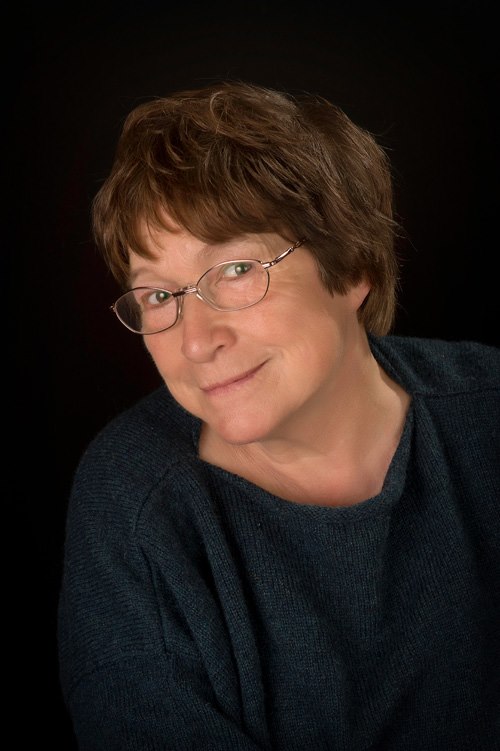
Michael R. Burch is an American poet who lives in Nashville, Tennessee with his wife Beth, their son Jeremy, two outrageously spoiled puppies, and a talkative parakeet. Burch’s poems, translations, essays, articles, reviews, short stories, epigrams, quotes, puns, jokes and letters have appeared in hundreds of literary journals, newspapers and magazines. He is also the founder and editor-in-chief of The HyperTexts, a former columnist for the Nashville City Paper, and, according to Google’s rankings, a relevant online publisher of poems about the Holocaust, Hiroshima, the Trail of Tears and the Palestinian Nakba. Burch’s poetry has been taught in high schools and universities, translated into 19 languages, incorporated into three plays and two operas, set to music 61 times by 32 composers, from swamp blues to classical, and recited or otherwise employed in more than a hundred YouTube videos. To read the best poems of Mike Burch in his own opinion, with his comments, please click here: Michael R. Burch Best Poems.   

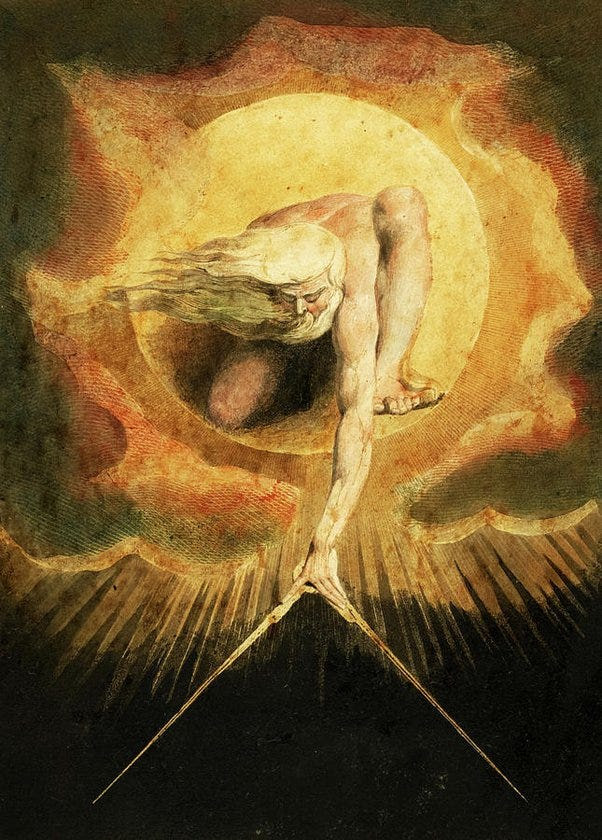
Illustration: ‘Ancient of Days’ by William Blake
Sonnet: Sue Parman, ‘Kaizen: How to Build a Poem’

Ignore your hand and focus on the pen,
which writes without your knowledge of the whole.
Do not insert the personal. Avoid translation.
The changes made are small and gradual.

Commas herd their letters toward a distant
goal of rhymes and metaphors but do not
specify a conscious “I” or soul,
a bold new vision or a school of thought.

Write like a dancer making small mistakes.
What is wrong to you fulfills your friend’s desire.
Cuttings and shit are what it takes
to grow a garden from a funeral pyre.

A poet will die unless she learns to laugh.
Do not hit DELETE. Save everything as DRAFT.

*****

Sue Parman writes: “When I was four years old, my father asked me, ‘When is a door not a door?’ His answer, ‘when it’s ajar,’ infuriated and then intrigued me. I began to keep a journal in which I wrote down sentences such as, ‘If the Devil is evil, God is odd.’ Puns were my intro-duction to poetry, a form of verbal play that taught me that words, rather than being a lifeline to truth, could be slippery and contain many truths at the same time. One of my favorite poets is Kay Ryan, the queen of poetic puns (see her ‘Bestiary’). As an anthropologist, I consider them a vital contributor to mental health, since they satisfy the needs of large-brained mammals to avoid epilepsy by indulging in surprise.”

Sue Parman is an anthropologist and award-winning essayist, short story writer, poet, and playwright. She is the author of two poetry books, “The Thin Monster House” and “Carnivorous Gaze,” and her poems have been published in a variety of journals and anthologies, including the above poem in Rattle. She writes in a number of other genres as well, including anthropological travel memoirs and mysteries. Her most recent publications include a short story, “Gannets and Ghouls,” which appeared in the September/October 2024 issues of Ellery Queen Mystery Magazine; and a nonfiction essay, “You Can’t Get There from Here,” that was awarded the Travelers’ Tales Grand Prize for Best Travel Story of 2024. After teaching anthropology in California for thirty-five years, she moved to Oregon in search of water, and travels frequently in hopes of getting lost. https://www.sueparman.com

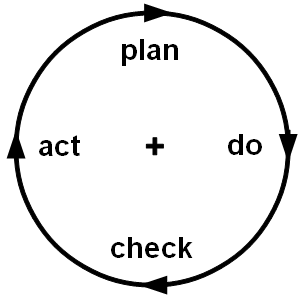
Photo: “PDCA-Cycle-Kaizen” by Tagimaguitar is licensed under CC BY-SA 3.0.

Short poem: RHL, ‘I Started Out Alone’

I started out alone,
No numbers and no words.
The people gave me food and clothes.
I loved the sun and birds.

And when I reach the end
Numbers and words all done,
Have to be fed and dressed again,
I’ll love the birds and sun.

*****

This is one of my favourite poems, for several reasons:
First, it extols the combination of curiosity, enjoyment and acceptance that I believe is appropriate for this thing called life.
Second, it is simple in expression: simple words, simple rhythm, in iambics with simple full and slant rhymes.
And third (and perhaps most importantly) it is easy to memorise: it has lodged itself in my brain without any effort or even intent on my part and, as this blog frequently claims, that is the essence of poetry.

‘I Started Out Alone’ was originally published in Bewildering Stories in 2019. More recently it was included in a batch of my poems that Michael R. Burch spotlighted in The Hypertexts for August 2024.

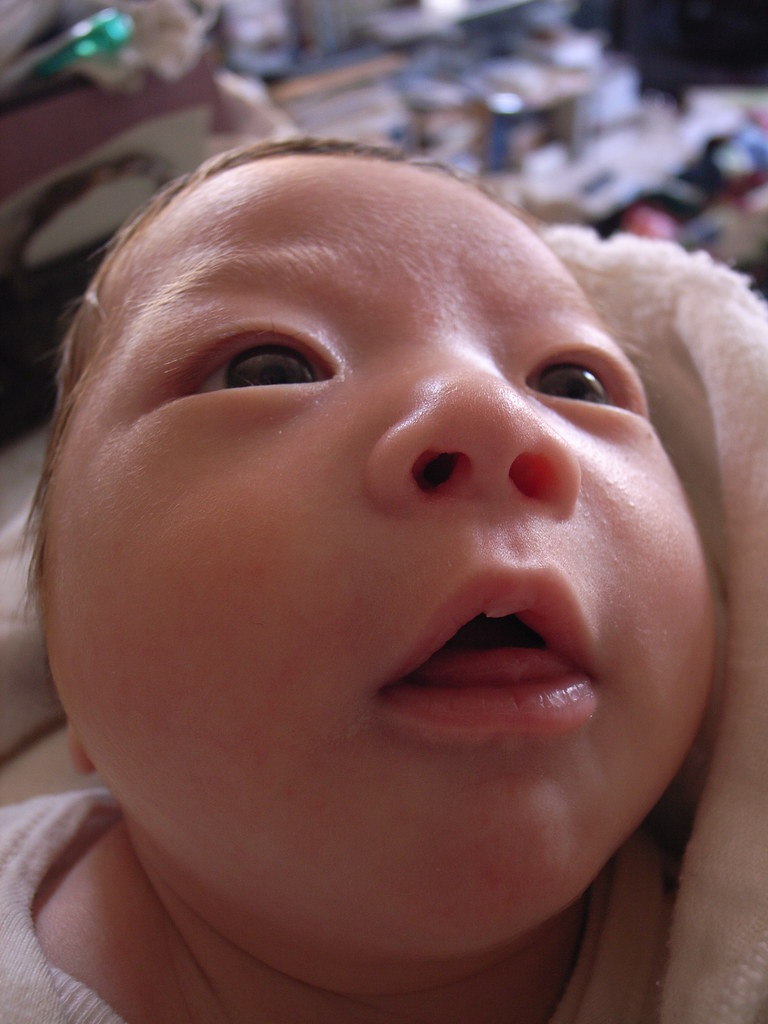
Photo: “Baby face” by matsuyuki is licensed under CC BY-SA 2.0.

Jawaharlal Nehru’s favourite poem: Robert Frost’s ‘Stopping by Woods on a Snowy Evening’

Whose woods these are I think I know.
His house is in the village though;
He will not see me stopping here
To watch his woods fill up with snow.

My little horse must think it queer
To stop without a farmhouse near
Between the woods and frozen lake
The darkest evening of the year.

He gives his harness bells a shake
To ask if there is some mistake.
The only other sound’s the sweep
Of easy wind and downy flake.

The woods are lovely, dark and deep,
But I have promises to keep,
And miles to go before I sleep,
And miles to go before I sleep.

*****

In June 2023 Indian Prime Minister Narendra Modi visited the United States, and President Joe Biden gave him an autographed first edition copy of the ‘Collected Poems of Robert Frost’. (Modi gave Biden a copy of the ‘Ten Principal Upanishads’ by Purohit Swami and William Butler Yeats – the latter being a poet that Biden frequently quotes.)

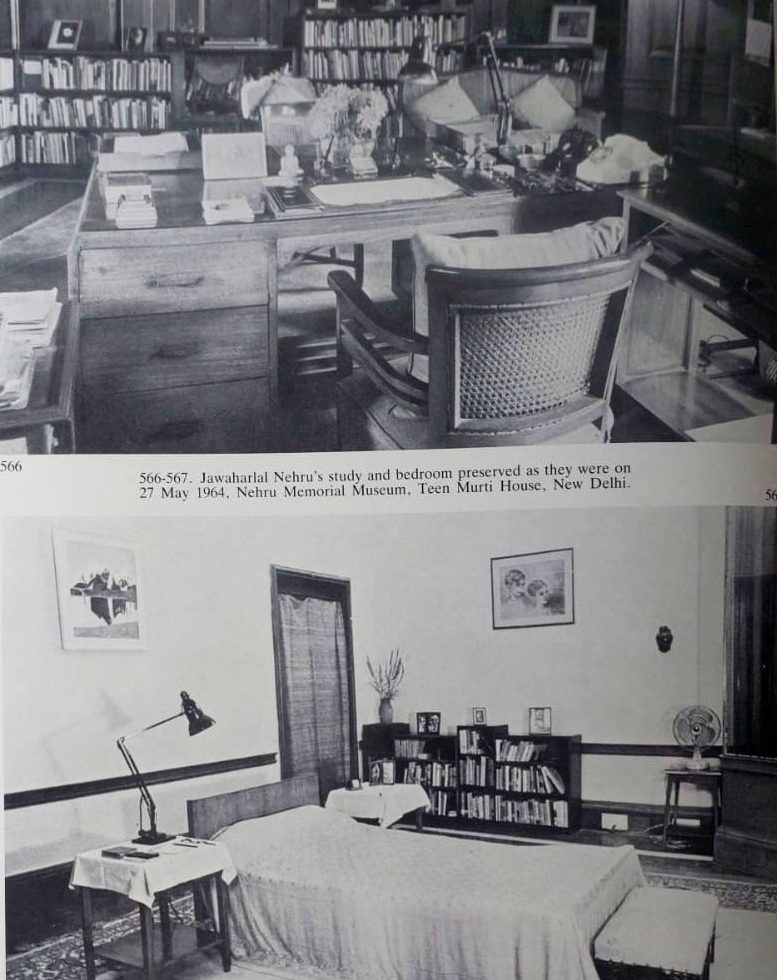
In India the gift of Frost’s work was recognised as a tribute to Jawaharlal Nehru, India’s first Prime Minister. Nehru, apart from being a founding father of Indian democracy, was a prodigious writer with a love of history, poetry and nature; in Himalayan vacations he went horseback riding and exploring woods. Frost’s poetry was a natural for him. Nehru had a particular fondness for ‘Stopping by Woods on a Snowy Evening’. Towards the end of his life he kept a copy of Frost’s poems by his bedside, with the last stanza of “Stopping by Woods” underlined:

The woods are lovely, dark and deep,
But I have promises to keep,
And miles to go before I sleep,
And miles to go before I sleep.

Photos: Jawaharlal Nehru’s study and bedroom, preserved as they were at the time of his death.

Weekend read: Tom Vaughan, ‘Rhyme-Crime’

Does rhyme matter –
    however occasional?

It used to be
    considered vocational

a must for verse’s
    inspirational

impact, even
    educational –

but these days, it’s a
    generational

sign your stuff’s just
    recreational.

*****

Tom Vaughan writes: “For me, rhyme is not just a technical trick to help make poetry memorable. I think the world rhymes in odd ways. I also believe time rhymes, across the centuries but also in our short individual lives, sometimes in irony, but more often – if we listen hard enough to hear it – to point the way to a deeper level of challenge and reflection.”

Editor: I had been planning a rant on the essence of poetry being all the tricks that make it memorisable word-for-word: rhyme, rhythm, alliteration, assonance, etc; and on the fact that the bits of poems an adult remembers are invariably rhymed; and on poetry’s links to dance and song and the prenatal heartbeat. But Tom Vaughan introduces a whole new layer of value of rhyme, obliquely in his poem, incompletely in his comment. There are things to meditate on here.

Tom Vaughan is not the real name of a poet whose previous publications include a novel and three poetry pamphlets (A Sampler, 2010, and Envoy, 2013, both published by HappenStance; and Just a Minute, 2024, from Cyberwit). His poems have been published in a range of poetry magazines, including several of the Potcake Chapbooks and frequently in Snakeskin.
He currently lives in Brittany.
https://tomvaughan.website

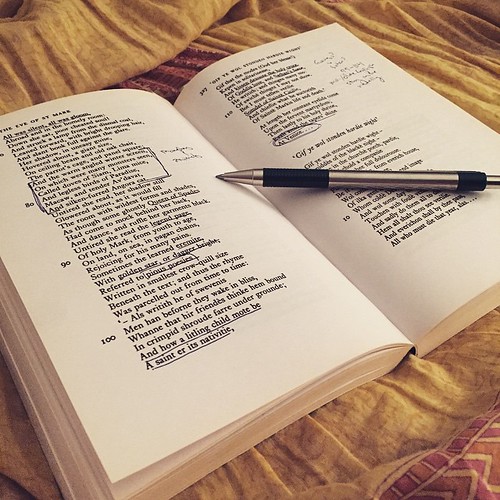
Photo: “Sometimes, I like going back into #poetry and pretending like I am still in college. #johnkeats #bookstagram #annotations #reading #books” by alis.smith is licensed under CC BY-NC 2.0.

Early poem: Michael R. Burch, ‘Will There Be Starlight’

Will there be starlight
tonight
while she gathers
damask
and lilac
and sweet-scented heathers?

And will she find flowers,
or will she find thorns
guarding the petals
of roses unborn?

Will there be starlight
tonight
while she gathers
seashells
and mussels
and albatross feathers?

And will she find treasure
or will she find pain
at the end of this rainbow
of moonlight on rain?

*****

Michael R. Burch writes: “The real test of a poem, for me, is whether I can remember it or not. If I can’t remember a poem, if it doesn’t leave a lasting impression, it simply vanishes like a windblown tumbleweed and cannot be a “keeper.” I decided to apply an “instant recall” test to my own poems and translations, to see which ones leapt to mind first. Ironically, or perhaps not, several of these poems turned out to be about memories and/or how the human memory works, or sometimes doesn’t. ‘Will There Be Starlight’ is one.

“I wrote it around age 18 as a high school student and it has been published by TALESetc, Starlight Archives, The Word (UK), Poezii (in a Romanian translation by Petru Dimofte), The Chained Muse, Famous Poets & Poems, Grassroots Poetry, Inspirational Stories, Jenion, Regalia, Chalk Studio, Poetry Webring and Writ in Water. ‘Will There Be Starlight’ has also been set to music by the award-winning New Zealand composer David Hamilton and read on YouTube by Ben E. Smith. To have a poem written as a teenager translated into Romanian, set to music by a talented composer, performed by one of the better poetry readers, and published in multiple literary journals was not a bad start to my career as a poet!”

Michael R. Burch is an American poet who lives in Nashville, Tennessee with his wife Beth, their son Jeremy, two outrageously spoiled puppies, and a talkative parakeet. Burch’s poems, translations, essays, articles, reviews, short stories, epigrams, quotes, puns, jokes and letters have appeared in hundreds of literary journals, newspapers and magazines. He is also the founder and editor-in-chief of The HyperTexts, a former columnist for the Nashville City Paper, and, according to Google’s rankings, a relevant online publisher of poems about the Holocaust, Hiroshima, the Trail of Tears and the Palestinian Nakba. Burch’s poetry has been taught in high schools and universities, translated into 19 languages, incorporated into three plays and two operas, set to music 61 times by 32 composers, from swamp blues to classical, and recited or otherwise employed in more than a hundred YouTube videos. To read the best poems of Mike Burch in his own opinion, with his comments, please click here: Michael R. Burch Best Poems.   

Photo: “Star Girl” by Tobias Mayr is licensed under CC BY-NC-SA 2.0.

Semi-formal: RHL, ‘Terminal’

Christian culture’s crucifixation
nails us to our seats as, station by station,
we travel the trammelled line
until we find
that terminal
more primal.

The humanstrain’s end-of-line stop
is Ragnarok.
Everyone please disembark
into the dark–
no light, no map.
Mind the Ginnungagap.

*****

This is as close as I get to religion: existential uncertainty. I’m a Militant Agnostic: “I don’t know… and neither do you!” Yet this attitude is apparently compatible with religion, being not that different from Eliot’s ‘East Coker‘:
O dark dark dark. They all go into the dark,
The vacant interstellar spaces, the vacant into the vacant,
The captains, merchant bankers, eminent men of letters

(…)
I said to my soul, be still, and let the dark come upon you
Which shall be the darkness of God.

But Christianity? I think not. Altogether too unlikely, with so many impossibilities packed into such a small understanding of the cosmos. We don’t know where we are headed, not just as individuals with finite lives, but as a species that is simultaneously developing space travel and genetic modifications… the possibilities are endless and the future, dark as well as light, is unknowable.

The poem is semi-formal with its loose iambics and paired rhymes or slant rhymes, but no structure beyond its natural flow. It was originally published in the Experimental section of a 2019 issue of Better Than Starbucks, and republished as part of work being spotlighted in The HyperTexts in August 2024.

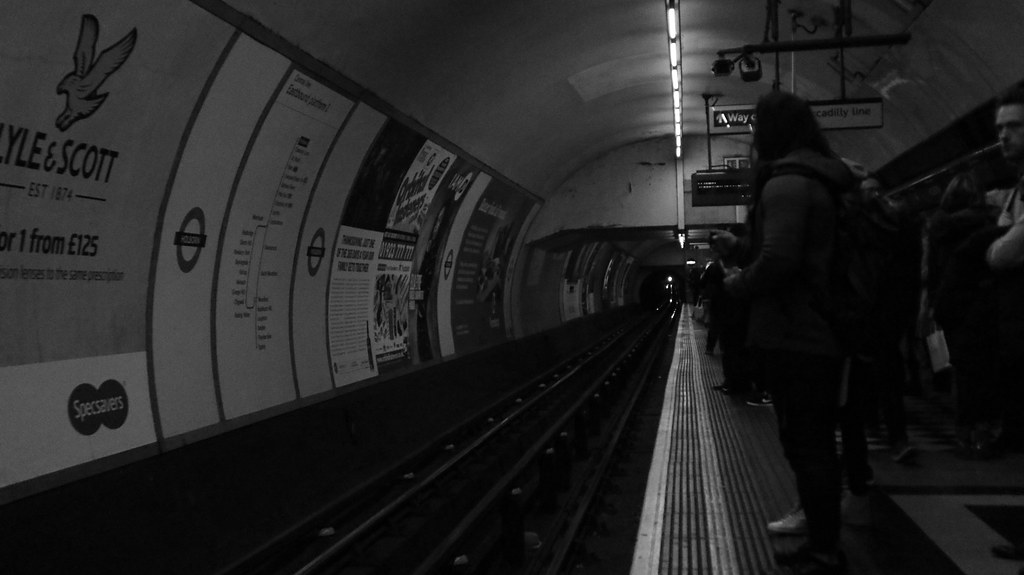
Photo: “London Holborn tube station in Black and White effect” by Patrick Cannon Tax Barrister is licensed under CC BY 2.0.

R.I.P. Ann Drysdale… ‘Weirdness Observed’

What is she doing, the mad old bat,
Down on her knees in the garden?
In her busted boots and her happiness hat
She doesn’t know and she wouldn’t care
That the size of the arse sticking up in the air
Is shading so much of the garden.

She pulls out a weed, the mad old bat,
Out of the face of the garden.
She tuts at the trauma and fusses it flat
While the waste-not weed she will put to use
By turning it into salubrious juice
And giving it back to the garden.

What is she up to, the mad old bat
As she struts, stiff-kneed in the garden
With her doo-dah dog and her galloping cat?
Spreading compost and scattering seed
So one may sprout and the other may feed
In the windmill world of the garden.

She’s a cruel cartoon, is the mad old bat
As she talks to herself in the garden.
What on earth is this? and Good Lord, look at that!
And she squats and she mutters and giggles out loud
And informs her potatoes they’re doing her proud
As she creeps like a crone in the garden.

Where is she going, the mad old bat
As the sunset blesses the garden?
She is going nowhere, and that is that.
She will dig in the dark till the dawn sky pales
And the damp on her knees and the dirt in her nails
Go singing the song of the garden.

*****

Ann Drysdale, who died unexpectedly on August 16th (apparently in her sleep) was a superb poet and self-aware, self-directed, life-rich eccentric lover of the natural world, of gardens, of animals and birds, of unpretentious people in all walks of life. I knew her only through her poetry and our correspondence – which is to say, well enough to deeply regret that I never got to meet her in person.

The poem above was collected in Miss Jekyll’s Gardening Boots, Shoestring Press, 2015; as was the poem that I put up on this blog earlier this month, ‘When Mister Nifty Plays the Bones‘. Here is the bio that she chose to represent herself with:

Ann Drysdale still lives in South Wales. She has been a hill farmer, water-gypsy, newspaper columnist and single parent – not necessarily in that order. She has written all her life; stories, essays, memoir, and a newspaper column that spanned twenty years of an eventful life. Her eighth volume of poetry – Feeling Unusual – came together during the strange times of Coronavirus and celebrates, among other things, the companionship of a wise cat and an imaginary horse.”

She was a much-loved member of the world of (especially formalist) poetry. George Simmers posted her ‘Song of Wandering Annie’ in the Snakeskin blog, and there is a tribute (and an enormous selection of her verse) in The HyperTexts. She was a truly good person.

Margaret Thatcher’s favourite poem: Charles Mackay, ‘No Enemies’

You have no enemies, you say?
Alas! my friend, the boast is poor;
He who has mingled in the fray
Of duty, that the brave endure,
Must have made foes! If you have none,
Small is the work that you have done.
You’ve hit no traitor on the hip,
You’ve dashed no cup from perjured lip,
You’ve never turned the wrong to right,
You’ve been a coward in the fight.

*****

I’m no fan of the excessive and unproductive trickle-down economics of Margaret Thatcher, other than to say that I’m also no fan of the excessive and unproductive Union bureaucracy that she came to fight. (That just means I’m a centrist, and centrists often have a hard time in Two-party First-past-the-post electoral systems. FPTP encourages dividing the country into Us and Them, and making everything a fight. I think Proportional Representation allows for more constructive government relationships.)

As reported in The Independent, in the docudrama ‘The Crown’, Margaret Thatcher fires half of her cabinet because of their “lack of grit as a consequence of their privilege and entitlement”. In response, Queen Elizabeth tells Thatcher that she’s playing a “dangerous game” making so many enemies, to which the prime minister replies that she is “comfortable” with having enemies, and she then recites Scottish poet Charles Mackay’s ‘No Enemies’. Mackay was a 19th century poet and journalist, now best remembered for his ‘Extraordinary Popular Delusions and the Madness of Crowds‘.

In real life, Thatcher was very fond of the poem, with a 2019 BBC documentary revealing that she kept it on her desk.

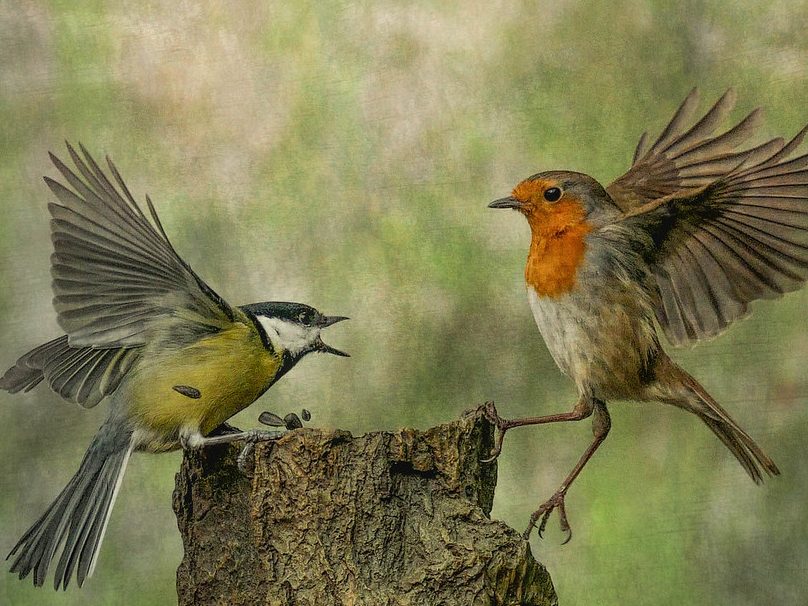
Food fight.” by Free the Image is licensed under CC BY 2.0.

Kelly Scott Franklin, ‘Fez’

Haberdashers, it is true,
are hardly known for derring-do,
or swashbuckling, or hurling stones,
or smashing heads and dragon bones.

But let that man exalted be,
that Hercules of hattery,
whose name no history ever says:
all hail the man who made the fez.

*****

Kelly Scott Franklin writes: “This comes from my collection-in-progress, A Curious Alphabet of Hats, a whimsical alphabet book of poems about, well, hats. The Fez is not a silly hat from its origins. But it is comical to see American members of the Shriners club wearing it while they drive their go-carts in parades. I’m especially proud of the alliterative-allusive-hyperbole “that Hercules of hattery.” This poem and more entries from A Curious Alphabet of Hats have appeared here (Light Poetry Magazineand another here (Lighten Up Online). I have also begun A Curious Alphabet of Birds, but haven’t gotten any farther than Dodo.”

Kelly Scott Franklin lives in Michigan with his wife and daughters. He teaches American Literature and the Great Books at Hillsdale College. His poems and translations have appeared in AbleMuse ReviewLiterary MattersDriftwood Literary Magazine, Iowa City Poetry in Public, National Review, Thimble Literary MagazineEkstasis, and elsewhere. His essays and reviews can be found in Commonweal, The Wall Street JournalThe New CriterionLocal Culture, and elsewhere. 
https://www.hillsdale.edu/faculty/kelly-scott-franklin/

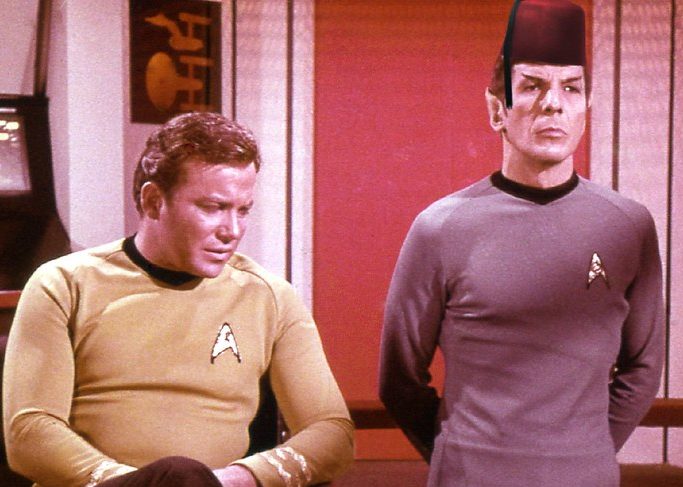
Photo: “Kirk Talks to Spock about his ‘Fez Addiction'” by The Rocketeer is licensed under CC BY-NC-ND 2.0.