Monthly Archives: November 2025

Martin Parker, ‘Fifty Ways to Leave a Lover. No. 51’

No bitterness and no recriminations,
no flesh hacked off in gladiatorial sport,
no claims for unpaid debts, no scornful laughter
to mock experience so dearly bought.

But differences all gently papered over,
cracks filled and memory’s cobwebbed cupboards cleared.
Receipts for all the good times carbon copied
our life divides more simply than we’d feared,

with dogs and books and vinyl all apportioned,
all ledgers balanced with forgiveness sought
and paid for with a parting smile.
For this had once been love – or so we’d thought.

*****

Martin Parker writes: “Sadly I can offer no significant thoughts about its background.  I simply wrote it then left it in a drawer for about ten years as it did not seem to fit with anything I was writing at the time.  But I do remember hoping that I had written something gentler and more civilised and sympathetic than much of what was appearing on the net at the time. And my ancient hope seems to have been justified in the light of recent reactions to the poem.

“My website at www.martinparker-verse.co.uk gives details and excerpts from my two hopefully humorous and only occasionally wrily depressing books in which parody, pastiche, satire, farce and poetic irreverence should appeal to all but the most po-faced of poetry fans.”

‘Fifty Ways to Leave a Lover. No. 51’ was originally published in Snakeskin.

Martin Parker is a writer of mainly light and humorous verse much of which has appeared in national publications including The Spectator, The Oldie and The Literary Review. In 2008 Martin founded the quarterly light verse webzine, Lighten Up Online at www.lightenup-online.co.uk, now edited by Jerome Betts.

Illustration: “|||||||| DIVIDER |||||||| — *** CAUGHT UP! ***” by Claire CJS is licensed under CC BY-NC-SA 2.0.

Using form: RHL, ‘Formal vs Free’

Look: formal verse can be china for tea,
a golden goblet, a mug made of clay.
Free verse is putting mouth to stream to drink.
Yes, you could cup your hands… but do you think
museums want to buy that to display
your “memorable skill”, your “artistry”?

*****

‘Formal vs Free’ is published in the current ‘Blue Unicorn‘, in a section loaded, as often, with verse about verse.

Photo: “Red-figured Greek Red-Figure Kantharos (Drinking Vessels) with Female Heads 320-310 BCE Terracotta” by mharrsch is licensed under CC BY-NC-SA 2.0.

Sonnet: Paul Burgess, ‘Reynadine’s Farm’

“The chickens should have been a tighter group,
and Farmer should have purchased stronger locks
instead of whining now about the coop
and getting mad at Reynardine, the fox.

The chickens didn’t mend defensive flaws
or try to get a gun or sharper beak.
Why blame the beast with wits and stronger jaws
for weeding out the losers and the weak?

The victim here, whose name they’ve tried to harm,
has suffered public shame and sad disgrace.
To make it right, he must receive the farm.
I thank Your Honors now and rest my case.”

The judges ruled in Reynardine’s support
because the fox had also bought the court.

*****

Paul Burgess writes: “The Elizabethan sonnet, which I love to adapt to many purposes, is a natural fit for the structure I like best: a setup, a volta, and a jolt at the end.  Many of my best poems succeed, and my worst fail, because of my persistent embrace of tonal ambiguity. This poem is no exception. I like the tension between a seemingly folksy and witty parable and a traditionally serious, elegant form. For me, there’s humor in darkness and darkness in humor. The balance shifts, but I don’t think I could ever completely separate the two and still be myself, as a person or as a writer.”

‘Reynadine’s Farm’ was first published in Snakeskin.

Paul Burgess, an emerging poet, is the sole proprietor of a business in Lexington, Kentucky that offers ESL classes in addition to English, Japanese, and Spanish-language translation and interpretation services. He has recently contributed work to Blue Unicorn, Light, The Orchards, The Ekphrastic Review, Pulsebeat, The New Verse News, Lighten Up On Line, The Asses of Parnassus, and several other publications.

About

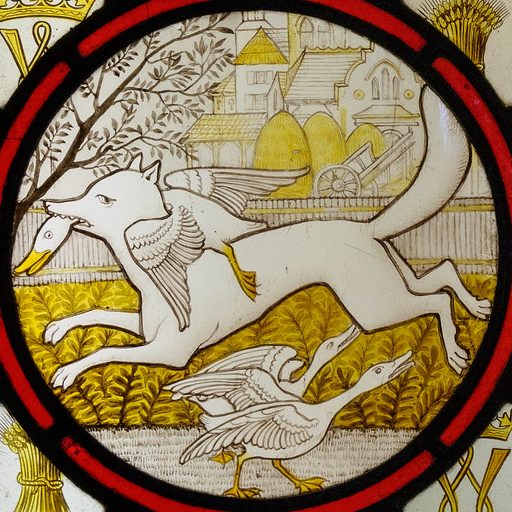
Photo: “Ely Cathedral: Stained Glass Museum” by Phil McIver is licensed under CC BY-NC 2.0.

R.S. (Sam) Gwynn, ‘Mr Heaney’

“This was Mr Heaney’s room. The peat’s
From off his boots. It got into the rug
And won’t be Hoovered out. Likewise the sheets
And pillow case.” Solemn, I nod and shrug,

Expecting little better, as I note
The sad brace of dried heads, the shards of flint,
The coprolites and drafts that Heaney wrote
Lying untidied here. “He liked his pint,

Did Mr Heaney, but you know the Irish.
That and a roasted spud. He didn’t pay
The last two weeks and more. You know the Irish.”
And so it is I lie where Heaney lay

And watch the twilight dripping with the murk
Lurking beyond short curtains. Left alone,
I ponder what she’d said: “He’d often work
My bit of bogland like it was his own–

He liked the muck and suck. But then one day
He got some kind of letter from the Swedes,
Got all excited and he went away.
Now the whole plot is given over to weeds.”

Such cause for wonderment: Did Heaney ask
No better than a spade or pen or hoe
To kill his time? Nothing to ease the task–
Girls, say? Or hurling pools? I just don’t know.

*****

R.S. (Sam) Gwynn writes: “It just came out of the similarity between the two names. With Heaney I always think of him out digging in a peat bog, etc.”

*****

The poem plays off Philip Larkin‘s description of himself moving into a boarding house, renting a room formerly lived in by ‘Mr Bleaney‘:

‘This was Mr Bleaney’s room. He stayed
The whole time he was at the Bodies, till
They moved him.’ Flowered curtains, thin and frayed,
Fall to within five inches of the sill,

Whose window shows a strip of building land,
Tussocky, littered. ‘Mr Bleaney took
My bit of garden properly in hand.’
(…)

(But if) at his age having no more to show
Than one hired box should make him pretty sure
He warranted no better, I don’t know.

What happened to Bleaney? He stayed there “till they moved him”. As for Heaney, he got that letter from the Swedes and went off to collect his Nobel Prize. – Editor

*****

R. S. (Sam) Gwynn was born in Leaksville (now Eden), North Carolina, in 1948. After attending Davidson College, he entered the graduate program at the University of Arkansas, where he earned his M. F. A. From 1976, he taught at Lamar University, where he was Poet-in-Residence and University Professor of English. He retired in 2016. His first two collections were chapbooks, Bearing & Distance (1977) and The Narcissiad (1980). These were followed by The Drive-In (1986) and No Word of Farewell: New and Selected Poems 1970-2000. His latest collection is Dogwatch (2014) from Measure Press (which includes this poem). His criticism appeared regularly in the Hudson Review and other publications, and he was editor of the Pocket Anthology Series from Pearson-Longman. He lives in Beaumont, Texas, with his wife, Donna. They have three sons and seven grandchildren.

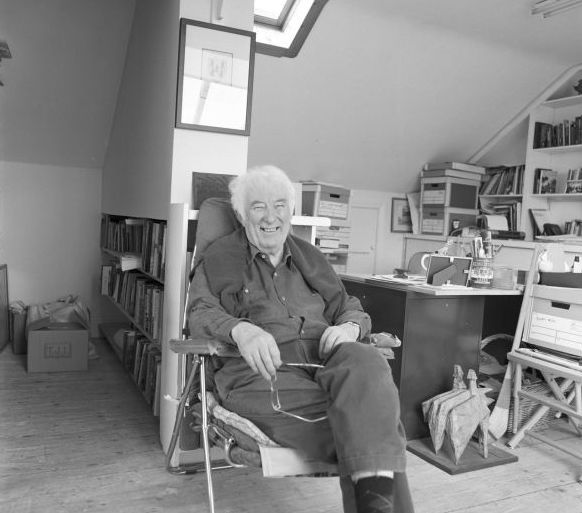
Photo with thanks to the Bobbie Hanvey Photographic Archive/Boston College.

Lindsay McLeod, ‘The Swing’

The black dog comes less to me lately
I fight the bait of the Siren’s barbed songs
I’ve tightened my belt to the hunger I’ve felt
scanned the sky for a place to belong.

But I’ve been to this point of the compass before
since we twitched off our vows and our rings
alone in the dark at one end of the arc
where that half-broken pendulum swings.

Still I’ve nothing left here to hold onto
afraid I’ll fall back to the place that I came
where I’ll take up my axe to the rainbow again
and bite deep into bright shining pain.

*****

Lindsay McLeod writes: “Fear not for my current mental health, as I wrote this 20 years ago.”

‘The Swing’ was originally published in Snakeskin.

Lindsay McLeod is an Australian writer who lives quietly on the coast of the great southern penal colony with (yet another ferocious Aussie animal) his cattle dog,  Mary. Lindsay still drives a forklift to support his poetry habit.

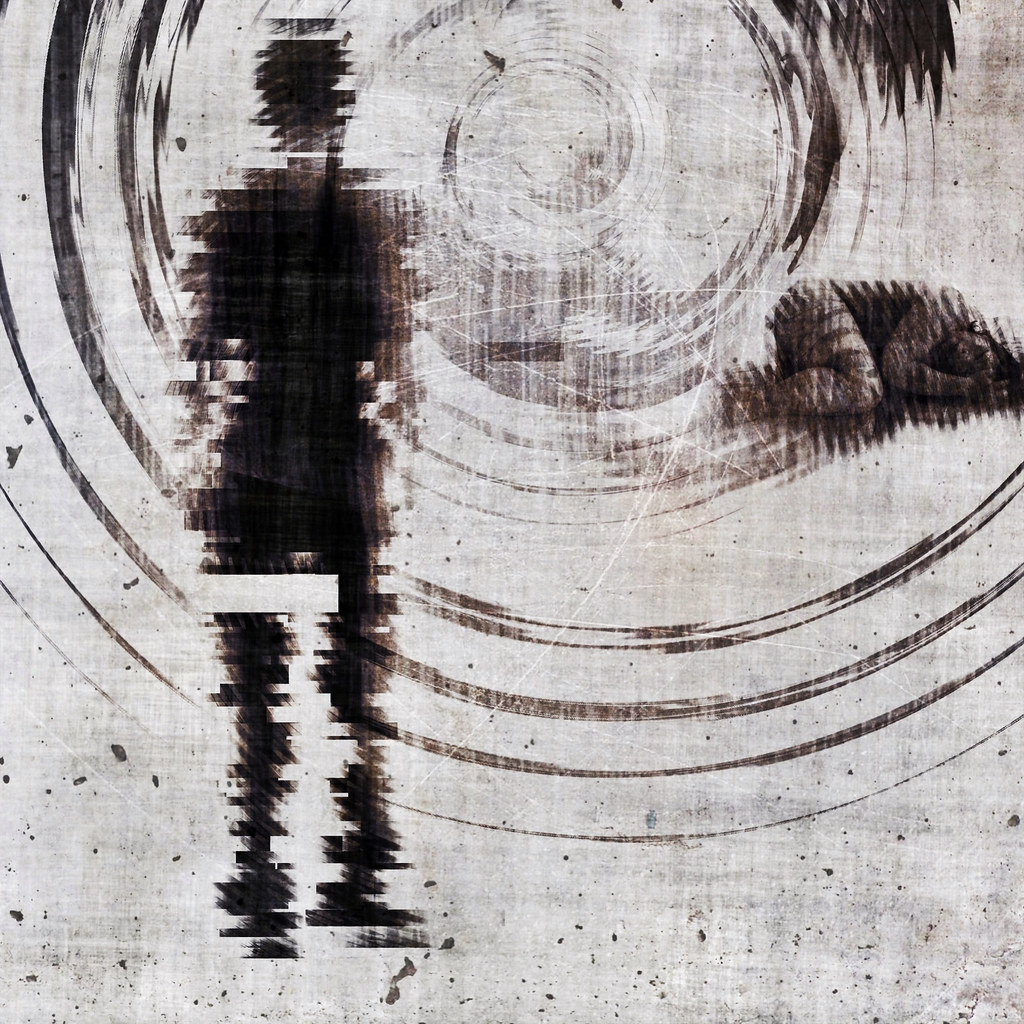
Image: “Feeding The Black Dog” by @mich.robinson is licensed under CC BY-NC-ND 2.0.

David Stephenson, ‘Payday’

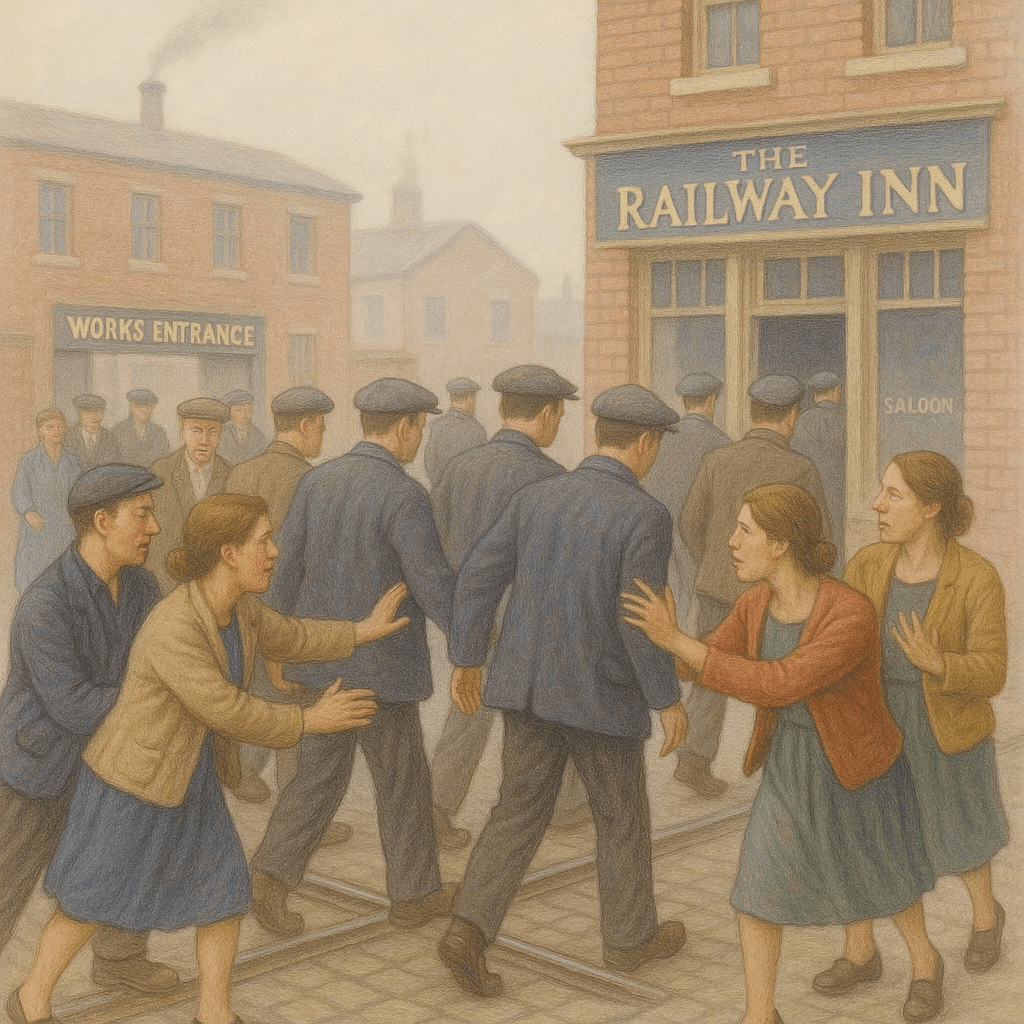
My dad’s plant was across the railroad tracks
from half a dozen shot and chaser bars,
and on paydays the bars were visited
and stocked with stacks of bills by armored cars,
 
and women waited at the gates and tracks
at shift changes, to try to intercept
their thirsty husbands in the passing throng
before they cashed and drank up half their check.
 
At the time, I didn’t think about
how desperate those women must have been
to go out on a crowded public street
and chase after their irresponsible men;
 
I guess I found it droll.  But if I’d been
more aware, what could I have done or said?
When people’s lives are going off the rails
strangers only frown and shake their heads.

*****

David Stephenson writes: “When I was in high school, my dad worked at John Deere Plow-Planter—now called Seeding and Cylinder—in Moline, Illinois.   This was before direct deposit, so the workers got paper paychecks.  As with many factories, there were several taverns nearby, any of which would happily cash a paycheck.  If I borrowed Dad’s car, I would have to pick him up and drop him off, so I was sometimes there during shift changes.  On paydays you would see armored cars outside the bars, and at the end of the afternoon shift you would see women waiting on the railroad tracks, as described in the poem.  It didn’t really register with me at the time, but later on I realized it was quite sad.  I wrote the first two stanzas of the poem four or five years ago, but was stuck as to how to proceed, since I didn’t know what to say about the scene.  What can you say?  I finally came up with the current ending, which says there isn’t anything to say, but says it well.”

‘Payday’ was first published in Snakeskin.

David Stephenson is a retired manufacturing engineer from Detroit, and the editor of Pulsebeat Poetry Journal.  His most recent collection is Wall of Sound (Kelsay Books, 2022).

Illustration: RHL and ChatGPT

Sonnet: Amit Majmudar, “The Only Holy War”

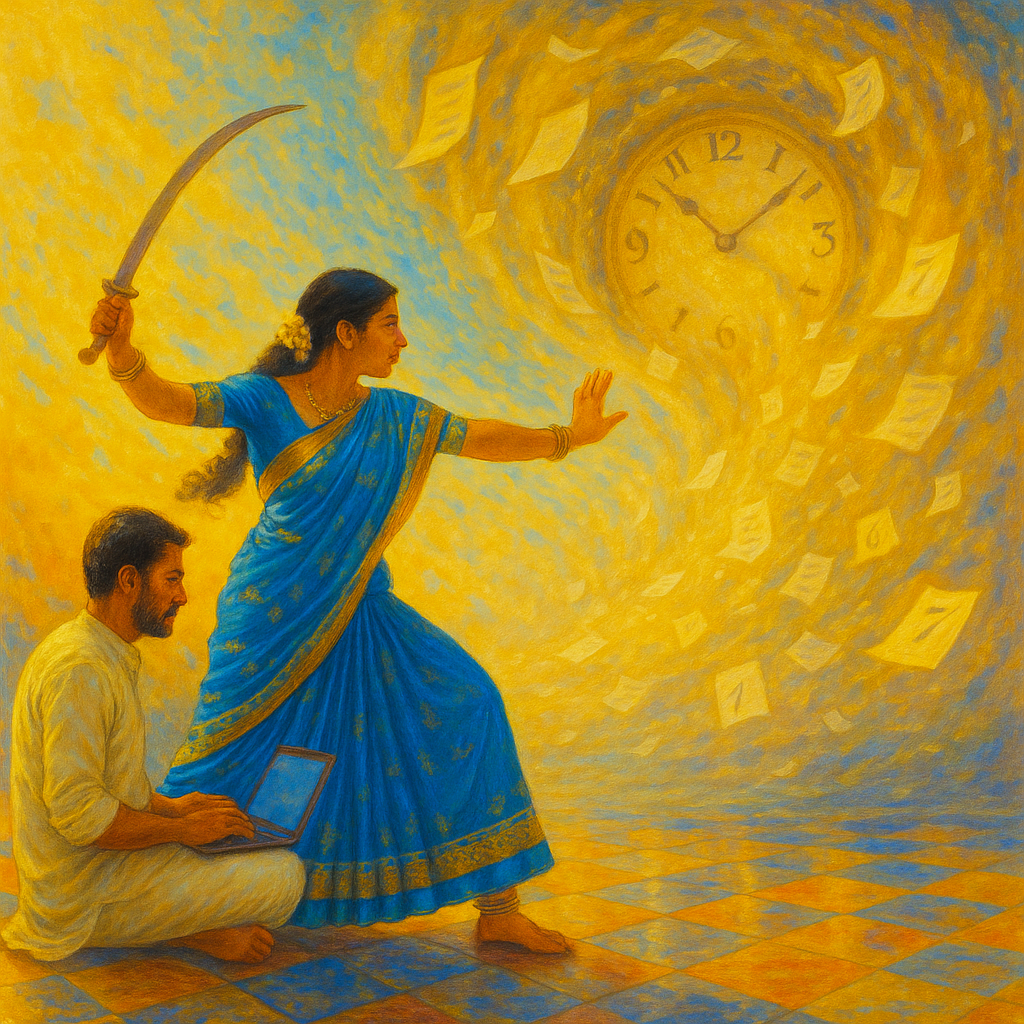
Oh what a glorious war we waged on time,
you in your peacock pleats and jasmine braid
and ankle bells portraying a warrior goddess,
me at my laptop redeploying rhyme
like roving arrows on a map of fate.
We fought our Passchendaele, entrenched in bodies,
my dugout deep in yours. We woke up, ate,
went on our morning walks, we made love, played
old board games, ditched our iPhones, stormed the beachhead,
kamikazed straight into the sun
while knowing we would likely never reach it,
while knowing no Great War was ever won,
each night, each decade together one more mission
prolonging this timeline, this lifegiving war of attrition.

*****

Amit Majmudar writes: “My twin sons, so recently in diapers, just submitted their college applications. My beard has now more white hairs than black. How did this happen? At the cellular level, at the level of fast-twitch muscular contractions and verbal elan, time causes depletion, the radioactive decay of the youthfully glowing complexion, the degradation of collagen, the degradation of memory…. Sophocles, Goethe, and Yeats wrote beautifully into their later lives. Shakespeare stopped writing, voluntarily, when he was less than a decade older than my current age. Two things take me out of time: love, and the creative flow state. This poem represents (both in its subject matter, and as an example of my creativity) the intersection of the two. Yet time really doesn’t stop during that interval. I just cease to register it. The aging goes on, unchecked: the piecemeal conquest of the body, follicle by follicle, neuron by neuron; the tick-tock wastage of love’s remaining years together…. It demands a war effort, and total war at that, all one’s resources of spirit and body utilized to fight it: a Crusade to retake one’s youth, the war against time a Manhattan Project, a veritable Mahabharata: “the only holy war.”

‘The Only Holy War’ was originally published in the New Verse Review.

Amit Majmudar’s recent books include Twin A: A Memoir (Slant Books, 2023), The Great Game: Essays on Poetics (Acre Books, 2024), and the hybrid work Three Metamorphoses (Orison Books, 2025). More information about his novels and poetry collections can be found at www.amitmajmudar.com.

Illustration: RHL and ChatGPT

D.A. Prince, ‘Leaving’

The date has come; the boxes are all stacked,
leaving pale squares where once the pictures hung.
The ghosts of photos, souvenirs, are packed,
the clocks are stopped, the pendulums have swung;
familiar noises banished. Here we sit,
nothing to do, for once: suspended time
can hold its breath and let the minutes knit
the final rows, and then cast off. The climb

into the future’s not so very hard
now all the work is done: decisions made,
the papers signed, that border crossed, the yard
cleared of dead plants, and every last bill paid.
The clocks are stopped, the pendulums have swung,
The ghosts of photos, souvenirs, are packed,
leaving pale squares where once the pictures hung.
The date has come. The boxes are all stacked.

*****

D.A. Prince writes: “This is a memory of a house move in 1982 when, somehow, I found time to sit and reflect. Having moved house last month was a rather different experience  –  and not an experience for the faint-hearted –  but I’m hopeful that eventually, there will be time to sit down. If poetry is ‘emotion recollected in tranquility’ I look forward to some restorative peace in the future.”

‘Leaving’ was first published in Snakeskin.

D.A. Prince lives in Leicestershire and London. Her first appearances in print were in the weekly competitions in The Spectator and New Statesman (which ceased its competitions in 2016) along with other outlets that hosted light verse. Something closer to ‘proper’ poetry followed (but running in parallel), with three pamphlets, followed by a full-length collection, Nearly the Happy Hour, from HappenStance Press in 2008. A second collection, Common Ground, (from the same publisher) followed in 2014 and this won the East Midlands Book Award in 2015. HappenStance subsequently published her pamphlet Bookmarks in 2018, with a further full-length collection, The Bigger Picture, published in 2022. New Walk Editions published her latest pamphlet, Continuous Present, in 2025.

Photo: “Moving Day” by jthetzel is licensed under CC BY 2.0.

Using form: Tritina: Nicole Caruso Garcia, ‘Love Poem in Winter, with Blackout Shades’

Beginning with a line by Aimee Nezhukumatathil

My husband is a pale blur. The dark
turns grainy as the blue hour tints our bedroom,
my glasses somewhere near the nightstand’s edge.

He could almost be U2’s guitarist, Edge:
goatee, pale arms, black T-shirt, trademark dark
wool skull cap. Me: his groupie. His hotel room.

Distortion fades. Before he leaves the room,
I feel a toe-squeeze, hear an air-kiss: edge
of day, his way of sugaring the dark,

our portrait in the darkroom of a marriage.

*****

Nicole Caruso Garcia writes: “The inspiration for the tritinaLove Poem in Winter with Blackout Shades‘ came from a workshop led by Matt. W. Miller at the 2022 Poetry by the Sea Conference. He had us select one line from among a dozen or so poems by other poets, then use the line use as a springboard and incorporate it somewhere in a new poem of our own. My poem’s first sentence is a line from the middle of Aimee Nezhukamatathil’s ‘I Could Be a Whale Shark‘.” 

Love Poem in Winter with Blackout Shades‘ was first published in Crab Orchard Review.

Nicole Caruso Garcia’s full-length debut OXBLOOD (Able Muse Press) received the International Book Award for narrative poetry. Her work appears in Crab Orchard ReviewLightMezzo CamminONE ARTPlumeRattleRHINO, and elsewhere. Her poetry has received the Willow Review Award and won a 2021 Best New Poets honor. She is an associate poetry editor at Able Muse and served as an executive board member at Poetry by the Sea, an annual poetry conference in Madison, CT. Visit her at nicolecarusogarcia.com.

Photo: “29/05/2009 (Day 3.149) – We Are Sane” by Kaptain Kobold is licensed under CC BY-NC-SA 2.0.

Sonnet: Felicity Teague, ‘Robot Dawn’

I sensed your rising in the paper years,
when I was sitting on the garden wall
to copy edit, through my teens. My fears
were few, back then, because the threat seemed small
and I still held the tools. My pencil case
contained my biros, red and royal blue,
my trusty ruler. And at quite a pace,
the work to trim and tidy would ensue,
just as required. But slowly, over time,
the paper-scape was lost to you, your screens,
your checks, your macros. Now, you’re in your prime,
you’re winning worlds of words with your machines,
while I am, we are, shrinking, dwindling, done,
deleted. Humans, zero; robots, one.

*****

Felicity Teague writes: “Due to the advance of the robots in my profession, I’m currently exploring other employment options. These are limited as I have severe and worsening autoimmune arthritis, but I really want to keep working for as long as I can.”

‘Robot Dawn’ was first published in Snakeskin.

Felicity Teague (Fliss) has featured in a number of poetry journals and has published two collections, From Pittville to Paradise (2022) and Interruptus: A Poetry Year (2025). Since April, she has put together the monthly metrical poetry showcase Well Met, and the November issue is here.

Photo: “Greenhouses – Castle Bromwich Hall Gardens – Silver robot potted man” by ell brown is licensed under CC BY-NC-SA 2.0.