Author Archives: Robin Helweg-Larsen

Unknown's avatar

About Robin Helweg-Larsen

Director, Andromeda Simulations International, Bahamas: a global education company providing online and in-person workshops in business finance. Series Editor, Sampson Low's 'Potcake Chapbooks'. Formal verse about traveling, family, love, etc...

Semi-formal poem: Susan de Sola, ‘Bounty’

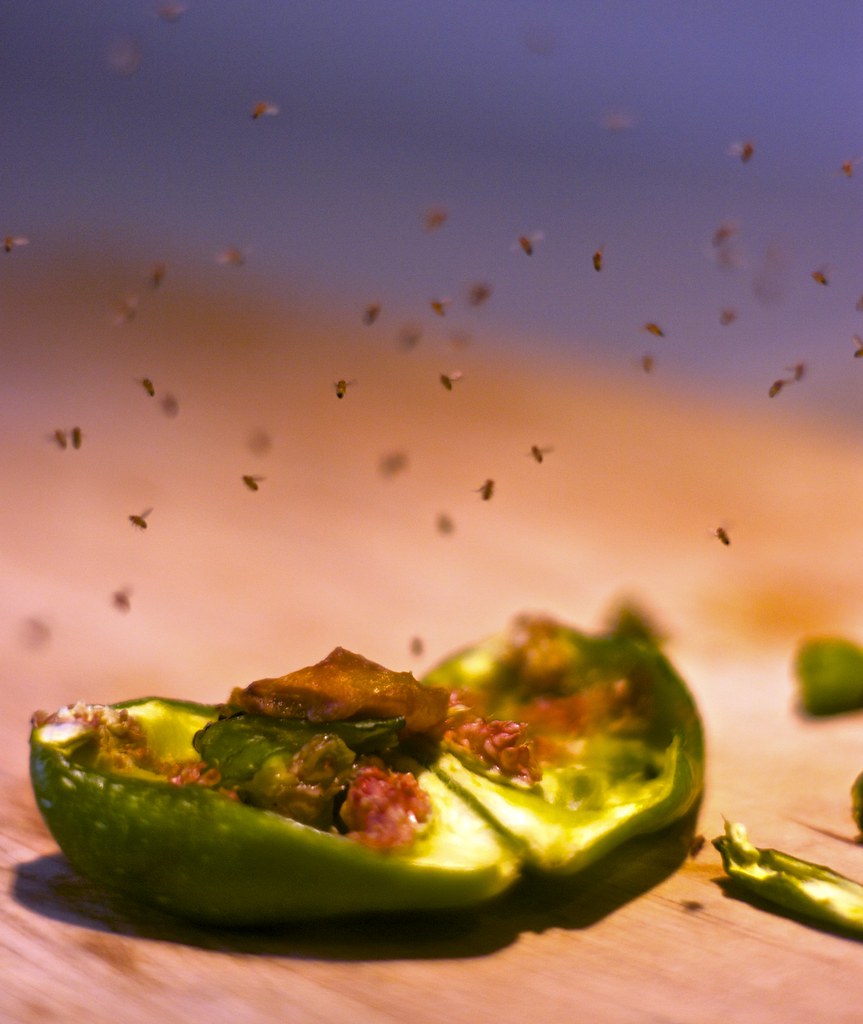
The fruit flies find our fruit, they slip
beneath the lid, a silver dome.
The dark fruit scent has drawn them in,
no other lures them out again.
They settle on apples, puckered figs,
they gorge in perpetuity,
may never fly back to their home,
(if they have ever had a home).
An allegory of choice? Well, yes–
in that we have no choice.
The fruit is fine, the day is long.
Let us feed, buzz, rejoice.

*****

Susan de Sola was a native New Yorker who earned a PhD in English Literature at Johns Hopkins, took a job at Amsterdam University… and stayed, married, raised five children. Published in the Hudson Review, PN Review, and The Dark Horse, she won the David Reid Poetry Translation Prize and the Frost Farm Prize. Her less serious work appeared in Snakeskin, Light, Lighten Up Online, and a couple of her poems were reprinted in Potcake Chapbooks. She was widely loved for her creativity, warmth, and sense of fun. She died from lymphoma in 2021, age 59.

‘Bounty’ is the final poem in her only published collection, Frozen Charlotte, published by Able Muse Press in 2019.

Photo: “Fruit flies from fig” by Alejandro Erickson is licensed under CC BY-NC-SA 2.0.

‘Maz’ Griffiths, ‘Clogs’

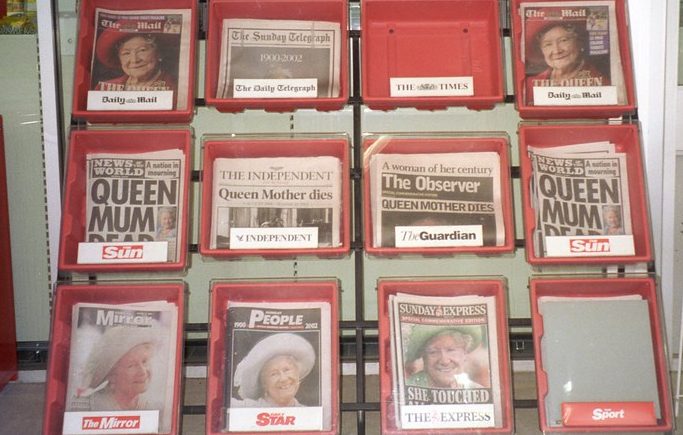
The Queen Mum’s gorn and popped her clogs;
the telly’s stuffed with Royal progs.
I’ve heard a thousand epilogues
now the old Queen Mum has popped her clogs.

The Queen Mum’s gorn and popped her clogs
so let’s fish out our mourning togs
and toast her name in small eggnogs.
Our dear old Queen Mum’s popped her clogs.

The Queen Mum’s gorn and popped her clogs.
Oh, Gawd, we’ll all go to the dogs,
and princes will turn into frogs
now the old Queen Mum has popped her clogs.

*****

The always delightful Margaret Ann “Maz” Griffiths published in a huge range of voices: formal sonnets of wildlife and of the illness that finally killed her, blank verse rants against warfare or injustice, sad songs of the female loss of innocence, flippant anti-establishment sarcasm about the British Royal Family…

‘Grasshopper’, her 350-page collection of poetry (and also one of her nicknames) was assembled by fans after her death and published by Arrowhead Press in the UK and Able Muse Press in North America. It is readable and rereadable. I post the occasional poem in this blog.

Photo: “Queen Mum Dead” by Joe Shlabotnik is licensed under CC BY-NC-SA 2.0.

Stephen Edgar, ‘Dawn Solo’

First light beside the Murray in Mildura,
Which like a drift of mist pervades
The eucalypt arcades,
A pale caesura

Dividing night and day. Two, three clear notes
To usher in the dawn are heard
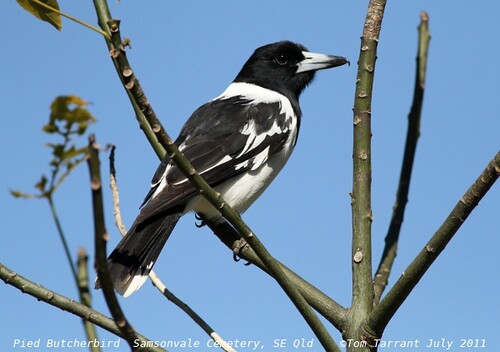
From a pied butcherbird,
A phrase that floats

So slowly through the silence-thickened air,
Those notes, like globules labouring
Through honey, almost cling
And linger there.

Or is it that the notes themselves prolong
The time time takes, to make it stand,
Morning both summoned and
Called back by song.

*****

Stephen Edgar writes: “This poem needs little comment, I think. The bird in question is the pied butcherbird, as the poem says, considered by some to have the most beautiful song of any Australian bird. Let me quote some field guides to Australian birds: “superb, slow, flute-like mellow notes”; “song is one of our finest: a varied sequence of pure fluty whistles, sometimes interspersed by throaty warbles”; “fluted, far-carrying notes that seem to reflect the loneliness of its outback haunts”. Perhaps that third quotation best suggests the quality I was trying to capture. The notes seemed to be in slow motion, slowing time. I was attending the Mildura Writers’ Festival. Mildura is on the southern bank of the Murray River in northwestern Victoria. This was the first occasion on which I had heard the pied butcherbird.

“The form is a quatrain rhyming ABBA, with lines progressively shortening from pentameter, though tetrameter, trimeter to dimeter. It was first published in Australian Book Review and then in my twelfth book The Strangest Place: New and Selected Poems (Melbourne, Black Pepper, 2020), which is available on the Black Pepper website.”

Stephen Edgar was born in 1951 in Sydney, where he grew up. From 1971 to 1974 he lived in London and travelled in Europe. On returning to Australia he moved with his then partner to Hobart, Tasmania, where he attended university, reading Classics, and later working in libraries. Although he had begun writing poetry while still at high school, it was in Hobart that he first began writing publishable poems and found his distinctive voice. He became poetry editor of Island Magazine from 1989 to 2004. He returned to Sydney in 2005. He is married to the poet Judith Beveridge.

He has published thirteen full collections: Queuing for the Mudd Club (1985), Ancient Music (1988), Corrupted Treasures (1995), Where the Trees Were (1999), Lost in the Foreground(2003), Other Summers (2006), History of the Day (2006), The Red Sea: New and Selected Poems (2012), Eldershaw (2013), Exhibits of the Sun (2014), Transparencies (2017), The Strangest Place: New and Selected Poems (2020) and Ghosts of Paradise (2023). A small chapbook, Midnight to Dawn, came out in 2025, and a new collection, Imaginary Archive,will be published in late 2025. His website is www.stephenedgar.com.au, on which publication details of his books, and where they can be purchased, are given.

He was awarded the Australian Prime Minister’s Award for Poetry in 2021 for The Strangest Place.

Photo: “Pied Butcherbird (Cracticus nigrogularis)” by aviceda is licensed under CC BY-NC-SA 2.0.

Blank verse: Gail White, ‘Eve Discusses Adam’s First Wife’

You tell me Lilith has become a fiend,
a vampire, a screech-owl, one who preys
on children (I‘ve had three and she has none),
sentenced for disobedience to run wild,
hideous now, howling for all she lost.
You tell me I was taken from your side
that I might always find a refuge there,
a warm and nestling creature like the cat,
safe from the free but haunted world of dark.
And I’ve adjusted splendidly, I think.
My apple fritters are the best you’ll eat,
go where you will.  I keep domestic life
tidy and clean.  I never stir abroad
for fear of Lilith’s shriek and bat-like wings.
Yet when our first son killed our second son,
I – the good mother and obedient wife –
had one quick moment’s envy of her life.

*****

Gail White writes: “You won’t find the story of Lilith in Genesis, but in later Jewish commentary.  She was created simultaneously with Adam – God made them out of mud – and she used this joint creation to claim equality with him.  The world was not ready for Lilith as First Feminist.  She was banished, and Eve was created within Eden and presumed to be more docile.  I tried to give her a little flash of independent thought.”

First published in Blue Unicorn.  

Gail White lives in the Louisiana bayou country with her husband and cats.  Her latest chapbook, Paper Cuts, is available on Amazon, along with her books Asperity Street and Catechism.  She appears in a number of anthologies, including two Pocket Poetry chapbooks and Nasty Women Poets.  She enjoys being a contributing editor to Light Poetry Magazine.  Her dream is to live in Oxfordshire, but failing that, almost any place in Western Europe would do.

Photo: “Adam and Eve (and Lilith, the serpent) (Notre Dame, Paris, France)” by runintherain is licensed under CC BY-NC-SA 2.0.

Epigram: Brooke Clark, ‘Still Waiting’

You say your memoirs offer pointed re-evaluations
of countless authors’ puffed-up reputations
so you’ve arranged to have them published once you’re safely dead.
Nestor, it’s time your memoirs were read.

*****

Brooke Clark writes: “The original for this is by Martial: Epigrams IV.33; it’s a good example of the alternating 7-stress, 5-stress lines I finally settled on as the best way to capture the feeling of Martial’s elegiac couplets in English. Martial has a number of these “hurry up and die already” poems; if you read through large chunks of his epigrams at a go you’ll find a lot of themes recur over and over with slight variations. The addressee in the original is a poet, but somehow I found the idea of a writer who has left a “poison pen” memoir revealing what he really thinks of all his contemporaries more interesting. Nestor is one of the recurring “characters” in Urbanities, an idea I picked up from Martial’s treatment of Zoilus and expanded until I had a small cast whose stories developed over the course of the book.”

‘Still Waiting’ was originally published in Literary Imagination.

Brooke Clark is the author of the poetry collection Urbanities and has published work in ArionLiterary ImaginationTHINKThe WalrusLA Review of Books, and other places. He is also the editor of the online epigrams journal The Asses of Parnassus and the book reviews editor at Able Muse.
Twitter: @thatbrookeclark
Bluesky: @brookeclark.bsky.social

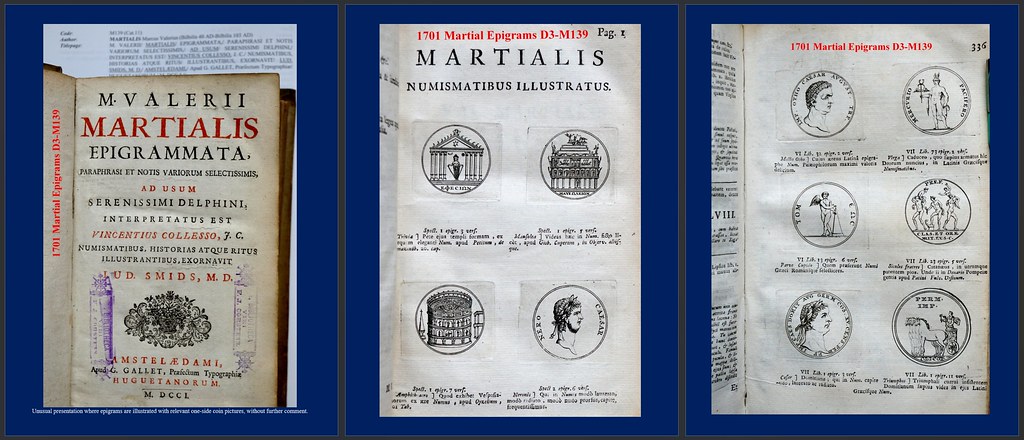
Photo: “1701 Martial Epigrams Dekesel M139” by Ahala is licensed under CC BY-NC 2.0.

Marcus Bales, ‘A Rainy Day in Cleveland’

A rainy day in Cleveland. I almost said
“The skies are gray.” Of course the skies are gray,
It’s raining, so — what could they be instead?
I meant to mow the rest of the lawn today,
But it’s a day to watch the garden grow.
The finches, flashing in the too-long grass,
Are pecking dandelion seeds, and glow
Their special yellow through rain-dotted glass.
The internet is off. I sit and watch
The irises and roses in the rain,
And do not read about the ugly botch
The greedy criminals in charge sustain
So they can strut around, so white, so male,
And cheat and lie to keep themselves from jail.

*****

Marcus Bales writes: “The rap against democracy has until now always been that the public, once it realized they could simply vote themselves money and benefits, would bankrupt the state voting themselves benefits and money. For 250 years the US public managed not to do that, though the reactionaries always accused them of it. It turns out the real danger is that if you have enough money you can just buy the government and operate it as a racket to benefit yourself and your cronies, even when there are laws in place that you have to break in order to do so. The problem with democracy, it turns out, is not that people are irresponsible but that the wealthy are liars and thieves.”

Not much is known about Marcus Bales except that he lives and works in Cleveland, Ohio, and that his work has not been published in Poetry or The New Yorker. However his ’51 Poems’ is available from Amazon. He has been published in several of the Potcake Chapbooks – Form in Formless Times.

Photo: Danny redd Photography https://www.facebook.com/watch/?v=1605166609548538

Using form: Villanelle: Rachel Hadas, ‘However Cool’

However cool X may have thought he was
made very little difference in the end.
We are transformed as we approach the close.

Everyone is subject to these laws.
Ozymandias collapsed in sand,
however cool he may have thought he was.

We live in structures—marriage, job, or house—
steered steadily toward an unknown land,
slyly transfigured as we near the close,

additions and subtractions dealt by whose
enormous unseen hand?
However cool Y may have thought Z was,

her freshness faded like a poet’s rose,
malady no medicine can mend
disguising her before she reached the close.

Think of it as time; a veiled command;
a principle: I do not give. I lend.
However cool we might have thought A was,
we all are changed as we approach the close.

Rachel Hadas writes: “The villanelle ‘However Cool’ was occasioned by a conversation with a friend; she and I were talking about a mutual acquaintance who was ill, and my friend uttered a perfect iambic pentameter line which became the first line of the poem, as well as, with variation, one of the repeated lines.  It was fun to keep switching initials – the “however cool…” downward arc applies in different ways to so many people.

“A.E. Stallings has commented that villanelles are more fun to write than to read, and she may have a point.  At this point in life, I certainly find them easier to write than sonnets. But I hope there’s a bit of rueful fun to be had in ‘However Cool’.”

Rachel Hadas’s recent books include Love and Dread, Pandemic Almanac, and Ghost Guest. Her translations include Euripides’s Iphigenia plays and a portion of Nonnus’s Tales of Dionysus. Professor Emerita at Rutgers-Newark, where she taught for many years, she now teaches at 92Y in New York City and serves as poetry editor of Classical Outlook. Her honors include a Guggenheim fellowship and an award from the American Academy-Institute of Arts and Letters.

Photo: “cool for kids – summer holidays” by oddsock is licensed under CC BY 2.0.

Short poem: RHL, ‘Vibration’

It’s quite a ride.
We took off in a cloud of dust and noise
and, while it might look steady, silent, from afar
above the clouds I’m feeling more and more
a rattle in the cabin and my joints
as though the bolts are shaking loose;
you trust the plane will land safe, smooth, three points . . .
but one way or another, all flights end.

*****

‘Vibration’ was recently published in Blue Unicorn.

Photo: “Ready for the ride, but Someone is a bit nervous…” by Just Us 3 is licensed under CC BY-NC 2.0.

Using form: iambic trimeter: Janet Kenny, ‘Stars’

Look at the stars, she said.
Just look how cold and bright!
And most of them are dead
though brightening the night.
Time lives and dies like stars.
The past is death of now.
Impermanence that scars
our fleeting human hour.
The world inside a mind
that dies when we die too
leaves others left behind
resigned without a clue.
Forget me nots deceive
and daisy chains depend
on children who believe
our world will never end.

*****

Janet Kenny writes: “The poet is very old and has been confronted inescapably with the mortality of all things.”

Janet Kenny left New Zealand to pursue a career as an operatic and concert singer in London, then settled in Sydney, Australia, where she worked in the anti-nuclear movement and jointly compiled, wrote and edited a book about the nuclear industry, Beyond Chernobyl, published by Envirobook in 1993. Janet lived for many years in Sydney with her husband and visiting currawongs. She now lives in Hervey Bay, Queensland, with visiting butcher birds, spangled drongos, ospreys, pelicans, assorted honeyeaters and flying foxes.

Her poems have been published in printed and online journals, including AvatarThe ChimaeraFolly14 by 14Iambs & TrocheesThe Literary ReviewMi PoesiasThe GuardianThe SpectatorThe New FormalistThe Barefoot MuseThe Raintown ReviewThe Shit Creek ReviewSnakeskinLavender ReviewSoundz ineVictorian Violet PressThe Susquehanna Quarterly and Umbrella. Her work is in the collections The Book of Hope and Filled With Breath: 30 sonnets by 30 poets and in the Outer Space anthology, Cambridge University Press. She shared an anthology of bird poems, Passing Through, with Jerry H. Jenkins. She has received three Pushcart nominations.

A selection of her poems, and links to her poetry collections Whistling in the Dark (2016, Kelsay Books) and This Way to the Exit (White Violet Press), are on her website https://janetkenny.netpublish.net/index.htm

Photo: “Sizzling Remains of a Dead Star” by Euclid vanderKroew is licensed under CC BY-NC-SA 2.0.

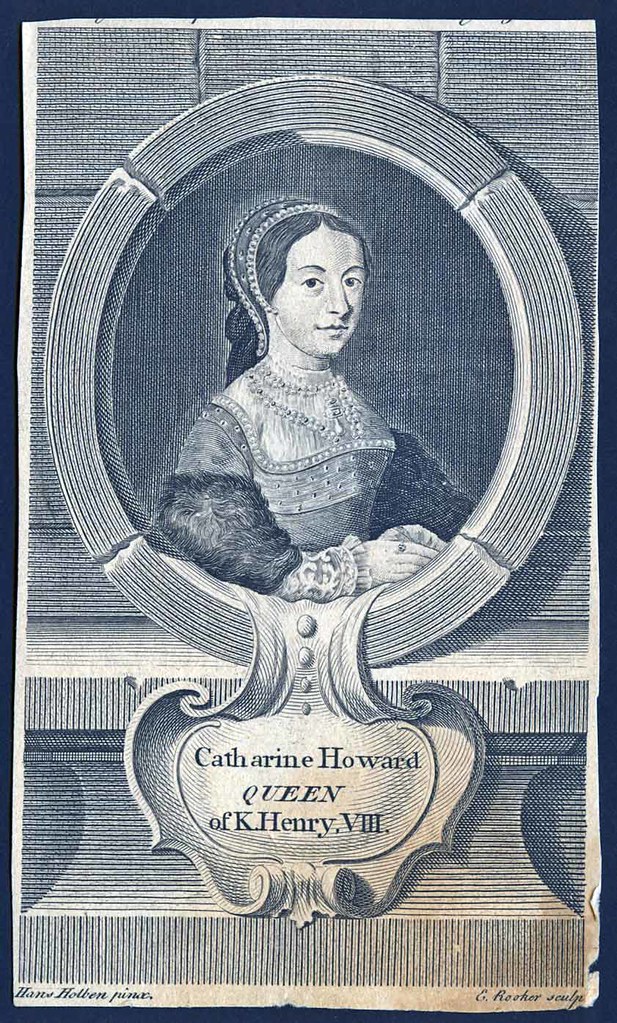
Sonnet: Gail White, ‘Catherine Howard’

(Fourth Wife of King Henry VIII)

The teenage bride the Norfolks gave the king
lacked only brains and her virginity.
Henry was in no mood for questioning
his rose without a thorn.  If only she
had borne a son, he never would have doubted
her purity.  But as the months went by
her youthful dalliance with boys was outed,
then the king’s young attendant caught her eye
and there were secret meetings, hide and seek.
It all came out.  She wrote to beg for grace,
pleading that men were bold and girls were weak,
and Henry wept, but nothing could efface
her crime.  The headsman ended all her pains.
Sometimes it pays a woman to have brains.

*****

Gail Whie writes: “After reading Gareth Russell’s excellent biography of Catherine, Young & Damned & Fair, I decided to take a leaf out of Daniel Galef’s Imaginary Sonnets and give her a sonnet of her own.  I figured that any woman who would commit adultery while married to Henry the Eighth must be either desperate or spectacularly stupid.  And on the path to inevitable execution, I think she really broke the king’s heart.”

Gail White lives in the Louisiana bayou country with her husband and cats.  Her latest chapbook, Paper Cuts, is available on Amazon, along with her books Asperity Street and Catechism.  She appears in a number of anthologies, including two Pocket Poetry chapbooks, five Potcake Chapbooks, and Nasty Women Poets.  She enjoys being a contributing editor to Light Poetry Magazine.  Her dream is to live in Oxfordshire, but failing that, almost any place in Western Europe would do.

Catherine Howard” by Stifts- och landsbiblioteket i Skara is licensed under CC BY 2.0.