Author Archives: Robin Helweg-Larsen

Unknown's avatar

About Robin Helweg-Larsen

Director, Andromeda Simulations International, Bahamas: a global education company providing online and in-person workshops in business finance. Series Editor, Sampson Low's 'Potcake Chapbooks'. Formal verse about traveling, family, love, etc...

Helena Nelson, ‘The Fall (GM)’

The tree was genetically modified.
The apple was full of dioxins.
The leaves were too green;
any fool could have seen
they were vibrant with millions of toxins.

A helpful old friend (we called him ‘The Snake’)
announced he’d go up there and get it.
I said to my spouse
‘We’ve got pears in the house’
but what did he do? Adam ate it.

He snaffled a bite with a smirk of delight,
then laughed till he cried (he was manic).
‘You’ll love it my dear,’
he said, ‘and look here—
I got you some seed. It’s organic.’

Well what could I say? It wasn’t my day
for dodging his amorous athletics.
It led to sheer babel
from wee Cain and Abel—
I blame the whole thing on genetics.

*****

Helena Nelson writes: “I wrote it more than twenty years ago, and at the time people were going on endlessly about GM foods and the risks thereof. They seem to be worrying about other things these days. Anyway, this was the result, and I’ve always liked it, although it is very silly. Maybe too silly.”

Helena Nelson runs HappenStance Press (now winding down) and also writes poems. Her most recent collection is Pearls (The Complete Mr and Mrs Philpott Poems). She reviews widely and is Consulting Editor for The Friday Poem.

Photo: “Everyone’s pregnant in the Garden of Eden!” by quinn.anya is licensed under CC BY-SA 2.0.

Rondeau: Political Poem: J.D. Smith, ‘Citizen Vain’

Who burned his sled? That would explain
The wisps of hair coiffed like a mane,
The name writ large on thrusting towers,
His rating of his works and powers.
Who wouldn’t take up his refrain?

A loser, say, without a brain
And envious he can’t obtain
Fresh wives imported like cut flowers.
(Who burned his sled?)

A nation may endure a reign
Of fire once tended with some pain
Outlasting its appointed hours
Yet starved, for all that it devours.
The question holds fast like a stain–
Who burned his sled?

*****

J.D. Smith writes: “I try not to say or write the name of the moral homunculus who is currently the 47th President of my country, lest my words get entangled in his omnipresent branding. That said, in verse I have occasionally renounced him and all his works. This poem was first published during the 2016 primary season, when speculating on how that troubled and troubling man became that way was still an interesting parlor game with low stakes. While others with credentials in psychology have discussed his origin story, perhaps most notably in this book, as a poet I gravitated toward metaphor. As some will ask a badly behaved person “Who broke you?” or “Who hurt you?”, I began to wonder ” Who burned his sled?” in the sense of some analog to the loss of Charles Foster Kane’s sled Rosebud in Citizen Kane. What early personal trauma made the current collective trauma possible?”

J.D. Smith’s seventh collection of poetry, The Place That Is Coming to Us, was published in September by Broadstone Books. His first fiction collection, Transit, is available from Unsolicited Press. Further information and occasional updates are available at www.jdsmithwriter.com.

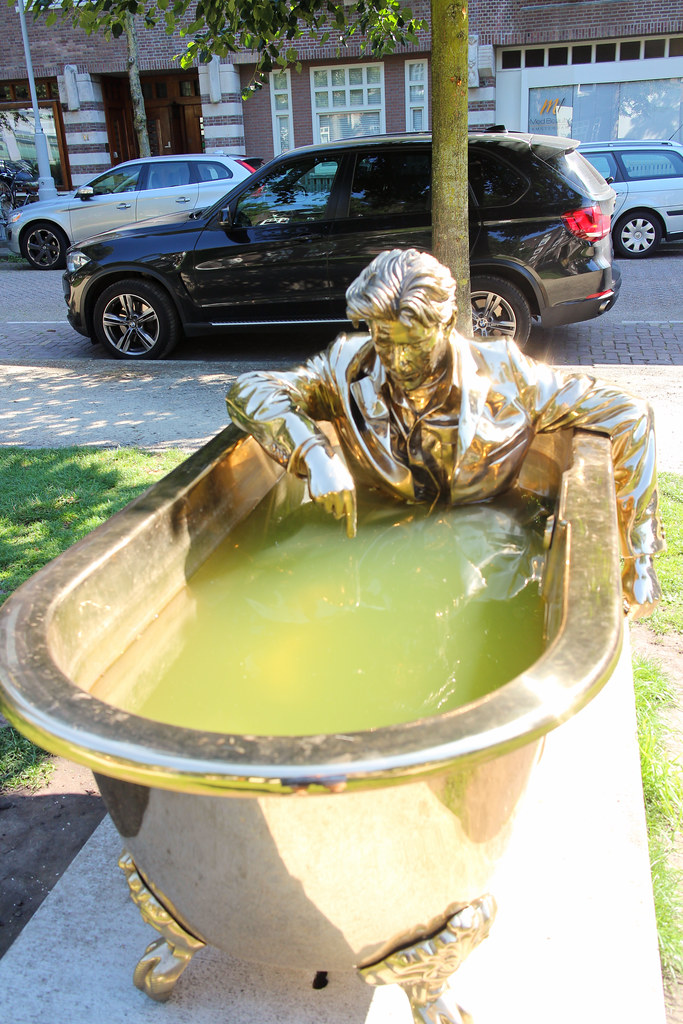
Photo: screenshot from that unbelievably offensive AI-generated video that Trump posted of himself as King Trump in a King Trump fighter-jet, bombing American protesters with his diarrhoea.

Damian Balassone, ‘The Mormon and the Mermaid’

Wounded and winded
by the wind and the waves,
he scratches her name in the sand,
her love is rescinded,
she hides in the caves
where the water caresses the land;
he sings her name in spite of his distress,
and fashions beauty out of loneliness.

*****

Damian Balassone writes: “With regards to the poem, I have no connection to either Mormons or mermaids – it’s about polar opposites.  I think the last line came first.  He doesn’t get the girl, but he gets the poem.”

‘The Mormon and the Mermaid’ was first published in the Shot Glass Journal.

Damian Balassone is the author of four books, including the forthcoming collection of short poems and epigrams Love is a Weird Cat and the children’s book Here, Bear and Everywhere. You can read more here.

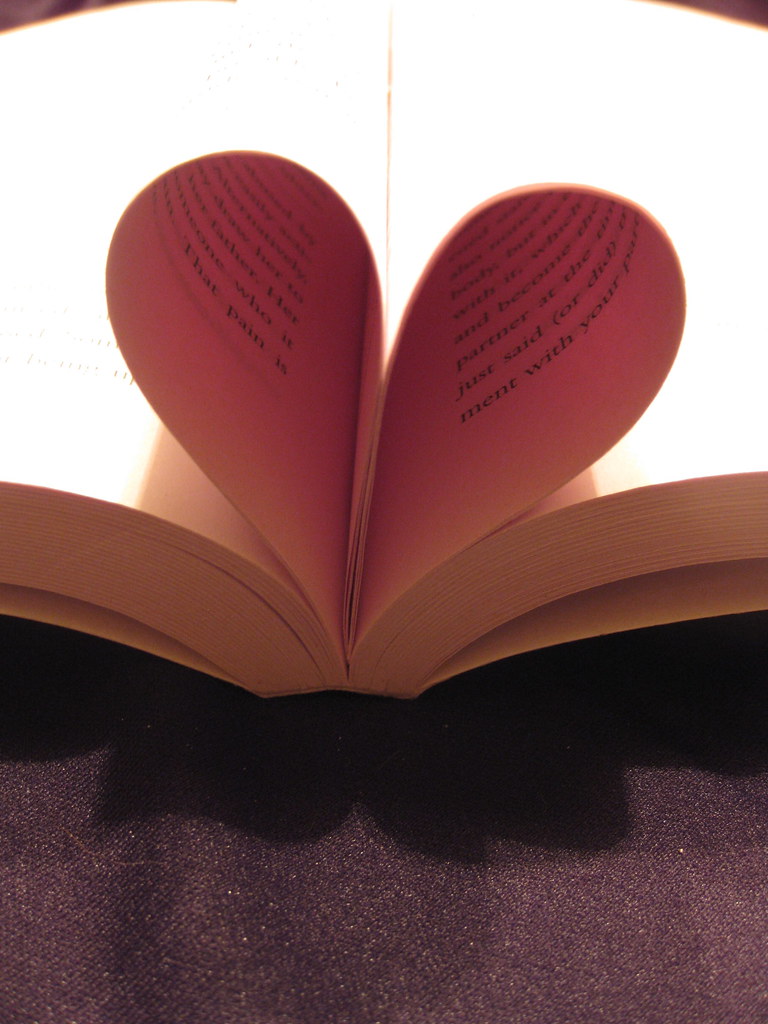
the Other Side of the Tunnel” by ihave3kids is licensed under CC BY-NC-ND 2.0.

Max Gutmann, ‘The Princess and the Pea’

Once a devious queen lodged just one tiny pea
Under twenty soft mattresses, wanting to see
Out of many young princesses which was the one
Who deserved to be matched with the prince, her fine son.

For she knew a true princess was dainty and fine,
And that little legume underneath the frail spine
Would prevent her enjoying the tiniest rest,
And by this all would know she had passed the queen’s test.

But you see, a true princess is also polite,
So when, bleary-eyed after a long, sleepless night,
Each was asked how she’d slept by the queen the next day,
She replied, “Very well,” and was sent on her way,

Till one morning a girl hollered, “What is this lump?
Do you call this a bed? Who can sleep in this dump?”
So the queen said okay. The prince married her straight.
And the moral is: don’t let your mom choose your mate.

*****

Max Gutmann writes: “It always frustrated me that the fairy tale couldn’t seem to see the flaw in the queen’s thinking.”

This poem was first published in Snakeskin.

Max Gutmann has contributed to New StatesmanAble MuseCricket, and other publications. His plays have appeared throughout the U.S. (see maxgutmann.com). His book There Was a Young Girl from Verona sold several copies.

Illustration: ‘The Princess and the Pea’ by Edmund Dulac. Dulac illustrated several of H.C. Andersen’s fairy tales, many of which include sarcastic social commentary on pretentiousness.


Odd poem: Barack Obama, ‘Pop’

Sitting in his seat, a seat broad and broken
In, sprinkled with ashes,
Pop switches channels, takes another
Shot of Seagrams, neat, and asks
What to do with me, a green young man
Who fails to consider the
Flim and flam of the world, since
Things have been easy for me;
I stare hard at his face, a stare
That deflects off his brow;
I’m sure he’s unaware of his
Dark, watery eyes, that
Glance in different directions,
And his slow, unwelcome twitches,
Fail to pass.
I listen, nod,
Listen, open, till I cling to his pale,
Beige T-shirt, yelling,
Yelling in his ears, that hang
With heavy lobes, but he’s still telling
His joke, so I ask why
He’s so unhappy, to which he replies…
But I don’t care anymore, cause
He took too damn long, and from
Under my seat, I pull out the
Mirror I’ve been saving; I’m laughing,
Laughing loud, the blood rushing from his face
To mine, as he grows small,
A spot in my brain, something
That may be squeezed out, like a
Watermelon seed between
Two fingers.
Pop takes another shot, neat,
Points out the same amber
Stain on his shorts that I’ve got on mine, and
Makes me smell his smell, coming
From me; he switches channels, recites an old poem
He wrote before his mother died,
Stands, shouts, and asks
For a hug, as I shrink, my
Arms barely reaching around
His thick, oily neck, and his broad back; ‘cause
I see my face, framed within
Pop’s black-framed glasses
And know he’s laughing too.

*****

1981 poem by future President of the United States Barack Obama, published in the journal Feast.

Featuring it in 2007 (alongside another Obama poem, “Underground”), The New Yorker noted that it “appears to be a loving if slightly jaded portrait of Obama’s maternal grandfather, with whom he spent a large part of his childhood.”

Short poem: RHL, ‘Comparatively Speaking’

One day we’ll all be dead;
survival chances: slim.
So concentrate instead
on aspects you prefer:
“I’m winding down,“ he said,
“but not as fast as him.”
“Losing my looks,” she said,
“but not as fast as her.”

*****

Speaking as someone now in the 4th quadrant of my 1st century, what other options are there? Anyway, this was first published in the Asses of Parnassus – thanks, Brooke Clark!

Old people party 2” by weldonwk is licensed under CC BY 2.0.

Lindsay McLeod, ‘She’

She drinks a bit more
she loves a bit less
she no longer fits
in her wedding dress.

She’s given up trying,
accepted her fate,
feels herself thinning
while she stacks on the hate.

Doesn’t feel like his partner
his mate or his wife,
all she feels is as hard
and as sharp as a knife.

She reels her mind back
but can’t seem to recall,
what she ever saw in him,
why she married at all.

It’s a dead man’s float,
face down on the bed,
they sleep separate, unsound
in their queen sized dread.

So she’ll tread bitter water
as she has done for years,
not so much married to him
as she is to her fears.

*****

Lindsay McLeod writes: “‘She’ was written in my head, wearing ear protection in a factory. It was about my (then) partner who had recently escaped a toxic relationship.” The poem was originally published in Fine Flu.

Lindsay McLeod is an Australian writer who lives quietly on the coast of the great southern penal colony with (yet another ferocious Aussie animal) his cattle dog,  Mary. Lindsay still drives a forklift to support his poetry habit.

Photo: “fulla-ocell / leave-bird ( Every little thing she does is magic )” by Jordi@photos is licensed under CC BY-NC-SA 2.0.

Maryann Corbett, ‘October’

I fail at them, these scenes
where beauty is married to fear.
I have failed before with this one.
How can I make it clear

when the moment itself was a blur?
My son and I, that night,
stepped through the warm, wet air
that had magicked every light

to a wide, all-hallowing halo.
He said–I think he was ten,
still with his clear soprano–
It’s lovely out here.
And then

the edge of every nimbus,
pale gold through a fog scrim,
shivered, knowing that beauty soon
would be bullied out of him.

*****

Maryann Corbett writes: “This poem (first published in Mezzo Cammin) is indeed based on one of those indelible memories, the sort that lodge in a parent’s brain for decades. And I have in fact tried to write about it before without succeeding. I’ve never asked my very adult son whether he remembers this moment at all.”

Maryann Corbett earned a doctorate in English from the University of Minnesota in 1981 and expected to be teaching Beowulf and Chaucer and the history of the English language. Instead, she spent almost thirty-five years working for the Office of the Revisor of Statutes of the Minnesota Legislature, helping attorneys to write in plain English and coordinating the creation of finding aids for the law. She returned to writing poetry after thirty years away from the craft in 2005 and is now the author of two chapbooks and six full-length collections, most recently The O in the Air (Franciscan U. Press, 2023). Her work has won the Willis Barnstone Translation Prize and the Richard Wilbur Award, has appeared in many journals on both sides of the Atlantic, and is included in anthologies like Measure for Measure: An Anthology of Poetic Meters and The Best American Poetry.

Photo: “Bright Lights of Quakers on a Wet Night” by Frank.Li is licensed under CC BY-NC-SA 2.0.

Short poem: Michael R. Burch, ‘Not Elves, Exactly’

Something there is that likes a wall,
that likes it spiked and likes it tall,

that likes its pikes’ sharp rows of teeth
and doesn’t mind its victims’ grief

(wherever they come from, far or wide)
as long as they fall on the other side.

*****

Michael R. Burch comments: “I wrote ‘Not Elves, Exactly‘ thinking of Trump’s border wall and Robert Frost’s mischievous elves in ‘Mending Wall‘.”

The poem was first published in Snakeskin.

Michael R. Burch’s poems have been published by hundreds of literary journals, taught in high schools and colleges, translated into 23 languages, incorporated into three plays and four operas, and set to music, from swamp blues to classical, 78 times by 35 composers. He is also the founder and editor-in-chief of The HyperTexts.

Photo: “Spiked wall, Lewes” by ♔ Georgie R is licensed under CC BY-ND 2.0.

Using form: Basic Me: Nicole Caruso Garcia, ‘Po-Biz Ars Poetica’

Form is a slippery seed to be grasped.
Free verse is form with its bra hook unclasped.
Blocked is me chewing my fanciest pens.
Pun is a test of my spouse and my friends.
Drunk is the poet who’s making a pass.
Prize is a unicorn chased by an ass.
Tome is Uranus-sized ego unbound.
Deep is the grave of my darlings I’ve drowned.
Rhyme is the hill where I’m willing to die.
Meh is the mic hog who sounds like AI.
Crit is a cig from a firing squad.
Light is the thirstiest verse. Please applaud.

*****

Nicole Caruso Garcia writes: “‘Po-Biz Ars Poetica‘ came about after I stumbled upon a metrical form Mary Meriam invented called the “Basic Me.” (I will include the link to its “rules” here.) Although Meriam says, “Basically, it means ‘what are your words and how would you define them?,” here I ascribed each trait to “po-biz” rather than to myself.”

Po-Biz Ars Poetica‘ was first published in the Winter/Spring 2025 issue of Light, where Nicole Caruso Garcia is the Featured Poet.

Nicole Caruso Garcia’s full-length debut OXBLOOD (Able Muse Press) received the International Book Award for narrative poetry. Her work appears in Crab Orchard ReviewLightMezzo CamminONE ARTPlumeRattleRHINO, and elsewhere. Her poetry has received the Willow Review Award and won a 2021 Best New Poets honor. She is an associate poetry editor at Able Muse and served as an executive board member at Poetry by the Sea, an annual poetry conference in Madison, CT. Visit her at nicolecarusogarcia.com.

Photo: “ENSACT Conference Social Action in Europe, Dubrovnik 2009” by sharon.schneider is licensed under CC BY-NC-SA 2.0.