Author Archives: Robin Helweg-Larsen

Unknown's avatar

About Robin Helweg-Larsen

Director, Andromeda Simulations International, Bahamas: a global education company providing online and in-person workshops in business finance. Series Editor, Sampson Low's 'Potcake Chapbooks'. Formal verse about traveling, family, love, etc...

George Simmers, ‘Earth’

Old Becky’s in her garden, delving among roots,
Cutting away dead wood, caressing shoots.
All this June morning, she has given her garden love
Tough as the fabric of her gardening glove.
She’s a no-nonsense woman; her words are earthy words.
She calls a spade a spade; she calls turds turds.

How old is she? As well ask how old’s that
Ridiculous and ragged old sun hat.
As well ask why the sun is blazing gold;
As well ask why she loves the limping old
Fat spaniel whose idea of summer fun
Is stretching indolent in the summer sun
And watching as she plods around the plot.

Dogs, children, husbands: these are what
Her life has been. Husbands both buried now.
Children all visit when their lives allow,
And relish her gruff love and plenteous food.
The dog’s grown old with her, and now his mood
Is slow contentment. She was at his birth
And soon she’ll bury him beneath this earth.

For in this garden it is understood
That death is natural, and the earth is good.

*****

George Simmers writes: “This is the first of four character sketches, each based on one of the ancient elements – Earth, Air, Fire and Water. The complete sequence can be found in Snakeskin 309 (August 2023).”

George Simmers used to be a teacher; now he spends much of his time researching literature written during and after the First World War. He has edited Snakeskin since 1995. It is probably the oldest-established poetry zine on the Internet. His work appears in several Potcake Chapbooks, and his recent diverse collection is ‘Old and Bookish’.

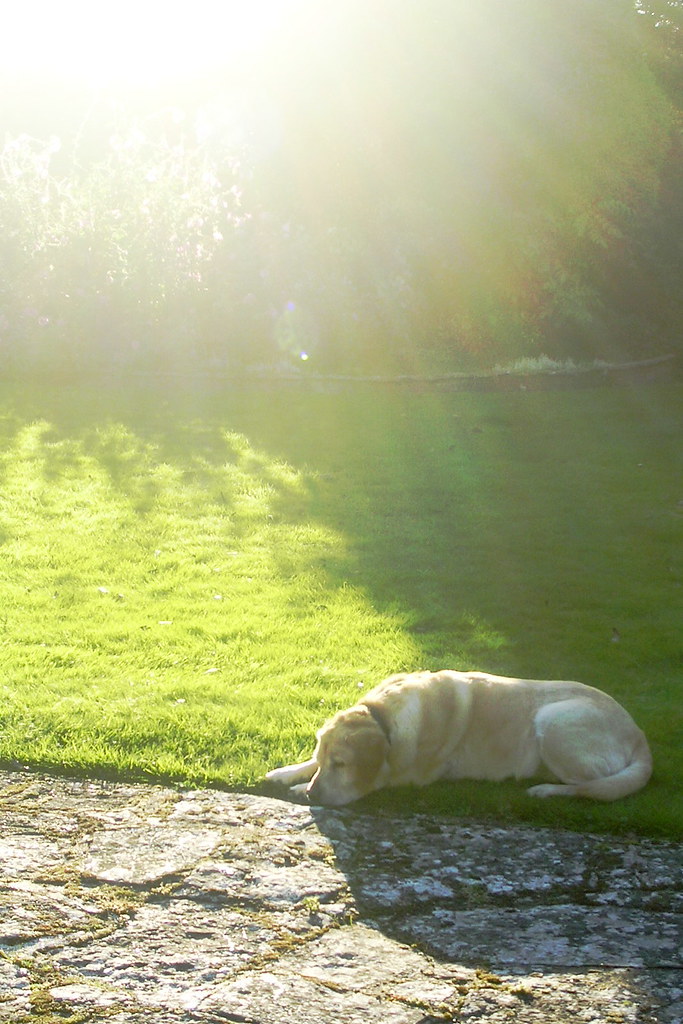
Dog moving as the shade goes” by Ed.ward is licensed under CC BY-SA 2.0.

Sonnet: ‘Wanderer, or Odin/Merlin in the 21st Century’

It isn’t money, power, or (really) sex;
it’s wisdom, knowledge, understanding, truth,
the motivation from my earliest youth.
So now I watch as all our dreams turn wrecks,
as statesmen bluster, muscles bulge and flex,
economists forecast but can’t say sooth,
and life extension folks are thought uncouth–
they hoard possessions, but can’t save their necks.
I wandered, ragged, with a missing eye,
patched so none knew my implant’s extra sight,
seeking her who’d save from oblivion
the things I’ve found; for I see I must die,
and I’m now summoning the acolyte
who’ll carry knowledge on. Come, Vivien.

*****

The child wandering, the youth hitchhiking, the middle-aged tramp, the old hobo… in my view, they all have the spirit of Odin, Merlin, Hermes, Papa Legba, searching for knowledge, intermediary between the human and the divine/posthuman.

This sonnet was recently published in The Road Not Taken – a Journal of Formal Poetry. Thanks, Dr. Kathryn Jacobs!

Illustration: DALL-E

Susan McLean, ‘Dead Giveaway’

Who’ll take my dead? I’ve carried them so long
my mind is swaybacked from their aching weight.
I can’t just cast them off. It would be wrong
to leave them in some shed, like unclaimed freight.
How could I walk away as Cathy’s smile
collapsed, as Brian gently said “Take care,”
and Grammy begged “Please take me home now” while
I shut them in the dark and left them there?

I’ve jettisoned so much I took to heart—
the afterlife, belief in justice, prayer.
I’ll have to lay my dead down too, I know.
After a party, when my friends depart,
I wash up, stow away what’s left, yet they’re
still here. The dead are always last to go.

*****

Susan McLean writes: “I love the way a cliché can take on new life if the words are interpreted in a nontraditional way. The title of this poem seemed painfully poignant to me when I imagined it applying to the dead we all carry around with us. It would be nice to be able to walk away from that sadness, but of course who among us could bring ourselves to do it? Though I try to keep the voice of the poem sounding natural, I pay attention to the play of sounds in the words, as in the echoes of consonant and vowel sounds in the first two lines: “take,” “swaybacked,” “aching,” and “weight.” In the sestet of the sonnet, the imagined action of the speaker’s leaving her dead behind in the octave is reversed when she is herself left behind by her departing friends, with only her dead to keep her company.
This poem first appeared in the online journal 14 by 14, and later was published in my
second poetry book, The Whetstone Misses the Knife.”

Susan McLean has two books of poetry, The Best Disguise and The Whetstone Misses the Knife, and one book of translations of Martial, Selected Epigrams. Her poems have appeared in Light, Lighten Up Online, Measure, Able Muse, and elsewhere. She lives in Iowa City, Iowa.
https://www.pw.org/content/susan_mclean

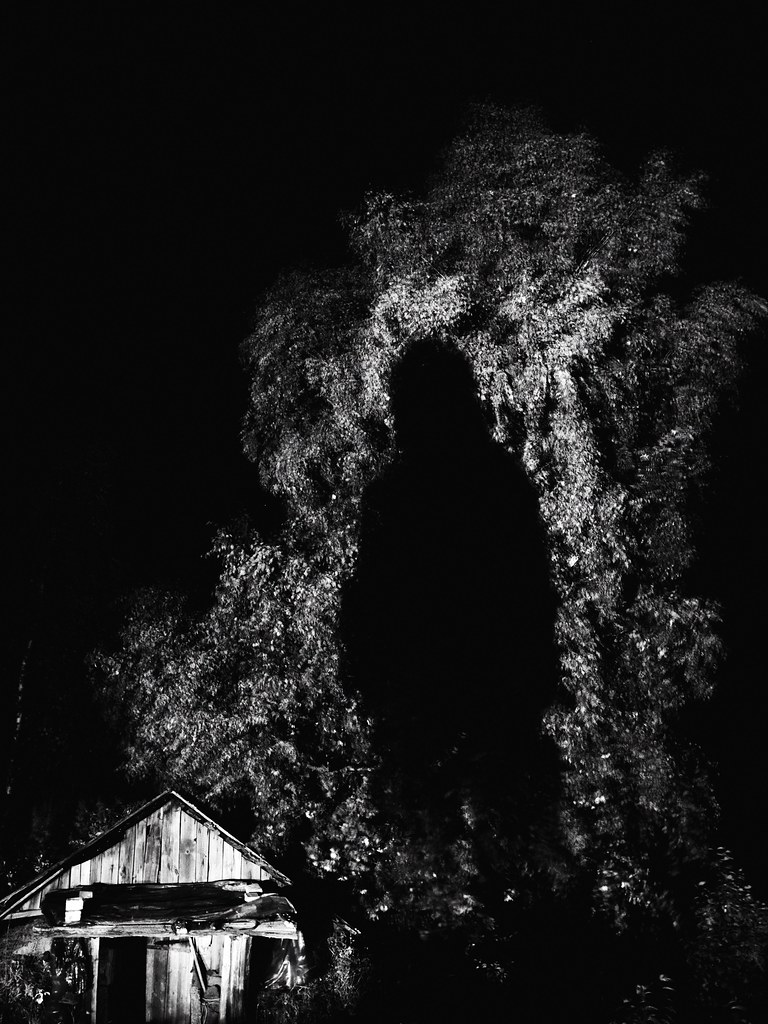
Photo: “Ghosts of the old house” by Tree Leaf Clover is licensed under CC BY 2.0.

Short poem: ‘On a Magazine Editor’

He puts on his apron every day
and dusts, arranges, bests;
but the more finicky his entryway,
the fewer, it seems, the guests.

*****

This little poem was sparked by the difficulties I have in trying to submit to some magazines and in trying to contribute to some discussions. Eventually I give up. And then make snarky comments.

It was recently published in The Asses of Parnassus – thanks, Brooke Clark (who makes the contribution process very simple!)

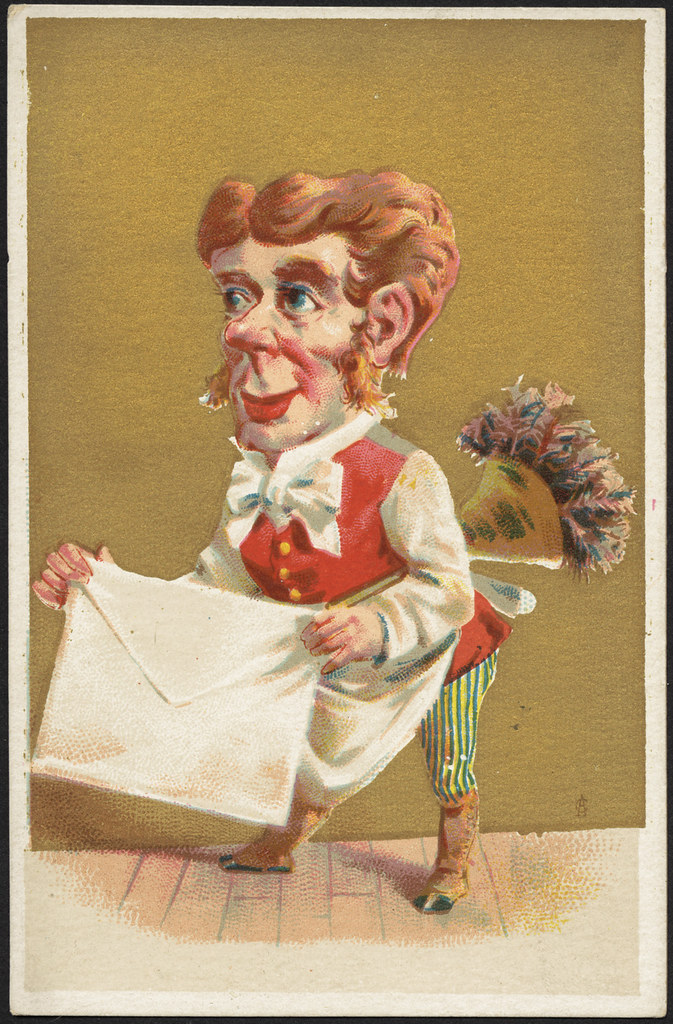
Illustration: “Man holding an envelope with a feather duster. [front]” by Boston Public Library is licensed under CC BY 2.0.

Quincy R. Lehr, ‘As if by chance’

When I looked at her, and when her lips
Pulled back to show her teeth, and when her voice
Broke into laughter, I could only think
Of moments that I’d pissed away, each choice
I’d left to others, and the careless slips
That landed me beside an empty drink.
That afternoon, I could have sworn I saw
A thinner, hopeful version of my face
Staring from behind her retinas–
Familiar, yes, the eyes, the skin, the jaw,
But in that instant somehow out of place.
It cast a knowing frown. The gravitas
Was overbearing. Nonetheless, we filled
The void with gossip, anecdotes and smut,
Comparing chatty journals–note by note.
Like poets, we dissembled in the rut
That each of us was in, our chances killed
By loss of nerve or failure to emote.
But still, a sneer could not have hurt me more
Than her clear laugh that sang of expectations
So long forgotten from a distant day
When youth still spread before me, and the poor
And pitiful attempts at explanations
Still lay in ambush, only years away.

*****

Quincy R. Lehr writes: “This poem was literally about running into a high school friend of mine by chance on the day I defended my doctoral dissertation (though that’s not in the poem). It’s funny how old I thought I was at twenty-nine.”

Born in Oklahoma, Quincy R. Lehr is the author of several books of poetry, and his poems and criticism appear widely in venues in North America, Europe, and Australia. His book-length poem ‘Heimat‘ was published in 2014. His most recent books are ‘The Dark Lord of the Tiki Bar‘ (2015) and ‘Near Hits and Lost Classics‘ (2021), a selection of early poems. He lives in Los Angeles.
https://www.amazon.com/Quincy-R.-Lehr/e/B003VMY9AG

Photo: “Young woman laughing” by Snapshooter46 is licensed under CC BY-NC-SA 2.0.

Susan McLean, ‘The Mirror’s Desolation’

Once you adored me. I would bask
in looks you saved for me alone,
giving no hint—if any ask—
of secrets only I have known.
But now you find me hard to face.
I care for you too much to lie,
copying lines you would erase.
You hurry past, head down, and I,
sensing your pained indignity,
return your look of mute distress.
Though you no longer cherish me,
I do not love you any less.

*****

Susan McLean writes: “I took the idea of a talking mirror from Sylvia Plath’s poem ‘Mirror,’ but whereas she presents the mirror as being totally dispassionate, my mirror reflects the emotions as well as the faces of those who look into it. Sometimes, if you see someone beautiful, you may think “the mirror loves her (or him).” But it occurred to me that mirrors love everyone. They just as gladly reflect the old and ugly as the young and beautiful. In this poem, I imagine the mirror’s sorrow that its love is not returned. In French, “I’m sorry” is “je suis désolé” (“I’m desolated”), which always seemed charmingly over-the-top to me. It occurred to me that the phrase “the mirror’s desolation” could refer both to the sorrow the mirror feels and to the devastation it causes. This poem first appeared in Valparaiso Poetry Review, and then in my second poetry book, The Whetstone Misses the Knife.

Susan McLean has two books of poetry, The Best Disguise and The Whetstone Misses the Knife, and one book of translations of Martial, Selected Epigrams. Her poems have appeared in Light, Lighten Up Online, Measure, Able Muse, and elsewhere. She lives in Iowa City, Iowa.
https://www.pw.org/content/susan_mclean

Illustration: DALL-E

Gail White, ‘The Girls Who Got Ahead’

When all the bright young women studied law
and medicine, I thought a PhD
in Women and the Novel would unthaw
the frozen heart of Academe for me.
When all the bright girls married, where was I?
Still shacking up with poets that I met
in bars, convinced that genius and rye
would write us into fame and out of debt.
The bright girls made investments by the rules.
I kept on writing novels in my mind.
They sent their handsome kids to private schools
and I became the girl they left behind.
Bright girls got married and ahead and rich,
while I’m in debt again, and life’s a bitch.

*****

Gail White writes: “The Girls Who Got Ahead is a poem from the 90’s. Yes, everyone was in the professions or in graduate school but me. I was a poet and that means taking a vow of poverty. I thought I might as well make a sonnet out of it.”

Gail White is the resident poet and cat lady of Breaux Bridge, Louisiana. Her books ASPERITY STREET and CATECHISM are available on Amazon. She is a contributing editor to Light Poetry Magazine. “Tourist in India” won the Howard Nemerov Sonnet Award for 2013. Her poems have appeared in the Potcake Chapbooks ‘Tourists and Cannibals’, ‘Rogues and Roses’, ‘Families and Other Fiascoes’, ‘Strip Down’ and ‘Lost Love’. ‘Money Song’ is collected in ‘Asperity Street‘. Her new light verse chapbook, ‘Paper Cuts‘, is now available on Amazon.

Photo: “Women Entrepreneurs Blazing Trails” by World Economic Forum is licensed under CC BY-NC-SA 2.0.

Short poem: ‘Raven’

Every raven started as a naked nestling,
every fox was a blind nursing pup,
helpless… then looking, reaching, wrestling
into the wilderness of growing up.

*****

Written for my grandson Raven (born in October last year, and dressed by his parents in a fox outfit for Halloween). The poem was published recently in The Asses of Parnassus – thanks, Brooke Clark!

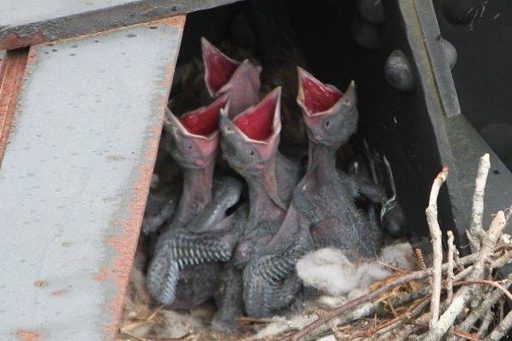
Photo: “HBT Raven Chicks” by vastateparksstaff is licensed under CC BY 2.0.

Michael Tyldesley, ‘Ballad of the Siren Song’

“Come closer and I will tell you a secret
To you, to you, only to you.
Come Closer.”

You’re perched sultry on a craggy cliff,
curvy on a windswept rock
with red dress clinging to your breasts:
you play that tune, that tune you play
it’s calling out to me.

And I’m sailing, roving, lost at sea,
bedraggled by the ocean spray
and changing course for you.

Because, that tune, that tune you play
it jolts me, hooks me, reels its prey:
from silent waves to violin,
from moonless numb to sun-kissed-skin
from topsail calm to snatching whip,
from steady course to daring trip.

I hear that tune, that tune you play
it takes me further, far away:
your spiral smile, your whirlpool lips,
they whisper songs to rolling ships.

That tune you play, with gravity
hypnotic moonstruck melody,
there’s no escape, the heavens swarm
electrostatic pulses form –

I’d love to be your thunderstorm,
whipping up the specks of you,
teasing you; perplexing you
not pleasing you; just vexing you
yet needing the effects of you,
a feeling that projects on you,
it’s squeezing me and sexing you.

And yet, that tune, that tune you play
it leads me on in some strange way –
I see beached skulls and broken hulls
shadows changing, screeching gulls,
till I’m marooned, a castaway,
a shipwreck in your taloned splay.

*****

Michael Tyldesley writes: “The poem was inspired by the trap of damaging relationships earlier in my life and the metaphor that sits behind the poem and continues to burn in me is the irresistible lure of hypomania. The poem structure was inspired by the freeform rhyming style of Jenni Doherty and the language of Dylan Thomas’s Under Milk Wood. It’s been gathering dust in my drawer over the years and it’s quite an old poem. I wrote most of it at 26 and I’m now 42. It’s slightly raunchy and I suppose I didn’t want to be judged negatively due to that but it’s always been a very popular poem when I shared it.”

Michael Tyldesley works in British submarine design. At the time of writing this post he is in Australia, doing performance poetry at Melbourne’s Vibe Union. ‘Ballad of the Siren Song’ was published in this month’s Snakeskin.

Photo: Image Creator powered by DALL·E

Edmund Conti, ‘Two’s Company’

Sweet are the uses of divinity
And sweeter yet in keeping us engrossed
Is the simple complex concept of the trinity
The Father, Son and Holy Ghost.

Is making sense of Them too much a bother?
Is there any way to master Three-in-One?
The son, the Holy Ghost and Father,
The Holy Ghost, the Father and the Son.

I use this ancient form, the cranky sonnet
To crank out my aberrant Dunciad
And what evolves from overthinking on it:
The Spook, the Kid and–dare I say it?–Dad.

It’s true that poems are made by fools like me
But only God can make himself a three.

*****

Edmund Conti writes: “I wasn’t going to get into any interpretations of the Trinity. Just noting that scholars writing about it don’t shed much light. So I decided to shed my own. Somewhere along the line I may have gone a little overboard. (Pray for me.) I think my cranky sonnet has its own rhyme scheme, not one from the books. Meanwhile I’ve forgotten what ”Dunciad” means except that it was a good rhyme word. Forgetting all that, I guess this whole thing was inspired by Joyce Kilmer’s memorable last line.”

Edmund Conti has recent poems published in Light, Lighten-Up Online, The Lyric, The Asses of Parnassus, newversenews, Verse-Virtual and Open Arts Forum. His book of poems, Just So You Know, released by Kelsay Books
https://www.amazon.com/Just-You-Know-Edmund-Conti/dp/1947465899/
was followed by That Shakespeherian Rag, also from Kelsay
https://kelsaybooks.com/products/that-shakespeherian-ragHis poems have appeared in several Potcake Chapbooks: Tourists and Cannibals
Rogues and Roses
Families and Other Fiascoes
Wordplayful
all available from Sampson Low Publishers

Photo: “Father, Son & Holy Ghost” by elston is licensed under CC BY-NC-ND 2.0.