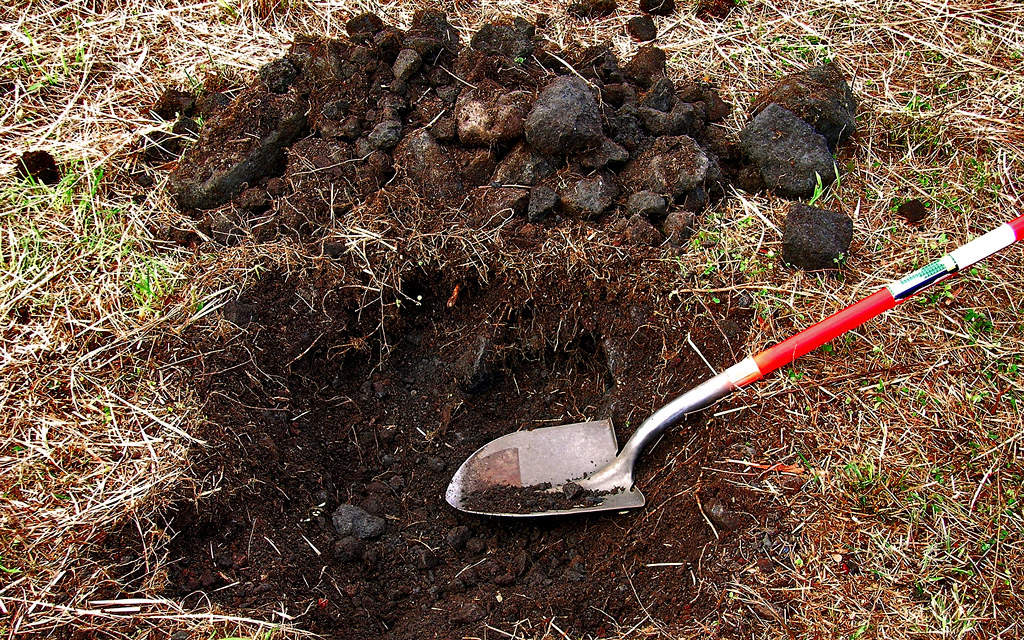
To ruin anyone’s potential, you Will need things like this: shell from a chicken’s Egg that broke when it fell from its nest to The ground, unhatched. Unfastened safety pins That were found, not bought. Seeds, germinated, Then boiled before the first leaves unfurled and Turned green. Dead caterpillars. Negated Contracts. Unopened catalogues. A hand From a working clock. Beads from a wedding Dress that was returned. At least one item Must have been stolen from your target. Bring These together, dig a 6 foot hole, then Bury them. As you bury, state the name Of who you want ruined, adding: ‘What a shame’.
*****
Juleigh Howard-Hobson writes: “This wicked sonnet was inspired by jealous fairytale stepmothers, and characters like Daphne Du Maurier’s Mrs. Danvers. Oh, and coming upon a bunch of dead green caterpillars lying under a tree… Besides first appearing in Coffin Bell, it is included in my book, Curses, Black Spells and Hexes: a Grimoire Sonnetica (Alien Buddha). Of all the spell sonnets I’ve written, this is one of the wryest. I wouldn’t wish it on my worst friend.”
Juleigh Howard-Hobson’s work can be found in Think Journal, Able Muse, New Verse Review, Coffin Bell Magazine (including this poem), The Deadlands, Autumn Sky Poetry and other venues. She has been nominated for “The Best of the Net”, Pushcart, Elgin & Rhysling Awards. A member of the HWA and the SFPA, she lives on the coast of the Pacific Northwest. In a poetically haunted house. X: poetforest
Despite the dreams and yearnings that lie drowned, the flotsam of desire, the fearful straits, the capsized hope, the passion gone aground, the tides too treacherous to navigate, you lift your gaze each time love reappears like an ocean liner gliding through the dark, without a thought you rush down to the pier and climb aboard and once again embark, and stand upon the deck ablaze with light, and raise your glass beneath the glittering stars, and watch the harbor slowly fade from sight, not caring where you’re going, or how far — knowing the odds are slim that you’ll survive, yet never having felt quite so alive.
*****
Marion Shore writes: “Embarking is a riff on Petrarch’s sonnet Passa la nave mia colma d’oblio (Canzoniere 189), contrasting the festive departure of the ocean liner into the unknown, with the inevitable shipwreck of Petrarch’s beleaguered vessel. You could say “Embarking“ is sort of a prequel to Petrarch’s poem–with a hint of Titanic thrown in.”
Marion Shore is the author of For Love of Laura: Poetry of Petrarch, a collecion of Petrarch’s poetry in translation published by the University of Arkansas Press in 1987. Her work has also appeared in Poems from Italy; Petrarch in English; 150 Contemporary Sonnets; and Rhyming Poems: A Contemporary Anthology. Her poems and translations have been published in numerous journals including The Formalist, Light Quarterly, Iambs and Trochees, First Things, and Measure. Recipient of the 2010 Richard Wilbur Award for Sand Castle(from which this poem is taken) and two-time winner of the Howard Nemerov Sonnet Award, she lives in Springfield, MA.
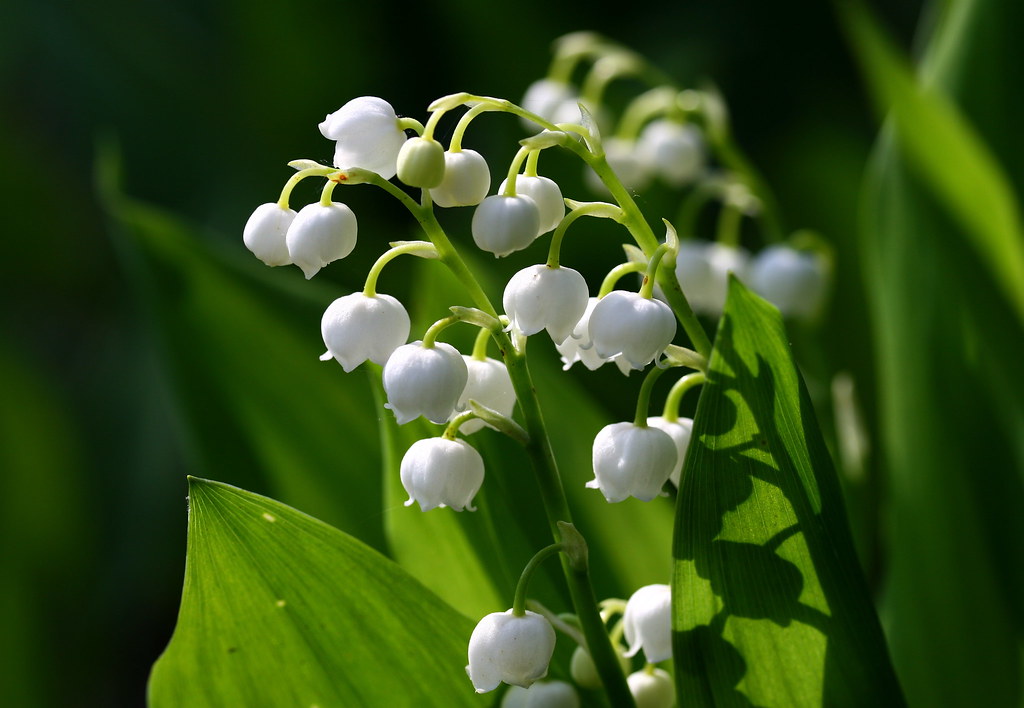
When at the end of spring I pick for the last time My favourite flowers— a yearning fills my breast, And to the future I urgently appeal: Let me but once again look upon the lilies of the valley.
Now they have faded. Like an arrow the summer has flown by, The days have grown shorter. The feathered choir is still, The sun more charily grants us its warmth and light, And already the wood has laid its leafy carpet.
Then when harsh winter comes And the forests don their snowy cover, Despondently I roam and wait with new yearning For the skies to shine with the sun of spring.
I find no pleasure in books, or conversation, Or swift-rushing sledges, or the ball’s noisy glitter, Or Patti, or the theatre, or delicate cuisine, Or the quiet crackling of smouldering logs on the fire
I wait for spring. And now the enchantress appears, The wood has cast off its shroud and prepares for us shade, And the rivers start to flow, and the grove is filled with sound, And at last the long-looked-for day is here!
Quick to the woods!—I race along the familiar path. Can my dreams have come true, my longings be fulfilled?— There he is! Bending to the earth, with trembling hand I pluck the wondrous gift of the enchantress Spring.
O lily of the valley, why do you so please the eye? Other flowers there are more sumptuous and grand, With brighter colours and livelier patterns, Yet they have not your mysterious fascination.
Where lies the secret of your charms? What do you prophesy to the soul? With what do you attract me, with what gladden my heart? Is it that you revive the ghost of former pleasures, Or is it future bliss that you promise us?
I know not. But your balmy fragrance, Like flowing wine, warms and intoxicates me, Like music, it takes my breath away, And like a flame of love, it suffuses my burning cheeks.
And I am happy while you bloom, modest lily of the valley, The tedium of winter days has passed without a trace, And oppressive thoughts are gone, and in my heart in languid comfort Welcomes, with you, forgetfulness of trouble and woe.
Yet now you fade. Again in monotonous succession The days will begin to flow slowly, and stronger than before Will I be tormented by importunate yearning, By the agonizing dream of the happiness of days in May.
And then someday spring again will call And raise the living world out of its fetters. But the hour will strike. I shall be no more among the living, I shall meet, like everyone, my fated turn.
And then what?—Where, at the winged hour of death, Will my soul, heeding its command, soundlessly soar? No answer! Be silent, my restless mind, You cannot guess what eternity holds for us.
But like all of nature, drawn by our thirst to live, We call to you and wait, beautiful Spring! The joys of earth are so near to us, so familiar— The yawning maw of the grave so dark!
*****
Lilies of the Valley (Ландыши) is a poem written by Pyotr Ilyich Tchaikovsky in December 1878 while he was in Florence.
“I am terribly proud of this poem”, he wrote when enclosing a copy to his brother Modest. “For the first time in my life I have managed to write a fairly good poem, which moreover is deeply heartfelt. I assure you that although it was very difficult, still I worked on it with the same pleasure as I do on music.”
Когда в конце весны последний раз срываю Любимые цветы, – тоска мне давит грудь, И к будущему я молитвенно взываю: Хоть раз еще хочу на ландыши взглянуть.
Вот отцвели они. Стрелой промчалось лето, Короче стали дни, умолк пернатый хор, Скупее солнце нам дает тепла и света, И разостлал уж лес свой лиственный ковер.
Потом, когда придет пора зимы суровой И снежной пеленой оденутся леса, Уныло я брожу и жду с тоскою новой, Чтоб солнышком весны блеснули небеса.
Не радуют меня ни книга, нибеседа, Ни быстрый бег саней, ни бала шумный блеск, Ни Патти, ни театр, ни тонкости обеда, Ни тлеющих полен в камине тихий треск.
Я жду весны. И вот волшебница явилась, Свой саван сбросил лес и нам готовит тень, И реки потекли, и роща огласилась, И наконец настал давно желанный день!
Скорее в лес!.. Бегу знакомою тропою: Ужель сбылись мечты, осуществились сны?.. Вот он! Склонясь к земле, я трепетной рукою Срываю чудный дар волшебницы-весны.
О ландыш, отчего так радуешь ты взоры? Другие есть цветы роскошней и пышней, И ярче краски в них, и веселей узоры, — Но прелести в них нет таинственной твоей.
В чём тайна чар твоих? Что ты душе вещаешь? Чем манишь так к себе и сердце веселишь? Иль радостей былых ты призрак воскрешаешь! Или блаженство нам грядущее сулишь?
Не знаю. Но меня твоё благоуханье, Как винная струя, и греет и пьянит, Как музыка, оно стесняет мне дыханье И, как огонь любви, питает жар ланит.
И счастлив я, пока цветешь ты, ландыш скромный, От скуки зимних дней давно прошел и след, И нет гнетущих дум, и сердце в неге томной Приветствует с тобой забвенье зол и бед.
Но ты отцвел. Опять чредой однообразной Дни тихо потекут, и прежнего сильней Томиться буду я тоскою неотвязной, Мучительной тоской о счастье майских дней. — И вот когда-нибудь весна опять разбудит И от оков воздвигнет мир живой. Но час пробьет. Меня – среди живых не будет, Я встречу, как и все, черед свой роковой.
Что будет там?.. Куда, в час смерти окрыленный, Мой дух, веленью вняв, беззвучно воспарит? Ответа нет! Молчи, мой ум неугомонный, Тебе не разгадать, чем вечность нас дарит.
Но, как природа вся, мы, жаждой жить влекомы, Зовем тебя и ждем, красавица весна! Нам радости земли так близки, так знакомы,- Зияющая пасть могилы так темна!
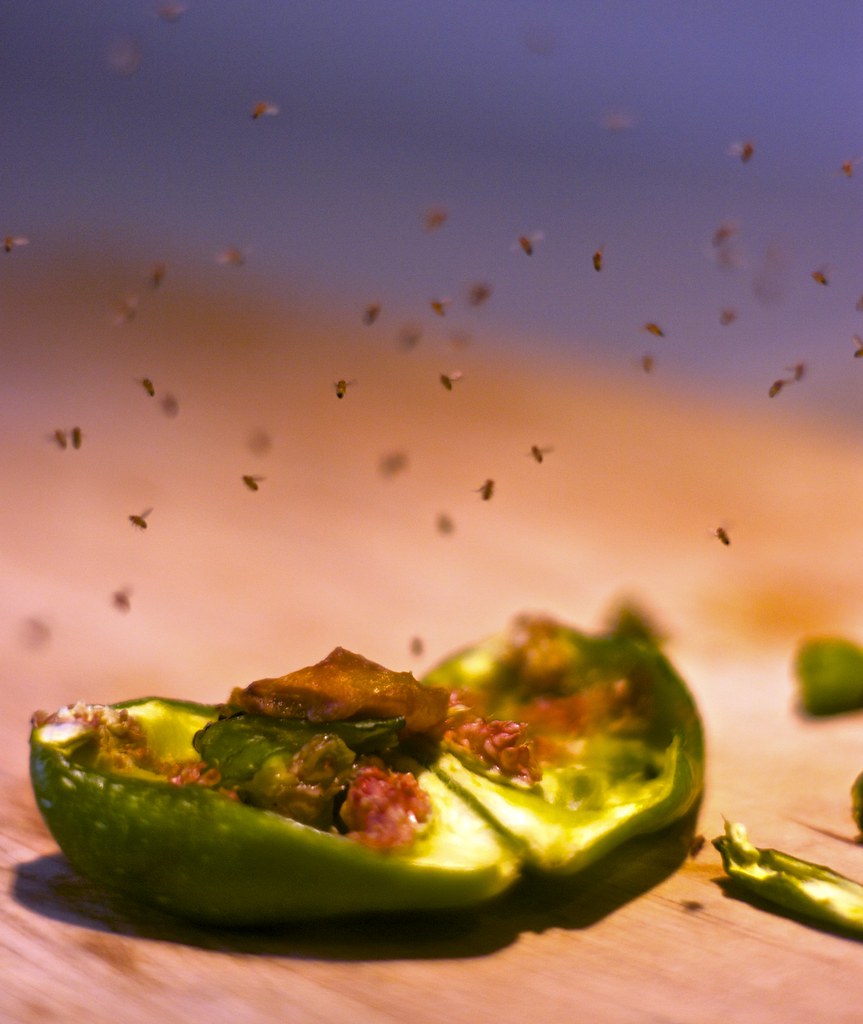
The fruit flies find our fruit, they slip beneath the lid, a silver dome. The dark fruit scent has drawn them in, no other lures them out again. They settle on apples, puckered figs, they gorge in perpetuity, may never fly back to their home, (if they have ever had a home). An allegory of choice? Well, yes– in that we have no choice. The fruit is fine, the day is long. Let us feed, buzz, rejoice.
*****
Susan de Sola was a native New Yorker who earned a PhD in English Literature at Johns Hopkins, took a job at Amsterdam University… and stayed, married, raised five children. Published in the Hudson Review, PN Review, and The Dark Horse, she won the David Reid Poetry Translation Prize and the Frost Farm Prize. Her less serious work appeared in Snakeskin, Light, Lighten Up Online, and a couple of her poems were reprinted in Potcake Chapbooks. She was widely loved for her creativity, warmth, and sense of fun. She died from lymphoma in 2021, age 59.
‘Bounty’ is the final poem in her only published collection, Frozen Charlotte, published by Able Muse Press in 2019.
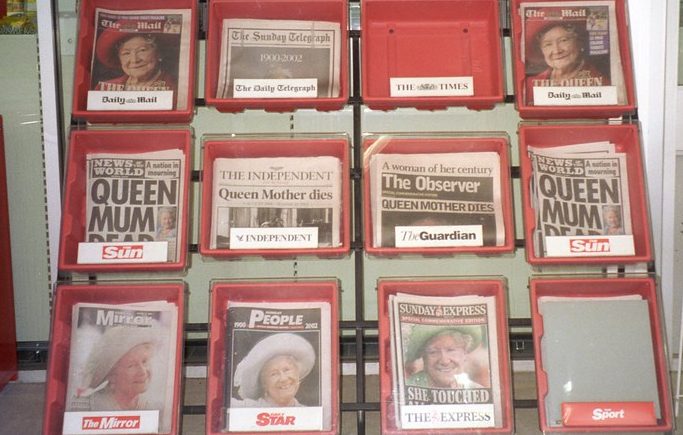
The Queen Mum’s gorn and popped her clogs; the telly’s stuffed with Royal progs. I’ve heard a thousand epilogues now the old Queen Mum has popped her clogs.
The Queen Mum’s gorn and popped her clogs so let’s fish out our mourning togs and toast her name in small eggnogs. Our dear old Queen Mum’s popped her clogs.
The Queen Mum’s gorn and popped her clogs. Oh, Gawd, we’ll all go to the dogs, and princes will turn into frogs now the old Queen Mum has popped her clogs.
*****
The always delightful Margaret Ann “Maz” Griffiths published in a huge range of voices: formal sonnets of wildlife and of the illness that finally killed her, blank verse rants against warfare or injustice, sad songs of the female loss of innocence, flippant anti-establishment sarcasm about the British Royal Family…
‘Grasshopper’, her 350-page collection of poetry (and also one of her nicknames) was assembled by fans after her death and published by Arrowhead Press in the UK and Able Muse Press in North America. It is readable and rereadable. I post the occasional poem in this blog.
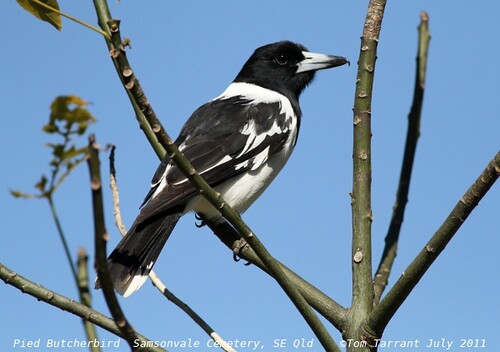
First light beside the Murray in Mildura, Which like a drift of mist pervades The eucalypt arcades, A pale caesura
Dividing night and day. Two, three clear notes To usher in the dawn are heard From a pied butcherbird, A phrase that floats
So slowly through the silence-thickened air, Those notes, like globules labouring Through honey, almost cling And linger there.
Or is it that the notes themselves prolong The time time takes, to make it stand, Morning both summoned and Called back by song.
*****
Stephen Edgar writes: “This poem needs little comment, I think. The bird in question is the pied butcherbird, as the poem says, considered by some to have the most beautiful song of any Australian bird. Let me quote some field guides to Australian birds: “superb, slow, flute-like mellow notes”; “song is one of our finest: a varied sequence of pure fluty whistles, sometimes interspersed by throaty warbles”; “fluted, far-carrying notes that seem to reflect the loneliness of its outback haunts”. Perhaps that third quotation best suggests the quality I was trying to capture. The notes seemed to be in slow motion, slowing time. I was attending the Mildura Writers’ Festival. Mildura is on the southern bank of the Murray River in northwestern Victoria. This was the first occasion on which I had heard the pied butcherbird.
“The form is a quatrain rhyming ABBA, with lines progressively shortening from pentameter, though tetrameter, trimeter to dimeter. It was first published in Australian Book Review and then in my twelfth book The Strangest Place: New and Selected Poems (Melbourne, Black Pepper, 2020), which is available on the Black Pepper website.”
Stephen Edgar was born in 1951 in Sydney, where he grew up. From 1971 to 1974 he lived in London and travelled in Europe. On returning to Australia he moved with his then partner to Hobart, Tasmania, where he attended university, reading Classics, and later working in libraries. Although he had begun writing poetry while still at high school, it was in Hobart that he first began writing publishable poems and found his distinctive voice. He became poetry editor of Island Magazine from 1989 to 2004. He returned to Sydney in 2005. He is married to the poet Judith Beveridge.
He has published thirteen full collections: Queuing for the Mudd Club (1985), Ancient Music (1988), Corrupted Treasures (1995), Where the Trees Were (1999), Lost in the Foreground(2003), Other Summers (2006), History of the Day (2006), The Red Sea: New and Selected Poems (2012), Eldershaw (2013), Exhibits of the Sun (2014), Transparencies (2017), The Strangest Place: New and Selected Poems (2020) and Ghosts of Paradise (2023). A small chapbook, Midnight to Dawn, came out in 2025, and a new collection, Imaginary Archive,will be published in late 2025. His website is www.stephenedgar.com.au, on which publication details of his books, and where they can be purchased, are given.
He was awarded the Australian Prime Minister’s Award for Poetry in 2021 for The Strangest Place.
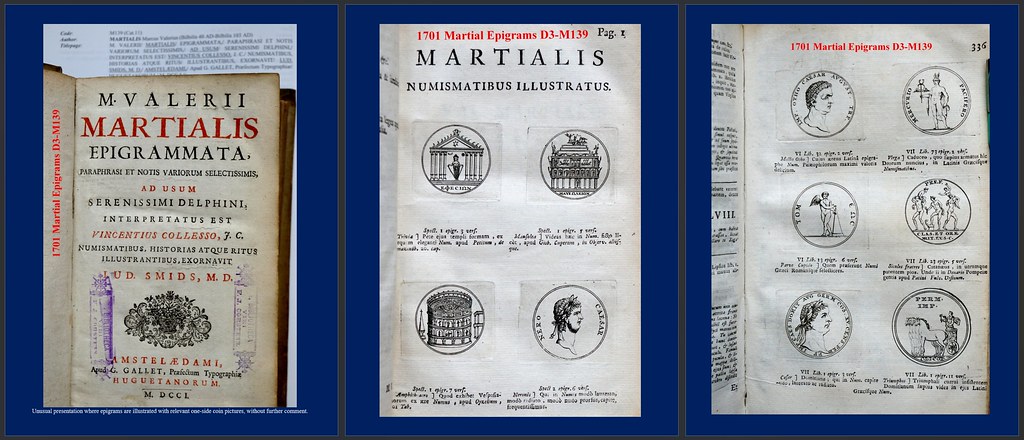
You say your memoirs offer pointed re-evaluations of countless authors’ puffed-up reputations so you’ve arranged to have them published once you’re safely dead. Nestor, it’s time your memoirs were read.
*****
Brooke Clark writes: “The original for this is by Martial: Epigrams IV.33; it’s a good example of the alternating 7-stress, 5-stress lines I finally settled on as the best way to capture the feeling of Martial’s elegiac couplets in English. Martial has a number of these “hurry up and die already” poems; if you read through large chunks of his epigrams at a go you’ll find a lot of themes recur over and over with slight variations. The addressee in the original is a poet, but somehow I found the idea of a writer who has left a “poison pen” memoir revealing what he really thinks of all his contemporaries more interesting. Nestor is one of the recurring “characters” in Urbanities, an idea I picked up from Martial’s treatment of Zoilus and expanded until I had a small cast whose stories developed over the course of the book.”
Brooke Clark is the author of the poetry collection Urbanitiesand has published work in Arion, Literary Imagination, THINK, The Walrus, LA Review of Books, and other places. He is also the editor of the online epigrams journal The Asses of Parnassus and the book reviews editor at Able Muse. Twitter: @thatbrookeclark Bluesky: @brookeclark.bsky.social
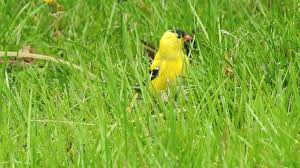
A rainy day in Cleveland. I almost said “The skies are gray.” Of course the skies are gray, It’s raining, so — what could they be instead? I meant to mow the rest of the lawn today, But it’s a day to watch the garden grow. The finches, flashing in the too-long grass, Are pecking dandelion seeds, and glow Their special yellow through rain-dotted glass. The internet is off. I sit and watch The irises and roses in the rain, And do not read about the ugly botch The greedy criminals in charge sustain So they can strut around, so white, so male, And cheat and lie to keep themselves from jail.
*****
Marcus Bales writes: “The rap against democracy has until now always been that the public, once it realized they could simply vote themselves money and benefits, would bankrupt the state voting themselves benefits and money. For 250 years the US public managed not to do that, though the reactionaries always accused them of it. It turns out the real danger is that if you have enough money you can just buy the government and operate it as a racket to benefit yourself and your cronies, even when there are laws in place that you have to break in order to do so. The problem with democracy, it turns out, is not that people are irresponsible but that the wealthy are liars and thieves.”
Not much is known about Marcus Bales except that he lives and works in Cleveland, Ohio, and that his work has not been published in Poetry or The New Yorker. However his ’51 Poems’ is available from Amazon. He has been published in several of the Potcake Chapbooks – Form in Formless Times.
However cool X may have thought he was made very little difference in the end. We are transformed as we approach the close.
Everyone is subject to these laws. Ozymandias collapsed in sand, however cool he may have thought he was.
We live in structures—marriage, job, or house— steered steadily toward an unknown land, slyly transfigured as we near the close,
additions and subtractions dealt by whose enormous unseen hand? However cool Y may have thought Z was,
her freshness faded like a poet’s rose, malady no medicine can mend disguising her before she reached the close.
Think of it as time; a veiled command; a principle: I do not give. I lend. However cool we might have thought A was, we all are changed as we approach the close.
Rachel Hadas writes: “The villanelle ‘However Cool’ was occasioned by a conversation with a friend; she and I were talking about a mutual acquaintance who was ill, and my friend uttered a perfect iambic pentameter line which became the first line of the poem, as well as, with variation, one of the repeated lines. It was fun to keep switching initials – the “however cool…” downward arc applies in different ways to so many people.
“A.E. Stallings has commented that villanelles are more fun to write than to read, and she may have a point. At this point in life, I certainly find them easier to write than sonnets. But I hope there’s a bit of rueful fun to be had in ‘However Cool’.”
Rachel Hadas’s recent books include Love and Dread, Pandemic Almanac, and Ghost Guest. Her translations include Euripides’s Iphigenia plays and a portion of Nonnus’s Tales of Dionysus. Professor Emerita at Rutgers-Newark, where she taught for many years, she now teaches at 92Y in New York City and serves as poetry editor of Classical Outlook. Her honors include a Guggenheim fellowship and an award from the American Academy-Institute of Arts and Letters.
It’s quite a ride. We took off in a cloud of dust and noise and, while it might look steady, silent, from afar above the clouds I’m feeling more and more a rattle in the cabin and my joints as though the bolts are shaking loose; you trust the plane will land safe, smooth, three points . . . but one way or another, all flights end.
*****
‘Vibration’ was recently published in Blue Unicorn.


 Form in Formless Times