Category Archives: Potcake Poet’s Choice

Potcake Poet’s Choice: Max Gutmann, ‘Old Growth’

So rooted
seem couples to a child! Firm-trunked and tall.
Some scrawny: sparsely leaved or badly fruited,
but fixed and solid, works of nature all.
It challenges imagination
that choice was part of the creation.

That they,
these halves, weren’t mingled always, childhood fails
to comprehend. The stories of the way
one’s parents met are magic, fairy tales.
To know the seed becomes the tree
does not dispel the mystery.

Divorce,
unless it strikes our parents, flashes where
it cannot burst our faith. A sudden force
that leaves the broken trunks deformed but there,
disaster-stricken, strangely ill,
but giving partial shelter still.

We feel
this all collapse as childhood’s shed. The trees
we thought so firm and fixed were never real.
To navigate by them can only tease.
Whatever fantasies persist,
unmoving couples don’t exist.

To find
one’s half and gather height and leaves are less
like acts of nature than like hiking blind.
Soil shifts and landmarks vanish. We must guess,
our one-time orchard morphing to
a wood no map can guide us through.

Max Gutmann writes: “It took me a long time to make a poem I liked of this thought/experience. The form supports emphasis where it’s helpful, and that it varies from the iambic pentameter some readers expect mirrors the sense. I rarely feel my verse quotable, but I feel that about ‘To know the seed becomes the tree/does not dispel the mystery’.”

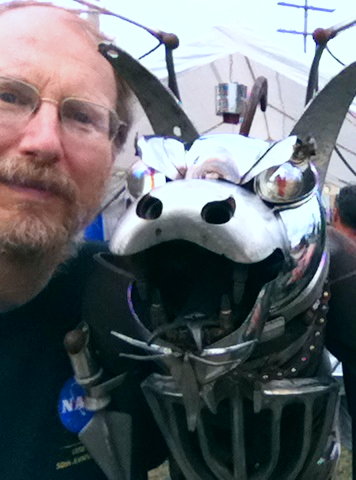
Max Gutmann has worked as, among other things, a stage manager, a journalist, a teacher, an editor, a clerk, a factory worker, a community service officer, the business manager of an improv troupe, and a performer in a Daffy Duck costume. Occasionally, he has even earned money writing plays and poems.

‘Old Growth’ was first published in Able Muse. Some of his ‘Travels with Alice’ limericks appear in the Potcake Chapbook ‘Travels and Travails‘. You can find more of his work at maxgutmann.com

Potcake Poet’s Choice: Marcus Bales, ‘Shore’

They grind across the continental shelf,
enormous in their long, well-muscled swells;
I know their sweaty smells of staling spray
and fishy sand; and oh, all by myself
I’ve heard the tide tell what it always tells:
some things wash up and others wash away.

They rise out there a long way from the beach,
and curl and pitch up face down on the sands
from roaming just too far to make it home,
and try to hold with fingers scrabbling, reach
for us, and fail and, failing, trail their hands
under water backwards in the foam.

Finally, though, the greyest weather clears:
small lapping waves replace exploding spume,
and one deep-breathing moment seems sublime;
sweet breezes sway embroidered window sheers
while pleasant sunlight fills the hospice room,
now empty, clean, and ready for the next time.

Marcus Bales writes: ‘The problem with me choosing or talking about one of my poems is that the impetus behind most of them is the same: a phrase or circumstance became a donnee because it resonated in some instant way, and I used it — and sometimes the actual donnee doesn’t survive the process of writing — to write something. It’s the resonance that interests me to turn the phrase over and look at it, clean it up, smear it with something, make it start, make it finish, bury it in the middle, whatever. The question that strikes me about a phrase with resonance is why does it resonate? The poem is the answer. In my view poetry is what a poet does to make a reader feel that resonance by putting it in a context that moves the reader to a feeling. I reject the notion that poetry is the poet expressing their feelings — at least, I don’t say poets cannot express their feelings, but that that expression must be in the service of making the reader feel the reader’s feelings in a directed way. Poetry is a method to make the reader resonate emotionally in response to the words.. If the best you can do is blurt out your pain or joy or whatever, then you’re doing it wrong. Yes, wrong. Write it in your diary, because poetry has never been about the poet. It’s always been about how the poet can make the reader feel in a directed way by using words, not a therapy-substitute for the poet. If you need therapy, get it, but don’t scatter the resulting words across ragged-margined pages and call it poetry.’

Not much is known about Marcus Bales except that he lives and works in Cleveland, Ohio, and that his work has not been published in Poetry or The New Yorker. However his “51 Poems” is available from Amazon.

Marcus Bales has appeared in several of the Potcake Chapbooks:

Tourists and Cannibals
Rogues and Roses
Careers and other Catastrophes
“Strip down,” she ordered
Wordplayful
Murder!
Houses and Homes Forever
Robots and Rockets

all available at https://sampsonlow.co/potcake-chapbooks/ for the price of a coffee.

Potcake Poet’s Choice: Amit Majmudar, ‘Eyespots’

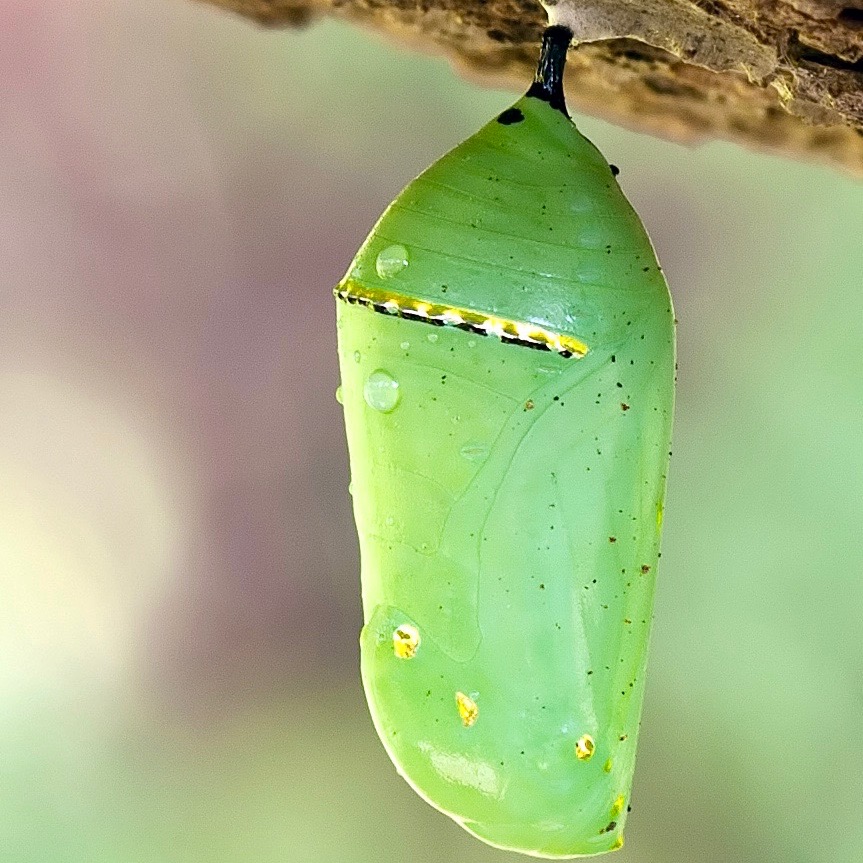
Caterpillars build their bunkers out
of terror. Transformation hunts them, haunts them
as oak leaf peepholes open underfoot
to bare the air, the emptiness that wants them.
I have a measure of infinity
inside me. A is no and mit is measure
in an ancestral tongue that haunts me, hunts me.
I’m half in love with what I have to be.
The other half is looking for a razor
to make of me the Amit who was once me,

my yogi’s beard a clump of Spanish moss
limp at my feet, a piece of furry roadkill.
I’m no ascetic. Half in love with loss,
I’ll seek out beauty, or at least my ode will,
night-blooming jasmines dooming my samadhi,
scenting, resenting my hermetic dark
because they know a yogi, breathing in
his first girlfriend’s perfume, unarchives her body,
and drives her, after dusk, to the vanished park
where memory of sin cocoons the sin.

Caterpillars ravel bunkers into
bodybags—no way for them to know
the moment that they poke themselves a window,
the rebirth they were hiding from will show:
Two stained-glass windows mounted on my back,
two earshaped eyespot petals I can flex
and fold, a flailing that transforms to flight
while all the darkling jasmines that I lack,
past loves that called me onward to the next,
unpetal in the bodybag of night.

In love, or half in love, with mere aesthetics,
I’ve daydreamed Himalayan caves, a hive
that hums with “Aum” from ninety-nine ascetics,
their senses hibernating, half alive.
No one has ever scaled Kailash, the peak
where Shiva sits in bud, in shut-flytrap samadhi
with ashes smeared across his chest and arms.
But that’s just not the changelessness I seek.
I want my language, shapely as a body,
to weave and rive cocoons, enchantments, forms

with giant wings inside their ashgray berries.
I want my transience to live in speech,
if only as a resonance that carries,
like jasmine scent, beyond my voice’s reach.
I tell myself: Old soul, don’t be afraid
of changing. You are old enough to know,
whenever something changes, something dies,
but the dark you flowered in won’t let you fade.
A crack in this cocoon admits a glow.
The blue moon butterfly will wear your eyes.

Amit Majmudar writes: “This poem, ‘Eyespots’, is what I think of as a Keatsian ode, borrowing its stanzaic form and (I hope) something of its musicality. Yet the poem incorporates Hindu religious imagery throughout and sings of self-transformation in a way that isn’t to be found in Keats. This hybridization of Eastern and Western traditions in the poem feels idiosyncratic. There remain elements still opaque to me about it; so I never really delved into the metaphysical significance of the title’s false eyes, these seeming sense organs that are not actually sensing anything, but, given the focus on ascetic imagery, there seems to be something in that. Maybe in another essay? Or another poem….

I feel as though there are poems I have written that someone else could conceivably have written. But not this one; even ignoring that my name hides caterpillar-like inside the cocoon of the poem, I feel that the range of influences and ideas is simply too idiosyncratically “me” for this to have come from any other poet’s hand. Will everyone like it? Probably not, for precisely that reason. But I know that no one else could have produced this sequence of words, so I confess a certain fondness for it. It’s the one of my literary children who most resembles me. And it’s as good a way as any to get to know me as a writer.”

Amit Majmudar is a diagnostic nuclear radiologist who lives in Westerville, Ohio, with his wife and three children. The former first Poet Laureate of Ohio, he is the author of the poetry collections What He Did in Solitary and Dothead among other novels and poetry collections. Awarded the Donald Justice Prize and the Pushcart Prize, Majmudar’s work has appeared in The New York Times, The New Yorker, Best of the Best American Poetry, and the eleventh edition of The Norton Introduction to Literature. Two novels are forthcoming in India in 2022: an historical novel about the 1947 Partition entitled The Map and the Scissors, and a novel for young readers, Heroes the Color of Dust. Visit www.amitmajmudar.com for more details.

‘Eyespots’ was first published in Measure Review.
Potcake Poet’s Choice: Kathryn Jacobs, ‘The Innocent’

They trust us, and they shouldn’t: butterflies
and earnestly pursuing preschoolers
careen among us, prone to accidents,
disasters in the making. Both of them

incapable of short-cuts, see-sawing
oblivious among the negligent,
convinced that we know best, who disregard
how short their legs and lives are.

Some of them
(the lucky and unswatted) mobilize
their stubby forces to stay out of reach,

But most of them launch headlong, more afraid
of being left behind or swallowed, than

of damaged wings and feelings, wedged against
rude curb-stops or cupped hands –

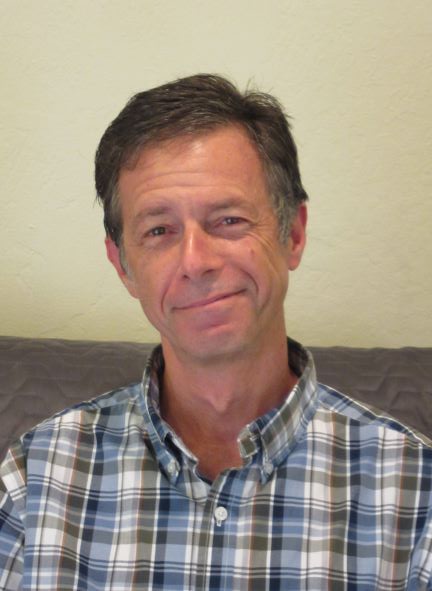
Kathryn Jacobs writes: “I am choosing The Innocent because it reminds me of what I’ve lost: of my son Raymond in particular (though he is not in the poem overtly). Ray died at 18. I am sending a photo of Ray with his twin: it’s a photo that reminds me of more Innocent days.”

Kathryn Jacobs is a professor at Texas A&M-C and editor of The Road Not Taken. Her fifth book of poetry (Wedged Elephant) appeared in Kelsay Books. Her poems have appeared in Measure, The New Formalist, Southern Poetry Anthology, Mezzo Cammin, etc. Currently she is working on a book of Dan.
http://journalformalpoetry.com/

Potcake Poet’s Choice: John Beaton, ‘Bedtime Story’

The sun has smouldered low. Its flaxen light
drizzles through the birches to the snow
where sheep stand still as hay-bales, beige on white.
A shepherd with a shoulderful of straw,
brindled by the shadows, softly walks.
The sheep flock round; he swings his load to strew
the strands on pillowed drifts like yellow locks,
then hastens homewards bearing sustenance
against the ghostly dark. He holds small hands
and spins his children tales of happenstance
and golden fleeces in enchanted lands.
Their minds woolgather. Snuggled down in bed,
they drift on snowy pillows; yellow strands
of hair glow like the hay their father spread.

John Beaton writes: “My wife and I have five children and one of my great delights was reading to them in bed when they were little. We covered a lot of ground, from Shel Silverstein’s poems and Roald Dahl’s stories to whole books like “Watership Down” and “The Old Man and the Sea.” This poem came to me when I was looking at the painting “Shortening Winter’s Day” by Joseph Farquarson (shown above). It was reminiscent of the place where I grew up in Scotland. The image of the shepherd feeding sheep in the gloaming light evoked the feeling of security and contentment that imbued those evenings of reading. I recite my poetry and tend to write for sound almost as much as for sense. I like the sounds of this one. Also, when picking subjects for poems, I’m more drawn to happiness and beauty than to sadness and misery. All in all, this poem fits my preferences quite nicely.”

John Beaton’s metrical poetry has been widely published and has won numerous awards. He recites from memory as a spoken word performer and is author of Leaving Camustianavaig published by Word Galaxy Press. Raised in the Scottish Highlands, John lives in Qualicum Beach on Vancouver Island.

https://www.john-beaton.com/

Potcake Poet’s Choice: Julia Griffin, ‘The Buck Stops’

A buck stopped here last Saturday early,
Just as the streets were turning blue.
A fine six-pointer, bronzed and burly:
What had it come for? Nobody knew.

It took its stand at the central bus stop,
Silent, proud-footed, thorny-topped.
There perhaps it had once seen us stop;
All that morning, nobody stopped.

It hardly seemed the thing to confront it.
We’ve little practice with bucks or deer;
Anyway, nobody tried to hunt it;
Anyway, nobody asked it here,

Maimed it, lamed it, blamed or shamed it!
This, in fact, is the most one can say:
A buck stopped here and nobody claimed it.
It waited a while, then it wandered away.

Julia Griffin writes: “I like the central image of a buck stopping. And it seems so widely applicable… I turn everything into an animal poem if I can.”

Julia Griffin lives in south-east Georgia/ south-east England. She has published in Light, LUPO, Mezzo Cammin, and some other places, though Poetry and The New Yorker indicate that they would rather publish Marcus Bales than her.

More of her poetry can be found in Light, at https://lightpoetrymagazine.com/?s=julia+g&submit=Search

Potcake Poet’s Choice: Melissa Balmain, ‘Fluffy Weighs in on the Baby’

It’s hairless as an egg—
why bother petting that?
It doesn’t purr or groom your leg,
and yet you feed the brat.

Instead of catching mice,
it grapples with its socks.
It’s never taken my advice
to use the litter box.

It can’t climb up a tree,
it can’t chase balls of string,
it leaves you zero time for me—
just eat the wretched thing.

‘Fluffy Weighs in on the Baby’ is reprinted from Walking in on People (Able Muse Press)

Melissa Balmain writes: “The great light poet Bob McKenty calls himself ‘an editorial cartoonist who can’t draw.’ Given my fondness for writing persona poems, I think I qualify as a method actor who can’t act. As you might guess, adopting a persona lets me try on fresh points of view and say things I might not think to say (or dare to say) as myself. Plus, it can be a fun vehicle for mockery—as in ‘Fluffy,’ which aims its claws at new parents who ignore their pets. (Yes, I was one of those new parents…) Over the years I’ve attempted to channel not just animals and fellow humans in my poems, but also cartoon characters, plants, water, Satan, a dictionary, and, in my latest book, fairy tale characters. It’s the closest I’ll get to a SAG card.”

Melissa Balmain edits Light, America’s longest-running journal of light verse. Her poems and prose have appeared widely in the US and UK. She’s the author of the full-length verse collection Walking in on People (Able Muse Press), chosen by X.J. Kennedy for the Able Muse Book Award; and the shorter collection The Witch Demands a Retraction: Fairy-Tale Reboots for Adults, new from Humorist Books. She is a recovering mime.

Potcake Poet’s Choice: Bruce McGuffin, ‘Why It’s Important To Take Your Saxophone Hiking’

Whenever I go for a walk in the wood
I carry a saxophone, everyone should.
You need it in case you get caught unawares
By a band of unruly and ravenous bears.

When the bears leap from bushes intending to eat you,
You won’t have the time that it takes to retreat, you
Had better be ready to pull out your sax
If you don’t want to finish your day as bear snacks.

Play a song they can dance to, try Latin or swing.
Dancing bears like to rhumba, they might highland fling.
But beware, every bear is a dance epicure.
If you play Macarena they’ll eat you for sure.

Bruce McGuffin writes: “A respected poet1 once described Light Verse as “a betrayal of the purpose of poetry”. All I can say is whatever gave him the idea that poetry only has one purpose? With almost 8 billion people in the world there must be 8 billion plus purposes for poetry. Everybody wants to feel a little light and laughter now and then, and for me that’s one of the purposes of poetry. This silly poem (which originally appeared in Light Poetry Magazine, February 2020) about dancing bears, with its driving, almost chant-like, rhythm makes me happy whenever I read it. I hope it will make other people happy too.”

[1] Robin Robertson in Guardian Interview, September 28, 2018. 

Bruce McGuffin writes all kinds of poetry, but meter has a way of sneaking in even when it’s not invited, sometimes bringing rhyme along for the ride. His subjects range from the profound to the utterly frivolous with a decided tilt toward frivolous, which he justifies by claiming he writes for his own amusement. He divides his time between Lexington Massachusetts, where he has a day job as an engineer at a radio research lab, and Antrim New Hampshire, where he lives with his wife and pretends to be practical (when he’s not writing poetry). At work the practical engineers think he’s a theorist, and the theorists think he’s a practical engineer. His poetry has appeared in Light, Lighten Up Online, The Asses of Parnassus, Better Than Starbucks, and other journals.

Potcake Poet’s Choice: Juleigh Howard-Hobson, ‘I’ll Keep My Ghosts’

“…presence, if it has been real presence, does not ever leave.”
–May Sarton

I’ll keep my ghosts. Each morning down we go
Through the hallway, where they begin to show
As grey reflections of themselves in frames
That do not answer when I call their names
But swirl and curve around me, to and fro.
Sometimes, in this house that they used to know
So well, their unseen numbers swell and grow
Until I am overwhelmed. All the same,
I’ll keep my ghosts–
By choice–for what else would I have? Hollow
Spaces between walls? Albums? And sorrow
That has no feeling to it left? Who blames
Me for my preference? I make no claims
That they bring only joy, but even so
I’ll keep my ghosts.

Juleigh Howard-Hobson writes: “It’s so hard to name a favorite poem of my own, (after all, they are all my favorite poetic children!) but this one, written a decade ago, is a little closer to my heart than the others.
Over time, I’ve collected quite a few post-card sized Edwardian portrait photographs, with their original frames, so I can hang them on my walls. These stranger’s images mix with my own vintage family photographs and after a while, they stop being photographs of strangers, they become photographs of familiar faces. After a longer while, some join my family ghosts. Which I find inspiring, if slightly unsettling. This rondeau owes its existence to my collection, both related and adopted.
The Rondeau, with its self-imposed restrictiveness that limits how far a poet may go before she or he must return to the refrain and readdress it, is one that I’ve always been fond of. When I was 16 I came across Dunbar’s “We Wear the Mask” and immediately sensed that the Rondeau was the perfect form for conveying the complicated simplicity of life (granted, I was a strange 16 year old). This one first appeared in Poets’ Touchstone 2010 having won 1st Prize in the 2010 Poetry Society of New Hampshire National Contest; later collected in my book The Cycle of Nine (RavensHalla Arts, 2012).”

Juleigh Howard-Hobson’s poetry has appeared in Valparaiso Poetry Review, Mobius, The Lyric, Dreams and Nightmares, 34 Orchard, Capsule Stories, Birds Fall Silent in the Mechanical Sea (Great Weather for Media), Lift Every Voice (Kissing Dynamite) and other places. Nominations include Best of the Net, the Rhysling, and the Pushcart. Her latest book is the Elgin nominated Our Otherworld (Red Salon). English born, US/Australian raised, she currently lives on an off-grid homestead in the middle of a dark woods in the Pacific Northwest USA, with her husband and her ghosts.

Contact: “I maintain an irregular Twitter presence as ForestPoet@PoetForest https://twitter.com/PoetForest where I follow every writer who follows me.”

Potcake Poet’s Choice: Geoffrey A. Landis, ‘If Angels Ate Apples’

If angels ate apples, potatoes and pears
they’d soon be chubby and cheerful as bears
nibbling knishes and other such things,
tickling your face with the tips of their wings.

If seraphim shouted and whistled at girls,
drank drafts from thimbles, all friends with the world
drained the best ale and chased it with rye,
then fluttered in circles while trying to fly.

Angels on tables! (Watch out for your glass!)
Slipping on puddles, right plop on their ass!
Laughing at music that only they hear,
then tweaking the barmaids a pinch on the rear.

Fuzzy fat angels, that’s something to see,
as they dance to the jukebox at quarter to three,
and ace out the pinball, a marvelous feat,
the lights and bells flashing (though sometimes they cheat).

If angels made merry, would that be so odd?
Must they always be solemn, to stay friends with God?
It’s a pity that Heaven is so far away
angels hardly ever come down and just play.

Geoffrey A. Landis writes: “It’s impossible to chose just one poem as a favorite, of course, and even if I could, which poem I’d pick would change from day to day, maybe even from minute to minute. Still, I’ve alway been fond about ‘If Angels Ate Apples’; it’s one that reads well out loud, and I had fun writing it. Mostly I was playing with meter and alliteration. I was happy that Gardner Dozois picked it up for Asimov’s Science Fiction, and since then it’s seen a couple of reprints.”

Geoffrey A. Landis is a rocket scientist who sometimes plays at being a science-fiction writer, and a science-fiction writer who sometimes plays at being a poet. In the process he’s picked up a handful of awards, ranging from science fiction’s Hugo and Nebula awards to the Science Fiction Poetry Association’s Rhysling award, and had his stories and poems appear in twenty languages. He lives in Berea, Ohio, with his wife (who is also a science fiction writer and a poet) and four cats.

Website: http://www.geoffreylandis.com/poetry.html