Category Archives: Robin Helweg-Larsen

Poem: ‘Body Surfing’

Standing hip deep in the sea
Is nice in itself, but the reason for being there
Is the wait for a big wave.

A wave rising, a sudden tower
Smooth with devouring power
But one you can launch yourself forward in tune with – and
Hurtle ecstatic, unseeing and breathless
For as long as breath can hold
Through the water and up along over and onto the sand,
Sand thick in your hair, jammed in every fold,
Scraped, battered and rolled,
Triumphant, beached, deathless.

For this the saint prays,
For this the artist stares open-eyed,
For this the poet lets wounds bleed unstanched,
For this: this hope of being launched,
Controlled and uncontrolled
By what can’t be withstood or denied.

(Or else you could duck under the wall,
Let it pass over while you count three,
Hear the boom of its crested fall,
Yourself unbroken, inactive, safe, free.)

The sea is always there
Whether or not you are in it
Standing hip deep in it
Waiting for the next big wave.

Another of my “Is it formal?” poems. How much rhyme, rhythm and consistent structure do you need in order to consider it formal? Where is the cut-off between form and free? I don’t know. But I felt the alternation – between quiet waiting sections and the breathless rush of a good wave – was an appropriate expression in itself.

The poem was originally published in Snakeskin. Thanks, George Simmers!

“Superman body position while body surfing” by benaston is licensed under CC BY 2.0
Poem: ‘Warfare’

The mother’s nightmare
The child’s terror
The rapist’s freedom
The girl’s death.
The killer’s ecstasy
The band’s brotherhood
The youth’s excitement
The dying breath.

The glory of the lucky
The scream of the unlucky
The lost limbs, blindness, madness
The lifelong PTSD, homeless in the streets.
The poet’s puzzle
The politician’s porn
The aphrodisiac
The power-soaked sheets.

The demagogue’s cause
The demagogue’s solution
The warmonger’s profits
The fearmonger’s skill.
The blacksmith’s trade
The scientist’s incentive
The human fascination
The tribe’s need to kill.

The acceptance by the boys
The eagerness of teens
The avoidance by the men
The manipulation by the old.
The girl’s adoration
The woman’s greed
The widow’s grief
The body cold.

The king’s invocation
The priest’s sanctification
The scared population
The desolation.

The peasant’s loss
The trader’s loss
The teacher’s loss
The city’s loss.

The mortician’s gain
The tombstone maker’s gain
The coffin maker’s gain
The graveyard’s gain.

The medal maker’s gain.

And over it all God sits in His rocking chair
On His front porch in the sky
Saying, A crop, a very fine crop, an excellent crop this year.

Sits in His deck chair to look at the warfare waves
In the shade of a cloud in the sky
Watching the sandcastles washing away.

Sits in the night coming down on the battlefield
Watching crows, ravens, hyenas, stray dogs
Men and women pulling gold teeth from the dead.

Sits in His laboratory, looking at His guinea pigs
Sits in His concert hall, listening to the music
Thinking, All this is so interesting
All this is so tragic
All so inspiring
How far will they get till they blow themselves up?
Will these ones escape? Will they figure it out?
Can they conquer themselves and discover the universe?

Maybe it’s out of line to put this poem into a ‘formal verse’ blog… But there are two points to consider. First, there is a lot of form in the outraged chant of the beginning half–rhyme, rhythm, balance, some alliteration. Second, transitioning from that form to a less structured meditation in itself a use of form; it transitions the entire poem from one viewpoint to another by making the two halves so different. That’s my argument, anyway. Is it reasonable?

The poem originally appeared in Bewildering Stories. Thanks Don Webb and John Stocks!

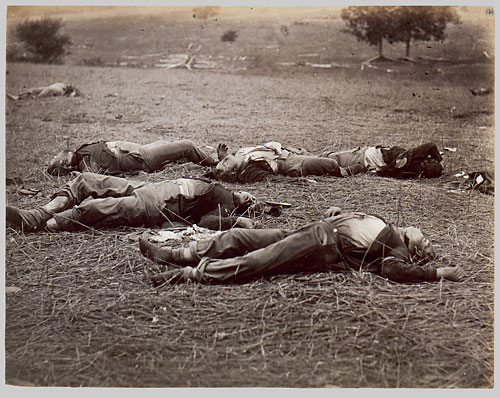
Photo: “Battlefield Dead After the Battle of Gettysburg” by elycefeliz is licensed under CC BY-NC-ND 2.0

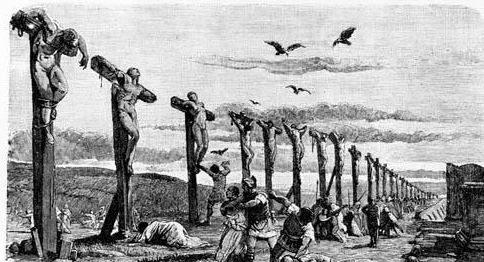
Poem: ‘Zippori Story’

Context, people, context! Remember that
Herod was building his new royal city
Zippori some four miles from Nazareth
when Jesus was a child. And Joseph would
have walked there, worked there, daily; Jesus too.

When Judas of Galilee raised his revolt,
captured and burned it–Roman legions came,
defeated him, cast him in the Sea
of Galilee, a millstone round his neck,
and crucified two thousand rebel Jews.

This was the year that Joseph disappears
from Gospel narratives, all unexplained.
When Jesus chased two thousand Legion pigs
over a cliff into that selfsame sea,
think retribution; think guerrilla strike.

The lack of stories and legends about Jesus’ step-father is one of the great Christian mysteries. He simply disappears from the narrative in the year of Judas of Galilee’s revolt, and is never mentioned again in polite society. Nor is Zippori ever mentioned in the Bible, either by that name or the Romanized Sepphoris, although it was the local capital of Galilee. I have laid out what seem to me obvious suspicions in The Gospel According to the Romans, and blogged about it here and there.

This poem was just published in The Road Not Taken, a Journal of Formal Poetry, in the section themed on ‘Replies’. My thanks to Dr. Kathryn Jacobs.

Poem: ‘He Wanted a Writer’

He wanted a writer – she had to have money.
He wanted a writer – she had to be funny.
He wanted a writer to laugh with and drink.
He wanted a writer… but not one who’d THINK!!!

The suits of this world, whether moguls or morticians, pastors or politicians, tend to think of creative types as frivolous playthings. That’s their loss.

This little poem (whose genders switched back and forth in fluid fashion before settling down) was originally and suitably published in The Asses of Parnassus. Thanks, Brooke Clark. (Yes, That Brooke Clark!)

“Woman drinking wine while working on her laptop.” by shixart1985 is licensed under CC BY 2.0

Poem: Space Colonization

The purity of space
Is like an egg, a young child’s face,
Unsullied piece of paper’s grace;
And, as the child must age and wizen,
As paper’s made for thought’s expression,
The egg to break and unimprison,
So space was made for human decompression.

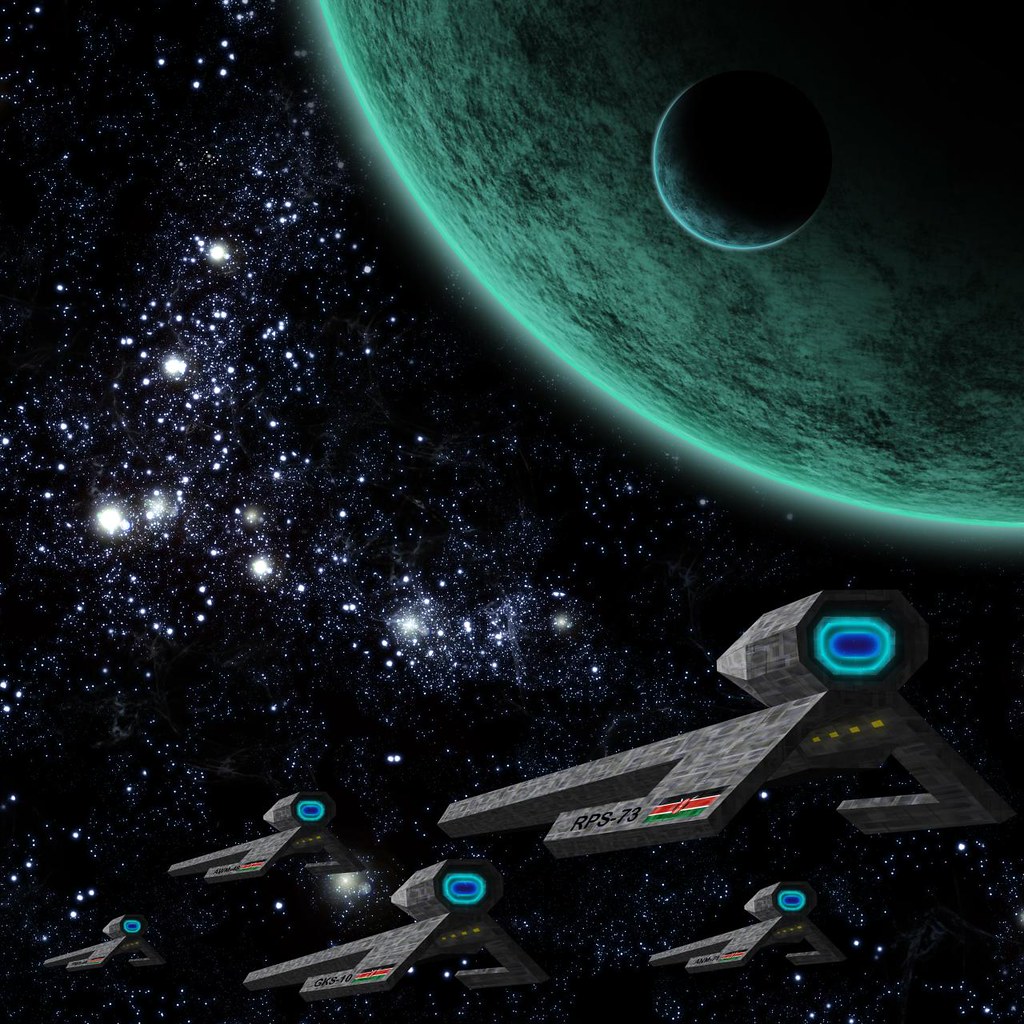
Keeping with our recent theme of SF poetry, this is one of mine first published in Bewildering Stories #740.

“Underway” by Robbert van der Steeg is licensed under CC BY-SA 2.0

Poem: ‘Earth Competition’

The Earth
Gives birth
To insects, animals and birds;

Each names,
Marks, claims
Its stake without our tools of words.

The seas
Like bees
Create fresh lands like hives of honey;

Our bands
Seize lands
And value them in human money.

We make
Our stake
Without considering others’ use;

And when
Beasts then
Eat crops or homes, we grunt ‘Abuse’.

They fight,
Scratch, bite,
To chase the competition off;

We too
Will sue,
Or wave knife or Kalashnikov.

We each
Just reach
For good resources to control;

In fact
Impact
Each other in true Darwin role.

I’m always glad when I find I’m writing something with a new structure, and not yet another sonnet. I love the sonnet form more than any other, but it’s nice to try out something more idiosyncratic occasionally.

This poem was first published in Bewildering Stories #794. Thanks, Don Webb and John Stocks!

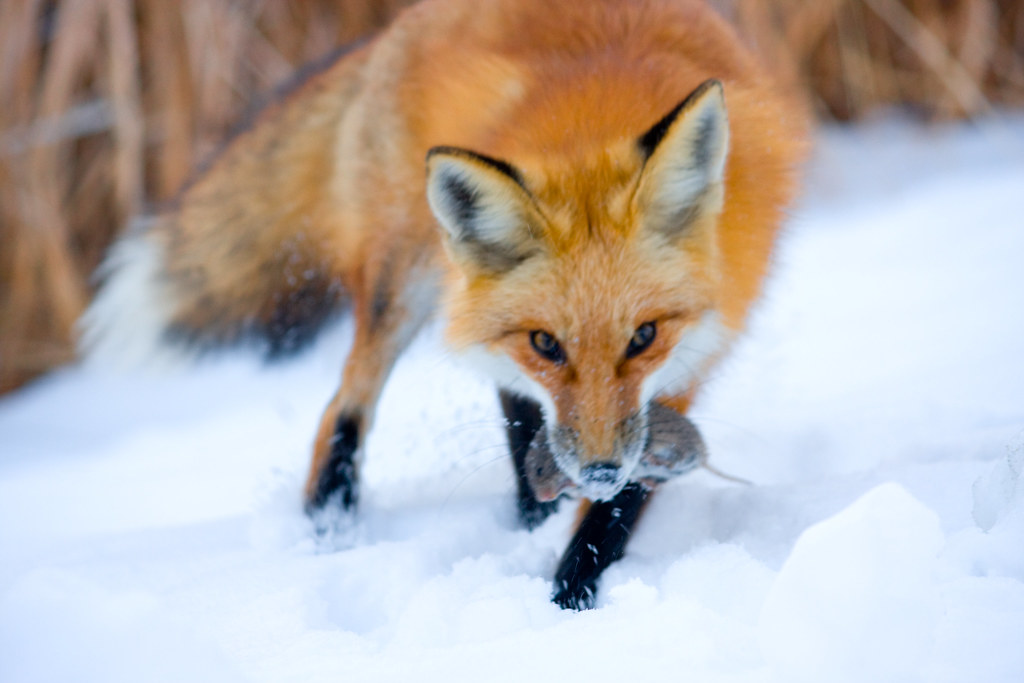
“Predator and Prey” by EricMagnuson is licensed under CC BY-NC-SA 2.0

Poem: ‘Buffoon’

You resent all my fun,
Complain I’m a buffoon.
Let me play in the sun,
The dark comes all too soon.

Originally published with The Asses of Parnassus – always a good place for pithy poems.

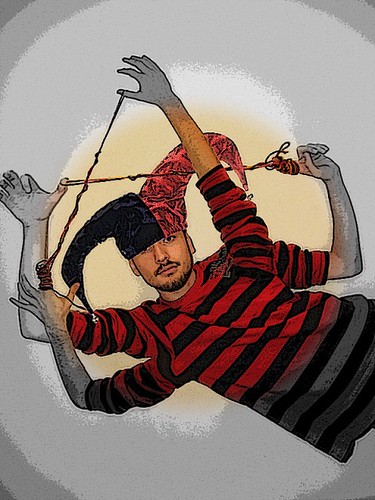
Picture: “end of the buffoon” by Ozan Ozan is licensed under CC BY-NC-ND 2.0

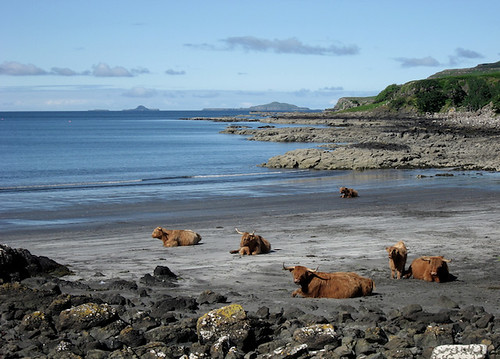
Poem: ‘Highland Spring’

Bulls lean head to head
In motionless battle;
Notionless cattle
Stroll the strand
And graze;
Sheep
Sleep
Or idly stand
Idly gaze
Down on the rocks
By the sea snore.

This poem was originally published in Candelabrum, one of the rare magazines that lived to support traditional verse through the winter of the mid to late 20th century. Traditional verse survived, and springs forth with new shoots. And, yes, it’s now spring in the northern hemisphere! The beginning of the good times! That’s my mood, anyway… things certainly feel more positive than they did a year ago, whether your spring beaches are populated by highland cattle or northern tourists.

“Highlanders at Torloisk Beach” by Simaron is licensed under CC BY-NC-SA 2.0

Poem: ‘The Moon’

The birds of dawn
Sing Come out on the lawn.

Flowers
Say Seize the hours.

The day, the sun
Say Don’t stay – look, laugh, run.

Warm rain
Says More! Again!

A tree
Simply says Be.

Beyond the trees, the beach
Rumbles Extend your reach.

A cliff
Asks: If?

The sand
Calls for a handstand.

A wave
Says Misbehave.

Sunset
Asks you, Done yet?

The moon, that overhanging stone…
The moon says You’re alone.

This poem was originally published in Snakeskin. It was an attempt to capture the bittersweetness of living in–or perhaps specifically growing up in–a rural or isolated environment. It’s wonderful to be wild in the wilderness except that, almost by definition, you’re likely to be on your own. And that’s fine, a lot of the time…

Anyway, that freedom is what my childhood and stretches of my 20s were like, and what I came back to after decades away–the difference being that now I’m no longer alone! 🙂 

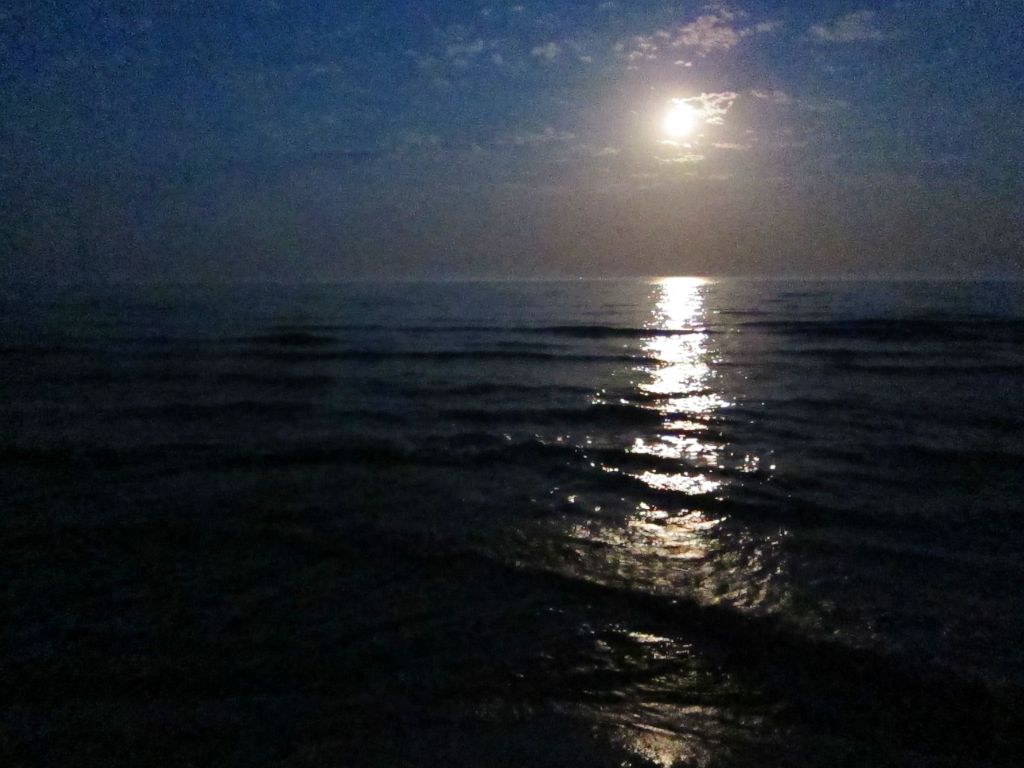
Photo: “Full Moon Beach Ride July 2012” by gasmith is licensed under CC BY-NC-ND 2.0

Poem : ‘Some Who Would Teach’

Some who would teach
Preach,
But speech cannot reach
As far as silence.

Even the stars perhaps are noisy, but, far as they are,
We hear their silence, not their sound.

Words are not for teaching, adding or changing.
Words can only express
What is already known
To one who already knows.

Words feathered together
Can lift aloft
Any body of men.
Opinions are pinions
With which men fly.
But they come down again
And with their descent
What was meant
Is often lost, or is known
To have never been known.
For a word is a wing
But a body’s a thing
And the body is always the body
But the wing only is when it flies.

Therefore not by talking but being
Does one teach how to be,
And words are for singing–
A song sung
By those knowing their winging as being but having no meaning.
And the best words
Come from birds.

I wrote this, but do I subscribe to the ideas? Did I ever? Not in any absolute sense, but as a rejection of all noisy preachers of faiths, and a rejection of those who put academic lectures ahead of experiential learning. In that sense this (early) poem prefigured my 25-year career teaching business finance through the Income-Outcome interactive games we developed for global clients like Beam Suntory, Michelin and hundreds of other companies and universities.

In another sense this poem is just about the enjoyment of words and songs, regardless of any meaning that the words may have.

It was published by Anima Magazine in the UK, unfortunately quiescent since 2018.

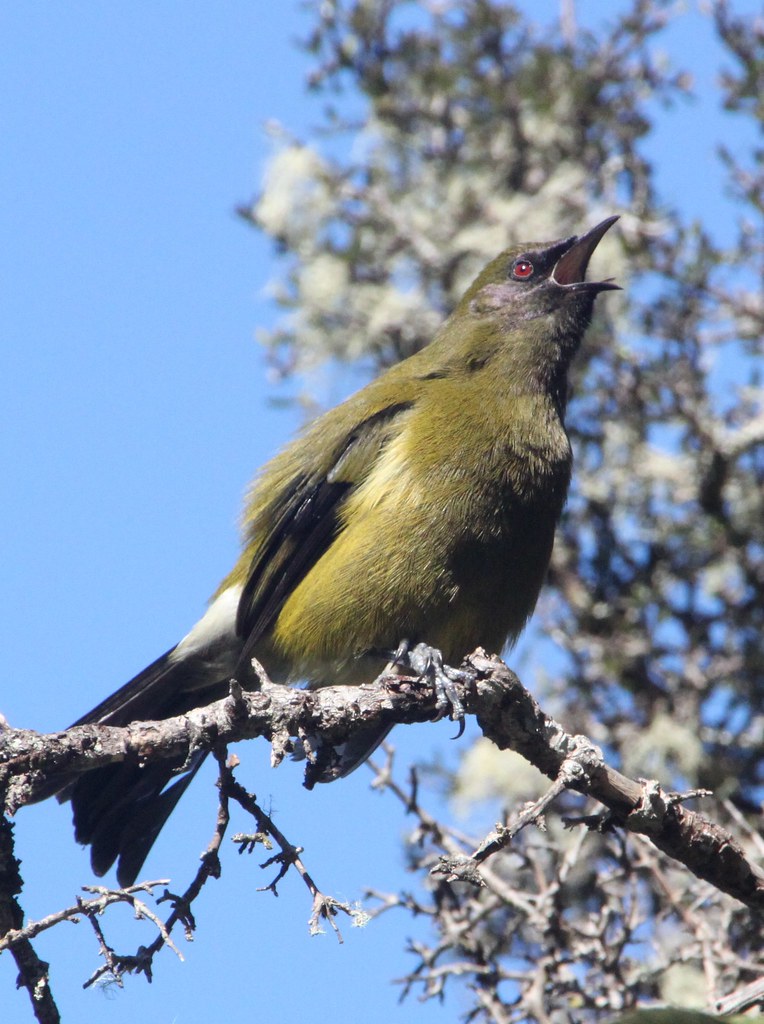
Photo: “Korimako (Bell Bird) singing” by theirishkiwi is licensed under CC BY-NC-ND 2.0