Category Archives: short poems

Odd poem: Margaret Mead(?), ‘Hogamus Higamus’

Hogamus, higamus,
Man is polygamous;
Higamus, hogamus,
Woman’s monogamous.

I’m going to go out on a limb here and say this is American anthropologist Margaret Mead‘s creation. I have a clear memory of reading the story many years ago, probably in ‘Male and Female’, of her waking up in the middle of the night with an understanding of the secret of the universe. She grabbed the pencil and paper she kept by her bedside and wrote it down, then went back to the sleep. And in the morning she found she had written the above verse.

I was so certain it was Margaret Mead that I began this blog post about her before trying to check which book the verse came from and if I had the wording correct. (I last read Mead decades ago, and I leave beyond the reach of bookstores and real libraries.) To my frustration, all I can find in Google is attribution to William James, Dorothy Parker, Ogden Nash, Bertrand Russell, Alice Duer Miller… and Mrs. Amos Pinchot, who allegedly denied authorship. According to Quote Investigator, “The first known evidence of this unusual anecdote appeared in the Cleveland Plain Dealer newspaper in November 1939. The article ‘Thanksgiving Nightmare’ by Claire MacMurray (…) presented a supposed episode in the mental life of a person named Mrs. Amos Pinchot”, and tells the tale as I remember it. Mead’s ‘Male and Female’ came out in 1949, so (if the poem was in that book) it may have been referring to the Pinchot story, or it may have been something that had happened more than ten years previously to Mead, and she had shared the story and it had spread by itself.

The poem itself is brief, witty, amusing. It is rhythmic, repetitive, well rhymed, very catchy. Those are all excellent qualities. As for the content, it seems very 20th century: it gives the impression of having broken out of the conventions of society and church, and to be saying that the two sexes have differing needs for propagating themselves successfully. It is also 20th century in being simplistic. Where does the concept of serial monogamy fall? How does the rhyme relate to the LGBTQ+ members of society? The verse is definitely not comprehensive enough for the 21st century. But Margaret Mead was a controversial opener of cans of worms in the early 20th century, and that is where this little poem came from. Her obsession with gender roles and her self-deprecating humour make her a good candidate for its author.

And where the poem came from, apparently, was a communication from the unconscious, a gift to the dreamer. Always respect and preserve what the Muse offers you – who knows, a couple of lines of verse may be treasured and quoted for a hundred years!

“Sex and Temperament in three primitive societies” by your neighborhood librarian is licensed under CC BY-NC-SA 2.0

Poem: ‘He Wanted a Writer’

He wanted a writer – she had to have money.
He wanted a writer – she had to be funny.
He wanted a writer to laugh with and drink.
He wanted a writer… but not one who’d THINK!!!

The suits of this world, whether moguls or morticians, pastors or politicians, tend to think of creative types as frivolous playthings. That’s their loss.

This little poem (whose genders switched back and forth in fluid fashion before settling down) was originally and suitably published in The Asses of Parnassus. Thanks, Brooke Clark. (Yes, That Brooke Clark!)

“Woman drinking wine while working on her laptop.” by shixart1985 is licensed under CC BY 2.0

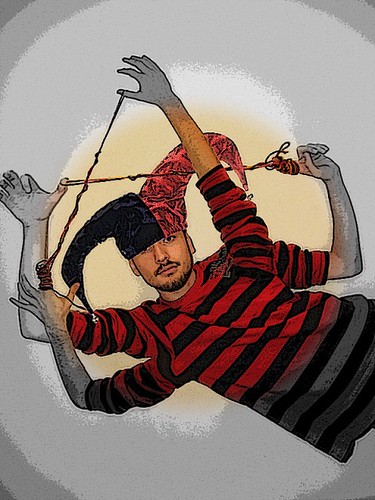
Poem: ‘Buffoon’

You resent all my fun,
Complain I’m a buffoon.
Let me play in the sun,
The dark comes all too soon.

Originally published with The Asses of Parnassus – always a good place for pithy poems.

Picture: “end of the buffoon” by Ozan Ozan is licensed under CC BY-NC-ND 2.0

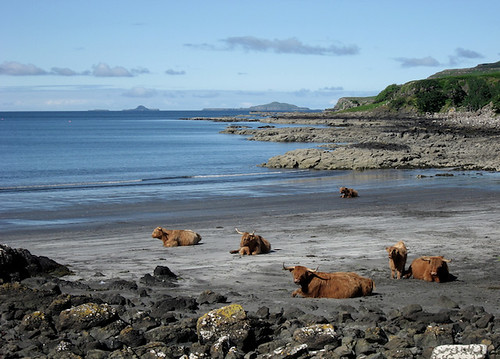
Poem: ‘Highland Spring’

Bulls lean head to head
In motionless battle;
Notionless cattle
Stroll the strand
And graze;
Sheep
Sleep
Or idly stand
Idly gaze
Down on the rocks
By the sea snore.

This poem was originally published in Candelabrum, one of the rare magazines that lived to support traditional verse through the winter of the mid to late 20th century. Traditional verse survived, and springs forth with new shoots. And, yes, it’s now spring in the northern hemisphere! The beginning of the good times! That’s my mood, anyway… things certainly feel more positive than they did a year ago, whether your spring beaches are populated by highland cattle or northern tourists.

“Highlanders at Torloisk Beach” by Simaron is licensed under CC BY-NC-SA 2.0
Political poems: Wilmot sniping at King Charles II

Restless he rolls from whore to whore,
A merry monarch, scandalous and poor.

When King Charles II was restored to the British thrones in 1660, eleven years after the execution of his father by Cromwell under the Commonwealth, the people were generally happy to have the Puritan government replaced by a king who was affable, witty and a patron of the arts and science. He founded the Royal Observatory and supported the Royal Society whose members included Robert Boyle, Robert Hooke and Sir Isaac Newton. His Portuguese wife, Catherine of Braganza, had several miscarriages and failed to produce children, but the “Merry Monarch” had over a dozen children that he recognised from seven mistresses including “pretty, witty Nell” Gwyn (and he likely had another half dozen mistresses). This life, together with various foreign wars and the fact that he was not a good administrator, left the king constantly short of cash. Hence the couplet above by John Wilmot, poet and Second Earl of Rochester.

Wilmot / Rochester also wrote:

Here lies our Sovereign Lord the King
Whose word no man relies on;
He never said a foolish thing
Nor ever did a wise one.

For this the king had a relaxed answer: “Perfectly true, for my words are my own, but my actions are my Ministers’.”

Short poem: ‘White Recluse’

Her thoughts were all inside her –
Free from reality –
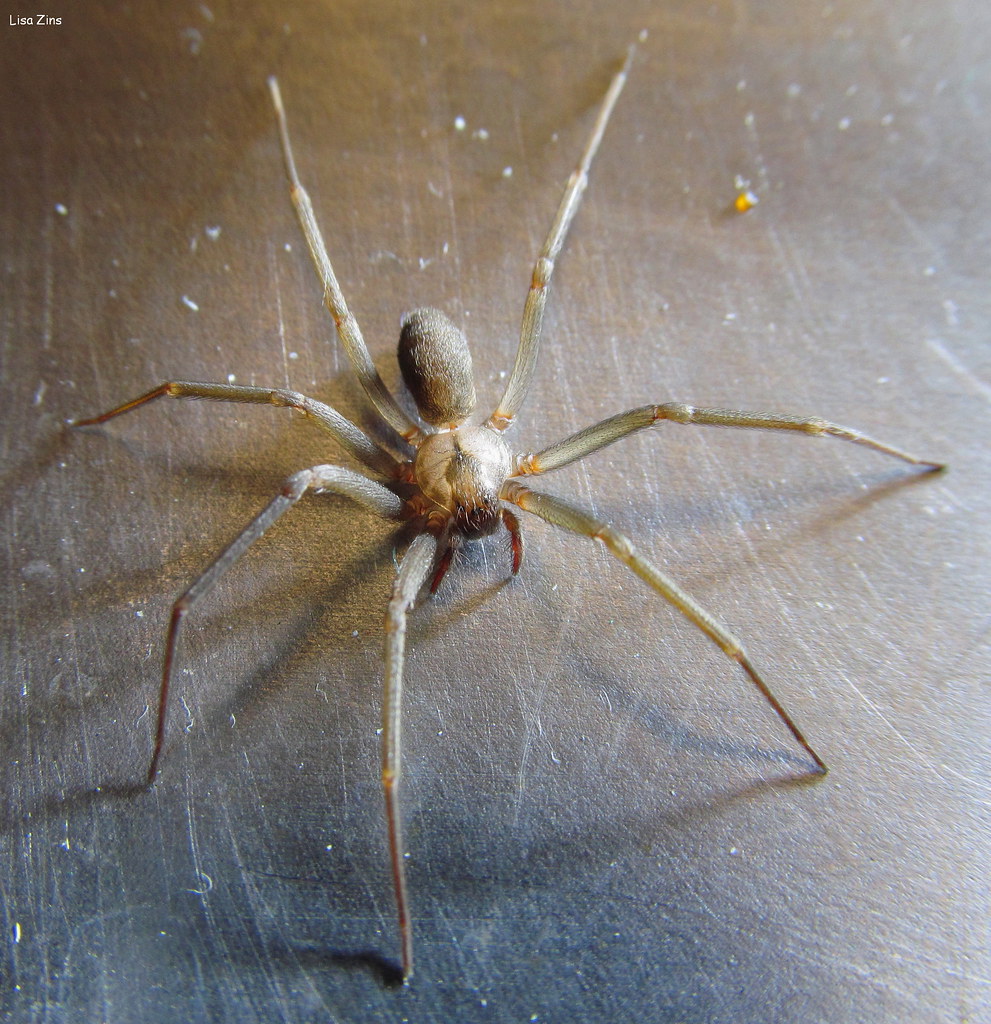
Poor little cramped-up spider
Who never saw the sea.

Much though I love her insightful and often wicked little poems, and deeply though I sympathise with her for (as I have heard) the traumatic and embarrassing seizures that restricted her life, I still have difficulty with this specific Emily Dickinson poem:

I never saw a Moor —
I never saw the Sea —
Yet know I how the Heather looks
And what a Billow be.

I never spoke with God
Nor visited in Heaven —
Yet certain am I of the spot
As if the Checks were given —

(There are two versions of this poem in circulation; but her poems were only edited and published after her death, and subsequently researched, de-edited and republished.) With all due respect, Miss Emily, if you had actually experienced the sea you would have realised that there is no way that a description and a couple of paintings can hope to capture the totality of waves: their warmth or chill, their taste, their sound, their movement against the body, the enjoyment, the danger, their feel in the water, their feel on a boat, their impact on a sandy beach or on a reef or against a cliff…

This also suggests to me that her understanding of God and Heaven is way too simplistic. She is making a good unwitting case for agnosticism. ‘White Recluse’ was published in The Asses of Parnassus, a suitable place for snippy little poems.

“Six Eyed Danger (Brown Recluse Spider)” by Lisa Zins is licensed under CC BY 2.0

Short poem: ‘Nothing’s Yours Always’

Nothing’s yours always, anyhow,
And Time shall lift from off your brow
Your troubles, wrinkles, hat and wig,
Leave you the basis for “long pig”.

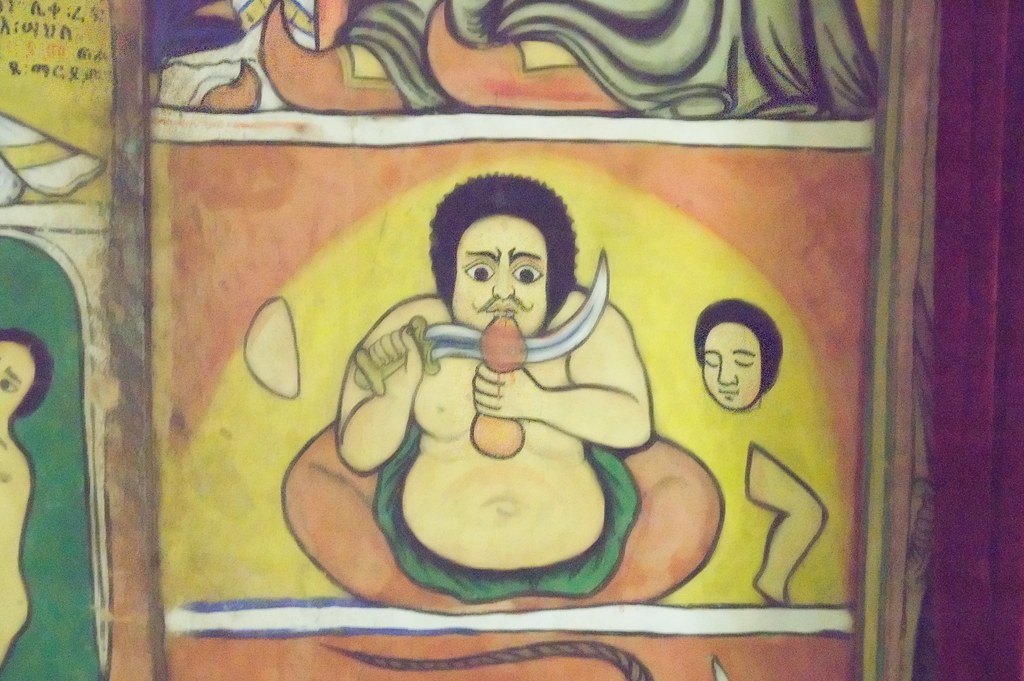
So many unusual foods are described as “tastes like chicken”; it’s worth remembering that there is one that apparently tastes like pork. And really, when you’re dead, does it matter who benefits from the recycling of your atoms? The picture is of a figure from Ethiopian legend, Belai the Cannibal.

This poem was published in Metverse Muse, a long-established Indian journal that champions traditional verse, edited by Dr. Tulsi Hanamanthu.

Photo: “Belai the Cannibal” by A.Davey is licensed under CC BY 2.0

Short Poem: ‘The Hitchhiker’

Sometimes you’d sell your soul just to get warm! –
Your clothes are rags in the wind, your skin goes blue,
You doubt your mouth can ever smile again;
The lonely world grows dark before the storm
Whose icy rain’s a mile away… and then,
The sun breaks through!

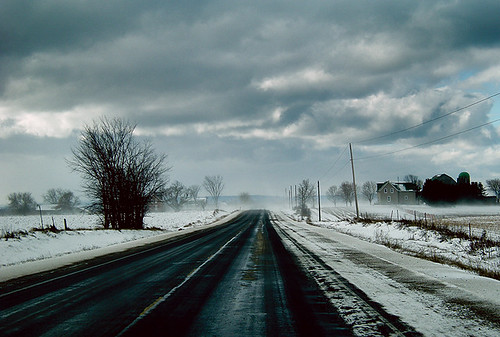
I used to do a lot of hitchhiking – 25,000 miles is my best estimate, on five continents. It can be miserable, it can be ecstatic, but as a way of exploring the world without plans and preconceptions, it’s hard to beat. It used to be safe, then it became unsafe, but now it’s probably safe again – if you send a picture of the vehicle from your cell phone before you get in. Or if you live on an island with no public transportation, where everyone seems to know everyone and it’s just common courtesy to give people a ride.

The poem was published in the now-defunct Candelabrum, a twice-yearly British publication that championed traditional verse through the darkest days of “free verse” from 1970 to 2010. The magazine has ceased publication, but thank goodness the sun has broken through again!

“Winter Road” by ryanmcgilchrist is licensed under CC BY-SA 2.0

Poem: ‘Spring Sprang’

Spring sprang full force with sudden storms then stopped.
Of which vertu engendred were the floods. We mopped.
Summer so wet dried into humid dank.
Sweat dripped, dried, dripped, and as we worked we stank.

This little poem was published in The Asses of Parnassus, where poems range from the short to the very short. Epigrams translated from the Greek or Latin alternate with modern insults and with odd little observations such as this post’s verse. It is a site for people who enjoy the occasional small random thought.

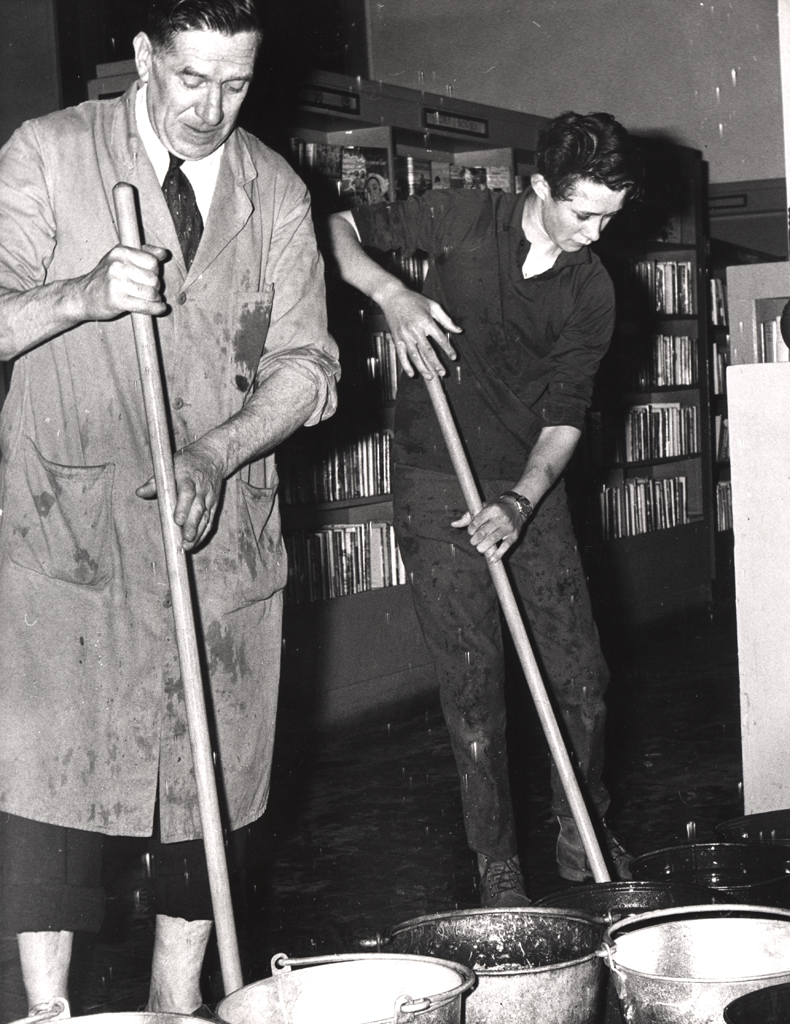
Why I wrote the poem, I don’t know. It probably started with the evocative sounds of “spring sprang”. Spring rains always bring Chaucer’s Prologue to my mind, whence the “of which vertu engendred” phrase. The whole thing is inconsequential, except that in one very important sense no creative act, not even the most trivial, is inconsequential: your creativity speaks to you, and your decision of whether or not to act on it determines many aspects of your life: not just your creative output, but your sense of satsfaction, your happiness, your mental balance, even your physical health. When the muse speaks, listen and act – the output doesn’t have to be significant, but keeping the lines of communication open to the inner and unconscious (but in several ways wiser and more knowledgeable) parts of yourself is supremely important. Call it the soul, if you want. Call it God, for all I care. There is something essential there: honour it. Your happiness, maybe even your life, depends on it.

OK, rant over. Back to other inconsequentialities.

Photo: “025457:Floods Central Library New Bridge Street Newcastle upon Tyne Unknown 1966” by Newcastle Libraries is marked with CC PDM 1.0

Short poem: ‘Subduction’

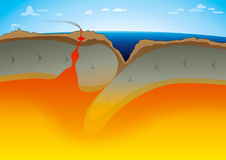
All human nature, conflicts, nations, and all races
will be washed as by tides on beaches, all loves and lusts
will with Time disappear, all human traces
washed under as all plates are washed
by the subduction of Earth’s crusts.

This poem was published this month in Lighten Up Online – an excellent place to read light verse on subjects both light and heavy. Every issue has a mixture of longer and shorter poems, and a competition. This March 2021 edition concludes with the results of the eco-crisis competition, headed ‘The Airing of the Green’; ‘Subduction’ was one of the winners. Other sections of the magazine were also focused on the environment. Pollution and climate change are twin disasters, and you can express outrage, despair, or (more usefully) proposals for action. The million-year view of my poem isn’t useful but it’s low-hanging fruit, there to be taken.

I’m delighted to be in a magazine along with poems by fellow Potcake Poets Martin Elster, Michael R. Burch, D.A. Prince, George Simmers, Nina Parmenter, Gail White, Chris O’Carroll, Tom Vaughan, Jane Blanchard, Jerome Betts, Martin Parker and Melissa Balmain, as well as two poets who will be appearing in the next Potcake Chapbook, Bruce McGuffin and Julia Griffin, and the ever-anomalous Max Gutmann. Several of us have more than one poem in this issue.

“File:Tectonic-plates-subduction-zone-17280738.jpg” by Benjilrm is licensed under CC BY-SA 4.0