She is polished and pernicious Her demeanor is delicious She will soften the suspicious With her smile
She’ll abash you then disarm you She’ll harass and she’ll alarm you Then she’ll nonchalantly charm you That’s her style
She’ll reject and then she’ll choose you She’ll respect and then she’ll use you She’ll protect and then she’ll bruise you In a flash
She’ll dismiss you then possess you She will curse you then she’ll bless you She’ll distress and then impress you With panache
She’ll accuse and then assuage you She’ll abuse and she’ll upstage you She’ll amuse and she’ll enrage you Every day
She’ll assist you then she’ll spurn you She’ll enlist you then she’ll burn you She will twist and she will turn you Every way
She will praise and then berate you She will raise and then deflate you She’ll amaze and still frustrate you You can’t win
She’s capricious and malicious She is smoothly surreptitious She conceals a core that’s vicious With a grin
*****
Susan Jarvis Bryant writes: “This is one of those poems that simply wrote itself. It’s a nonce form that appeared in my head as a song without lyrics. The lyrics came easily. I love the way words fit together to create music – a melodious flow that lifts images to a greater height. Passion always assists me in the creative process, and this poem is written about someone in particular… someone that irked me greatly… someone I will never mention. I’ll just nod and smile a satisfied smile when reading the poem. Poetry composition can be immensely cathartic.”
‘Sorceress’ was originally published in Snakeskin.
Susan Jarvis Bryant is originally from the U.K. and now lives on the coastal plains of Texas. Susan has poetry published on The Society of Classical Poets, Lighten Up Online, Snakeskin, Light, Sparks of Calliope, and Expansive Poetry Online, The Road Not Taken, and New English Review. She also has poetry published in The Lyric, Trinacria, and Beth Houston’s Extreme Formal Poems and Extreme Sonnets II anthologies. Susan is the winner of the 2020 International SCP Poetry Competition and was nominated for the 2022 and 2024 Pushcart Prize. She has published two books – Elephants UnleashedandFern Feathered Edges.
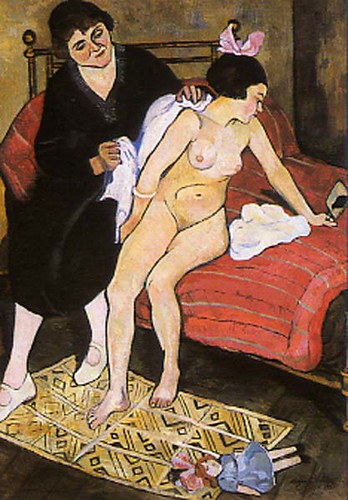
What, you haven’t heard of me, despite my art and stormy life? There’s much to tell of pride and bitterness, of bliss and hell— but not regret. I’ll fill my pen and write.
I was born a bastard. Maman worked, a laundress, while I’d roam Montmartre, spying through café and whorehouse doorways, trying to snitch some fruit or francs. I laughed and lurked. With lumps of coal I loved to draw on streets. Ditching convent school at puberty, I learned to earn my way. I felt free in circus work, curvaceous and petite and daring on the high trapeze, strong until I hurt my back—I fell headlong.
That set me back, but new work came along— also daring, deemed risqué—being painted, a model for men. Few were sainted . . . nor was I. I didn’t think it wrong to give a man some pleasure and to claim my own. For one artiste I posed unclad and soon became his favorite lover. I had his child, and kept my word: I didn’t name that man on papers with a ‘Father’ line and kept on working. Maman tended him, my son, Maurice Utrillo—a pseudonym so he would not be stigmatized by mine, that of the saucy urchin shedding clothes— and budding painter, watching men compose.
I watched the colors bloom as men composed. Toulouse-Lautrec’s hues, both somber and bright, would join or jar to make a mood just right. He’d talk of wealthy clients and gallery shows while I could study his techniques with paint. He studied me and loved my breasts, my hair, my thighs, my openness to him. I dared to love that rich midget with no restraint. When he refused to marry me, my feigned suicide didn’t change his mind. But what I learned while posing, I combined with my good eye, instinctive and untrained. I’d use my wits (and likely my libido) to paint in oils, with honesty my credo.
I painted nude women by my credo. When I showed Degas my work, he praised me with, “Madame, you’re one of us!” That raised my nerve; like those Montmartre men, I’d show my art—although I’d wish my name need not be printed next to ‘woman artist,’ a tag suggesting Other like a warning flag. I’m already Other in my lot as Bastard-with-a-Bastard history. Will I be known for art or just my life of scandal? I never stayed a bougeois wife, as two would always tangle into three; our pacts permitting infidelity could not prevent one partner’s jealousy.
His cryptic music vented jealousy; Eric Satie was moody, odd, hysteric— and amusing, in and out of bed. Eric and Paul Mousis loved me zealously and it was bound to chafe, our double link. Mousis was rich; Satie holed up in one squalid room. He slowly came undone without me to himself—he took to drink till drink took him. Maurice, by then eighteen, also drank. Since he was prone to rage and smashing things since an early age, Maman would feed him wine to calm such scenes. When briefly sober, it was to me he came— I treasured hearing Maman as my name.
Of course Maurice Utrillo made his name with me his mother-teacher and his Papa (I tell you now) Pierre-Auguste Renoir! Maurice was barely sane, but all the same, prolific and successful in his art. His painter colleague André, with brains and flair, had tireless desire in our affair; our turbulent trio could not live apart. With André as our agent, income flowed— I once took fifty children to the circus . . . Montmartre beggars crowded round to work us . . . we’d help out any artist friend who owed. The stream of money later dried to drought, but while it flowed I bloomed by giving out.
Too soon I knew my bloom was giving out— I missed men’s wide-eyed stares, their swiveled heads. André, still youthful, strayed to other beds; Maurice would drink or sit around and pout. We three unraveled into separate ways. Instead of painting nudes I painted flowers; they didn’t sell but brightened up the hours of living alone, inviting in malaise, till I found Gazi. This young, exotic man takes care of me and listens to my stories, roughly true—my slights, successes, glories. I’m seventy-two. I’ll end where I began, a bastard bitch whose art was bold and right. My pride and grit leave little room for spite.
*****
Here is what the judge for the 2024 Kim Bridgford Memorial Sonnet Contest wrote: Praise for the winning sonnet crown: Among a strong group of finalists, “Roughly True” distinguished itself across the board—in form, in voice, in message, in grace. After reading these seven sonnets in the voice of French painter Suzanne Valadon, I felt as if I had just taken short courses in poetic form, meter, rhyme, and art history, all expertly and candidly delivered by the fully realized persona of an accomplished, but overshadowed figure, one exquisitely resurrected here in verse. ~Dan Albergotti, Judge
Barbara Lydecker Crane writes: “I was surprised and thrilled to win this contest, and further pleased that the judge seemed to recognize the same strength of character in Suzanne Valadon that I did. The more I researched her life and work, the more I felt I actually knew this gritty woman a bit, despite our wildly different lives. As I get older I find I am more interested in writing about others than myself. My latest book, You Will Remember Me (Able Muse), is a collection of persona poems about portrait artists and their works. I am currently writing a new series of persona poems, this time about landscape artists and their works. This time, rather than writing all sonnets, each poem takes a different form; but all (so far) are in rhyme and meter. That seems fitting both for older times and for the craft and musicality I strive for, to befit the art that I hope to see with these poems one day, perhaps in a new book. And there is something about writing in form that, to me, is exactly like framing a picture. What a difference that makes; it says “completed,” and adds its own panache to the art.”
O my luve’s like a red, red rose That’s newly sprung in June: O my luve’s like the melodie That’s sweetly play’d in tune.
So fair art thou, my bonnie lass, So deep in luve am I; And I will luve thee still, my dear, Till a’ the seas gang dry.
Till a’ the seas gang dry, my dear, And the rocks melt wi’ the sun: And I will love thee still, my dear, While the sands o’ life shall run.
And fare thee weel, my only luve! And fare thee weel awhile! And I will come again, my luve, Tho’ it were ten thousand mile!
*****
January 25th being the birthday of Robert Burns (and the opportunity for a Burns Night celebration), it seems the right day to post an interesting fact that I was unfamiliar with until reading a 1964 Canadian high school poetry text book: ‘A Red, Red Rose’ was fashioned from three distinct songs that Burns had heard in the Highlands of Scotland. Part of each song was reworked by him into a single poem:
(Song 1) Her cheeks are like the roses That blossom fresh in June; O, she’s like a new-strung instrument That’s newly put in tune.
(Song 2) The seas they shall run dry, And rocks melt into sands Then I’ll love you still, my dear, When all these things are done.
(Song 3) Altho’ I go a thousand miles I vow thy face to see, Altho’ I go ten thousand miles, I’ll come again to thee, dear love, I’ll come again to thee.
Wikipedia (as often) is a good place to look for more information, and here is an extensive quotation from its article on the poem:
Sources Burns is best understood as a compiler or a redactor of “A Red, Red Rose” rather than its author. F.B. Snyder wrote that Burns could take “childish, inept” sources and turn them into magic, “The electric magnet is not more unerring in selecting iron from a pile of trash than was Burns in culling the inevitable phrase or haunting cadence from the thousands of mediocre possibilities.”
One source that is often cited for the song is a Lieutenant Hinches’ farewell to his sweetheart, which Ernest Rhys asserts is the source for the central metaphor and some of its best lines. Hinches’ poem, “O fare thee well, my dearest dear”, bears a striking similarity to Burns’s verse, notably the lines which refer to “ten thousand miles” and “Till a’ the seas gang dry, my dear”.
A ballad originating from the same period entitled “The Turtle Dove” also contains similar lines, such as “Though I go ten thousand mile, my dear” and “Oh, the stars will never fall down from the sky/Nor the rocks never melt with the sun”. Of particular note is a collection of verse dating from around 1770, The Horn Fair Garland, which Burns inscribed, “Robine Burns aught this buik and no other”. A poem in this collection, “The loyal Lover’s faithful promise to his Sweet-heart on his going on a long journey” also contains similar verses such as “Althou’ I go a thousand miles” and “The day shall turn to night, dear love/And the rocks melt in the sun”.
An even earlier source is the broadside ballad “The Wanton Wife of Castle-Gate: Or, The Boat-mans Delight”, which dates to the 1690s. Midway through the ballad, Burns’ first stanza can be found almost verbatim: “Her Cheeks are like the Roses, that blossoms fresh in June; O shes like some new-strung Instrument thats newly put in tune.” The provenance for such a song is likely medieval.
Two friends diverged in a yelling mood And sorry I could not keep them both And still maintain one attitude, I scrolled down through one’s page, and viewed Some green and gold of writing growth.
Then saw the other was just as good, With maybe even a better claim Because so well misunderstood Within the writing neighborhood, Though as for that they’re much the same.
And each that morning equally laid The blame upon the other’s back. I had no way to tell who’d made The first or worst move; I’m afraid I have no feel for clique or claque.
Online I have too many friends To keep good track, so, nothing loath To making enemies or ends Where there are no real dividends, I shook my head – and blocked them both.
*****
Marcus Bales writes: “Most of the fraught relationships online are due to people not being able to write very well on one end, or read very well on the other. Stuff that in in-person conversation would go completely unnoticed is taken up as deliberate slighting. Mostly its merely awkward phrasing, or one interlocutor is already two comments past when the reply to the third interaction scrolls by and it’s misinterpreted as an instant response to the most recent reply when it was really intended to answer something two or three comments back.
“Now in the case of political disagreements where the polarized sides are already firmly established and one side or the other or both are determined to fight that’s a whole other thing. There it’s got nothing to do with how well or ill something is read or written and everything to do with the sport of online woofing.
“It’s one of those things where over the years people block and get blocked and complain to their friends about either end of it and then it all goes away pretty fast as the opportunity to be triggered — again at either end — fades with the blocking.”
(The original poem on which this parody is based, for those not familiar with it, is Robert Frost’s ‘The Road Not Taken‘. – RHL)
Not much is known about Marcus Bales except that he lives and works in Cleveland, Ohio, and that his work has not been published in Poetry or The New Yorker. However his ‘51 Poems‘ is available from Amazon. He has been published in several of the Potcake Chapbooks (‘Form in Formless Times’).
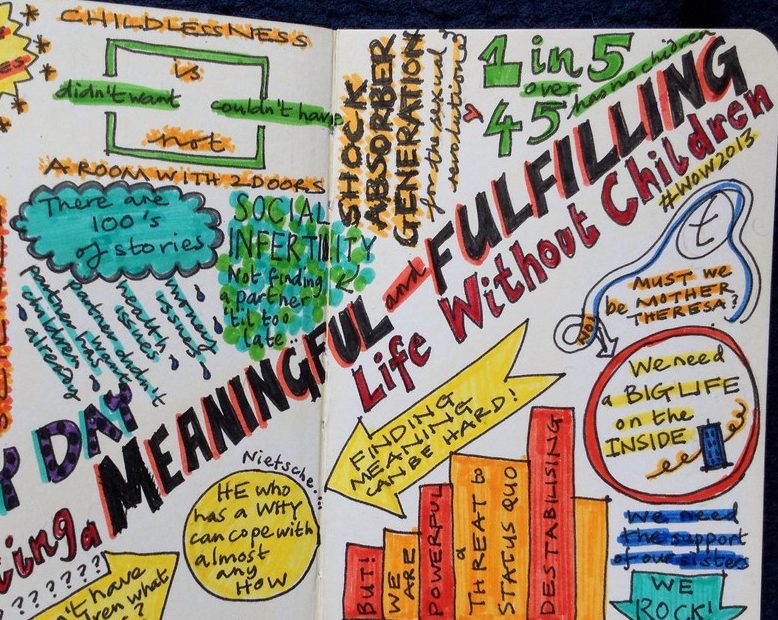
What ends with me? A set of genes, The notion that my slender means Might turn into a son’s estate, The hope that, at some distant date, Beside my grave, my line convenes
To recollect my days’ routines, My counsels, and the vanished scenes Whose witnesses would recreate What ends with me:
The consciousness that struts and preens In holding that its passing means An altering of our species’ fate, My thought possessed of untold weight. Yet, on that thought, the question leans– What ends with me?
*****
J.D. Smith writes: “After reaching a certain age and making certain commitments, I found myself coming to grips with never being a parent. As in other instances of following form, the repetitions of the rondeau gave me a way to enclose and develop my response to the situation.”
J.D. Smith has published six books of poetry, most recently the light verse collection Catalogs for Food Lovers, and he has received a Fellowship in Poetry from the United States National Endowment for the Arts. This poem is from The Killing Tree (Finishing Line Press, 2016). Smith’s first fiction collection, Transit, was published in December 2022. His other books include the essay collection Dowsing and Science, and his seventh collection, The Place That Is Coming to Us, will be published by Broadstone Books in 2025. Smith works in Washington, DC, where he lives with his wife Paula Van Lare and their rescue animals. X: @Smitroverse
One month from when you met me, when you brought the first of many gifts, a 45 of plaintive praise and longing, who’d have thought that forty-five years later we’d survive on weekends, holidays, and summer breaks, a foretaste of the end in every start, anticipation ballasted with aches as we put love on hold and live apart?
You are a holiday. The working week unspools like toilet paper from a roll. My attitude goes airborne when we speak, and when we meet, my heart swoops like a shoal of fish. Would we have lost this giddy glow, living together? Better not to know.
*****
Susan McLean writes: “It makes me feel ancient to realize that for younger readers I will have to explain that a 45 was a record with one song on each side, which played on a record player at 45 revolutions per minute. Love poems themselves tend to feel old-fashioned these days, though this one is about a relatively modern problem, the long-term, long-distance relationship in which both people are employed full time at jobs far apart from one another. The form, a Shakespearean sonnet, mirrors the content, in that the rhymes are separated from one another until the end, when they are reunited. The poem was originally published in the online journal of female formalist poets Mezzo Cammin, and it later appeared in my second book of poetry, The Whetstone Misses the Knife.
All things dull and ugly, all creatures gross and squat, All things vile and tedious, the Lord God made the lot.
He made the sly hyena, the hookworm and the slug, Your moaning Auntie Margaret and pervy Uncle Doug.
He made that dreary Welshman who so often reads the news, And he made us, the ragtag lot who worship at St. Hugh’s.
We’re far from high achievers, we don’t have gorgeous bods; At best you’d call us humdrum, a group of odds and sods.
We’re verging on the useless and we have got a hunch No deity could think we were a preposessing bunch.
That’s why we’re rarely cheerful, but feel a bit less blue When thinking how the mighty Lord can be ham-fisted too.
‘Cause frankly we’d be daunted by a more efficient chap. We feel a lot more comfy with a God who’s slightly crap.
*****
George Simmers writes: “This is a poem that would never have existed had it not been for the Spectator magazine, which each week sets a challenge to its readers, demanding produce a short piece of writing (it might be 16 lines of verse or 150 words of prose) on a particular theme. The task is often a silly one. A couple of years ago the demand was for a hymn beginning ‘All things dull and ugly…’
“Competitive light verse is a tradition that stretches back a long way in Britain. In the early years of the twentieth century Naomi Royde-Smith of the Saturday Westminster Gazette set challenges that were responded to by up-and-coming writers like Rupert Brooke and Rose Macaulay, among others. In the thirties the Weekend Review was notable for its literary competitions, and when that magzine was incorporated into the New Statesman, the comp came with it.
“Those New Statesman competitions became a notable feature of English literary life, producing star writers such as Allan M. Laing, Stanley J. Sharpless, Roger Woddis, E.O. Parrott, Martin Fagg, Bill Greenwell and Basil Ransome-Davies.. look in any good anthology of light verse, and you’ll find glittering examples of some of their work. The Spectator and Punch were later in running competitions that attracted many of the same writers.
“I first entered a New Statesman competition in 1981, earning a pound for a one-line joke. Easy money! I entered a few more, mostly prose, and it was a while before I had a verse winner. Before that my verse writing had been a bit modernist and self-indulgent; no more. To succeed in the comps you need to master rhyme and metre. It’s a great training ground. Wendy Cope, one of the best writers of neat epigrammatic verse today began in New Statesman competitions (Much of her first, and arguably best, book, Making Cocoa for Kingsley Amis, is made up of her competition winners.) At about the same time, D.A. Prince began her competition career, which continues in the Spectator today (and I’m proud to have her as regular poet in Snakeskin.)
“From the thirties to the seventies, the New Statesman was a crucial publication in British culture, with a left-wing front-end but back half that was welcoming to all sorts of attitudes and points of view. A couple of dull editors diminished its appeal and importance in the eighties, but the comps continued to flourish, though in the twenty-first century they mostly seemed to welcome only rather predictable political humour. A few years ago the editor, Jason Cowley arbitrarily cancelled them. I’ve not looked at the magazine since then, but I’m told that it has gone from bad to worse.
“The Spectator, meanwhile, has flourished. My first Spectator winner (which imagined Wordsworth doing a snooker commentary) was in 1983. It was the top winner that week, and in addition to a small cash prize I was sent a very good bottle of wine. Those were the days. At that time the competition was run by James Michie, himself a good poet notable for his translations of Horace and Catullus. His was a generous welcoming personality, and many talents flowered under his watch.
“After him, Lucy Vickery ran the comp for many years, showing good judgement Though when she went away on maternity leave for a while, a substitute was brought in who gave prizes to some very inept stuff. It’s not an easy job. At present Victoria Lane is the adjudicator. I like her, because she has awarded me a good few prizes. Others may have grumbled.
“The Spectator competition is today just about the only forum for light verse in Britain. While the respectable poetry outlets have mostly given up on traditional rhyme and metre (Have you ever tried to read the stuff printed in the heavily subsidised Poetry Review?) the Spectator comp still demands well-formed and witty verse. Bill Greenwell and Basil Ransome-Davies are still star turns, and they have been joined by Adrian Fry, Janine Beacham, Sylvia Fairley, Chris O’Carroll and others.
” ‘All things dull and ugly…’ was a task that appealed to me, because I’ve always been struck by the way church congregations can make even sprightly tunes like ‘All Things Bright and Beautiful’ sound really drab and tedious. The ‘dreary Welshman’ is Huw Edwards, a BBC news-reader whom I had always found obnoxious, especially when toadying to the Royals. I’m rather proud of having had a dig at him in this poem, which pre-dates his fall from grace when he was dismissed after his appalling taste in pornography was discovered.”
George Simmers used to be a teacher; when he retired he then amused himself by researching a Ph.D. on the prose literature of the Great War. He now spends his time pottering about, walking his dog and writing a fair bit of verse. He is currently obsessed by the poetry of Catullus, and may be issuing a volume of translations within the next year or so. He has edited Snakeskin since 1995. It is probably the oldest-established poetry zine on the Internet. His work appears in several Potcake Chapbooks, and his recent diverse collection is ‘Old and Bookish‘.
Your hours of tears won’t let you follow Those who’ve left you alone. Tonight your head lies on a pillow, Not beneath earth and stone.
The dead won’t be returning, Not for all of your pleas, Not for all your candles burning. Get up off your knees.
The deceased, removed from their rest Can take up all your hours Until your mind, denied a fair rest, Is deprived of its powers.
The road set before you is rocky and steep, So seize the night’s respite and drift off to sleep.
*****
J.D. Smith writes: “Though I do not sing, play an instrument or read music, I had Brahms’ Lullaby in the back of my mind while attempting to deal with various losses, and the poem roughly follows its tune. In adjusting to a new reality (I hesitate to say “move on” or “get over,” phrases that smack of empathic failure), sometimes all one can do is rest.”
J.D. Smith has published six books of poetry, most recently the light verse collection Catalogs for Food Lovers, and he has received a Fellowship in Poetry from the United States National Endowment for the Arts. This poem is from The Killing Tree (Finishing Line Press, 2016). Smith’s first fiction collection, Transit, was published in December 2022. His other books include the essay collection Dowsing and Science, and his seventh collection, The Place That Is Coming to Us, will be published by Broadstone Books in 2025. Smith works in Washington, DC, where he lives with his wife Paula Van Lare and their rescue animals. X: @Smitroverse
A poem is so obdurate and small Compared to what you wanted it to say And sometimes isn’t even close at all. For instance, this. I’ve worked on it all day, A metaphor for all of love’s affairs. I failed to ride the energy it gave, My form and balance gone. Nothing prepares You for the wildness of the standing wave. Possessing and possessed and then propelled Abruptly past the point of no control To merely peril, having once beheld The moving stillness of it all, all whole. Your head’s what every poem wants to split, While you stroke hard to stay ahead of it.
*****
Marcus Bales writes: “My online pal, the poet Liam Guilar, was a kayak adventurer, sneaking across borders to paddle the most dangerous rivers in the world. I went white water rafting once. You’re stuck in cold, wet, awkward positions that often turn suddenly painful. Why people do it over and over seems not just unreasonable but cold, wet, and painful. There are exhilarating moments, but you’re still cold, wet, and out of control. I could feel in my one experience that the out of controlness might be the point. Still, it was wet and cold. Very wet. Very cold.
“The confluence of Liam’s many tales, my paltry experience, and he and I both struggling to write poems is the impetus for this poem. I’ve often thought that maybe what it needs is a bucket of ice water suspended over the reader like a, well, like a bucket of Damocles, that sloshes over the head and down the back of the neck in order to make it work.”
Not much is known about Marcus Bales except that he lives and works in Cleveland, Ohio, and that his work has not been published in Poetry or The New Yorker. However his ‘51 Poems‘ is available from Amazon. He has been published in several of the Potcake Chapbooks (‘Form in Formless Times’).
You can almost see Vincent Price, black-robed, hunched above the console of a jumbo organ in the bowels of his creaky haunted manse; or maybe a stadium of damned souls, strobed in lurid red and howling nettle-robed as they plummet into Pandemonium, pore and pith aflame. It’s no troubadour, undoubtedly, this vast atonal gob.
As with the Roach Motel, we’d check in, but never out—us or anything, since it can swallow errant planets whole, and still, however much the mass, can’t eat its fill. Though it’s larger far than Jupiter or Mars, we can barely see it, thank our lucky stars.
*****
William Trowbridge writes in Rattle, where this poem was published: “I’ve spent most of my years as a poet writing free verse, though lately I find myself turning toward form. Unlike those who see formalist verse as dry and effete, I find it can generate power by means of barriers to play against—‘the net’ as Frost put it, by which he also meant boundary lines. If you pour gunpowder in a pile and light it, a mere flash occurs. But pack it tightly into a container, and you can get something more powerful. And, as opposed to the notion that form is restrictive, I agree with Richard Wilbur that it often liberates one from choosing the easy word in order to discover the better, surprising one. I haven’t moved into this part of town yet, but I stop there more and more.”
William Trowbridge’s tenth poetry collection, Father and Son, was published by Wayne State College Press Press in April. His poems have appeared in more than 45 anthologies and textbooks, as well as on The Writer’s Almanac, AnAmerican Life in Poetry, and in such periodicals as Poetry, The Gettysburg Review, The Georgia Review, The Southern Review, Plume, Rattle, The Iowa Review, Prairie Schooner, Epoch, and New Letters. He is a mentor in the University of Nebraska-Omaha Low-residency MFA in Writing Program and was Poet Laureate of Missouri from 2012 to 2016. For more information, see his website, williamtrowbridge.net.





 Form in Formless Times